Purple Tomato Seedlings: Why the Undersides Turn Purple and Growth Stalls
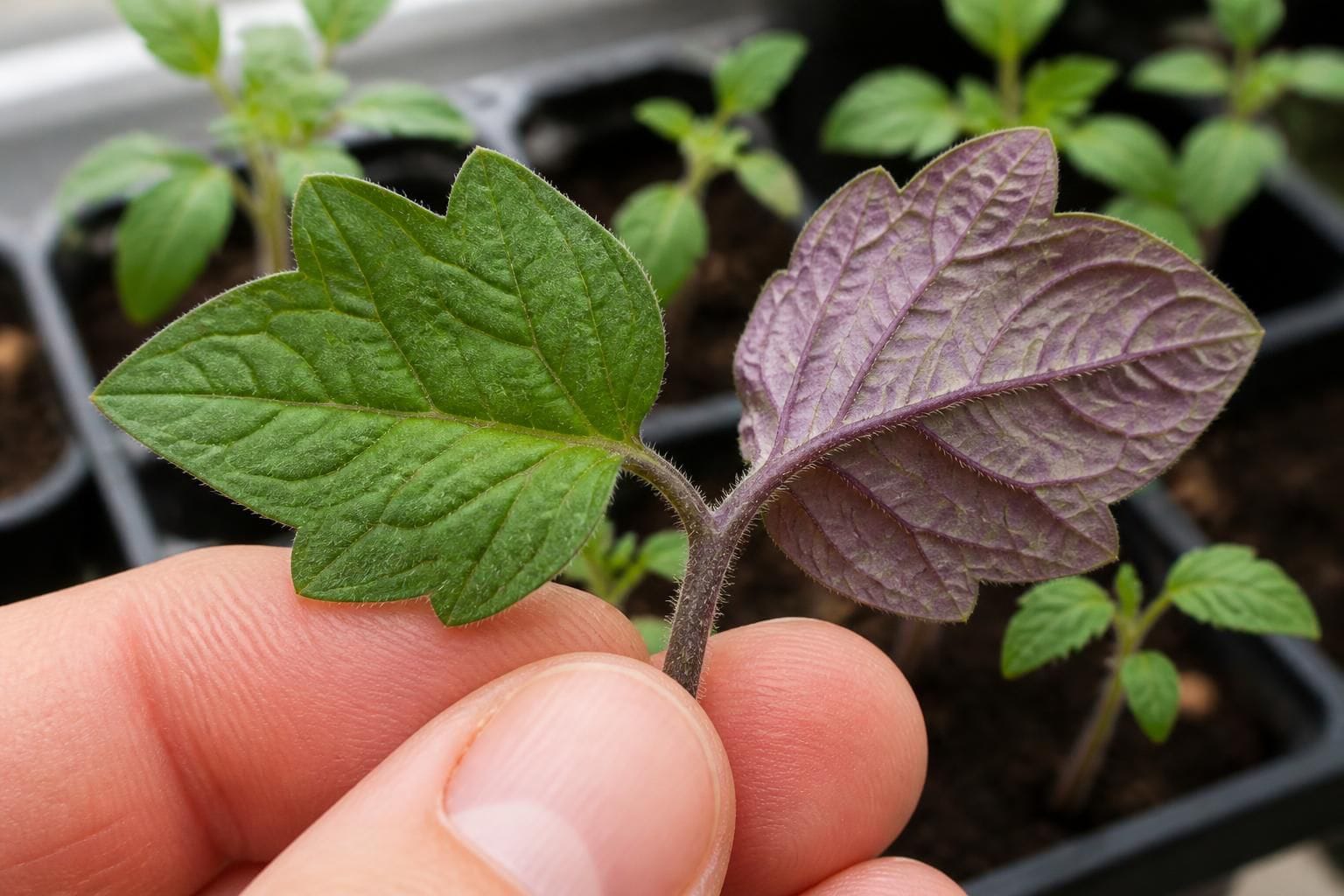
Flip over a leaf on a stunted tomato seedling and find the underside purple, and the color doesn’t automatically mean the plant needs more fertilizer. Cold roots, immature roots, sudden changes in light or temperature, and true phosphorus deficiency can all produce similar symptoms. Some varieties also develop purple pigment naturally. Start with the roots and recent growing conditions: Were the seedlings moved outdoors, repotted, or left somewhere cool? If so, warming the roots and steadying conditions may do more than adding fertilizer. If the purple comes with yellowing, curling, distorted new growth, or continued stunting, it deserves a closer look.
Purple is a pigment, not a diagnosis
The color comes from anthocyanin, the same pigment that colors blueberries, according to a Franklin County page from Ohio State Extension, which also notes that the purpling tends to show first on the older leaves near the bottom of the plant. Plants make more of it under stress. Research on purple-fruited tomatoes, summarized in Frontiers in Plant Physiology, describes anthocyanin production responding to environmental factors such as high light intensity and low temperatures. That research is about fruit, so treat it as background rather than proof for your seedlings.
So the first sorting question is simple. Are all the seedlings of one variety purple from day one, yet growing normally? A few varieties are bred for purple pigment, such as ‘Indigo Rose’, and they are not a problem. Or did seedlings that were green turn purple while their growth slowed? That second pattern is the one worth investigating.
Start with the roots, not the leaves
Here’s the thing: the purple leaf doesn’t necessarily mean the leaf itself is short of phosphorus. Often, the clue is what is happening around the roots. University of Maryland Extension explains that seedling roots are immature and can’t pull up nutrients held in organic matter, and that cool soil slows the soil microbes that release those nutrients. UConn’s IPM program calls cold soil the most common look-alike of a true phosphorus deficiency, with similar visual symptoms, and lists transplant shock from a big temperature change as another route to purple leaves. Colorado State Extension’s tomato guide says phosphorus deficiencies occur early in the growing season when the soil is still cool.
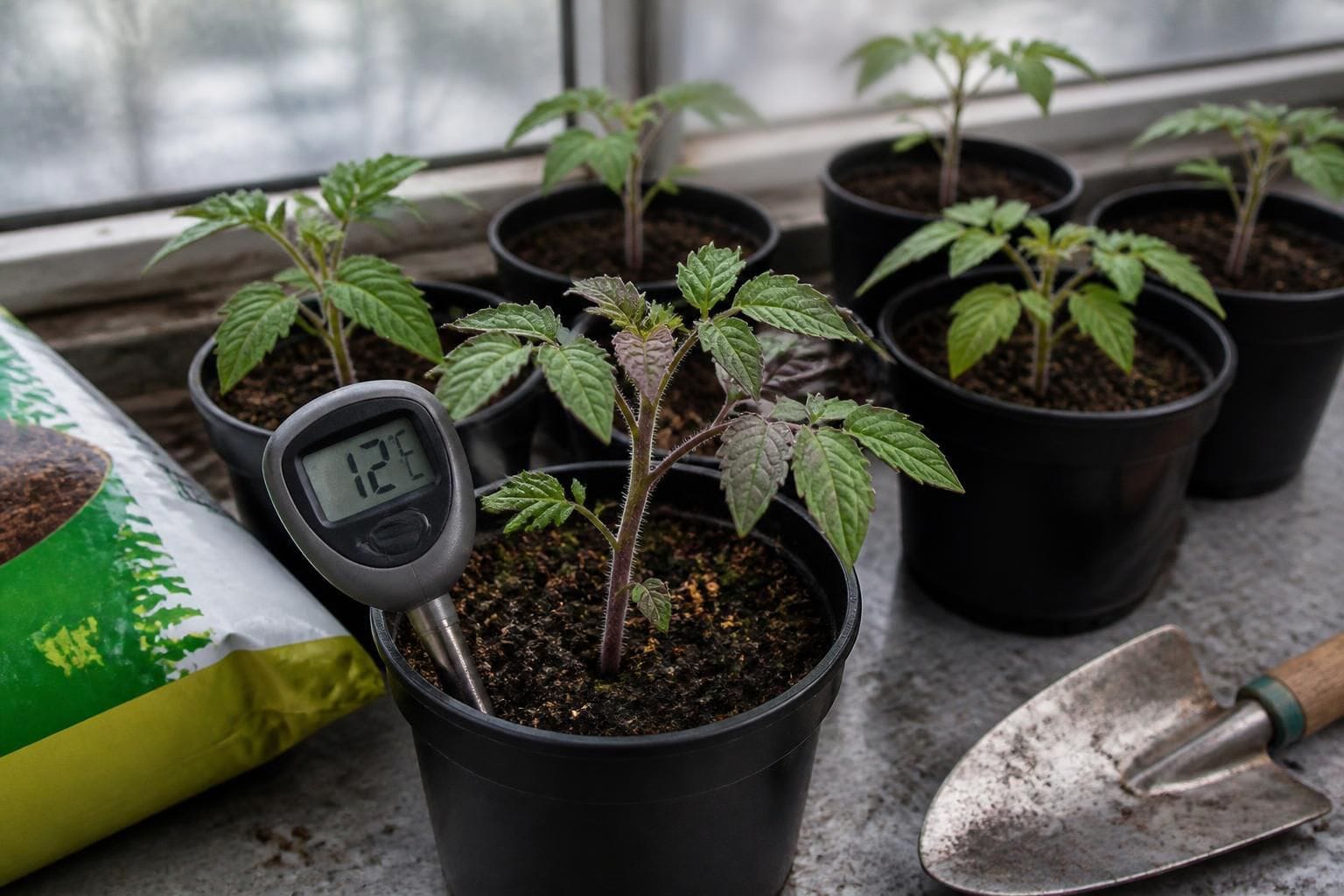
The clearest evidence I know of comes from a root-temperature experiment at the Hebrew University of Jerusalem, and here’s what I take from it. Tomato seedlings in growth cabinets held at a daytime root temperature of 12°C ended up with about 47 percent less shoot dry weight than seedlings at 20°C, and about 36 percent less root dry weight. At 16°C the losses were smaller: 26 percent for shoots and 14 percent for roots. The researchers traced much of the effect to slow upward transport of plant hormones and nitrate, not to the plants failing to make them. The lesson for a seedling tray is that chilled roots can stunt growth on their own, with plenty of nutrients in the mix. That was a sand-grown experiment in controlled cabinets, so your pots won’t match those numbers, but the direction is reliable. The abstract is on the Hebrew University research portal.
In practice, push a soil thermometer into a pot and check it in the morning, when it’s coldest. Pots on a cold windowsill, a garage floor or bare ground can sit much cooler than the air in the room. The Ohio State page mentioned above includes a reply setting 60°F as the minimum soil temperature for planting tomatoes outside; treat that as a rule of thumb, since local conditions vary.
Phosphorus: a real shortage or a locked-out supply?
Phosphorus is the nutrient most often blamed, and the blame is partly fair. A 1970 study in Biologia Plantarum found that phosphorus-starved tomato plants had about five times the anthocyanin of well-fed ones on average, along with about 18 percent less growth. Those plants were grown in nutrient solution, so the result shows that phosphorus shortage can cause this picture, not that yours has one.
The same study carries a warning worth keeping in mind. When the researchers doubled the phosphorus, results were uneven: some experiments showed less purple and slightly better growth, while others showed more purple and less growth, and the authors pointed to light intensity as a likely influence. More phosphorus is not a guaranteed cure. UConn says a true deficiency can only be confirmed with a soil or tissue test, and University of Maryland Extension suggests a starter solution on transplants following label directions, plus a soil test for pH and nutrients.
Another caution comes from the Ask Extension answer from Maryland. Despite the deficiency-like look, the expert advised against fertilizing unless the plants are yellowing and have been growing for at least eight weeks in the same potting mix. Product choice and amounts depend on your mix and your label, so follow the label and check local rules rather than a number from a forum post.
Light and the trip outdoors
The same Maryland answer says some purpling of stems and leaf undersides is very common in tomato transplants raised under supplemental lighting. It describes the purple as a stress symptom linked to several factors at once: nutrient levels, shifts in temperature, light and humidity, crowding and poor airflow. It also makes a point that surprises people. Shade outdoors is usually brighter than a bright indoor grow-light spot, so carrying seedlings straight into sun is a large jump in light intensity that can damage the leaves. Move them out in stages, a little more sun each day, and give the tray room to breathe.
When purple points to something else
The Colorado State guide lists purple leaves with purple veins and an overall purplish tint as phosphorus deficiency only when no insects are present, and it points to insect-related problems that can produce similar symptoms. One is psyllid yellows, caused by a tiny sap-feeding insect that you confirm by checking the undersides of the leaves for nymphs. Another is a leafhopper-spread virus, for which the guide recommends row covers. That distinction matters. Turn the leaves over and inspect them before assuming the problem is nutritional. If seedlings stay stunted, yellow or distorted even after warmth and light are sorted out, ask your local extension office to look at a sample. And if the newest leaves are curling, our guide to tomato leaves curling upward even though you’re watering enough walks through the look-alikes, from herbicide exposure to mites and viruses.
A three-step check for tonight
- Check root-zone temperature. If the soil is cold, move the pots to a warmer spot and lift them off cold surfaces before changing anything else.
- Review what changed in the last week or two: a move outdoors, repotting, new lights, a cold night, or a tray that has been in the same small pot for weeks.
- Inspect the undersides for insects and look at the newest leaves. Green, normal new growth points to stress that is easing. Distorted or yellowing new growth, or insects, means look further.
Only after those three would I consider feeding, and then only guided by a soil test, the state of the potting mix and the product label.
Will the seedlings recover?
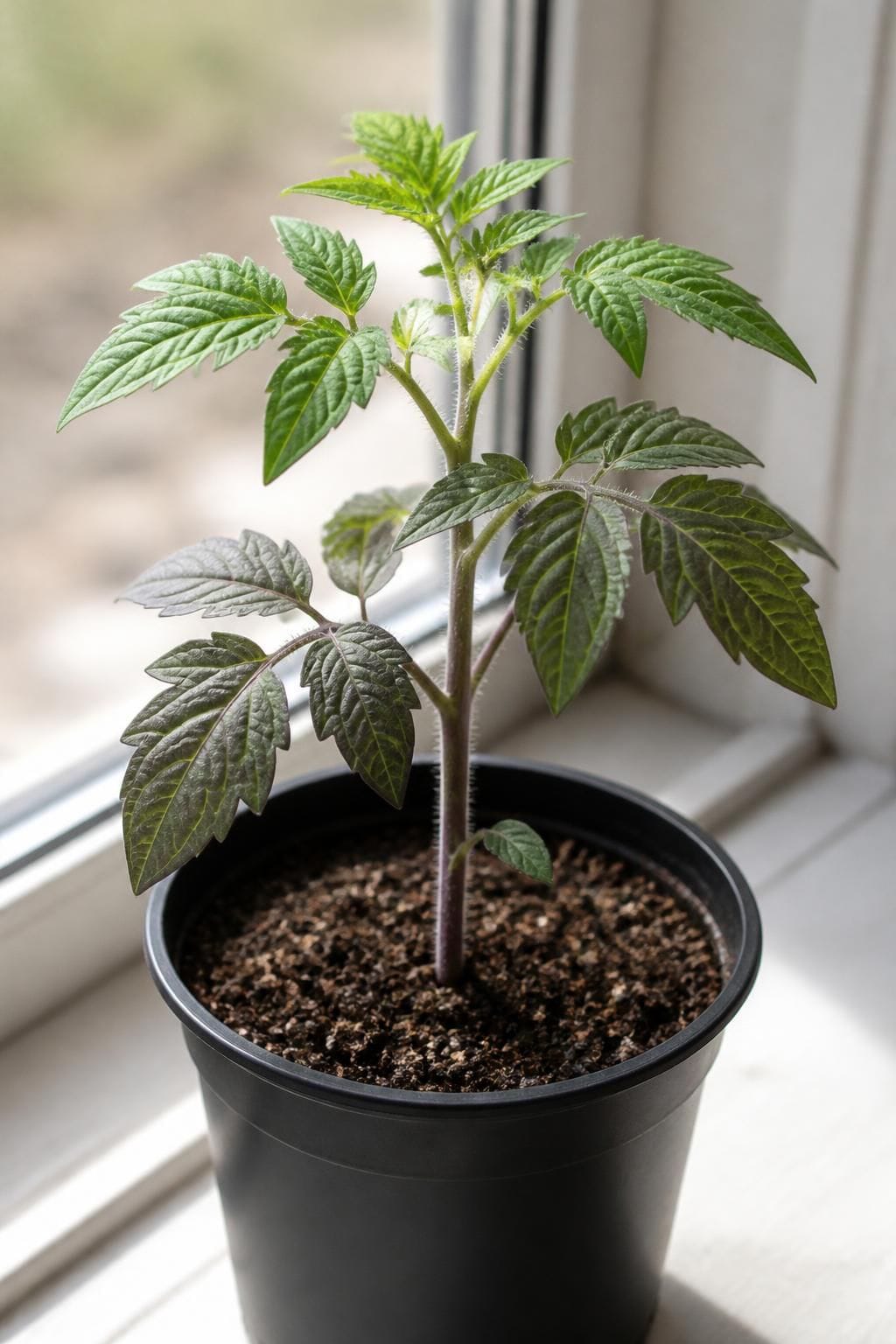
Don’t panic, and don’t toss them yet. Reader’s Digest, quoting a professional horticulturist, says purple leaves may or may not green up over a few weeks once nutrients, soil warmth and sun are right, and that seedlings kept in cold soil or poor nutrition for a long time can stay stunted. Old purple leaves often stay purple. Watch the newest growth: if it comes in green and the plant starts to move again, the seedling has turned the corner.
What not to do
- Don’t pour extra phosphorus onto cold soil. If the roots can’t take it up, it won’t fix anything.
- Don’t carry seedlings from indoor lights straight into full sun.
- Don’t plant out into cold ground just because the calendar says it’s time.
- Don’t replace the whole tray over a purple stem alone. Fair enough if you’re worried, but check the variety and the new growth first.
Quick answers
Are purple tomato seedlings always short of phosphorus?
No. Cold roots, transplant shock, strong light changes and some varieties’ natural pigment can all produce purple, and a true phosphorus deficiency can only be confirmed with a soil or tissue test.
Should I fertilize purple seedlings right away?
Usually not as a first move. Warm the roots and steady the light first, and let a soil test and the product label guide any feeding.
Are purple stems on tomato seedlings normal?
Sometimes. If the seedlings are growing normally, purple stems may simply reflect the variety or a reaction to light. Slowing growth is the signal to investigate.
The short version: warm roots, steady light and a patient eye on the newest leaves solve most purple trays.