Tomato Plants With Lots of Leaves but Few Flowers: Causes and Fixes
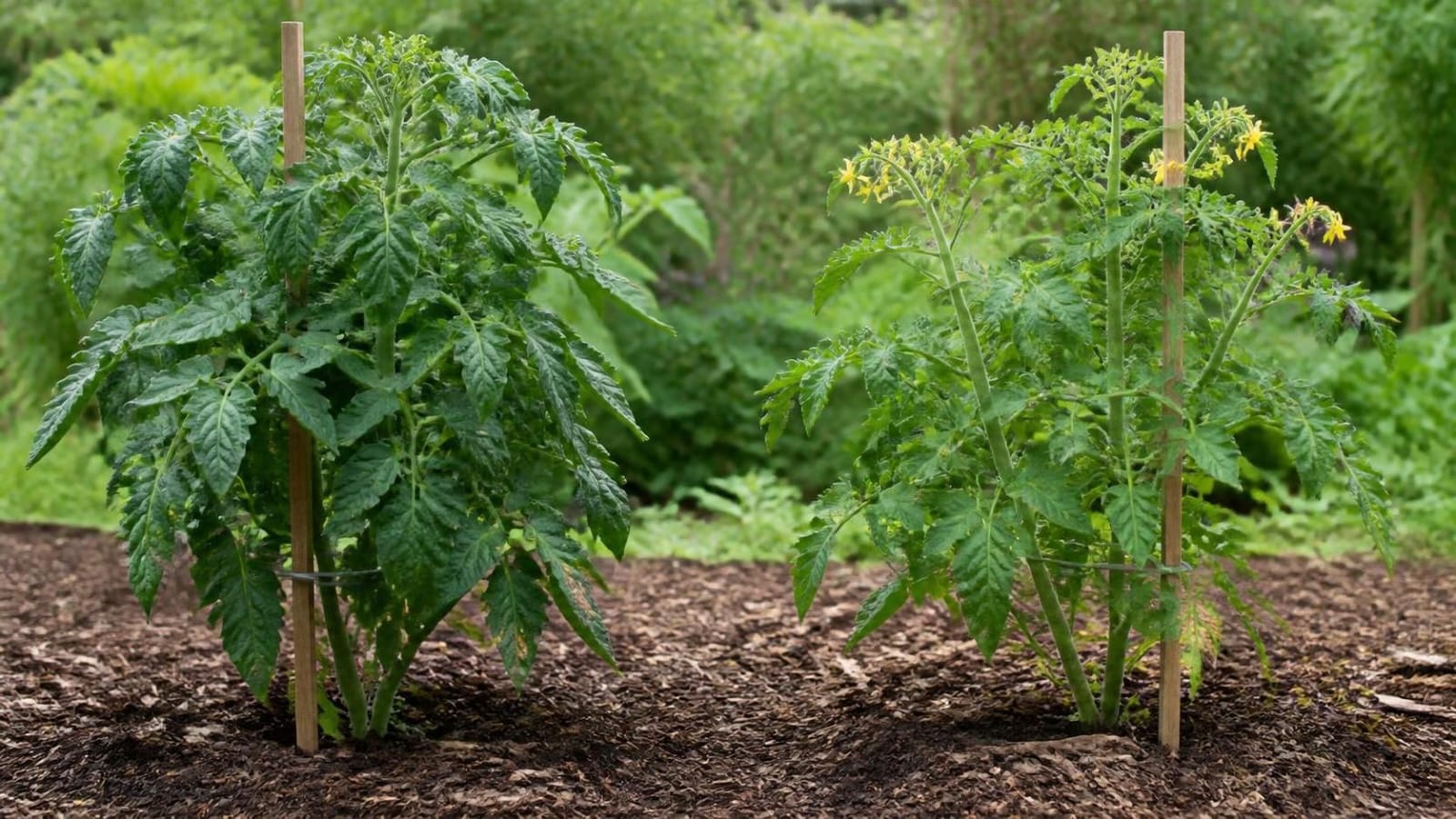
A tomato plant that is big, dark green and short on flowers is usually telling you one of three things: it got more nitrogen than it needed, it isn’t getting enough sun, or it hasn’t reached its flowering stage yet. Heat, cold and watering stress can add to the picture. Start with two quick checks. When did you last fertilize, and how many hours of direct sun does the bed actually get? If you fed generously early on and the plant is lush and vigorous, excess nitrogen is the most likely culprit, and the fix is patience and a lighter hand, not more fertilizer.
Read the plant before you change anything
Several different problems end with the same picture: plenty of foliage and not much else. The clues below help you sort them out. If two rows fit your plants, treat both.
| What you see | Likely cause | How to confirm | What to do |
|---|---|---|---|
| Large, deep green, vigorous plant; you fed generously early on | Too much nitrogen | Check the first number on your fertilizer label and when you last applied it; a soil test is better still | Stop nitrogen-heavy feeding and wait |
| Tall, spindly growth in a shaded spot | Not enough light | Note how many hours of direct sun reach the plant from morning to evening | Move containers, or cut back whatever is shading the bed |
| Young plant, recently transplanted, or set out into cold weather | Not at flowering stage yet, or sulking in the cold | Compare your planting date with recent night temperatures | Give it time as the weather warms |
| Hot spell with days above 90°F, or nights in the low 50s | Temperature stress | Look at your local weather history for the past few weeks | Shade in heat; row covers on cold nights |
| Few flowers plus wilting, stunting or spots | Disease or a root problem | Inspect stems, leaves and roots for discoloration or decay | Ask your local extension office to look at a sample |
Too much nitrogen: one of the first things to check
Nitrogen drives leaf and stem growth. A plant that gets more than it needs keeps pouring energy into foliage. K-State Research and Extension says over-fertilized tomatoes can produce a large, healthy-looking plant with no flowers, because excess nitrogen delays flower production and cuts fruit set among the flowers that do appear. An agent with NC State Extension in Hoke County points to the same cause: a generous dose of nitrogen early in the season, shown as the high first number on the fertilizer label.
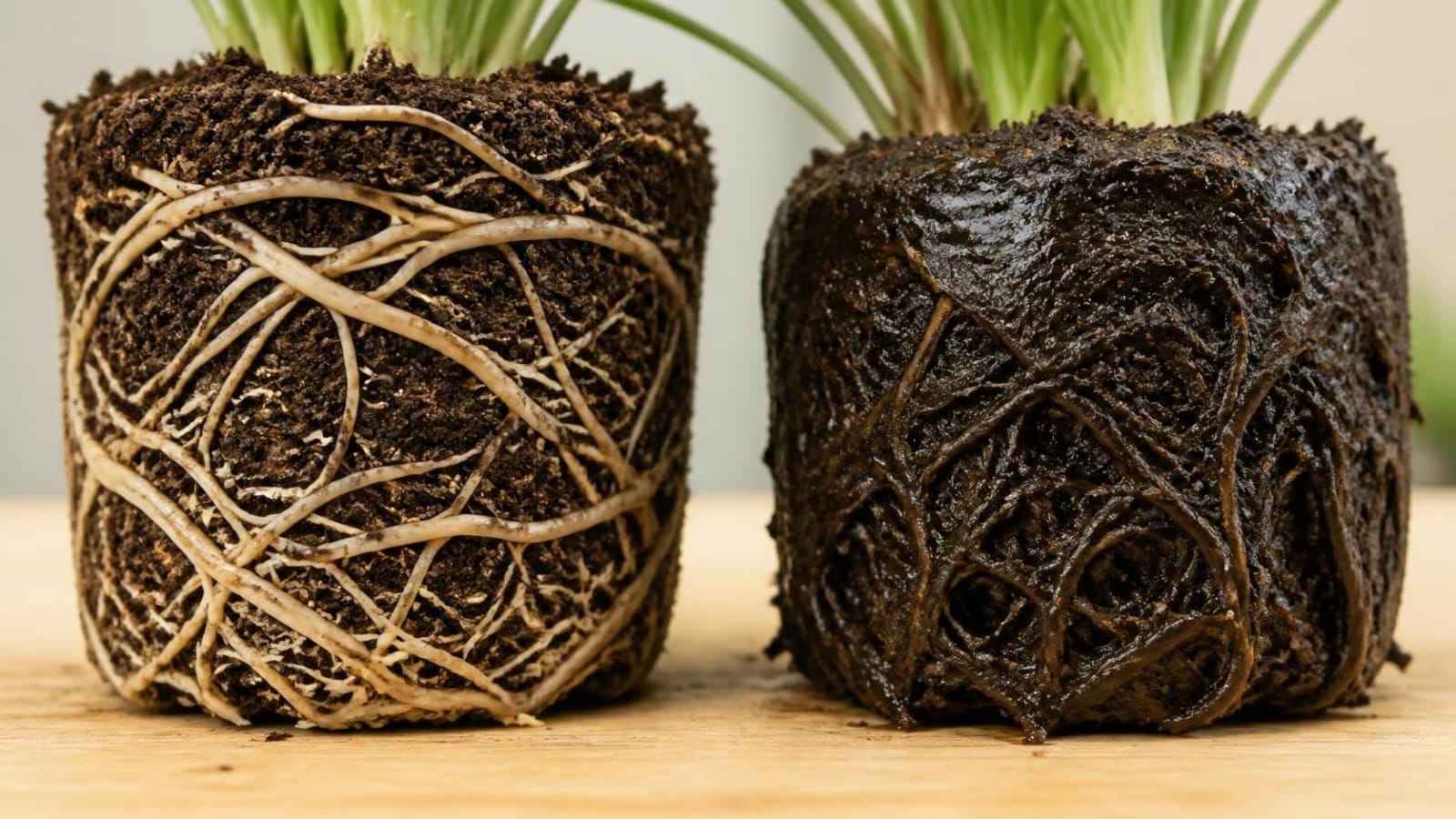
Here’s the catch: the effect isn’t instant, and it isn’t instantly reversible. A published seedling experiment shows the pattern clearly. In that study, seedlings given three times the nitrogen they needed developed far less root growth and much more shoot growth, and their flower clusters (trusses) stayed small and mostly aborted. Here’s what I take from it as a grower: a plant can look impressively leafy while quietly losing flowers, so stopping the extra nitrogen matters more than adding anything new. Because this was a controlled seedling experiment, garden plants won’t necessarily respond in exactly the same way. The write-up is on the ISHS site.
How long does the effect last? University of Arizona Cooperative Extension says too much nitrogen can favor vine growth over fruit for three to four weeks after the fertilizer goes on. Once the plant has used up the nitrogen, flowers and fruit set should start to appear. So if you fed heavily at planting, a quiet stretch with lots of leaves and few flowers can be normal.
If you want to feed again, let a soil test and the product label decide rather than guessing. Advice differs a little. New Mexico State University suggests a feed higher in phosphorus (the middle number) to balance heavy nitrogen, while the more conservative route is to hold off fertilizing until flowers and fruit appear. Holding off is the safer first move.
Lush, over-fed plants tend to show other symptoms too. Leaves that roll upward even when the soil is moist can be one of them, since high nitrogen is among the triggers covered in our guide to tomato leaves curling upward even though you’re watering enough. Fruit that does set can also suffer. Blossom end rot can develop when calcium movement to developing fruit is disrupted, even when the soil contains calcium, and heavy nitrogen feeding is one of the factors our guide discusses. That is why adding more calcium doesn’t always solve the problem. If you’re also seeing blossom end rot despite calcium and eggshells, the underlying issue may be water movement rather than a simple lack of calcium.
Not enough sun
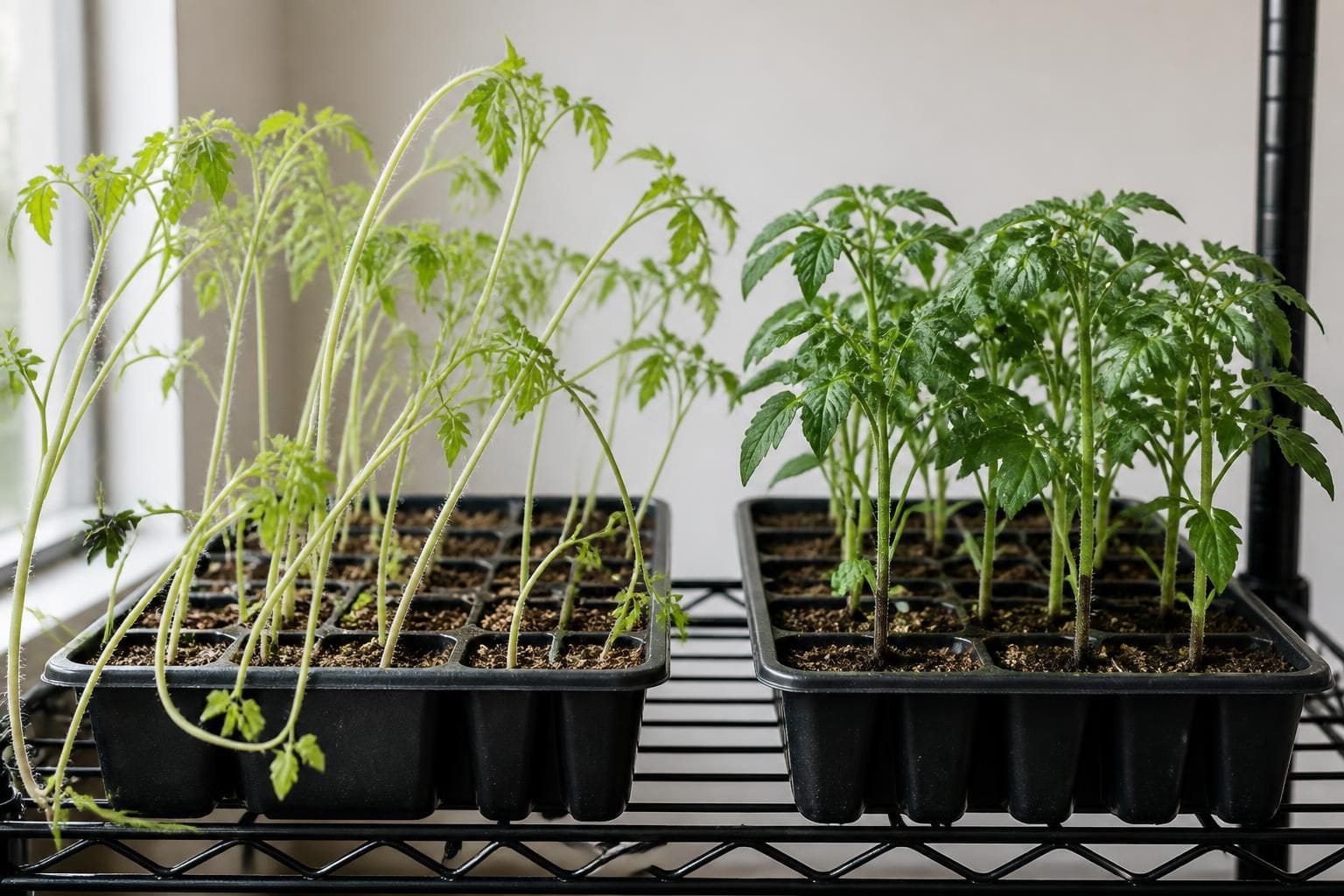
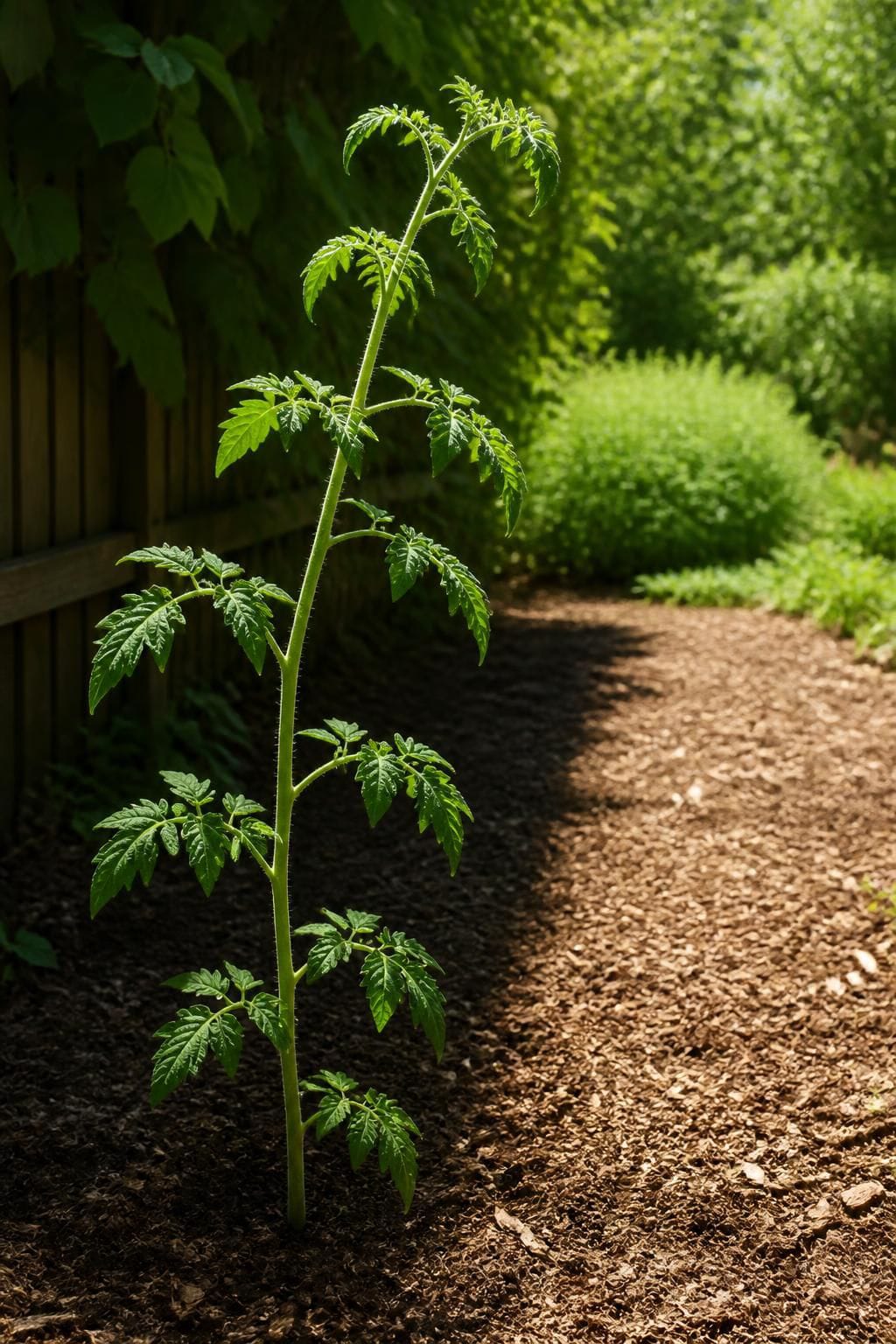
Tomatoes are full-sun plants. The UC Master Gardener Program of Contra Costa County says they need a minimum of six hours of sun to produce fruit, and Tom’s Guide puts the range at six to eight hours of direct light. Without enough, plants photosynthesize less and stretch toward the light, giving you tall, spindly growth with very few flowers.
Don’t judge by a single glance at noon. A bed that looks sunny at midday can sit in shade from a fence or tree for half the day. Check it in the morning, early afternoon and late afternoon.
Temperature: too hot or too cold
Temperature mostly shows up as flowers that fail to set fruit, but a plant stuck in the wrong range can also look stalled and flower-poor, so it belongs on your checklist. These temperature ranges are useful warning points rather than universal cutoffs. Variety, humidity, duration of the heat or cold, and overall plant condition can change how strongly tomatoes respond. Arizona’s extension says fruit set slows at daytime temperatures around 90°F, stops at about 94°F or when nights stay above 75°F, and also stops below 55°F. K-State says nights below 50°F lead to sparse pollen. The NC State agent says tomatoes set fruit best with days between 70 and 85°F and nights between 60 and 70°F, and that a second flush of fruit set can follow as temperatures cool, provided plants stay healthy and relatively pest free.
Cold nights have a delayed effect too. Flowers that open during a cold snap can grow into scarred fruit weeks later, which is covered in our guide to tomato catfacing in cool weather.
Timing, variety and stress
Sometimes there’s no problem to solve. Epic Gardening notes that plants may simply be too young or it may be too early in the season, and that bacterial wilt and some blights can also cause a lack of flowers. The UC Master Gardeners add that seedlings set out too early in spring often stall in the cold and just “sulk” until warm weather arrives.
Water stress is another quiet factor. The University of Missouri’s IPM program lists water stress among the causes of poor fruit set and calls water stress combined with high temperatures an especially unfortunate pairing. Keep soil moisture steady.
What to do now
- Pause nitrogen-heavy feeding. Check the fertilizer label before applying anything else.
- Measure the sun your plants actually get, and fix shade problems where you can.
- Water deeply and evenly rather than in swings between dry and soaked.
- Match your response to the weather: shade in extreme heat, row covers on cold nights.
- Inspect stems, leaves and roots for signs of disease or damage.
- Send in a soil sample if you want to take the guesswork out of feeding.
What not to do
- Don’t add more fertilizer to “wake the plant up.” That usually deepens the problem.
- Don’t use a bloom booster without knowing what your soil already contains and what the label says.
- Don’t pull the plant too soon. Fair enough if you’re frustrated, but a young or recently over-fed plant often needs a few weeks.
Will the plant recover?
In most of these cases, yes. For nitrogen, flowers should start once the excess is used up. For heat, New Mexico State’s advice says flowering and fruit set should begin after the hottest part of summer passes, once nutrient and light conditions are corrected. The best sign to watch for is new growth at the top of the plant: small clusters of yellow buds forming where there were only leaves before.
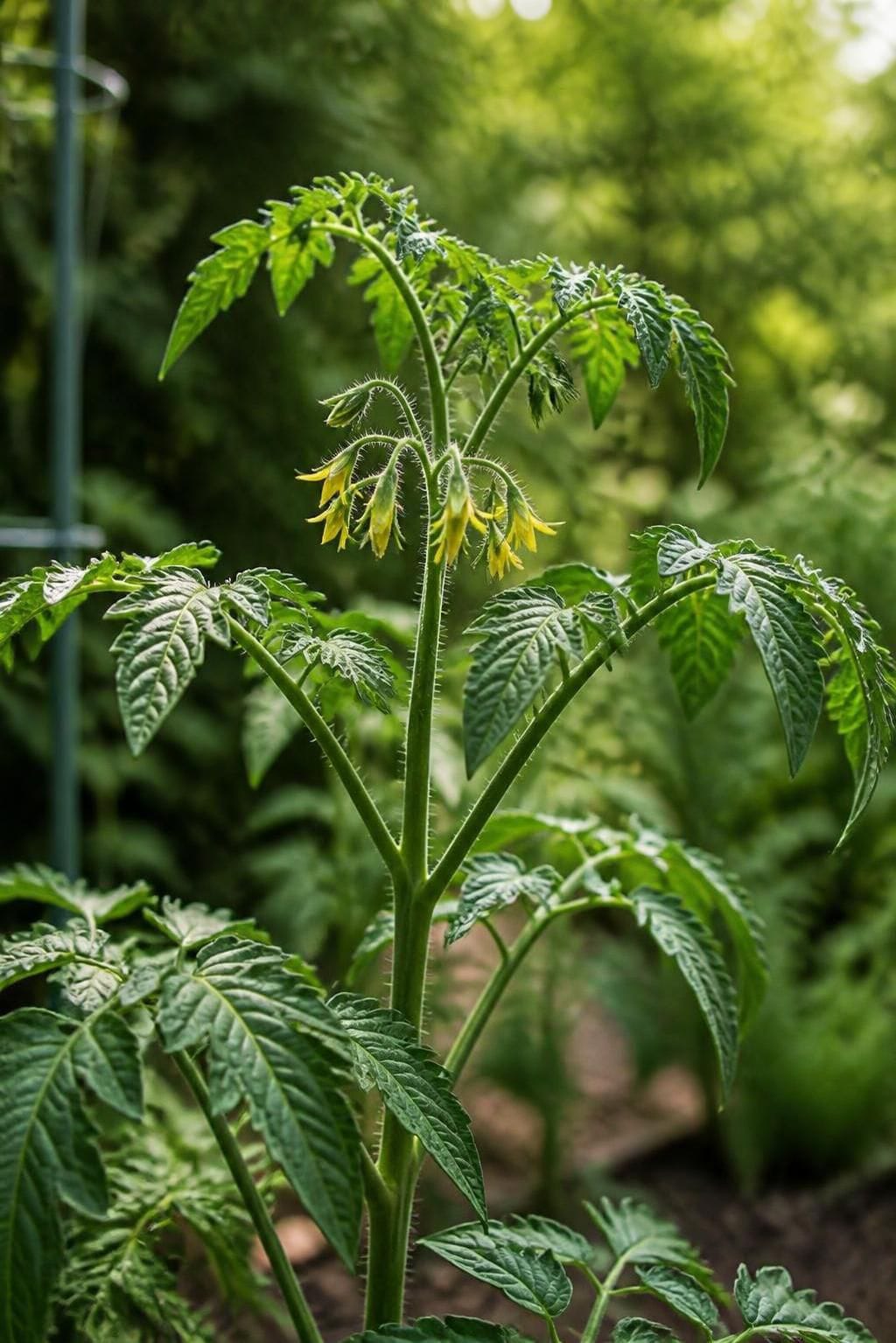
If the plant still produces no flowers after several weeks of good light, steady watering, and no additional nitrogen, it is worth looking beyond fertilizer. Check the roots, inspect for disease or pests, and consider contacting a local extension service if the problem continues. This is a practical rule of thumb, not a guaranteed recovery timeline.
Preventing it next season
- Base fertilizer on a soil test and the product label, and go easy on nitrogen at planting.
- Choose a site with at least six hours of direct sun.
- Plant once the weather has warmed instead of racing the season.
- Pick varieties suited to your climate; local extension offices usually publish recommended lists.
Quick answers
How long does it take a lush, overfed tomato plant to start flowering?
There is no fixed timeline. Extension guidance suggests that the effects of excessive nitrogen can persist for several weeks, so give the plant time after stopping unnecessary nitrogen rather than trying to force flowering with another fertilizer.
Is it normal for young tomato plants to have no flowers?
Yes. Young plants, or plants set out too early in the season, may not flower yet, and cold weather can hold them back further.
Will a high-phosphorus fertilizer make it flower?
Some extension advice suggests it can help balance heavy nitrogen, but other advice is simply to stop feeding until flowers appear. A soil test and the product label should decide.