You did everything the gardening videos told you to do. The eggshells were rinsed, dried and crushed, then tucked into the planting hole. Maybe you added a calcium tablet or a bottle of spray on top. And still the first big tomato of the season has a sunken, leathery patch on its bottom end, with the next one starting to show the same dark spot.
That patch is blossom end rot, and the frustrating truth is that it is rarely a shortage of calcium in your soil. It is a problem of getting calcium into one particular place, the tip of a fast-growing fruit, at the right moment. Once you see it that way, the confusing results make sense, and the fix becomes much more practical.
The short answer: if you added calcium and the rot continued, the calcium probably is not the missing piece. Blossom end rot usually appears when uneven watering, damaged roots, heavy nitrogen or ammonium feeding, salty soil, or very fast growth stop calcium from reaching the fruit. Steady soil moisture and sensible feeding fix far more cases than extra calcium does.
Calcium can be plentiful in the soil and still miss the fruit
Blossom end rot is a physiological disorder, not a disease. No fungus or insect starts it. The University of Minnesota Extension explains that the rot means the developing fruit is short of calcium, but that does not mean the soil is. Those are two separate problems, and a bag of eggshells only addresses the second one.
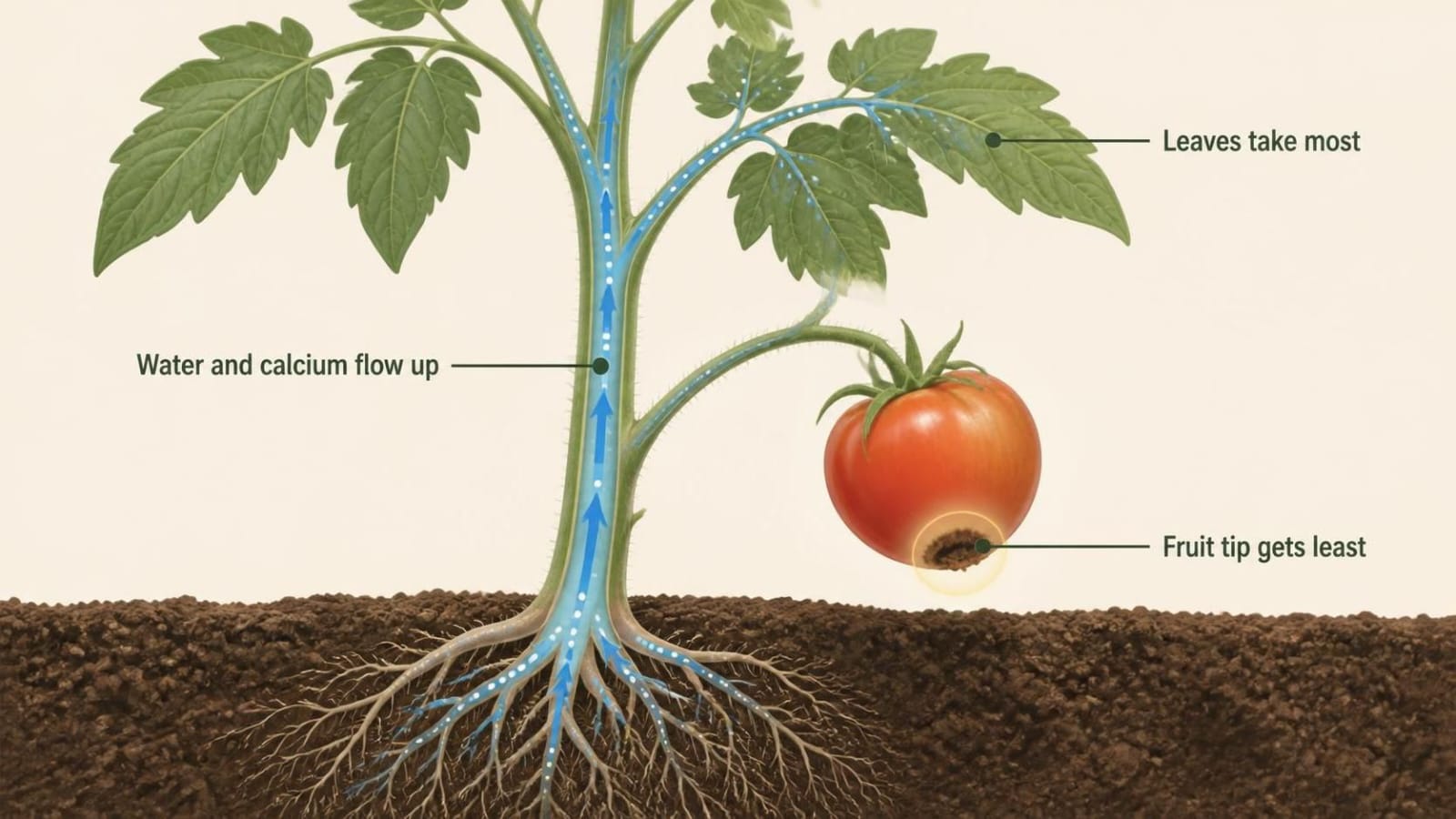
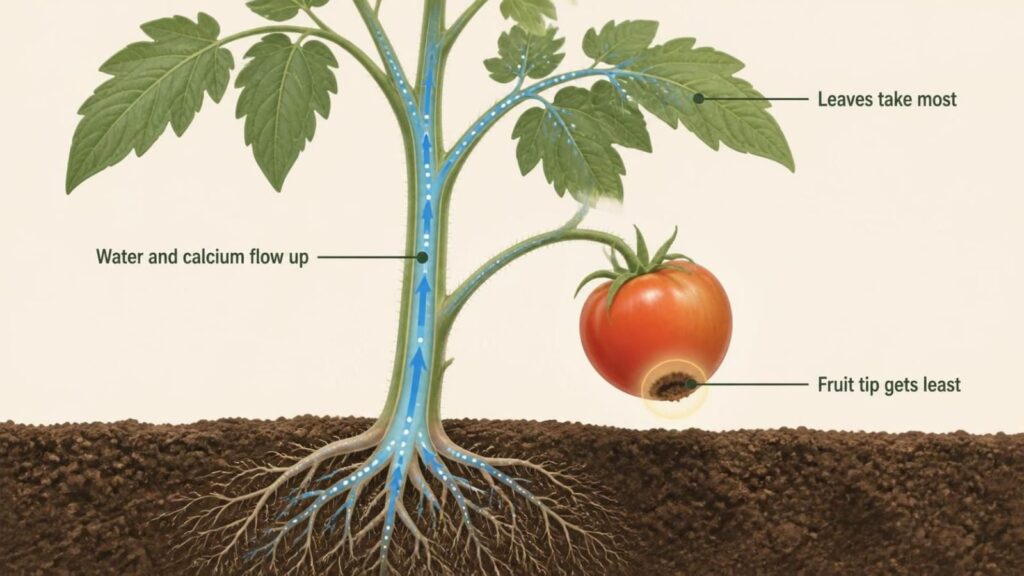
Here is why. Calcium travels in one direction, upward from the roots, dissolved in the water the plant pulls through its vascular system. The Clemson Home and Garden Information Center points out that calcium already sitting in leaves cannot move through the phloem into the fruit. Leaves lose water to the air all day long, so they draw most of the flow. A tomato transpires very little by comparison and receives a smaller share. At the far tip of a swelling fruit, where new cell walls are being built fastest, the supply runs thin first. When water delivery stutters even briefly, the cells at the blossom end break down and the dark patch begins.
This also explains why the first fruits suffer most. According to University of Nebraska–Lincoln Extension, the earliest clusters grow while the plant is expanding quickly, with a large leaf surface pulling water upward, so even a short spell of water stress during early fruit enlargement can trigger the problem. The UMN guide adds that rot is most common when fruit are between one-third and one-half grown, and that later fruit on the same plant can come out clean.
Why eggshells and calcium products so often disappoint
Eggshells are mostly calcium carbonate, so they do contain calcium. The trouble is speed and delivery. NC State Extension in Chowan County says shells will not release calcium quickly enough to help with rot that is already happening, and Mississippi State University Extension reaches the same conclusion: eggshells do not fix the underlying problem. The Master Gardeners of Northern Virginia add that shells do little to correct soil acidity, either. Fine compost material, yes. A rescue for rotting tomatoes, no.
Calcium sprays are the second popular fix, and the evidence is mixed. The Royal Horticultural Society says foliar calcium sprays are not effective because the fruit absorbs calcium poorly and transport from leaf to fruit is weak. University of Georgia Extension notes that calcium usually enters through the roots, so a solution applied around the plant works better than a leaf spray. Not every source writes sprays off completely, though. The Pacific Northwest Plant Disease Handbook reports studies where foliar calcium lowered rot to a point, and North Dakota State University Extension calls the results inconsistent. If you do use any calcium product, follow the label and your local rules, because approved products differ by country and region.
Sometimes the soil really is the issue, which is why a soil test beats guessing. Target pH ranges differ slightly between universities, for example University of Maryland Extension suggests roughly 6.3 to 6.8, while Nebraska’s extension publication names 6.5 to 6.7, so rely on your own lab’s recommendation. One more twist is worth knowing: the Pacific Northwest handbook warns that very high soil calcium levels can actually increase the incidence of blossom end rot. More is not automatically better.
Work out which cause fits your plants
Several different problems end in the same dark patch, so it helps to read the clues before changing anything. Find the row below that sounds most like your garden. If two rows fit, treat both.
| What you notice | Likely cause | How to check | What to change |
|---|---|---|---|
| Only the first fruits are rotting; later clusters look normal | Rapid early growth with a brief water shortage | Watch whether new fruit on the same plant stays clean over the next few weeks | Keep moisture steady and remove affected fruit |
| Spots show up after a hot, dry stretch, or after rain follows a long dry spell | Swings in soil moisture | Dig a few inches down between waterings and see whether the root zone has dried out | Water deeply and regularly, then mulch |
| Potted or raised-bed plants rot more than those planted in the ground | Small soil volume that dries quickly | Check how fast the container or bed dries, especially on its sunniest side | Use larger containers, mulch, and water more consistently |
| Plants are lush, very dark green and heavily fed | Too much nitrogen, or ammonium competing with calcium | Read the fertilizer label and compare with a soil test | Cut back on heavy nitrogen and favor nitrate forms if a soil test supports feeding |
| Plants wilt even in damp soil, or you recently dug or hoed near the stems | Damaged or waterlogged roots | Look for broken, brown or mushy roots and think back to recent digging | Stop cultivating near plants and improve drainage |
| Salty irrigation water, or a history of heavy fertilizer use | Salts blocking calcium uptake | Ask a local lab about a soil or water salinity test | Follow the lab’s advice and ease off fertilizer |
| Large paste or slicer types rot while cherry tomatoes stay clean | Variety susceptibility | Compare the different fruit types growing in the same bed | Choose less susceptible varieties next season |
The salt and root points come straight from the extension literature. UMN notes that excess potassium, magnesium, ammonium and sodium all use similar pathways into the plant and can crowd out calcium, and it lists root injury among the common triggers. Variety matters too: both the UMN guide and UConn Extension say larger and elongated fruit types tend to be hit harder than cherries.
Check that it really is blossom end rot
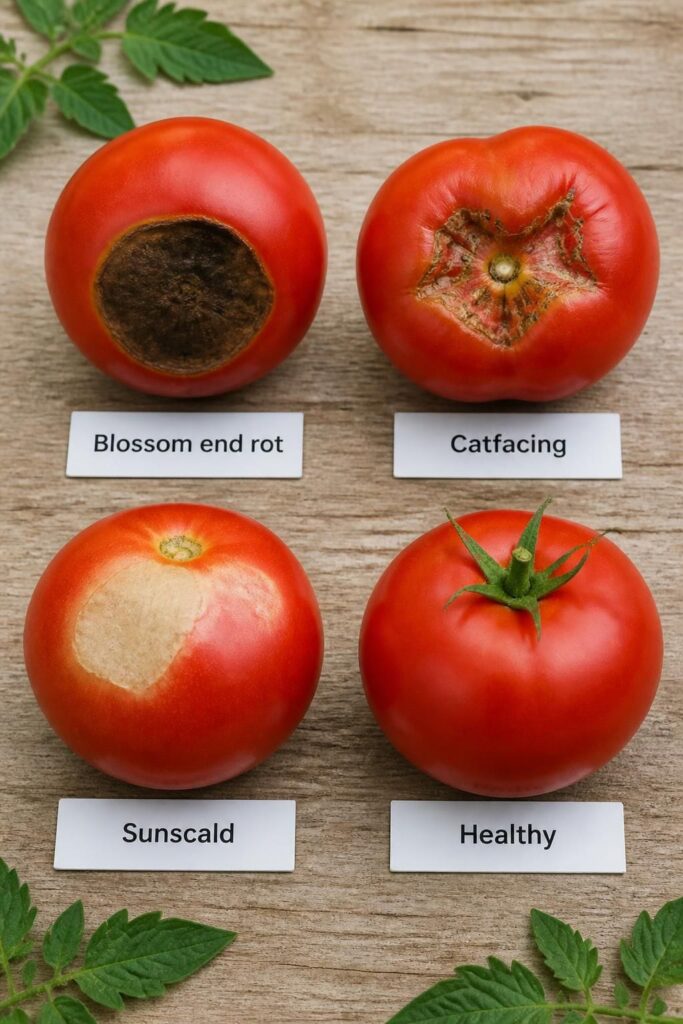
Not every ugly tomato bottom is blossom end rot. Blossom end rot begins as a water-soaked patch that darkens into a flat, leathery spot. Catfacing looks different: a corky, scarred, sometimes puckered base, often with cavities running into the flesh, and the usual suspects are cold weather and disturbance to the flower. If your plants went through a cool spell while flowering, our guide to tomato catfacing in cool weather will help you tell the two apart. Sunscald, by contrast, sits on the side of the fruit facing the sun and looks pale or papery. Secondary fungi and bacteria can invade any of these damaged spots, which is why old lesions often turn black and fuzzy.
Fix the water first, because everything else depends on it
If you change only one thing, change this. Calcium moves with water, so an even supply of moisture in the root zone does more for the fruit than any amendment. The pattern to avoid is the swing: bone dry for several days, then a heavy soaking. Each swing interrupts the trickle of calcium reaching the fruit that is expanding at that moment.
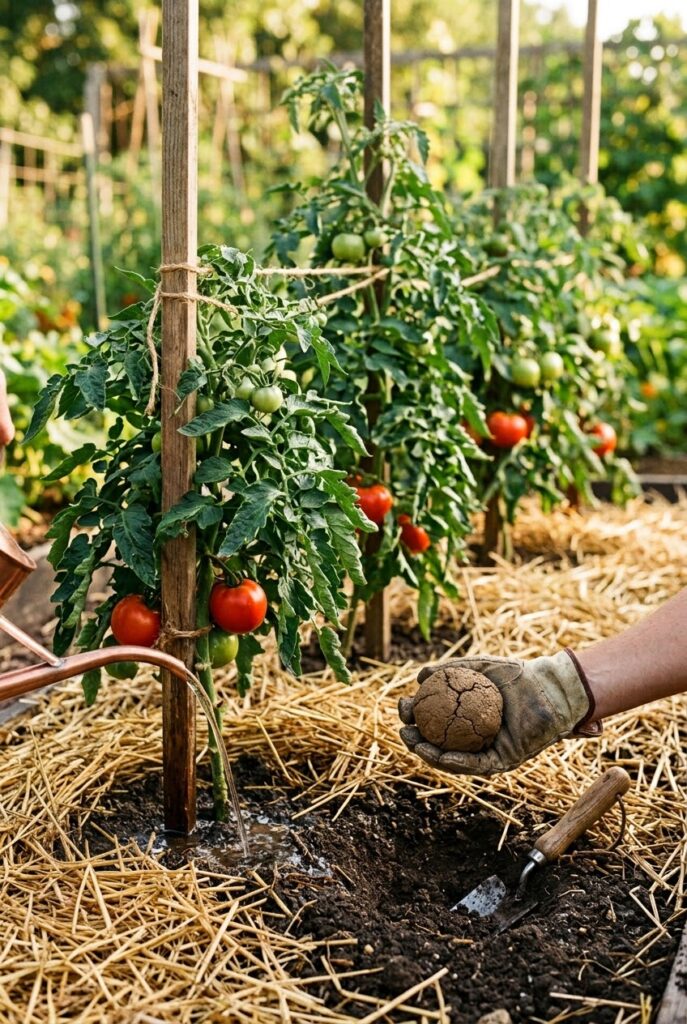
Regular, deep watering works better than frequent sprinklings, because shallow watering leaves the deeper roots dry. Oregon State University Extension offers a handy test: the root-zone soil should be moist enough to form a loose ball in your hand. Mulch helps hold that moisture steady. UConn recommends organic mulch such as straw or wood chips once the soil has warmed, and the UMN guide lists mulch as a core control. Plants in containers and in raised beds deserve extra attention, since the Pacific Northwest handbook notes they dry out faster, especially along sun-facing edges.
The same up-and-down rhythm that causes rot also splits skins, since a drenching rain or watering after drought can make fruit swell too fast. If you have seen both problems, read our guide to why tomatoes crack after rain, because the cure overlaps. And if your leaves are curling upward even though you believe you are watering enough, the roots or the weather may be the limiting factor rather than the watering can, which our article on tomato leaves curling upward even though you’re watering enough walks through clue by clue.
Feeding can quietly block calcium
Fertilizer is the other half of the story, and it is where well-meaning gardeners often undo their own work. Heavy nitrogen pushes the plant toward leaves, and a bigger canopy pulls even more water and calcium away from the fruit. NDSU advises avoiding fertilizers that contain ammonium nitrate, because ammonium ions compete with calcium for the limited uptake sites on roots, and it suggests holding off on side-dressing until the first fruits have set. UConn recommends applying fertilizer according to a soil test and choosing nitrate rather than ammonium forms of nitrogen.
Magnesium deserves a mention, since Epsom salt is a popular add-on for tomatoes. Because magnesium is one of the salts that compete with calcium at the root, piling it on without a test can work against you. Leafy, over-fed plants are also the ones that tend to flower generously and then disappoint, so if yours fit that description, our piece on tomatoes flowering but not setting fruit makes a good companion read. Whatever you apply, follow the product label and local regulations rather than a number from a social media post.
What helps, what doesn’t, and what depends
| Common fix | Verdict | Why | Worth knowing |
|---|---|---|---|
| Crushed eggshells | Little help now | Calcium carbonate breaks down slowly and does not fix delivery | Harmless as compost, but not a rescue for rotting fruit |
| Calcium leaf sprays | Inconsistent | Calcium moves poorly from leaves into fruit | RHS and Clemson say ineffective; some trials report small benefits |
| Calcium added to soil | Only if the soil is truly low | Corrects a real shortage over time | Let a soil test decide, and follow the label; limestone changes pH, gypsum does not |
| Even watering plus mulch | Strongest fix | Keeps calcium moving to the fruit | Backed by UMN, Nebraska, Oregon State and others |
| Cutting back heavy nitrogen or ammonium | Helps | Less leaf growth and less competition at the roots | Choose nitrate forms if a soil test supports feeding |
| Extra Epsom salt | Can backfire | Magnesium competes with calcium for uptake | Use only if a soil test calls for magnesium |
| Removing affected fruit | Helps the plant | Damaged fruit will not develop normally | Puts energy into healthy fruit, per UMN |
The pattern in the table is consistent. The things that improve the flow of water and reduce competition at the roots help. The things that simply add more calcium to the ground mostly do not.
What to do this week, and what to skip
- Pick off the affected fruit. It will not develop normally, and removing it lets the plant put its energy into healthy fruit.
- Check the soil a few inches down every couple of days and water deeply when the root zone starts to dry, rather than waiting for the leaves to droop.
- Lay organic mulch around the plants once the soil is warm, keeping it clear of the stem itself.
- Pause nitrogen-heavy feeding, and look at your fertilizer label for ammonium.
- Send a soil sample to a local lab so any pH or calcium decision rests on a measurement.
What not to do
- Do not keep adding eggshells, tablets or sprays in the hope of a quick reversal. They will not heal fruit that is already marked.
- Do not hoe or dig close to the plant. UMN advises against cultivating within about a foot of the base, because damaged roots take up less water and less calcium.
- Do not lime on a hunch. Without a test you can push the pH the wrong way.
- Do not drench the soil after a long dry spell as an emergency measure. Gradual, regular moisture does far more good than one flood.
Will the rot stop, and when should you worry?
Fruit that already has a dark patch will not heal, but the plant often settles down. UMN notes that fruit set later in the season can be unaffected, and NDSU says later clusters are much less susceptible than the first. Hot, dry weather can bring a relapse. The same stress that triggers rot can also make blossoms fall, so if your plants are dropping flowers during a heat spell, our guide to tomato flowers dropping before fruit will help you separate the two problems.
If new fruit are still rotting a month after you have steadied the watering and eased off the fertilizer, it is time to look deeper. Check the roots for damage, test the soil and the water for salts, and consider the variety. Oregon State’s guide admits that no tomato variety adapted to Oregon is highly resistant, so the realistic goal is fewer rotten fruit, not a guarantee of none.
Setting up next season so it does not return
- Test the soil before planting, so pH and nutrient decisions are made in advance rather than mid-crisis.
- Build beds and containers that hold moisture evenly: generous soil volume, organic matter worked in, and mulch ready to go as the weather warms.
- Plant a mix of fruit types if rot has been a repeat problem, since cherry types are usually affected less than large slicers and pastes.
- Wait until the first fruits have set before side-dressing, and keep any later feeding moderate.
- Keep cultivation shallow around the plants, or skip it entirely under a thick mulch.
Quick answers
Does blossom end rot spread from one tomato to another?
No. Because it is not caused by a pathogen, it does not pass from fruit to fruit. What can happen is that secondary fungi and bacteria move into the damaged spot and finish the job of rotting it.
Can other crops get it?
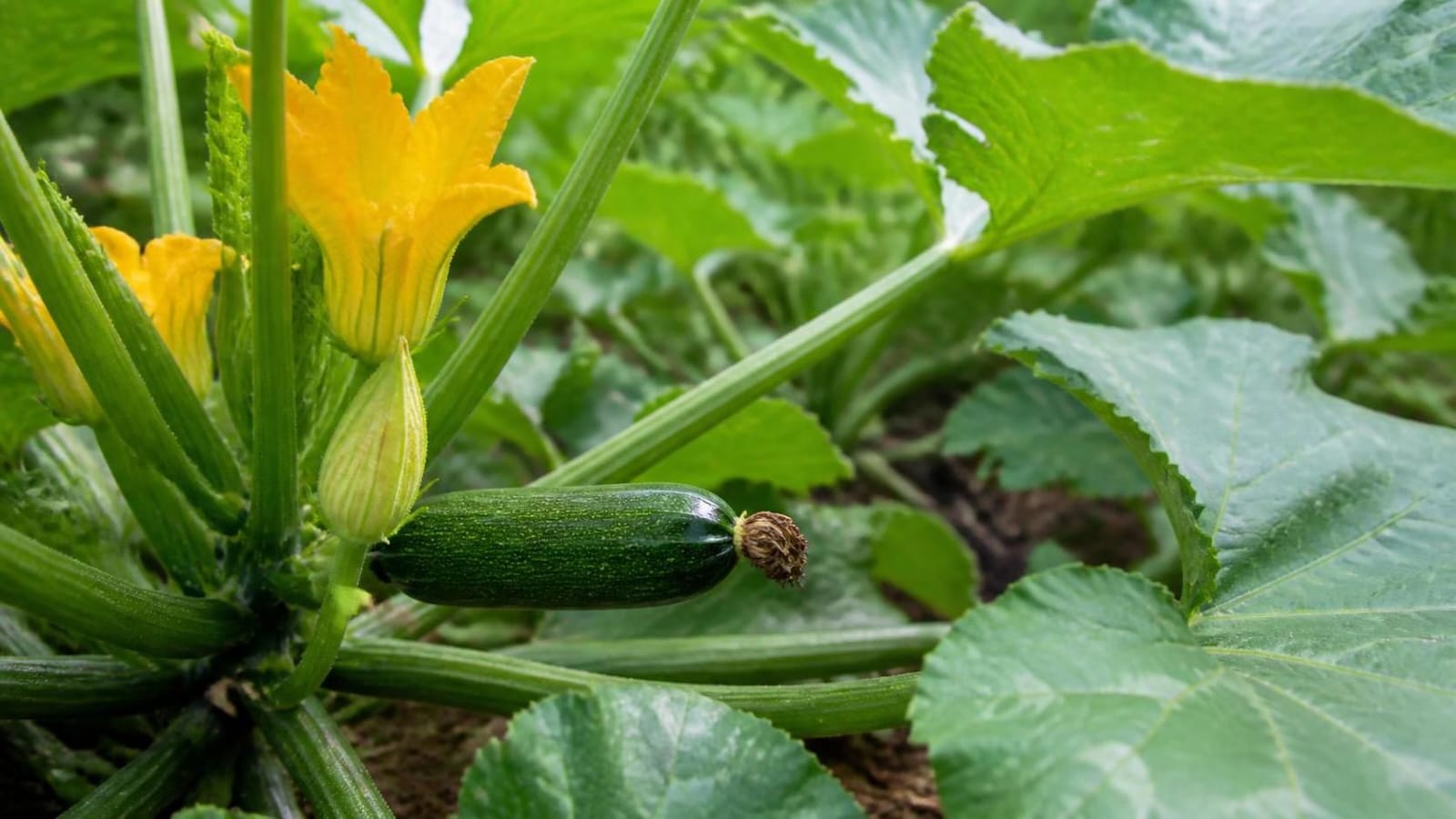
Yes. University of Maryland Extension lists peppers, eggplant, squash, pumpkin and watermelon among the other fruiting crops affected, and the same watering and feeding principles apply to them.
Should I stop using eggshells altogether?
There is no harm in composting them. Just do not count on them as the answer, and put your real effort into steady watering, gentle feeding and healthy roots.
Treat the rot as a message about water and roots rather than a verdict on your soil, and the next trusses of tomatoes have a good chance of coming through clean.