
- Tomato Leaves Curling Upward Even Though You’re Watering Enough
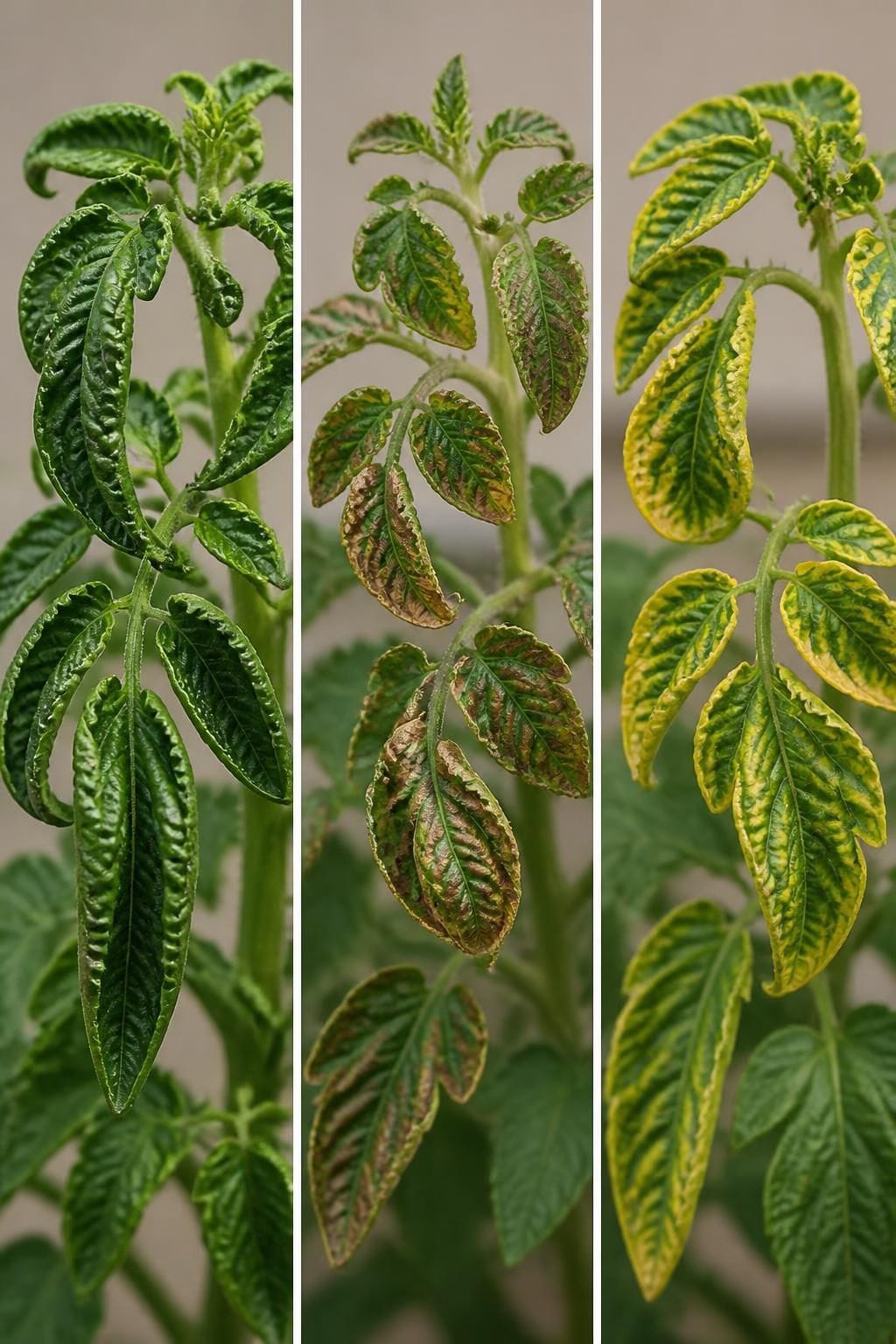
If your tomato leaves are curling up and the soil isn’t dry, physiological leaf roll is the most common explanation. It is a stress response rather than a disease, and it doesn’t usually affect yield or fruit quality. Watering enough doesn’t guarantee the plant can move that water to its leaves. Heat, wind, soggy roots, pruning and a heavy fruit load can each trigger the curl.
The main exception is curl in the newest growth, which deserves a closer look. The steps below will help you tell the two situations apart.
First, Look at Which Leaves Are Curling
Three clues do most of the sorting.
Where is the curl? With environmental stress, the older leaves usually show signs first. Symptoms typically appear on the lower leaves first, rolling upward and sometimes overlapping. If the damage is concentrated in the newest leaves, that is more consistent with herbicide exposure, mites or a virus.
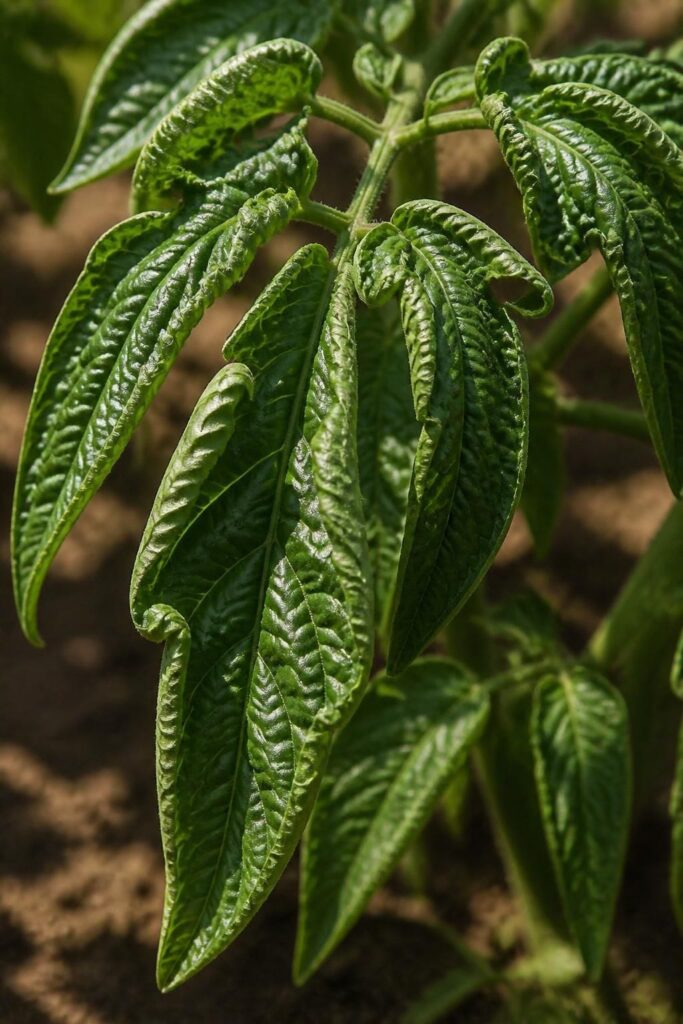
How do the leaves feel? Leaves affected by leaf roll are rigid and leathery. They usually keep their normal colour and shape if you flatten them out.
What is the rest of the plant doing? With physiological leaf roll, plants stay green and aren’t stunted or deformed, even though the symptoms can resemble a virus. Yellowing, stunting or distorted new growth means it’s worth looking for another cause.
Why Leaves Roll When You’re Watering Enough
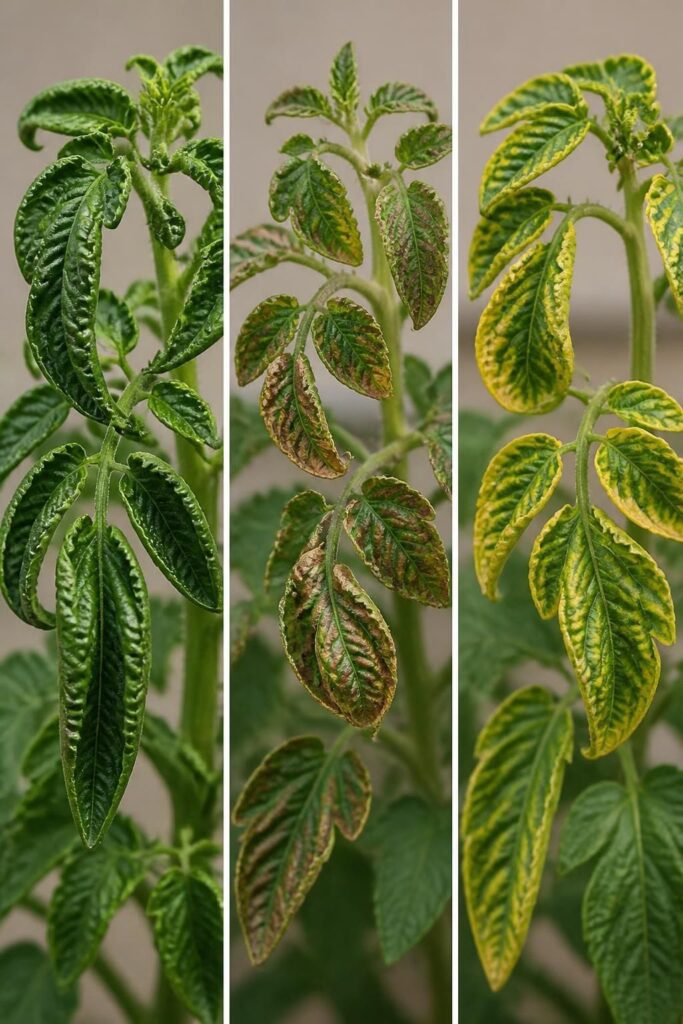
The plant is reducing the leaf surface exposed to sun and wind because it can’t supply enough water to the leaves. That can happen with plenty of water in the soil, because the limit is often the roots’ ability to take it up and the leaves’ demand for it. Extension sources associate leaf roll with:
- Extreme changes in soil moisture, prolonged dry soil, high nitrogen, phosphorus deficiency, severe pruning in dry soil, or wet soil combined with hot temperatures
- Root damage from nearby tilling, and the strain of a heavy fruit set
- Transplant shock, when a young root system can’t keep up with fast top growth
So a schedule that looks adequate on paper can still produce this. Soggy roots, a swing between wet and dry, or an afternoon hot spell can all leave leaves short of water.
Check the Roots and Soil
Dig down beside the plant rather than judging by the surface. Two patterns are possible.
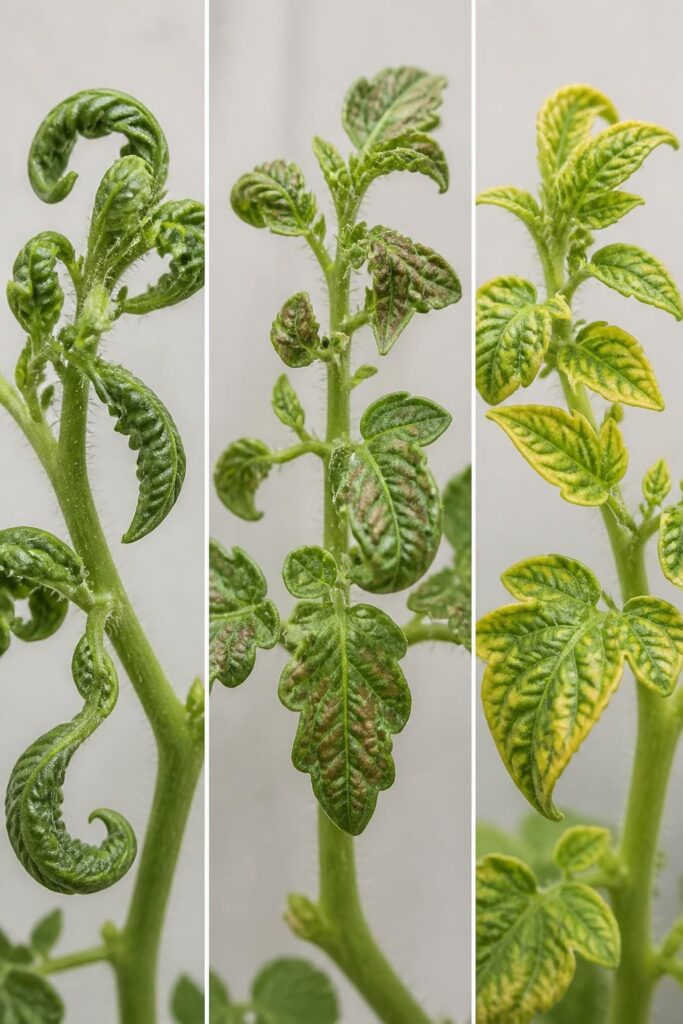
Wet, heavy or poorly drained soil. Roots sitting in saturated soil don’t take up water well, and too much water can also lead to leaf rolling. Let the soil dry somewhat and improve drainage if water pools. Downward curling is more often associated with overwatering.
Dry below a damp-looking surface. Frequent light watering can wet only the top layer. Containers dry out faster than beds, so they’re the first place to check.
Either way, consistency matters more than volume. Mulch can help maintain steady soil moisture and reduce temperature fluctuations around the roots.
Weather, Pruning and Feeding
Heat and wind. If the curl seems worse after hot or windy days, weather is one possibility. A similar stress pattern can cause plants to wilt during the day and recover overnight. Guidance varies with climate and variety, but some extension advice suggests keeping temperatures below 95°F through shading or evaporative cooling. Site plants so they get late afternoon shade, when it is hottest.
Pruning. Severe pruning is linked to leaf roll, especially in dry soil. If you’ve recently stripped a lot of foliage, that may be part of the story.
Nitrogen. Over-fertilizing with nitrogen can contribute, and phosphorus should be applied based on a recent soil test. A soil test is a better guide than guessing.
Variety. Indeterminate varieties may be more prone, and high-yielding cultivars tend to be more susceptible. If only some plants curl while neighbours stay flat, variety could explain it.
When the Cause May Be Something Else
Leaf roll doesn’t explain everything. Several other problems can look similar at first, and a single symptom rarely settles which one you have. Look for these extra clues.
Herbicide exposure
Tomatoes are very sensitive to dicamba and 2,4-D, and may show symptoms at very low doses when other plants nearby look unaffected. Clues that raise the likelihood: tips curl in along with the sides into C-shapes, the leaves can feel rubbery, and they can’t be flattened to a normal shape. Small bumps along the stem, flower or fruit loss, or malformed fruit point the same way. It is worth thinking about recent lawn spraying nearby or herbicide-contaminated compost or grass clippings. Montana State University Extension names aminopyralid, clopyralid and picloram among the herbicide residues that can end up in manure and compost and damage tomatoes, with cupped leaves among the signs, so it matters to know where your manure or compost came from.
Broad mites
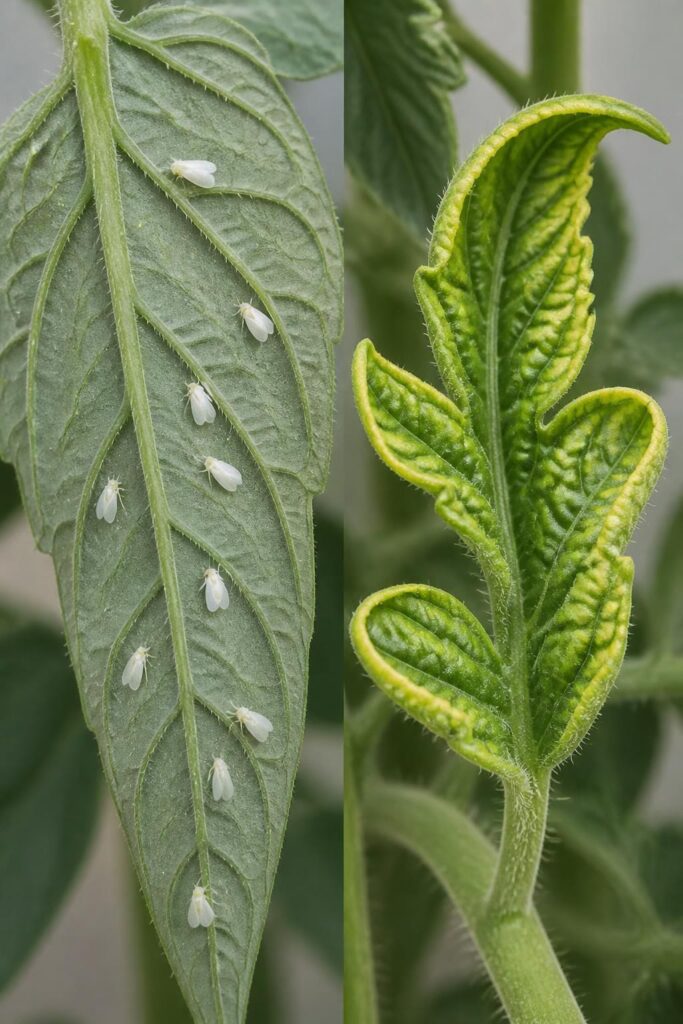
These are microscopic. Their damage can resemble that of viruses, herbicides or nutrient deficiencies, and early feeding near the growing point causes leaves to curl and distort. Newer leaves may twist or curl downward with browning, while veins stay green. Confirming mites generally needs magnification, so consider asking your local extension office to look at a sample.
Tomato yellow leaf curl virus
Symptoms include yellowing between the veins, upward curling of leaf margins and smaller leaves. Plants infected late show the effects only in new growth. It is spread over short distances by whiteflies, and symptoms can take up to three weeks to develop. Whiteflies on the undersides of leaves add weight to this possibility, but they don’t prove it.
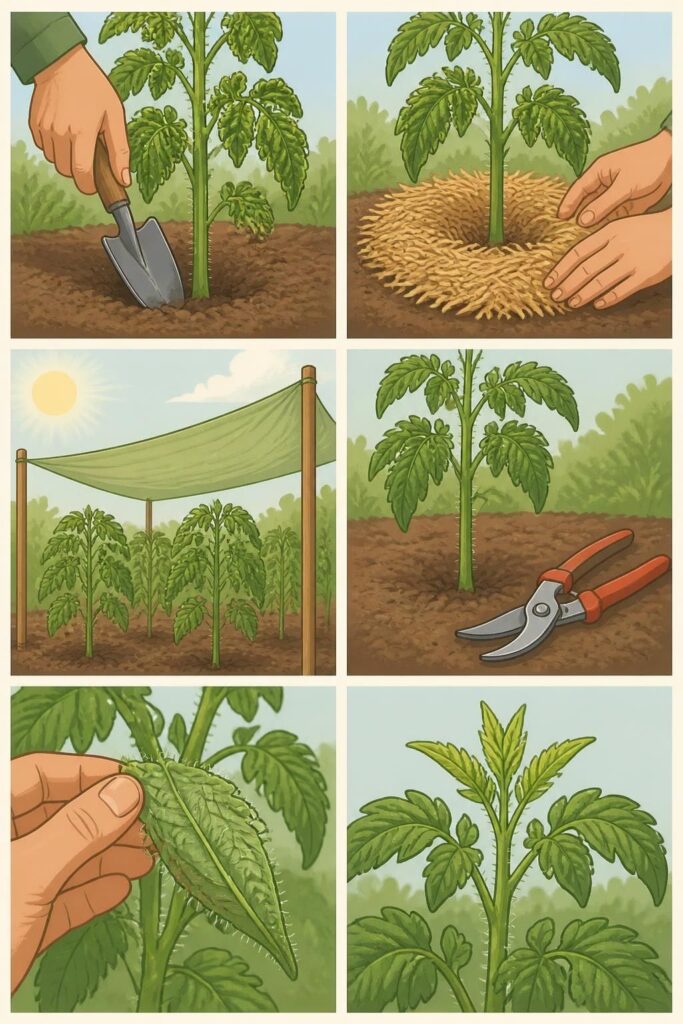
Viruses are hard to identify by eye. They may be difficult to diagnose without a laboratory test, and infected plants can’t be treated. If new growth looks distorted and yellowed, your local extension service may be able to arrange testing.
Quick comparison
| Where to look | What it looks like | Possible cause | What to do |
|---|---|---|---|
| Lower, older leaves first | Rolling upward, sometimes overlapping; rigid and leathery; plants stay green | Physiological leaf roll | Check the soil around the roots, mulch, provide afternoon shade, and pause heavy pruning and nitrogen-heavy feeding |
| Newest leaves | Tips curl in along with the sides into C-shapes; leaves feel rubbery and can’t be flattened; small bumps along the stem, flower or fruit loss, or malformed fruit | Herbicide exposure (dicamba, 2,4-D) | There are no remedies; ask your local extension service for advice before eating the fruit |
| Newer leaves near the growing point | Twist or curl downward with browning, while veins stay green | Broad mites | Ask your local extension office to look at a sample |
| New growth | Yellowing between the veins, upward curling of leaf margins, smaller leaves | Tomato yellow leaf curl virus | Infected plants can’t be treated; ask your local extension service about testing |
What to Do Now
- Check the soil around the roots and correct whichever extreme you find.
- Mulch to steady moisture and soil temperature.
- Provide afternoon shade if heat is a plausible factor.
- Pause heavy pruning and nitrogen-heavy feeding.
- Examine new growth and leaf undersides regularly.
- Watch what new leaves do. Flat, normal growth supports leaf roll.
What Not to Do
Avoid spraying pesticides or fungicides without a confirmed pest or disease, since it adds cost and risk without a benefit. If you do find clusters of aphids on curled new growth, use our guide to why aphids keep coming back after treatment. Avoid adding extra water just because the leaves look thirsty. And don’t pull plants on the strength of leaf roll alone, because affected plants generally keep growing with little or no reduction in yield or quality.
Will the Plants Recover?
Leaves can recover if conditions are adjusted to reduce stress, but prolonged stress makes recovery less likely. Rolled leaves may stay rolled. The better test is whether new growth appears normal.
Herbicide exposure is different. There are no remedies, and traces can persist through the season and appear at low levels in fruit. There is no level of dicamba considered safe for consumption in tomatoes. If you suspect exposure, ask your local extension service for advice before eating the fruit.
Preventing It Next Season
- Harden off seedlings before planting and transplant once the weather has warmed.
- Mulch for consistent soil moisture, and avoid over-fertilizing with nitrogen.
- Avoid root damage from tilling or hoeing near plants.
- Consider determinate varieties, which are less prone.
- Clean greenhouses and high tunnels thoroughly before replanting, since pests such as broad mites can carry over from an earlier crop.
Common Questions
Can overwatering and underwatering both cause upward curl?
Yes. Both extremes, and swings between them, are associated with leaf roll.
Should I remove the curled leaves?
Usually there’s no need. They still photosynthesise, and heavy pruning is itself a known trigger.
Can leaf roll spread to other plants?
Physiological leaf roll is an environmental response, not an infection. Viruses are different, which is why distorted new growth is worth checking.
4 thoughts on “Tomato Leaves Curling Upward Even Though You’re Watering Enough”