Plants Wilting During the Day but Recovering Overnight: When It’s Normal and When It Isn’t
The best moment to judge a wilting plant is not the afternoon, when it looks its worst. It is the next morning, before the sun has touched the leaves. A plant that stands firm at dawn has usually just lived through a hot day. A plant that recovers a little less each morning is telling you something different.
In most gardens this is a heat response, not a disease. Leaves lose water faster than the roots can send it up, so they droop at the hottest hours and firm up again once the air cools. It is only harmless when three things line up: the soil is moist a couple of inches down, the plant is fully firm by morning, and the whole bed behaves the same way. When one plant, one vine or one side of a plant wilts first, and the recovery weakens day by day, look for another cause.
At two in the afternoon the harmless version and the serious version look identical, which is exactly why this pattern fools so many gardeners. The sections below show how to tell them apart, what to do for ordinary heat wilt, and which signs call for a closer look at the stem and roots.
What is happening inside the leaf when it droops
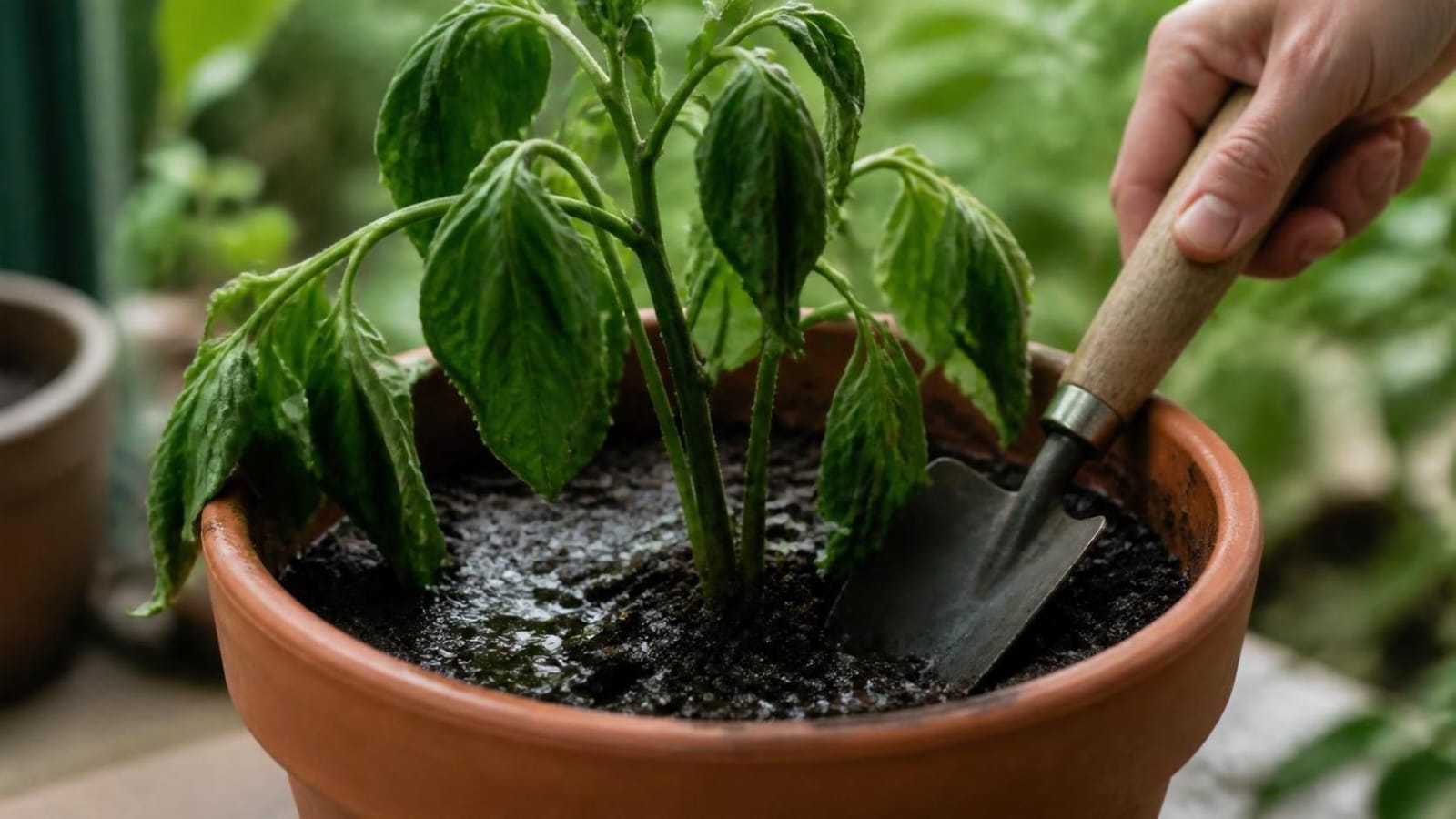
A leaf stays firm because its cells are full of water, a pressure known as turgor. On a hot, bright afternoon the leaf loses water to the air faster than the roots can replace it, the cells soften, and the leaf sags. Horticulture specialists at North Carolina Cooperative Extension note that this happens even in soil that is not dry, and that the droop is partly protective: a hanging leaf exposes less surface to the sun and loses water more slowly. University of Georgia Extension describes the same adaptation and adds that plants wilted in the afternoon often look perfectly happy by morning.
Plants with big, soft leaves show it first. Squash, cucumbers, peppers, basil and hydrangeas are the usual examples. Young plants and recent transplants are more vulnerable because their root systems are still small, so they struggle to keep up with water loss in the heat. When the evening cools, uptake catches up and the leaves lift again.
Read the clues before you reach for the hose
Heat wilt is common, but it has look-alikes. These six checks, taken together, separate them far better than any single symptom.
| What to check | Look closer if… | Usually just heat if… |
|---|---|---|
| When it wilts | It starts earlier each day, or you already see drooping in the morning | It happens only in the hottest hours of the afternoon |
| Recovery | The plant is not fully firm by morning, or recovers a little less each day | Leaves are firm again by evening or by the next morning |
| Soil two to three inches down | Bone dry, or soggy and sour-smelling | Damp |
| How many plants | One plant, one vine or one side of a plant while its neighbors stay fine | Many broad-leaved plants in the same bed droop together |
| Leaf condition | Yellowing, browning edges, or leaves that stay green but never fully lift | Leaves are green, warm to the touch and not crispy |
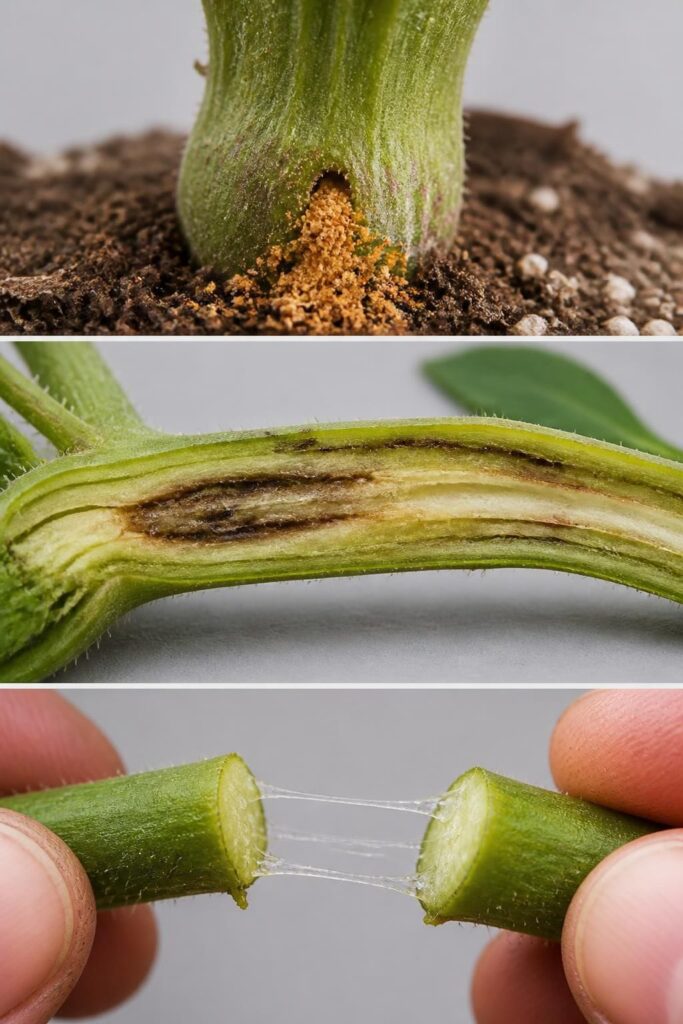
| Base of the stem | A small hole with sawdust-like debris, a mushy base, or brown streaks inside a cut stem | The stem base looks clean and sound |
No single row is a verdict. A broad-leaved plant in full sun that droops at three in the afternoon and stands firm at seven the next morning, in damp soil, is almost certainly fine. A plant that fails two or three rows deserves a closer look.
Two plants can look the same at 2 p.m. — but tell different stories
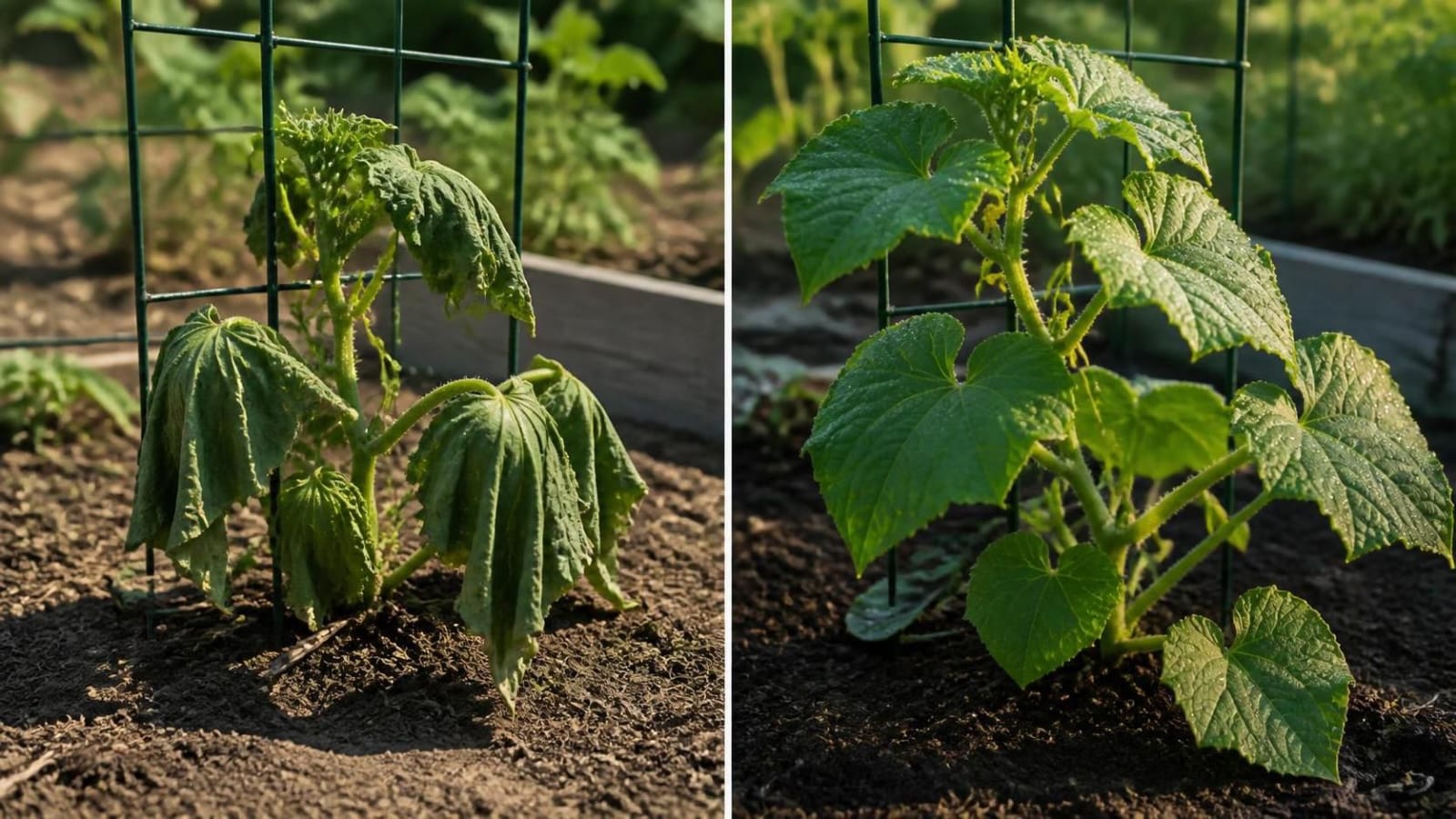
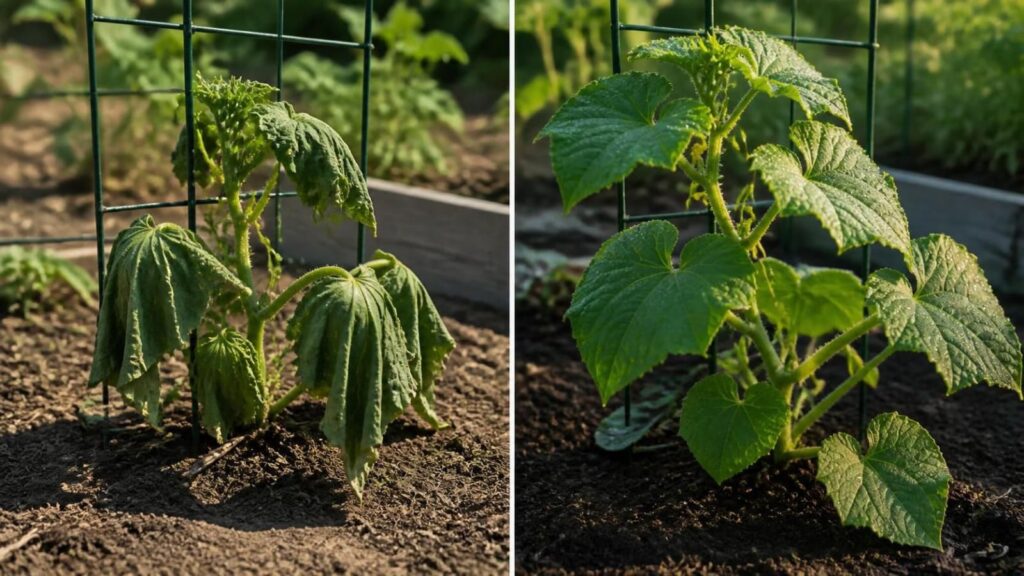
Imagine two cucumber plants wilting on the same hot afternoon. The soil around both plants is damp. By the next morning, the first plant is standing upright again and its leaves look normal. That pattern fits temporary heat stress.
The second plant is different. It is the only cucumber in the bed that keeps wilting, its recovery is getting weaker each morning, and cucumber beetles are present nearby. The wilting may still look like heat stress in the afternoon, but the pattern is a reason to investigate bacterial wilt rather than simply adding more water.
The lesson is simple: don’t diagnose the plant from its afternoon appearance alone. Compare the morning recovery, soil moisture, nearby plants and any clues on the stem. The pattern over several days is often more useful than a single wilted afternoon.
Check the soil at root depth, not on the surface
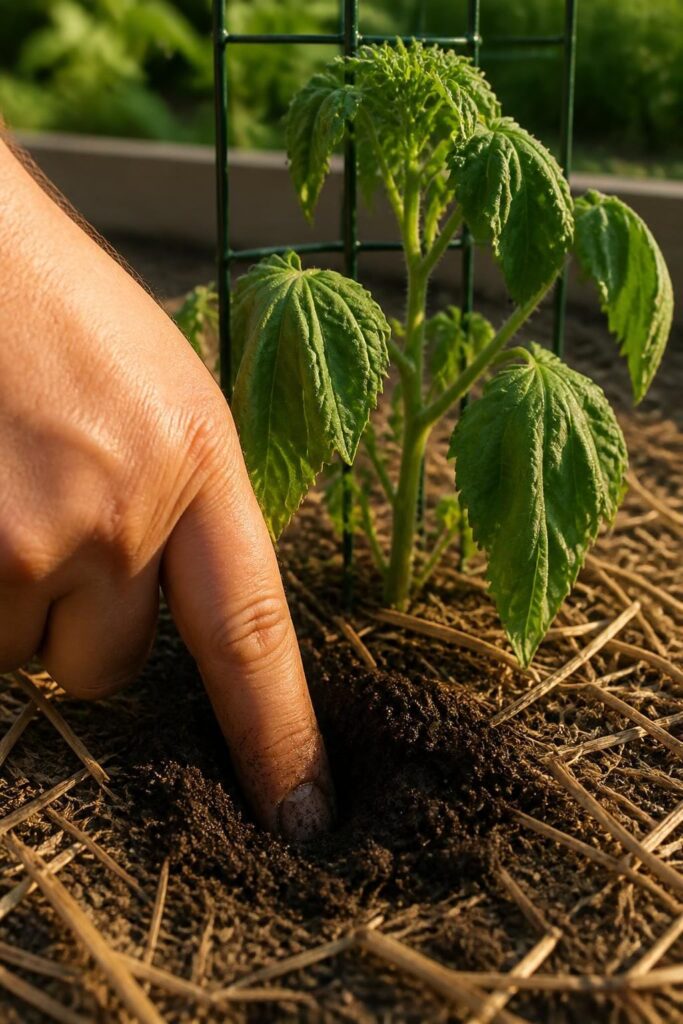
Push a finger into the soil near the plant, down to about the second knuckle. NC State Extension suggests that damp soil at that depth means the wilting is probably temporary, while soil that is dry more than two inches down means it is time to water. The dry crust on top proves nothing. Pots heat up and dry out faster than garden beds, so check them the same way and more often.
Why watering every afternoon can backfire
Watering at the first sign of a droop feels responsible, and it often makes matters worse. Soil that is already moist and gets watered again can run short of oxygen around the roots, which NC State links to root rot and fungal problems. The University of Georgia gives two more reasons to wait: water that stays on leaves through the evening invites leaf diseases, and gardeners who water every afternoon tend to water plants that never needed it.
If the soil really is dry, water early in the morning, aim at the soil rather than the leaves, and go slowly and deeply. Both extension sources prefer that to frequent light sprinkling.
When overnight recovery is the warning sign
Here is the part most short articles skip. Several serious problems also wilt plants by day and let them recover at night, at least in the early stages. In those cases the recovery that seems to prove the plant is fine is actually part of the disease pattern. The giveaway is rarely the wilting itself. It is what surrounds it: one plant instead of the whole bed, a recovery that weakens from day to day, and clues at the stem or the roots.
Bacterial wilt in cucumbers, melons and squash
University of Minnesota Extension describes bacterial wilt as a disease in which plants wilt in the field, often recover overnight, and wilt again the next day. It tends to strike individual plants or small patches, moves down the vine, and goes hand in hand with striped or spotted cucumber beetles, which carry the bacteria. Cucumbers and melons can collapse quickly, while pumpkins may take up to two weeks to wilt completely.
There is a simple field test. Cut an affected vine close to the crown, press the two cut faces together, then slowly pull them apart. Thin, sticky threads between them point to bacterial wilt. The Minnesota specialists caution that the threads can be hard to see, so not finding them does not rule the disease out. There is no cure. The plant should be removed, and controlling cucumber beetles is the main defense.
Squash vine borer in zucchini, summer squash and pumpkins
If the plant is a squash or pumpkin, look at the base of the stem. A moth larva tunneling inside the stem cuts off the water supply, so a runner or the whole vine can wilt suddenly even when the soil moisture is adequate, according to Ohio State University Extension. The tell is sawdust-like droppings, called frass, near a small hole close to the soil line. By the time the plant wilts, the larva is already inside and insecticides are largely ineffective. In small plantings, Ohio State notes that splitting the stem to remove the larvae may reduce damage, and that row covers put on early, then removed at flowering so pollination can happen, are among the most reliable ways to prevent it.
Fusarium and other vascular wilts in tomatoes
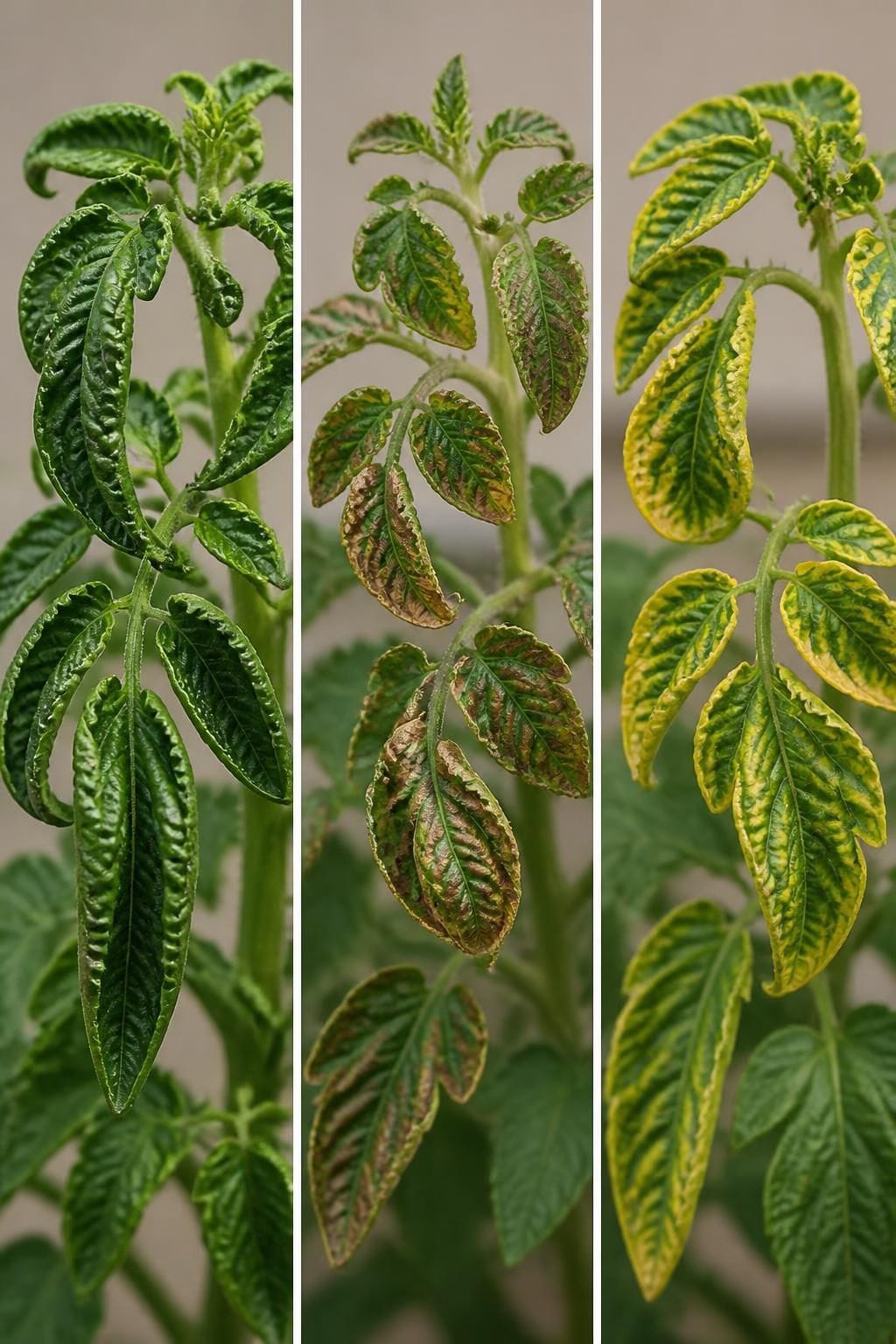
In tomatoes, University of Maryland Extension describes Fusarium wilt as yellowing that often starts on the lower leaves, sometimes on one side of the plant or one branch, followed by wilting with some recovery at night. Split the lower stem lengthwise. Brown tissue just under the skin, with a healthy pith in the middle, points to a vascular wilt. Verticillium wilt looks similar but moves more slowly and more evenly through the plant.
These fungi live in the soil for years, and there is no cure. Maryland’s advice is to pull and discard infected plants, choose resistant varieties, rotate tomatoes to another part of the garden or grow them in containers with clean soil, and avoid wet spots or build raised beds where drainage is poor.
Root-knot nematodes
Microscopic roundworms in the soil can cause wilting that passes for heat stress. UC IPM lists wilting during the hottest part of the day despite adequate soil moisture, slow growth and yellowing among the above-ground signs. The clue is underground: dig up a plant with symptoms, wash the soil from the roots, and look for swellings. Root-knot galls are true swellings and cannot be rubbed off, unlike the harmless nitrogen-fixing nodules on bean and pea roots. Prevention does more than cure here, so start with nematode-free transplants and resistant varieties.
A morning-after routine that sorts it out
- At first light, look at the plant before the sun reaches it. Firm leaves mean the afternoon droop was heat.
- Push a finger two inches into the soil. Damp means wait. Dry means a slow, deep drink.
- Count how many plants are affected, and whether the wilting began on one stem or one side.
- If one plant or one vine is the odd one out, check the base of the stem for holes, frass, mushy tissue or ooze, and cut a stem open if you need to.
- Repeat the check over a few days. Heat wilt stays about the same on equally hot days, while a developing disease keeps getting worse.
Helping plants through a hot spell
For plants that pass the morning test, the goal is to make hot afternoons easier, not to stop all drooping.
- Water at dawn, slowly and deeply. NC State Extension favors a deep watering a couple of times a week over light daily sprinkles in its hot, humid climate, so adjust to your own soil and weather.
- Mulch two to three inches deep to hold moisture and buffer soil temperature, as NC State recommends.
- Give new transplants and potted plants some afternoon shade during extreme heat, with a light shade cloth or by moving the containers.
- Group plants by how much water they need, so thirsty vegetables are not stressed by neighbors that prefer drier soil.
- Hold off on fertilizer and heavy pruning during a heat wave, since new growth is tender and leaves shade the plant.
What not to do
- Don’t water in the middle of the afternoon just because the leaves droop. Check the soil first.
- Don’t keep watering a plant that is still wilted in the morning and sitting in wet soil. That points to roots, drainage or disease, not thirst.
- Don’t leave a plant with a confirmed wilt disease in the bed. There is no cure, and with bacterial wilt, beetles can carry the bacteria to nearby plants.
- Don’t plant tomatoes straight back into soil where a wilt disease struck. The fungi can persist for years.
Will the plant recover?
If it stands firm by morning, yes. A day of afternoon wilting does little lasting harm when the soil is moist and the heat eases at night. During long heat waves, plants may pause growth or drop flowers, which is stress rather than failure. If a plant is still limp at dawn while the soil is moist and the weather has cooled, stop thinking about water and start thinking about the stem base and the roots.
Preventing a repeat next summer
Give new plants time to settle, because young roots are the most common reason a healthy plant wilts in the heat. When you buy a plant, slip it out of its pot and look at the roots. Healthy ones are white throughout, and black or brown roots in the lower third of the root ball can mean overwatering at the nursery or an existing root disease, as the University of Georgia points out. Keep mulch on the soil, water deeply rather than often, choose disease-resistant varieties where wilts have struck before, rotate crops, and cover cucurbits with row covers early in the season to keep beetles and borers off.
Frequently asked questions
Why do my plants wilt in the afternoon but recover overnight?
Usually, this happens because the leaves are losing water faster than the roots can replace it during the hottest part of the day. If the soil is still moist and the plant becomes fully firm again by evening or the next morning, temporary heat stress is a likely explanation. If one plant stays weaker than its neighbors, fails to recover fully, or develops symptoms at the stem or roots, look for another cause such as disease, stem damage or root problems.
How long should a plant take to recover from heat wilting?
By evening, or at the latest by the next morning. NC State Extension describes plants perking up again by early evening, and the University of Georgia says healthy plants often look fine again by morning.
Can a plant wilt even though the soil is wet?
Yes. Heat can do it. So can waterlogged soil that starves the roots of oxygen, vascular wilt diseases, borers inside the stem and root-knot nematodes. That is why the morning check and the stem-base check matter more than the hose.
Which plants wilt in the afternoon and bounce back most reliably?
NC State Extension lists basil, hydrangeas, cucumbers, squash, peppers and zinnias as plants that usually recover. It suggests watching lettuce and other leafy greens, ferns, impatiens and newly planted perennials or trees more closely.