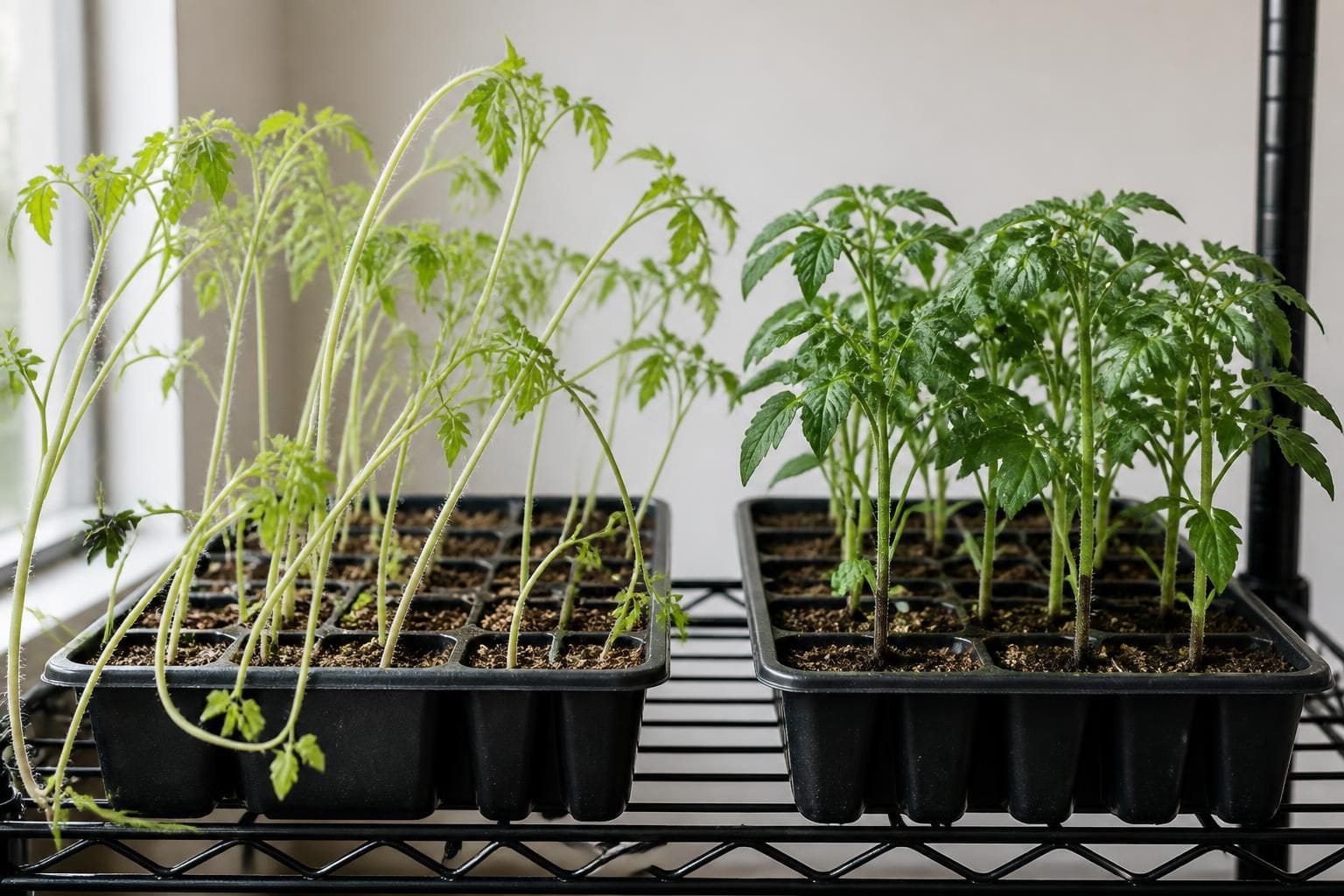
Seedlings turn tall, thin and pale under “good” light because that light is usually weaker than it looks, not because it’s missing. A bright window, or a grow light hung a little too high, delivers far less than a seedling needs, and warm nights, crowding, soggy roots or a nutrient-poor mix can add to the stretch. Start with two checks: the gap between the leaf tops and the light, and how warm the room stays overnight. If the stems are pale and the oldest leaves are fading too, suspect hunger at the roots as well as weak light.
If your seedlings are sprawling over the edge of the tray while the window looks sunny or the grow light is glowing, you’re not alone. It’s one of the most common seed-starting complaints, and the standard advice, “give them more light,” feels useless when you already did.
The advice does apply, just not the way most people read it. Our eyes adjust so well that a dim corner can look bright. Seedlings don’t adjust. They respond to the energy that actually reaches their leaves, and when it falls short they pour everything into stretching toward it.
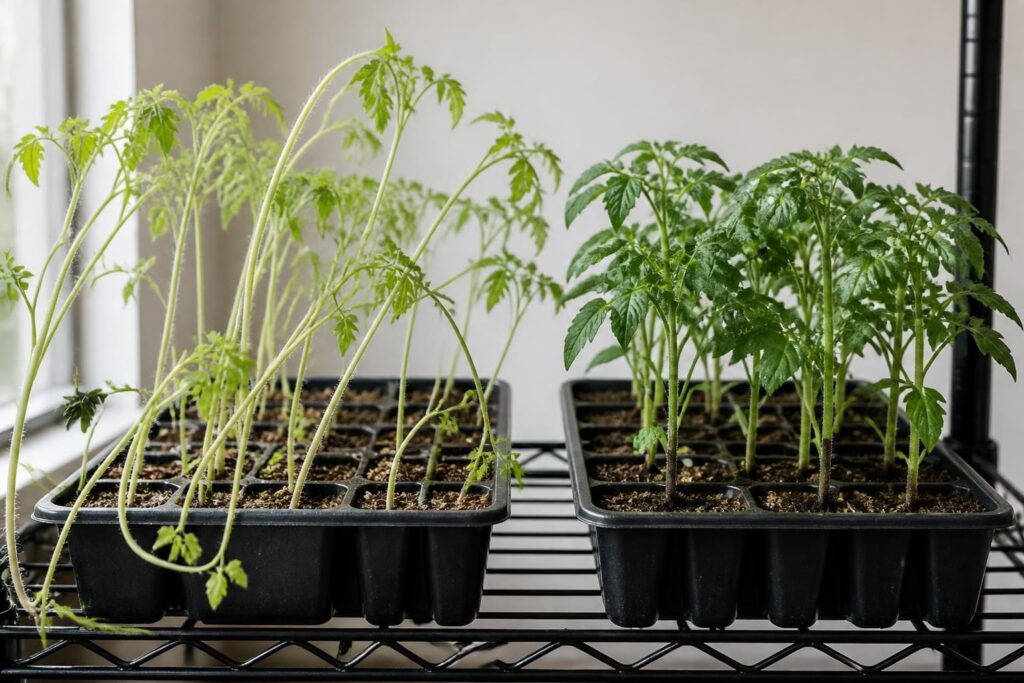
Why Light That Looks Bright Still Falls Short
Even a south-facing window is weaker than it appears. Horticulture magazine points out that light fades quickly as a tray sits farther from the glass, which is why seedlings on a sill so often lean and stretch toward it. Illinois Extension goes further and says no bright window or grow light can match the sun’s intensity, and University of Maryland Extension describes window light as seldom enough for strong seedling growth, adding that acceptable growth usually only happens in south-facing bay windows or solariums.
A grow light isn’t a guarantee either, and distance is where a lot of setups go wrong. There’s no single right number, because fixtures differ so much in output. Iowa State’s general setup guide puts LED shop lights roughly 12 to 24 inches from the foliage and fluorescent fixtures 6 to 12, while advice written specifically for seedlings under fluorescent tubes runs much tighter, down to an inch or two. Start with the manufacturer’s recommendation, then let the seedlings tell you. If they keep stretching, move the light closer or step up to a stronger one, and raise it as they grow. If you see burning, back off (more on that below).
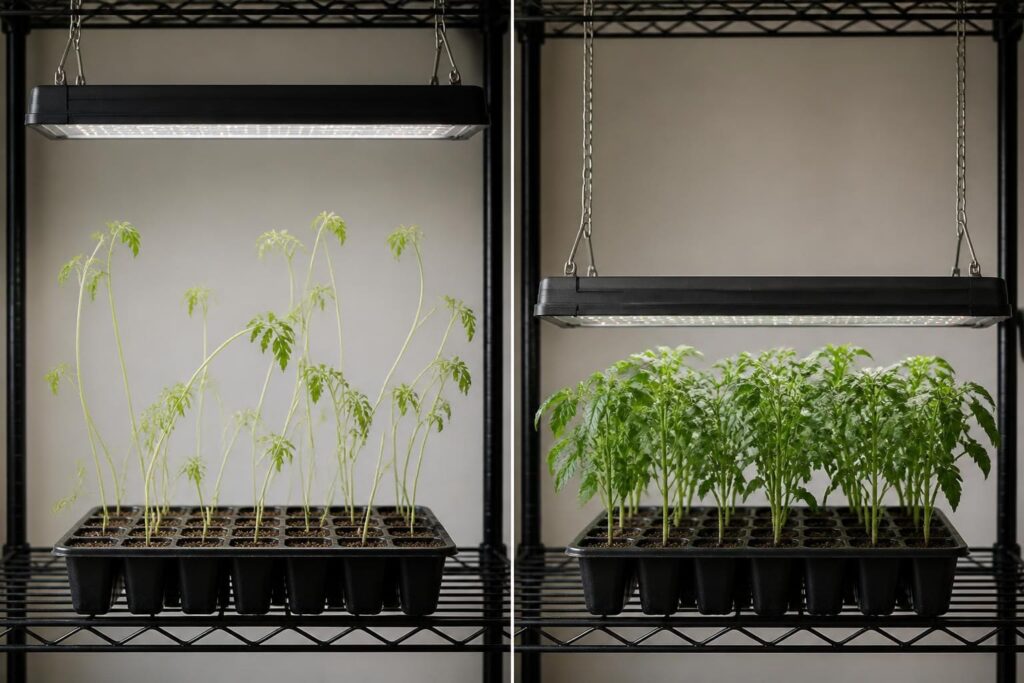
The bulb itself matters, too. Fluorescent tubes lose output as they age, and Illinois Extension notes that many serious growers replace theirs every year. Color plays a smaller role, but Horticulture magazine points out that a warm-white tube on its own doesn’t supply enough blue light, which seems to encourage compact growth, so pair it with a cool-white or daylight tube. Skip incandescent bulbs for seedlings, since they run too hot.
Most extension advice for seedlings lands on 14 to 16 hours of light a day. Put the lights on a timer so the schedule stays consistent, and give the plants a dark period each night. Hours have a ceiling, so you can’t extend your way out of a light that is too weak or too far away. Fix the distance first.
Extension educators fall into this trap too. A North Dakota State University Extension agent describes starting seeds in south-facing windows again and again and ending up with tall, thin, floppy seedlings each time. In her words, “I learned the hard way” that artificial lights were the answer. Her fix is a good template: lights almost touching the seedlings right after germination, then raised as they grow and kept within 4 to 6 inches, as described in her NDSU Extension column.
Sorting Out the Cause: What Each Clue Points To
Light is the headline cause, but UConn Extension lists several others for leggy transplants: low light, overwatering, over-fertilizing, and plants held in their trays longer than planned. When the light looks fine, one of those is usually doing the damage or piling on top of it. This table helps you match what you see to the likely cause.
| What you see | Most likely cause | How to confirm it | What to change |
|---|---|---|---|
| Stems lean toward the window or one side of the tray | Light too weak, too one-sided, or too far away | Measure from leaf tops to the light; check whether the tubes are old or the bulbs aren’t made for plant growth | Lower the light or move trays closer, use a timer, turn trays daily |
| Long, soft stems in a room that stays warm overnight | Warm nights speeding up stem growth | Put a thermometer where the seedlings sit; note whether the heat mat is still on | Cool the room a little after germination; take trays off the heat mat once seedlings emerge |
| Seedlings packed shoulder to shoulder, tallest ones in the middle | Crowding, so plants shade each other | Look down from above; overlapping leaves give it away | Thin at the first true leaves, or pot up into more space |
| Pale stems, oldest leaves fading yellow, growth slowing | Low-nutrient mix, or seedlings kept in the tray too long | Check the mix and how old the seedlings are; older leaves fade first, while pale-all-over points to light or cold | Give a weak, diluted feed and follow the product label |
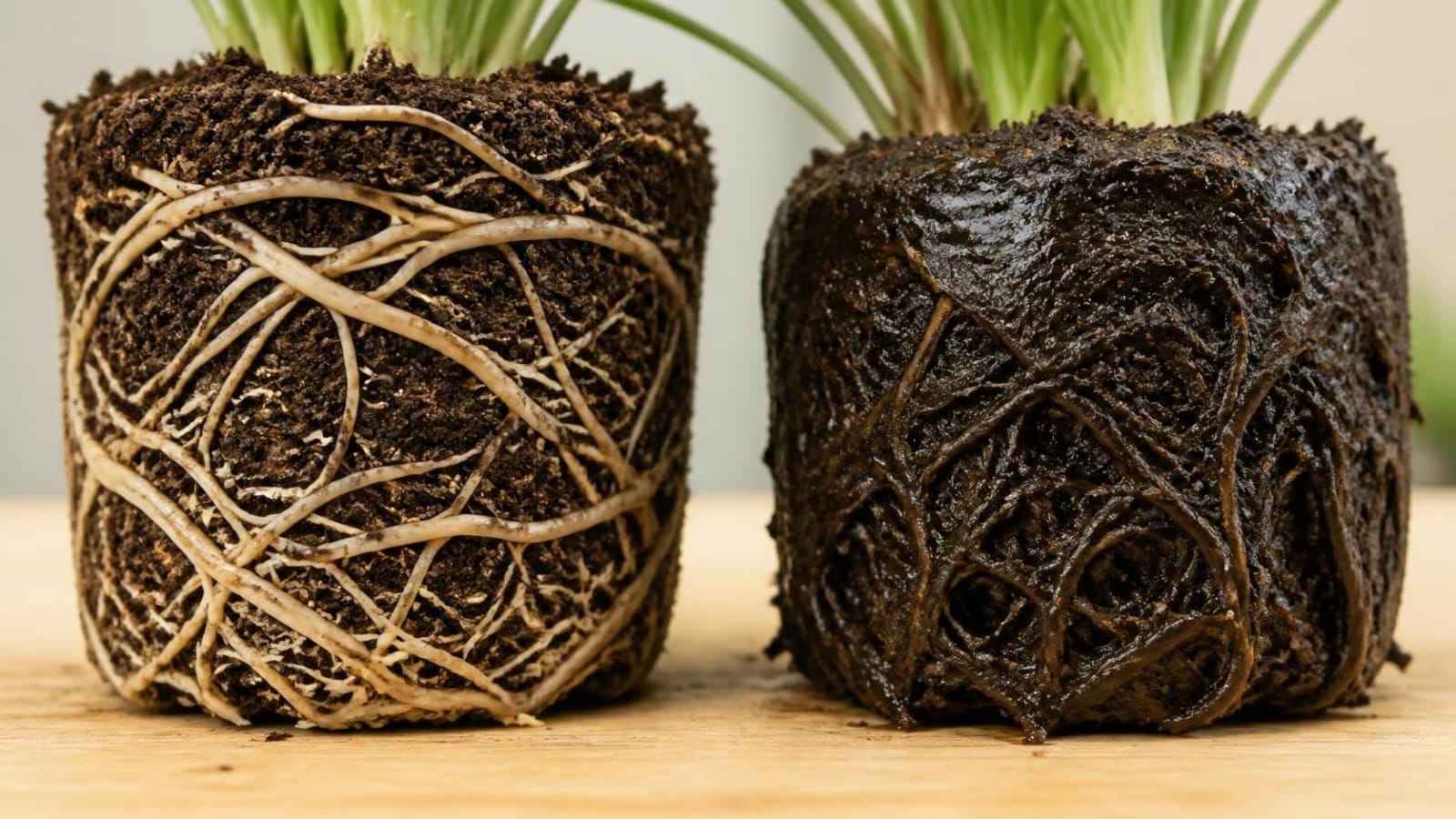
| Drooping, weak stems at the soil line and a mix that stays soggy | Overwatering, poor drainage or root trouble | Slide one seedling out: roots should be white and firm, not brown and mushy | Let the mix dry slightly, improve drainage, water from below |
| Weak, spindly growth after repeated feeding | Too much nitrogen | Think back over how often and how strongly you fed | Pause feeding and let the plants use what is already there |
Here’s the kicker: more than one row can be true at once. A seedling on a so-so windowsill, in a warm room, crowded in with its neighbors, is getting stretched three ways. Fixing only the light will help, but it won’t finish the job.
The Night-Temperature Clue Most Gardeners Miss
Light isn’t the only thing that controls how tall seedlings grow. Temperature plays a part, too. When seedlings stay warm around the clock, especially in a room with limited light, they can put on soft, stretched growth instead of developing sturdy stems.
Commercial growers get more specific with something called DIF, the difference between daytime and nighttime temperature. When days run warmer than nights, plants stretch more. When days are cooler than nights, or temperatures dip briefly at dawn, growth stays more compact. UConn Extension adds some caveats: the response varies by species (tomatoes, basil, cole crops, eggplant and melons respond strongly, squash and watermelon much less), and anything that lowers the average temperature also slows development. It also reports that cooling this way doesn’t hurt field establishment or yield.
Matt Mattus of the American Horticultural Society makes the point from the gardener’s side. Many seeds germinate best in warmth, but once they are up they prefer cool, bright conditions and grow sturdier when they leave the heat source right after emerging. His example is brassicas, which germinate best near 80°F but prefer to grow at around 55°F, as reported by Homes & Gardens.
In a house, that comes down to a simple rule: once the seeds have sprouted, don’t keep the seedlings warmer than they need to be. Take the trays off the heat mat, and if you germinated under a plastic dome or wrap, remove it as soon as green shoots appear, because trapped heat speeds up stretching, as Gardening Know How explains. Aim for temperatures suited to the crop you’re growing. You want steady, healthy growth, not a cold shock.
Why Pale Matters: Stretching Is Only Half the Story
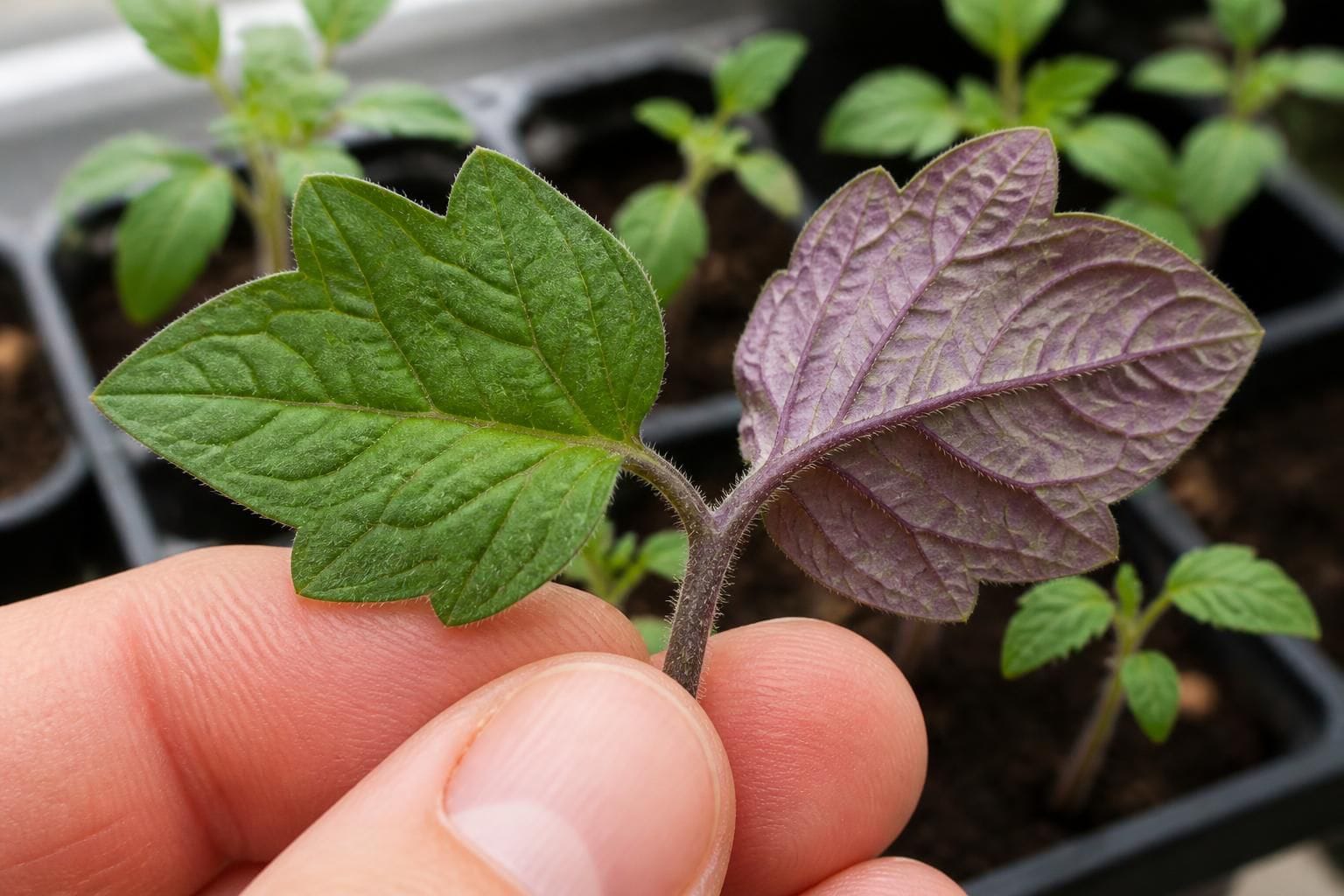
Stretched but still green is mostly a light-and-heat story. Stretched and pale deserves a second look below the surface. University of Minnesota Extension educator Robin Trott wrote in May 2026 that gardeners across the state were seeing exactly this combination of pale seedlings and slow growth, and that nitrogen-poor potting mix was one of the biggest culprits that spring. A mix with little or no nitrogen can leave seedlings with almost nothing to eat. The giveaway, she says, is older leaves fading to pale yellow, thin stems and growth that slows to a crawl, and a diluted dose of nitrogen fertilizer can green things up within a week, as long as you go easy, because too much burns tender roots. You can read her full column here.
This is where things can get confusing. Some gardeners are told not to feed seedlings too early because many potting mixes already contain enough fertilizer for the first several weeks. Others find their seedlings turning pale because the mix contains very few nutrients to begin with.
Start by checking the whole picture. One dividing line helps: seedlings that are pale all over usually point to weak light or cold stress, while yellowing that begins on the oldest, lowest leaves points toward a nutrient shortage, according to Epic Gardening’s troubleshooting guide. If the oldest leaves are turning yellow, growth has slowed, and the seedlings have been growing in a low-nutrient mix for weeks, a lack of nutrients is worth considering. But don’t reach for the fertilizer just yet if the mix is constantly wet or the roots look unhealthy. Damaged roots can struggle to take up nutrients even when those nutrients are present. If you’re still unsure which one you’re dealing with, this guide to telling overwatering from nutrient deficiency in yellowing leaves lays out the differences.
If the roots look healthy and the mix is running low on nutrients, use a fertilizer suitable for seedlings and follow the label. Start cautiously rather than trying to turn pale plants dark green overnight. Too much fertilizer can damage tender roots and create another problem on top of the first one.
Roots tell the rest of the story. Slide one seedling out of its cell and look. Healthy roots are white and firm, while brown, mushy roots point to overwatering, compaction or poor drainage.
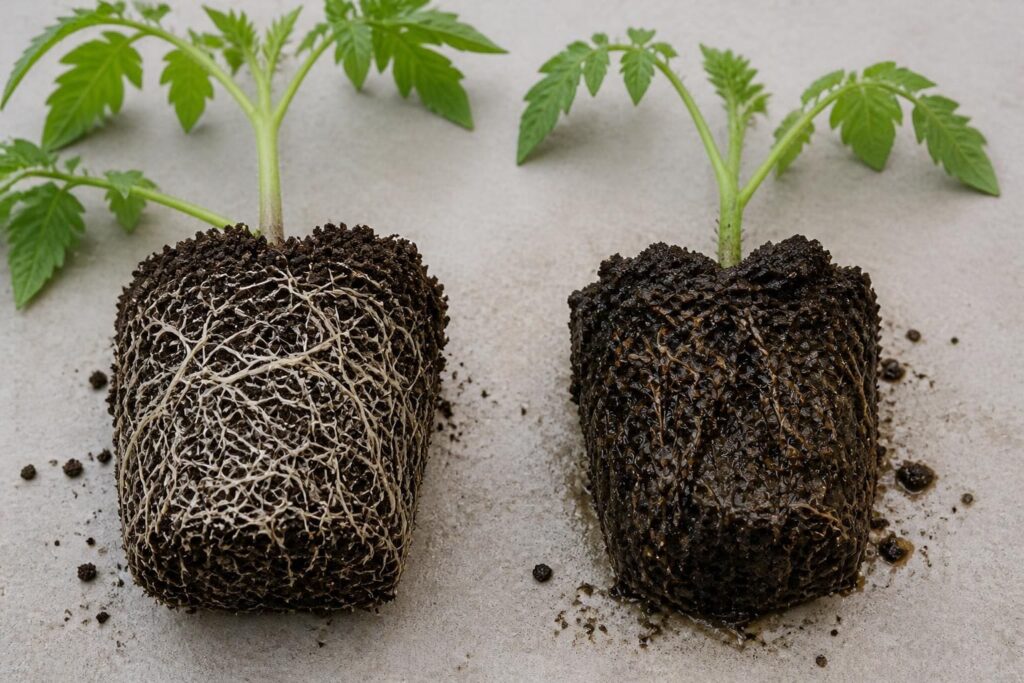
What overwatered seedlings look like
Look at the stems rather than the leaves. Epic Gardening notes that drooping stems, as opposed to wilted foliage, almost always point to too much water, often with a soggy mix and sometimes a foul smell at the roots. Its advice is to check the mix before irrigating rather than watering on a set schedule. The University of Saskatchewan adds that wet soil can rot roots and stems or cut off their oxygen, and that watering from the bottom and keeping air moving both help. Weak, leggy seedlings are also more prone to damping off, the sudden collapse at the soil line, according to Homestead and Chill. If the soggy mix is also making older plants droop, see our piece on why plants wilt even when the soil is wet.
Can Seedlings Get Too Much Light?
Yes, though it looks different. Seedlings with too little light stretch and lean toward the source, while seedlings with too much develop yellow or brown, burned-looking leaves starting at the top, according to an Iowa State Extension answer. Backing a fixture off by just a few inches cuts the light reaching the plants significantly, so small adjustments are usually enough.
If your seedlings are tall and floppy, start by checking the light distance and how warm the room stays. Those are more useful first checks than assuming the plants are getting burned.
The same goes for moving seedlings outdoors. Don’t take plants that have spent weeks inside and put them straight into strong sunlight. Start them in a sheltered, bright spot and gradually increase their exposure. A little patience here can save you from dealing with a whole new set of damaged leaves. And if they droop through the day outdoors but perk up overnight, that’s a different problem, covered in why plants wilt during the day and recover overnight.
How to Fix Leggy Seedlings You Already Have
Fix the reason your seedlings stretched in the first place. Otherwise, the new growth may end up just as weak as the old growth.
Start with the light, then check the temperature, watering and spacing. You don’t have to change everything at once, but you do need to correct the conditions that are holding the plants back. The goal isn’t to make an already-stretched stem shrink. It’s to help the next growth come in shorter, stronger and healthier.
- Bring the light closer. Keep leaf tops within your fixture’s recommended distance and raise the light as the plants rise.
- Put the light on a timer. Aim for 14 to 16 hours a day so the schedule doesn’t depend on your memory.
- Take the edge off the heat. Move trays off the heat mat once seedlings are up, and cool the room slightly if it stays warm overnight.
- Add moving air. Gardening Know How suggests brushing your hands over the seedlings a few times a day or running a gentle oscillating fan for a few hours daily. Brush when the foliage is dry, wait until seedlings are a couple of inches tall, and go gently with tender crops like peppers, which can be damaged.
- Thin the crowd. Once the first true leaves appear, remove the weakest so the rest get light and room.
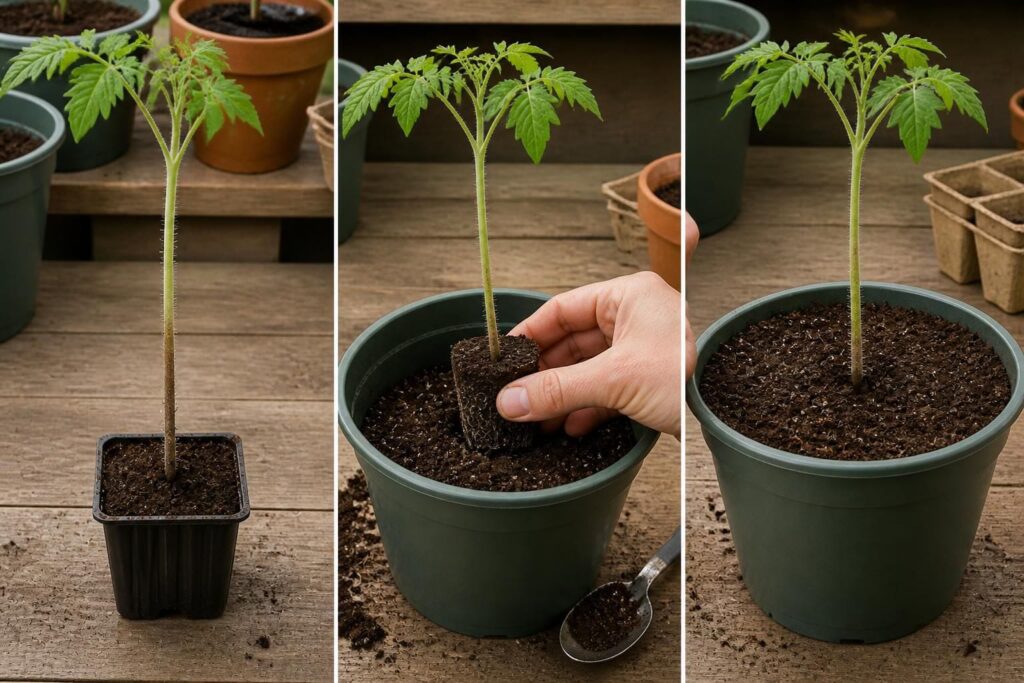
- Bury the stems of leggy tomatoes. Purdue Extension says tomatoes can be planted deeper because they root along the stem, and it advises stripping any leaves that would sit below the soil. Other crops are less clear-cut. An Ask Extension answer says peppers and eggplant also root from buried stems, while Purdue cautions that most other crops root less readily and shouldn’t be planted deeper. Homestead and Chill adds a practical warning: weak, thin young stems can rot in damp mix, so let seedlings toughen up first, and bury peppers and brassicas no deeper than their first true leaves.
- Prop up the weakest. Small stakes or toothpicks can hold fragile stems until they firm up.
- Feed only if the signs fit. If the oldest leaves are fading and the mix is old or bare, use a weak feed and follow the label.
What not to do
- Don’t move stretched seedlings straight into full sun or outdoors. Toughen them up in bright shade first.
- Don’t pour on fertilizer to “green them up.” Too much causes its own weak growth and can burn roots.
- Don’t assume longer hours will rescue a light that is too far away. Fix the distance first.
- Don’t leave seedlings in the starter tray for weeks past the point they need more room.
Will Leggy Seedlings Fix Themselves?
Not completely on their own. Once a stem has stretched, it won’t shrink back to its original length. But that doesn’t mean the plant is a lost cause.
After you improve the light, temperature and growing conditions, give it a couple of weeks and watch what happens to the new growth. If the leaves come in closer together, the stems start to thicken, and the plants look greener and sturdier, you’re moving in the right direction.
Very weak seedlings may not recover well, especially if their stems are thread-thin, badly bent or already collapsing. If a plant keeps falling over despite better conditions, starting a fresh batch may save you time and frustration.
Setting Up the Next Round So This Doesn’t Repeat
The easiest way to avoid leggy seedlings is to get the basics right from the start. Set up the grow light before the seeds sprout, use a timer, and raise the fixture as the plants grow. Once the seedlings emerge, remove the trays from the heat mat when they no longer need it. Keep an eye on watering, and give the plants enough room before their leaves start crowding each other.
Most importantly, don’t judge the light by how bright the room looks to you. Watch the seedlings themselves. Compact growth, sturdy stems and healthy new leaves are much better signs that your setup is working. If the plants keep stretching, treat that as a signal to check the conditions rather than simply adding more hours of light.