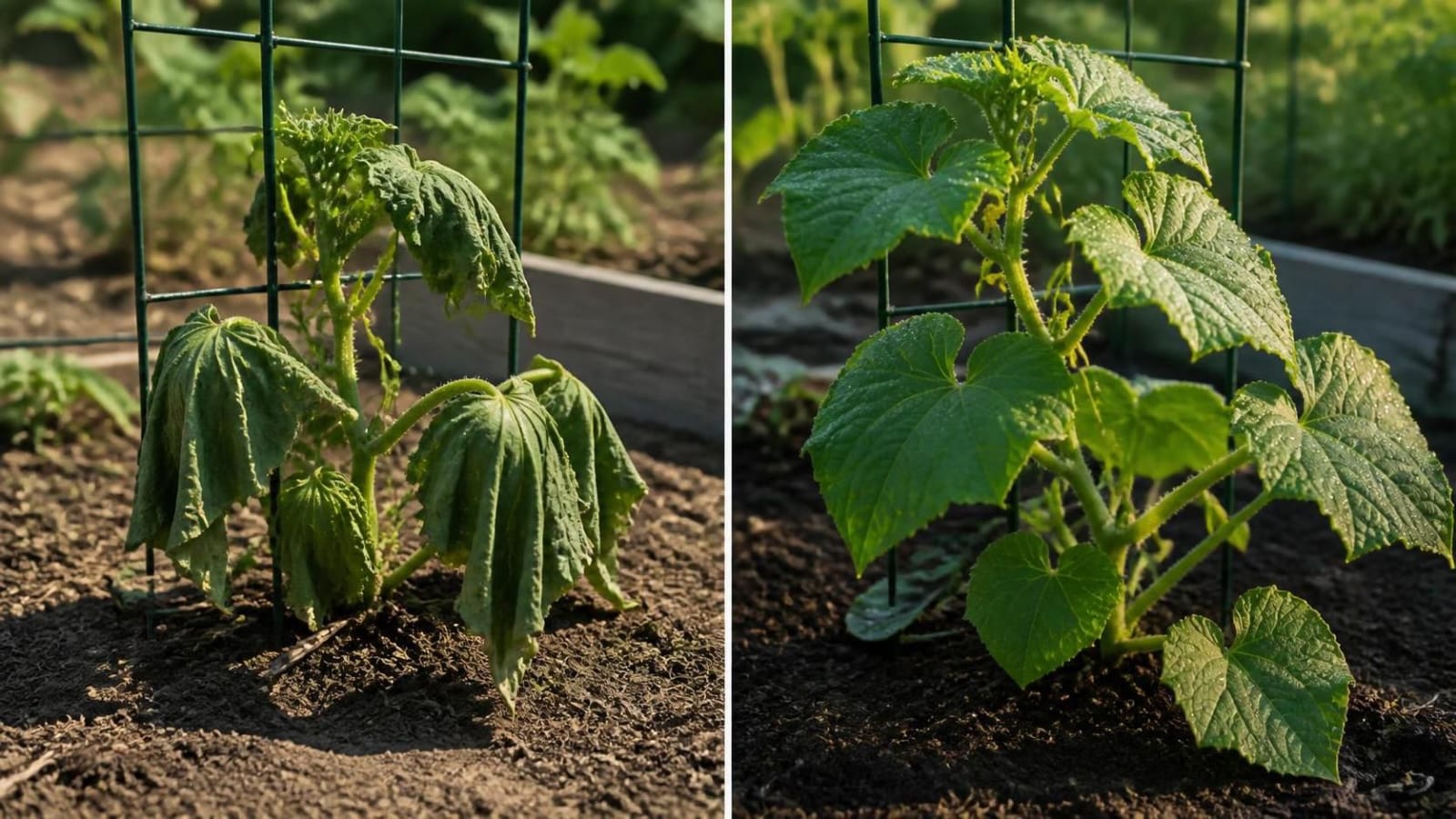
Two plants can show the same pale yellow leaves for opposite reasons. One is sitting in soil that never gets a chance to dry. The other is genuinely hungry. The leaf alone rarely settles the question, which is why so many gardeners reach for fertilizer when the real problem is the watering can, and the other way around.
If the soil stays wet for days and the yellow leaves are soft, suspect overwatering. If the soil is evenly moist and the yellowing follows a clear, symmetrical pattern, such as pale old leaves or yellow between green veins on new growth, suspect a nutrient problem. Check the soil and roots first, because waterlogged roots cannot take up nutrients and make overwatering look like a deficiency.
Why the two problems look so alike
Roots breathe. When water fills the spaces between soil particles, the air goes out, and University of Nebraska–Lincoln Extension lists yellowing and dying of the lower leaves among the most common signs of low oxygen in wet soil. Purdue Extension’s Vegetable Crops Hotline adds that roots in waterlogged soil stop growing and their tips die, and that the injured root system takes up fewer nutrients, which helps explain the yellow leaves.
So a plant in soggy soil can be surrounded by nutrients and still behave as if it were starving. Illinois Extension makes the same point from the other side: yellowing can come from poor drainage, damaged roots, high soil pH, or a real shortage of a nutrient. Those are four different problems with one shared symptom.
If your plant is also drooping while the soil is wet, our guide to plants wilting when the soil is wet covers that side of the story in more detail.
Start underneath: a two-minute soil and root check
Before you judge the leaf, look at what the leaf is connected to. These checks cost nothing and rule out the most common mistake.
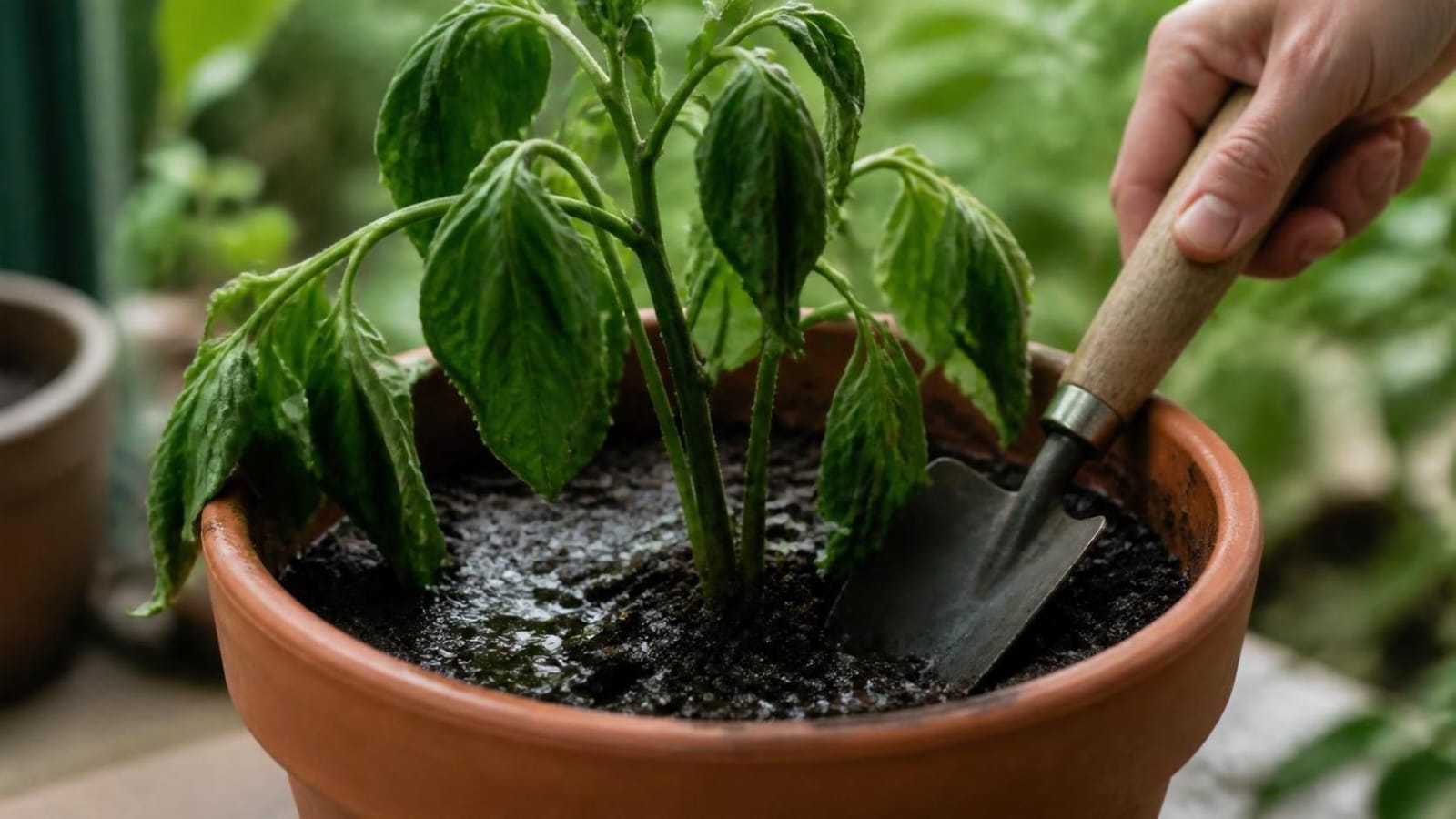
- Push a finger a couple of inches into the soil. Cool, dark, clumping soil that is still wet days after the last watering points toward overwatering. Dry or only barely damp soil points elsewhere.
- Lift the pot. A pot that feels heavy long after watering is holding too much water. Check that the drainage holes are open and that the pot is not standing in a full saucer.
- In the garden, open a small hole beside the plant. Standing water, a sour smell, or soil that smears like putty a few inches down tells you drainage is part of the problem.
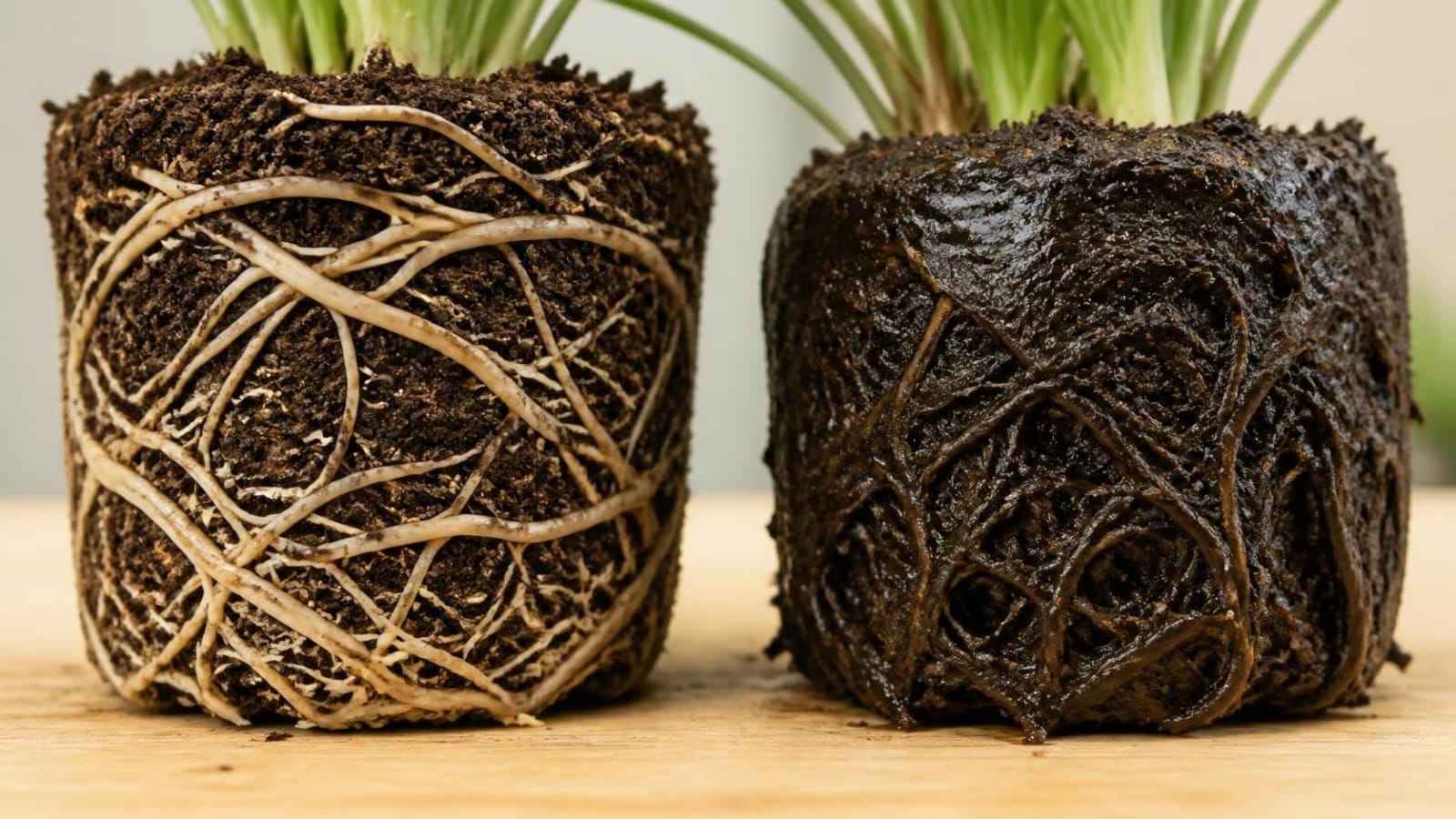
- For a potted plant in real decline, slide the root ball out. Healthy roots are firm and light in color. Rotted roots are dark, soft, and often smell sour.
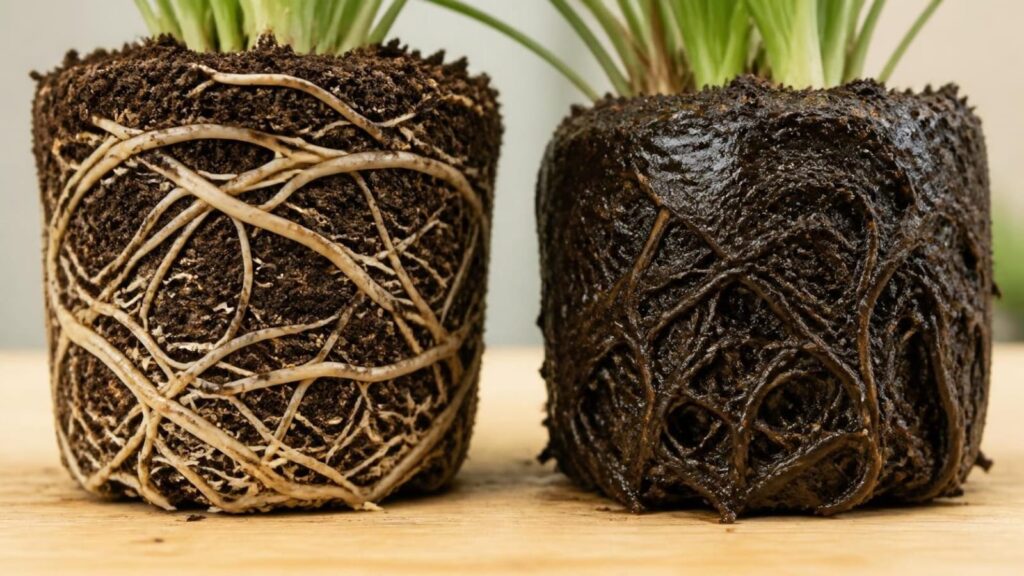
One caution about timing. The Purdue note above points out that some damage to waterlogged roots appears only after the soil starts to drain and oxygen returns, so roots can look worse a few days after you fix the watering. That does not mean you made it worse.
What overwatering yellowing usually looks like
No single sign proves it, but several together build a convincing case:
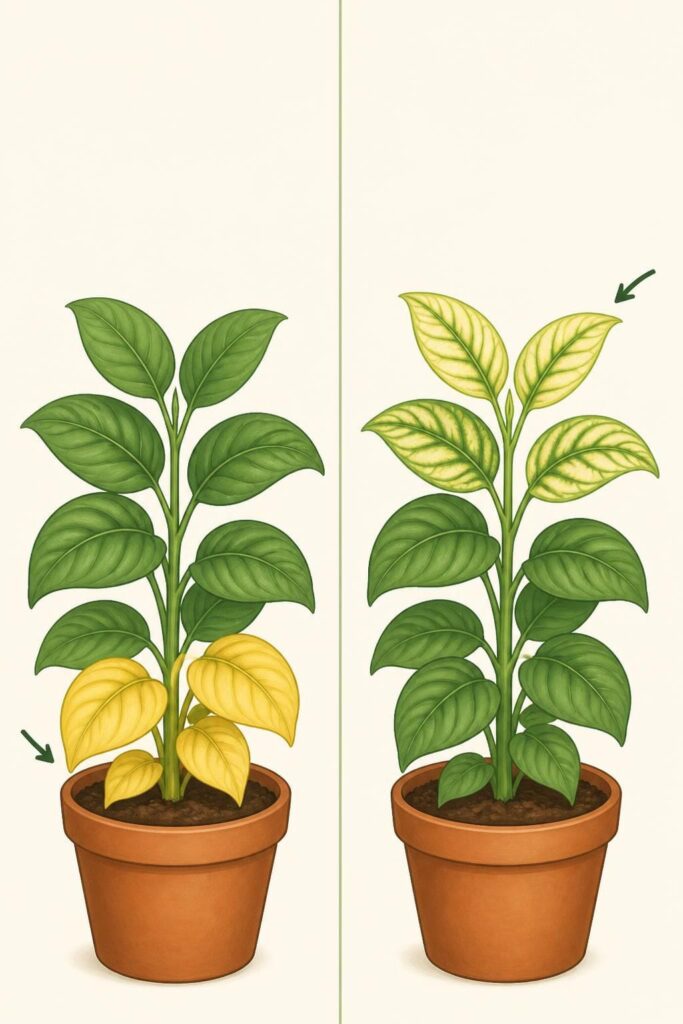
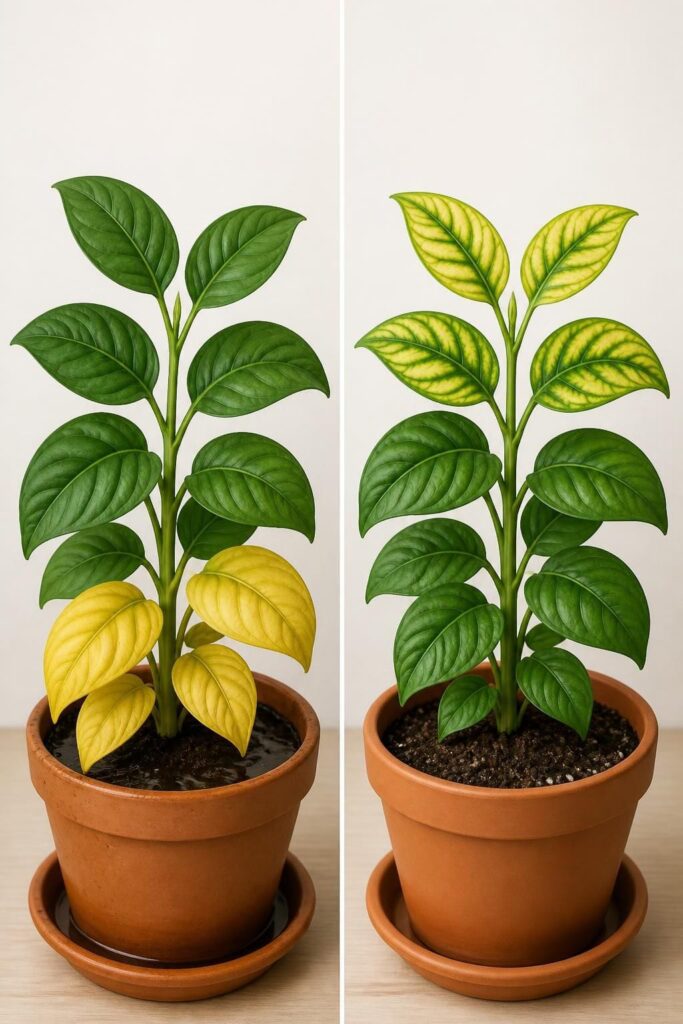
- Yellowing starts on the lower, older leaves and spreads upward.
- The leaves feel soft or limp rather than dry and papery.
- The plant droops even though the soil is wet, because damaged roots cannot move water upward.
- Growth slows or stalls, and the soil smells sour or stays dark and heavy.
Notice that the first clue, yellow lower leaves, is shared with a nitrogen shortage. That overlap is exactly why the soil check comes first.
What a true nutrient deficiency looks like
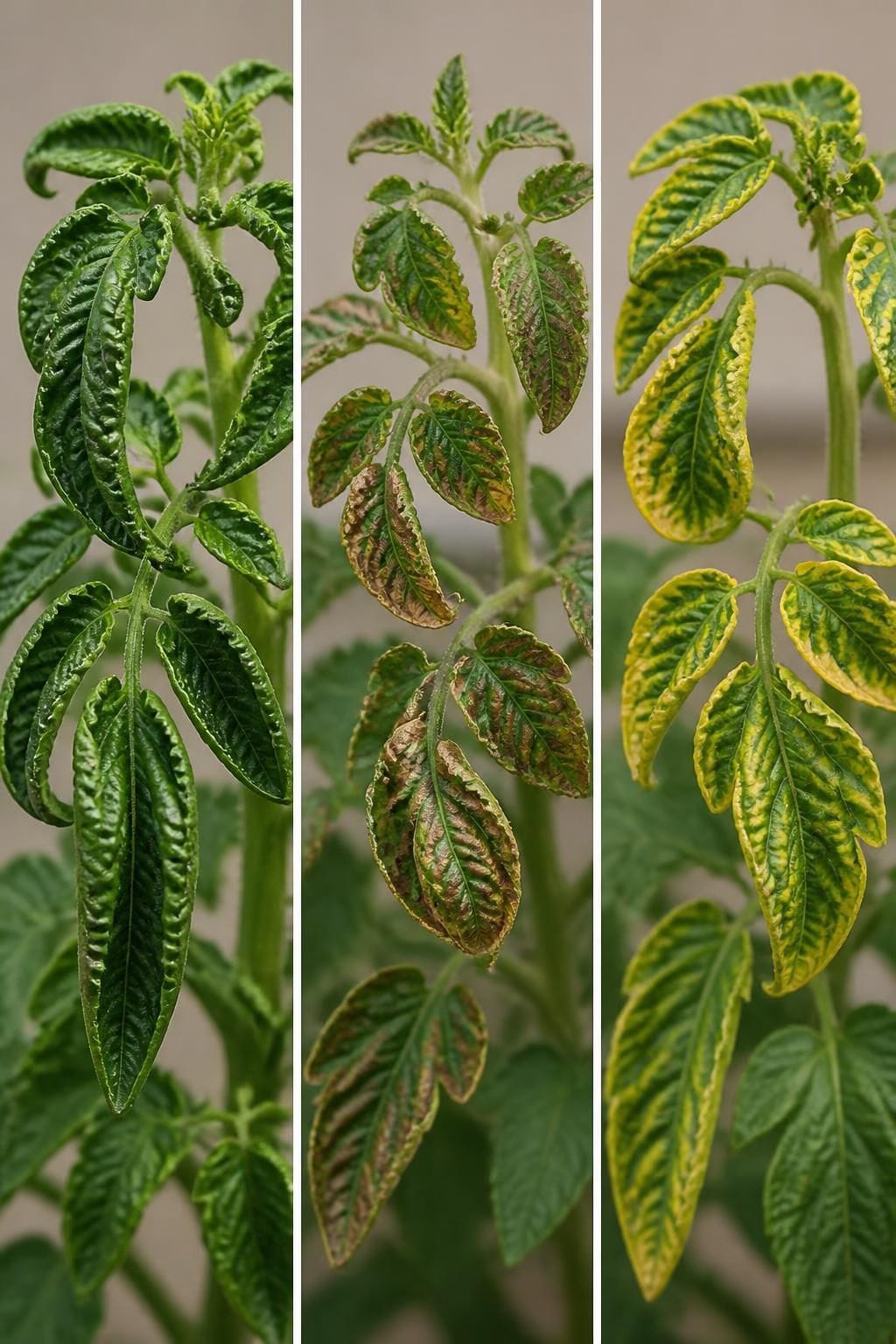
Nutrient shortages follow rules, and the rules are useful. University of Delaware Cooperative Extension explains that nitrogen, phosphorus, potassium and magnesium can be moved around inside the plant, so a shortage shows up first on older leaves. Iron, calcium and several other nutrients cannot be moved, so their shortages show up first on new growth.
The same fact sheet notes that deficiency symptoms tend to spread evenly across a leaf and across the plant, while damage from insects or disease usually looks uneven. It also admits that exact identification can be hard without tissue testing, because many deficiencies look alike.
That gives you two questions to ask the plant. Which leaves go first, the old ones or the new ones? And does the yellow cover the whole leaf, or only the tissue between the veins?
Putting the clues together
Treat this table as a starting point, not a verdict. Where two rows could fit, trust the soil check.
| What you see | What it points to | How to confirm |
|---|---|---|
| Lower leaves yellow and soft, soil wet for days | Overwatering or poor drainage | Soil stays damp below the surface; roots dark and soft |
| Older leaves evenly pale, soil only moist, slow growth | Nitrogen shortage | Roots firm and pale; pattern is symmetrical across the plant |
| Older leaves yellow between green veins | Magnesium shortage | Soil test; check soil pH and recent feeding |
| Newest leaves yellow between green veins | Iron shortage, often caused by high soil pH | Soil pH test from the root zone |
| Yellow or scorched edges on older leaves | Possible potassium shortage | Soil test; rule out dry soil and salt buildup first |
| Yellow, crisp leaves, dry soil, plant perks up after watering | Too little water | Soil is dry several inches down; recovery within hours of a deep watering |
When it is both at once
This is the case most guides skip, and it is common. A plant that has been sitting wet for weeks has usually lost some root function and some nitrogen at the same time. The Nebraska publication explains that wet, low-oxygen soil can lose nitrogen both by leaching and by bacteria converting it to gas, so the soil really can end up short of it. The Illinois page adds that nutrients may simply not be absorbed when roots are injured or growing poorly.
The practical sequence follows from that. Fix the water and drainage first. Then give the plant time and watch the new growth, not the old yellow leaves. If new leaves come in a healthy color, the problem was the roots and the water. If new growth is still pale or patterned after the soil is behaving, that is the point to test the soil and think about nutrients.
Two look-alikes worth ruling out
High soil pH
Sometimes the nutrient is in the soil but the roots cannot reach it. UC IPM describes yellowing between the veins of new growth in high-pH soil, caused by reduced availability of minerals such as iron, manganese and zinc, and gives 6.0 to 7.5 as a good range for most gardens and landscapes. Adding more iron to a high-pH soil rarely solves it. A pH test from the root zone does.
Heat, dryness and curling
Leaves that droop in the afternoon heat and recover overnight are usually handling heat, not drowning. Our article on plants wilting during the day and recovering overnight helps you tell that apart from a real root problem. On tomatoes, curling rather than yellowing is a different symptom with its own causes, covered in tomato leaves curling upward even though you’re watering enough.
What to do once you know
If it is overwatering
- Hold off watering until the soil has dried to the depth that suits that plant. Succulents and tropical foliage plants need very different gaps.
- Empty saucers, clear blocked drainage holes, and move the pot somewhere with better airflow.
- If the roots are mostly rotted, cut away only the dead, mushy parts and repot into fresh, free-draining mix in a pot with drainage.
- In a garden bed, look for the cause: compacted soil, a low spot, or a bed that cannot shed rain. Improving drainage matters more than watering less.
If it is a nutrient problem
- Confirm the soil is draining properly, then test the soil. The Delaware fact sheet recommends a soil test before applying fertilizer, because pH can lock up nutrients that are actually present.
- If pH is the problem, correct pH rather than adding more of the missing nutrient.
- If a real shortage is confirmed, choose a product that supplies that nutrient and follow the label. Rates, products and rules differ between countries and regions, so check what is approved where you live.
What not to do
- Do not fertilize just because leaves are yellow. On waterlogged roots it adds a second stress and fixes nothing.
- Do not water on a fixed calendar. Check the soil each time, because pot size, season and light all change how fast it dries.
- Do not add Epsom salt, iron or any single-nutrient product on a hunch. If the cause is roots or pH, it will not help.
- Do not repot into the same wet mix, or into a much larger pot of it. More wet soil around a damaged root system makes the oxygen problem worse.
- Do not strip every yellow leaf at once. Remove leaves that are fully yellow or dead, and leave those that still have green in them.
How long recovery takes
Leaves that have already turned fully yellow seldom regain their color, so judge progress by what grows next. Healthy new leaves mean you found the right cause. Illinois Extension notes that the longer a plant stays chlorotic, the more severe the damage tends to be, which is a good reason to act on the first yellow leaf rather than the tenth. Roots take longer to rebuild than leaves take to yellow, so expect weeks rather than days, and expect it to depend on the plant, the season and how much root was lost.
Keeping it from coming back
- Give every container drainage holes and every bed a way to shed water.
- Water when the soil tells you to, not when the calendar does, and water less in cool, dull weather.
- Test the soil before you start a feeding routine, so you add what is missing and not what is already there.
- After a long wet spell, look for lower-leaf yellowing even if you fed recently, since heavy rain and wet soil can carry nitrogen away.
Quick answers
Can a plant be overwatered and short of nutrients at the same time?
Yes. Wet, low-oxygen soil damages roots and can lose nitrogen, so the two problems often overlap. Fix drainage first, then judge by new growth.
Should I fertilize a plant with yellow leaves?
Not until you have checked the soil moisture and roots. If the soil is wet, feeding will not help. If the soil is fine and the pattern points to a nutrient, test first and follow the product label.
Is one yellow leaf at the bottom a problem?
Usually not. Plants shed their oldest leaves as they grow. It becomes a concern when yellowing keeps moving upward, spreads to several leaves, or shows up on new growth.
Will the yellow leaves turn green again?
Mild, early yellowing sometimes improves. Fully yellow leaves rarely do. Watch the new leaves, because they show whether the fix worked.