
Powdery Mildew on Roses: Treatment, Fungicides & Prevention
A dusty white film on young rose leaves is usually the first thing people notice. Soft new shoots and flower buds are where it tends to start, and the leaves underneath may already look slightly twisted by the time the coating shows up.
This guide helps you confirm that it really is powdery mildew, shows what to do in the first week, compares the treatments that university extension services actually describe, and explains how to make next season easier.
The short answer: cut out the worst growth, let air and light into the shrub, and treat at the first signs, because most products stop new infections far better than they cure old ones. A mature rose rarely dies from powdery mildew, according to Oklahoma State University Extension, but a heavy infection can stunt growth, distort leaves, and damage developing buds.
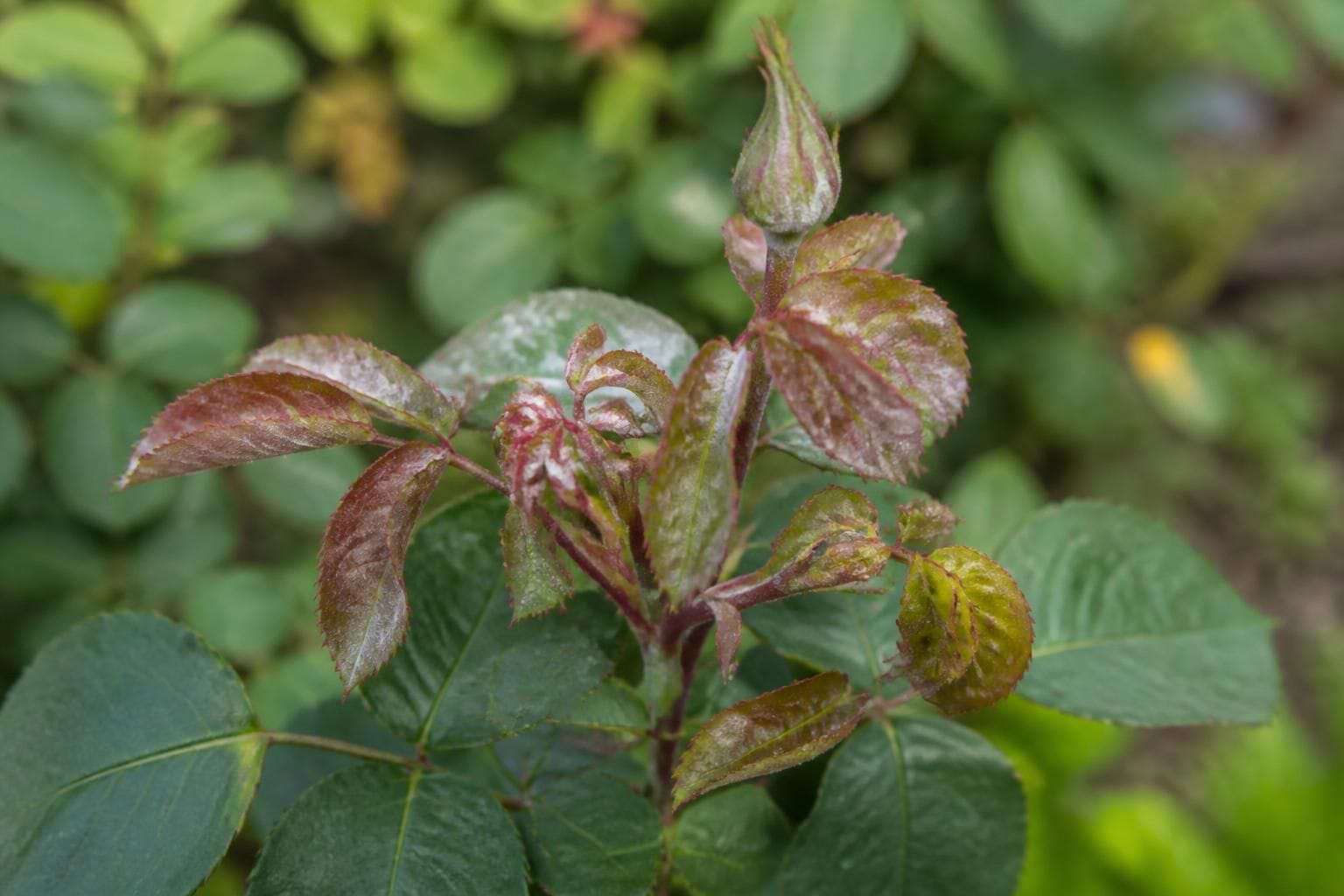
First, make sure it is powdery mildew
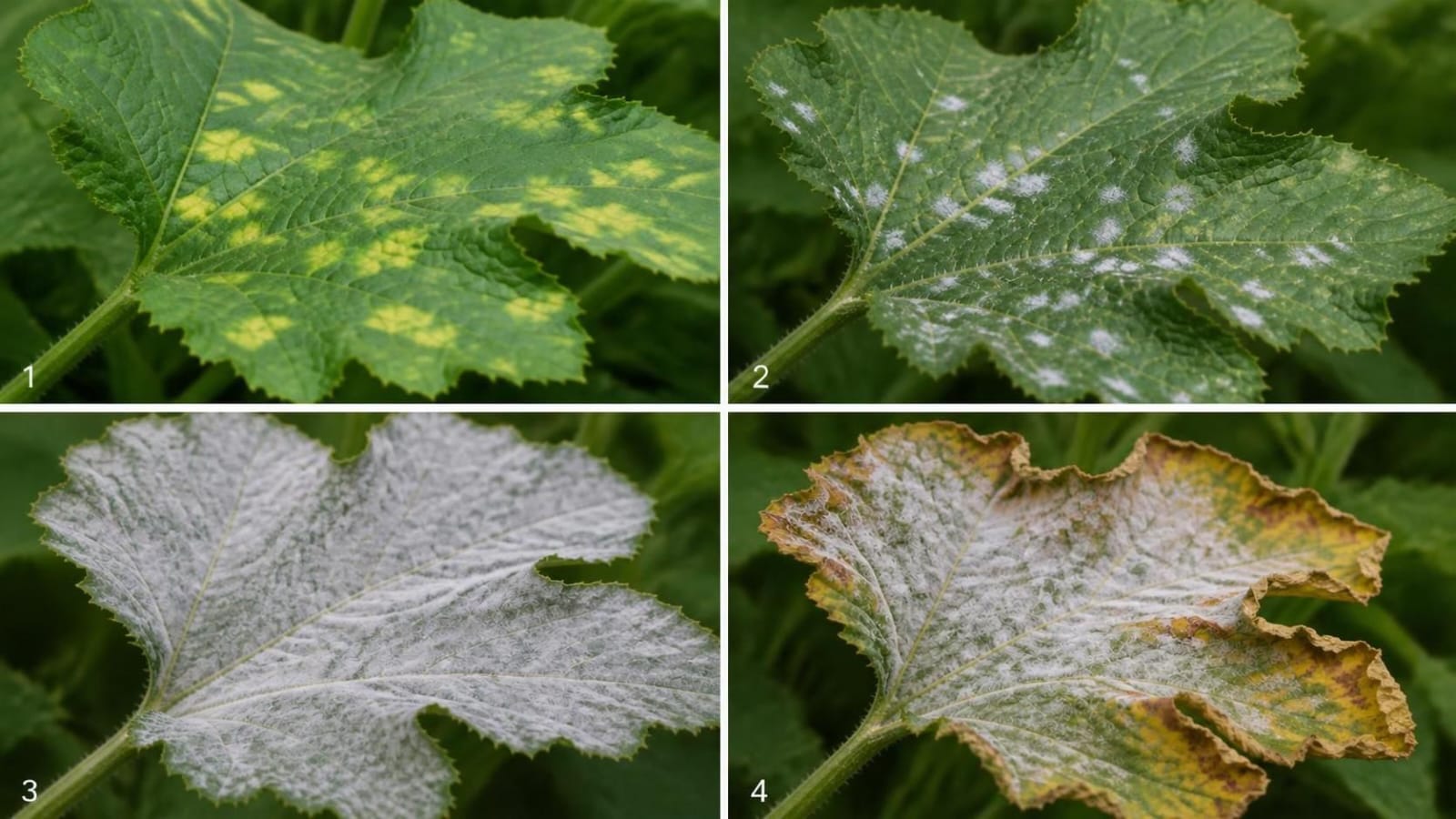
Several rose problems leave marks that look alike from a distance, and each one needs a different response. Powdery mildew grows on the surface of the plant. The University of California IPM program describes it as a white-to-gray powdery growth on both sides of the leaves and on shoots, sepals and buds, sometimes on petals too, with leaves that may distort and drop. For a broader symptom guide with examples from other plants, see what powdery mildew looks like.
| Problem | What you see | Where to look | Weather it favors |
|---|---|---|---|
| Powdery mildew | White-to-gray powdery coating; new growth may twist | Both sides of leaves, plus shoots, buds and sepals | Moderate temperatures and shade; no standing water needed |
| Downy mildew | Angular purple, red or brown spots between veins; pale felty patches | Felty patches on leaf undersides | Cool, humid conditions with prolonged leaf wetness |
| Black spot | Black spots with feathery or fibrous edges | Upper leaf surfaces and stems; no fungal growth underneath | Prolonged leaf wetness |
| Rust | Small orange pustules; upper leaf surface often discolors | Undersides of leaves | Cool, moist weather |
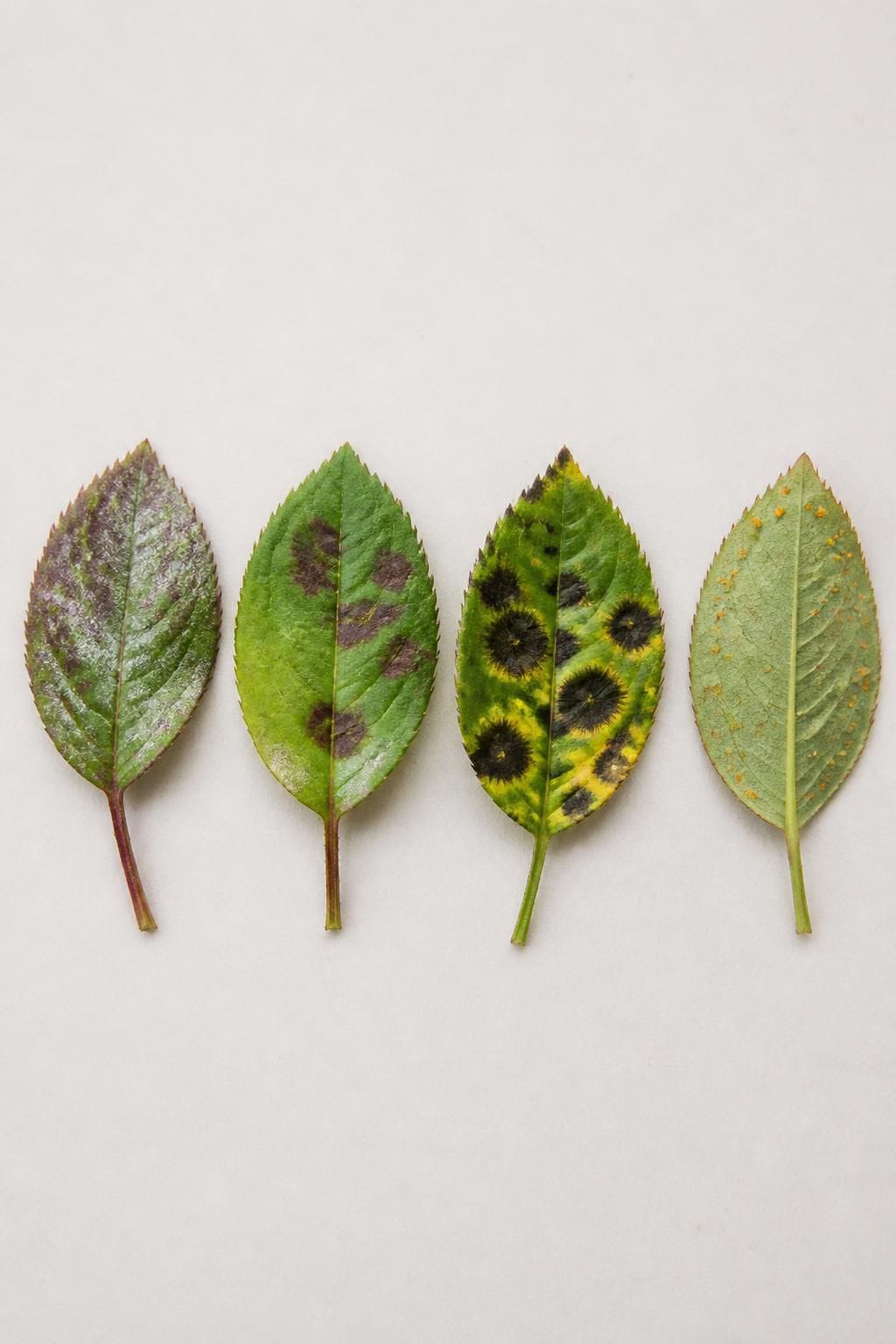
Two of these look-alikes call for the opposite handling. Downy mildew and black spot depend on wet leaves, so washing the plant down or watering overhead can make them worse. Work out which disease you have before you act.
A hand lens settles it
If you own a hand lens, look closely at the coating. UC IPM notes that powdery mildew spores form in chains, while downy mildew spores sit on branched stalks and look like tiny trees.
Why roses get it, and why it keeps coming back
Powdery mildew behaves differently from most fungal diseases because it does not need water sitting on the leaf. UC IPM reports that it can infect roses even during warm, dry summers, and its guide to powdery mildew on ornamentals adds that moderate temperatures of 60° to 80°F combined with shade favor it. Strong heat works against the fungus, since temperatures above 95°F may suppress it.
The fungus also survives winter on the rose itself, either as thin strands inside buds or as tiny black fruiting bodies on leaves and stems. That is why a clean-looking plant can break out again each spring. Wind then carries in spores from other places, so tidying up reduces the problem without wiping it out.
Soft, fast growth is the easiest target. UC IPM warns that too much nitrogen produces lush foliage and shade, which suits the fungus. Rose varieties also differ a great deal in resistance, and landscape shrub roses are among the most resistant.
Some garden writers also link drought stress to more mildew. The extension sources behind this article focus on shade, crowding and lush growth instead, so steady watering is sensible, but it is not a proven cure.
One more point that saves confusion: powdery mildew comes in many species, and each infects a particular range of plants. The coating on your squash and cucumbers is generally a different fungus from the one on roses, so vegetable mildew has its own advice. For general background on the disease across garden plants, the main guide to powdery mildew goes into causes and prevention.
What to do in the first week
- Cut out the worst growth. Remove the most infected shoots and any mildewed buds. Epic Gardening advises against removing more than about a third of the plant in one go during the growing season, so take the worst shoots and treat the rest.
- Bag it. Put cuttings and fallen leaves in green waste or the trash. UC IPM says a properly maintained compost pile should kill spores, while Oregon State University advises against using homemade compost that contains diseased rose material around your roses, so a bin is the safer choice for most home gardeners.
- Rinse the plant. A strong spray of water slows the disease but will not eliminate it. Oregon State suggests using it two or three times a week, and UC IPM suggests mid-morning so the leaves dry quickly. Skip this step if black spot or rust is also present.
- Open up the shrub. Thin crowded canes, especially those growing toward the center, so leaves dry faster and light reaches the inner growth.
- Choose a treatment. The right option depends on how far the mildew has gone, which the next section covers.
Choosing a treatment: timing matters more than the product
Extension guidance agrees on one idea more than any other. UC IPM separates protectant fungicides, which prevent new infections and go on before the disease appears, from eradicants, which can stop an existing infection. Eradicants can injure the plant because the fungus lives in the surface cells of the leaf, so they work best at the very first signs. Once mildew is thick on the leaf, every option gets harder.
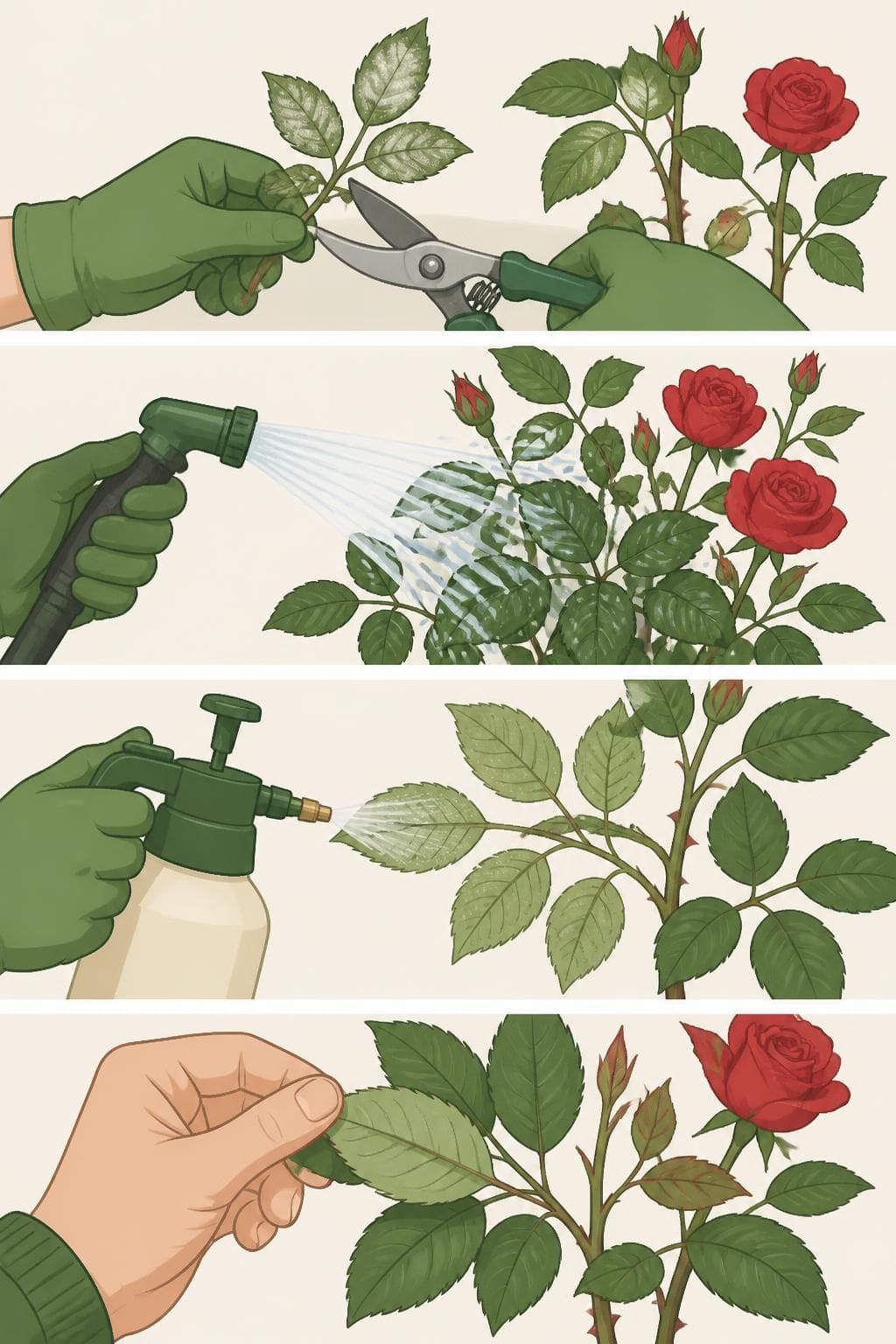
The table shows how the main options compare. For a longer product-by-product comparison, see our fungicide comparison.
| Option | Role | Best timing | Main caution |
|---|---|---|---|
| Strong water spray | Knocks spores back | Mid-morning, repeated as needed | Keep leaves from staying wet if black spot or rust is present |
| Horticultural or neem oil | Mostly eradicant | Mild to moderate infections | Not within two weeks of sulfur, not above 90°F, not on water-stressed plants |
| Sulfur | Protectant | Before mildew appears; repeat as new leaves grow | Can damage some cultivars near 90°F; not within two weeks of oil; dust is harder to use |
| Potassium bicarbonate | Some eradicant action | Early infections | Can injure infected plants; damage is severe on advanced mildew |
| Bacillus-based biologicals | Mostly preventive | Before or at the first sign | Mostly preventive; effectiveness can vary by product and disease pressure |
| Synthetic fungicides with labeled activity against powdery mildew | Protectant and eradicant | As the label directs | Approved active ingredients and products vary by country; always follow the product label |
Temperature limits differ between sources. UC IPM says to avoid sulfur when temperatures are near or above 90°F, while Gardening Know How gives 85°F (30°C). The label on your product has the final word, and it may set a lower limit than either.
Habits that make any spray work better
- Cover everything. These products work on contact, UC IPM explains, so spray thoroughly, including leaf undersides and stems.
- Repeat when new growth appears. UC IPM mentions repeat applications at 7 to 10 day intervals, or the interval on the label, when conditions favor the disease. Always follow the label.
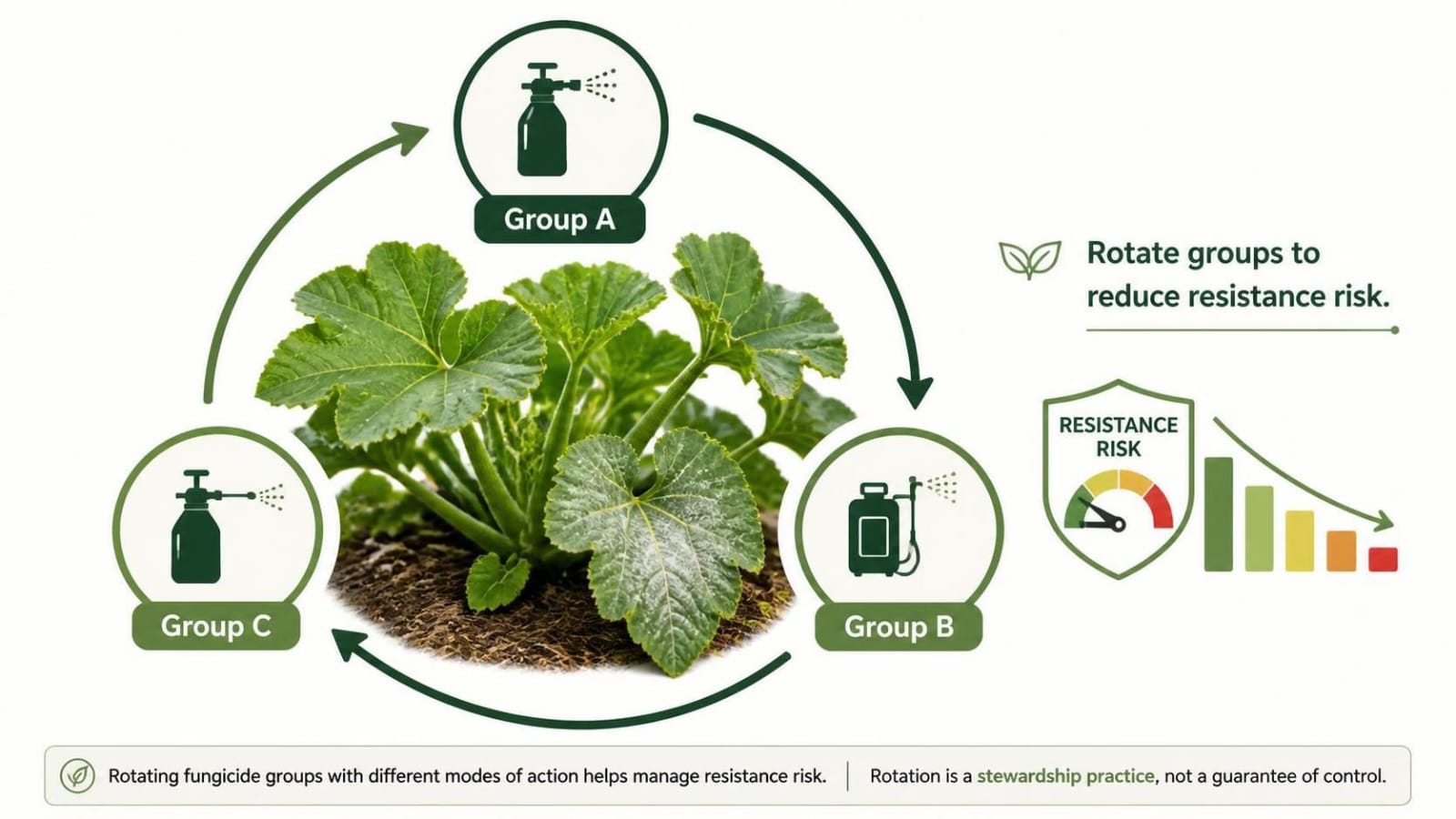
- Rotate active ingredients. Oregon State says researchers recommend alternating products by active ingredient, because local mildew populations can become resistant when one type is used again and again.
- Spray when bees are least active. Oregon State suggests early morning or evening, and avoiding open flowers where possible.
Home remedies: baking soda, milk and vinegar
Baking soda is the best-known kitchen remedy, and Epic Gardening notes that evidence suggests it works better as prevention than as a cure. See baking soda for powdery mildew for a closer look. A glasshouse trial on roses, published in Crop Protection in 1997, found that baking soda gave satisfactory control at a low concentration but injured the plants at double that strength. Mixing it stronger is a mistake. More is not better with bicarbonate sprays; stronger mixtures can increase the risk of leaf injury.
The same trial found that wine vinegar controlled mildew while plain acetic acid injured plants, which is a good reason to avoid improvised vinegar sprays. Milk sprays are popular with garden writers, but the university guidance reviewed here does not list them for roses, so treat milk as an unproven extra rather than something to rely on.
Neem oil sits in a different category. UC IPM lists it among the oils suited to mild or moderate infections, with the same cautions about heat, drought-stressed plants and sulfur. Home recipes vary wildly online and many give no source for their strengths, so for any spray follow a tested product label or a recipe from a university extension service.
When the mildew is already severe
A heavy white coating, curled leaves and buds that look dusted over mean the disease is well advanced. Once mildew growth becomes extensive, controlling it with fungicides becomes much more difficult. Mild to moderate infections can still respond to appropriate eradicant treatments, especially when they are applied early. The realistic goal is to protect the growth that follows rather than repair what is already damaged.
Cut away the worst shoots, but do not try to remove every affected leaf if doing so would severely thin the plant. Keep the soil evenly moist, and protect new leaves with a preventive product from the table above. Hold back on heavy feeding, since lush new growth is exactly what the fungus prefers.
What not to do
- Do not spray oil within two weeks of a sulfur product, or sulfur within two weeks of oil. Both can injure the plant.
- Do not spray oils on drought-stressed plants or when temperatures are above 90°F.
- Do not use potassium bicarbonate on advanced mildew. UC IPM warns that the leaf damage can be severe.
- Do not strengthen a homemade mix because the first spray seemed weak. Higher strengths can burn leaves.
- Do not put heavily infected clippings in a compost pile that never gets hot.
Preventing powdery mildew on roses next season
Pick the right rose and the right spot
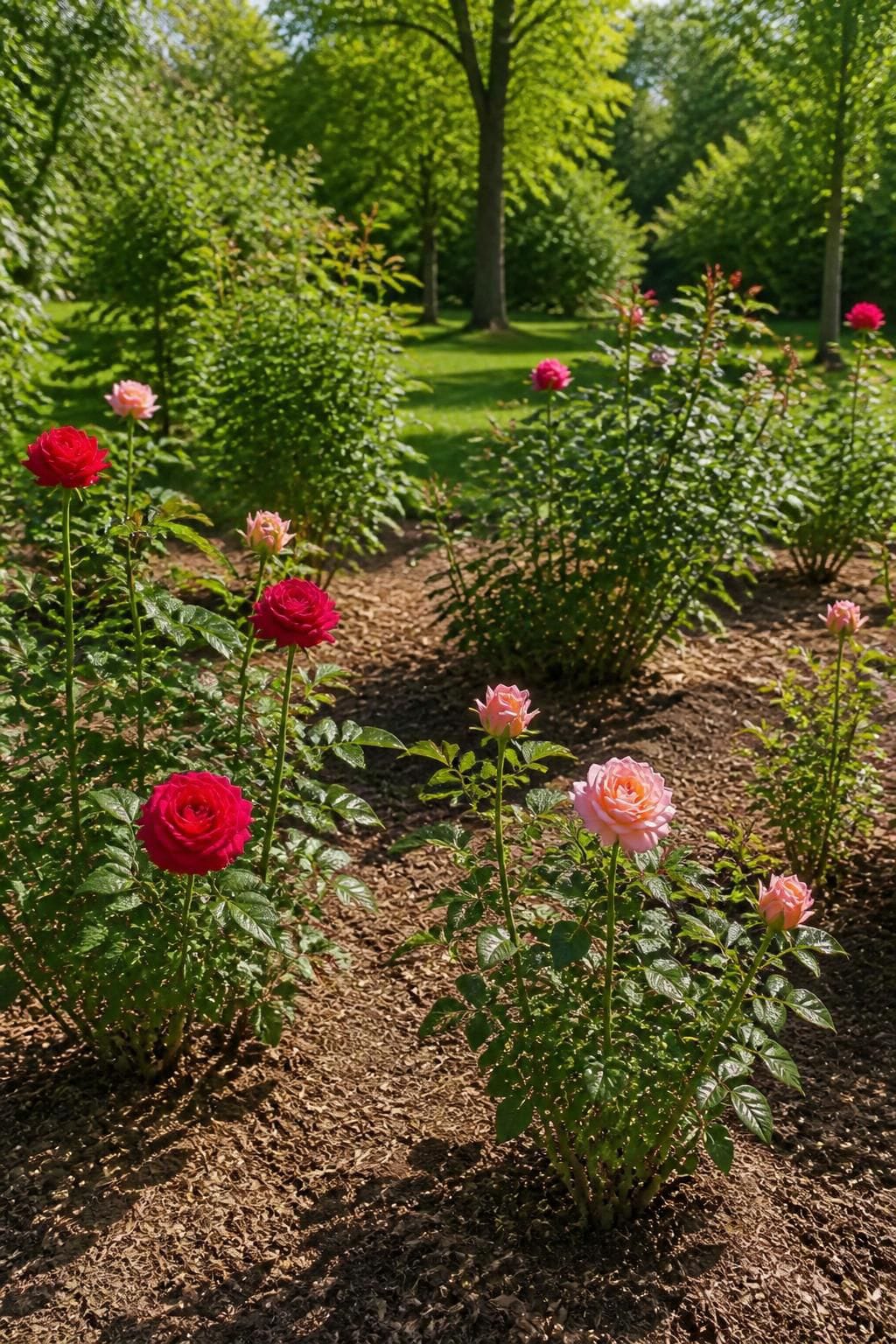
Sun and airflow do most of the work. UC IPM says plants grown in sunny places with good air circulation are less likely to have serious problems, and Oregon State recommends full sun and enough space between plants. Resistance varies by region and strain, so use the names below as a starting point and ask a local nursery or extension office what performs well nearby.
UC IPM and Oregon State Extension list several rose cultivars with lower susceptibility, but resistance varies by cultivar and growing conditions. Examples include ‘Double Delight’, ‘Iceberg’, ‘Europeana’ and ‘Just Joey’, plus Rosa rugosa varieties. Resistance is not immunity, though, and a resistant rose in a shady, crowded corner can still pick it up.
Water and feed with mildew in mind
Advice on overhead watering looks contradictory because it depends on the disease. Many guides say to keep foliage dry, and that is right for black spot, rust and downy mildew. UC IPM and Oregon State both note that overhead sprinkling in the middle of the day or morning can wash powdery mildew spores off, as long as the leaves dry before evening. Water can be useful against powdery mildew because it can wash spores from the foliage. That does not make overhead watering a good general practice for roses, however, because prolonged leaf wetness can favor other diseases such as black spot and downy mildew. If powdery mildew is your only problem, that is a reasonable tool. If other leaf diseases are present, water at the base instead.
For feeding, UC IPM suggests avoiding excess fertilizer or using a slow-release product, since a flush of soft growth gives the fungus an easy target.
Clean up in the dormant season and watch new growth
Because the fungus needs living tissue to survive, UC IPM says pruning and removing leaves during the dormant season can limit infestations, even though it cannot remove the disease completely. As new shoots form in spring, check them often. Catching the first white patches while they are small lets you use the gentlest options in the table.
Common questions
Will powdery mildew kill my rose?
Rarely. Oklahoma State University Extension says death from the infection is very rare, but severe attacks can stunt growth, curl and dry out leaves, and overgrow unopened buds and young stems.
Can I spray when it is hot?
Check the label first. UC IPM says not to use oils above 90°F and not to use sulfur when temperatures are near or above that level, so spray in the cooler part of the day. Early morning or evening also suits bees.
Should I cut the whole plant back?
During the growing season, cutting only the worst shoots is gentler than a hard prune, because heavy removal adds stress. Cleaning up leaves and pruning in the dormant season helps by reducing the places where the fungus can survive.
Can mildew from my vegetables spread to my roses?
Usually not. Powdery mildew fungi are separate species with their own host ranges, and UC IPM lists a different species for roses than for other garden groups. Your vegetables still need attention, but the rose fungus is a separate problem.

One thought on “Powdery Mildew on Roses: Treatment, Fungicides & Prevention”