Quick answer: Misshapen cucumbers are most often the result of incomplete pollination or uneven watering, with heat, cold and plain physical obstruction as secondary causes. Crooked or nubbed fruit usually means some of the ovules inside the flower were never fertilized. Fruit that is fat at the blossom end often follows a heavy drink after dry weather. A virus is less common but worth ruling out if the leaves are mottled as well. Most distorted fruit is still edible, so keep the vine, even out the water, help the flowers get pollinated, and judge the next fruit by what it does.
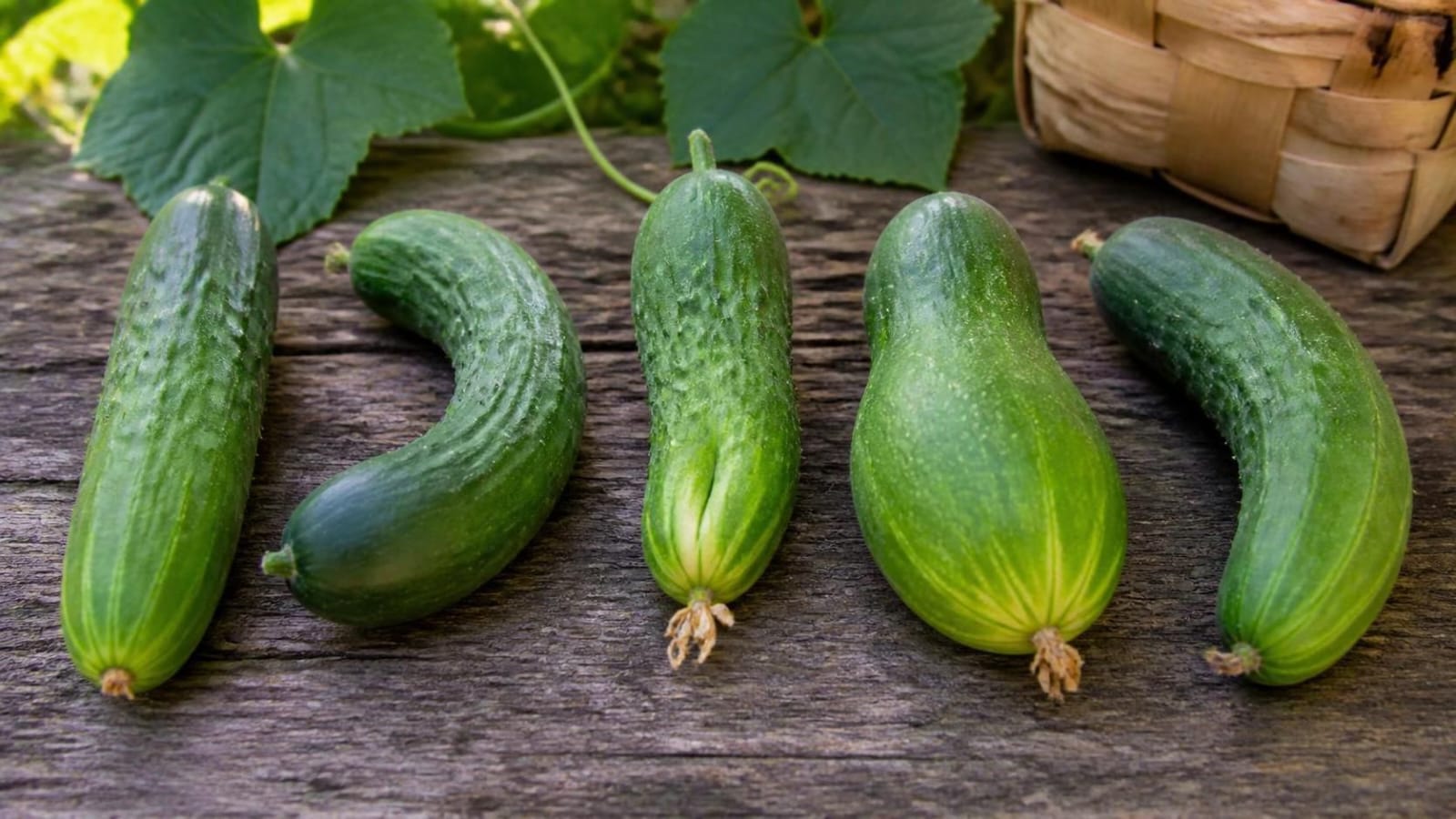
You check the vines and find a cucumber curled like a hook, another that is fat at one end and pinched at the other, and a third that looks like a small bowling pin. The plant itself looks fine. The leaves are green, the vine is growing, and the flowers keep coming.
Misshapen cucumbers are one of the most common complaints in the vegetable garden, and in most cases they are not a sign that the plant is dying or diseased. The shape tells you something about what happened while that particular fruit was developing, if you know what to look for.
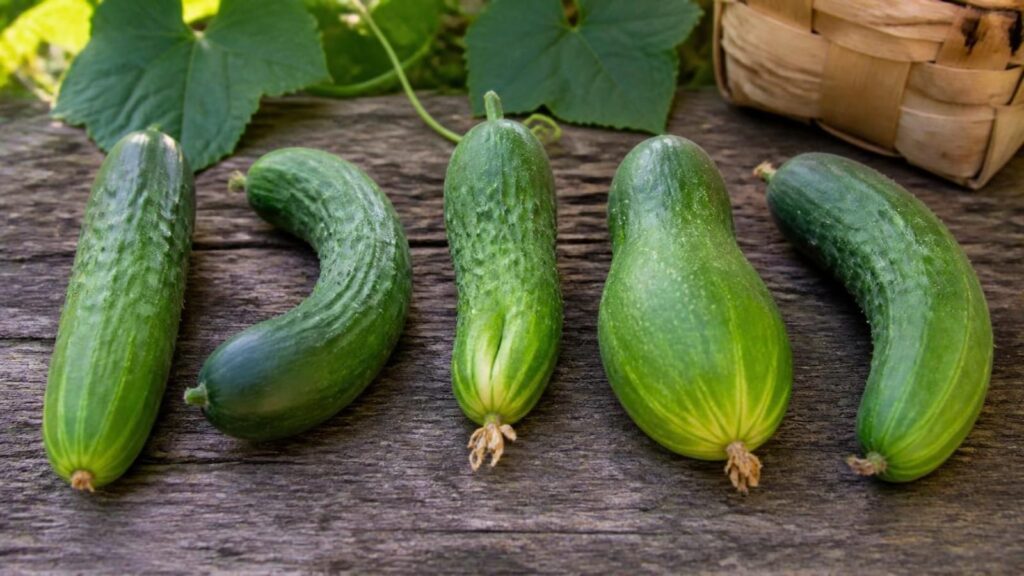
Why a cucumber grows crooked, lumpy or lopsided
A cucumber develops from the ovary of a female flower, which holds many tiny ovules. Incomplete pollination can leave parts of the developing fruit less filled out, producing crooked, pinched or nubbed cucumbers. University of Saskatchewan horticulturists describe it as pollen not reaching every ovule, so some sections develop less flesh even though the plant is otherwise healthy.
Pollination is only one cause. Fruit also changes shape when its water supply swings, when temperatures go outside what cucumbers like, when it grows against something solid, and occasionally when a virus is involved. The trick is to match the shape to the likely cause instead of changing everything at once.
Match the shape to the likely cause
| What you see | Likely cause | What to do |
|---|---|---|
| Curled or crooked fruit, or one end full and the other narrow or nubbed | Incomplete pollination | Encourage pollinators, and hand-pollinate if flowers are not being visited. Check weather, since cold, rain and cloud reduce bee visits. |
| Fruit swollen or bulbous at the blossom end, especially after a dry period followed by heavy rain or watering | Uneven water availability, with a large intake of water late in fruit development | Keep moisture even, mulch, and avoid long dry spells followed by soaking. |
| Fruit pinched in places or curved during a hot, dry stretch | Water or heat stress | Water deeply and regularly, and shade the plants during extreme heat. |
| Distorted, lumpy or mottled fruit together with crinkled, mottled leaves | Possible virus, such as cucumber mosaic virus | Look closely at the leaves before deciding. If the symptoms fit, remove the plant, control aphids, and choose tolerant varieties next time. |
| Fruit kinked, scarred or flattened exactly where it touched a wire, stem, stone or the soil | Physical obstruction | Train the vines up a trellis, with fruit hanging freely. Check that the variety is not naturally round or curved. |
The usual causes, one at a time
Incomplete pollination
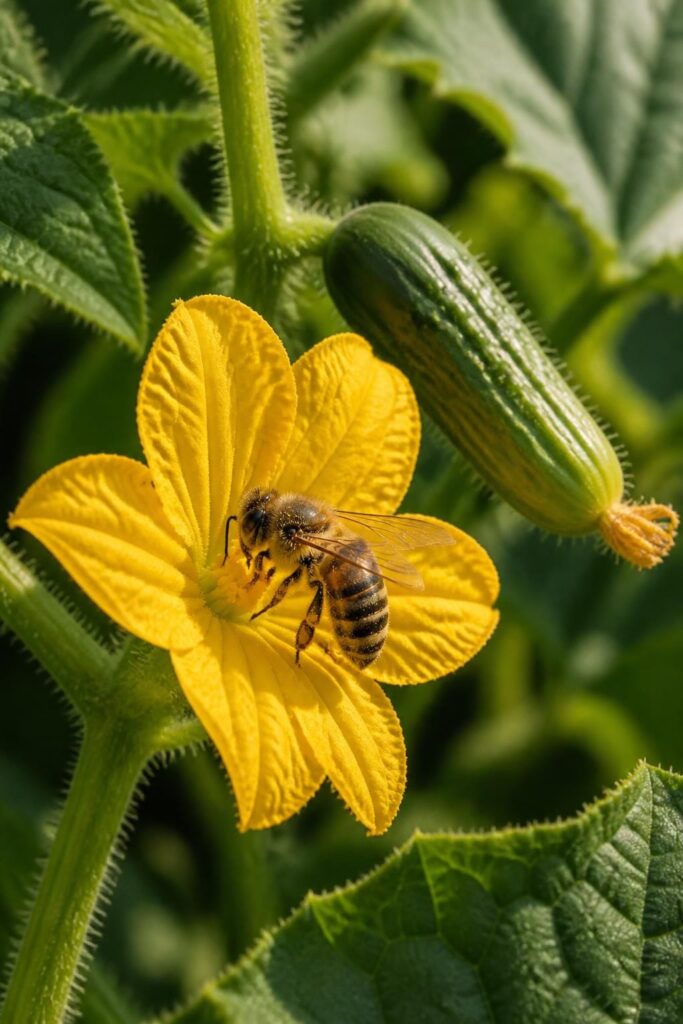
This is the one to suspect first when the fruit is crooked or nubbed. UF/IFAS describes it as inadequate pollen deposited on the female flower, so the fruit forms with some sections underdeveloped. Bees do the work. Cucumber flowers may need repeated bee visits to receive enough pollen for a well-filled fruit, so poor pollinator activity can quickly show up as crooked or poorly shaped cucumbers. Ask Extension also notes that cold, rain and cloudy weather can reduce pollination.
Because cucumbers need pollen carried between separate male and female flowers, an off week for bees can leave a run of oddly shaped fruit even when every other condition is right. Flowers are usually most receptive in the morning, which is when most of the visiting happens. Planting a few flowers nearby and avoiding sprays on or near open blossoms gives pollinators a reason to come and stay.
If the plant is putting out male blooms with few female ones, the cause is a different one, covered in this guide to cucumber plants with many male flowers but few female flowers. Misshapen fruit can follow from that too, since fewer female flowers mean fewer chances for a good set.
Uneven watering
Cucumbers are mostly water, so supply matters for shape as much as for size. USask notes that fruit that is thick or bulbous at the blossom end is usually not a pollination problem. It follows a large intake of water later in the fruit’s development, which is especially common after a period of rain. In practice, a dry spell followed by a deluge, or by a heavy hand with the hose, is the usual pattern.
The same swings that make fruit lopsided can also push it toward bitterness, so if your cucumbers are both misshapen and bitter, read this guide to bitter cucumbers on healthy-looking plants as well. Deep, regular watering with a mulch layer on top takes care of both.
Heat and cold
Cucumbers like warmth, but extreme heat can interfere with pollen and flowering, and fruit that develops through a heat wave is more likely to come out stunted or oddly shaped. A cold snap, or the cool nights that come late in the season, can scar or pit fruit as it grows, and the damaged areas can leave a distorted look as the cucumber keeps expanding. You cannot control the weather, but mulch helps buffer the roots and a bit of shade during the worst afternoons takes the edge off.
Nutrients and growing conditions
A plant that is short of nutrients, or crowded and competing for light and water, can produce poorer fruit, but this is rarely the main reason for a misshapen cucumber. Check pollination and water management first. Nutrients become more relevant when the plant also looks pale, weak or slow-growing, and in that case a soil test is better than guessing with fertilizer. Heavy nitrogen tends to give you leaves instead of fruit.
Obstacles and variety
If the distortion sits exactly where the fruit touched a wire, a stem, a stone or the ground, it was probably just in the way. Growing the vines up a trellis lets the fruit hang free and grow straight. It is also worth checking the variety. Some cucumbers, such as lemon types, are naturally round, and others curve by design, so a shape that looks wrong may be normal for what you planted.
Virus and sap-feeding pests
Most crooked cucumbers have nothing to do with disease, and distorted fruit on its own is not a sign of a virus. It is worth checking when the leaves look off as well. WSU’s HortSense fact sheet describes cucumber mosaic virus as causing mottled, crinkled leaves, stunting, and fruit with warty bumps and blotchy coloration, and notes the fruit is usually bitter. Aphids spread the virus, and there is no cure. Removing the infected plant, controlling aphids and weeds, and planting tolerant varieties is the standard advice.
If you do see aphids, think twice before spraying hard. UMass Extension notes that insecticides can irritate aphids into moving and probing plants more quickly, which can make the virus spread faster. Fruit that is distorted but sits on an otherwise clean, vigorous vine points back toward pollination or water instead.
What actually helps
- Keep moisture even. Water deeply and regularly instead of letting the bed dry out and then flooding it. Mulch and drip irrigation make this easy.
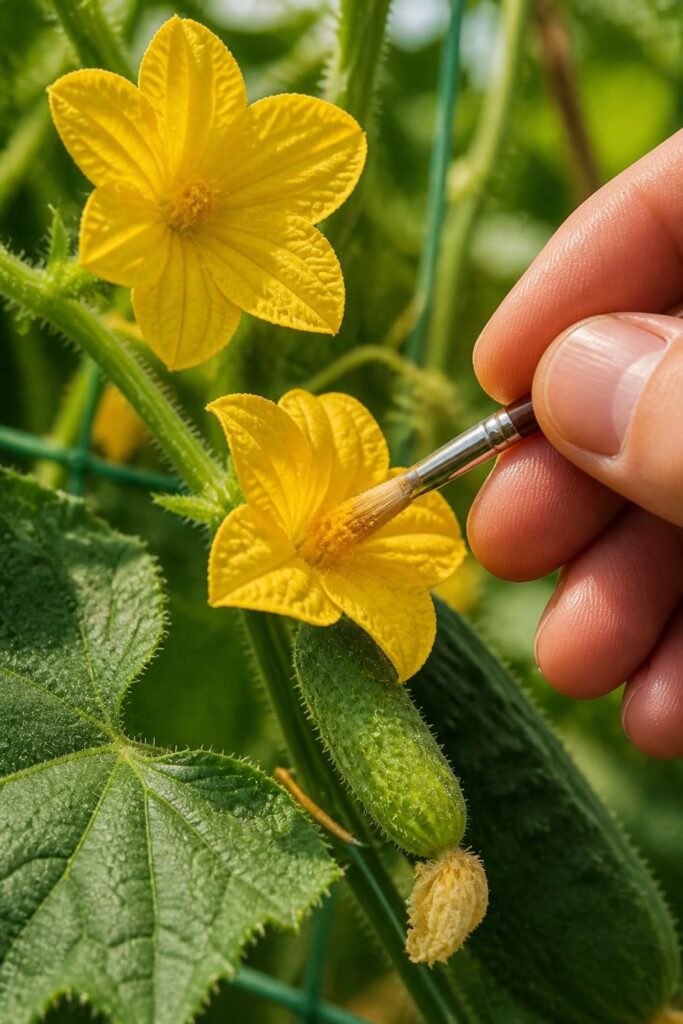
- Help pollination along. Plant flowers nearby, avoid spraying open blossoms, and hand-pollinate during cold, wet or cloudy spells. In the morning, touch a male flower to the stigma of a female flower, or move pollen with a soft brush. A female flower is the one with a tiny cucumber behind it.
- Trellis the vines. Fruit hanging free is less likely to be bent or scarred by contact.
- Remove badly deformed fruit early. Many growers pick them off so the plant puts its energy into better ones. You can still eat them.
- Shade and mulch in a heat wave. The goal is to take the extremes out of the root zone, not to keep the plant cool all season.
- Check the leaves when the fruit looks wrong. Mottled, crinkled leaves with warty fruit point to a virus. Clean leaves with a crooked fruit point to pollination or water.
What not to do
- Do not pull a healthy vine over a few crooked fruit. Check the weather, watering and pollination first. Odd fruit after a cold or wet week is common.
- Do not flood the bed after a dry spell. A large intake of water late in development is how bulbous fruit happens.
- Do not spray open flowers. Pollinators are working in the morning, and sprays on blossoms can keep them away.
- Do not pile on nitrogen to fix fruit shape. It tends to add leaves, not better fruit.
- Do not keep a vine that shows virus symptoms. There is no cure, and aphids can carry it on to healthy plants.
Common questions
Are misshapen cucumbers safe to eat?
Yes, in most cases. USask says misshapen fruit from an otherwise healthy plant is perfectly edible, even if it is no good for fitting into pickle jars. Taste a small piece first. If it is bitter, see the guide on bitter cucumbers, and if it came from a plant with virus symptoms, expect poor quality.
Will a crooked cucumber straighten out?
No. Once the shape is set by incomplete pollination or uneven growth, it stays. What you can change is the next fruit, by evening out the watering and making sure the flowers get pollinated.
Why are my cucumbers fat at one end after rain?
That bulbous shape is usually a water issue, not a pollination issue. A heavy intake of water late in fruit development, especially after rain following a dry spell, makes the blossom end swell. Mulch and steady watering reduce the swing.
Do I need bees for cucumbers?
Most garden cucumbers do. A few types, often sold as seedless or greenhouse varieties, set fruit without pollination, which helps if bee activity is low. If you grow regular varieties, hand pollination is the dependable backup.