
Neem Oil for Powdery Mildew: Does It Work? How to Use It
Most people reach for neem oil on a Saturday afternoon, right after the first white patches show up on a squash leaf or a rose. A week later, one of two things has happened. Either the patches stopped spreading, or they came back bigger, and neem oil earns a reputation as a miracle or a waste of money.
Both reactions make sense, because the result depends on details that labels and many blog posts skip: how far along the mildew was, what is really in the bottle, and what the weather was doing when you sprayed. This guide covers those details so you can decide whether neem oil suits the plant in front of you.
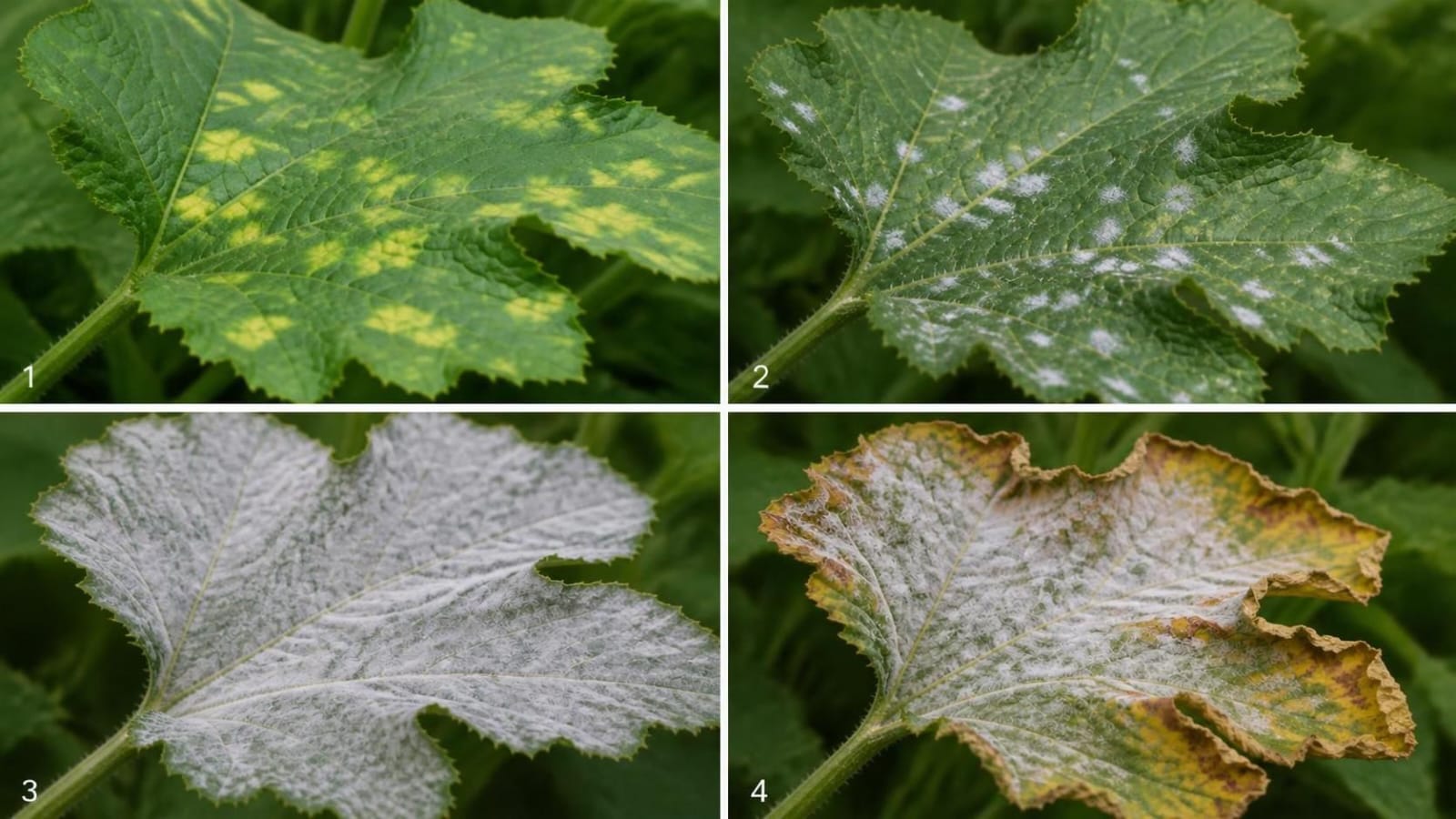
The short answer: neem oil can help, mostly when it goes on early. University extension guidance puts oils, neem included, among the options for mild to moderate infections, and describes their protective effect as limited. Thick, established mildew is much harder to deal with, and no spray repairs leaves that are already damaged. Thorough coverage, repeat sprays on the label schedule, and staying away from heat, drought-stressed plants and sulfur make the difference between a decent result and burned leaves.
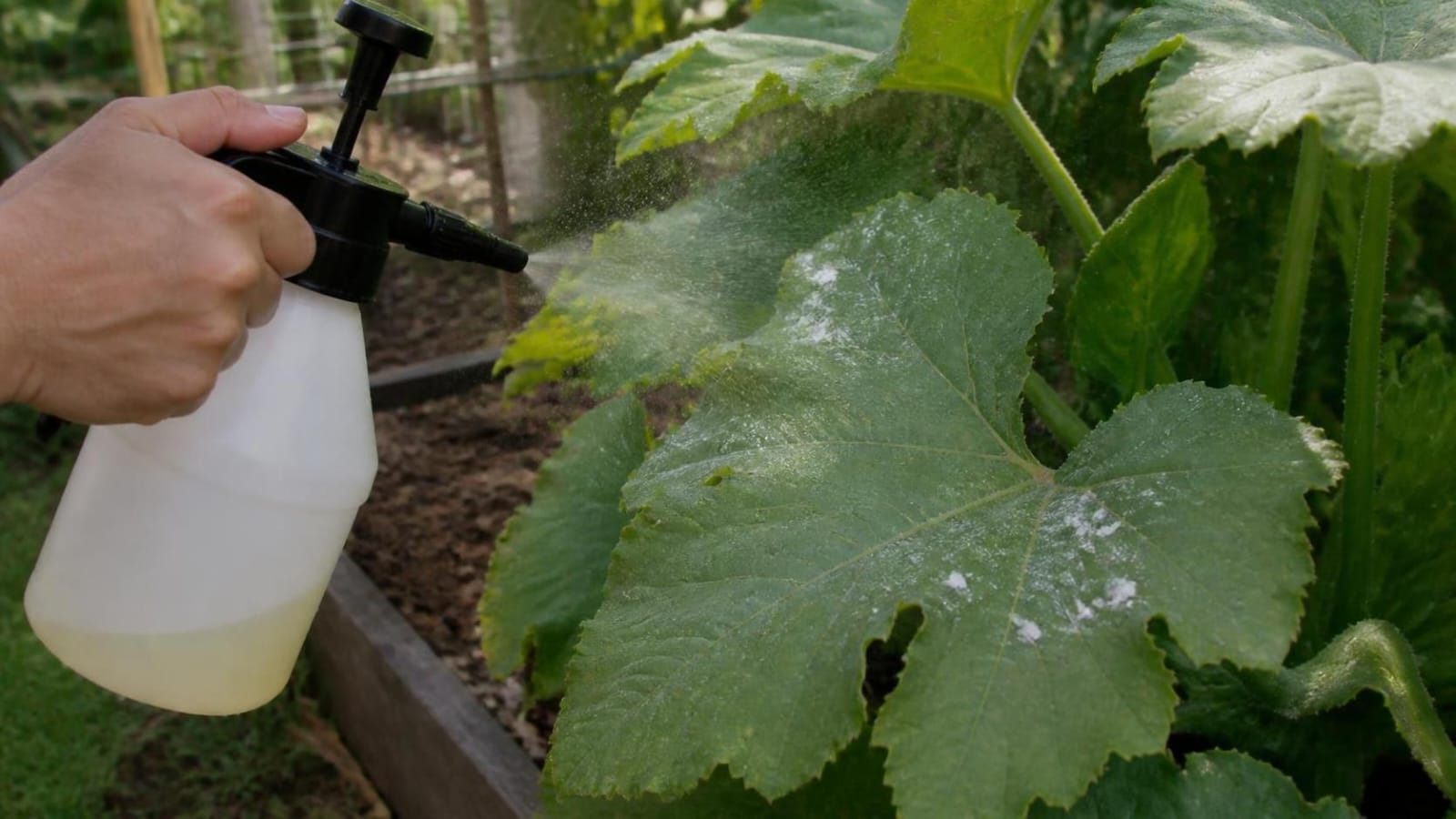
What neem oil does to powdery mildew
Powdery mildew grows on the surface of the leaf, which is what makes it reachable by a contact spray. The LSU AgCenter describes neem oil as a contact product that has been shown to stop some fungal spores, powdery mildew among them, from germinating and penetrating the leaf, and it stresses that coverage has to be complete. The University of Connecticut fact sheet reports that USDA researchers found neem oil controlled powdery mildew on hydrangea, lilac and phlox, with the likely explanation being that spores on an oil-coated leaf either fail to germinate or cannot get in.
It helps to know where that evidence is thin. Much of the research behind these statements is older, and the same UConn sheet says more testing was needed before the effectiveness could be considered proven. The Pacific Northwest Plant Disease Management Handbook lists neem oil among the oils labeled for powdery mildew on squash, then adds that oils give poor control as a stand-alone product.
The most useful framing comes from UC IPM. Oils work best as eradicants, meaning they can stop an existing infection, but they have only limited protective activity. Eradicants can also injure the plant, because the fungus lives in the surface cells of the leaf and killing it can kill those cells too. That is why timing matters so much: the earlier the mildew, the less there is to kill and the less damage the treatment does. Once mildew growth is extensive, every fungicide has a harder job.
| Situation | Neem oil outlook | Why |
|---|---|---|
| A few small white patches on new leaves | Good chance of slowing it | Eradicants work best, and cause the least injury, at the first signs |
| White coating thick across most leaves | Poor | Control gets harder as growth becomes extensive; oils alone often fall short |
| Healthy plants next to infected ones | Limited | Protective activity of oils is limited; sulfur is the usual preventive |
| Hot, dry or drought-stressed plants | Do not spray | Oil injury risk rises with heat and plant stress |
| Spots or fuzz rather than a dry white powder | Check the diagnosis | Downy mildew and other diseases follow different rules |
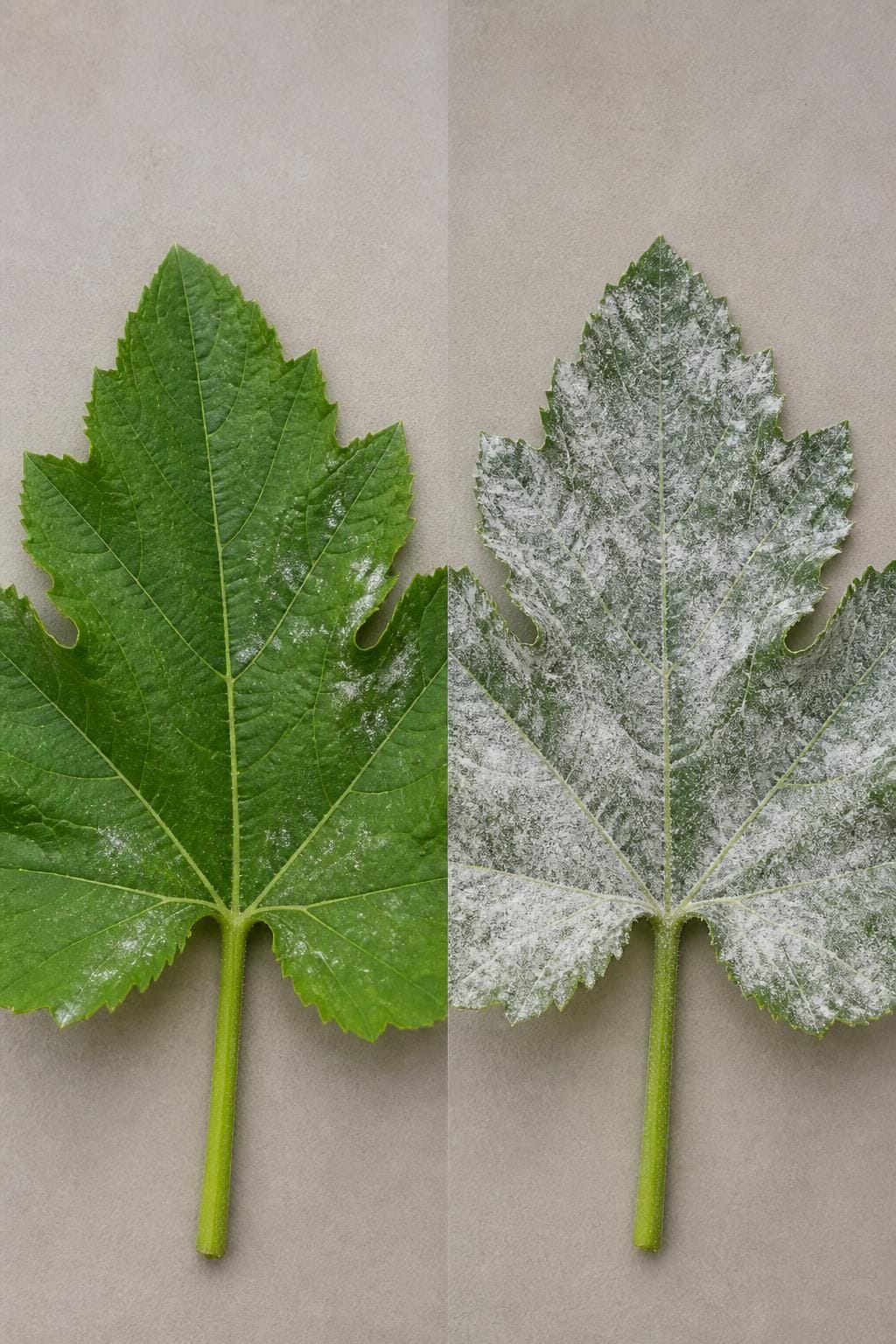
Make sure it is powdery mildew before you spray
Powdery mildew shows up as a white-to-gray powder on the leaf surface, on shoots, and sometimes on flowers and fruit, and new growth may look dwarfed or twisted. Downy mildew can look similar from a distance, but it prefers cool, very humid weather with moisture on the leaf, and its growth sits mostly on the undersides. Under a hand lens, UC IPM notes, powdery mildew spores form in chains, while downy mildew spores sit on branched stalks and resemble tiny trees.
If the leaves have angular yellow or purple patches with a fuzzy growth underneath, you are probably not dealing with powdery mildew, and advice written for it will not transfer neatly. For a closer look at the differences, see what powdery mildew looks like.
Which neem oil are you actually buying?
This is the detail most guides leave out. Raw neem seed oil contains azadirachtin, the compound behind neem’s reputation as an insecticide. Many products sold as neem oil use clarified hydrophobic extract of neem oil, which is the oil left after azadirachtin has been removed, while other neem products contain azadirachtin. Check the active ingredient on the label rather than assuming all neem products are the same. The University of Maryland Extension notes that neem-based horticultural oils are usually listed as clarified hydrophobic extract and lack azadirachtin, and the LSU AgCenter describes azadirachtin as the active ingredient in several commercial insecticides. Azadirachtin is primarily registered and used as an insect-control ingredient, rather than as the fungicidal component relied on for powdery mildew control.
In practice, that means two things. For mildew, extension sources point to the oil rather than azadirachtin as the useful part, much as with a plain horticultural oil. And a product whose active ingredient is azadirachtin is meant for insect control, so it is not the one to reach for here. Look for a product whose label lists powdery mildew and your type of plant, and remember that registered products and rules differ by country.
How to apply neem oil so it has a fair chance
- Test first. Spray a few leaves and wait a day or two. University of Maryland Extension recommends this for any plant whose tolerance of oils you are unsure about.
- Choose the weather. UC IPM says not to apply oils above 90°F or on water-stressed plants. The University of Maryland gives 85°F as its limit, and the Pacific Northwest handbook says to avoid spraying wet foliage. Take the lowest figure if your label does not say, and spray in the cooler morning or evening hours.
- Mix by the label, and keep shaking. Mix the product exactly as the label directs. Do not assume that a concentration recommended for one neem formulation applies to another. Oil separates from water, so an unshaken sprayer ends up too watery or too oily, which the University of Maryland ties to poor results or plant damage. Strengths meant for dormant plants are a scorching risk on leafy ones.
- Cover everything. The fungicidal action is on contact, so wet the tops and undersides of leaves and the stems, including the lower part of the plant, where mildew often starts.
- Repeat on schedule, not on impulse. UC IPM mentions 7 to 10 day intervals when conditions favor disease, and the Pacific Northwest handbook lists 7 to 14 days for neem products. Spraying more often than the label allows invites leaf burn, as the UC IPM nursery guidelines warn about repeated oil applications.
- Judge the new growth. Check the newest leaves a week or so after spraying rather than staring at the old patches. That is the real test.
A word on homemade neem sprays
Online recipes vary wildly, and many give no source for their strengths. The oil needs an emulsifier to mix with water, and the UConn fact sheet cautions that both vegetable oils and dish detergent can injure plants. A labeled product has a tested strength and a formulated emulsifier, which is usually the safer starting point. If you do mix your own, test a patch first and do not strengthen the mix because the first spray looked weak.
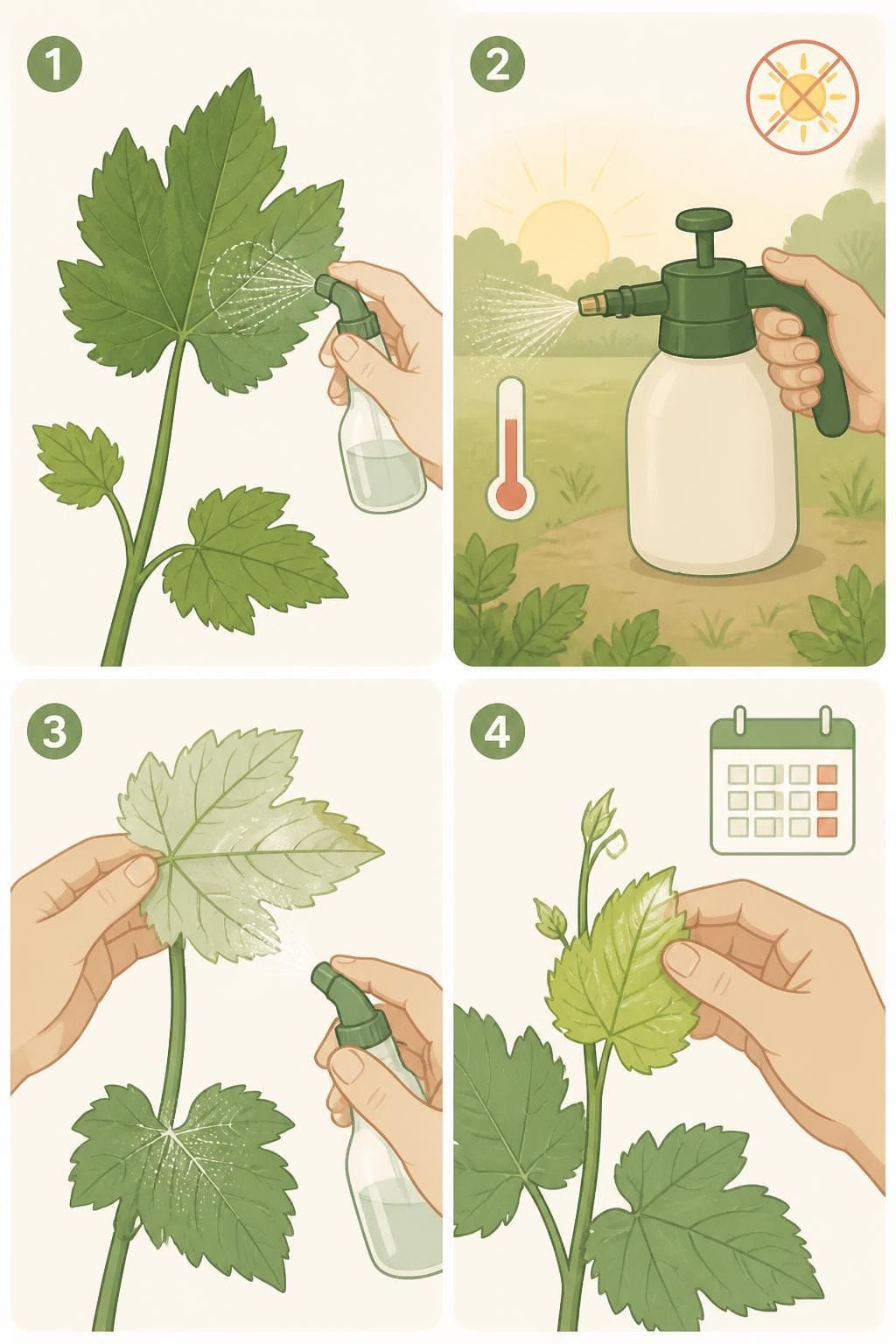
What to expect after spraying
Neem oil does not wipe the white coating away overnight, and leaves that are already infected may keep their patches. What you are looking for is that the newest growth stays clean and the mildew stops spreading. Keep an eye out for yellowing, spotting or browned edges in the first day or two, which point to oil injury rather than a failing treatment.
If mildew keeps advancing after a full round or two of sprays, switch tools rather than increasing the strength. Cut out the worst shoots, bag the clippings, and look at a different active ingredient. Potassium bicarbonate has some eradicant action but can injure infected plants, and sulfur works as a protectant on clean growth, though never within two weeks of an oil. The fungicide comparison lays out the options side by side.
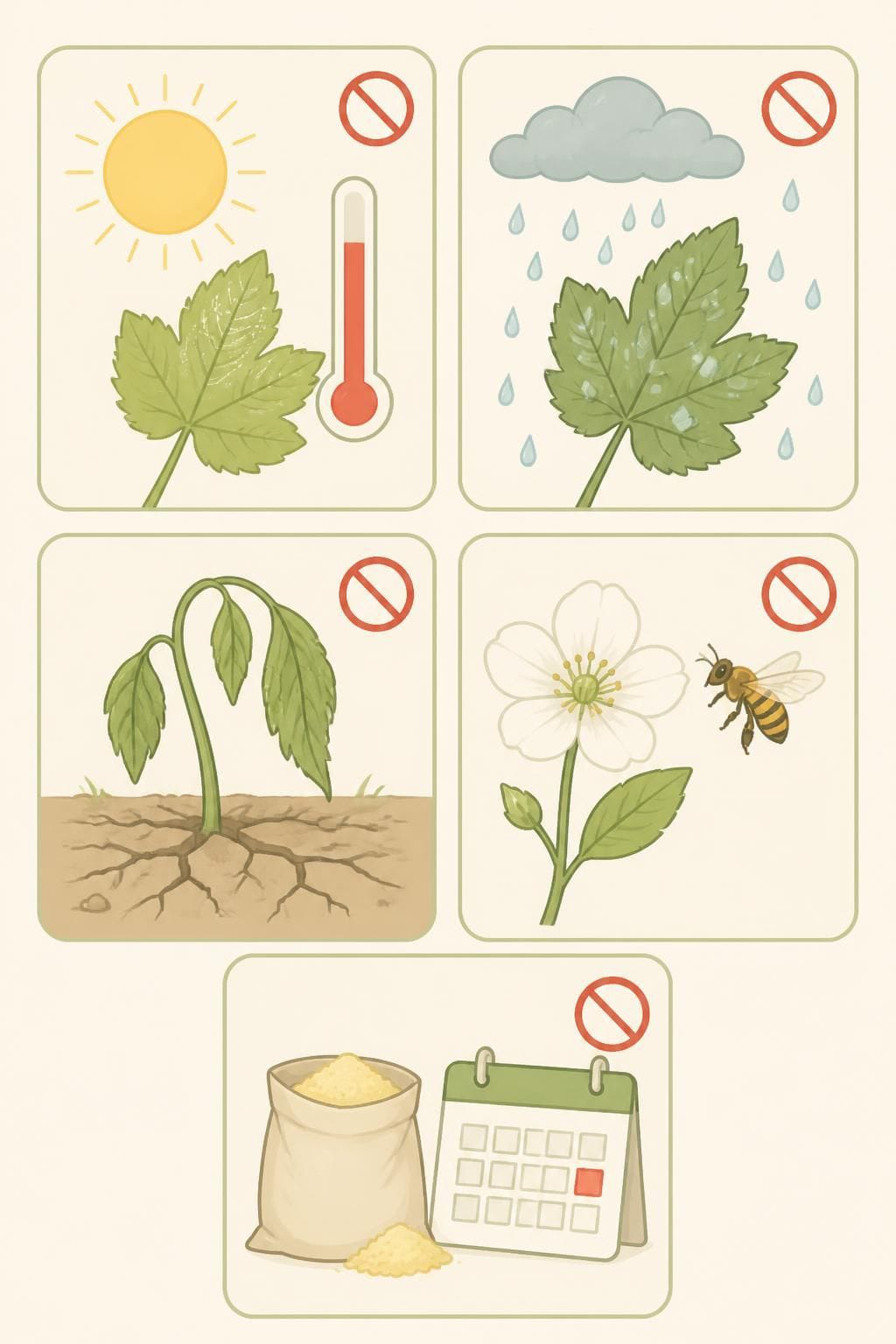
When not to spray neem oil
- Do not spray within two weeks of a sulfur product, or the other way round. UC IPM warns of plant injury, and the LSU AgCenter explains that sulfur can react with oils to form compounds that harm plants.
- Do not spray in hot weather. The usual ceiling is 90°F, some sources say 85°F, and a product label may set a lower limit than either.
- Do not spray drought-stressed or recently transplanted plants. Wait until the plant has recovered and is growing normally.
- Do not spray wet foliage or when rain is likely, because oil dries poorly and the risk of injury goes up.
- Do not spray open flowers. Oil can spot blooms, and it is a risk to pollinators that visit them.
- Do not use it on tender seedlings or fresh shoots without a test patch, since young tissue is easily damaged.
- Do not spray blue or gray foliage without testing. Oils can strip the waxy coating that gives hostas, junipers and similar plants their color.
- Do not boost the concentration to fix a stubborn case. Change the active ingredient instead.
Bees, aquatic life and food crops
Sources do not agree on how worried to be about pollinators. The National Pesticide Information Center rates neem oil as practically non-toxic to bees, reasoning that insects generally have to eat treated plant material to be harmed. The LSU AgCenter adds that it can be lethal when applied directly to beneficial insects. A sensible middle path is to spray when pollinators are inactive and skip anything in bloom.
Neem oil is slightly toxic to fish and other aquatic life, so keep it away from ponds and runoff. For vegetables and fruit, check the label for harvest intervals and wash produce before eating. The label is also the place to find precautions for people and pets, so follow it for protective clothing and for how long to keep children and animals away from treated plants.
Neem oil on roses, squash and other plants
On roses, UC IPM lists oils for mild to moderate infections and notes that susceptible varieties may need fungicide protection when conditions favor mildew. Choosing resistant varieties does more than any spray, and the rose-specific guide goes through timing, look-alike diseases and varieties.
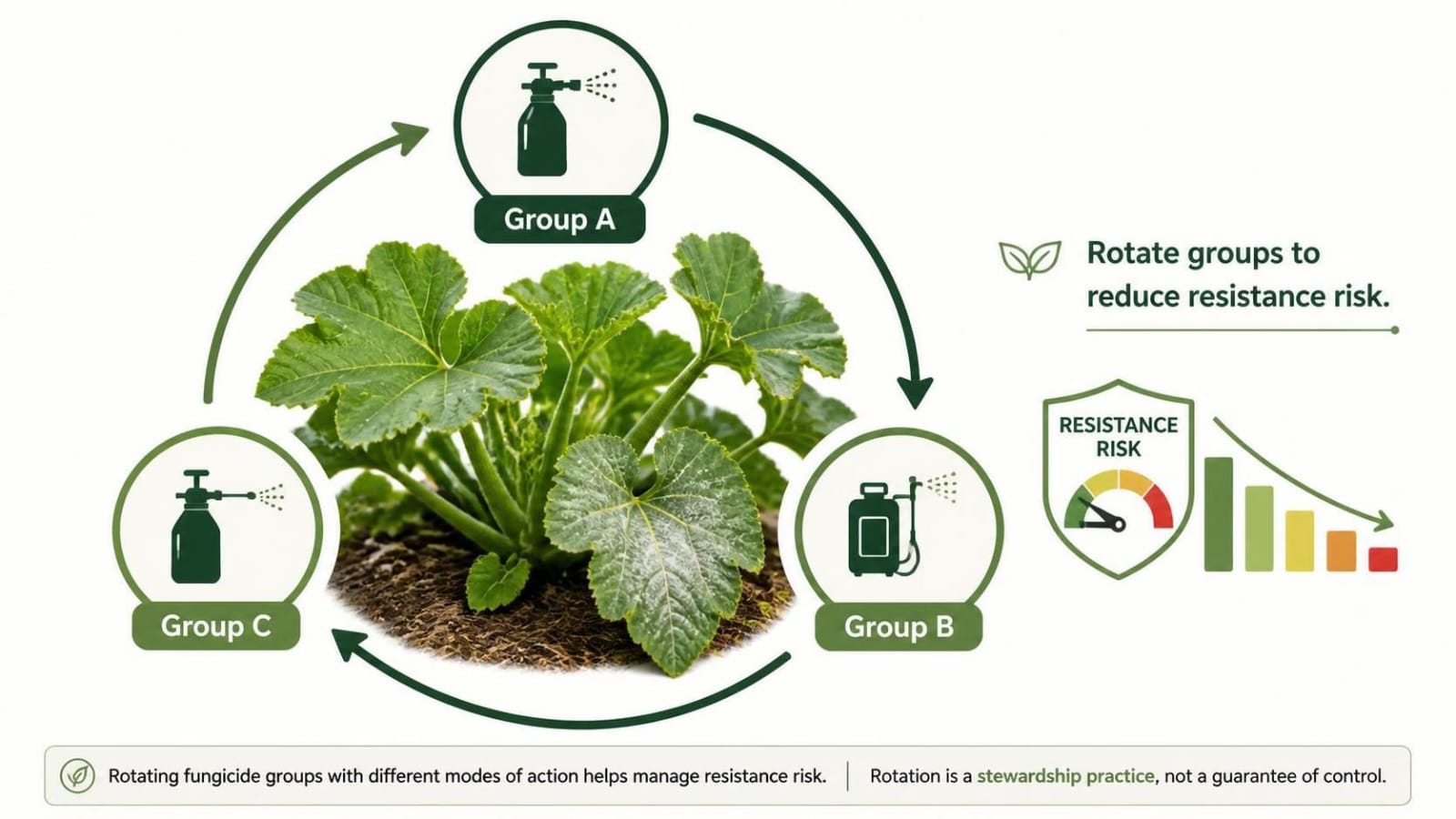
On squash, cucumbers and pumpkins, mildew can build quickly in warm weather. The Pacific Northwest handbook includes neem oil among its oil options but calls oils poor control on their own, which is why many growers rotate products and plant resistant varieties. The guide to powdery mildew on squash and cucumbers covers that in more depth.
On other ornamentals, the evidence from the USDA work mentioned earlier covers hydrangea, lilac and phlox. For anything else, test a few leaves first and watch them for a day or two.
Where neem oil fits among other options
| Option | Best role | Catch |
|---|---|---|
| Neem or horticultural oil | Eradicant for mild to moderate infections, with limited protective activity | Heat, drought stress, wet leaves and sulfur all raise the risk of injury |
| Sulfur | Protectant, applied before mildew appears | Not within two weeks of oil; can injure some plants near 90°F |
| Potassium bicarbonate | Some eradicant action | Can injure infected plants; damage is severe on advanced mildew |
| Bacillus-based biologicals | Mostly preventive | Effectiveness varies by product and disease pressure |
Baking soda gets its own attention because it is the best-known kitchen remedy. The UConn sheet notes that Maryland researchers found it failed on lilac without oil, and the baking soda guide looks at what the evidence does and does not support.
Use Neem Oil Early, But Do Not Rely on It Alone
Neem oil is a reasonable option for early or mild powdery mildew, but it works best as one part of a broader plan. Sun, airflow and variety choice do much of the work. UC IPM recommends sunny sites, good spacing, resistant varieties and restrained fertilizing, since too much nitrogen produces the lush growth that mildew likes. It also notes that overhead sprinkling in mid-morning can wash spores off, as long as leaves dry quickly, which is fine if powdery mildew is your only problem and a poor idea if black spot or rust is around. Clearing infected leaves in autumn reduces what is left to restart the cycle next spring, according to UConn.
The main guide to powdery mildew covers causes and prevention across garden plants if you want the wider picture.
Common questions
Does neem oil kill existing powdery mildew?
It can knock back mild to moderate mildew, especially when applied early and thoroughly. It will not repair damaged leaves, and thick coverage is much harder to control.
How often can I spray neem oil?
Follow the label. Extension sources mention intervals of 7 to 10 or 7 to 14 days, and repeating oils too often can burn leaves.
Can I use neem oil and sulfur together?
No. Keep at least two weeks between an oil spray and a sulfur spray, in either order, and check your labels because some plants need a longer gap.
Why did the mildew come back after I used neem oil?
Oil is a contact product with a very short residual, according to the University of Maryland, so new leaves are unprotected and wind brings in fresh spores. A thicker coating, shade or crowding can also keep the disease going, so fix those along with the spray.

2 thoughts on “Neem Oil for Powdery Mildew: Does It Work? How to Use It”