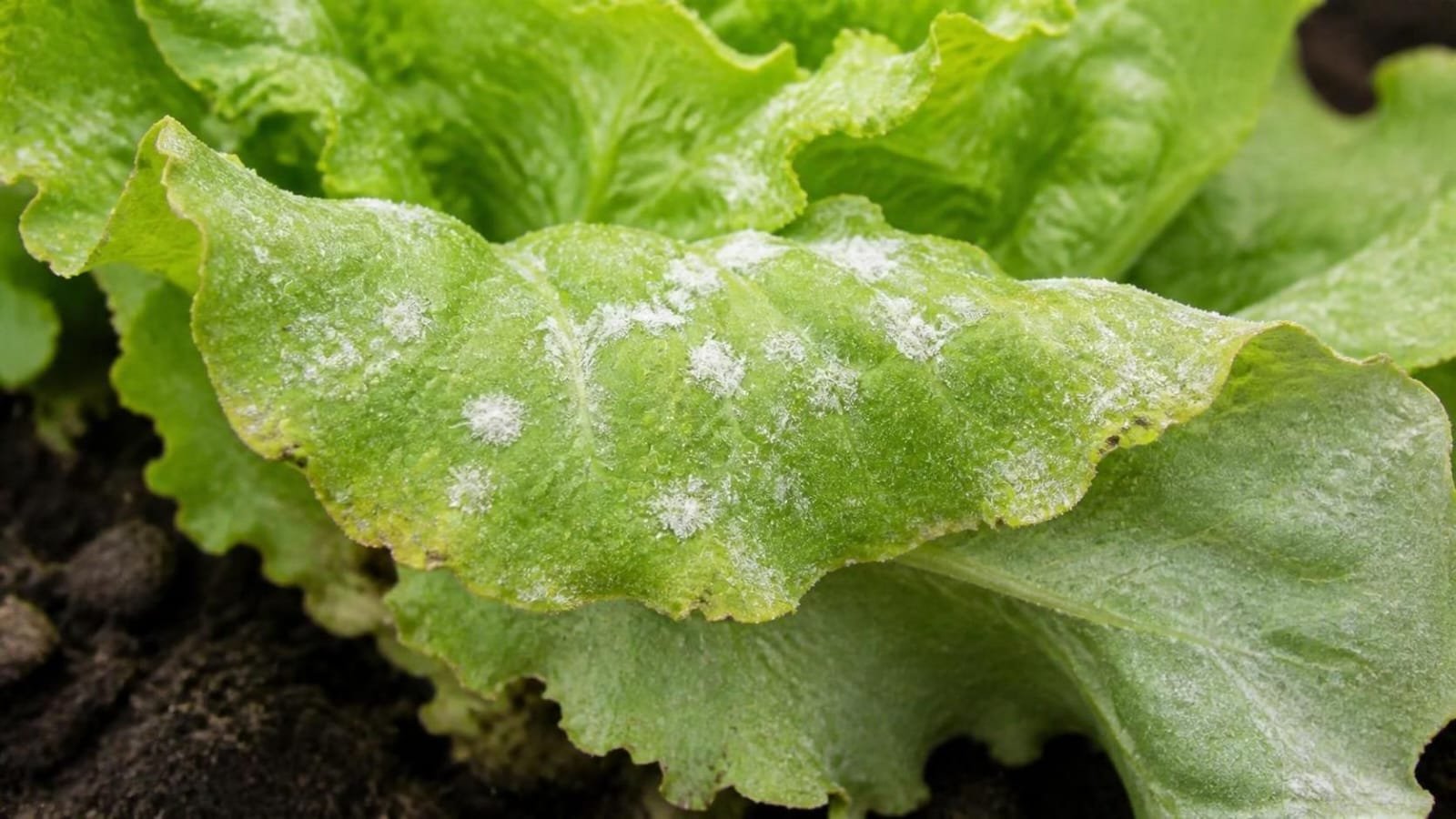
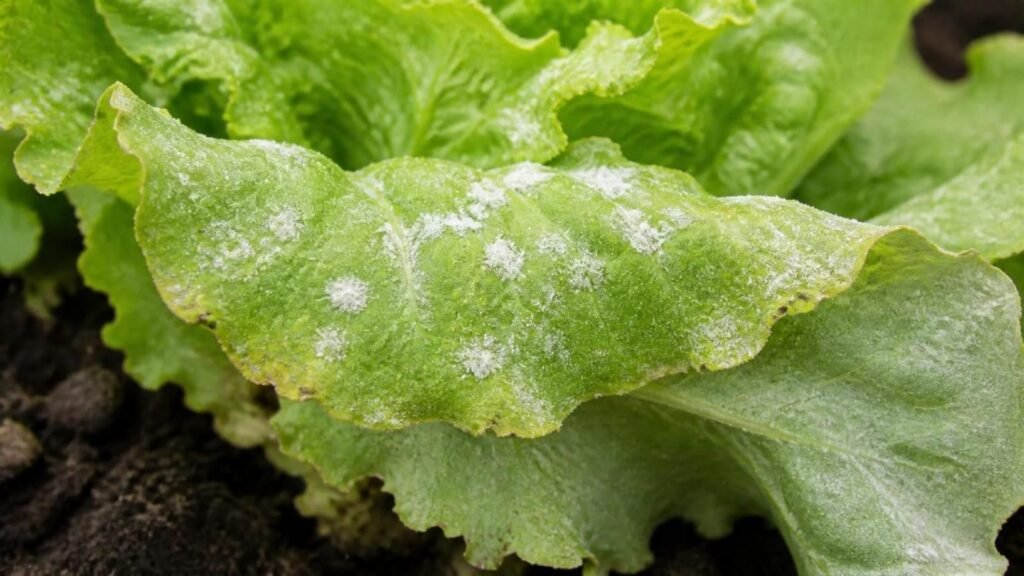
Start with your thumb. Rub one of the dusty patches on an outer leaf, then flip the leaf and check the underside. If the white film smears off like flour and you find more of it on the back, powdery mildew is the most likely answer.
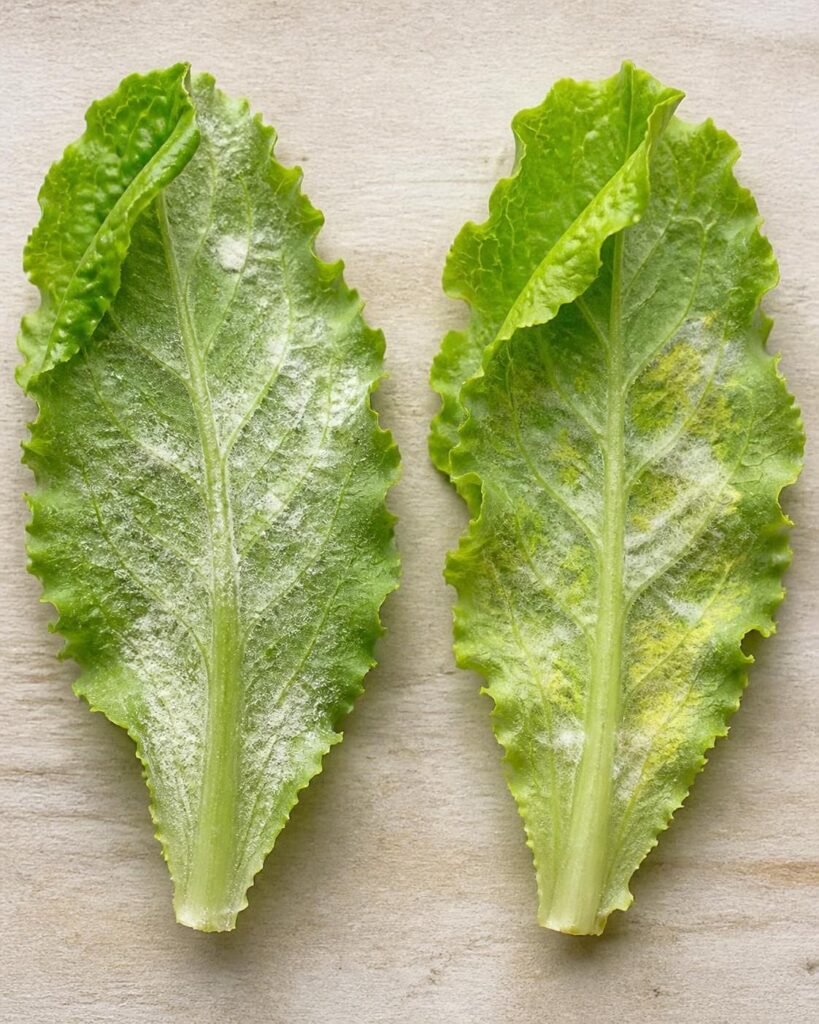
Powdery mildew on lettuce is a fungal disease caused by Golovinomyces cichoracearum. It starts on the oldest outer leaves as yellowish spots, then turns into a white, dusty coating on both sides of the leaf. It likes warm weather and crowded plants, so better airflow will help more than a new watering routine. In most home beds, picking off the worst leaves and thinning the plants is enough. A fungicide is optional, and if you use one, follow the label.
White dust on the outer leaves, clean heart in the middle
If you’re staring at a white-dusted leaf right now, you’re not alone, and it’s usually fixable. The pattern is fairly consistent: older leaves go first. According to the University of California IPM program, the first sign is often yellow spots on the upper surface of those older leaves. The powdery growth forms on the spots, then spreads to the undersides and the stems. Badly affected leaves can turn completely yellow and die.
As the infection moves along, leaves may buckle or twist, then dry out and turn brown. Now and then you’ll also see tiny brown dots in the white patches. The same program’s commercial lettuce guidelines describe these as the fungus’s reproductive stage, and they matter later, when we get to next season.
The heart of the head often looks fine for days, so a lot of people shrug it off. Mildew on the underside is easy to miss and can spread quite a bit before anyone notices. Lift a few outer leaves every time you check the bed.
Before you treat anything, rule out the lookalikes
White or pale marks on lettuce don’t always mean mildew, and a wrong guess sends you after the wrong fix. Go through these checks in order. The first ones rule out the most.
- Rub it. Powdery mildew sits on the leaf surface, so the powder usually smears or lifts off. Marks that stay put could be spray residue, hard-water spots, or leaf damage.
- Turn the leaf over. Powdery mildew covers much of both the top and the underside. Downy mildew shows its growth mostly underneath, often below a yellow patch on top.
- Think about the weather. Powdery mildew is a warm-weather disease. Downy mildew prefers cool, damp spells, so a cold, wet fortnight tips the odds toward downy.
- Use a hand lens if you own one. Powdery mildew spores form in chains on a single stalk. Downy mildew spores sit on branched stalks that look like tiny trees. It takes a decent lens and a steady hand, but the difference is clear once you’ve seen both.
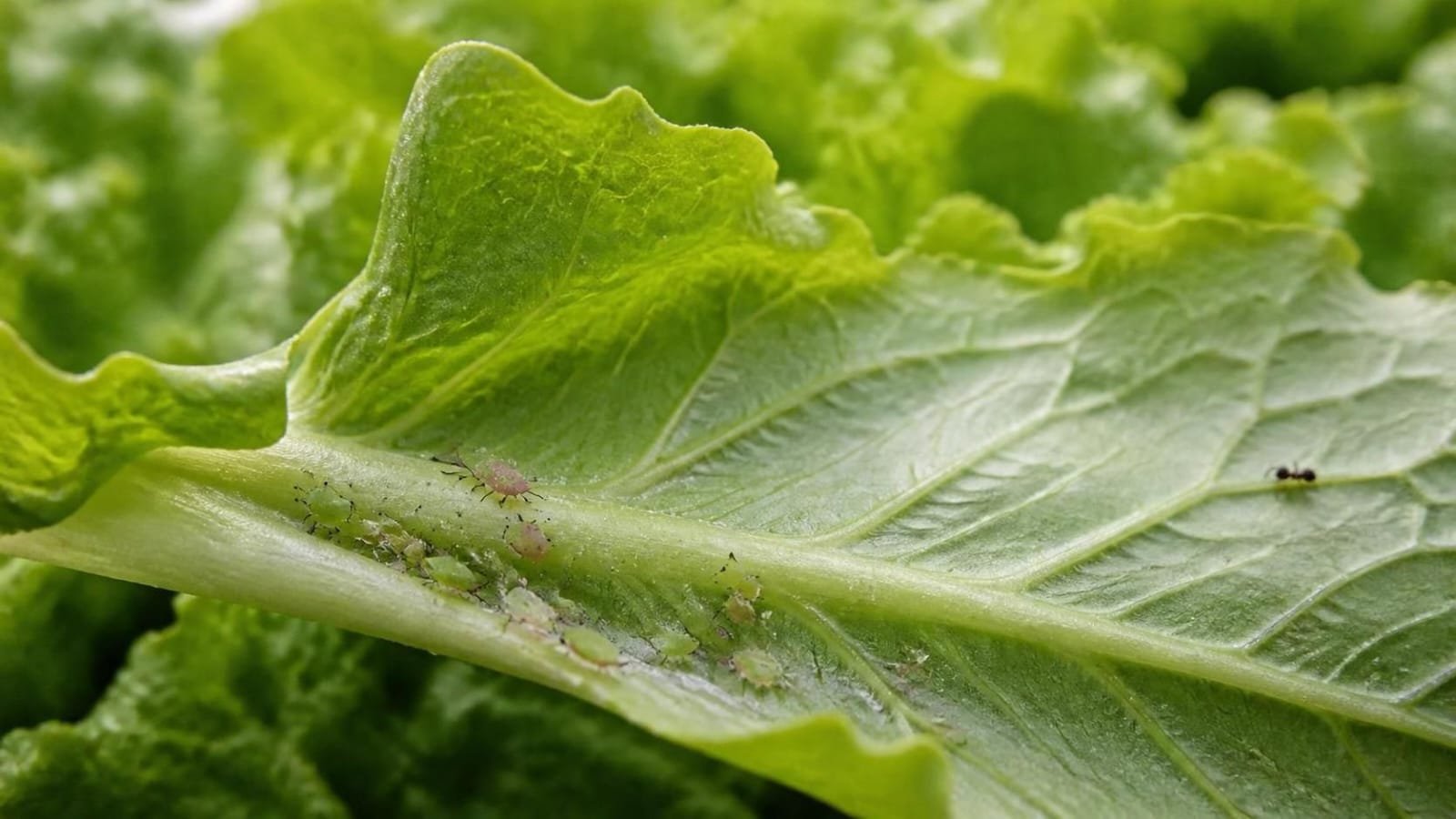
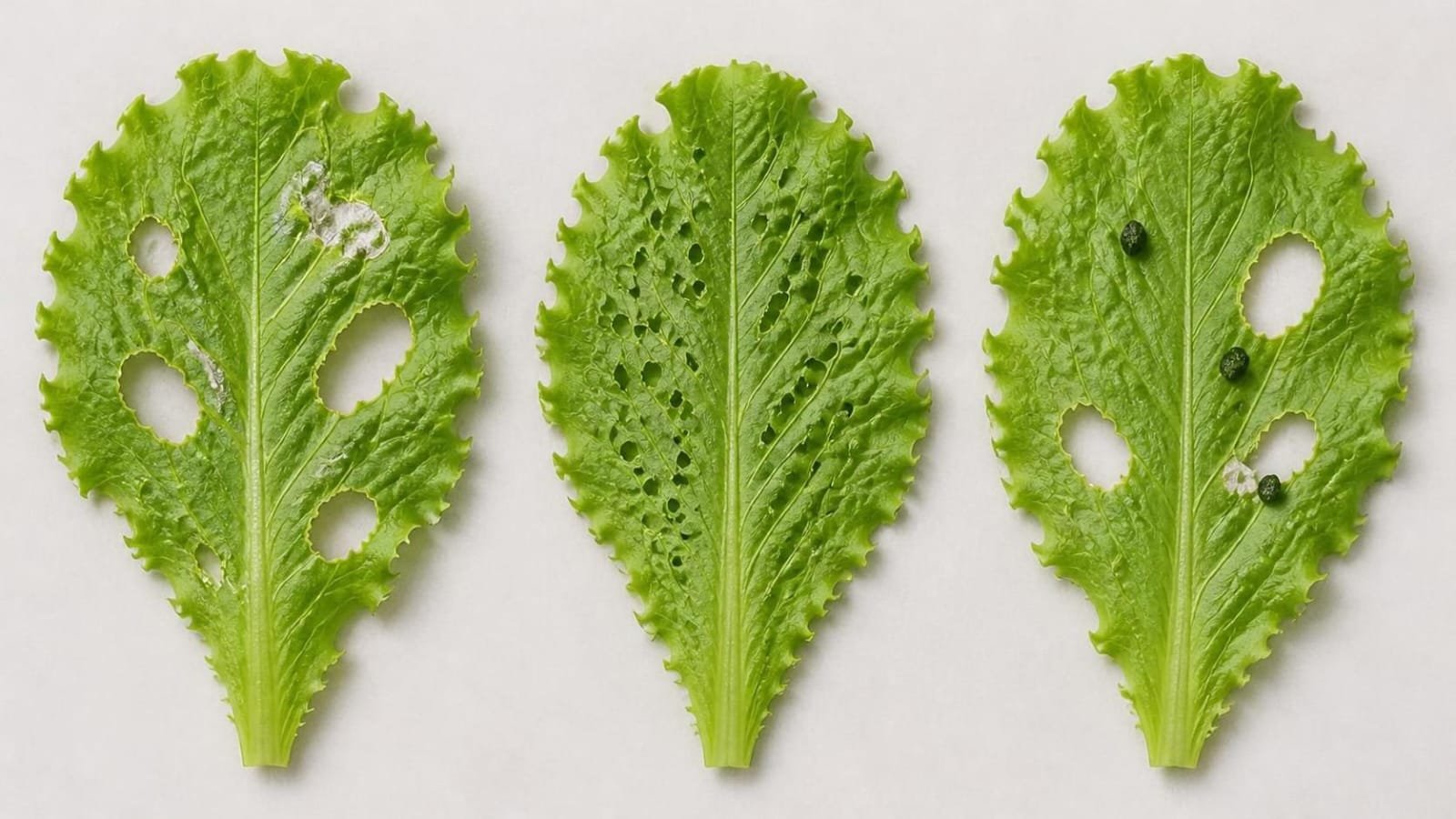
- Check for aphids. Their shed skins are small, pale flecks that can pass for mildew at a glance, and colonies like to hide on the undersides. Our guide to identifying and controlling aphids on lettuce shows what to look for. If you see holes or chewed edges, something else is feeding on the plant, and the rundown of common lettuce pests covers the usual suspects.
Yellow leaves with no white growth at all are a different story. Nutrient shortages, watering problems, and plain old age can all turn leaves yellow, and our page on yellow lettuce leaves walks through those.
One honest limit: early powdery mildew and early downy mildew can look alike, and nobody can settle it from a description or a single photo. If the planting matters to you, or the problem keeps coming back, your local Extension office can confirm it from a sample.
It’s been dry and sunny, so why the mildew?
Most of us either reach for the watering can or stop watering altogether, because mildew sounds like a moisture problem. Neither move deals with the real cause.
Here’s the kicker: the warm, sunny stretch you’ve been enjoying is exactly what this fungus likes. A fact sheet from Ohio State University Extension says spores germinate best at about 64 to 77°F (18 to 25°C), though infection is possible from roughly 41 to 86°F (5 to 30°C). It can also take hold at fairly low humidity, and water sitting on the leaf actually discourages spores from germinating.
What the fungus does need is a sheltered place to settle: a dense canopy, poor airflow, shade, and crowded plants. Heavy nitrogen feeding makes things worse by pushing soft, tender growth. So the lever you can pull is spacing and airflow. That said, don’t take this as permission to soak the leaves. Downy mildew and several other leaf diseases do like wet foliage, so watering at the base in the morning is still the safer habit.
Mildew and bolting often show up in the same hot spell. If the center of the head is also stretching upward, our piece on why lettuce bolts will help you sort that out.
And if the plants look stunted or limp on top of the dust, mildew may be only one of several problems. The wider guide to lettuce growing problems helps you sort through the rest.
What to do this afternoon
A common situation: a bed of romaine sown thick in spring and thinned late, with leaves touching by the time the weather warms. The outer leaves go dusty first, the heart looks fine, and the grower decides to wait until the weekend. Fair enough if your first thought is to tough it out too. On a home bed with a light dusting, that can be a reasonable call, since extension sources generally describe powdery mildew as rarely serious in home lettuce. Just do these few things while you wait.
Pick off the worst leaves. Oregon State University Extension advises pruning infected parts as soon as they show, bagging or burying them instead of composting at home, and cleaning your tools afterward. Take only the heavily coated leaves. Please don’t strip a plant bare in a panic, because lettuce needs its leaves to keep growing. A leaf with a light dusting can simply be trimmed at harvest. Leaves that are already yellow or crinkled won’t recover, but new growth can stay clean if you act early.
Thin the bed. If leaves are touching, pull every second head and eat the thinnings from the cleanest plants. That fixes the crowding that let the mildew settle in. If the dust has already reached the inner leaves of a mature head, harvest the clean parts now rather than waiting.
Rinse in the morning. A hose can wash spores off the leaves. It’s a low-risk step, though only somewhat effective. Do it early so the leaves dry well before evening, and keep the pressure gentle around small seedlings.
Skip the fertilizer boost. Feeding nitrogen to perk the plants up just produces the tender growth that mildew prefers.
Do you actually need to spray?
Often, no. Oregon State University Extension notes that fungicides usually aren’t needed for powdery mildew on vegetables. They work best when applied before symptoms appear, so they make the most sense for beds that get hit every year. The active ingredients it lists for home gardens include Bacillus amyloliquefaciens strain D747, canola or mineral oils, plant essential oils, potassium salts of fatty acids, and sulfur. The Pacific Northwest Plant Disease Management Handbook also lists bicarbonate products among registered options and says sulfur formulations can be very effective.
Heads up: a spray that works on your roses may not be labeled for lettuce. Read the label front to back, confirm lettuce is listed, and check what’s approved where you live, since products and rules differ by country and region. Extension guidance for home gardeners suggests spraying between 50 and 80°F, and never on wet leaves or on plants stressed by heat. If you spray more than once in a season, alternate active ingredients that work in different ways, so the fungus has a harder time adapting.
Can you still eat it?
Powdery mildew isn’t considered harmful to people. The damage is to the plant’s leaves and your harvest. Trim off the coated leaves, wash the rest, and eat. Don’t sweat it if a leaf or two already made it into your salad. If you’re sensitive to molds, skipping anything visibly coated is a sensible precaution.
Setting up the next planting so it doesn’t repeat
Start with the variety. Studies reported by Ohio State University Extension found that leaf and butterhead types resist powdery mildew better than romaine and crisphead. If this bed keeps getting hit, change the type before you change the spray. Resistance varies with the variety and your growing conditions, so check seed company and university trial results.
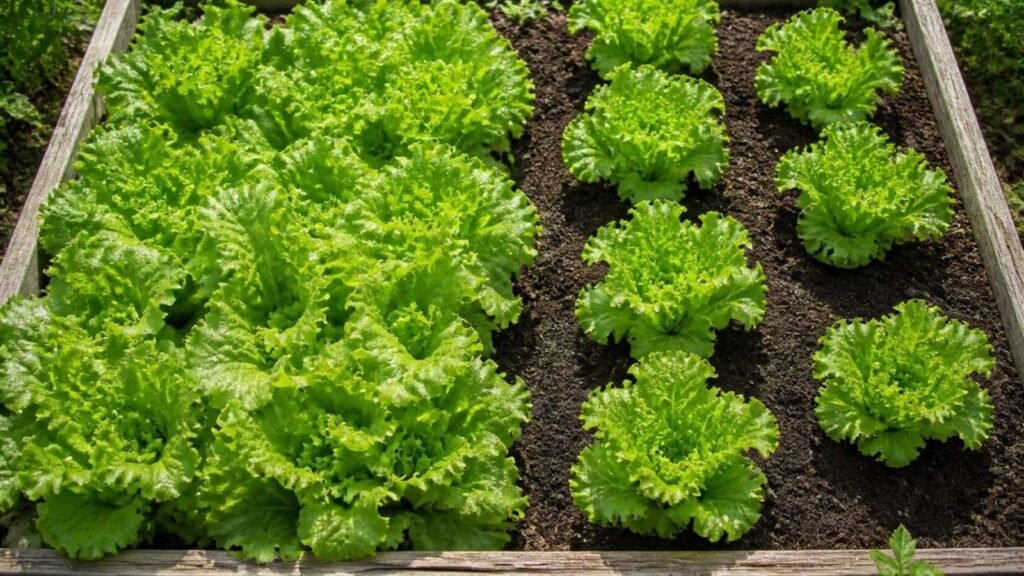
Then give the plants room. Sunny, open sites with space between heads let air and light through. Avoid planting lettuce in the same spot year after year, and clear away all plant debris at the end of the season, since the fungus can survive the winter on it.
Look around the garden, too. A weed called wall lettuce can carry powdery mildew. The same fungus species can also infect some daisy-family flowers, such as zinnia and cosmos, although not every strain infects every host. If those neighbors are dusty, treat them as an early warning for your lettuce.
Check the outer leaves again in a few days. If the center keeps growing clean, you caught it in time. If the white dust keeps climbing toward the heart, thin again and look at your spray options.