
What’s Eating My Lettuce?
Slugs get blamed for a lot of holes in lettuce leaves. Sometimes they’ve earned it. Other times a tiny beetle did the work, or a caterpillar is sitting deep in the head where you can’t see it. The damage tells you which one you’re dealing with, so read it before you buy anything to spray.
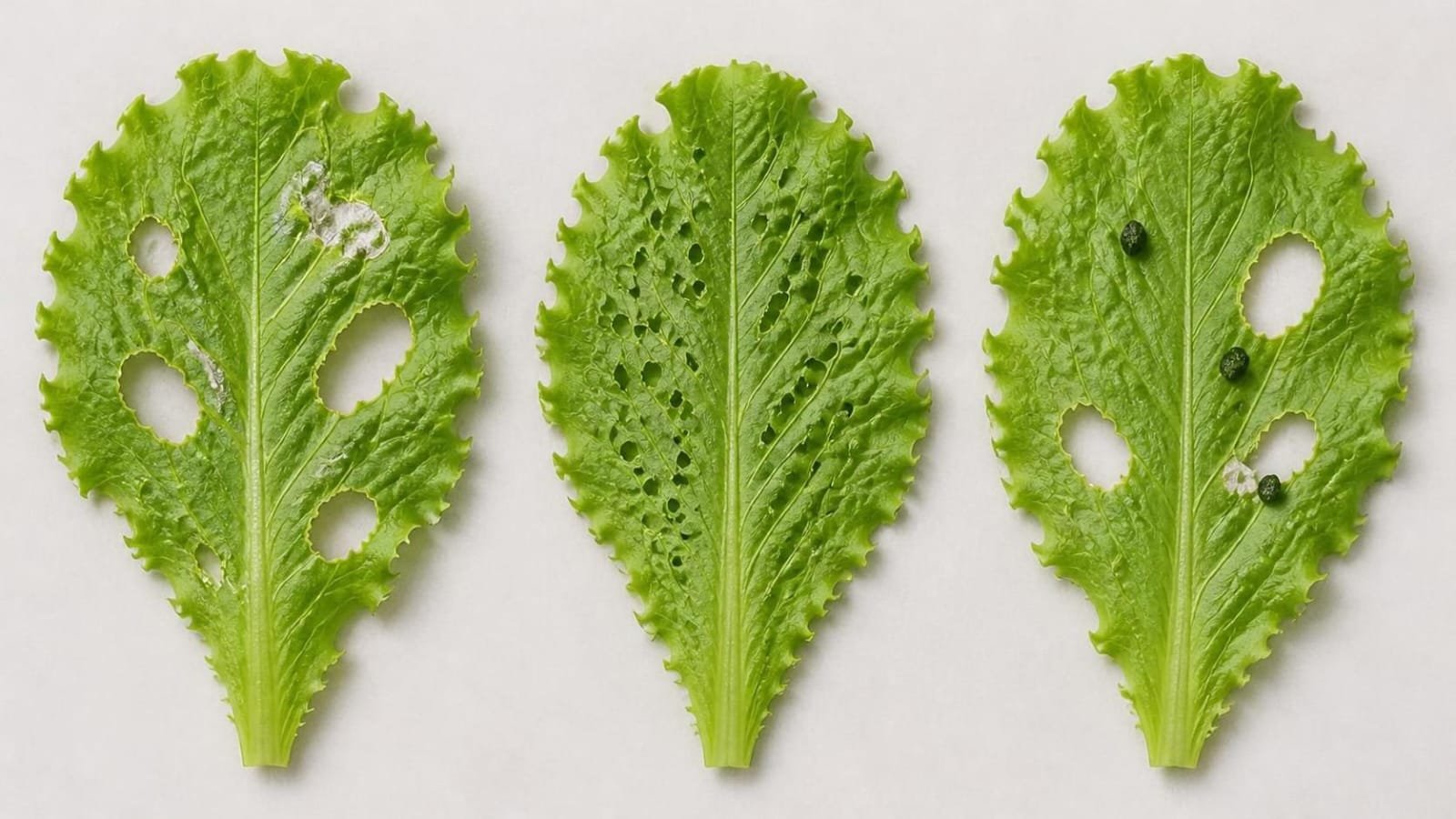
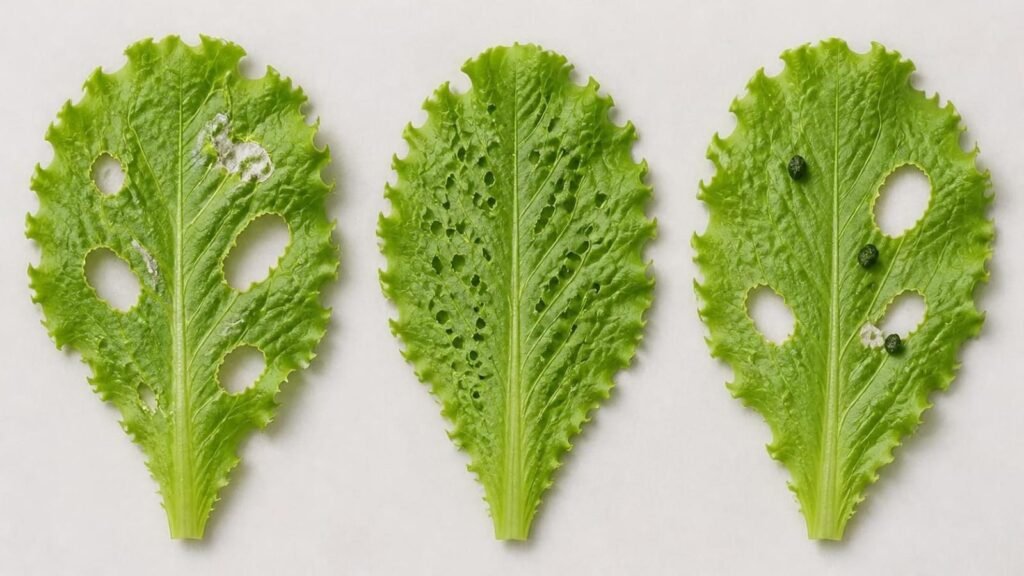
Silvery trails and big ragged holes point to slugs or snails. Dozens of tiny round holes in young leaves mean flea beetles. A seedling cut off at the soil line is often a cutworm. Holes with small pellet-like droppings mean caterpillars. Sticky, curling leaves with tiny soft insects underneath mean aphids.
Here’s the kicker: whatever did the chewing is often long gone by breakfast, because many of these pests feed at night and hide by day. That is why guessing goes wrong so often.
Go out with a flashlight an hour after dark
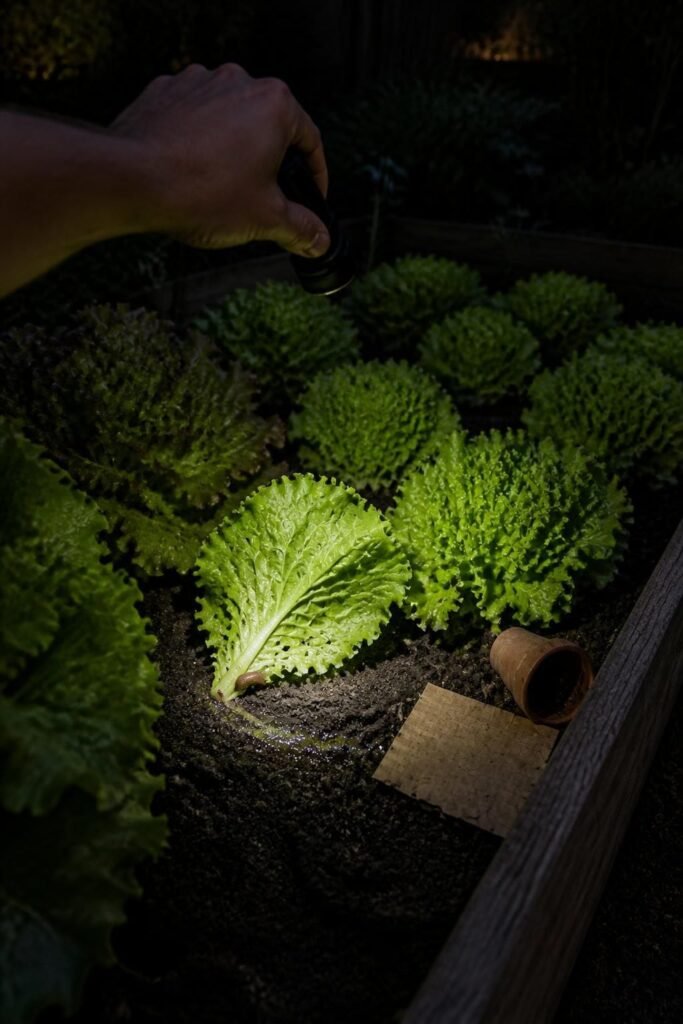
Fair enough, standing in a vegetable bed with a flashlight feels silly the first time. It is also the fastest diagnosis there is. UMass Extension advises looking for pests at dusk or at night, since many caterpillars, beetles, earwigs and slugs feed after dark and hide during the day. Check the undersides of the leaves, the soil at the base of each plant, and anything lying close by, like boards or flowerpots.
A common situation: you find holes at breakfast, dust the leaves for caterpillars, and a week later new holes keep appearing because the culprit was crawling up from the soil every night. Work through the clues below instead.
Start at the top and stop at the first line that matches your plants.
- Big ragged holes, with a shiny trail on the leaf or the soil? Slugs or snails.
- Tiny round holes scattered over young leaves, like buckshot? Flea beetles.
- A seedling toppled or snipped at the base? Dig beside the stump for a cutworm. If you find nothing and the cut is clean, think rabbit.
- Holes with pellet-like droppings, or a chewed-out heart? Caterpillars.
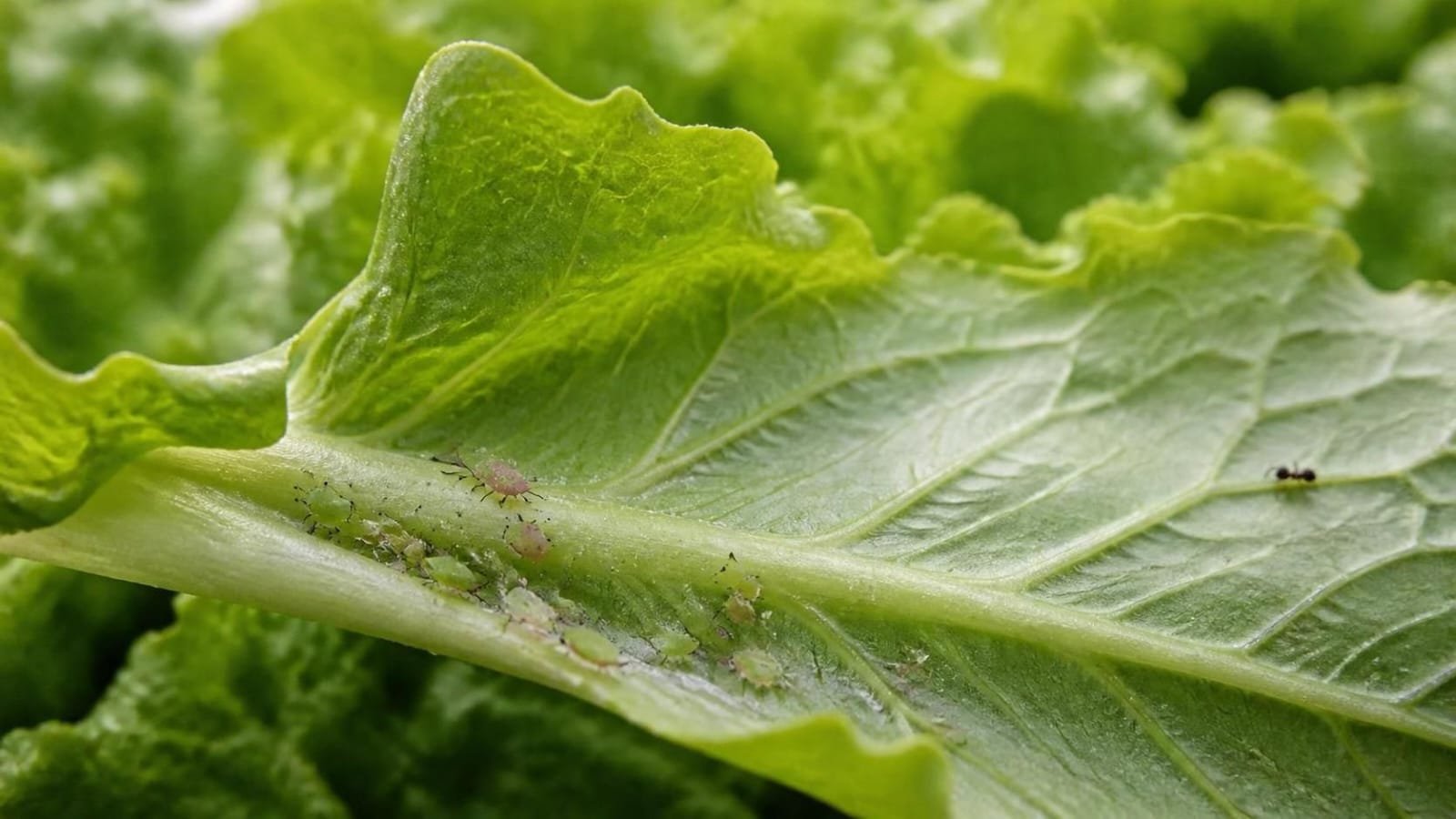
- Sticky, curling, mottled leaves with tiny insects clustered underneath? Aphids.
- Pale, winding trails inside the leaf? Leafminers.
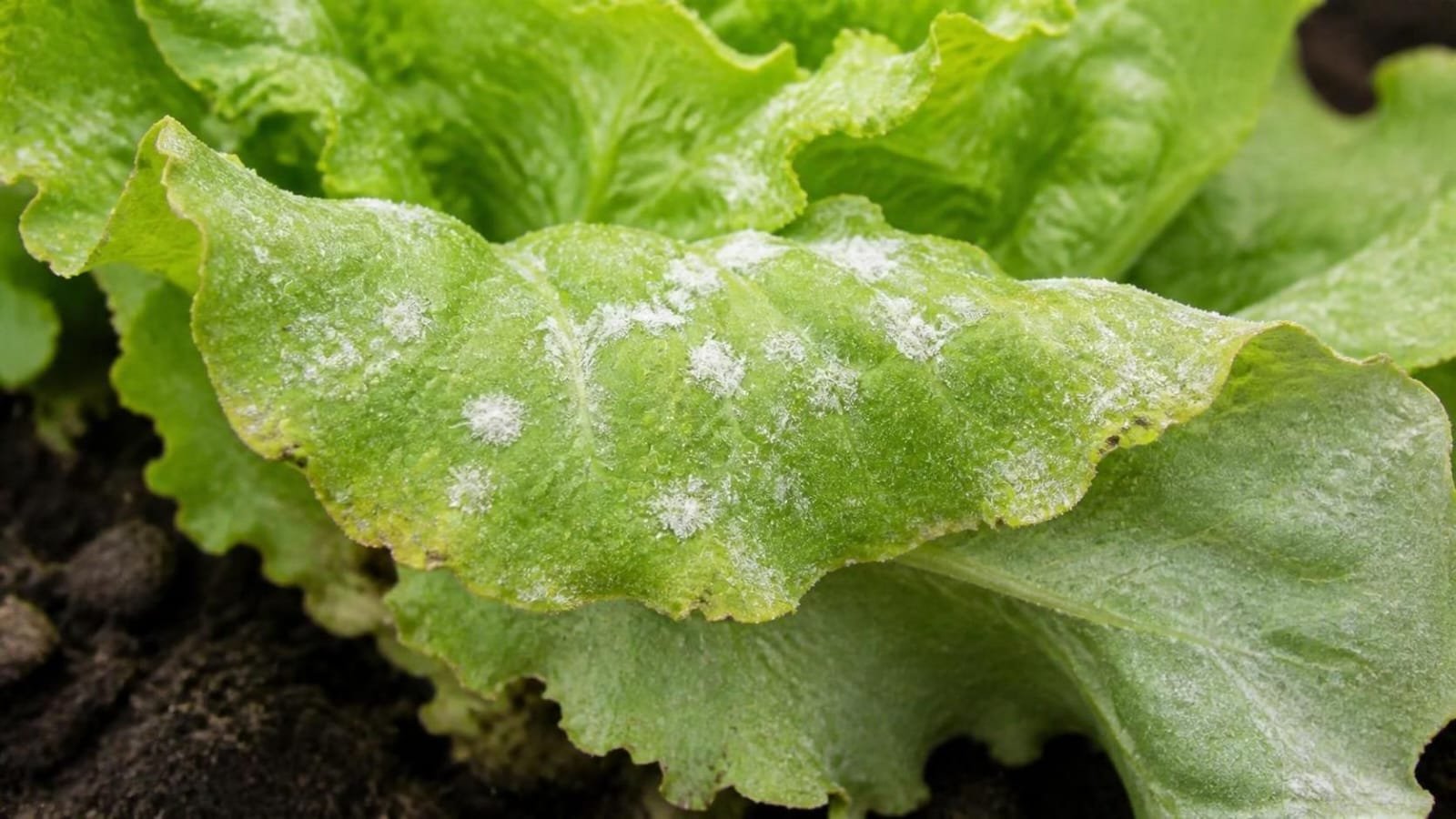
- A dusty white coating and no holes at all? Most likely a fungal disease, not a pest.
Still no culprit after all seven? The wider list of lettuce growing problems is the next stop.
Overnight holes and a silver trail on the soil
Most of us reach for a beer trap first. It can help, but a few drowned slugs won’t matter while the whole bed is a cozy hiding place, because slugs and snails need somewhere dark and damp to spend the day. Washington State University describes slugs as night feeders that do the most harm in cool, wet weather, eating seedlings whole and leaving holes in bigger plants. So clear away boards, rocks and weedy edges, pull mulch back from the base of the plants, and water in the morning so the soil surface is drier by dark. Then pick them off after sunset into soapy water.
If you still want a bait, iron phosphate products are safer for pets than other slug baits, and the label will tell you when to apply. Earwigs are the lookalike here. They also chew ragged holes but leave no slime, and they hide by day. Leave a rolled-up newspaper in the bed overnight, and UConn’s home and garden educators say earwigs will climb in to rest. Shake it out into soapy water in the morning.
Tiny pinprick holes in young leaves
Look closely and you may see a black speck spring off the leaf. That’s a flea beetle. Their feeding gives leaves the shot-hole look University of Minnesota Extension describes, and Michigan State notes the damage is worst early in the season on seedlings. A mature plant can usually shrug it off; a seedling can’t.
Floating row cover, a light fabric laid over the bed at planting, keeps beetles off from day one. Put it on after they’ve already arrived and you’ve only fenced them in with the crop.
Seedlings cut off at the soil line
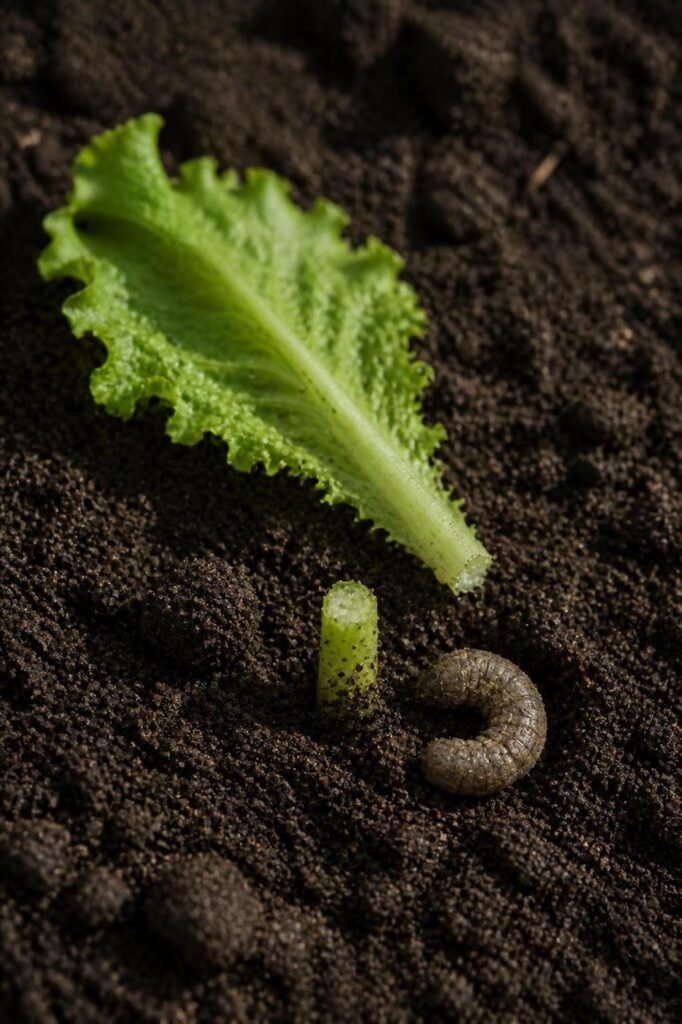
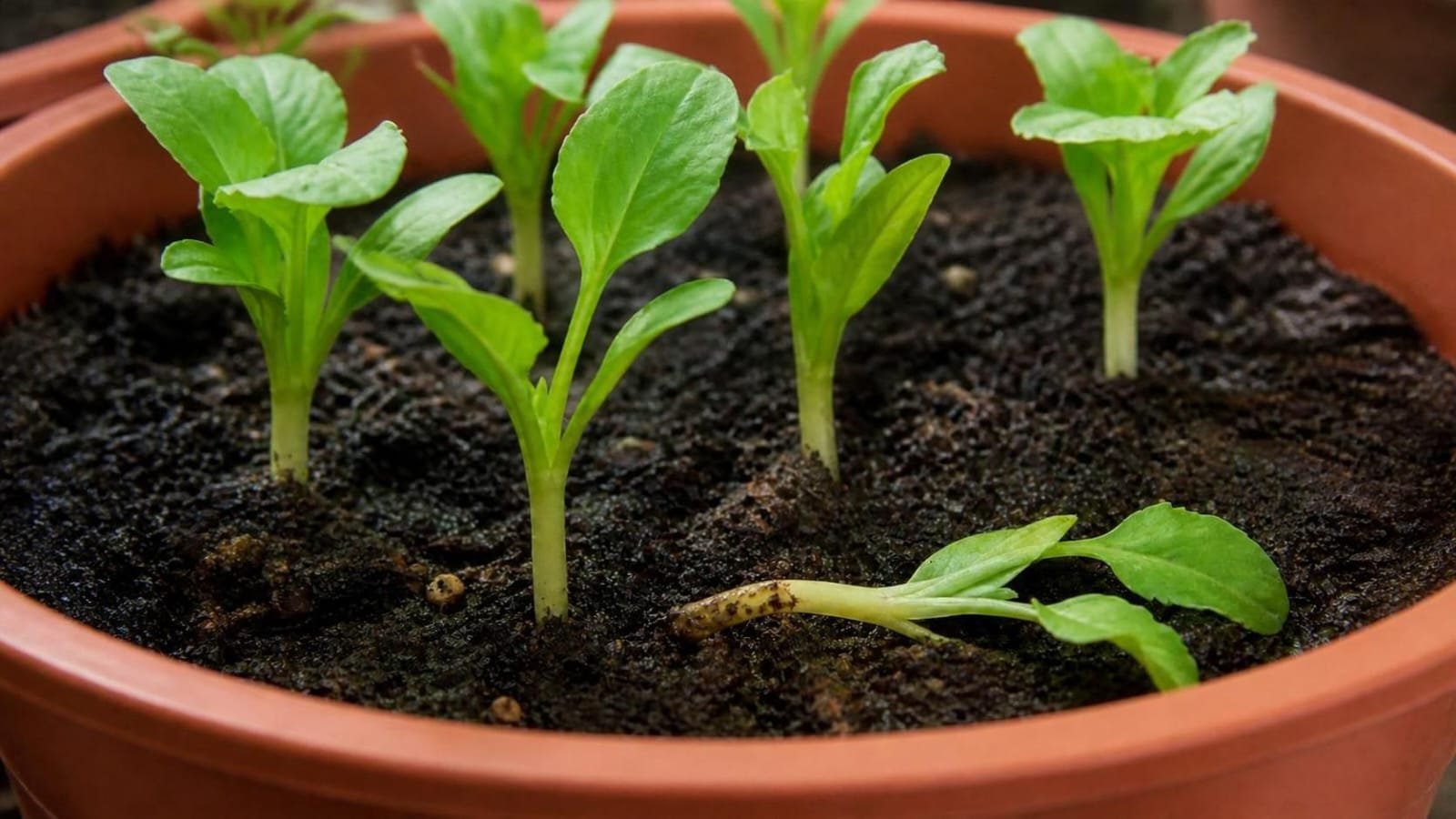
Don’t sweat a plant with a few holes in its outer leaves. A severed seedling is different, because it won’t come back. NC State Extension says cutworms feed at night and hide by day in soil burrows near the base of plants, and Gardener’s Path adds that they chew stems and drop young seedlings at soil level.
So scratch the soil beside the stump with a finger and look for a fat gray or brown caterpillar curled up. Find one and you’ve cracked the case. Find nothing, and consider rabbits or voles. Rabbits leave a sharp, clean snip with no ragged edge, while voles can topple a row of seedlings much the way cutworms do.
A cardboard collar set into the soil around each transplant is a common barrier, and a University of Arizona Extension guide to vegetable garden insects lists collars among its physical barriers. If a plant is wilting rather than toppling, our guide to lettuce wilting goes through the other causes.
Holes, dark pellets, and a chewed-out heart
Three caterpillars turn up on lettuce: the imported cabbageworm (velvety green), the cabbage looper (green, white-striped, arching walk) and the beet armyworm (green or black with light stripes). Spraying the outer leaves often misses them. NC State’s guide explains that young loopers feed on leaf undersides while mature ones sit deep inside the head, and cabbageworms leave wet, greenish-brown droppings among the inner leaves. Peel the head back and look inside.
Pick off what you find and drop it into soapy water. If numbers keep climbing, UMass Extension lists Bt (a bacterium that kills caterpillars that eat it), neem (a plant oil) and spinosad (also bacteria-based) as options for some caterpillars and beetles. Its advice: choose a product labeled for both the pest and your crop, check how soon after spraying you can harvest, and treat at dusk when pollinators are less active. Local rules matter too, since approved products differ by region. Row covers at planting keep moths off.
Sticky, curling leaves and ants on the stem
Aphids hide in the folds of the head and under older leaves, so the first sign is often the leaf itself: curling, mottling, and a sticky shine, which is honeydew, the aphids’ sugary waste. Ants marching up the plant are a clue too, because they farm aphids for it, as Gardener’s Path points out. Aphids can also carry lettuce mosaic virus from plant to plant.
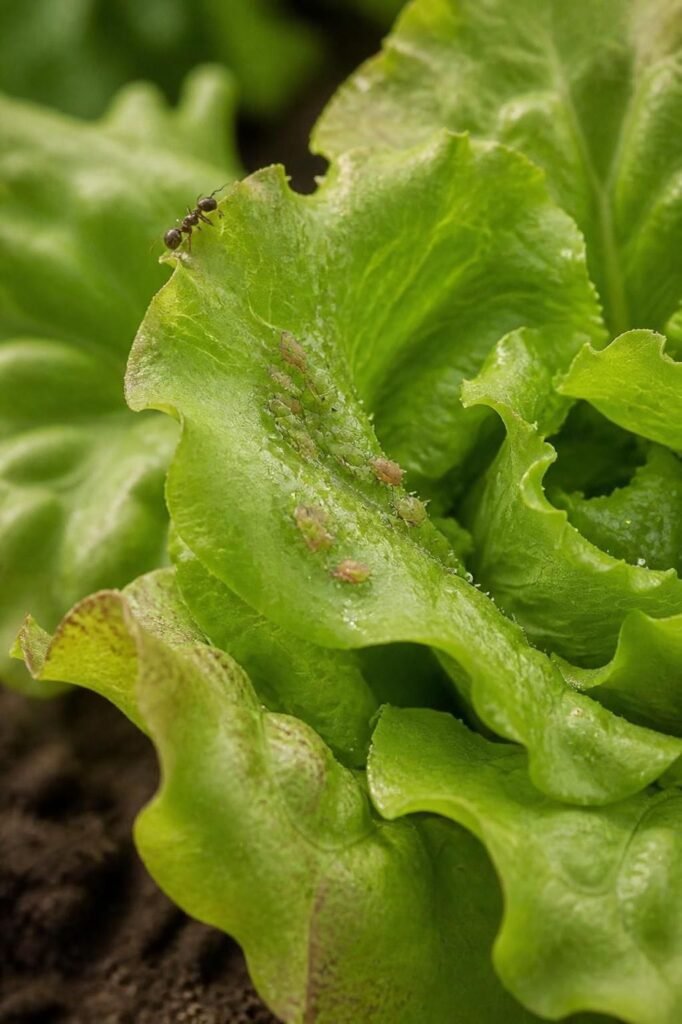
A firm jet of water knocks small colonies off sturdy varieties, though delicate butterheads can bruise. Bottom line, start with water and your fingers before anything else. Our guide to identifying and controlling aphids on lettuce goes deeper. If leaves stay pale after the aphids are gone, see why lettuce leaves turn yellow.
Pale, winding trails inside the leaf
Leafminers are fly larvae that tunnel between the upper and lower leaf surfaces. You can sometimes peel back the thin top layer of a trail and find the tiny maggot still feeding. For a light infestation, remove the marked leaves and put them in the trash, not the compost pile.
A white film and no holes at all
Nothing is chewed, yet the leaves wear a dusty gray-white coating on top and underneath. That’s most likely powdery mildew, which UC IPM says favors warm, dry conditions and mostly strikes mature lettuce. Downy mildew is the lookalike, with yellow angular spots on top and white fluff underneath, so check both sides. Insect control won’t help, so see our guide on powdery mildew on lettuce.
Tonight, take the flashlight out an hour after dark and see what’s on the plants and in the soil beside them.
One thought on “What’s Eating My Lettuce? Common Pests & How to Stop Them”