
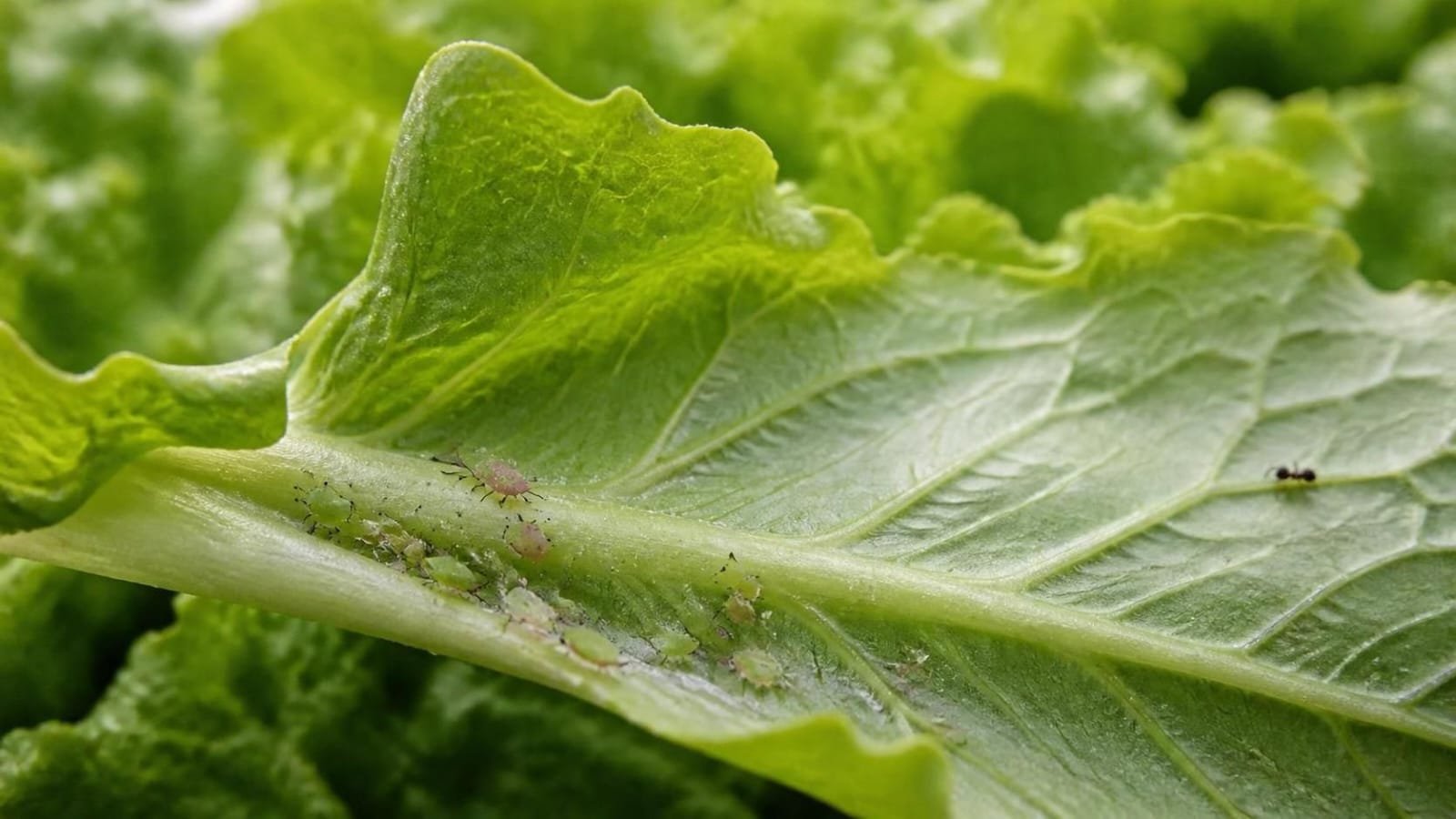
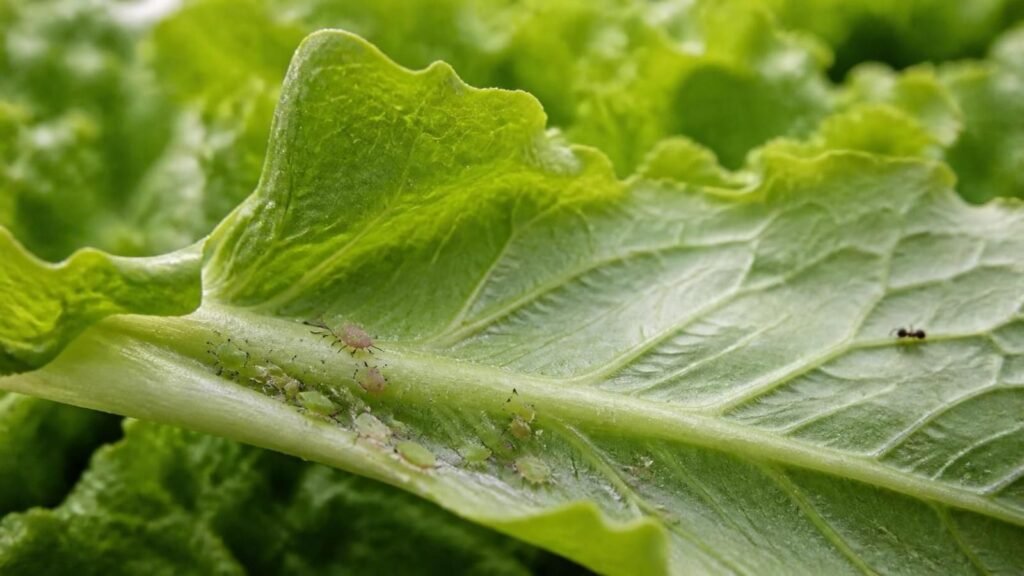
Slide a fingertip along the underside of a lettuce leaf. If it comes back tacky, aphids are the first thing to check for.
Sticky, curling leaves plus tiny soft insects on the undersides or deep in the heart usually mean aphids. Look closely to be sure, cut off the worst leaves, clear the rest by hand or with water, and encourage the predators that help keep them down.
Sticky leaves, curled centers, and ants on the stems
Aphids are tiny, soft, pear-shaped insects, roughly 1 to 3 mm long. The one that causes the most trouble on lettuce, the currant-lettuce aphid, can be green, yellow, or pink, with dark markings on its back, according to the UK’s AHDB.
Their sticky mess is called honeydew. Washington State University’s HortSense says honeydew can attract ants, which may guard the colony, and that dark sooty mold can grow on it. So ants climbing a stem tell you something too. Infested leaves may also yellow and wilt.
No insects and nothing sticky? Look elsewhere, starting with yellow lettuce leaves or lettuce wilting.
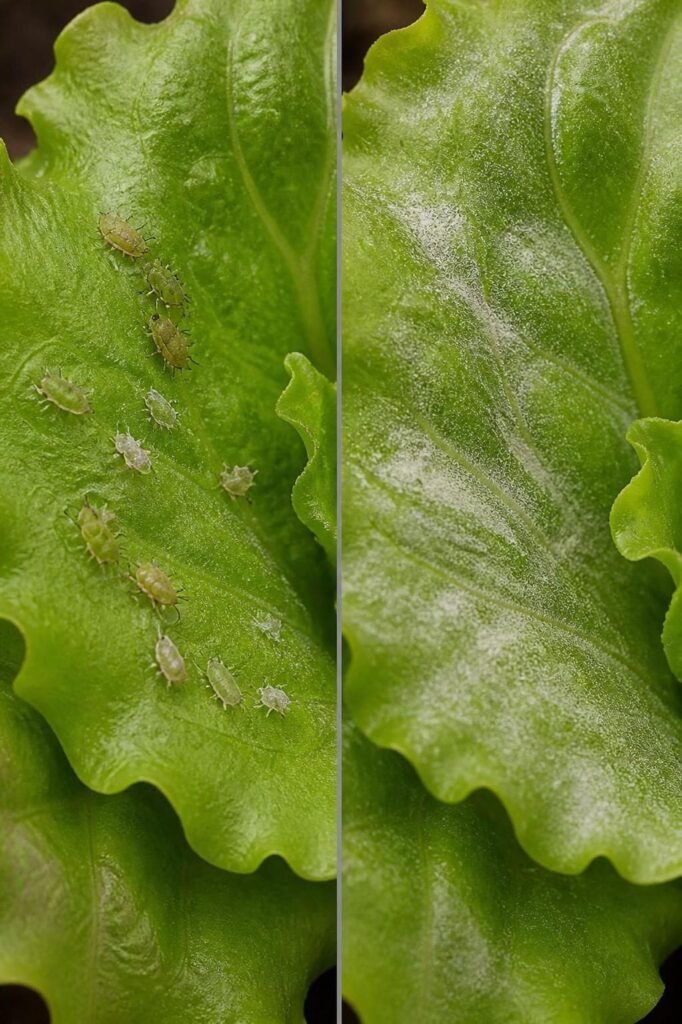
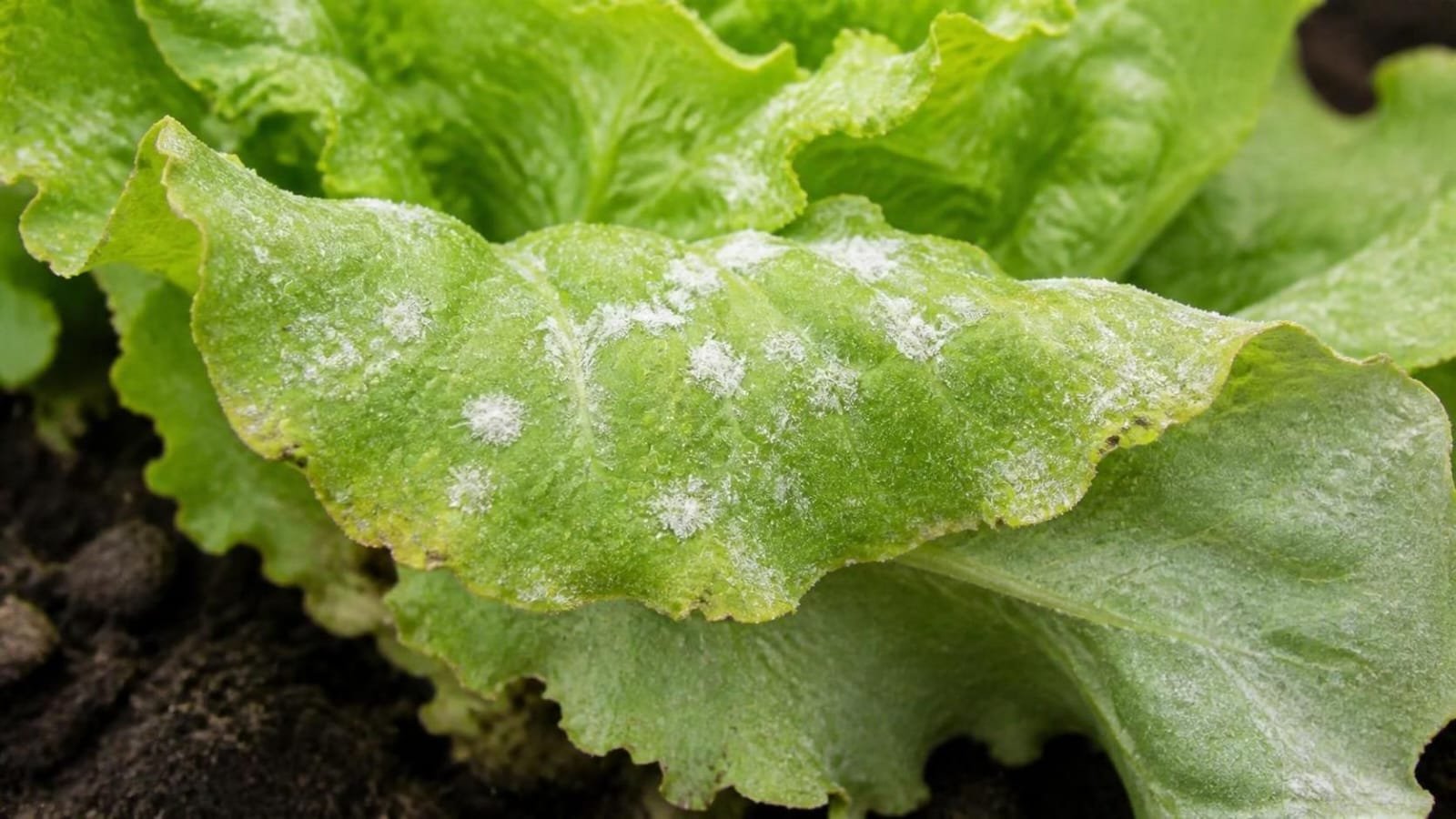
White flecks on the leaf: shed skins or mildew?
Aphids shed their skins as they grow, and the pale flakes can pass for disease from a distance. As a rough guide, shed skins come off as separate flakes. Mildew is a film that smears when you rub it.
| What you see | Most likely | Quick check | Where to go |
|---|---|---|---|
| Pale flakes that lift off one by one | Shed aphid skins | Turn the leaf over and look for live aphids nearby | The rescue plan below |
| Dusty white film that smears across the leaf | Powdery mildew | Rub gently; a film spreads instead of flaking | Powdery mildew on lettuce |
| Shiny, tacky leaves with a black film | Honeydew and sooty mold | Look above the sticky spot for aphids, and along the stem for ants | The rescue plan below |
| Yellow or drooping leaves, nothing sticky | Water, nutrient, or heat problem | Check the root zone before blaming insects | Lettuce growing problems |
Both can show up on the same leaf, and a description only goes so far. If you can’t tell, your local Extension office can identify it.
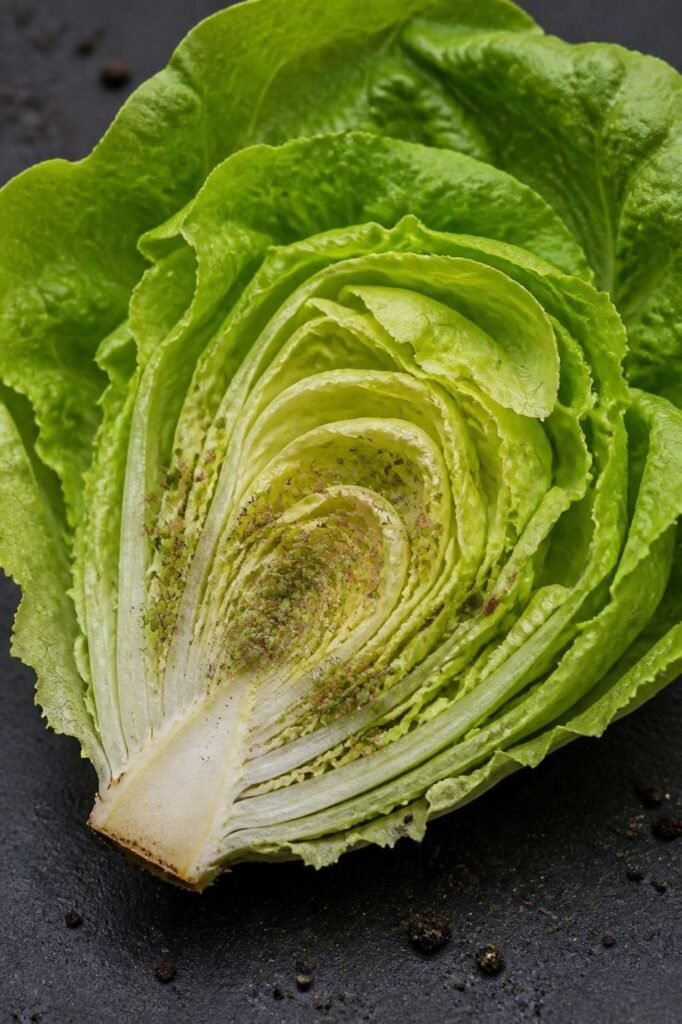
The outside looks clean, but the heart is crowded
Here’s the kicker: the aphids you can see aren’t always the ones doing the damage. According to Growing Produce, green peach aphids settle mostly on older outer leaves, while foxglove and lettuce aphids head for the young leaves deep inside. So peel back the inner leaves before you call a plant clean.
Resistant seed isn’t a guarantee either. In California’s Salinas Valley, pest advisers found lettuce aphids on varieties bred to resist them. An extension entomologist started a study to see whether a different strain was responsible, because resistance had already broken down in Europe for that reason (UC ANR). If your seed packet says resistant, still check the heart.
The rescue plan: start with your hands
Most of us reach for a spray bottle first. Try something simpler first. WSU’s HortSense lists non-chemical options first, and warns that a water stream may do little on low, dense lettuce leaves.
- Cut and bag the worst leaves. Put heavily infested outer leaves in a sealed bag and throw them out, since the compost pile just sends the aphids back to your bed. Wipe small colonies off with a gloved hand or damp cloth.
- Rinse in the morning. A hose works better on loose-leaf lettuce than on tight heads. Rinsing early lets the leaves dry before night. Go gently on seedlings.
- Deal with the ants. Ants looking after the colony will bring the aphids back after every cleanup, so break up the trail at the base of the plant.
- Use a soft spray only if hands and water aren’t enough. Insecticidal soap or a horticultural oil registered for lettuce where you live only works on insects it actually touches, and the heart is hard to reach. Follow the label for dose, timing, and the waiting time before harvest, and check local rules, since approved products differ by country. Avoid broad-spectrum insecticides, because they kill the predators too.
- Welcome the predators. For the lettuce aphid, UC IPM names syrphid fly larvae and green lacewing larvae as the natural enemies that matter. Lady beetles and parasites play little part with this species. Some organic growers plant quick-flowering annuals beside lettuce to attract syrphid flies.
- Go easy on nitrogen. Lush, heavily fed growth helps aphids multiply, so use a slow-release or low-nitrogen fertilizer.
Aphids are rarely the only visitor. This guide to common lettuce pests and how to stop them helps you rule out slugs, caterpillars, and other chewing pests.
Check the heart again within a week. Long story short, hands and water come before sprays.
Harvest day: a head with aphids in it
If you find a few aphids after cutting a head, you’re not alone. A 2003 statement from New Zealand’s growers’ body, VegFed, described aphids as a cosmetic problem, not a health risk. They wash off, and speckled leaves can simply be removed.
- Take the head apart instead of rinsing it whole.
- Rinse each leaf under running water, checking the folds near the base.
- Throw out leaves that are sticky, stained, or speckled.
- If you sprayed anything, wait out the label’s waiting time first.
Fair enough, a heart packed with colonies isn’t worth the effort. Pull it, bag it, and check its neighbors the same day.
How many aphids is too many?
There’s no firm answer for a home bed. AHDB lists no established threshold for the currant-lettuce aphid. A sensible rule: a few aphids on outer leaves can wait for hands and water, but colonies in the heart can’t. And no big deal if a straggler turns up after cleanup.
If growth stalls once the aphids are gone, see why lettuce isn’t growing for what to check next.
One thought on “Aphids on Lettuce: How to Identify and Control Them”