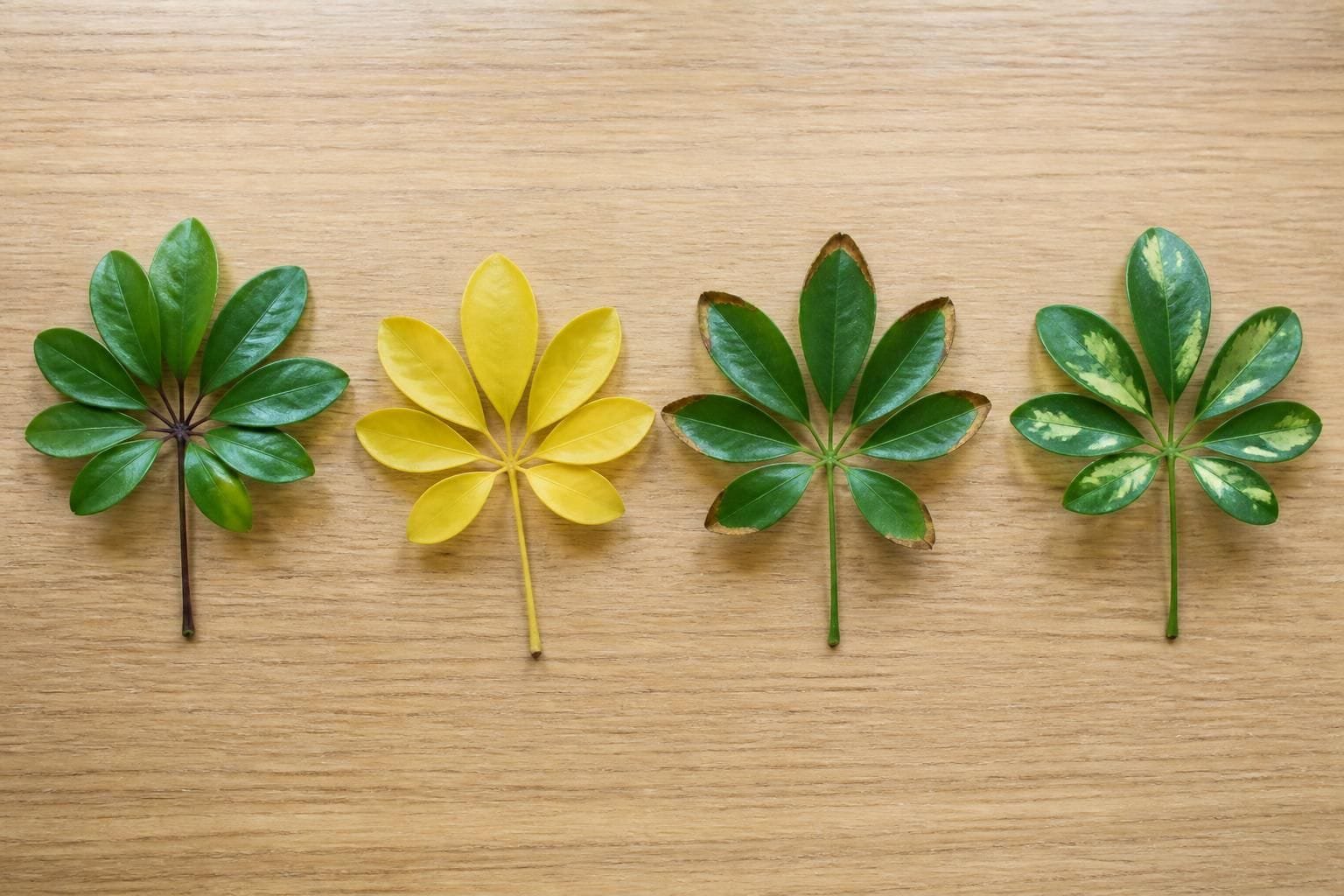
Pick up one of the fallen leaves and turn it over in your hand before you reach for the watering can. The leaf itself will often tell you which way to look.
A green leaf that fell with a dark, soft base usually points to wet soil and unhappy roots. Yellow leaves from the bottom of the plant usually point to too little light, or to plain aging. Dry, crisp, brown ones suggest dry soil, hot air or a draft. And if leaves of every age are dropping a few weeks after a move or a repot, the plant is most likely just adjusting.
Treat that as a starting point. A leaf can’t settle it alone, because wet roots and bone-dry roots can both end with yellow, falling foliage, and the only way to separate them is to check the pot.
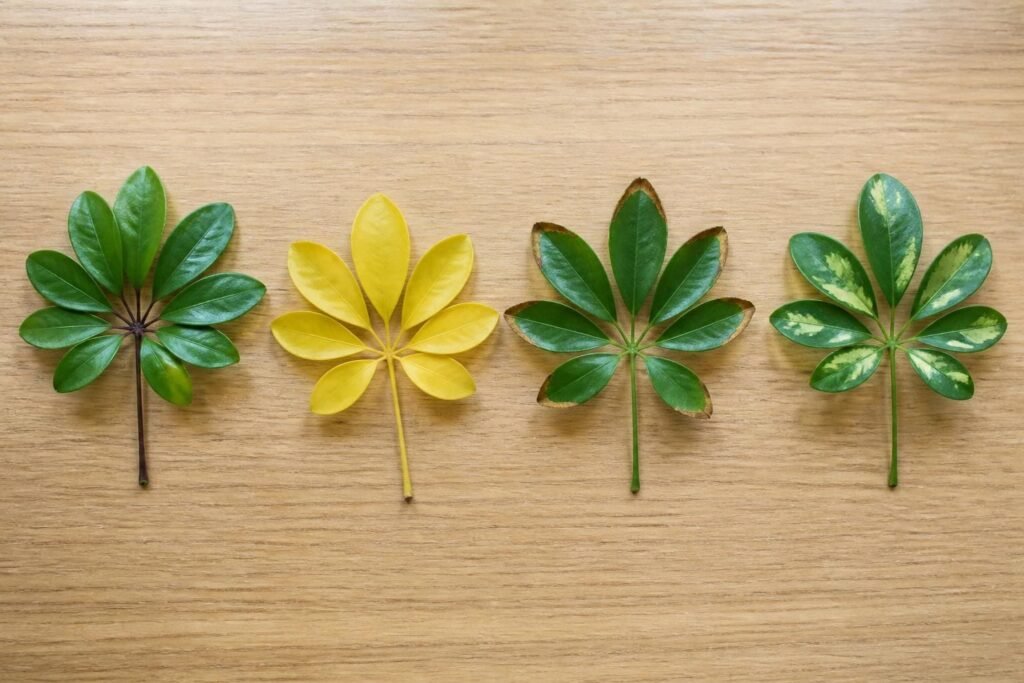
Four checks, in the order that rules out the most
- Think back over the last two months. A new plant, a new spot, a fresh pot, a change of season? If yes, start with the first scenario below.
- Slide the plant out of its pot and squeeze the root ball. Nothing cancels or confirms a watering problem faster.
- Step back and look at the whole plant. Stretched stems, small pale new leaves and a thinning lower half point at light.
- Turn leaves over and look at what sits near the pot: a vent, a cold window, fine webbing, sticky residue.
It came home from the garden center a few weeks ago
When a plant starts dropping leaves, most of us change something: more water, a sunnier window, a splash of fertilizer. On a plant that has just moved house, that instinct usually makes things worse.
Iowa State’s extension horticulturists explain that a greenhouse-raised houseplant lands in much poorer conditions once it’s in an ordinary home, and that leaf drop can carry on for several weeks while the plant takes two to three months to settle in. There’s a mechanism behind it. Leaves can’t adjust much once they’re formed, so when the light changes, the plant often sheds the leaves built for the old conditions and grows new ones suited to the new, which is why the older, lower leaves go first and why a little fresh growth on top is a good sign.
Picture a typical case: the plant looked full at the store, dropped a dozen leaves in week two, and by week five has been watered three extra times, moved twice and repotted once. Every one of those changes hands the plant something else to adjust to. The first few weeks can be messy, and that is fine. Pick one bright spot out of direct sun, water on a steady rhythm, skip the fertilizer until new growth shows, and please don’t repot a sad-looking plant that arrived less than a month ago.
The soil stays wet for days and the leaves blacken before they drop
The usual first move is the watering can. A drooping plant looks thirsty, but drooping doesn’t tell you whether the roots are starving for water or drowning in it. So go and look.
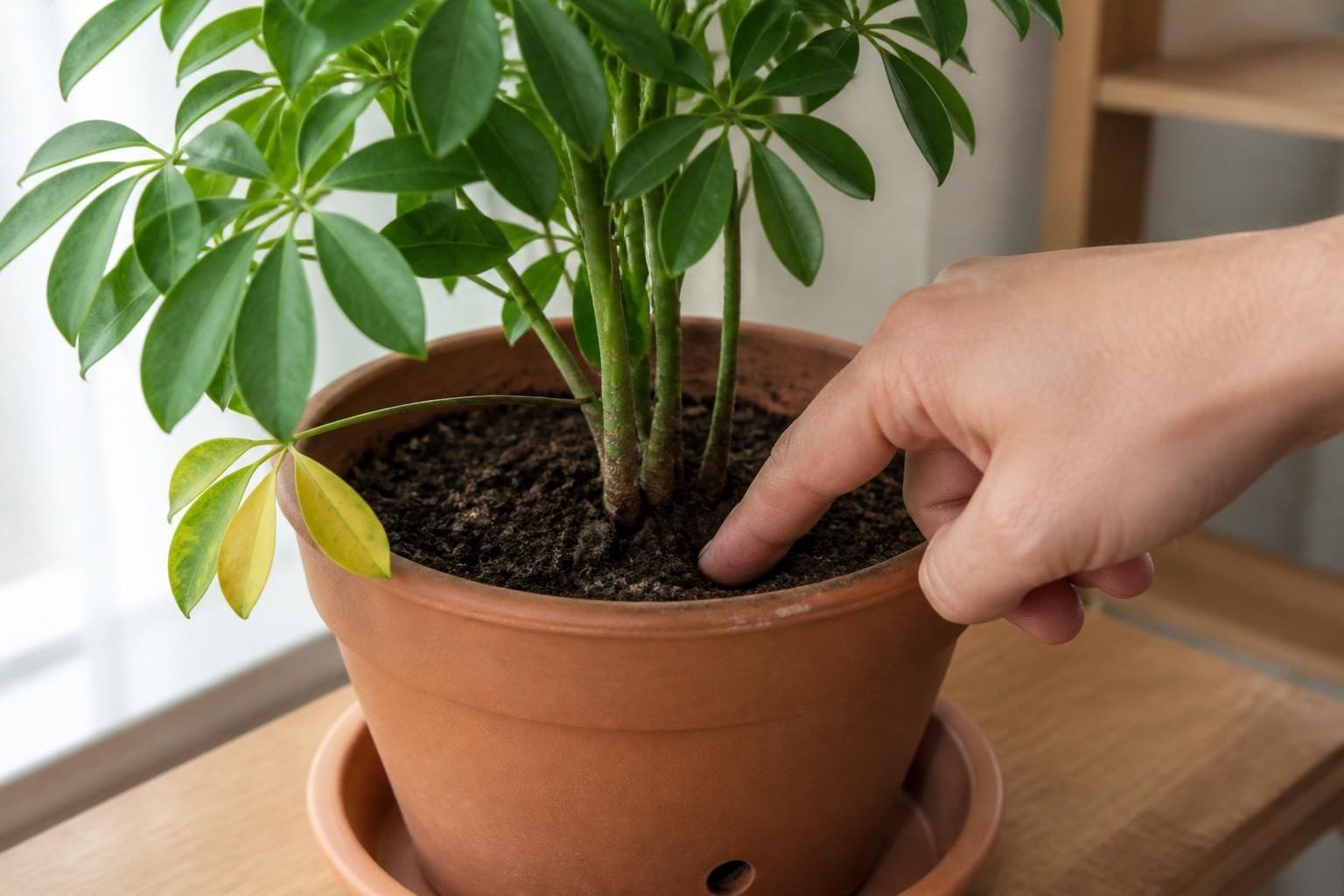
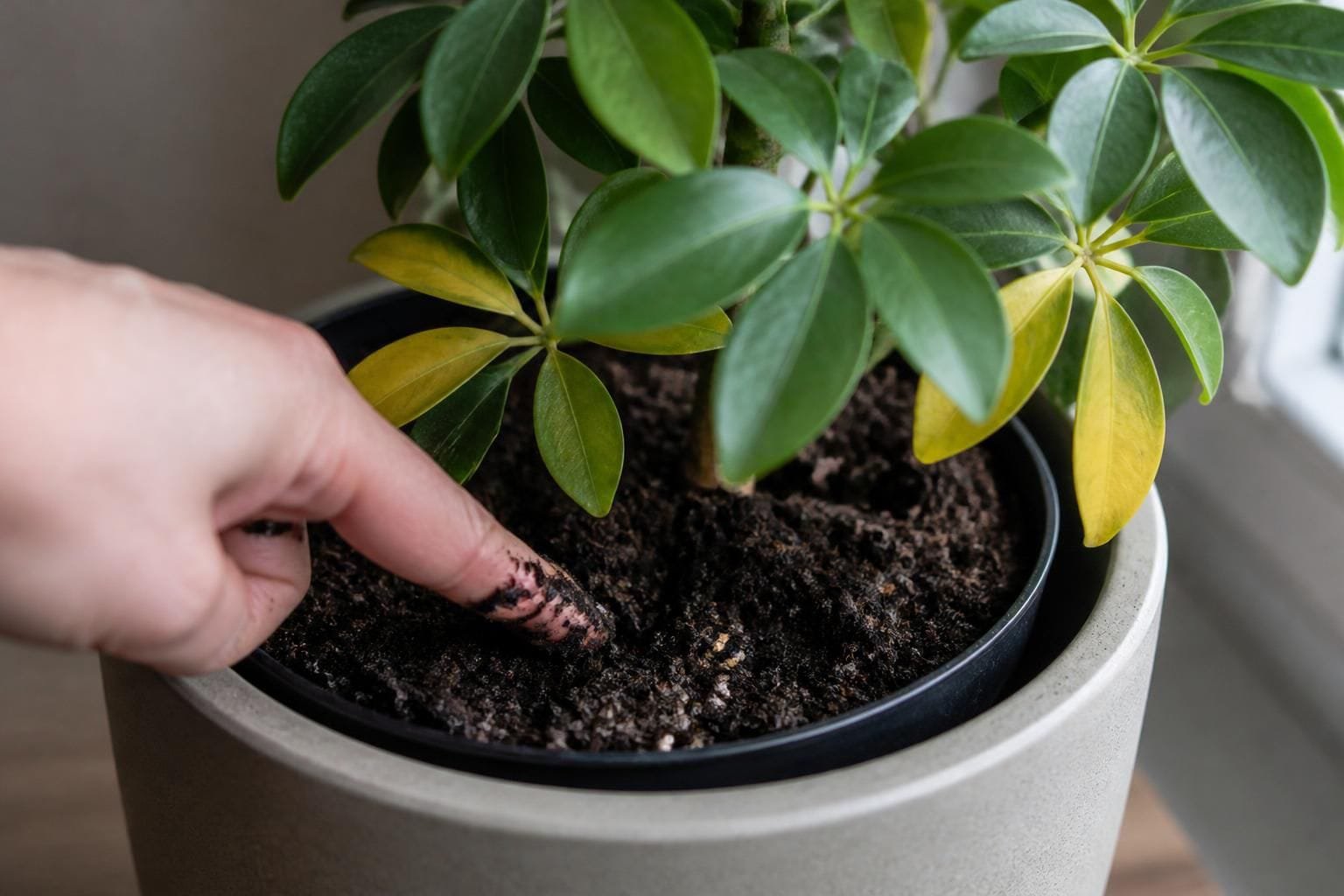
Push a finger well past the first inch of soil and lift the pot to feel its weight. Then slide the plant out and squeeze the root ball. Healthy roots are firm and light in color. Rotted ones are dark, soft and slip apart in your fingers, often with a sour, swampy smell. Clemson’s extension notes that root rot usually follows a mix that doesn’t drain quickly or watering that comes too often, and it lists excess water, low humidity and chilling among the causes of leaf drop.
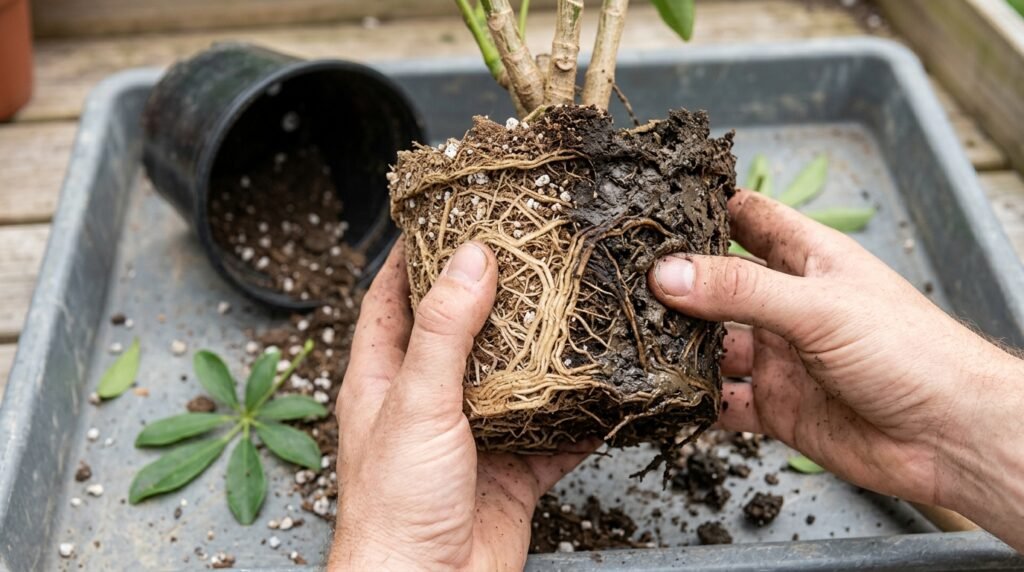
If you find rot, the trimming and repotting sequence is laid out step by step in our yellow leaves guide, so follow it from there. What matters here is the timing: the top of the plant can look fine for weeks while the roots are already toast.
If the roots look fine and the pot feels light and dry, you’re on the other side of the problem. A root ball that has shrunk away from the pot wall can let water run straight down the gap and out the bottom. Water slowly until it drains, or stand the pot in a few inches of water for a while, then let it drain completely. A pot packed solid with roots dries out quickly too, and that’s your cue to move up a size in the growing season.
The lower half is thinning and new growth comes in small and pale
Pale new growth sends a lot of people to the fertilizer shelf. Light is the likelier problem, especially when the plant is also losing leaves from the bottom up.
A schefflera in a dim spot can’t make enough energy to carry a full canopy, so it sheds the oldest leaves and replaces them with smaller, weaker ones. Variegated plants may go plain green on top of that. Texas horticulturist Neil Sperry points to cupped, rolled leaves as the clearest giveaway and recommends a really bright south or west window for plants in this state.
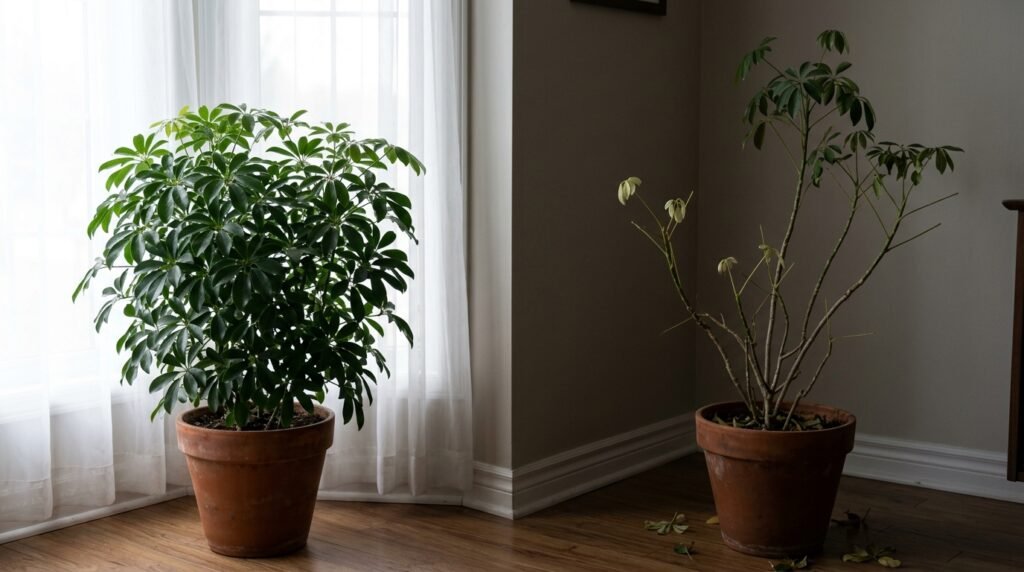
Move it toward the light gradually. A plant that has been dim for months can scorch if it goes straight into hard direct sun, so shift it closer over a week or two. Long story short, bright indirect light is the target, and the brighter the spot, the more water the plant can use. A dim corner keeps the soil wet longer, which is how a light problem quietly turns into a root problem. If you want a window-by-window feel for what bright indirect light means for this plant, our guide to dwarf umbrella tree care walks through it.
It also explains why leaf drop so often begins in winter. Days get shorter and the sun sits lower, so the plant gets less light even though nothing in the room has changed.
Leaves turn yellow first, then let go
One yellow leaf at the very bottom now and then is ordinary aging, and that’s fine. When the yellow spreads upward or arrives alongside the drop, the cause usually sits in the soil, the light or the undersides of the leaves. The pattern-by-pattern breakdown lives in our yellow leaves guide, so if yellow was the first thing you noticed, start there.
Crispy brown leaves, and the pot sits by a vent or a drafty door
Misting is the first thing most people try here. It feels like help, but it raises humidity for only a few minutes, and constantly damp foliage can encourage leaf spot problems. Moving the plant away from the source does far more.
Both a hot stream of air and a cold one can trigger leaf drop, and so can a cross-breeze every time a door opens. The temperature range the plant prefers is covered in our dwarf umbrella tree care guide. Treat it as a rule of thumb, not a hard line: a plant that sat against a cold winter window overnight may have taken a hit even if the room felt comfortable. Low humidity on its own usually acts as a contributing stress rather than the main cause, so if dry air is your suspect, rule out watering and light first.
Fine webbing, sticky leaves, or spots on the foliage
Indoors, scale insects and spider mites are the pests most often linked to this plant, according to the University of Florida’s dwarf schefflera fact sheet, and Clemson adds mealybugs to the list. Mites are tiny, so check the underside of leaves and the crevices where leaves meet stems. Tap a leaf over a sheet of white paper: specks that crawl are mites. A sticky residue usually means scale or mealybugs.
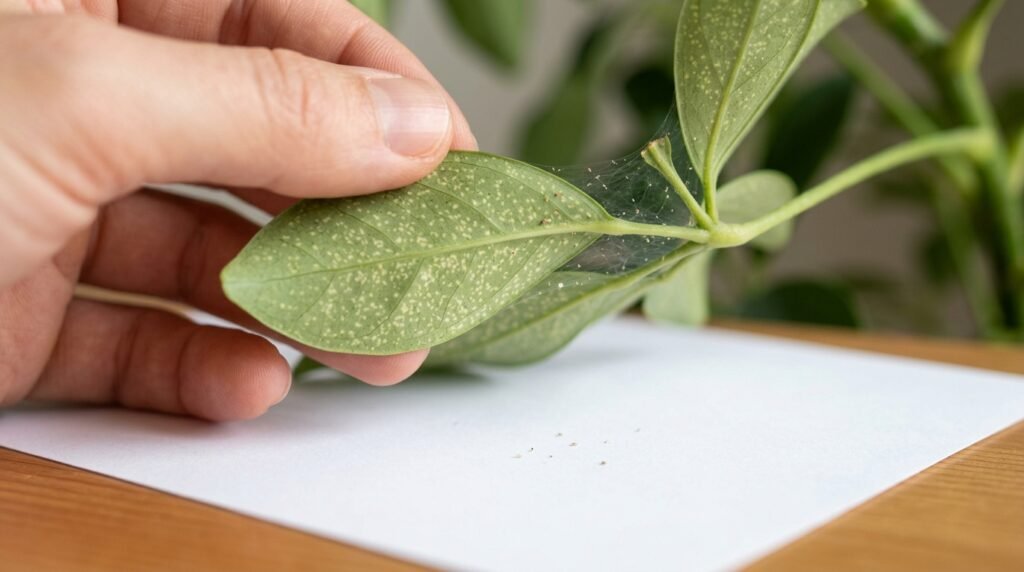
Isolate the plant, rinse or wipe the foliage, and follow the product label and your local regulations if you move on to a treatment. The step-by-step version is in the speckles section of the yellow leaves guide.
Spots are harder. The UF/IFAS foliage notes list several bacterial and fungal leaf spots on schefflera that can end in leaf drop looking much like root-rot loss. That’s one of the places where a photo and a description can’t separate the possibilities, and a local Extension office or plant diagnostic lab can. If the leaf drop is only one of several things going wrong with your plant, our general Schefflera troubleshooting guide lays the whole range of symptoms side by side.
The leaves are gone and the stems look bare
Before you give up, scratch a small patch of bark with a fingernail. Green and moist underneath means the stem is alive. Brown and dry means that section is dead, so work down the stem until you reach green. A plant with live stems and intact roots can often push new leaves, but give it weeks to months, and please don’t judge it on its third day.
Water sparingly in the meantime. A plant with no leaves uses very little water, and a soggy pot is the quickest way to lose a plant that was otherwise recovering. Bare lower stems rarely re-leaf along the old wood. If the plant is leggy, cut back to just above a leaf or node and new shoots will usually start below the cut, giving a fuller shape over time.
If the scratch test is brown all the way down and the roots are mush, the plant is finished, though a healthy stem tip from an earlier trim can sometimes be rooted as a replacement. Otherwise, keep the light bright, the watering steady and the location unchanged until the first new leaf appears.