
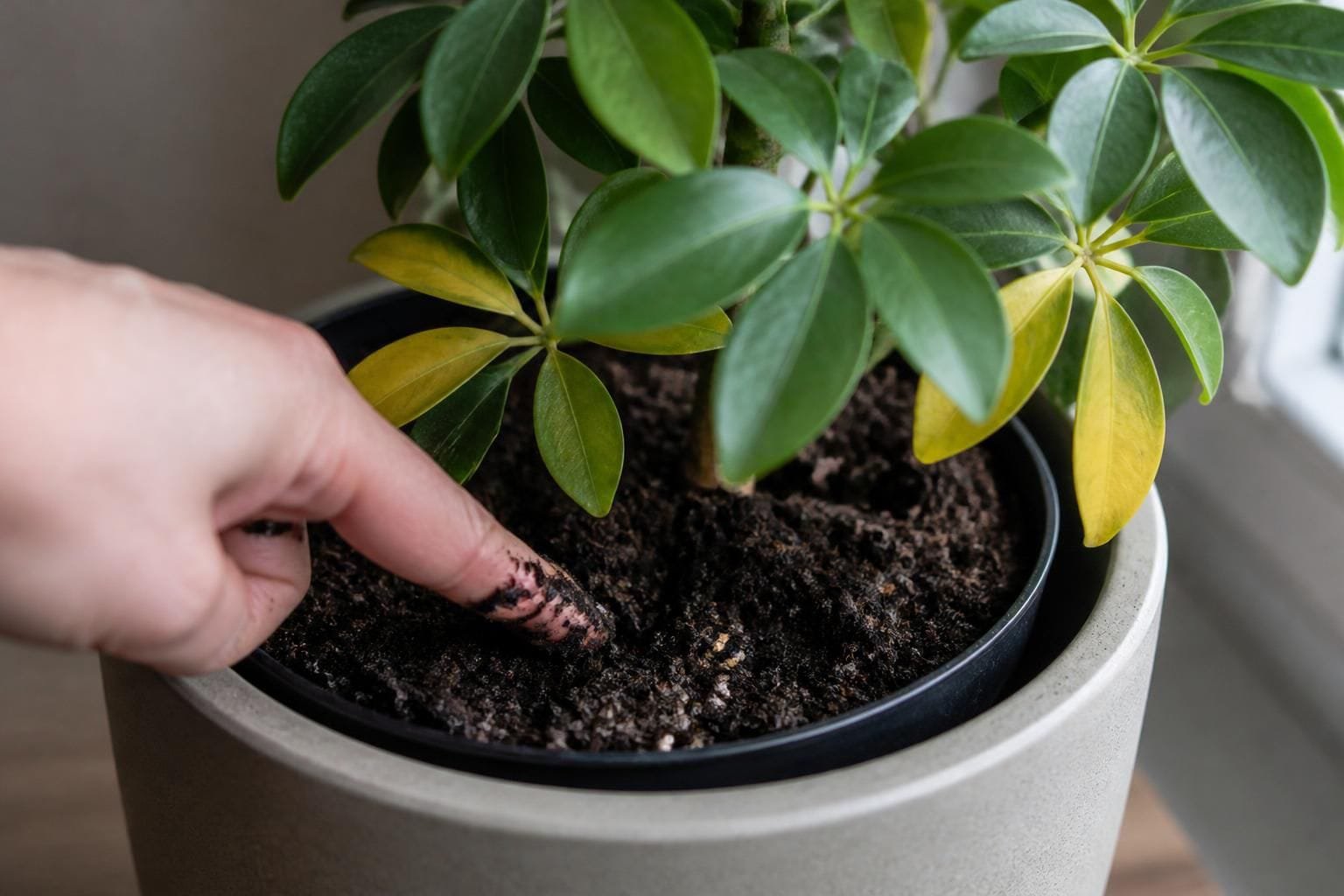
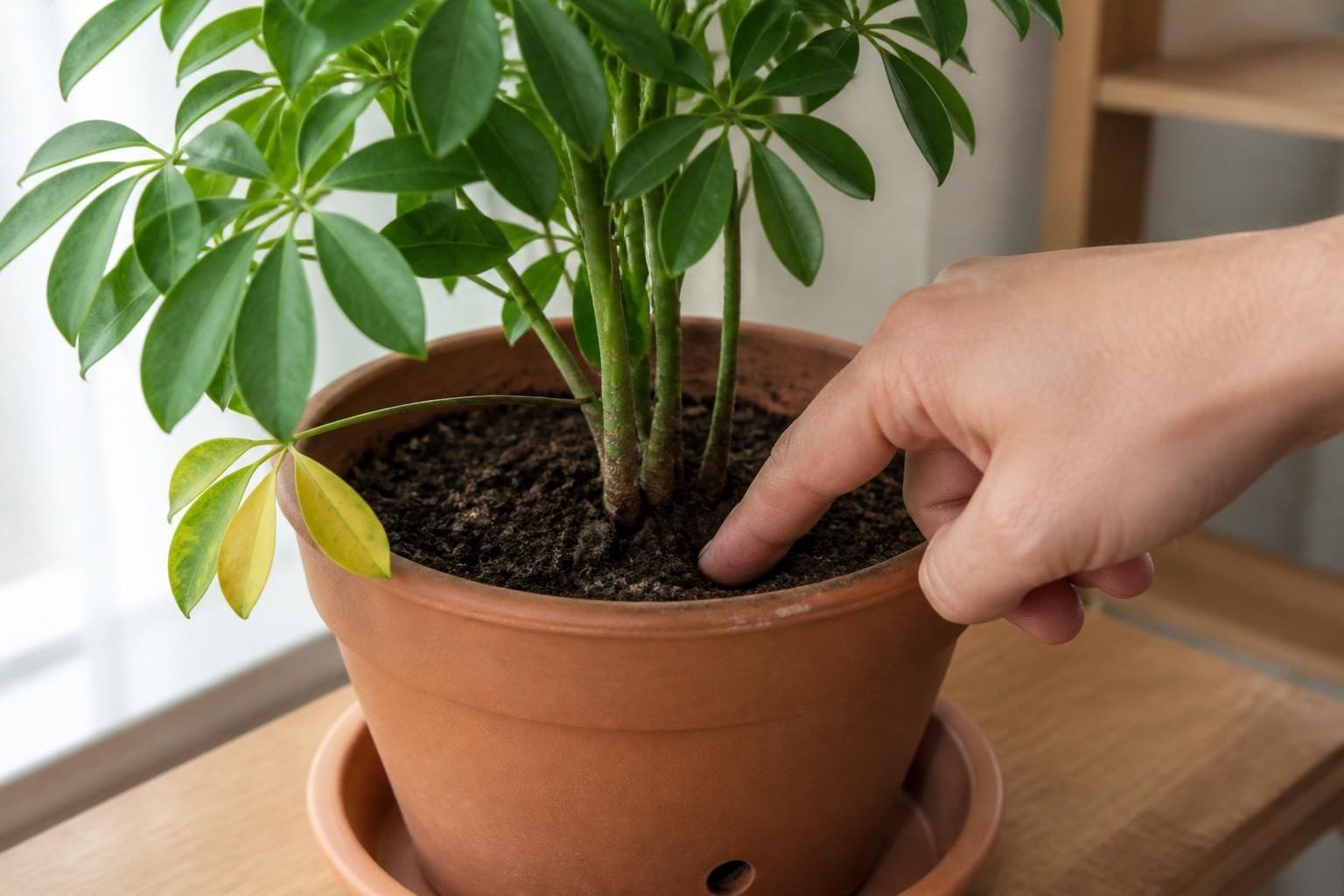
Before you touch a single leaf, push a finger two inches into the soil. That one test tells you more than staring at the foliage ever will, because many yellowing problems start below the surface.
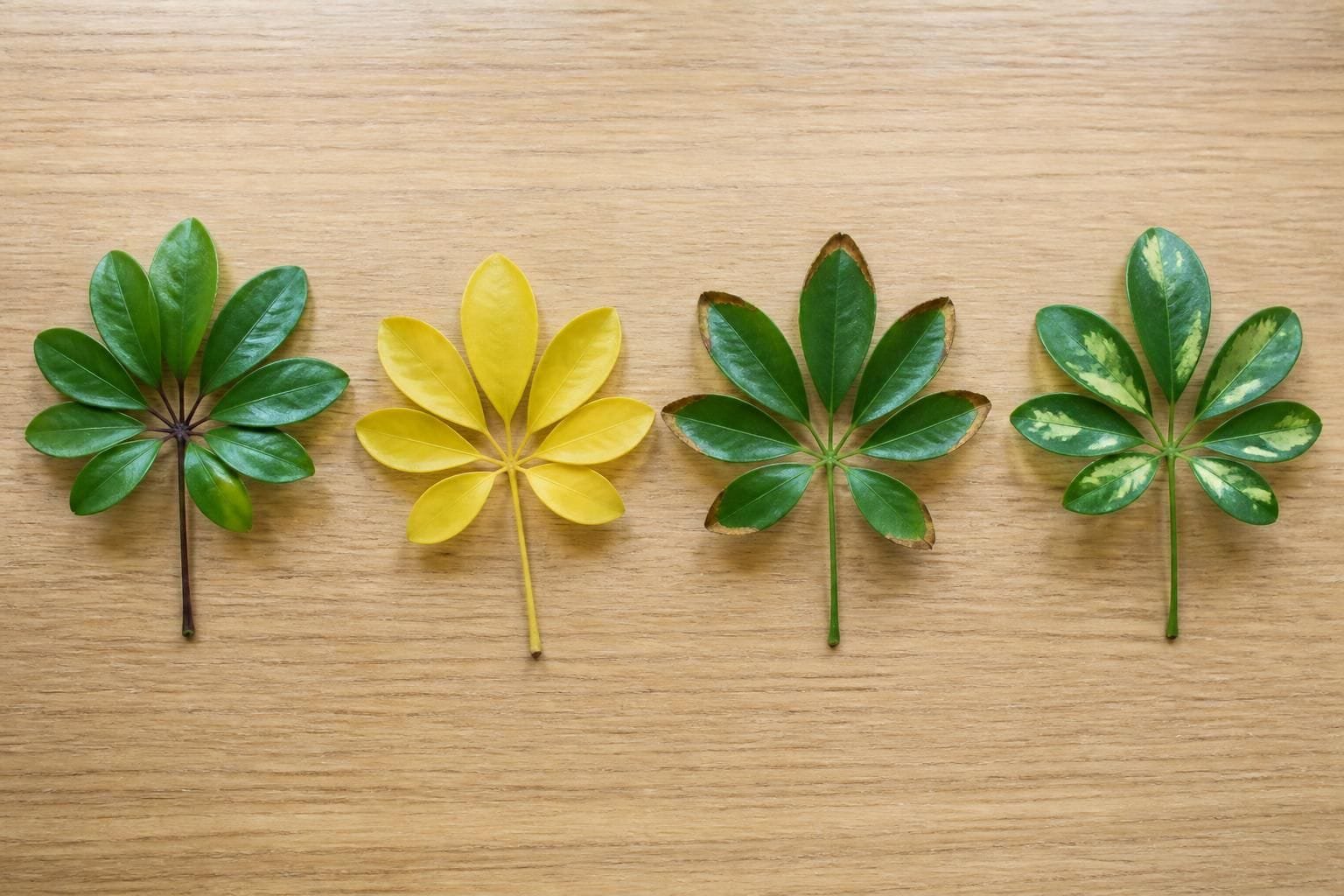
Yellow schefflera leaves most often come from watering that doesn’t match the light: soil that stays wet in a dim room, or a pot that bakes dry between drinks. Low light, cold air, spider mites and the plant’s normal shedding of its oldest leaves can look nearly the same, so check the soil first, then note where on the plant the yellow begins.
The soil is still damp three days after watering
The first move for most of us is to water the moment a plant looks unhappy. With a schefflera that is often the wrong move, because a drowning plant droops and yellows in much the same way a thirsty one does. If you’ve been watering on a schedule and still ended up with yellow leaves, you’re in good company.
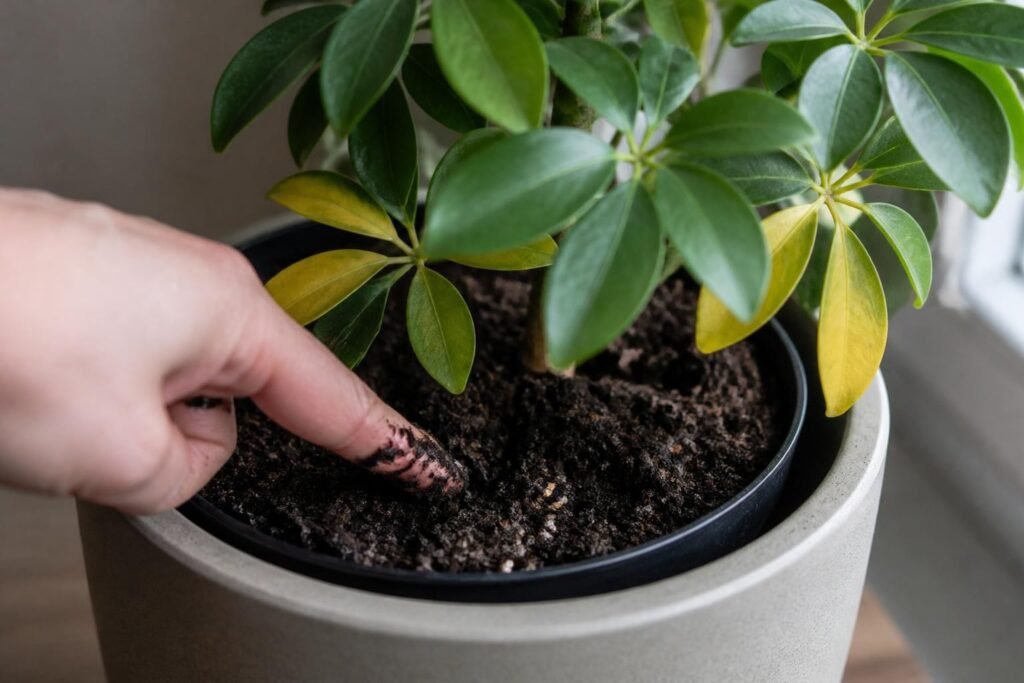
So go in with a finger or a wooden chopstick. Soil that is cool, dark and clinging to the stick several days after watering means the roots are sitting wet. Soil that is light, crumbly and shrinking away from the pot wall points the other way. If you can lift the pot safely, its weight is another clue: a heavy pot after several days points toward slow drying, while a very light one supports the dry-soil side of the diagnosis.
Wet roots run short of oxygen and start to die back, and that is when the leaves complain. A University of Florida research note on schefflera production describes this low root oxygen problem as wilted or droopy foliage, says the remedy mirrors root rot treatment because rot organisms move in on the damaged roots, and ties prevention to an airy potting mix and restrained watering. It was written for commercial growers, but a pot on your shelf obeys the same physics.
Clemson’s extension team lists too much or too little water, plus insects and mites, as the main problems for houseplant scheffleras. Its schefflera factsheet suggests watering thoroughly, letting the soil dry about half an inch down, and never leaving water in the saucer. In a dim room or an oversized pot the soil dries slowly, so the wait stretches well beyond what a calendar would tell you.
Picture a typical case: a schefflera that sailed through summer starts dropping yellow lower leaves in November. Nothing about the watering routine changed, and that is exactly the problem. The room is darker and cooler, the soil stays wet longer, and a weekly schedule that suited July now keeps the roots soggy.
Heavy pot, dark roots: what to do, in this order
If the finger test says wet, pull the plant out and look. It takes two minutes and replaces guessing with evidence.
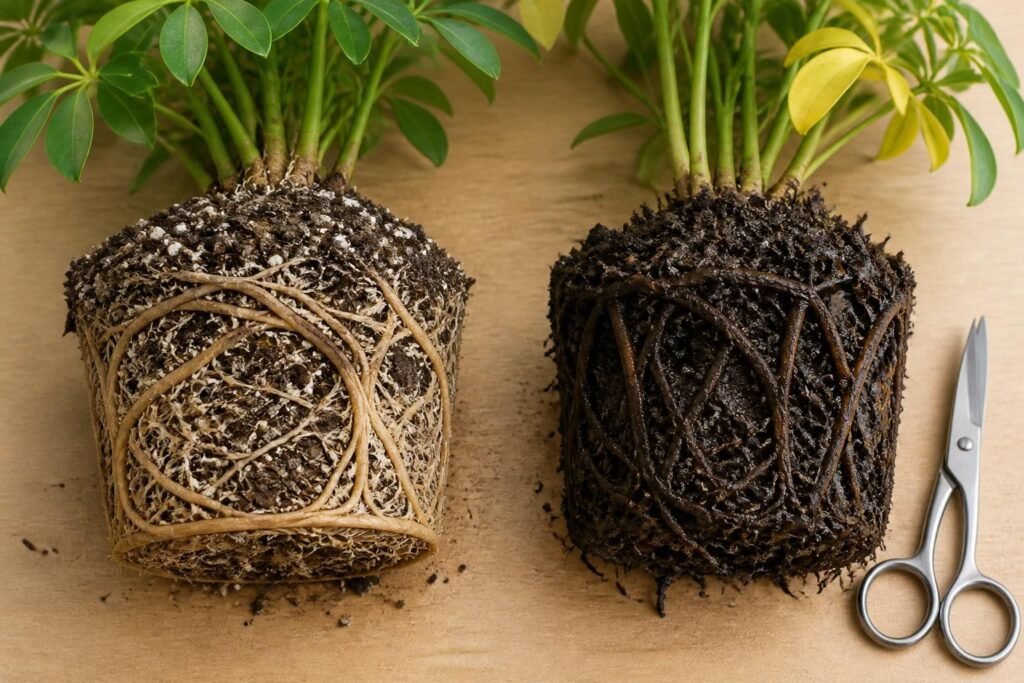
- Support the base of the stem, tip the pot, and slide the root ball out. Firm roots are a good sign. Dark, soft or mushy roots are more worrying, especially when the soil has stayed wet and the plant is declining.
- If most roots are firm, leave the pot size alone. A bigger pot holds more water around the same few roots, which is how a small problem turns into a large one. Slide the root ball back, empty the saucer, and let the soil dry before the next watering.
- If a good share of the roots are mushy, snip them back to firm tissue with clean scissors and repot in fresh, free-draining potting mix, in a pot with drainage holes. Stay the same size or go up one size at most, and don’t reuse the old soggy soil.
- Hold off on fertilizer for now. Damaged roots can’t use it, and leftover salts only add another stress (more on that further down).
- Water lightly once, then go back to the finger test. Pick off only the leaves that are fully yellow; half-green ones are still feeding the plant.
One honest caveat. Heavy leaf drop from root rot and from a leaf-spot disease can look alike from across the room, so if the roots turn out fine and the leaves carry dark, wet-looking spots, skip down to the spot section.
Where on the plant does the yellow start?
Soil answers the water question. The pattern on the plant answers nearly everything else.
| What you see | Most likely cause | How to confirm | What to do |
|---|---|---|---|
| Lower leaves go soft and yellow, soil stays damp | Overwatering or poor drainage | Finger test; dark, soft or mushy roots | Root check and the steps above |
| Lower leaves yellow, stems long and thin, leaves far apart | Too little light | Dim room; growth leaning toward the window | Brighter indirect light, water less often |
| Yellow and crispy, soil hard and pulling from the pot | Underwatering | Pot feels light; water runs straight through | Soak thoroughly, let it drain, then keep a steadier rhythm |
| Fine yellow speckling (stippling), sometimes fine webbing under the leaves | Spider mites or another sap-feeding pest | Wipe an underside with a damp white tissue | Rinse the plant; follow the label for any product |
| Newer leaves with brown edges, crust on the soil | Fertilizer salts | White crust; heavy feeding history | Flush the pot with plain water, ease off feeding |
| Whole plant pale and yellowish after a cold spell | Cold soil | Pot sitting on a cold floor or sill | Warm it up; color often returns by itself |
| One or two oldest leaves yellow, fresh growth on top | Normal leaf turnover | Plant is pushing new leaves | Remove the old leaves; nothing else needed |
Several rows overlap. Low light and overwatering often show up together, since a plant in dim light uses less water. When two rows fit, fix the light and the watering together and see which one the plant responds to.
Two yellow leaves at the bottom and fresh growth on top
No cause for alarm here. A schefflera retires its oldest, lowest leaves as new ones come in, and a plant that is still pushing fresh growth is telling you it’s fine. Concern starts when the yellow climbs upward, when several leaves go in a week, or when the growing tip stalls. That is the moment to go back to the soil test.
If leaves are dropping in handfuls rather than yellowing one at a time, the leaf drop guide goes into more detail.
Stems are stretching and the lower leaves keep yellowing
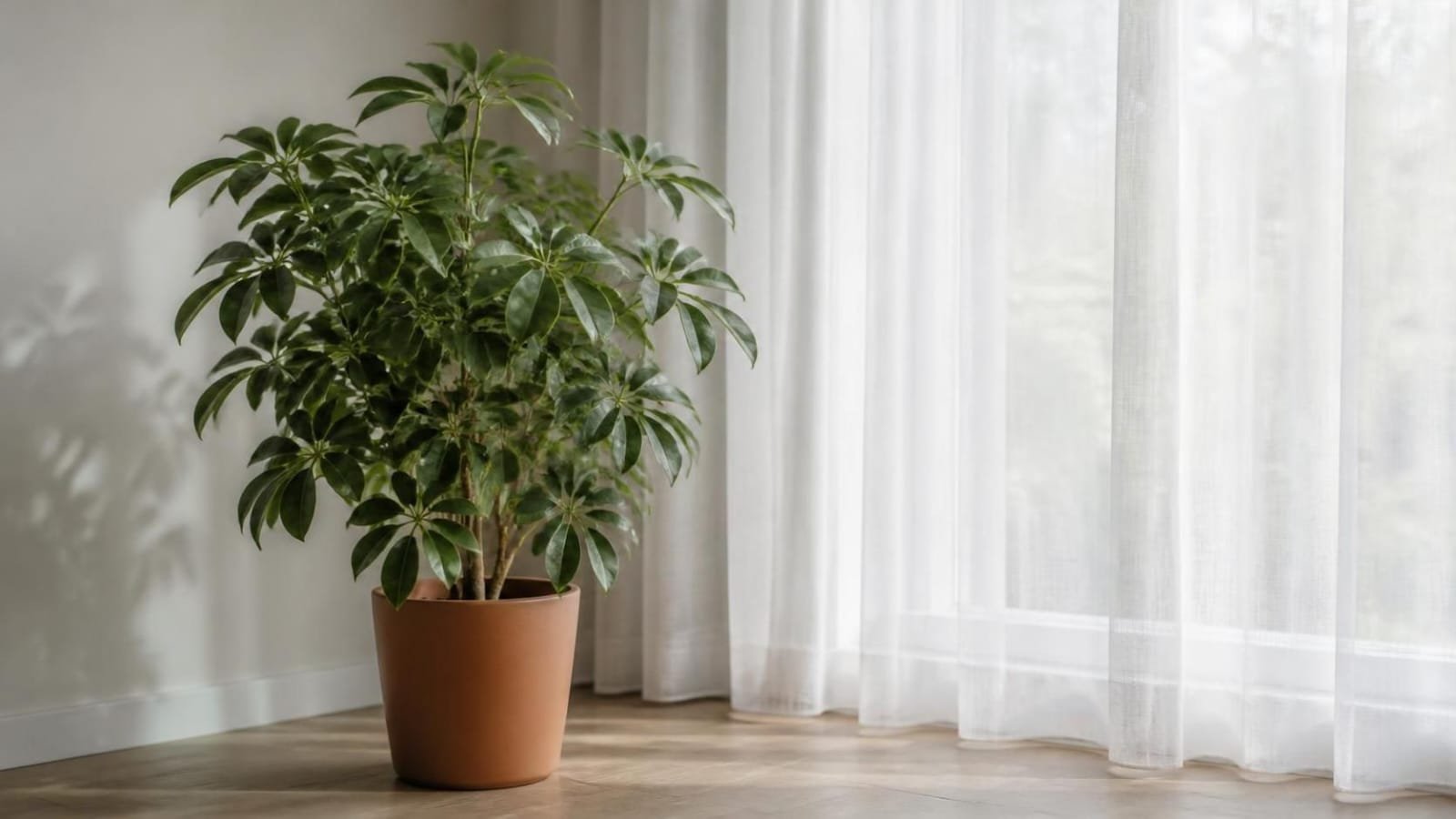
This pattern usually points at light, not water. The Clemson factsheet connects low light with yellowing and spindly, weak stems, and describes medium to bright light as the target. Move the plant closer to a bright window, but keep it out of harsh midday sun that can scorch the foliage. If you can, make the move gradually, because a sudden change of scene can cost a few leaves.
Brighter light changes the water math too. The plant will drink faster, so recheck the soil more often for a few weeks. The full picture of light, watering and feeding lives in our dwarf umbrella tree care guide.
Fine yellow speckles, maybe with webbing underneath
A plant that yellows with no wet soil to explain it deserves a look at the undersides of its leaves. Two-spotted spider mites are tiny, and their cast skins and fine webbing are easily mistaken for dust. As they feed, the foliage turns yellow or speckled.
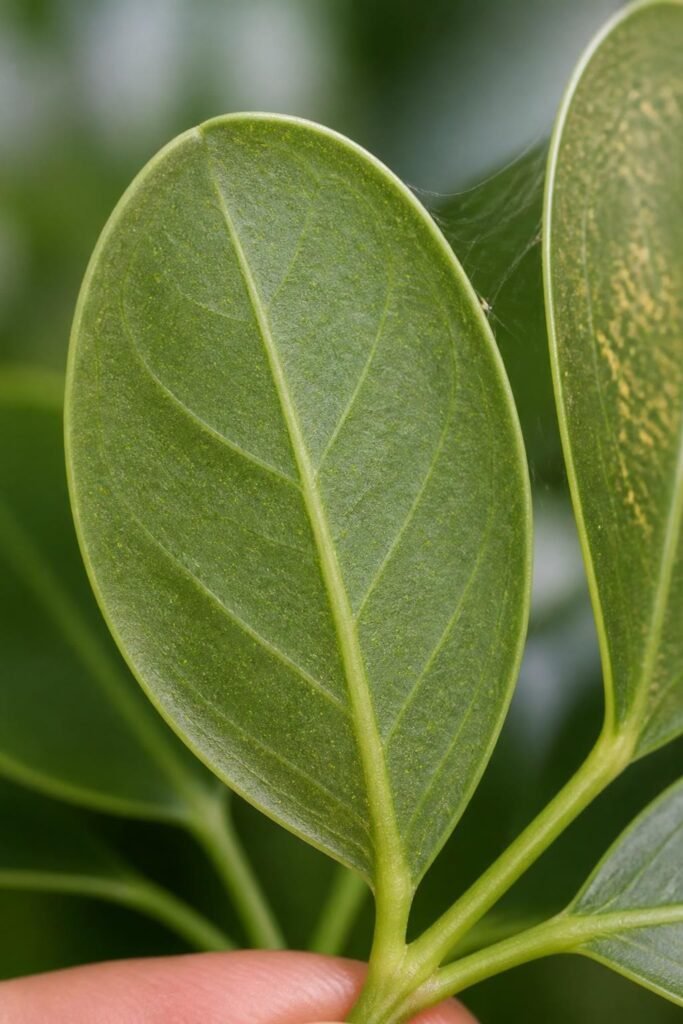
Wipe an underside with a damp white tissue and look at what comes off. A powdery film that smears yellow or reddish, or silk strands between leaflets, calls for a magnifying glass. While you’re at it, check the leaf joints for white cottony fluff (mealybugs) and the stems and midribs for small brown bumps that don’t wipe off easily (scale).
Start with the unglamorous fix: take the plant to the sink or shower and rinse the foliage, undersides included, then repeat every few days and recheck. If you move on to a product, read the label and check what is approved where you live. Schefflera can be damaged by some pesticides, so test on a single leaf and wait a few days before treating the whole plant.
Yellow leaves with dark, wet-looking spots
Plain yellowing fades in gradually. Spots behave differently. The same Florida note describes Alternaria leaf spot as large dark brown to black patches that look wet and can swallow a whole leaf within days, and it reports that keeping the foliage dry controls the disease without fungicides. Bacterial leaf spots tend to show up as pinpoint yellow-to-tan lesions, sometimes with a corky underside, and bactericides are not very successful against them.
So pick off the affected leaves, water at the soil instead of overhead, skip the misting, and give the plant some air. If spots are what you’re really looking at, our general troubleshooting guide helps sort out the lookalikes.
It was fine until the move, the cold snap or the new feeding routine
Chilling, or a blast from a vent or an open window, can drop leaves, and the temperature range the plant prefers is covered in our dwarf umbrella tree care guide. Very cold soil can also make the whole plant look pale and yellowish, because the roots become less effective at taking up some nutrients. Growers’ research reports this in cold winter soil, with the color returning on its own a couple of weeks after the soil warms. Treat any temperature figure as a rough marker rather than a hard yellowing threshold.
Feeding mistakes are harder to read. Newer leaves with brown edges plus a crust on the soil point to excess salts, so run plenty of plain water through the pot, let it drain fully, and ease off. Pale, stretched growth can have more than one cause, low light included. A nutrient deficiency can also cause yellowing, but don’t jump to fertilizer first. Check light, watering and root health before feeding, because damaged roots may not take up nutrients normally. Honestly, you can’t tell a hungry plant from a waterlogged one just by looking at the leaves, which is why the soil test comes first. For amounts, follow the fertilizer label.
You’ve fixed it, and the yellow leaves are still there
They will stay yellow. A leaf that has fully yellowed won’t turn green again, so take it off and judge the plant by what grows next. Give it a few weeks. New leaves that come in small or pale usually mean the cause hasn’t been fixed yet, while full-sized, glossy ones mean it has. Check the soil again before the next drink.
2 thoughts on “Schefflera Yellow Leaves: Causes and Solutions”