Lift the pot before you do anything else. A schefflera in soggy soil feels like a bag of wet sand, and one that has dried out completely feels almost silly light. That one test sorts out more problems than staring at the leaves ever will.
Most schefflera problems trace back to watering (too much more often than too little), too little light, a cold draft or a recent move. Insects such as spider mites, scale and mealybugs come next. Check the weight of the pot, the soil and the underside of the leaves, in that order, before you change anything.
That order matters because leaves are a late messenger. By the time they yellow, drop or spot, the cause has usually been at work for a while. Clemson Extension puts it plainly for indoor plants: diseases are rarely the issue, and too much or too little water plus insects and mites are the main troubles. The dwarf schefflera (Schefflera arboricola) and the larger umbrella tree (Schefflera actinophylla) read the same way, so everything below applies to both.
Run this check before you change anything
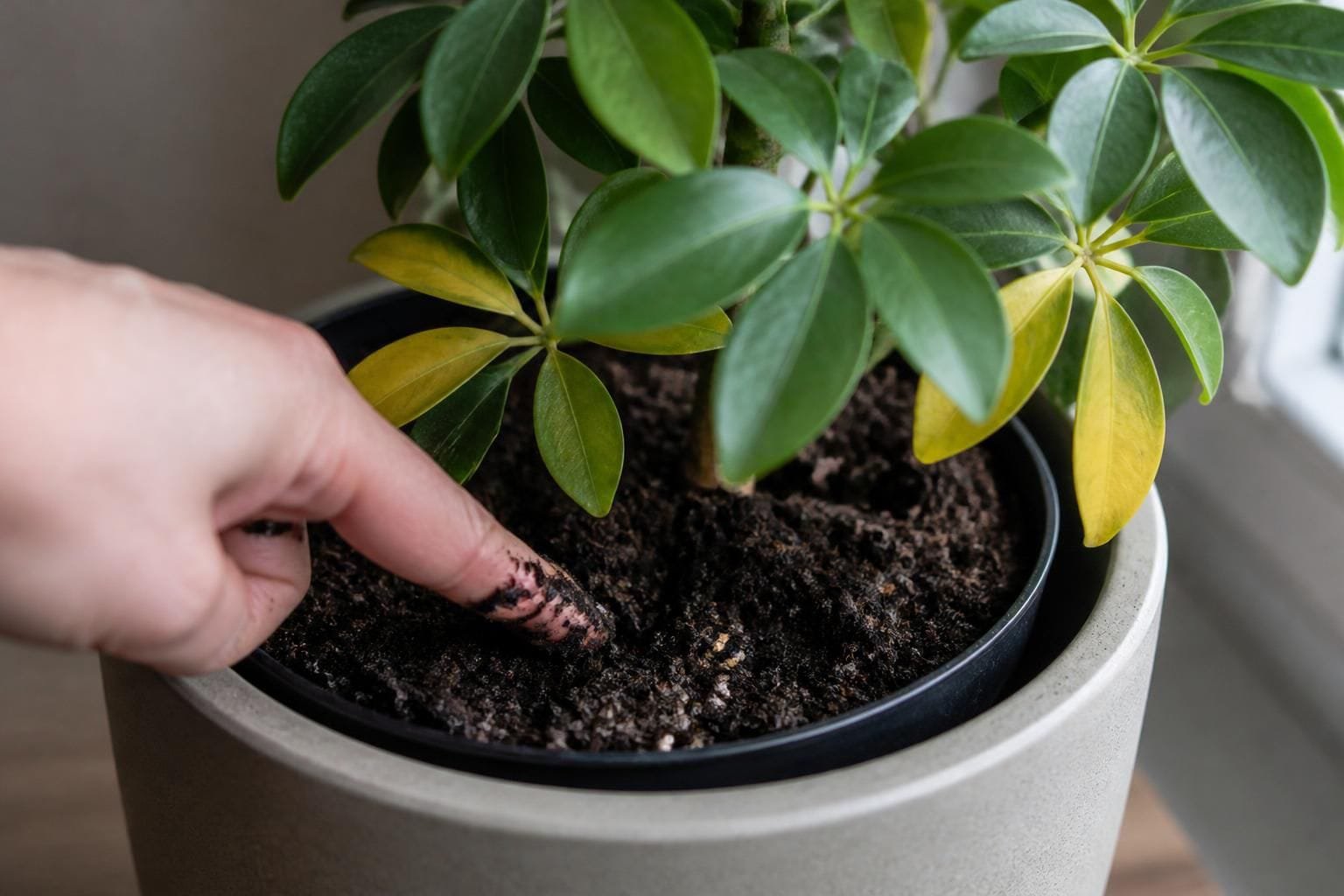
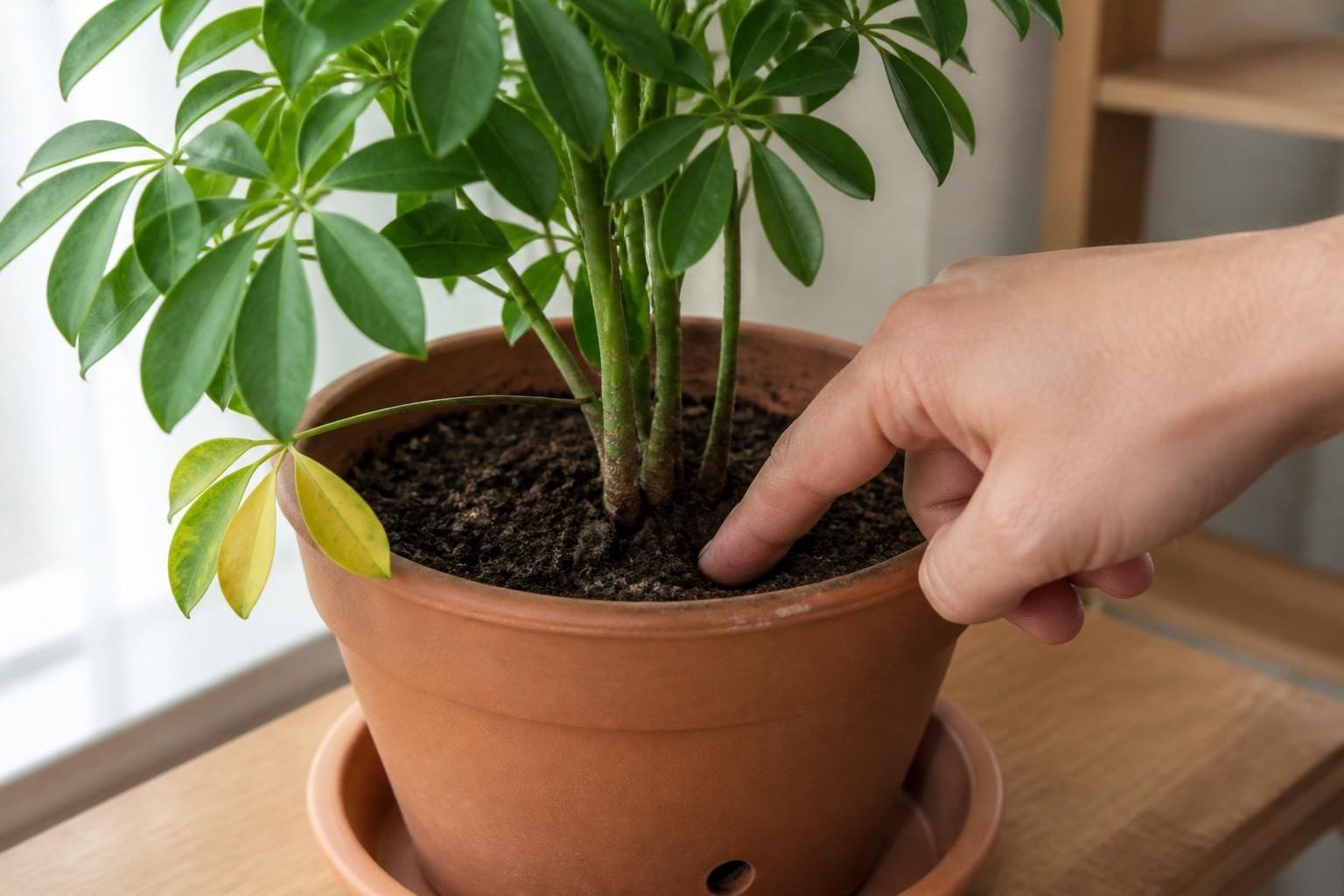
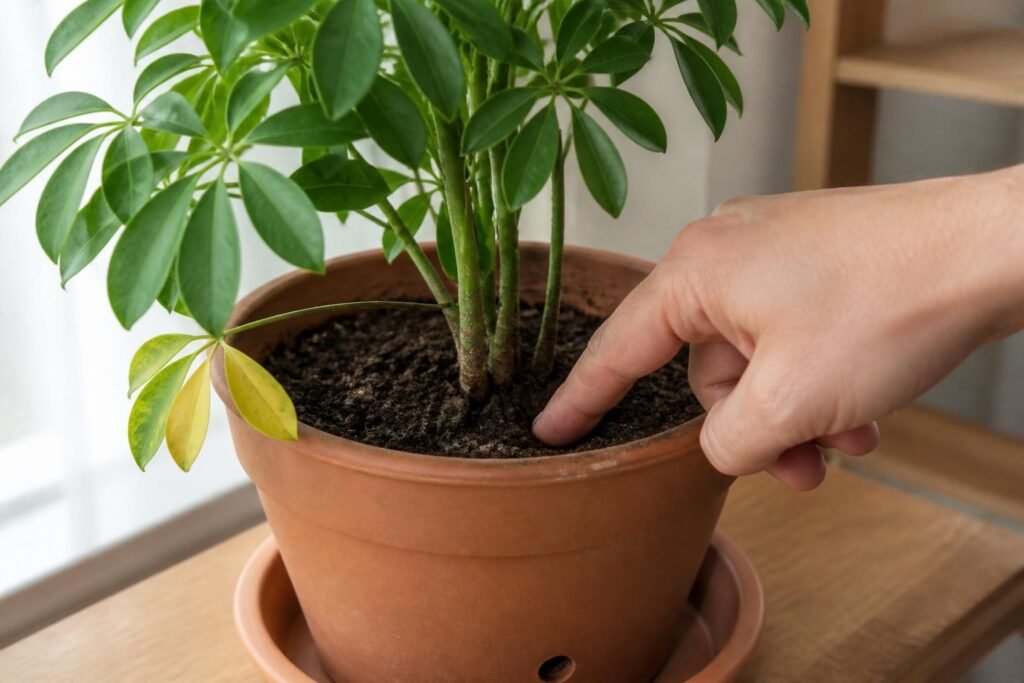
- Lift the pot, then push a finger into the soil down to your second knuckle. If the pot is heavy and the soil feels cool and damp, hold off on water, even when the leaves look droopy. Funny thing is, a schefflera sitting in wet soil droops almost exactly like a thirsty one, which is how so many plants get watered into a worse state.
- Look at the base of the stems and smell the soil. Dark, soft or wrinkled stem bases and a sour, swampy smell point to roots in trouble. Firm stems and a neutral earthy smell send you somewhere else on this list.
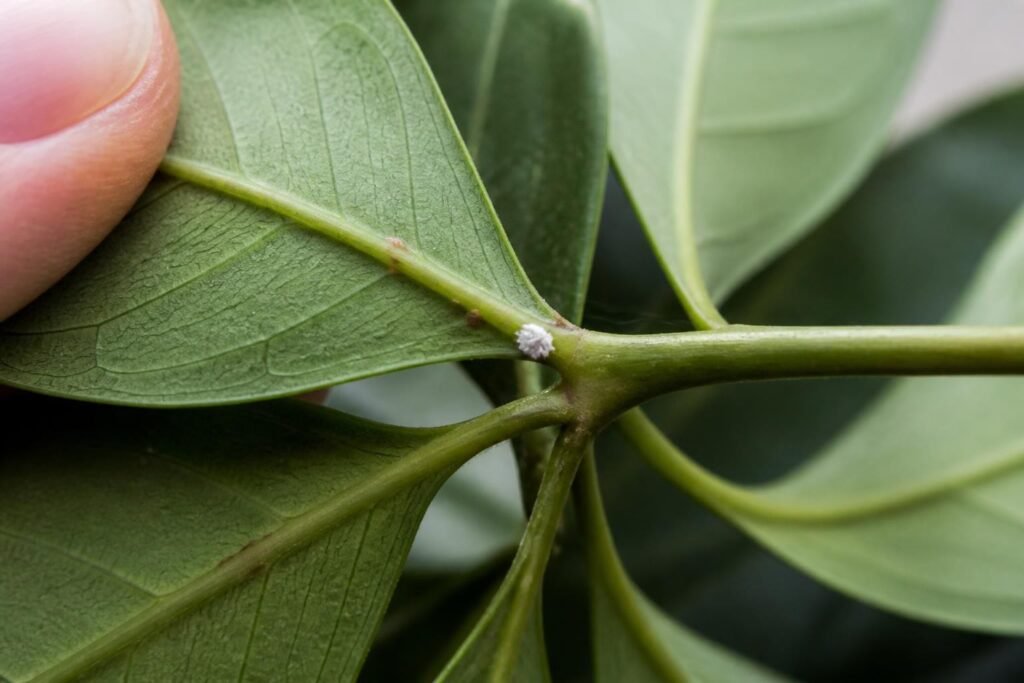
- Turn a few leaves over and check the joints where leaflets meet the stalk. You are looking for fine webbing, small bumps that stay put when you wipe them, white cottony tufts or a sticky film. Use your phone camera zoomed in if your eyes need help, and do not spray anything until you have actually seen something.
- Look at where the pot stands. A cold windowpane in winter, a heating or cooling vent, a drafty doorway, a spot it was moved to last month, even a bowl of ripe fruit nearby: all of these count as clues.
Two clues pointing the same way make a diagnosis. One clue is only a hunch. A description or a photo can only take anyone so far, so if the plant keeps sliding after you have fixed the obvious, a local extension office can look at a sample properly.
Leaves drooping but not falling
Drooping is not the same as dropping, and that gap is useful: the plant has not lost anything yet, so you still have time to read the soil. If the soil is clearly dry and the pot feels light, water thoroughly and let the excess drain away. If the soil is wet and the pot is heavy, do not add water, and look at the roots if the droop continues (the next section covers how). If the droop started after a move, a cold night or a blast from a vent, look at the spot before you touch the watering routine.
These causes overlap. Damaged roots cannot deliver water, so a plant can droop in wet soil and in dry soil alike. If a properly watered, dry plant has not perked up after a few days, suspect the roots.
The pot stays heavy and the leaves start to go
Sure, a wilting plant looks like it is begging for a drink, and that instinct finishes off a lot of scheffleras. Roots sitting in saturated mix cannot breathe. Answering a reader’s question about rapid leaf drop, Ask Extension points out that over-watered roots can also produce a hormone that stimulates leaf drop, so the plant sheds foliage even though nothing looks wrong above the soil.
So hold the water and let the top layer dry before the next drink. Then slide the plant out and look. Firm roots are a good sign. Dark, soft or mushy roots, especially when they smell sour and the soil has stayed wet, are much more concerning. The step-by-step rescue, from trimming to repotting, is in Schefflera Yellow Leaves: Causes and Solutions, which also covers the other half of the picture, yellow leaves on dry soil.
Stretched stems, bare lower branches, slow growth
Low light is the quiet one. A schefflera without enough light does not have the energy reserves to keep a full canopy, so it sheds the oldest or most damaged leaves first, as Ask Extension explains in the same answer. The new growth that does come tends to be thin and stretched toward the window.
Move it somewhere brighter, but do it in steps. A plant that has lived in a dim corner will scorch if you drop it straight onto a sunny sill, and the sudden jump in light intensity can trigger another round of leaf loss all by itself. A few days in an in-between spot, then the brighter one, is gentler. No need to panic over a few bare lower branches. They won’t fill back in just because you wait, but pruning just above a leaf can encourage new branching when the plant is growing well.
The full light and watering routine for the dwarf form is laid out in Dwarf Umbrella Tree Care: Light, Watering, and Growing Tips, so you can set it up once and stop firefighting.
Fresh from the store, or just moved across the room
Picture a typical case: a plant raised in a bright, humid greenhouse now sits on a shelf a few feet from a window, and within two weeks the lower leaves begin to fall. It may simply be acclimating, especially if the light or temperature changed, because the plant is trimming its canopy to match the light it now has. In winter, when growth is slow, that adjustment can drag on.
Ok, so a week or two of leaf drop after a move is pretty normal, no biggie. What turns it into a real problem is the fussing that follows: shifting the pot again, repotting, feeding, watering on a panic schedule. Pick one steady spot, away from vents and cold glass, and wait for fresh leaves at the stem tips. If the drop does not slow down once the plant has settled, or you cannot tie it to a move at all, work through Schefflera Losing Leaves: Causes and How to Stop Leaf Drop.
Sticky leaves, fine webbing, or bumps that will not wipe off
Each pest leaves its own signature. Spider mites leave fine webbing at the leaf joints and a pale stippling on the leaflets. Scale shows up as small brown or tan bumps along stems and leaf midribs, and mealybugs as white cottony tufts tucked into the joints. Both scale and mealybugs leave a sticky film on the leaves below them, and that film can turn dark and sooty over time. Mites are tiny, so tap a leaf over a sheet of white paper and watch for specks that move.
Isolate the plant first. Rinse the foliage in the shower or sink, paying attention to the undersides, which is where most people never spray. Dab scale and mealybugs with a cotton swab dipped in rubbing alcohol, testing it on a small area first and waiting to see how the plant responds before treating more of it. If you then reach for insecticidal soap or horticultural oil, follow the product label exactly and check what is allowed where you live, because approved products differ from country to country. Check again after several days, since survivors and newly hatched pests will otherwise carry on where the first round stopped. Bugs are a pain, sure, but they are usually easier to control when you catch them early.
Black or brown patches on the leaves
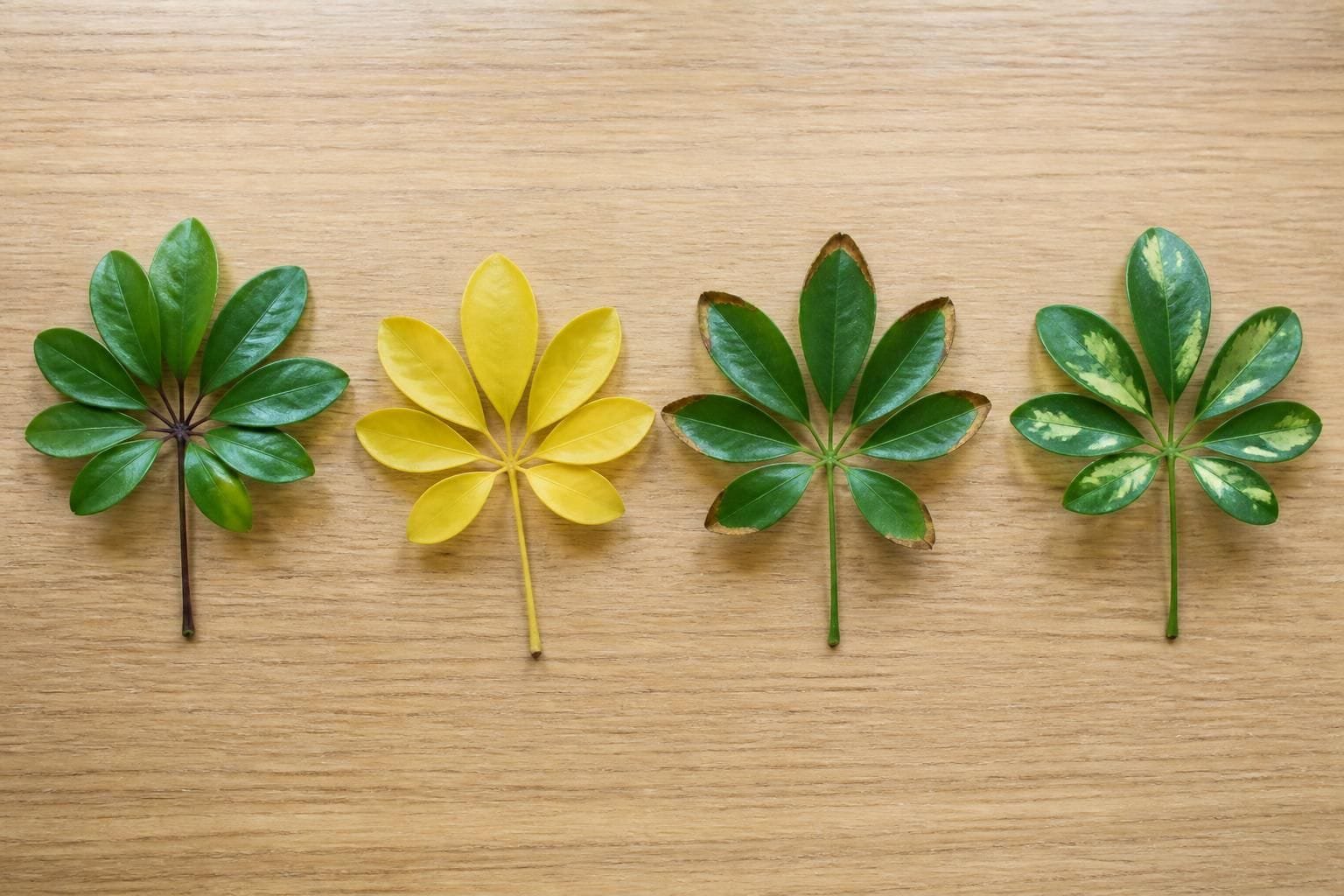
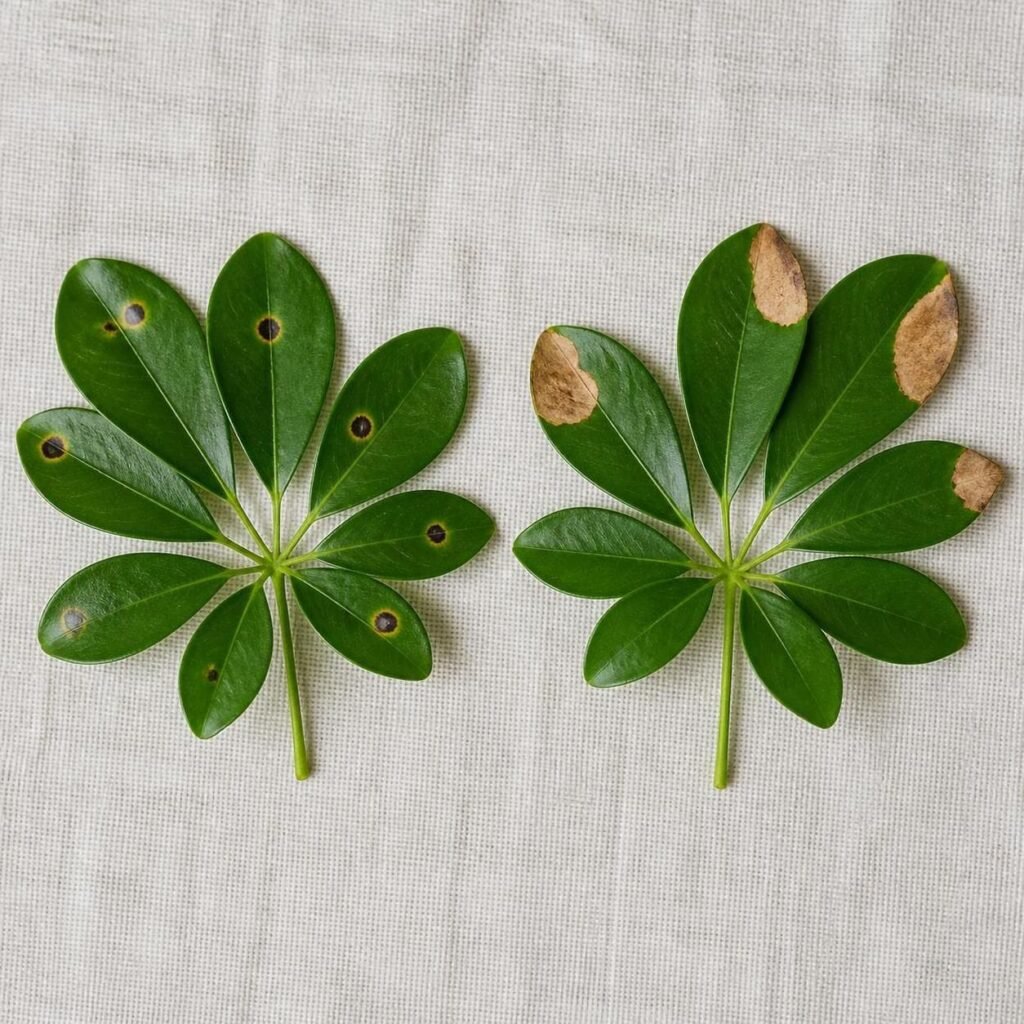
Start by asking how fast it happened. Cold injury shows up as dry, dead-looking patches that appear several days after the chill, which is why people hunt for a recent cause and miss the open window or air-conditioning vent from last week. Clemson advises keeping indoor scheffleras away from air conditioning vents and cold drafts, and the temperature ranges that matter are set out in our dwarf umbrella tree care guide. Look at which side of the plant is affected: a cold-damaged plant usually has the worst leaves facing the glass or the vent.
Leaf spot is different. Some fungal and bacterial leaf spots appear as round or irregular lesions, sometimes with a yellow halo. Wet foliage and splashing water can encourage the spread of certain diseases. Pick off the worst leaves, water at the soil level, give the plant some air, and stop misting. There is no reliable home treatment that reverses infected tissue, so focus on removing affected leaves and limiting further spread. From a description alone, leaf spot and cold damage can look alike, so a sample taken to an extension office is the honest way to be sure.
Two look-alikes are worth ruling out. Stems turning black and soft from the soil upward mean rot, so go back to the root check. Crisp brown leaf tips on otherwise healthy leaves are usually linked to dry air or uneven watering and are mostly cosmetic. Trim them if they bother you, following the natural shape of the leaflet.
Give any fix a few weeks before you judge it. Leaves that have already fallen will not come back, and that is fine. New growth at the tips is the sign you found the real cause.