
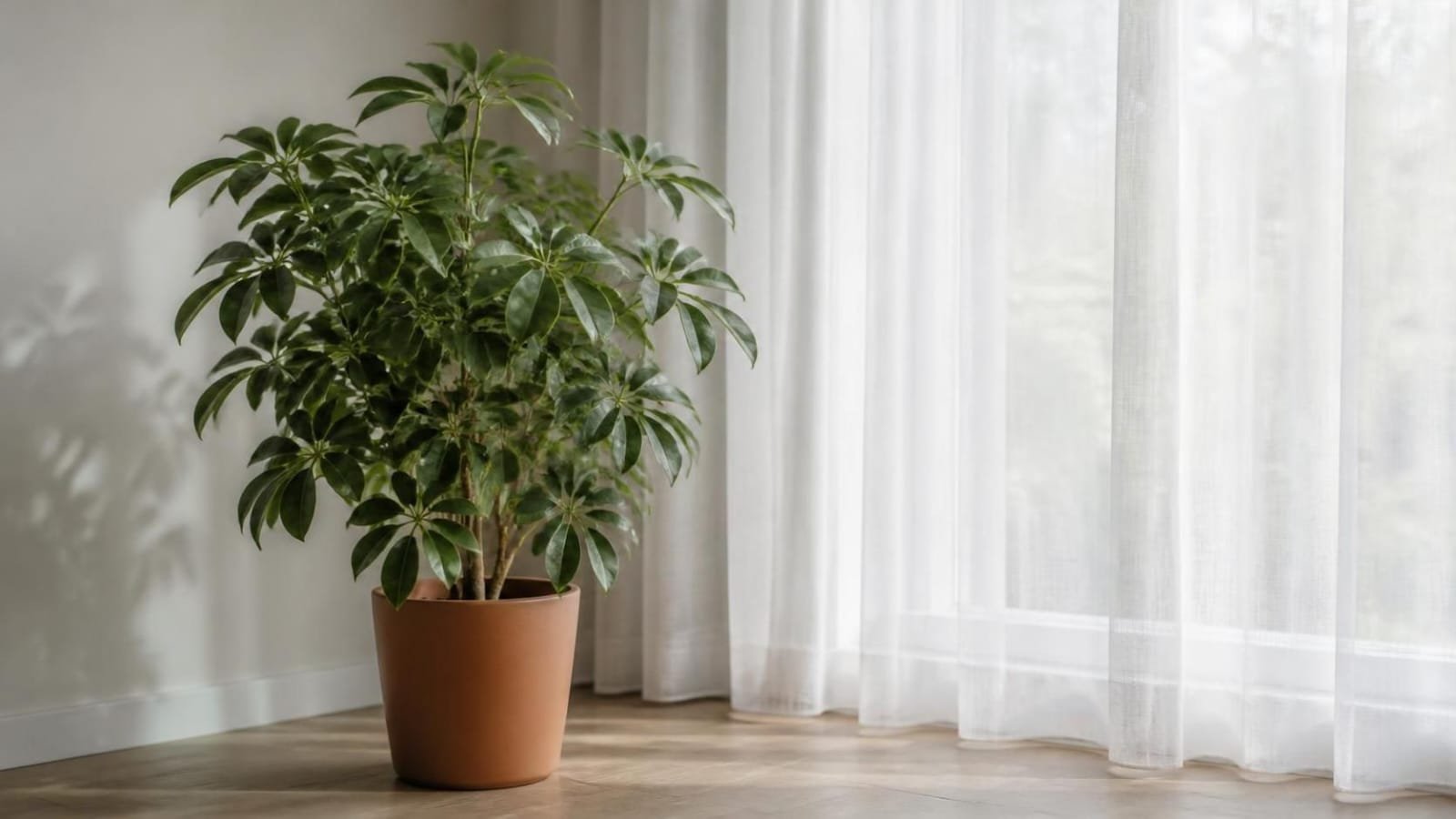
Bring a dwarf umbrella tree home from the garden center, and there is a good chance that within a couple of weeks you will find a few leaves on the floor beneath it. The instinct is to water it, move it, or do both. Hold off on both for a minute.
A dwarf umbrella tree does best in bright, indirect light. Water it thoroughly, but only after the top of the soil has dried, and keep it in a warm room away from drafts and heating vents. Those three habits head off many of the problems this plant is known for.
A few fallen leaves after a change of scene is a common houseplant reaction, and it usually settles as the plant adjusts. Leaf drop that carries on for weeks is a different matter, and our guide to why a Schefflera keeps losing leaves goes through the causes one at a time. What follows is the everyday care that keeps you from needing it.
Before you pick a spot: which umbrella tree is this?
“Umbrella tree” is a name shared by more than one plant, and plenty of care advice online is written for the larger one. The dwarf is Schefflera arboricola, which North Carolina State Extension now lists as Heptapleurum arboricola, with the old name in brackets. Nurseries still sell it as Schefflera, so don’t let the label throw you. Each leaf is made of seven to nine glossy leaflets fanned out like umbrella spokes, and in a container indoors the plant usually tops out around four to six feet.
Its bigger cousin, Schefflera actinophylla, has larger leaves and grows taller. According to an MSU Extension Advanced Master Gardener answering a reader’s question, the dwarf has leaves of about four to five inches or less and reaches roughly four to eight feet. If you are unsure what you own, count the leaflets and measure one. Seven to nine leaflets that are only a few inches long point to the dwarf. Variegated forms such as ‘Gold Capella’ and ‘Trinette’ exist too, and they generally want a little more light to hold their cream or yellow markings.
If you share your home with a cat or a dog
The same plant profile gives the plant a low poison rating overall, yet its description warns that it is a serious problem for dogs and cats when the leaves are chewed. The signs are drooling, trouble swallowing and vomiting, linked to calcium oxalate crystals in the leaves and sap. The profile does not settle how severe a given case will be, so treat any chewing as worth a call. The sap can also irritate sensitive skin, so gloves are a sensible precaution when you prune. If a pet has been chewing on it, call your veterinarian or a pet poison hotline rather than waiting to see what happens.
The bright window that isn’t as bright as it looks
The usual advice is bright, indirect light, which is easy to say and surprisingly hard to judge by eye. A room can feel well lit to you and still be dim for a plant, because your eyes adjust and a leaf cannot. Here is a rule of thumb many growers use, not a measurement. At midday, hold your hand a foot above the soil and look at the shadow it casts. A sharp, dark-edged shadow means direct sun is reaching the plant. A soft, blurred one means bright indirect light, which is what you want. If you can barely see a shadow, the spot is too dim for steady growth.
Direct sun is the other half of the story. Through glass in the afternoon it can scorch the leaves, so a sheer curtain, or a spot a few feet back from a south-facing window, often works better than the sill itself. East and west windows tend to be the easy ones.
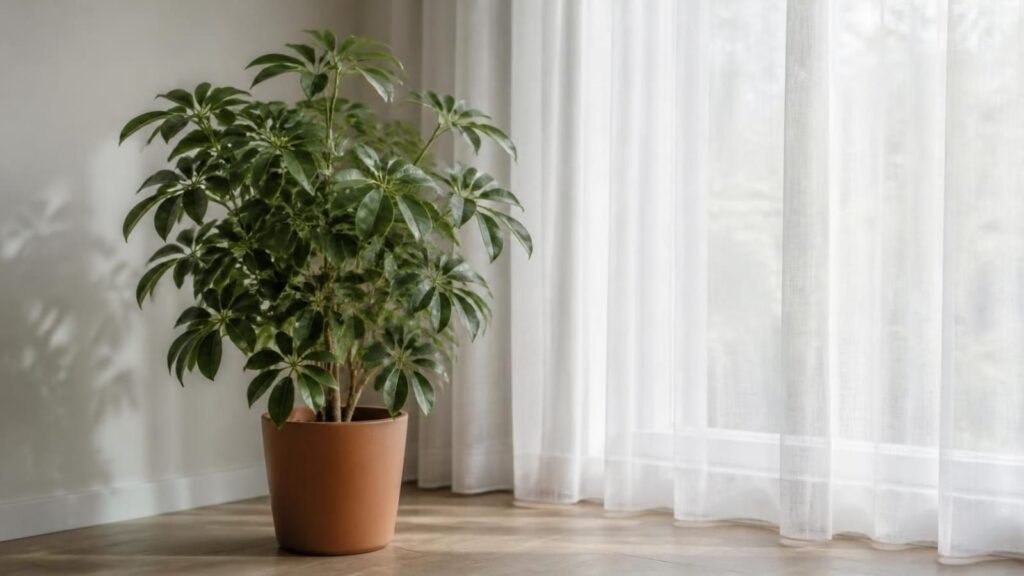
Too little light shows up slowly. The plant holds onto its leaves for a long time, but new stems stretch, the gaps between leaf clusters widen, and the whole plant starts to lean toward the glass. Oklahoma State Extension lists low light and improper watering as reasons the leaves drop or cup, which means a plant that is both dim and overwatered gets hit twice. A dim room also lowers how much water the plant uses, so a routine that worked all summer can slowly drown the same plant in a darker winter.
If your home is simply short on light, a grow light placed above the plant can make up the difference. Give the pot a quarter turn every couple of weeks so every side gets its share and the plant doesn’t lean. On a variegated type, watch the pale areas. When they fade toward plain green, the plant is asking for a brighter spot.
You watered it last Saturday. Is it time again?
The reflex at the first drooping leaf is to water. A calendar is no better. A guide that says “every nine days” or “every fourteen days” is describing somebody else’s pot, somebody else’s window and somebody else’s winter.
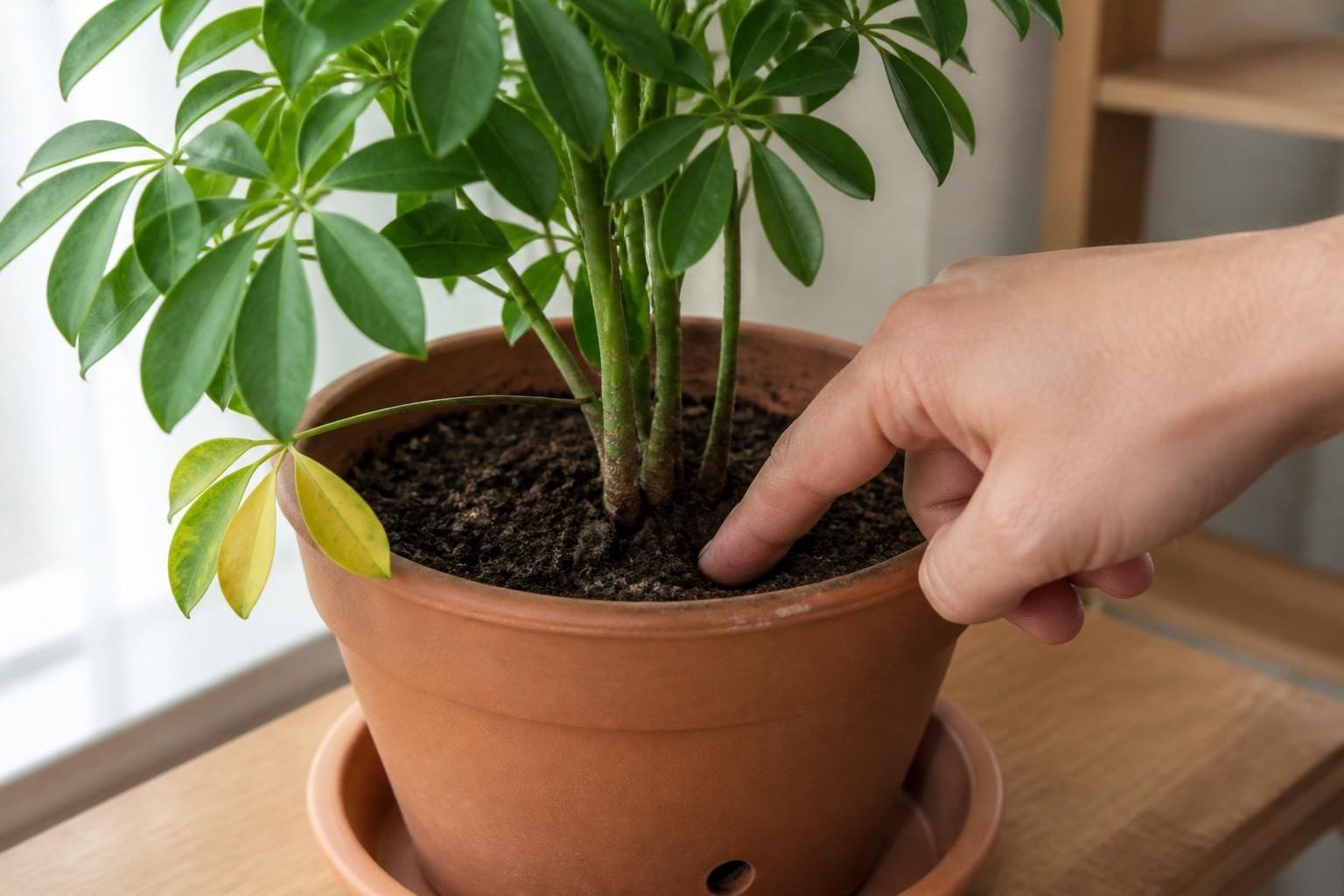
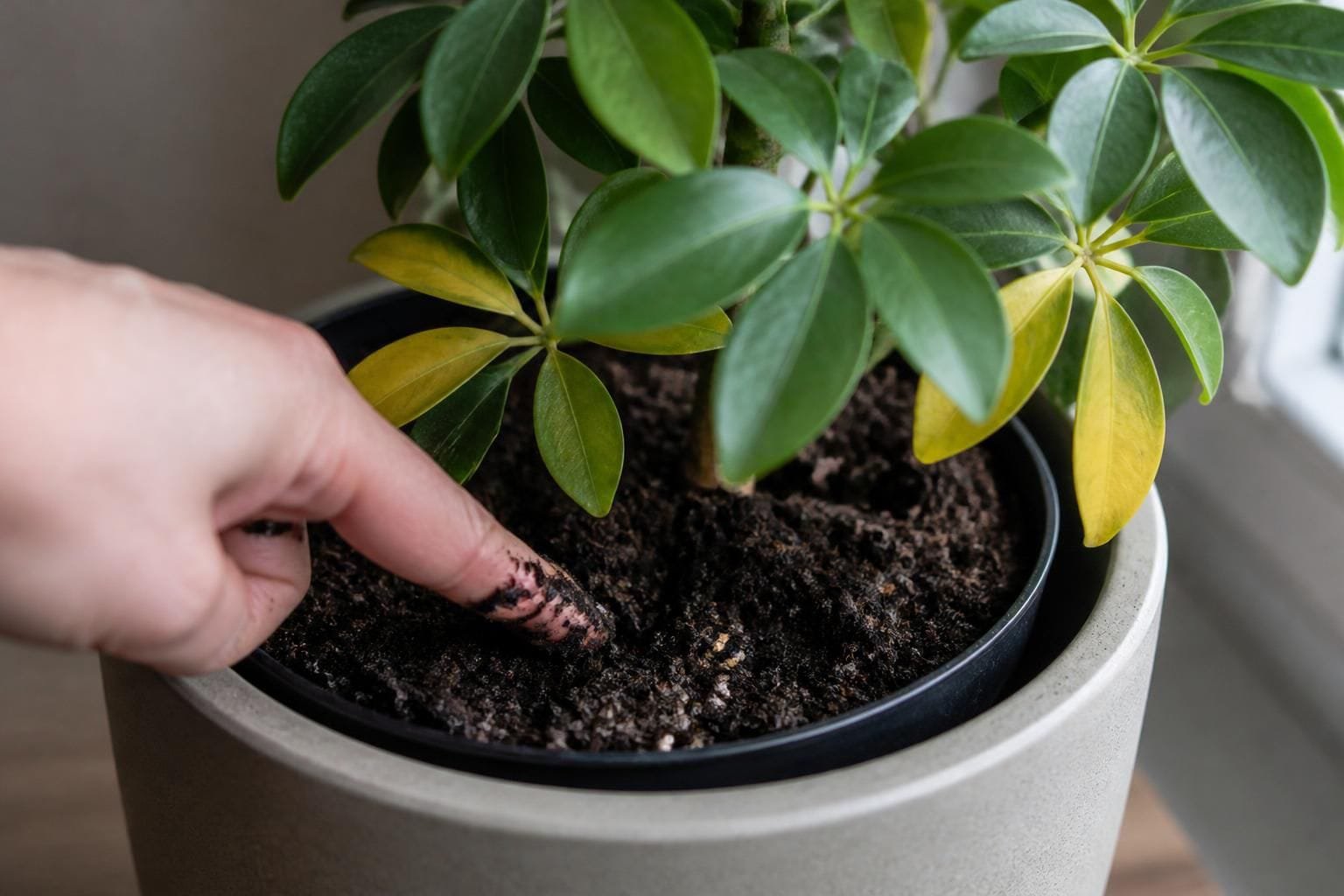
Even the depth rule varies. Clemson Extension advises watering thoroughly and letting the soil dry about half an inch down before the next watering, while some guides wait until the top couple of inches are dry. Both are workable, because pot size, light and season change how fast soil dries. Pick one, and check the soil each time instead of checking the date. One more instruction from that fact sheet is worth keeping: never leave the pot standing in water in its saucer.
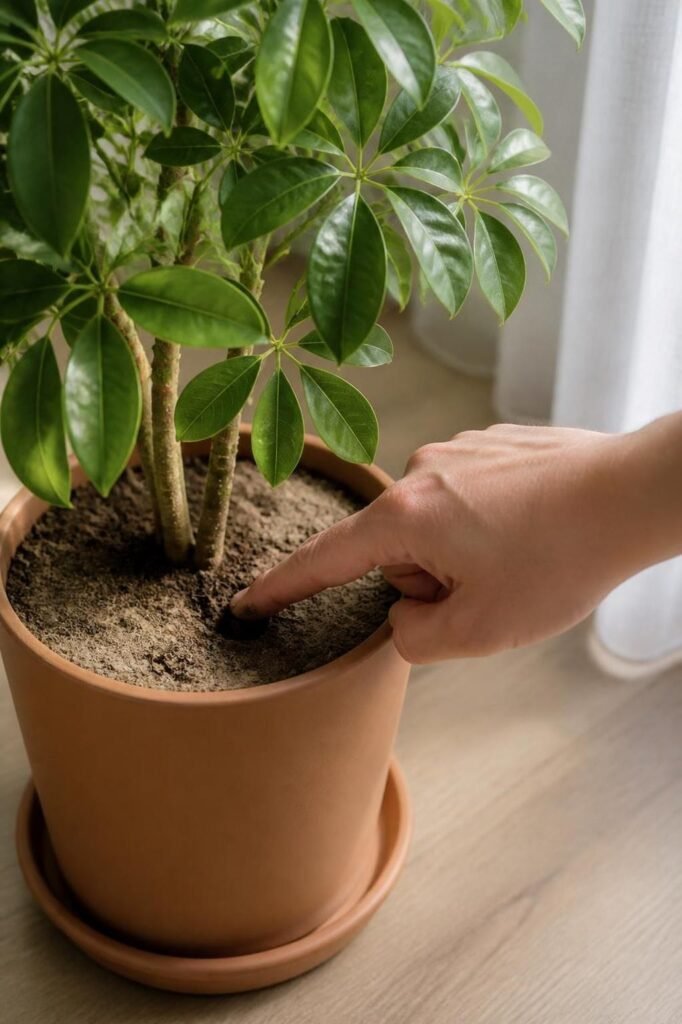
Here is the sequence worth following before the can leaves your hand.
Water or wait? A quick check
↓ If it is dry
↓ If it feels light
↓ Then look at the leaves
Two habits quietly undo this check. The first is a small sip every day. It wets only the top layer, which dries first, so the finger test keeps saying “water me” while the soil further down stays wet and the roots never get an even drink. The second is the decorative outer pot with no hole. Water collects in the bottom where you can’t see it, so lift the inner pot out after watering and let it drain before putting it back.
The cold night that shows up on the leaves a week later
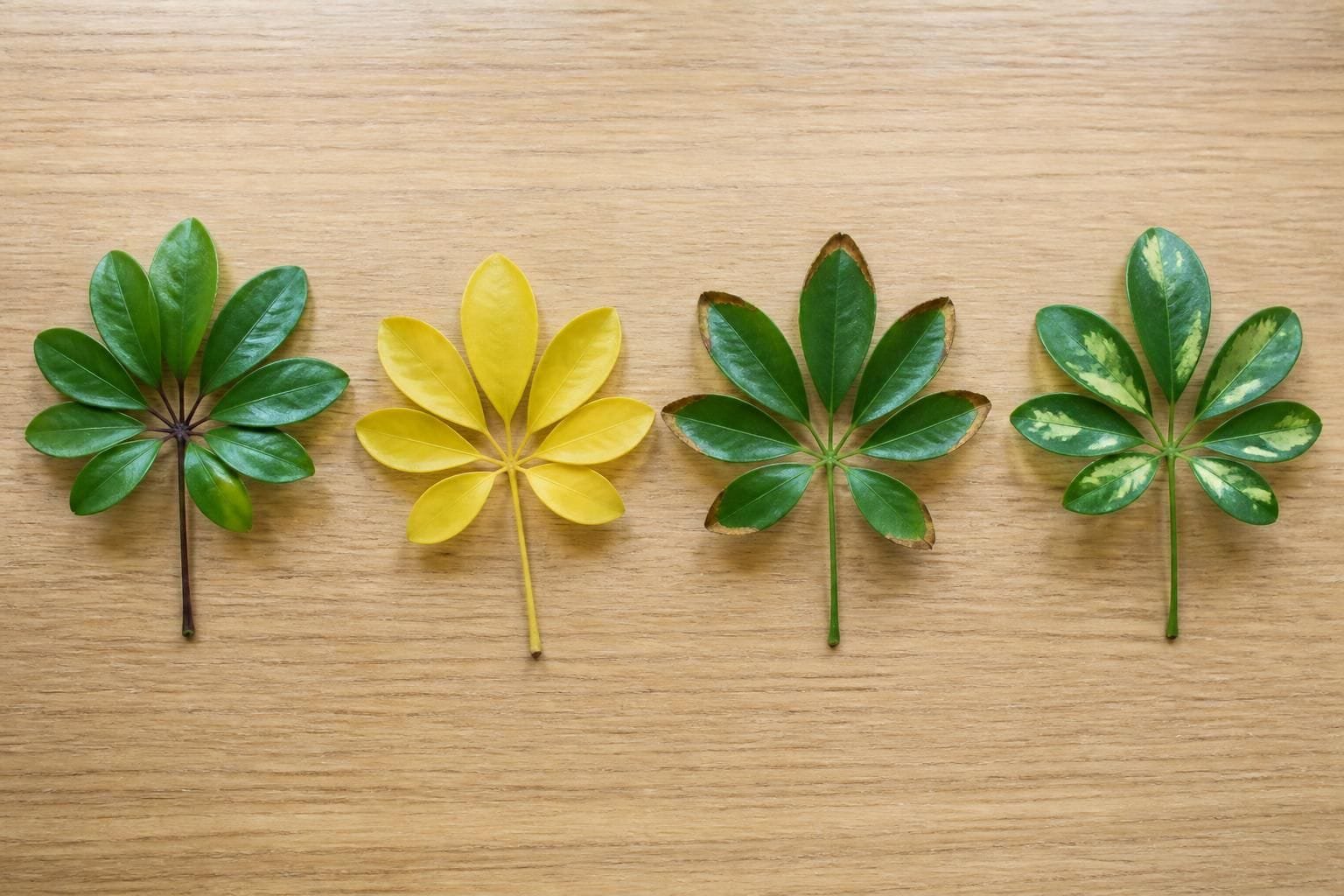
Clemson Extension puts the comfortable range at about 65 to 75°F by day, with nights staying above 60°F, and it says to keep the plant away from heat vents, radiators, open windows and air conditioners. It also notes that dead patches form on the leaves several days after a bad cold exposure. That delay explains a lot of mysteries. The window you cracked open on Tuesday shows up as brown patches on Sunday, by which point nobody connects the two.
Heat causes trouble from the other side. A plant sitting in the stream of a heating vent can lose moisture faster than its roots replace it, and winter heating dries the air in the whole room. Moderate to high humidity suits this plant. A tray of wet pebbles under the pot helps a little, as long as the water stays below the tops of the pebbles so the pot isn’t sitting in it. A small humidifier is another option if the room is very dry.
Fine webbing and dusty-looking leaves
Warm, dry rooms are where spider mites turn up. Illinois Extension says so for the larger umbrella tree, Schefflera actinophylla, noting that raising the humidity helps and that regularly washing the tops and undersides of the leaves helps too. The dwarf is a close relative, and extension profiles of it also list mites among its common pests, so the advice carries over. Turn a leaflet over in good light. Tiny pale pinpricks and fine webbing between the leaflets point to mites. A sticky film, small cottony tufts or hard brown bumps on the stems point to mealybugs or scale, which are the other usual pests on Scheffleras.
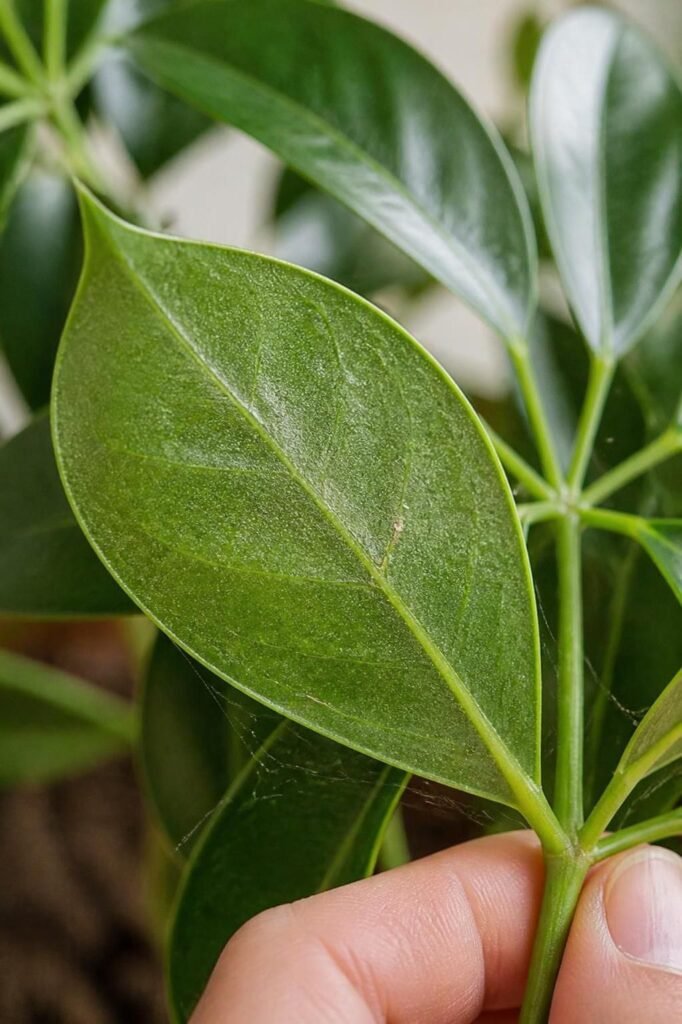
Start with the gentlest option: a shower or a wipe-down, then repeat it. If the pests keep coming back, use a product labeled for houseplants and for the pest you have, and follow the label and your local regulations, since approved products differ from one country to another. A hand lens settles most doubts, because stippling from mites can look a lot like dry-air damage to the naked eye.
Mites are only one of several things that can go wrong with a Schefflera. If what you are seeing doesn’t fit, our general Schefflera troubleshooting guide lets you compare symptoms side by side. No single page can diagnose a plant from a description, and a local extension office can confirm anything that stays unclear.
Feeding, potting mix and the winter slowdown
A balanced houseplant fertilizer during the growing season is plenty. Follow the label for how much and how often, because strengths differ widely between products. Iowa State Extension recommends feeding the larger umbrella tree in spring and summer and watering less often in fall and winter. That advice is for the larger species, but the two are close relatives with similar habits, so it is a reasonable guide here. A plant in a dim corner uses less food as well as less water, so it needs a lighter hand than one in a bright window.
An ordinary general-purpose potting mix works. What the roots need most is drainage, because a mix that stays soggy is a common route to root rot, and perlite stirred into the mix helps it drain.
When it turns leggy, lopsided or too big for its pot
A tall, thin stem with long gaps between leaf clusters can be fixed from the top. a University of Florida extension article says bushiness can be improved by pinching the tips of the stems, which forces more side shoots and keeps the plant in bounds. Cut or pinch just above a leaf, and new shoots will usually appear below the cut. That is how one stretched stem becomes a fuller plant.
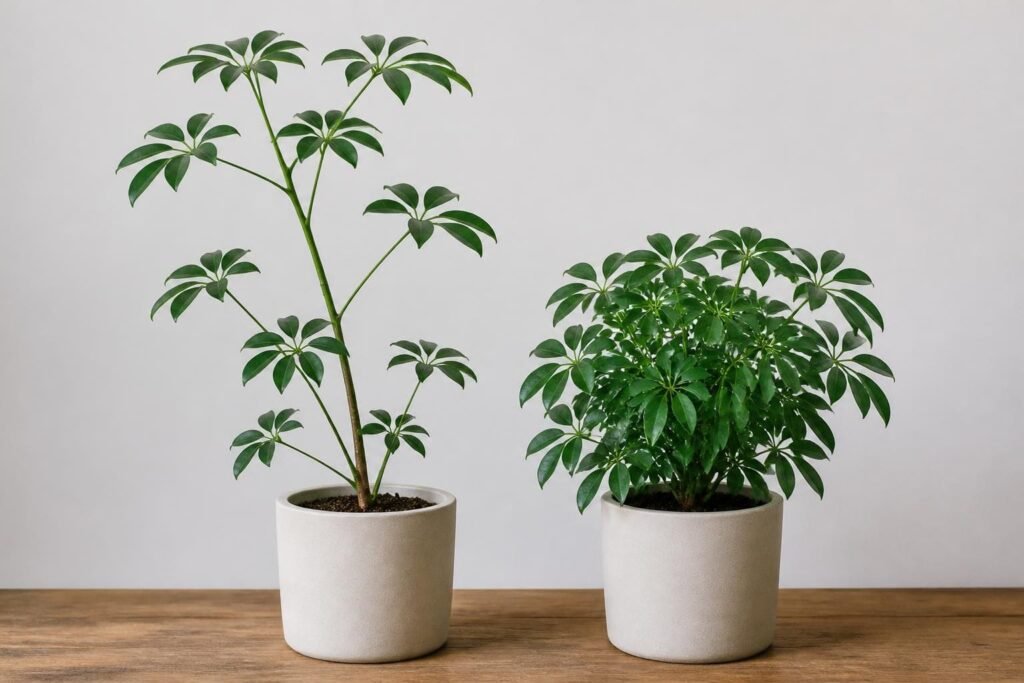
Pot size matters more than most people expect. In an Ask Extension answer from a North Carolina Master Gardener volunteer, a North Carolina gardener sent a photo of a leggy Schefflera that was not flourishing. The volunteer suspected too much water and not enough light, observed that these plants get strung out without sufficient light, and said the plant would probably never become attractive, suggesting a fresh start with a new plant given plenty of light. When the owner replied that the plant had sentimental value, the advice changed to a rescue: lift it out carefully, fit it into a smaller pot without too much soil, and fertilize with a weak solution later. The same answer on repotting is worth borrowing. Wait until the roots are somewhat crowded, and move up to a pot only slightly larger, because the root system is otherwise undersized for the pot, which in practice means a lot of soil that stays wet.
Notice what the volunteer was working from: a photo and a few lines. Even an experienced gardener had to write “I suspect,” and your own diagnosis deserves the same caution. A plant that is only mildly stretched is a very different case from that one, and pinching plus a brighter spot can turn it around. Roots pushing out of the drainage holes, or water running straight through the pot without soaking in, are good signs that repotting is due.
If you do only one thing this week, push a finger into the soil before you pick up the watering can.
Quick answers
Can a dwarf umbrella tree grow in low light?
It can live there, and better than its larger cousin. In a University of Florida research report on nursery-raised plants, dwarf schefflera kept its quality through about three months under very dim fluorescent light, and it did better than the bigger umbrella tree at the dimmest level tested. Two limits apply. The plants had been raised in strong light first, and the same trials found more flopping stems on plants raised in weak light. Read the result as proof that the plant adjusts well to a move, and expect holding on rather than growing if the dim spot is permanent.
How often should you water a dwarf umbrella tree?
There is no interval that fits every home. One care guide quotes roughly six to eight days in summer and eleven to seventeen in winter, which shows how wide the range is, and adds that light, pot size, pot material and indoor humidity all shift the timing. A terracotta pot, for example, tends to dry out sooner than a glazed or plastic one. Use a figure like that only to decide when to start checking the soil, then let the finger-and-lift check above make the call.
Why is my dwarf umbrella tree losing leaves?
A few leaves after a move are normal. Leaves that keep falling usually trace back to watering that is too heavy or too light, dry air, a chill, or light that is too dim. Feel the soil before anything else. Wet and heavy points to the roots. Bone dry with crisp leaf edges points to thirst or dry air. Brown patches that showed up a few days after a cold night point to the chill. If none of those fits, the full guide to Schefflera leaf drop covers the rarer causes.
2 thoughts on “Dwarf Umbrella Tree Care: Light, Water & Growing Tips”