
By the time peach leaves look like this, the damage was done weeks ago. The infection happened when the buds were opening, and the blistered, reddened foliage you’re looking at is the delayed result. That timing is the single most useful thing to understand about this problem, because it changes what you can do now and what you should do next winter.
The short answer: thick, puckered, red or purplish leaves on a peach or nectarine in spring almost always mean peach leaf curl, a fungal disease caused by Taphrina deformans. Once the leaves are distorted, spraying cannot restore them. The realistic goals this season are to support the tree through the disease, and to plan a preventive treatment or protection for the dormant season.
Confirm it: what peach leaf curl looks like
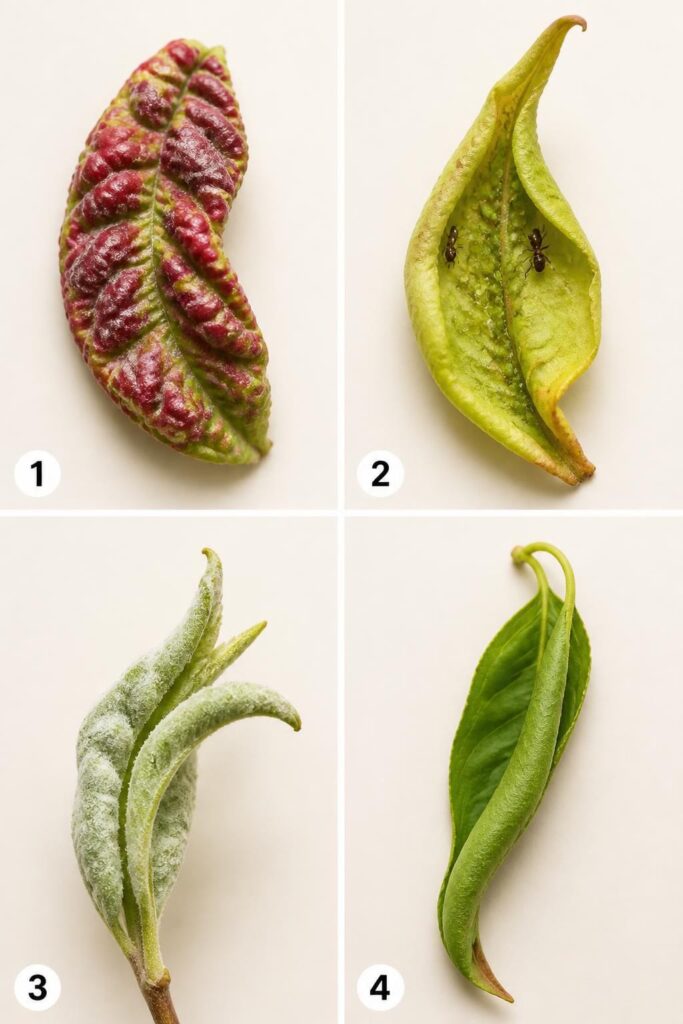
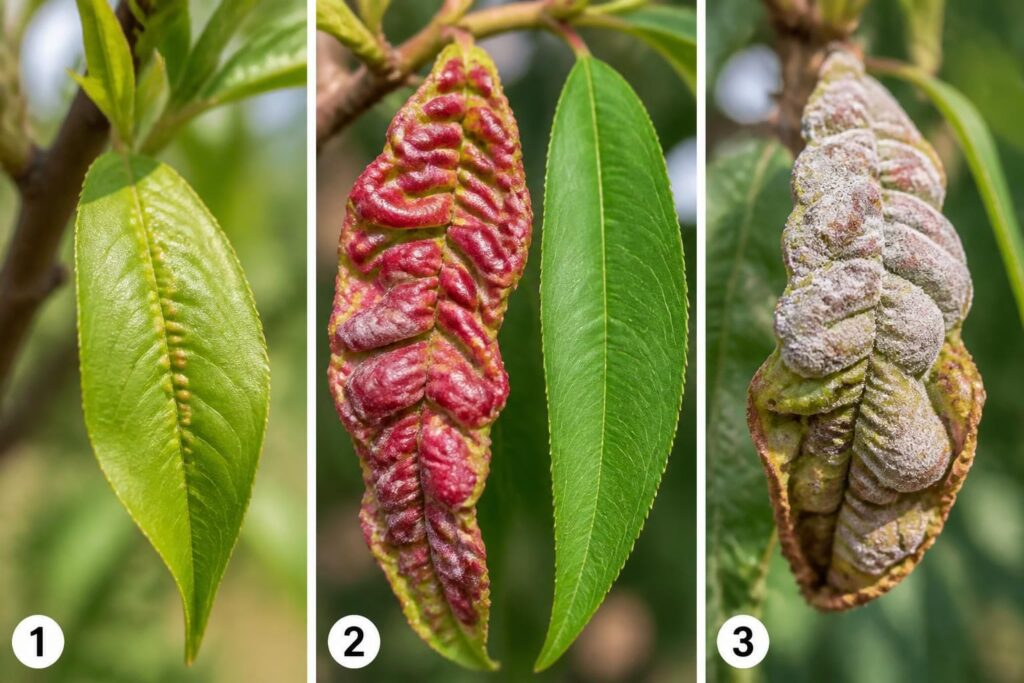
Peach leaf curl is one of the easier tree diseases to recognize. It appears in spring and causes new leaves to become reddish, puckered and severely distorted. The affected leaves change over a few weeks:
- Early: young leaves emerge with yellow to reddish blisters. Symptoms typically show up about two weeks after the leaves emerge.
- Middle: the blistered areas thicken, and the leaf puckers and twists. The leaf turns thick, leathery or rubbery compared to normal leaves, with red, pink or purple color where it’s distorted.
- Late: a whitish or grayish, powdery bloom covers the blisters as the fungus produces spores. The leaf then yellows or browns and drops.
Shoots can be affected too. Infected green shoots may thicken and distort, and fruit can develop swollen, reddish patches that lack the normal peach fuzz.
Is it really peach leaf curl? Ruling out the lookalikes
Not every curled peach leaf is peach leaf curl. Aphids, herbicide injury, water stress, nutrient problems and other diseases can distort foliage. Use the clues.
| What you see | Likely cause | Useful clue |
|---|---|---|
| Thick, blistered, red or purple puckers on young leaves, then a white bloom | Peach leaf curl | Leaves are thick and rubbery, and the distortion appears as the leaves open |
| Curled, yellowing leaves with sticky residue or ants | Aphids | Look on the underside of leaves for insects, and for honeydew or sooty mold |
| Whitish-gray powdery patches on buds, young leaves and twigs, leaves curling upward | Powdery mildew | Mildew appears as felt-like patches on the surface, and new shoots may be stunted |
| Distortion across many different plants nearby | Herbicide injury | Other species are affected, not only peach and nectarine |
| Leaves droop or roll without thickening or reddening | Water stress | Leaves stay thin and normal in color, and improve with consistent moisture |
Peach leaf curl typically affects only peaches and nectarines, although apricots and occasionally almonds can be infected too. If your tree is something else, such as a plum or cherry, look elsewhere for the cause.
A simple test: run a finger over the affected area. Blisters that are thickened, rubbery or crisp, and red or purple, point strongly toward leaf curl. Thin leaves that have simply rolled point to something else.
Why it happens: cool, wet weather at bud break
The fungus survives the hot, dry summer as spores on the tree’s surface, and with cool, moist winter and spring weather the spores germinate and infect the emerging leaves. It overwinters on twigs and buds, so a tree carries the disease from one year to the next.
Weather decides how bad it gets. One reference describes successful infection as needing rain that wets the tree for more than about 12.5 hours at temperatures below about 61°F (16°C), with the fungus unable to grow below about 48°F (9°C). Treat those numbers as approximate, since sources differ slightly. The practical point is that leaf curl can be mild in some springs and severe during cool, wet springs that follow mild winters.
That also explains why the disease can fade as the season warms. Once temperatures climb, the fungus stops spreading, and later leaves are usually healthy.
What to do this spring, now that leaves are affected
There’s no cure for the leaves that have already curled, and a fungicide sprayed now won’t help. UC IPM specifically warns against applying fungicides during the growing season, since they won’t be effective and may harm foliage. What you can do is keep the tree in good shape while it recovers.
Keep moisture even. Maintain steady soil moisture without saturating the root zone. A stressed tree copes worse with losing its first set of leaves.
Go easy on nitrogen. Avoid pushing soft, lush growth with unnecessary nitrogen while the tree is already under pressure.
Thin the crop if the tree is badly defoliated. If a lot of leaves drop, a heavy fruit load may be too much for the foliage left. Thinning fruit reduces the strain.
Watch the second flush. Infected leaves often drop, and the tree may put out new foliage, which is usually healthy unless more spring rain reinfects it. In severe cases, replacement leaves may appear as late as June or July. The catch is that producing them uses energy the tree would otherwise put toward fruit.
Should you pick off infected leaves? Advice is mixed. Some sources, including the RHS and Washington State University, suggest removing infected leaves early, before the white spore bloom appears, to reduce the fungus carried into the next year. Others point out that removing individual leaves doesn’t eliminate the fungus and reduces the tree’s photosynthetic area, and one extension publication notes there are no proven sanitation practices for this disease. If you do remove leaves, do it early and dispose of them, and don’t strip the tree bare. Raking up fallen leaves is harmless, though it isn’t a substitute for dormant-season prevention.
Will the tree survive?
Usually, yes, though sources differ on severity. One extension source says the disease rarely kills trees and is easily managed with dormant-season treatment. UC IPM says that leaving infection untreated for several years can lead to tree decline, and a Washington State University fact sheet notes that severe leaf drop reduces vigor and can increase susceptibility to winter injury. A commercial gardening site goes further and claims untreated trees can die within two to three years, which is a stronger claim than the extension sources make.
A sensible reading: one bad spring is unlikely to kill a healthy tree, but repeated years of heavy infection wear it down. Fruit from an infected tree is often normal, though it can be affected.
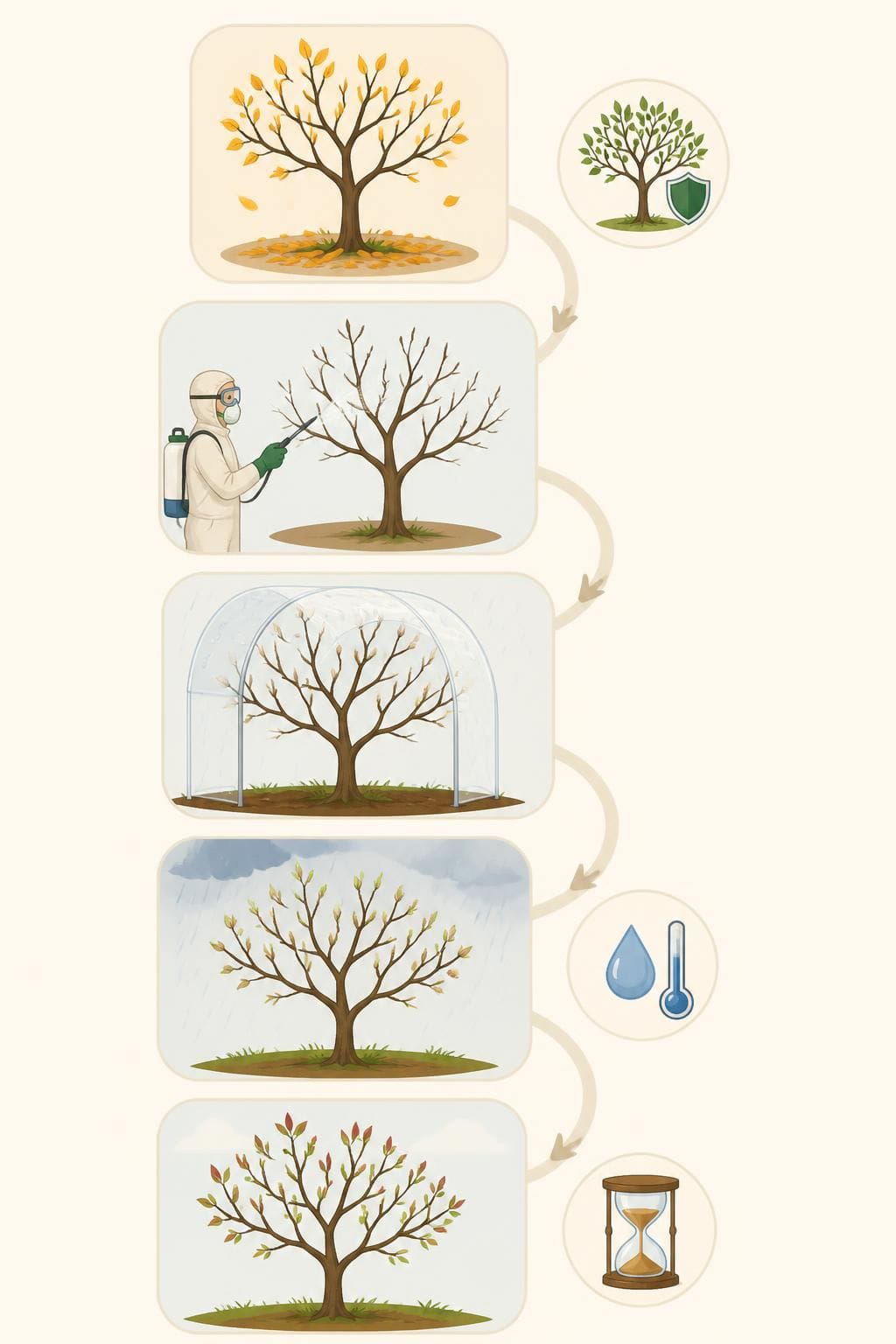
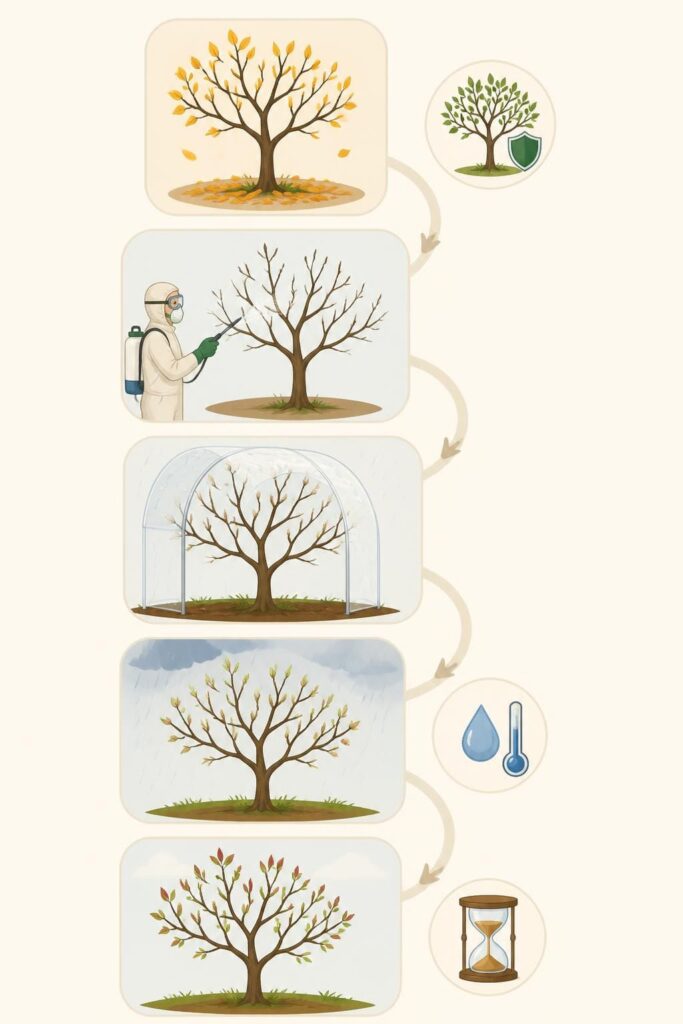
Preventing it next year: the dormant-season window
This is where the problem is actually solved. Because infection happens at bud opening, prevention has to happen before then.
Timing. UC IPM recommends treating susceptible trees with a preventive fungicide every year after the leaves have fallen but before new buds develop in spring, typically late November or December in California. A second application in late winter, before buds swell, can be considered, especially in high-rainfall areas or wet winters. Other regions differ. A Washington State University fact sheet recommends starting in January and repeating at intervals during wet weather, so check guidance for your area.
Coverage. Spray the whole tree, including branches, twigs and buds, until dripping. Leaves left on the tree get in the way, which is why treating after leaf fall works better.
Product choice. Copper-based fungicides (such as copper ammonium complex or copper soap) are the commonly recommended options for home gardeners in extension guidance, and horticultural oil is sometimes added to improve effectiveness. Approved products differ by country and region, and some countries restrict what home gardeners may use. Follow the product label, and check your local regulations before choosing or applying anything. UC IPM also notes that all leaf-curl fungicides carry environmental and health risks, and that copper can build up in soil over many years, so wear protective clothing and avoid runoff.
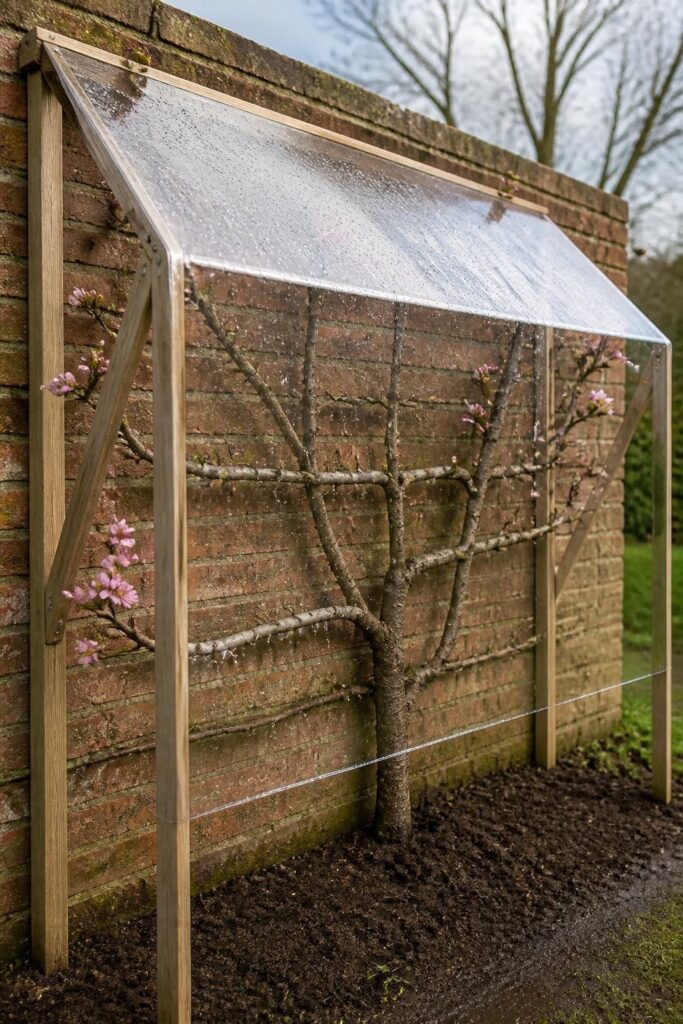
Rain protection. Keeping buds dry works well where it’s practical. RHS guidance for wall-trained peaches describes a plastic rain shelter covering the top and front of the tree to within about 30 cm (1 ft) of the ground, with the ends left open so pollinators can reach the flowers. It goes up after leaf fall in November and stays until mid-May. This also gives some frost protection. Potted peaches can be moved under cover for the same reason.
Resistant varieties. UC IPM lists Frost, Indian Free, Muir and Q-1-8 as resistant or partially resistant peaches, and Kreibich as a resistant nectarine. Redhaven and most cultivars derived from it are considered tolerant, while Redskin and its descendants are susceptible. Two cautions: Frost reportedly needs fungicide during its first two to three years, and resistant does not mean immune, especially in years with very favorable weather. The RHS names several other cultivars with some claimed resistance, including ‘Avalon Pride’.
What not to do
- Don’t spray a fungicide on already-distorted leaves. It won’t reverse the damage and may harm the foliage.
- Don’t panic-prune. Cutting off large amounts of growth reduces the tree’s ability to feed itself.
- Don’t overfeed with nitrogen hoping to force fresh growth.
- Don’t assume every curl is leaf curl. Check for aphids and other causes first, since the treatment is completely different.
- Don’t skip next winter. One spring without treatment can mean another year of infection.
Quick questions
Can I treat peach leaf curl in spring? Not effectively. Once symptoms appear, a spray can’t restore infected leaves, so prevention has to happen in the dormant season.
Will the leaves grow back normally? Often yes. Replacement leaves are usually healthy unless more wet weather reinfects them.
Does it spread to other trees? It affects peaches and nectarines mainly, plus apricots and occasionally almonds. Spores spread by water splash.
Is the fruit safe to eat? Fruit from an infected tree is usually normal. If fruit itself is affected, you may see reddish, swollen patches without fuzz.