Tomatoes Cracking After Rain or Heavy Watering? Why It Happens and What to Do
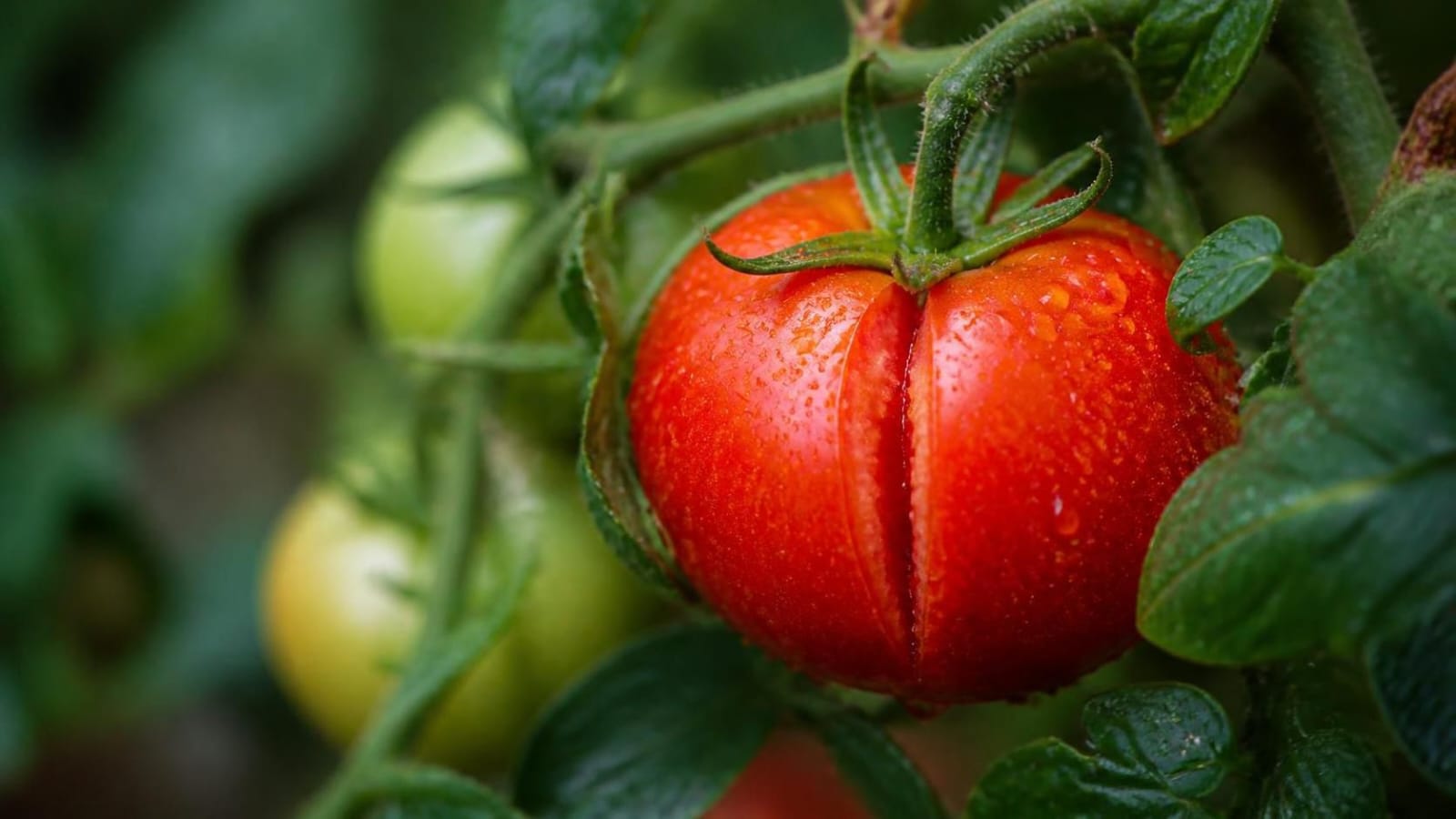
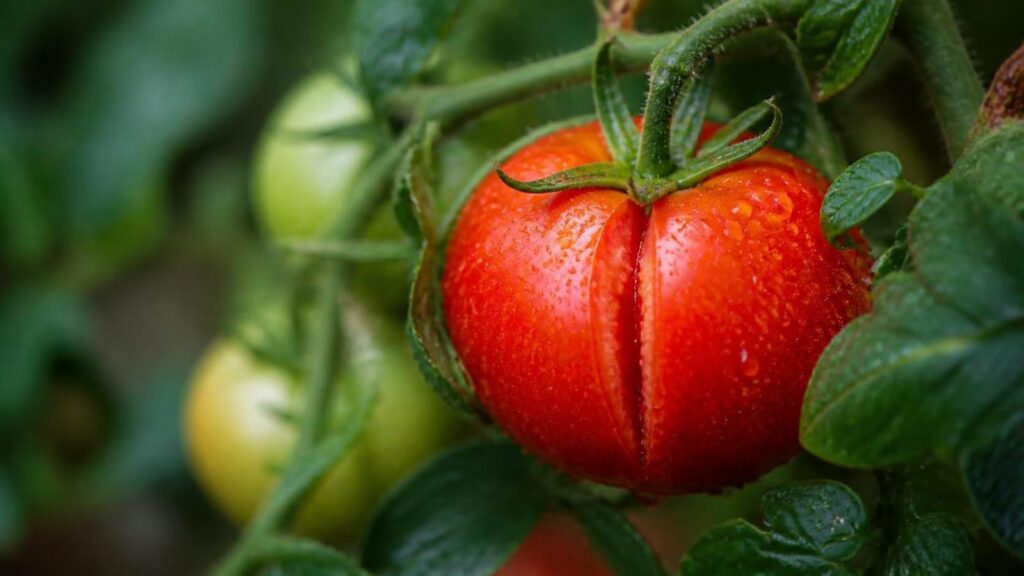
There is a particular kind of disappointment in finding a split tomato. The fruit was almost ripe yesterday. Then a thunderstorm came through, or you gave the thirsty plants a long soak, and this morning there is a gash running down the shoulder.
It helps to know that this is rarely a disease and rarely a sign that you did something badly wrong. It is a physical problem, and once you see how it works, it becomes something you can manage with fairly small changes.
Tomatoes crack when the inside of the fruit swells faster than the skin can stretch. A dry spell followed by heavy rain or a deep watering sends a sudden surge of water into ripening fruit, whose skin has already lost much of its elasticity. You cannot undo a crack, but you can pick the right fruit before storms, keep soil moisture steady with mulch and regular watering, shade the fruit, and rewet dry soil gradually instead of flooding it.
What is happening inside the fruit
A ripening tomato is a small pressure vessel. As it matures, sugars and other dissolved solids build up inside, and that draws water in. At the same time the skin is changing. K-State Extension horticulturist Matt McKernan explains that cracking is most common in nearly ripe fruit, because the internal pressure often rises while the skin gets weaker and less elastic, as quoted in the K-State Extension news service.
Now add a sudden supply of water. The University of Missouri describes how excessive irrigation or heavy rainfall after a droughty period causes a rapid uptake of water, so that ripening fruit splits vertically or cracks in rings. During a dry spell the plant slows down and the fruit grows less. When the soil is wet again, the roots absorb water quickly, and the fruit tries to catch up in hours rather than days.
Rain can also reach the fruit directly. A University of Delaware crop update notes that in heavy rain, water can enter at the stem scar or through minute cracks in the shoulder of the skin, adding pressure from outside the normal route. The same source says high humidity around the fruit can increase cracking, and that susceptible varieties have thin, less elastic skin. So it is not only a root problem.
Researchers still debate some of the details. The University of Massachusetts Amherst vegetable program lists water uptake, humidity, temperature, sugar levels, calcium nutrition and standing water on the fruit as factors, along with genetics. Irregular uptake, swinging from very dry to very wet, is singled out as playing a major role.
Read the crack to understand what happened
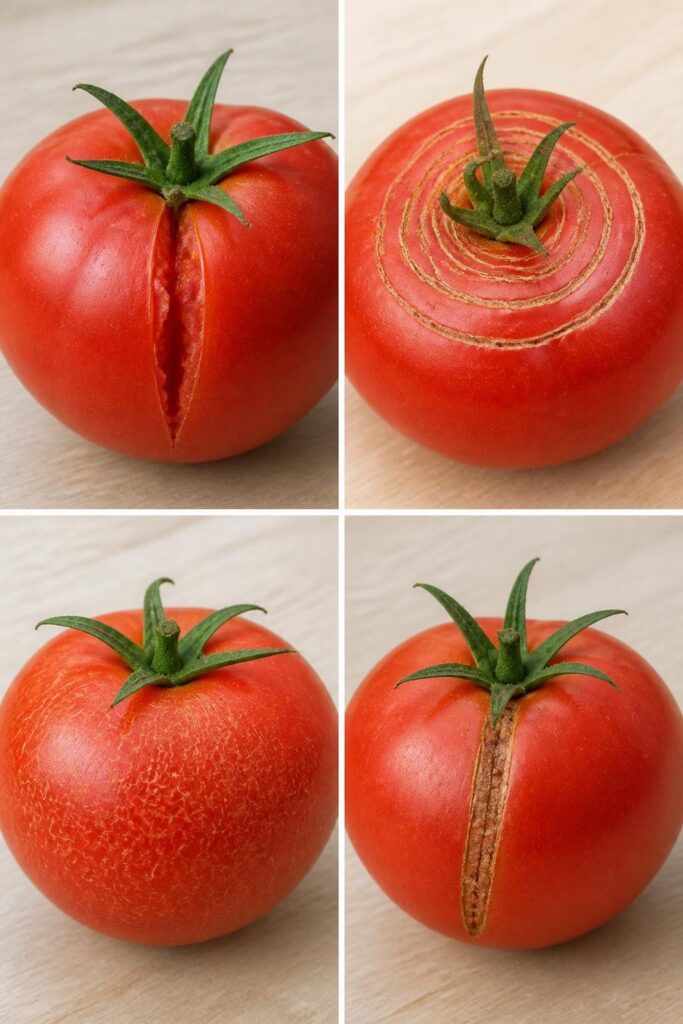
Not every crack tells the same story. Iowa State University Extension describes two classic patterns: radial cracks that run out from the stem, and concentric cracks that circle the fruit in rings. There is also a third, quieter kind. The table below pairs what you see with what it usually means and what to do with the fruit.
| What you see | What it usually means | How serious it is | What to do |
|---|---|---|---|
| Deep split running down from the stem end (radial) | A sharp surge of water, typically rain or a heavy soak after dry soil | Serious. Deep splits expose the flesh and raise the chance of rot. | Pick it now and use it quickly. Do not leave it on the plant. |
| Rings or arcs around the shoulder (concentric) | Fluctuating water and temperature, or fruit left on the vine too long | Often shallower, but it can still open up. | Pick promptly. Trim the damaged part away and use the rest. |
| Fine, rough, network-like marks on the skin | Repeated small stresses, humidity, or water sitting on the fruit surface | Mostly cosmetic. It can shorten shelf life. | Fruit is usually fine to eat. Improve airflow and keep foliage dry where you can. |
| An old split that has sealed into a brown, corky scar | A minor split that happened earlier and stopped | Low. Check that the scar is dry and firm. | Cut out the scar if you like, and eat the fruit. |
| A crack with soft spots, sour smell, mould or fermentation | Decay entered through the split | Serious. Do not eat it. | Discard it and remove debris from around the plant. |
The morning after: what to do right away
If a storm has just passed, a calm half hour in the garden can save a lot of the crop. Work in this order.
- Check every plant within a day. The University of Missouri advises looking over the plants after rain and harvesting any cracked fruit immediately, then using it quickly before rot develops.
- Sort what you pick. Clean, fresh splits can be trimmed and used the same day. Anything that smells sour or looks diseased should be discarded.
- Pick fruit that is turning colour, even if it is not fully ripe. It is the next most likely to split. The K-State guidance is to harvest as soon as the fruit begins to colour and let it ripen indoors at room temperature, which prevents the further expansion that would happen on the vine.
- Resume a steady watering rhythm. Do not stop watering in an effort to dry the plants out. Dry soil followed by the next rain is exactly the swing that causes the problem.
- Look at drainage. Standing water around the base of the plant, or a saucer full of water under a pot, should be cleared.
- Hold off on nitrogen. Extra feeding now will not mend anything, and the Missouri extension notes that excess nitrogen can predispose fruit to cracking.
Are cracked tomatoes safe to eat?
In most cases, yes, if the split is fresh and clean. Cut away the damaged area and use the fruit soon. The risk is in the opening: a crack gives bacteria and fungi a way in, especially in warm, humid weather. Discard fruit with mould, a fermented or sour smell, soft rot, or insect activity in the wound.
Before the storm: a short forecast routine
When rain is forecast after a dry spell, you have a day or two to protect the harvest. A little forethought here does more than any later repair.
- Pick fruit that is nearly ripe. The University of Missouri advises harvesting any nearly ripe tomatoes when rain is expected after a dry period. They may be a little less flavourful than fully vine-ripened fruit, but they remain usable.
- Harvest at first colour for the most vulnerable plants, then finish ripening on a counter out of direct sun.
- Skip the deep watering the day before. The ground is about to be soaked anyway, and adding to it makes the swing larger.
- Move container plants under cover if you can. Pots in the open take the full force of a downpour, and they swing between dry and wet faster than garden beds do.
- Think carefully before covering plants. Some growers use covers to keep rain off, but humidity around the fruit can increase cracking, so any cover must leave plenty of airflow.
Water in a way that keeps the swings small
Consistency matters more than the exact amount. K-State puts the average need at about 1 inch (roughly 25 mm) of water per week, and says that scheduled watering prevents the quick influx of water that tends to cause cracking. Iowa State suggests a thorough soaking about once every seven days during dry periods for most plants, along with mulch. Other growers prefer several lighter watering sessions per week. The right pattern depends on your soil, your weather and whether you are growing in the ground or in pots, so use these as starting points and let the soil guide you.
Check the soil, not the calendar
Push a finger several inches into the soil beside the plant. If it is dry at that depth, the plant is overdue. If it is damp, wait. A plant growing in the ground is more forgiving than a container plant, which can go from fine to parched in a single hot afternoon.
Rewet dry soil in stages
This is the step many gardeners miss. After a long dry stretch, a single huge soaking can set off the same surge that a storm does. Water slowly and deeply, pause for a few hours, and then water again later or the next day if the soil still needs it. Drip lines and soaker hoses help because they deliver water at a pace the plant can handle, and the University of Missouri lists them among the most helpful tools.
Containers need extra care
Pots dry out faster, so check them daily in summer. Larger containers hold moisture more evenly than small ones, and mulch on top helps slow evaporation. If a pot has gone bone dry, give it a gradual drink rather than a flood.
Mulch, shade and feeding
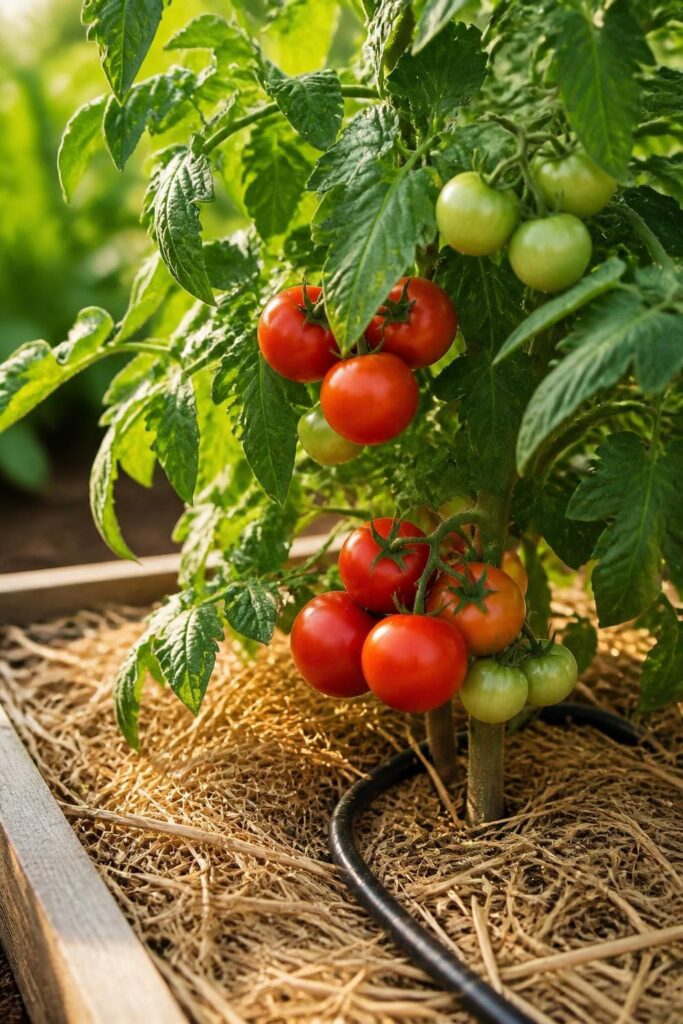
A layer of organic mulch such as straw, shredded leaves, compost or dried grass clippings evens out soil moisture, which is why K-State, Iowa State and Missouri all recommend it. Keep it a little away from the stem, and refresh it as it breaks down.
Shade helps in a second way. K-State notes that shading the fruit, with leaf cover or shade cloth, keeps it from heating in the sun and reduces temperature swings. Missouri adds that tomatoes exposed to direct sun absorb more heat than shaded fruit and are more likely to split. This is a reason to avoid stripping too many leaves from a plant, especially in hot weather.
On feeding, the Missouri extension says excess nitrogen or low calcium and potassium can predispose tomatoes to cracking. The practical lesson is balance. A soil test will tell you far more than guesswork, and it is worth remembering that no amount of calcium will compensate for a large swing in water. Some other sources argue that cracking is almost entirely about water and has little to do with calcium. The two views are not as far apart as they seem: steady moisture is the main control, and sound nutrition supports it.
Varieties that cope better
If you do everything right and still lose fruit, the variety may be part of the answer. K-State evaluated tomato varieties over several years and reported that the difference seems to be the pliability of the skin rather than its thickness. An older variety, Jet Star, was the most crack resistant they tested, though it is a rampant grower. Among newer types they named Mountain Spring, Mountain Pride, Mountain Fresh, Floralina and Sun Leaper as having good resistance.
A word of caution. The University of Missouri points out that every type, cherry, plum and slicing alike, can still split when dry soil is followed by abundant moisture. Resistance reduces the risk. It does not remove it, so the watering habits above still matter. Large-fruited heirlooms with thin skins tend to be the most sensitive.
Mistakes that make cracking worse
- Do not hold back water to toughen the plants. Very dry soil followed by rain is the classic setup for splitting.
- Do not flood the bed after a dry spell. Rewet in stages so the plant is not hit with a surge.
- Do not leave nearly ripe fruit on the vine before a storm. It is the fruit most likely to split.
- Do not overfeed with nitrogen. Lush growth does not protect fruit and may make cracking more likely.
- Do not leave split fruit on the plant. It invites rot and pests that can spread to healthy fruit.
Quick answers
Is tomato cracking a disease?
No. It is a physiological disorder linked to water, temperature and fruit development, not an infection. The danger comes afterward, when decay organisms enter through the opening.
Can I stop tomatoes cracking once it has started?
A crack that has formed will not close up properly, though a small early one may seal into a corky scar. The goal is to pick damaged fruit quickly and prevent the next round.
Will tomatoes keep ripening off the vine?
Yes. Fruit picked at the point when colour begins to show can finish ripening at room temperature. Keep it out of direct sun.
Do I need to water if it has just rained?
Check the soil first. If the root zone is moist several inches down, skip it. After a light shower in hot weather the soil may be dry underneath, so a finger test is better than assuming.
Do container tomatoes crack more?
They can, because pots swing between dry and wet quickly. Larger pots, mulch, daily checks and moving containers out of heavy rain all help.