Why Is My Lettuce Bitter? Causes and What to Do
Ask one question before anything else: when did the bitterness start? A bed that tasted sweet last week and sharp today points to weather or water. Leaves that grew sharper as the plants aged point to maturity. Lettuce that has never tasted right points to variety, season or soil. Bitterness that arrives with a stretching stalk or pale, twisted heart leaves points to bolting or, less often, disease.
The chemistry underneath is the same in every case. Lettuce makes bitter compounds called sesquiterpene lactones, mainly lactucin and lactucopicrin, and it makes more of them when conditions push the plant toward stress or flowering. Bitter lettuce is not harmful. The useful part is working out which pattern you have, so here they are one at a time.
Sweet last week, sharp this week
A sudden change nearly always means something shifted in the bed, and the two usual suspects are a run of hot days and a dry spell.
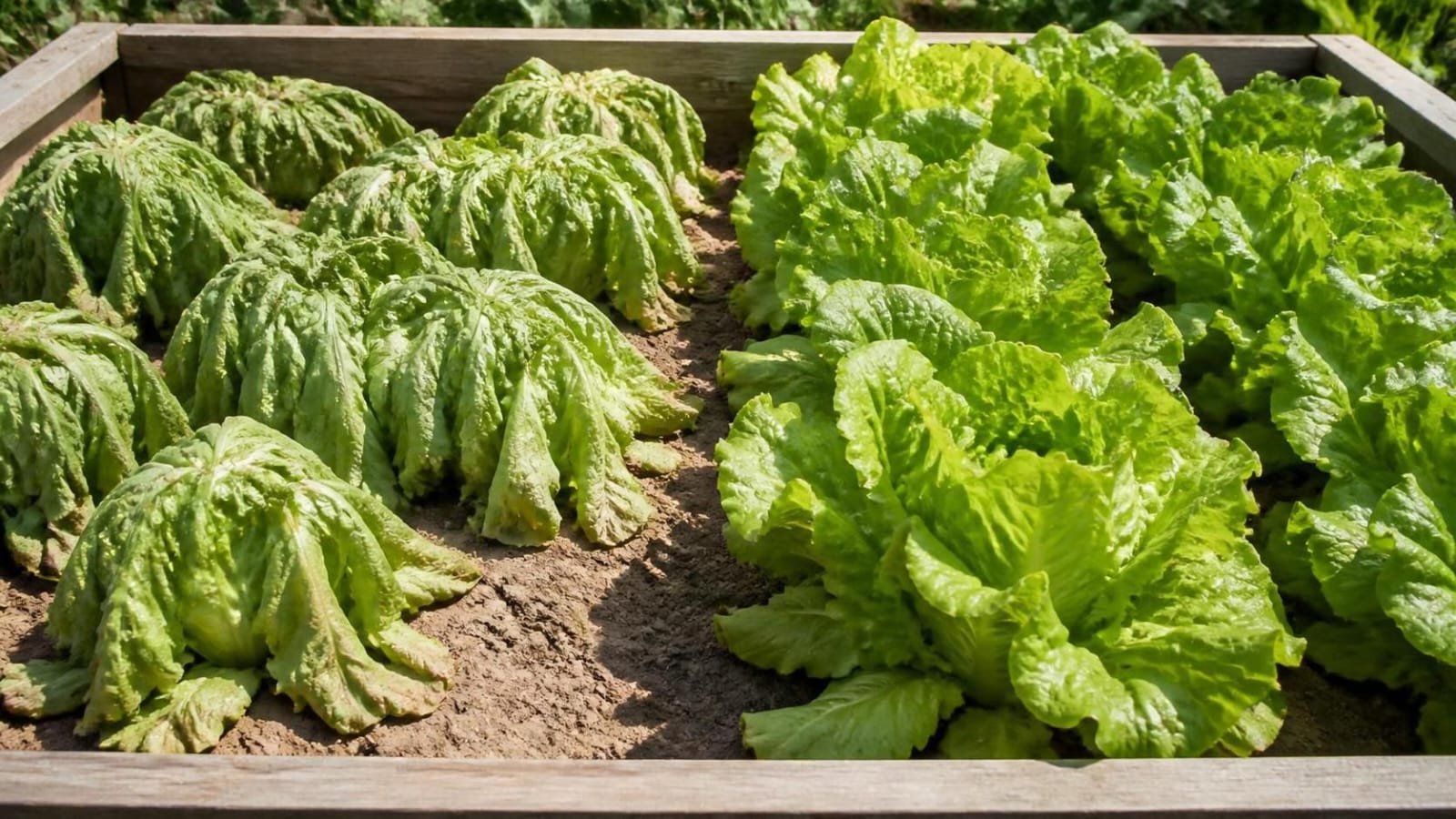
Heat comes first. Minnesota’s extension diagnostic page ties bitter taste to several days above 75°F, and Oregon’s salad greens guide puts the point where lettuce may send up a flower stalk at above 80°F (University of Minnesota Extension, Oregon State). Read those as a range rather than a line. Researchers measuring the bitter compounds see the same direction: in a hydroponic study from Oklahoma State, they built up with hot weather and long days, most strongly once the plants began to bolt (ASHS summary).
Water is the other trigger. Lettuce roots stay shallow, and Oregon State Extension notes that letting the bed dry out too much can induce bolting and make the leaves taste bitter (guidance here). Evenness matters more than quantity, and extra water after the damage is done usually won’t sweeten leaves that have already turned. If the leaves also droop in the afternoon, the page on why lettuce keeps wilting helps separate thirst from heat.
A common situation: a spring bed that was picked for weeks without complaint turns sharp in the first real warm spell, with nothing changed in how it was watered. The days simply got warmer.
Part the leaves and look at the center before you decide anything. If it is stretching into a stalk, the plant has started to bolt and that cannot be reversed. Harvest what you still like and read the guide to lettuce bolting for the options. If the heart is still low and tight, afternoon shade cloth and steady moisture are the best chance of keeping the next leaves mild.
It got sharper as the plants aged
Lettuce is at its mildest young. Gardeners commonly find that older plants, and the oldest outer leaves, taste sharper than fresh growth. Picking a few leaves at a time keeps a bed going, but the leaves left behind keep aging, and past a certain point the plant is simply old.
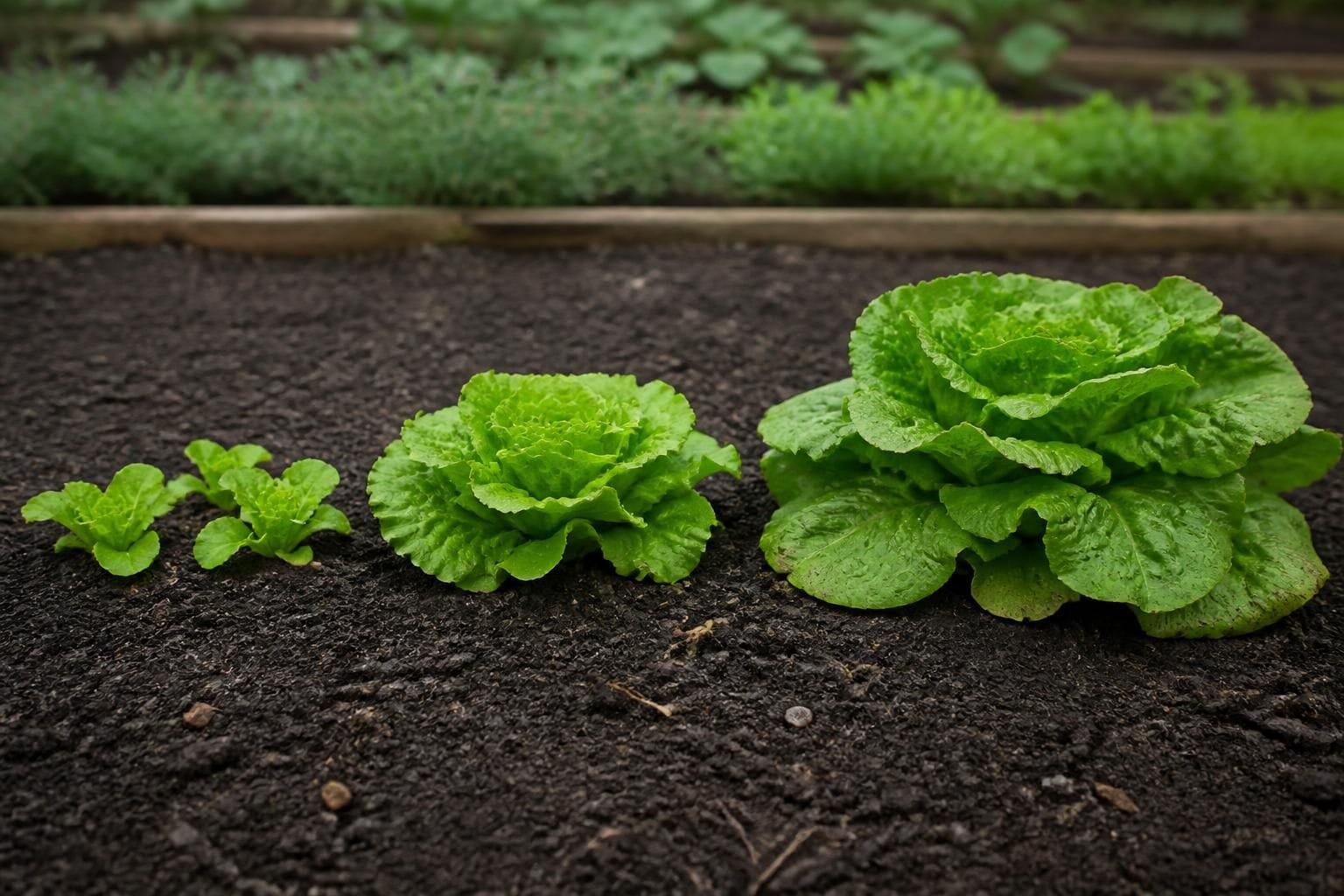
Taste an old outer leaf against a small one from the heart. If only the old ones are sharp, harvest the young leaves and plan a fresh sowing. Smaller, more frequent sowings mean a young bed is always coming along. If your plants also stalled early and stayed small, the guide to lettuce that is not growing covers why, since a slow crop spends longer aging in the bed.
It has never tasted right
If the very first leaves were sharp, look at what you planted and when. Lettuce types differ measurably. In a twelve-cultivar hydroponic trial, cultivars and market types differed significantly in their bitter compounds and in sugar, and sweetness on the tongue is partly the balance between the two (the trial record). A seed description that says mild is a reasonable hint, and a small side-by-side trial in your own bed tells you more than any catalog.
Season counts too, and not always the way you would guess. In a Serbian greenhouse study, lactucopicrin was higher in the autumn crop than in the spring or winter ones, and the authors credited genotype, fertiliser and season together (Stojanović and colleagues). A cool-looking calendar does not guarantee a sweet crop.
Fertility is murkier. Popular advice blames both too little and too much nitrogen, and the evidence behind either claim is thin. Steady, fast growth is the safer goal. A soil test beats guessing, and any fertilizer should be used according to its label.
Some greens are bitter on purpose. Chicory, a relative, carries the same compounds, which is part of why it tastes the way it does (a bitter-receptor study). And if bitterness is only one of several things going wrong in your bed, our guide to common lettuce growing problems helps you sort out the rest.
Bitter only in the core and the ribs
Sometimes the leaf blade is fine and the trouble sits in the thick parts. A 2026 analysis in Molecules describes lactucopicrin as abundant in the milky sap that leaks from the cut core (Molecules). Snap a stem and you will often see it. A little sharpness at the base is ordinary anatomy, not a sign that something went wrong.
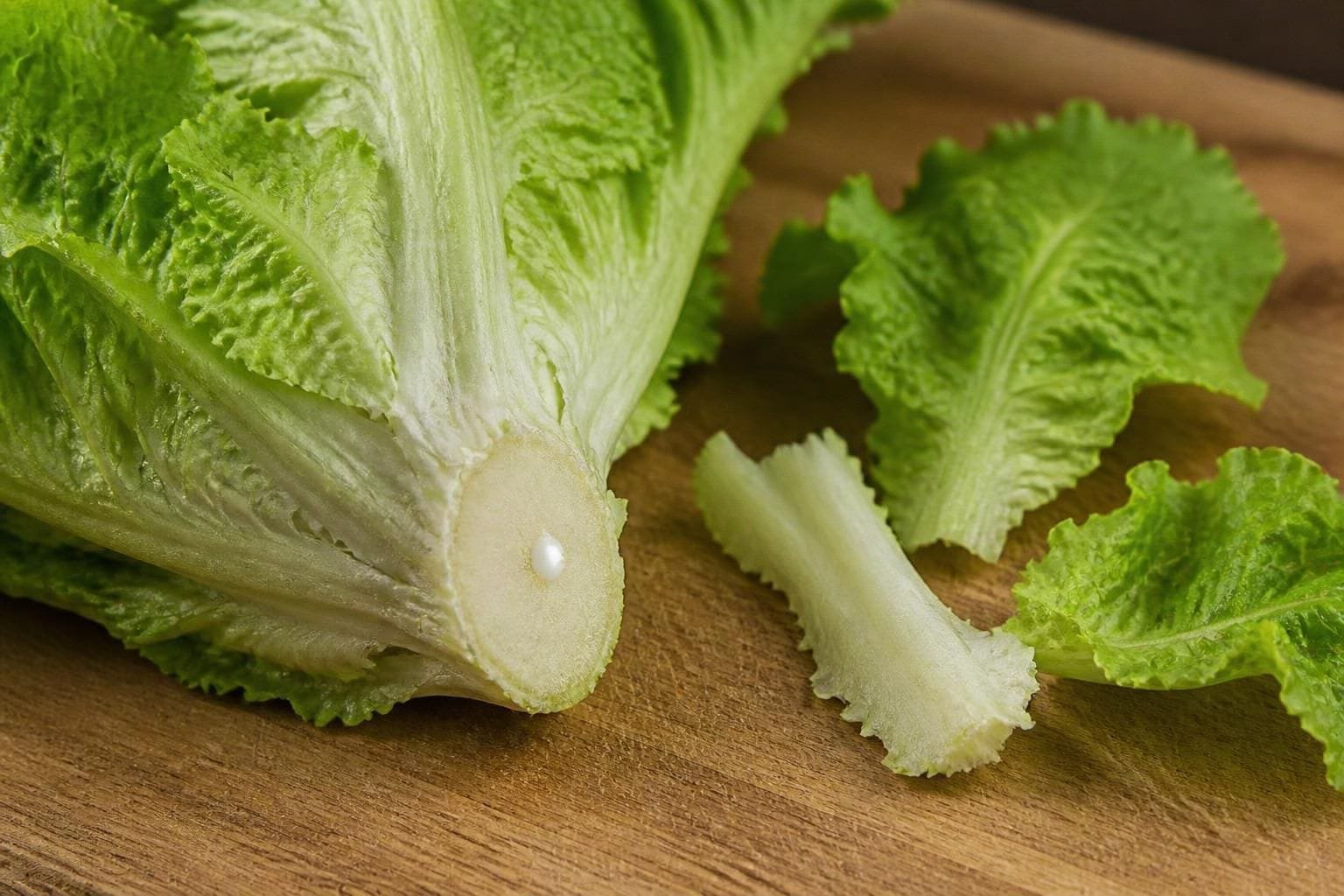
That also gives you the practical fix. Trim the core and, if the ribs taste harsh, the thick midribs too, then use the rest. Soaking leaves in cold water is the tip you will see everywhere, and gardeners report it helps with mild bitterness. No controlled trial turned up in the sources reviewed, so treat it as a modest kitchen trick that will not rescue a bolted plant. Cooking and a slightly sweet dressing soften what is left.
Sweet in the garden, sharp by dinner
If the leaves taste fine in the bed and sharp later, look at what happens after the cut. The same Molecules paper points to earlier reports that lettuce may gradually grow more bitter after harvest, which is a reason to chill leaves promptly and use them soon. Advice to pick first thing in the morning is everywhere, but the authors also note that morning versus evening harvest has not been systematically investigated. Fair enough to pick early if it suits you, though it is a habit more than an established rule.
The plant itself looks wrong
Pale, twisted heart leaves together with a bitter taste call for a different kind of check. Aster yellows is a phytoplasma spread by leafhoppers. It shows first in the young heart leaves, which turn yellow and look thickened and stubby, with pinkish or tan latex deposits on the underside of the midrib, and older plants may show only the interior symptoms and the latex spots (Washington State University). Minnesota’s extension page lists bitter taste among the symptoms and notes that they are most severe in July and August. The sap and the odd-looking heart are what separate it from plain heat stress.
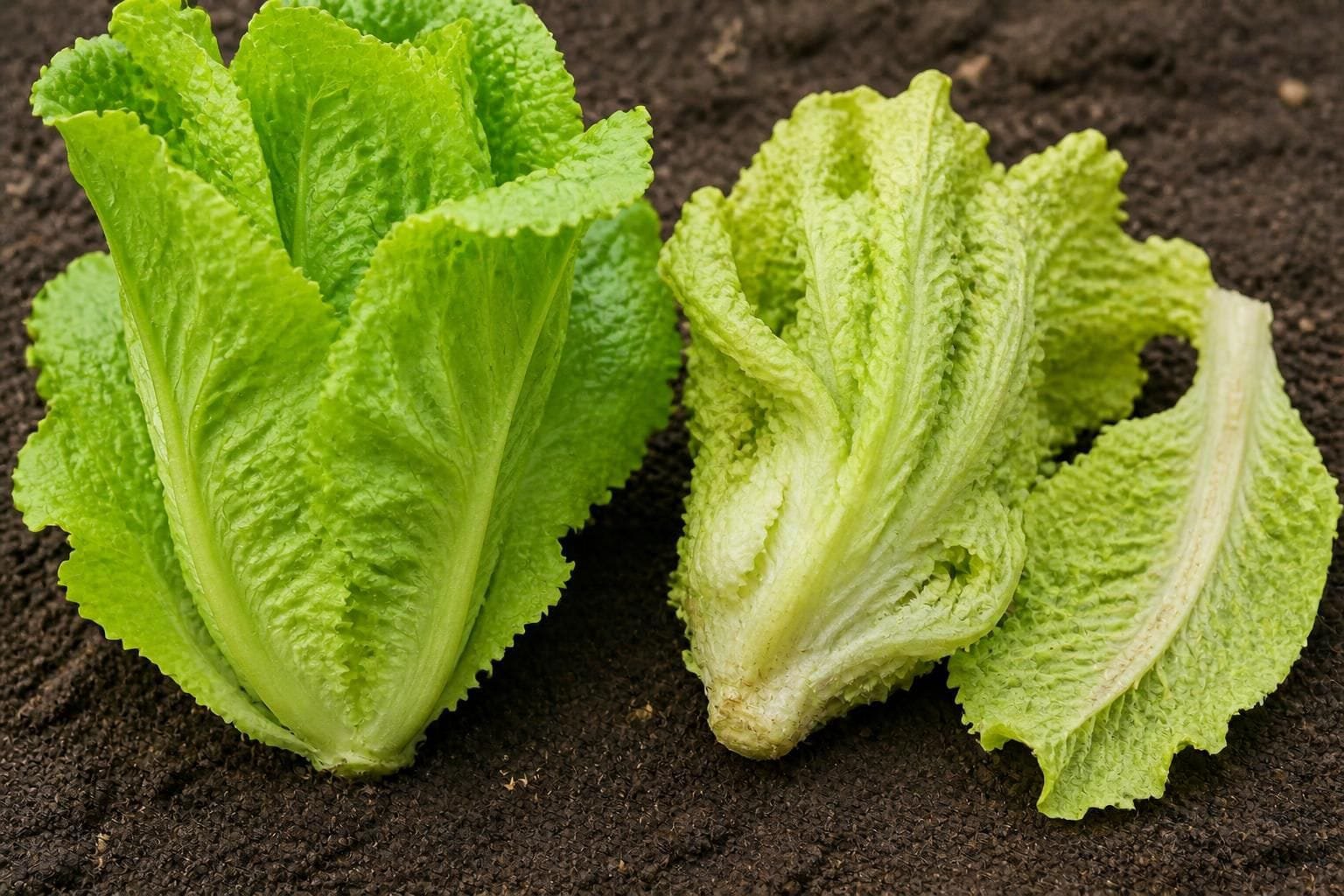
There is no treatment. Utah State Extension advises removing infected plants (Utah State), and WSU lists weed and leafhopper control around the garden as the non-chemical steps. Looking at one plant can’t settle it, so a photo sent to your local Extension office is worth the few minutes if you are unsure. For pale leaves without any bitterness, the guide to yellow lettuce leaves covers the other causes.