
Why Is My Lettuce Not Growing? Causes of Stunted Growth and Fixes
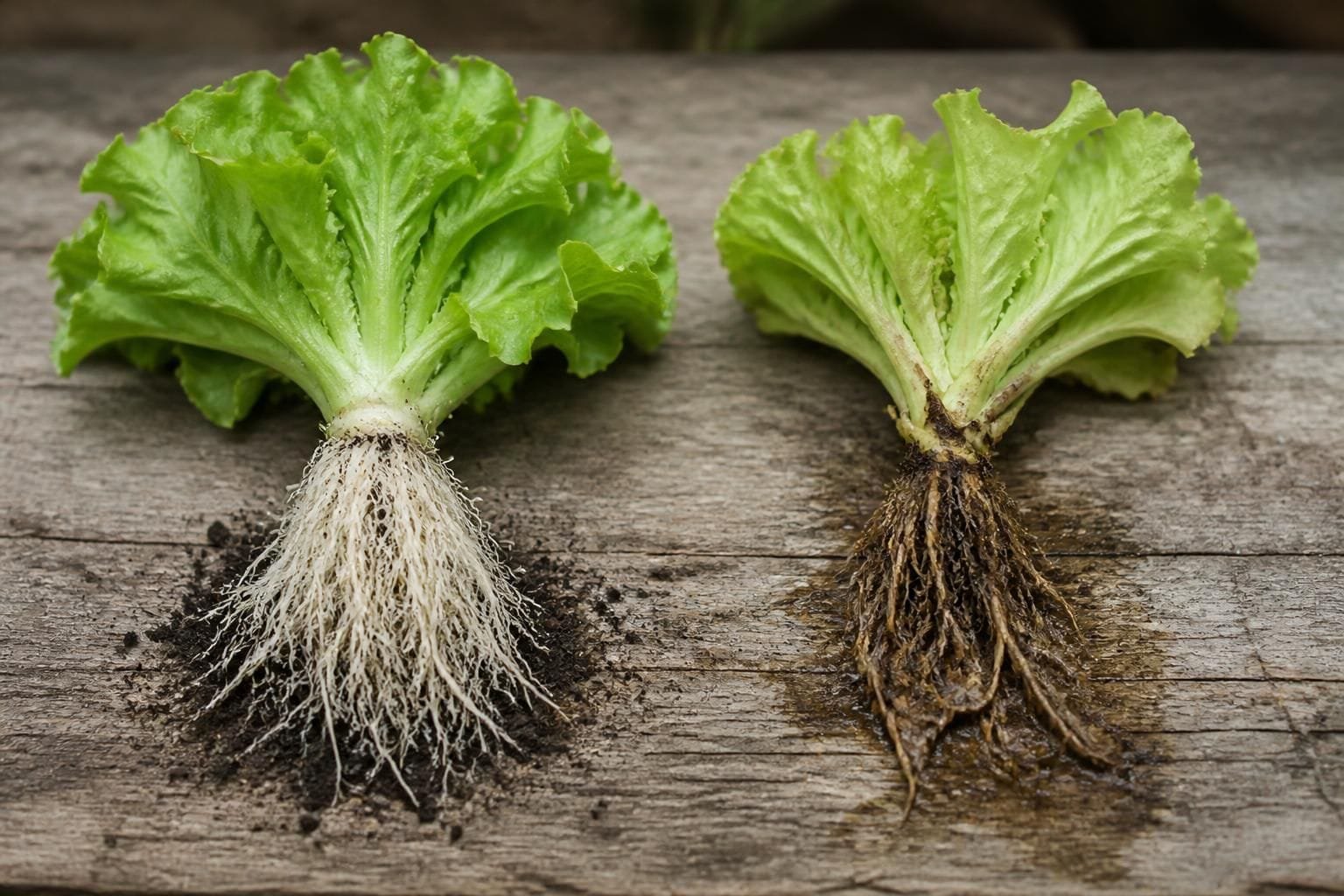
Pull one plant out of the row and squeeze the root ball. Healthy lettuce roots come up pale and fibrous, and the soil crumbles away from them. Roots that are brown, soft and slipping apart in your fingers are a different problem, and no amount of fertilizer will fix them.
Lettuce that sits at the same size for weeks is usually struggling with one of three things: damaged roots, weather outside its cool comfort zone, or too little nitrogen. The roots tell you fastest which one to chase, so check them first, then read the leaves from the oldest to the youngest.
Follow the plant, one check at a time
Most stalled lettuce sorts itself out in four checks. Work down this path and stop at the first box that fits.
Check 1: Pull one plant and look at the roots
Brown, soft, or covered in small knots → read “The roots come up brown, soft or knobbly.”
↓ Roots white and fibrous
Check 2: Read the leaves from oldest to youngest
Outer leaves pale and the whole plant small → likely nitrogen. Heart leaves pale, thick and stubby → possible aster yellows. Both are in the section on white roots and pale leaves.
↓ Leaves look normal, just small
Check 3: Think back over the weather
A hot spell, a cold snap, or a transplant that went straight from the tray to the bed → temperature.
↓ Weather was mild
Check 4: Dig a small hole between plants
Dry two inches down, plants touching, weeds taller than the lettuce → water and competition. Nothing came up at all → germination. Growing under lights or on a sill → the indoor section at the end.
The roots come up brown, soft or knobbly
A common situation: seedlings come up evenly, sit at four leaves for three weeks, and the grower answers with more water, then a feed. Nothing changes, because rotted roots can’t take up what they’re given.
Most of us reach for the watering can first. With root rot, that backfires, since the organisms behind it thrive in wet soil. The Connecticut Agricultural Experiment Station describes affected roots as brown and water-soaked instead of white, often with a water-soaked patch at the base of the stem, and lists Pythium, Rhizoctonia and Fusarium among the usual causes. Telling those apart takes a lab. The first move is the same for all of them.
Stop watering on a calendar. Water only when a trowel shows the soil is dry a few inches down. Skip the liquid feed on any plant with rotted roots, because there is nothing healthy left to take it up. Lift the worst plants, since these pathogens move through wet soil, and give the survivors a few weeks to push out new white roots if the bed now drains better. Next season, build the bed up or loosen heavy soil, and rotate: the same station suggests a two-year rotation with non-susceptible crops such as corn.
Knobbly roots are another story. Small knots on the fine feeding roots point to root-knot nematodes, which can persist in the soil for years. Pulling the plants won’t clear the bed, so the practical answer is a rotation or a new planting spot, and keeping soil from the old bed off your tools and boots. If the bed was lawn last year, dig around for white, C-shaped grubs or hard, wiry wireworms. Both chew roots, and both are worse in ground that has only recently come out of sod.
Plants that also flop in the afternoon while the soil is wet follow a pattern covered in our guide to wilting lettuce.
The roots are white, but the plant is small and pale from the bottom up
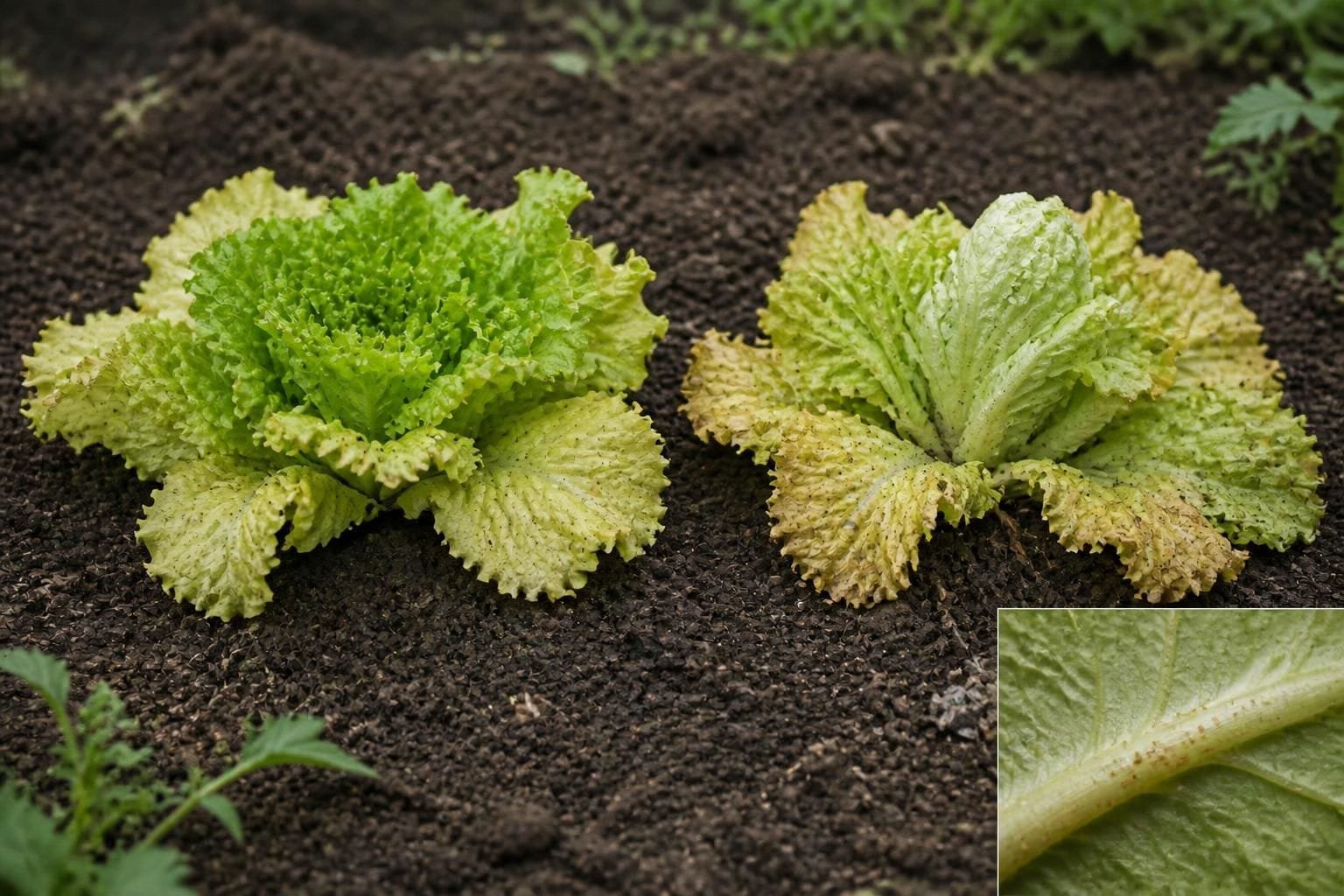
Start at the outer leaves. Nitrogen moves around inside the plant, so when supply runs short, lettuce pulls it out of the oldest leaves to feed the newest. The oldest leaves go lighter green and then yellow while the whole plant stays small, a pattern the USDA Agricultural Research Service documents in butterhead lettuce.
Here’s the catch. Cold soil, soggy soil, compacted ground and damaged roots can all make plants look nitrogen-starved when the soil is full of nitrogen, and fertilizer fixes none of them. That is why the root check comes first. Once the roots pass, feed according to the product label, and test the soil if you can. The University of Georgia’s home garden circular puts lettuce’s preferred pH at 6.0 to 6.5 and says to follow soil test results when you have them. If a modest feed hasn’t produced darker new growth within a couple of weeks, stop adding more and look elsewhere.
Now look at the middle of the plant instead. Heart leaves that are pale, thickened and stubby, with pinkish or tan latex on the underside of the midrib, are the signature of aster yellows, as described by Washington State University. Young plants may also show yellow outer leaves and severe stunting. Leafhoppers spread the disease, and WSU lists no chemical option. The practical answer is to pull affected plants and control weeds around the bed. WSU adds that shading lettuce may reduce the risk, since leafhoppers tend to avoid shaded plants.
One honest limit: from a description alone, a mild case of aster yellows and a nutrient shortage can look alike, and a few other diseases stunt lettuce too. If you see heart-leaf symptoms and can’t settle it, a photo sent to your local Extension office is cheap insurance.
Leaves yellowing for other reasons are covered in our guide to yellow lettuce leaves, and a reddish or purple cast has its own set of causes in lettuce turning red or purple. If what you see fits none of this, the wider map of common lettuce growing problems is the place to cross-check.
It stalled after a hot spell, a cold snap, or a fresh transplant
Lettuce grows like a cool-season crop because it is one. University of Minnesota Extension gives the ideal as nights around 50°F with days up to about 68°F, and says several days above 75°F can push plants to flower. When a plant bolts, it sends up a flower stalk and stops growing, and the leaves turn bitter. At the cold end, freezing temperatures halt growth, and the guide recommends hardening seedlings off for two to three days, cutting back water and temperature a little, before they go into the garden.
If the center of the plant is stretching into a stem, you are past stalled and into bolting, which has its own guide on lettuce bolting. Harsh-tasting leaves from heat and dry soil are covered in why lettuce turns bitter.
Fair enough if summer is the only season you have a free bed. Afternoon shade helps, and so does choosing slow-bolting varieties, though even those can flower in a heat wave. For the next sowing, aim at the cool weeks of spring and fall.
The soil is dry two inches down, or the plants are shoulder to shoulder
Minnesota’s extension guide points out that lettuce may form a long taproot, yet the small roots near the surface absorb nearly all of the water and nutrients. A bed can look damp on top and be dry just below, and a few dry days is enough to freeze growth.
Skip the guesswork and dig a small hole between plants. If the soil is wet only an inch or two down, keep the water running a little longer. Sandy beds dry out faster than clay and need watering more often. When rain or irrigation follows a dry spell, growth restarts suddenly and the leaf edges can scorch, which is tipburn.
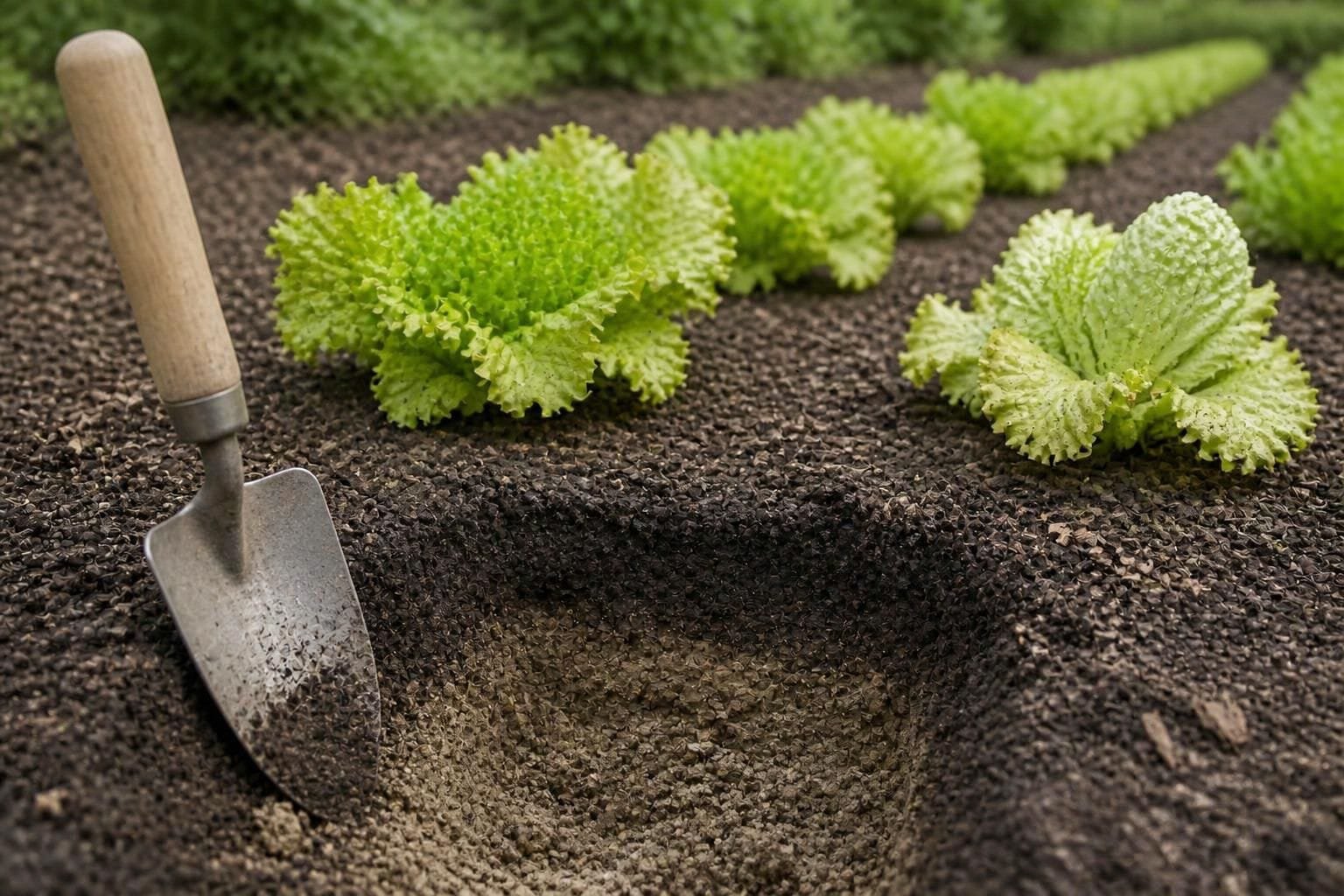
Then look at spacing. For full-size leaf or head lettuce, plan on 10 to 12 inches between plants, or about 5 inches if you’ll pick baby leaves. Thin while the seedlings are small, and snip the extras at the base with scissors instead of pulling, so the roots of the keepers stay undisturbed.
Weeds sit in the same top few inches and compete for the same water, so hoe them shallow before they get ahead of the lettuce. A bed that gets sun for only a short stretch each day will also lag behind one that gets plenty.
Nothing came up, or the seedlings never got past the seed leaves
Two quirks of lettuce seed catch people out. The first is heat. The University of Arizona’s extension service notes that, depending on variety, germination can be blocked at soil temperatures somewhere between 77 and 95°F, and that seed kept hot long enough can slip into a dormancy that persists even after things cool down. A late-summer sowing that never appears may need a fresh sowing in cooler weather, not more water.
The second is light. Lettuce germination is promoted by light and inhibited by darkness, and leaf types are often sensitive to it, so bury the seed lightly. The Georgia circular says 1/8 to 1/4 inch and firming the bed lightly with your hand. Some other guides allow up to 1/2 inch, but the shallow end is the safer bet.
A cloddy seedbed gets in the way too. If seedlings emerge and then collapse at the base, that is damping-off, a separate problem from slow growth.
Growing indoors or under lights
Indoors, suspect light first. A seedling that is tall, thin and pale is stretching toward a light source that is too weak or too far away, and a windowsill often supplies less than lettuce wants.
Light is measured as daily light integral, the total usable light a plant receives across a day. In a study of iceberg lettuce in an indoor hydroponic system, shoot fresh weight at harvest rose from 275.5 g to 393 g when the daily light integral went from 8.64 to 11.5 mol per square meter per day, while a higher 14.4 lowered it, according to the paper in Scientific Reports. You’ll see 12 to 18 quoted as a target in many guides. The study’s own best result was 11.5 for one cultivar in one system, and its review of earlier work notes that requirements vary among species and cultivars. Treat any figure as a starting range and let the plant’s response guide you.
Rooms are often warmer than lettuce likes, so the temperature section above applies indoors too. In water-based systems, brown, slimy roots often point to a warm or stagnant solution, which brings you back to the root check at the top.
Change one thing at a time and judge the result by new growth from the center of the plant. Leaves that have already stalled won’t regain their size. If nothing has moved after a couple of weeks and none of this fits, take a whole plant with its roots to your local Extension office, where a lab can diagnose what a description can’t.
2 thoughts on “Why Is My Lettuce Not Growing? Causes of Stunted Growth and Fixes”