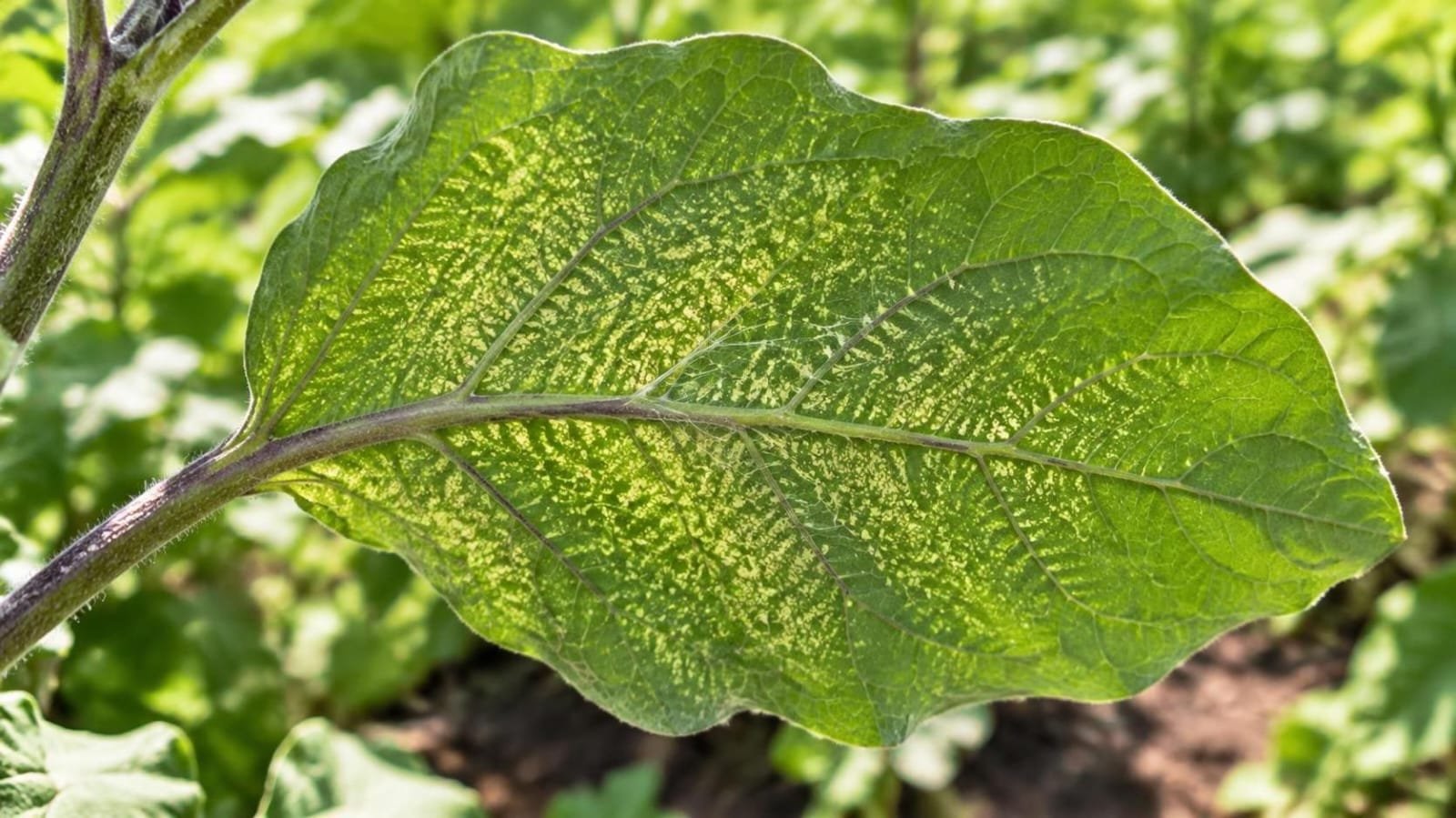
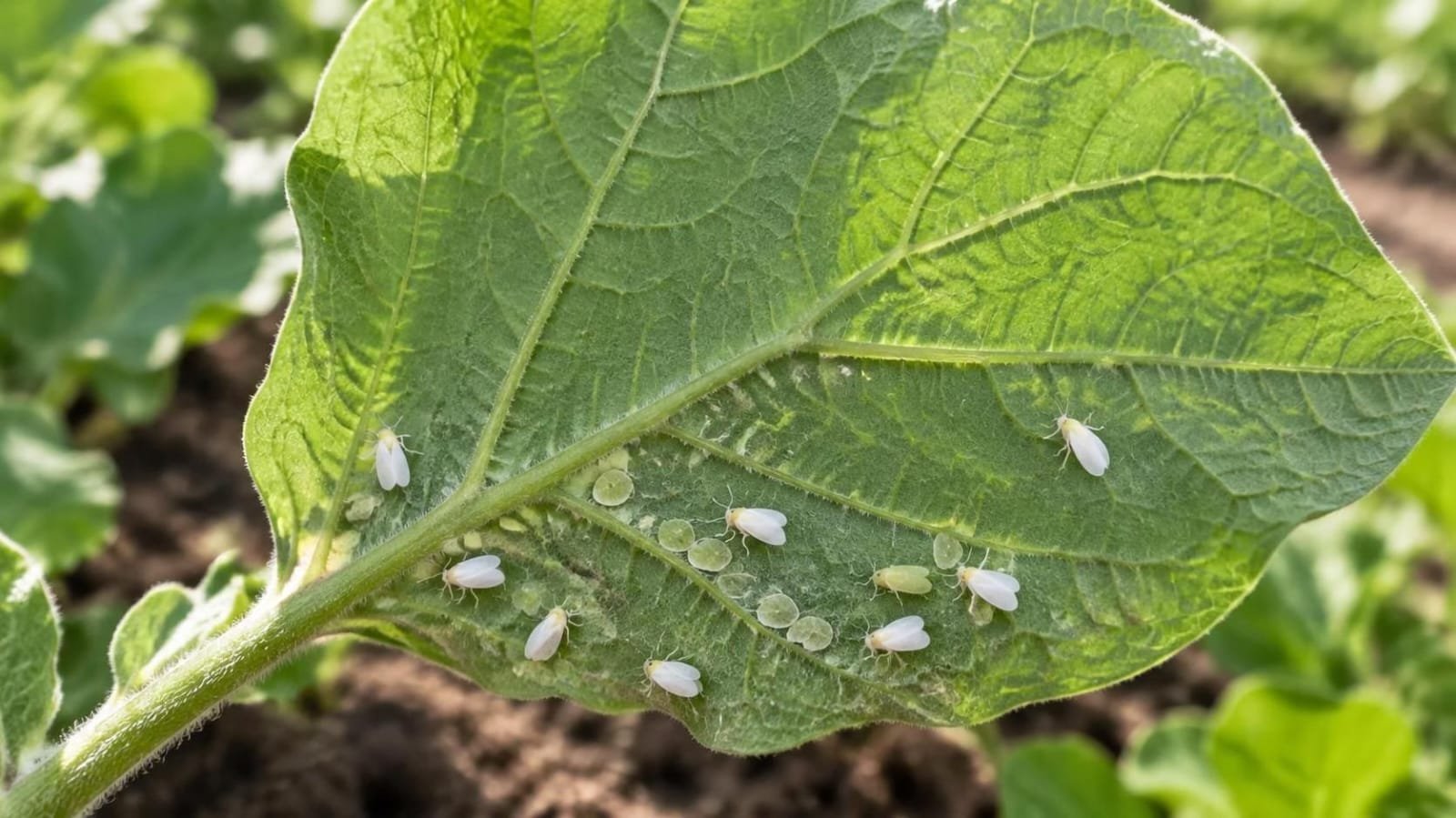
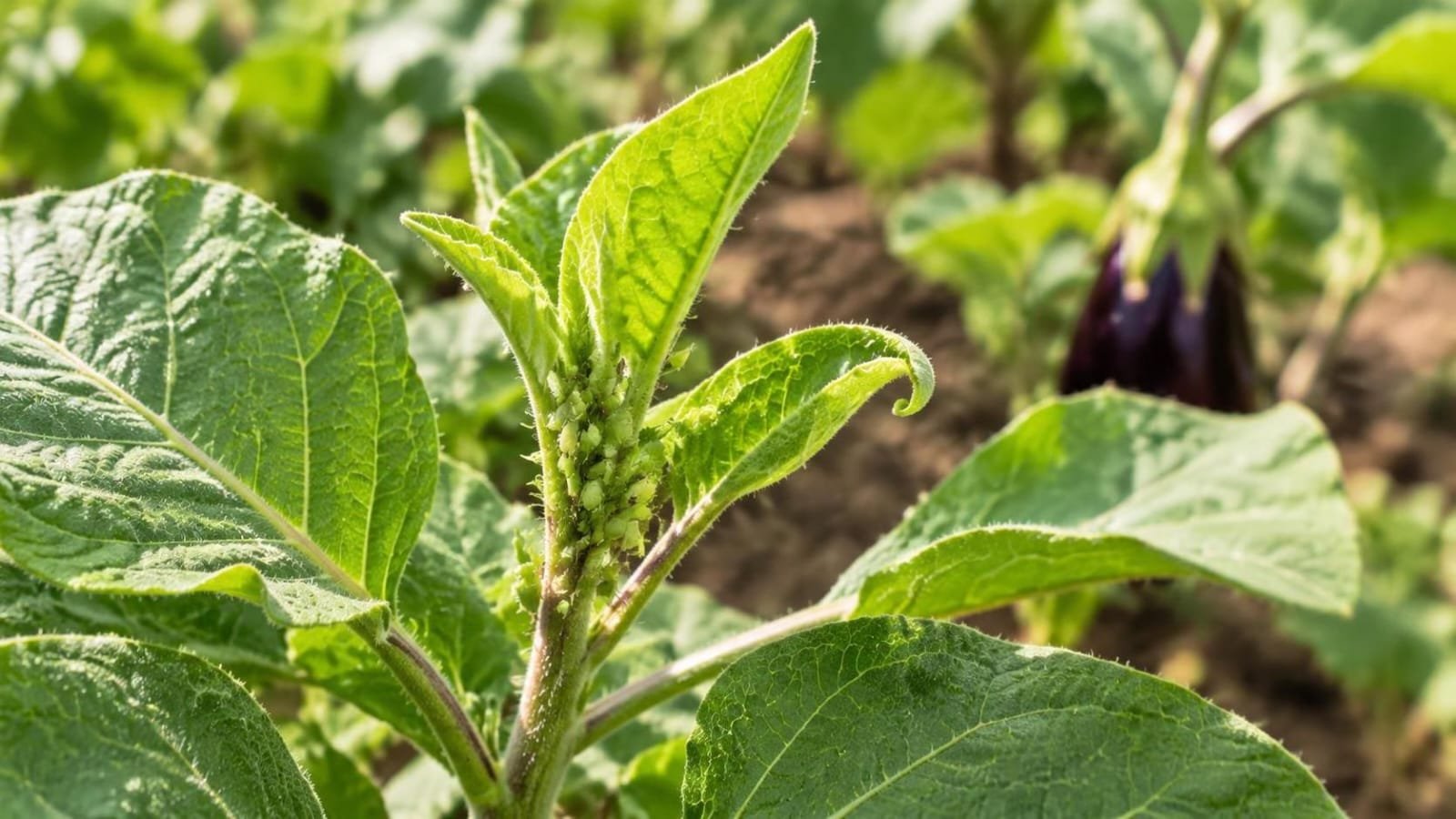
Flea beetles are tiny, dark, jumping beetles that chew small round shot holes in eggplant leaves. Eggplant seedlings are a preferred target, and damage is worst early in the season. Scout every one to two days while plants are small. Set row covers at or before emergence, and clear crop debris and weeds. Crop rotation alone does little, so combine these steps.
Flea beetles are one of the most familiar pests in eggplant gardens. They are small enough to miss, but their damage is hard to overlook once you see it. This guide explains how to recognize them, why early season matters most, and which steps reduce damage. No single method works alone.
What do flea beetles look like?
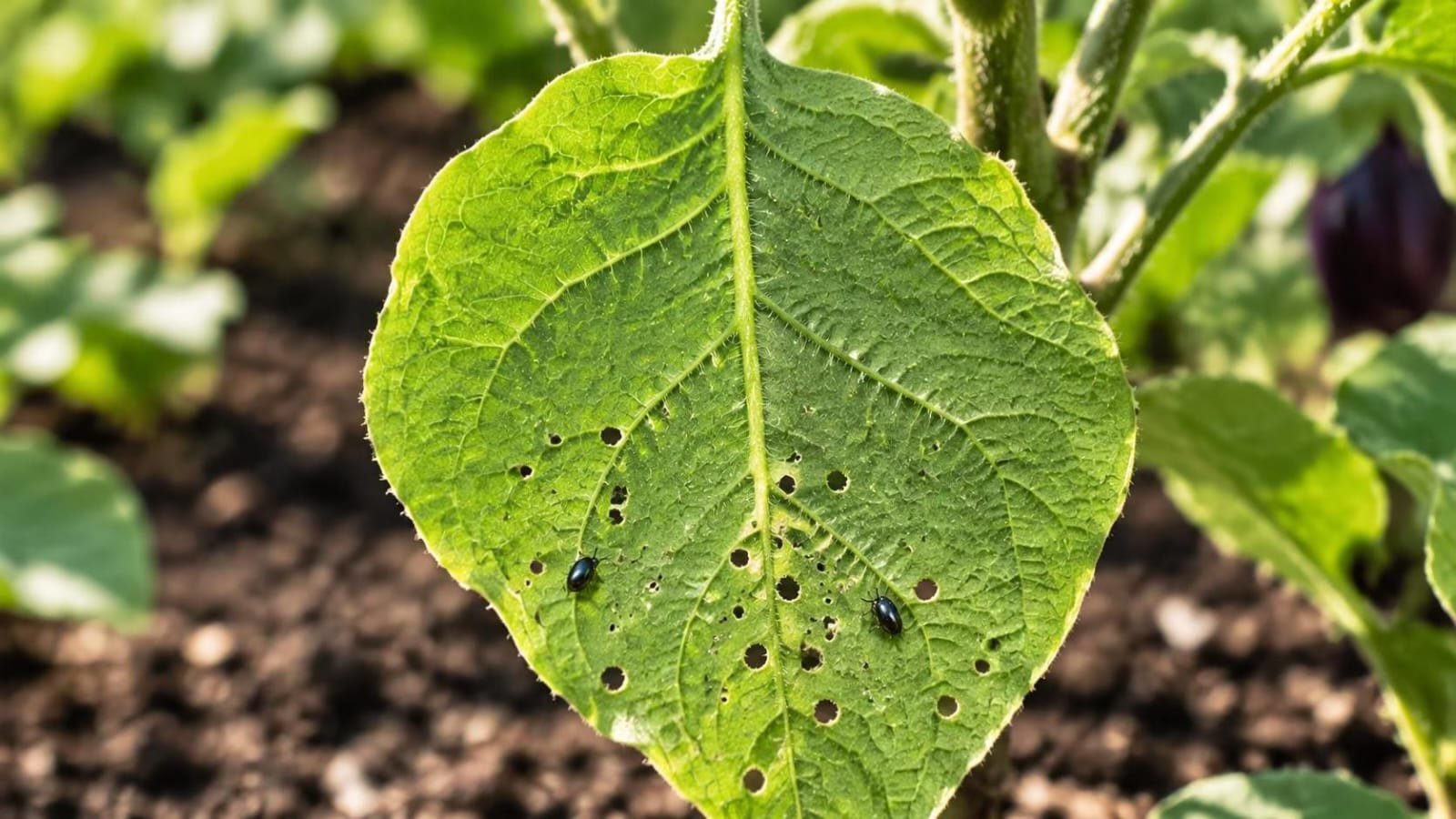
Flea beetles are small, shiny, and usually black or dark brown. Most species are only about 1/16 to 1/8 inch long, so a hand lens helps. Some species, such as the pale-striped flea beetle, have pale stripes along the wing covers. Their hind legs are built for jumping, so they leap away when you disturb the plant.
Many species can feed on eggplant, so you don’t need the exact species for basic management. The identification helps when you want to understand the life cycle, or when you compare notes with an extension agent.
When are flea beetles most damaging to eggplant?
University of Wisconsin Extension describes flea beetles as overwintering mostly as adults in plant debris. Activity picks up in spring as temperatures warm. University of Minnesota Extension adds that flea beetles prefer eggplant seedlings. Heavy feeding early on can stunt or kill young plants.
That’s why early protection pays off. A small, stressed transplant can lose a large part of its leaf area in a few days, and recovery takes time. Once the plant is larger, it can tolerate more feeding without a major loss.
How much damage do flea beetles do to eggplant?
Flea beetles chew small, round holes that give the leaf a shot-hole look. Light feeding usually has little effect on yield. Heavy feeding can stunt or wilt plants, according to the University of Minnesota guide. Holes in Eggplant Leaves: What’s Eating Them? compares flea beetle damage with other chewing pests, and Why Is My Eggplant Plant Wilting? covers the causes of wilt.
Larvae live in the soil and feed on roots. Most eggplant flea beetle larvae cause little economic damage. Potato flea beetle larvae can cause more harm, according to the Minnesota guide.
How do you scout for flea beetles on eggplant?
Scout every one to two days while plants are small, according to the Wisconsin guidance. Look at the upper and lower leaves of new transplants and volunteer plants nearby. Brush the foliage gently and watch for jumping beetles. Check the holes too, since fresh holes mean active feeding.
Weeds next to the bed can hold flea beetles early in the season. Walk the edges and check the nearby weeds as well.
Do row covers protect eggplant from flea beetles?
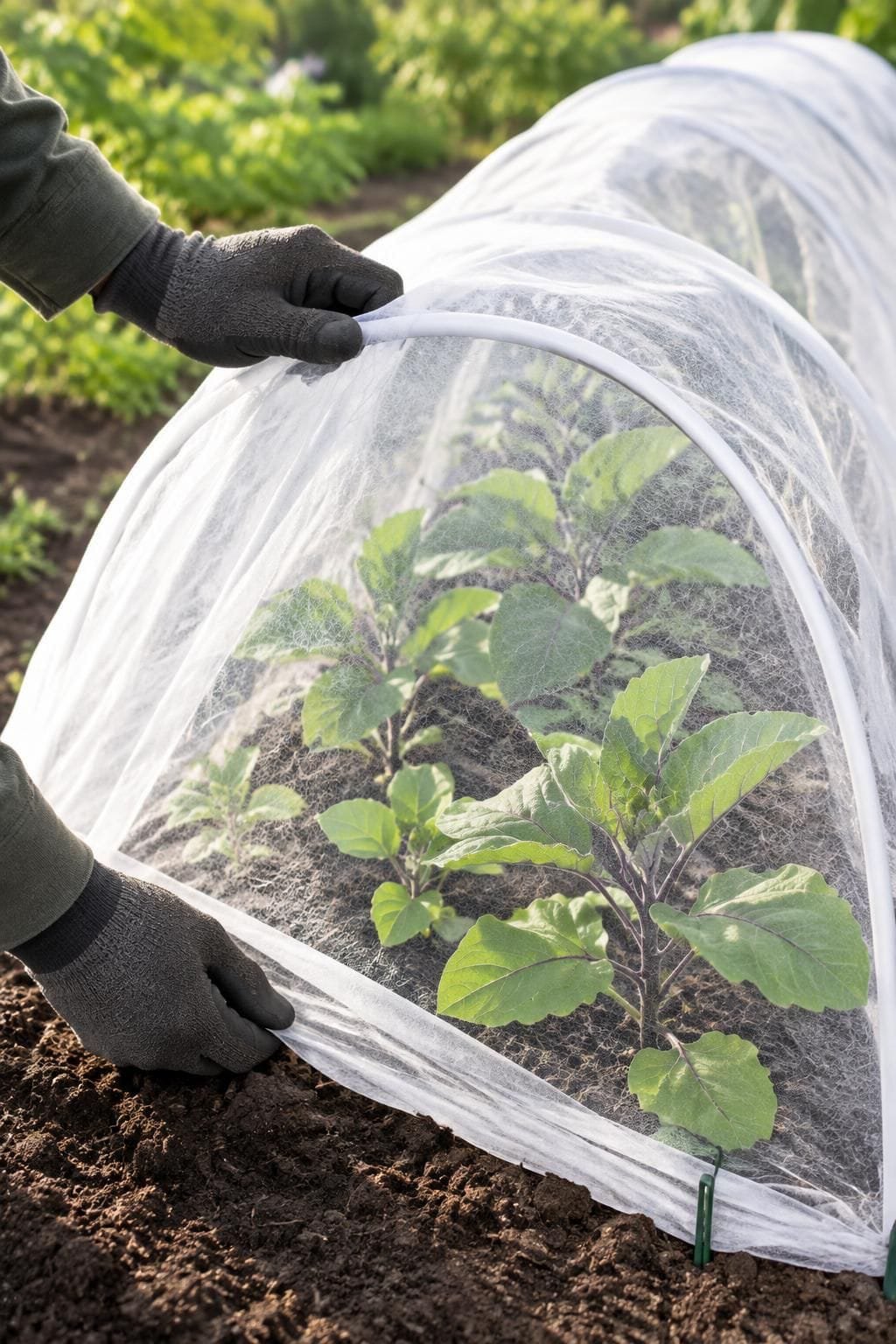
Yes, when they’re installed correctly. Row covers keep adults off young plants, but they must be in place at or before emergence or transplanting. The edges need to be sealed so beetles can’t crawl under. University of Minnesota Extension notes that eggplant needs hoops. A cover laid directly on the plant can’t keep beetles off the foliage.
Covers make weeding harder, and beetles can slip under them whenever you lift the cover. Remove covers when the plants flower so pollinators can reach the blooms.
What cultural steps help most?
Remove crop debris after harvest, since it provides overwintering sites. Clean-up at the end of the season matters most, according to the Minnesota guide. Keep weeds down in and around the bed, because they can host beetles early in the season.
Crop rotation alone does little against flea beetles, because the adults move easily between plots. The ATTRA organic guide says rotation works best combined with row covers. That keeps the new crop away from an overwintering population.
Watering can also deter adults. University of Wisconsin Extension notes that water can deter adult flea beetles. Plan watering around the timing that works best for your garden.
Do natural enemies control flea beetles on eggplant?
Yes. Lacewing larvae feed on flea beetles, and a native braconid wasp can kill adults and sterilize females. That wasp is not sold commercially, according to the Minnesota guide. Commercially available nematodes that attack flea beetle larvae are also listed in Wisconsin guidance.
Protect these natural enemies by avoiding broad-spectrum sprays, which can also kill them. Common Eggplant Pests: Identification and Control covers the wider pest picture.
When do you need a product?
Use a product only when scouting shows populations above threshold, especially early in the season. Also use it only when cultural steps aren’t enough. Wisconsin guidance ties product decisions to population levels, so scouting data should guide the choice.
Choose a product that is labeled for eggplant and for flea beetles. Follow the label for rate, timing, and safety. Ask your local extension office which options are registered in your state.
What should you do next?
Start with scouting and row covers before the plants go out. Keep the edges clean, remove debris after harvest, and watch the new transplants closely. For the full growing cycle, How to Grow Eggplant: Planting, Growing, and Care connects pest management to planting and harvest. Eggplant Leaves: Identification, Problems, and Care covers other leaf changes that can look similar.