Spider mites on eggplant are tiny sap-feeding arachnids, not insects. They live on the undersides of leaves and spin fine webbing. Look for stippling, which is a mottled, pale speckling on the leaf surface, and check the undersides with a hand lens. They thrive in hot, dry weather, so scout most closely during heat waves. Keep plants well watered, add predatory mites where you can, and use a strong water spray to knock mites off the leaves.
Spider mites are a common problem in hot summers, and they can build up faster than most gardeners expect. The mites are very small, so the first signs are usually the damage on the leaves rather than the mites themselves. This guide shows how to recognize the damage, when to scout, and which controls work best.
What do spider mites look like on eggplant?
UConn Extension notes that spider mites are about 0.5 mm long, which means a hand lens of at least 10x is needed to see them clearly. Twospotted spider mites can be rusty green, brown, or yellow in warm weather. Overwintering females turn red or orange, according to North Carolina State Extension.
Mites are arachnids, which means they have eight legs as adults. Insecticides often don’t control them well, because they aren’t insects. That’s one reason a clear diagnosis matters.
How do spider mites damage eggplant?
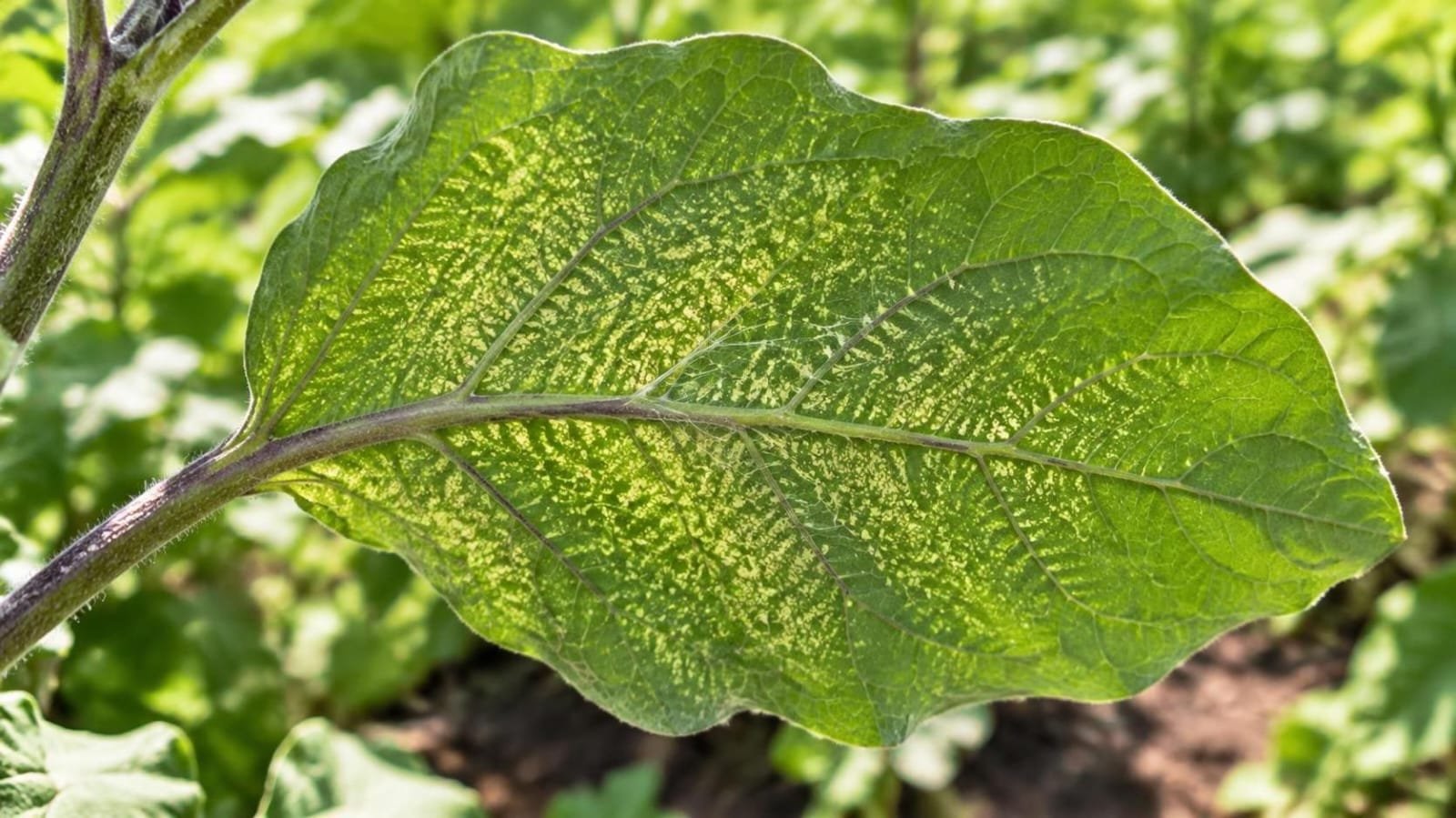
Most of the detailed guidance on spider mites comes from twospotted spider mite research on other crops, so apply it to eggplant with some care. Mites feed on the sap of the undersides of leaves. The feeding leaves a mottled, pale speckling called stippling. Heavy feeding makes the leaves look bronzed, dull, or yellowish. North Carolina State Extension notes that mites also spin silk webs over leaf surfaces, and the webs collect feces and shed skins.
In hot, dry weather, the damage can spread quickly. A bad infestation can cause leaves to drop within a few weeks, according to the University of Kentucky guide. That loss of leaf area reduces the plant’s ability to support fruit. Why Are My Eggplant Leaves Turning Brown? covers other causes of browning that can look similar.
Where and when should you look for spider mites on eggplant?
Mites feed on the undersides of leaves, so start there. Check the plants at least once a week during hot, dry weather. Oregon State University Extension describes ideal conditions for spider mites as temperatures in the 80s°F and above, with humidity below about 50 percent.
Check the leaves that are closest to the sun and heat, and look for stippling or fine webbing. Early detection is important, because mites are easiest to control when caught early.
How do you check eggplant for spider mites?
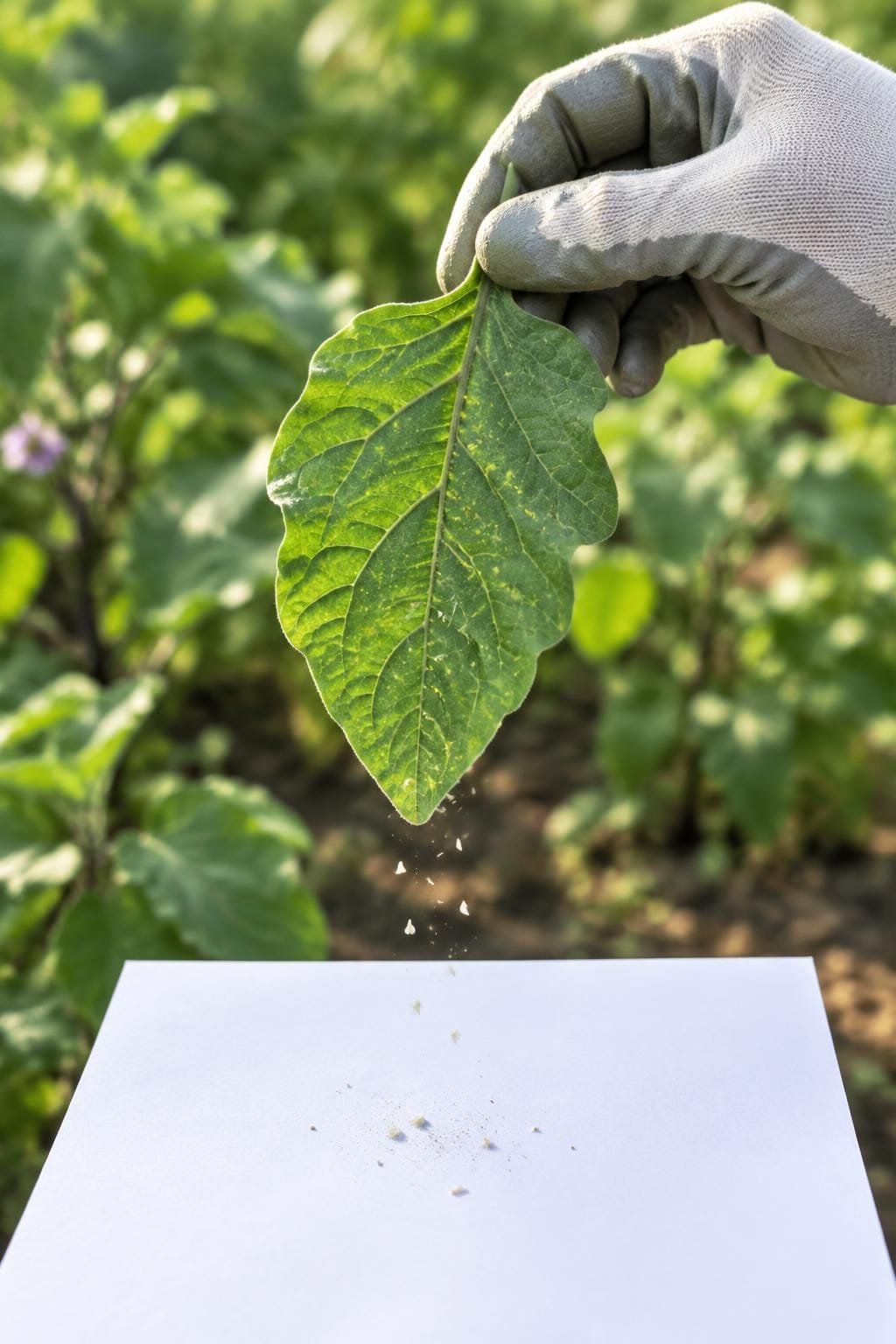
Use a hand lens to look at the undersides of leaves. You can also shake a leaf over a sheet of white paper. Mites that drop onto the paper show up as tiny moving specks. University of Kentucky Extension describes this method for identifying mites on infested leaves.
Compare what you see with the other leaf patterns. Why Are My Eggplant Leaves Curling? covers curling, which can also follow heavy mite feeding.
What steps reduce spider mites on eggplant?
Keep the plants well watered, especially during heat waves. Drought stress lowers a plant’s ability to tolerate mite damage. Mulch the bed to conserve moisture. Don’t fertilize a plant during drought, since the extra stress can make the damage worse, according to University of Minnesota Extension.
Use a high-pressure water spray to dislodge mites from the undersides of leaves. The spray also washes away the webbing. Repeat the spray as needed.
Remove isolated infested leaves or plant parts when the infestation is small. North Carolina State Extension notes that pruning isolated infestations can be effective.
Do natural enemies control spider mites on eggplant?
Yes. Several predators feed on spider mites, including certain lady beetles and predatory mites. The University of Minnesota guide notes that predatory mites can control spider mite populations. Commercial growers buy them, and home gardeners can sometimes purchase them as well.
Protect the predators by avoiding broad-spectrum sprays, which can kill them and allow mites to rebound. Fungal pathogens also infect mites in humid weather, according to North Carolina State Extension.
When do you need a spider mite product on eggplant?
Use a product only when scouting shows that mites are increasing and cultural steps aren’t enough. Read the label before you apply anything. Several products labeled for mites are available, but the label determines whether they can be used on eggplant and how.
Pesticide choice matters. Many broad-spectrum insecticides can kill predators and make mite outbreaks worse, so ask your local extension office which options are safe for natural enemies. Whiteflies on Eggplant covers another sap feeder that shares similar conditions.
Where should you go next?
Start with scouting during hot weather, then add watering and water sprays before anything else. For the wider pest picture, Common Eggplant Pests: Identification and Control gives an overview of the common pests. Eggplant Leaves: Identification, Problems, and Care covers the leaf patterns in general, and How to Grow Eggplant: Planting, Growing, and Care connects pest management to planting and harvest.