Quick answer: A lush cucumber vine can still make bitter fruit, because bitterness is a stress response and not a sign of a sick plant. The bitter compounds, called cucurbitacins, normally stay in the leaves, stems and roots but can spread into the fruit under stress. Check watering first, trim the stem end and peel what you have, and choose bitter-free varieties next season.
The vines are green, the flowers are setting, and the cucumbers keep coming. Then you take a bite and have to spit it out. It feels unfair, because nothing about the plant looked wrong.
That mismatch has a straightforward explanation, and in most cases it can be managed. This guide helps you work out which cause fits your garden, tells you what is safe to eat, and covers the steps that make sweeter cucumbers more likely.
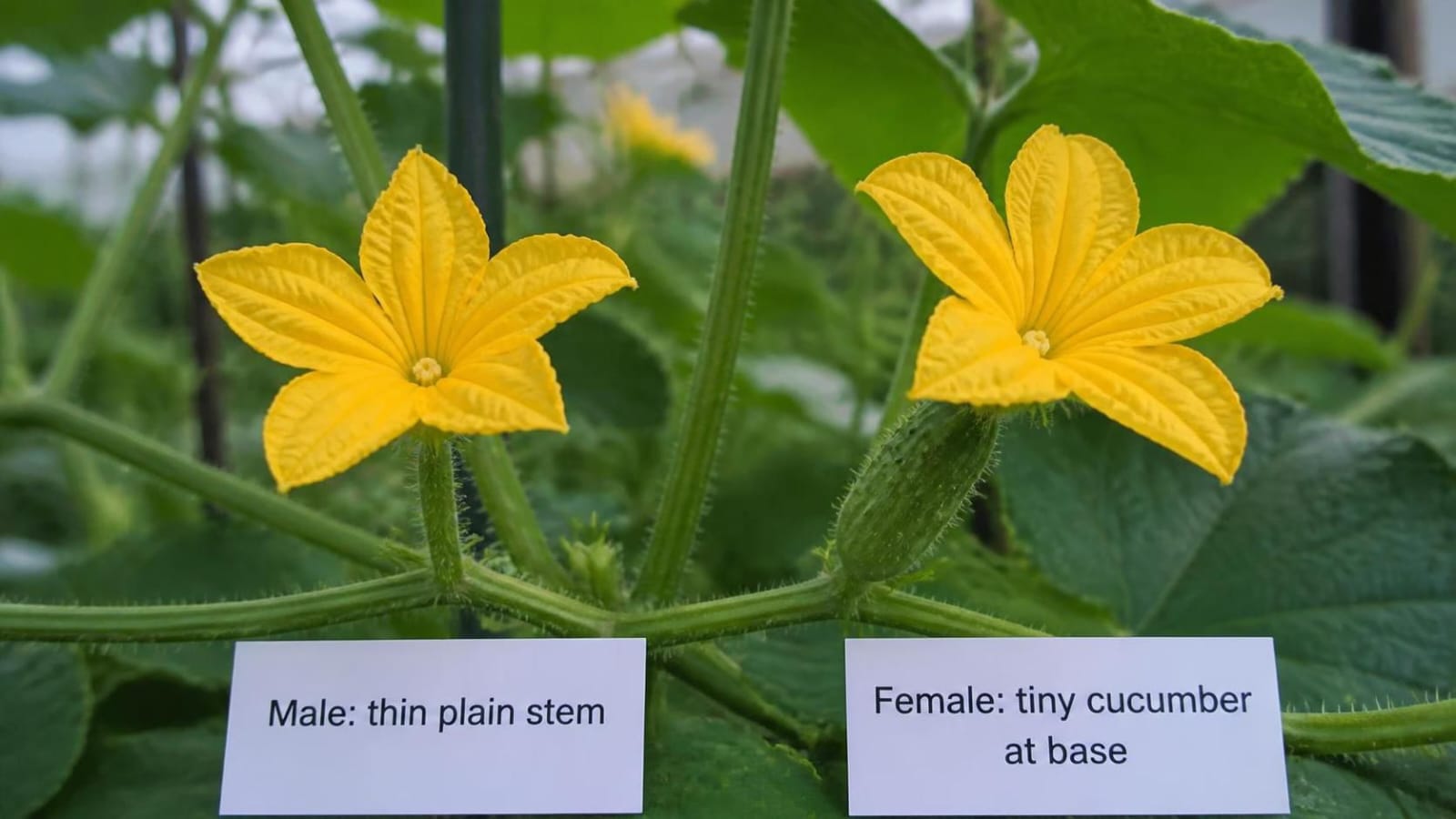
If your plants have the opposite problem, with plenty of blooms but few cucumbers, that is a separate issue. It is normal for male flowers to open first and for the earliest blossoms to drop, as University of Minnesota Extension explains, but when the imbalance continues, this guide to cucumber plants with many male flowers and few female flowers covers what to look at.
Why a healthy plant can still make bitter cucumbers
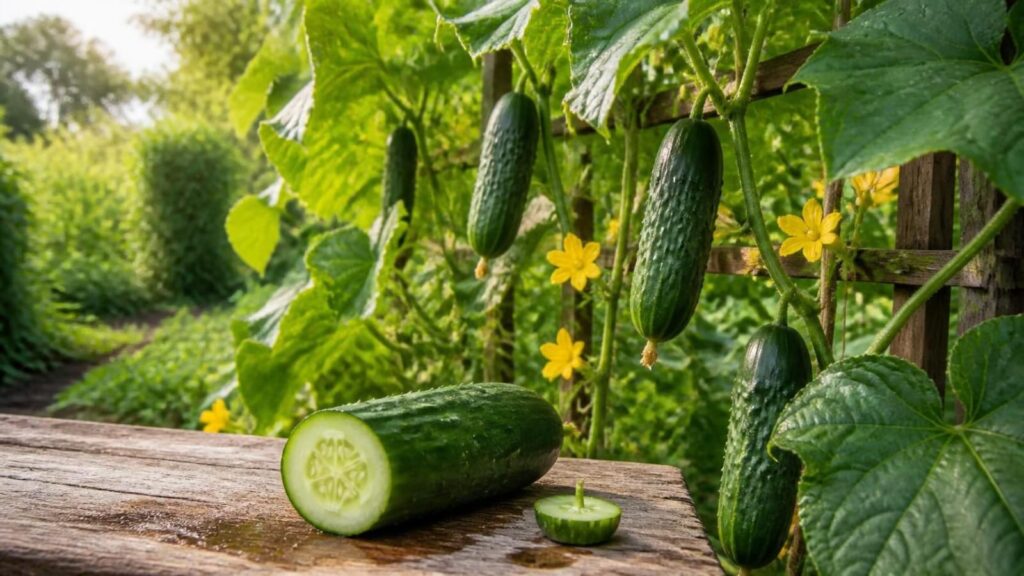
All cucurbits make cucurbitacins, chemicals that taste bitter and that served as a defense against plant-eating wildlife, according to Nebraska Extension. In cucumbers they are found mainly in the vegetative parts of the plant, and on occasion, to a lesser degree, they spread into the fruit, as Oregon State University Extension explains. Iowa State University Extension adds that the spread happens when plants are under stress.
Garden cucumbers have been bred to carry far less of these compounds than wild cucurbits, which can be too bitter to eat. Even so, the level is not fixed. It varies between varieties, and OSU notes that it can vary from one fruit to the next on the same plant. So vigorous growth and good flavor are separate things, and stress does not always show on the leaves.
Work out the cause before you change anything
Different patterns point to different causes, and the fix is not the same for each. Match what you are seeing to the table.
| What you see | Likely cause | How to confirm and what to do |
|---|---|---|
| Fruit across the whole bed turned bitter after a hot, dry stretch | Heat or water stress | Check soil moisture a few inches down. Newly forming fruit usually improves once the weather settles or watering improves. |
| Bitterness showed up during a cool spell, or the fruits are misshapen | Cool-weather or irregular-water stress | OSU notes more complaints about bitterness in cool periods, and that misshapen fruit is more likely to be bitter. Review your watering pattern. |
| Fruit is oversized, with big seeds and yellowing skin | Over-maturity | Pick younger. Over-mature fruit can develop mild bitterness. |
| The same variety is bitter year after year, even with steady care | Variety genetics | Cucurbitacin levels vary among varieties. Try one sold as bitter-free or burpless. |
| One plant’s fruit is far more bitter than anything else in the bed | Genetic bitterness in that plant | Extension describes this pattern, mostly in zucchini. Discard intensely bitter fruit and do not save its seed. |
One clue helps separate stress from genetics. Nebraska Extension points out that if stress is the cause, you would expect most plants in the garden to show a similar level of bitterness, and that newly developing fruit improves once the weather cools or watering is stepped up.
The usual culprits: water, temperature and soil
Uneven or too little water
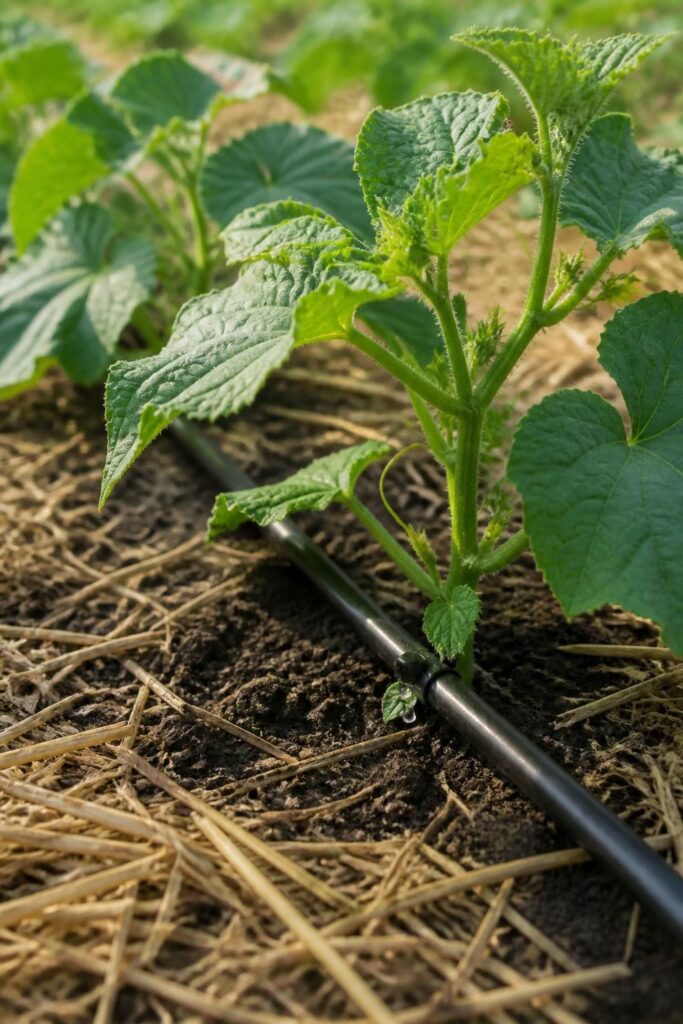
Dry soil and swings between too wet and too dry are among the stresses Nebraska Extension lists. University of Minnesota Extension says cucumbers need about one inch of water a week from rain or irrigation, and that sandy soils should be watered more often with smaller amounts each time. Soak the soil thoroughly, use a drip or soaker hose so the leaves stay dry, and hold off on straw or compost mulch until the soil is above 75°F, because these mulches can slow soil warming.
Heat and temperature swings
High temperatures and wide swings between day and night can both trigger bitterness, and it is a common problem later in summer. Iowa State Extension reports that hot, dry weather is usually the cause in Iowa, while OSU notes that cool periods can also bring complaints. You cannot control the weather, but steady soil moisture removes one stress you can control.
Soil fertility and pH
Low soil fertility and low soil pH are also listed as possible stress factors. Rather than guessing, get a soil test. The University of Minnesota advises a pH between 6.0 and 6.5 for best yield and quality, and the test results will show whether anything needs adjusting. There is no reason to add fertilizer just because the fruit tastes bitter.
Is a bitter cucumber safe to eat?
Mild bitterness is usually not severe enough to stop you from eating the fruit. Nebraska Extension says removing the outer skin is normally enough to moderate the flavor.
Extreme bitterness is a different matter. The same source warns that eating very bitter cucumber or zucchini can cause severe stomach cramps and diarrhea lasting several days. The documented poisoning cases involved zucchini, and extremely bitter cucumbers are occasional rather than typical, but the advice is the same: taste a small piece first, and if it is intensely bitter, spit it out, discard the fruit and do not give it to anyone else. If someone develops severe symptoms after eating very bitter produce, contact a doctor.
How to rescue a bitter cucumber
- Cut off the stem end. This is the end that was attached to the vine. Both OSU and Iowa State report that the bitter compound tends to concentrate there.
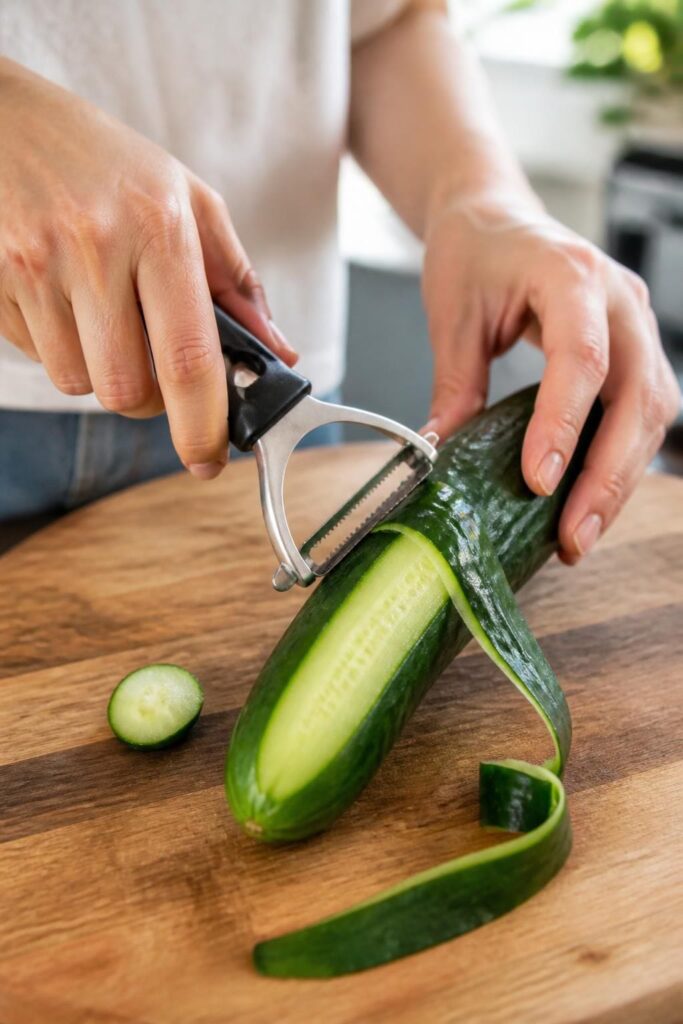
- Peel the rest. The bitterness is more common in the peel and in the light green layer just beneath it, and less likely in the deeper flesh.
- Peel from the blossom end toward the stem end. OSU describes a method developed by a University of Florida vegetable specialist: strip the peel in passes from the blossom end, stop about an inch before the stem, and rinse the knife between passes.
- Taste before you serve. If it is still unpleasantly bitter, discard it.
Rubbing cut ends together to draw out the bitterness is a popular trick, but none of the extension sources reviewed here support it.
Preventing bitter cucumbers next time
- Choose bitter-free or burpless varieties. Iowa State suggests cultivars such as ‘Sweet Slice’ and ‘Sweet Success’. University of Minnesota Extension adds a second benefit: bitter varieties are more attractive to cucumber beetles, so non-bitter ones may mean fewer pests.
- Keep soil moisture steady. Aim for about one inch a week and adjust for sandy soil or hot spells, rather than letting the bed dry out and then flooding it.
- Mulch once the soil is warm. It helps hold moisture between waterings.
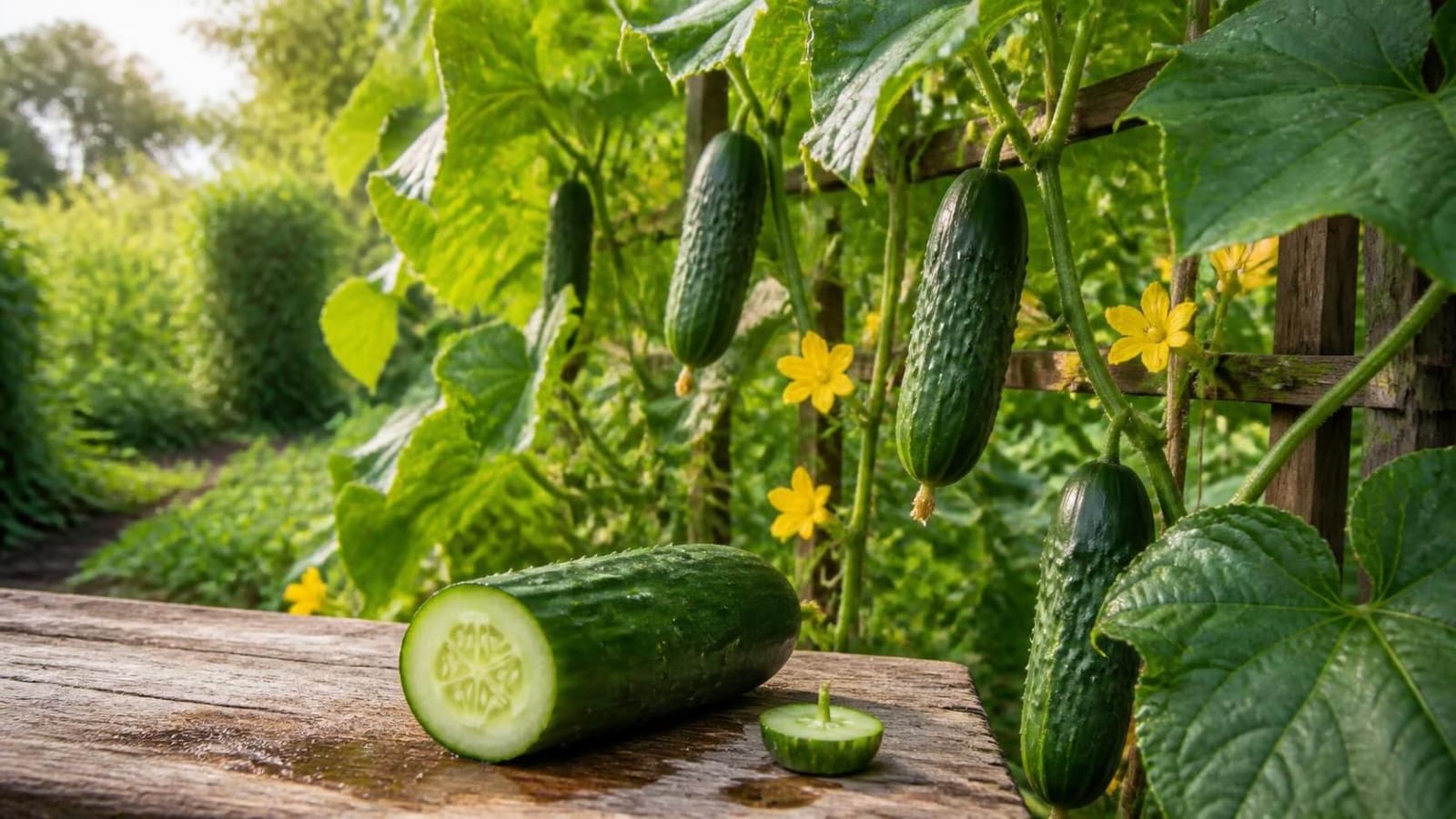
- Harvest at the right size. Nebraska Extension gives these sizes: 1.5 to 2 inches for sweet pickles, 3 to 4 inches for dill pickles and 7 to 9 inches for fresh slicers. Burpless types are picked at 1 to 1.5 inches in diameter and up to 10 inches long.
- Test the soil if the problem keeps returning. Then follow the results instead of adding fertilizer by guesswork.
- Do not save seed from a plant that produced very bitter fruit. Nebraska Extension advises this because extreme bitterness can be genetic.
Common questions
Why is my cucumber bitter only at one end?
Bitterness does not spread evenly through the fruit. Most extension sources, including Oregon State and Iowa State, report that it is strongest at the stem end and just under the skin. That is why trimming the stem end and peeling usually works.
Will the bitterness go away on its own?
Not in fruit that is already bitter, but newly developing fruit usually improves once the stress eases. Fix the likely cause, then judge the next few harvests instead of the current ones.
Do burpless cucumbers ever turn bitter?
Occasionally. OSU says you can expect some degree of bitterness from time to time in almost any commonly grown variety. Burpless and bitter-free types simply make it less likely.
Are bitter cucumbers poisonous?
Mildly bitter ones are generally edible once trimmed and peeled. Intensely bitter fruit can cause stomach upset and should be discarded.