Quick answer: Whiteflies usually return because treatment reaches only part of the population, not because every product has failed. All life stages overlap on the undersides of leaves, soaps and oils kill only what they touch, new adults fly in from nearby plants, and harsh sprays can wipe out the natural enemies that keep numbers down. Cover leaf undersides thoroughly, remove heavily infested leaves, trap adults, protect beneficial insects, and keep checking for several weeks.
You sprayed, the cloud of white insects disappeared, and a week later it is back. It is tempting to conclude that the product does not work, or that you need something stronger.
In most cases the real explanation lies in how whiteflies live. This guide helps you confirm the pest, understand why treatment keeps falling short, and use the methods that actually bring numbers down.
First, confirm it is whiteflies
Several small pests look alike at a glance, and a treatment aimed at the wrong one will never work. Match what you see to the table.
| What you see | Likely cause | How to confirm |
|---|---|---|
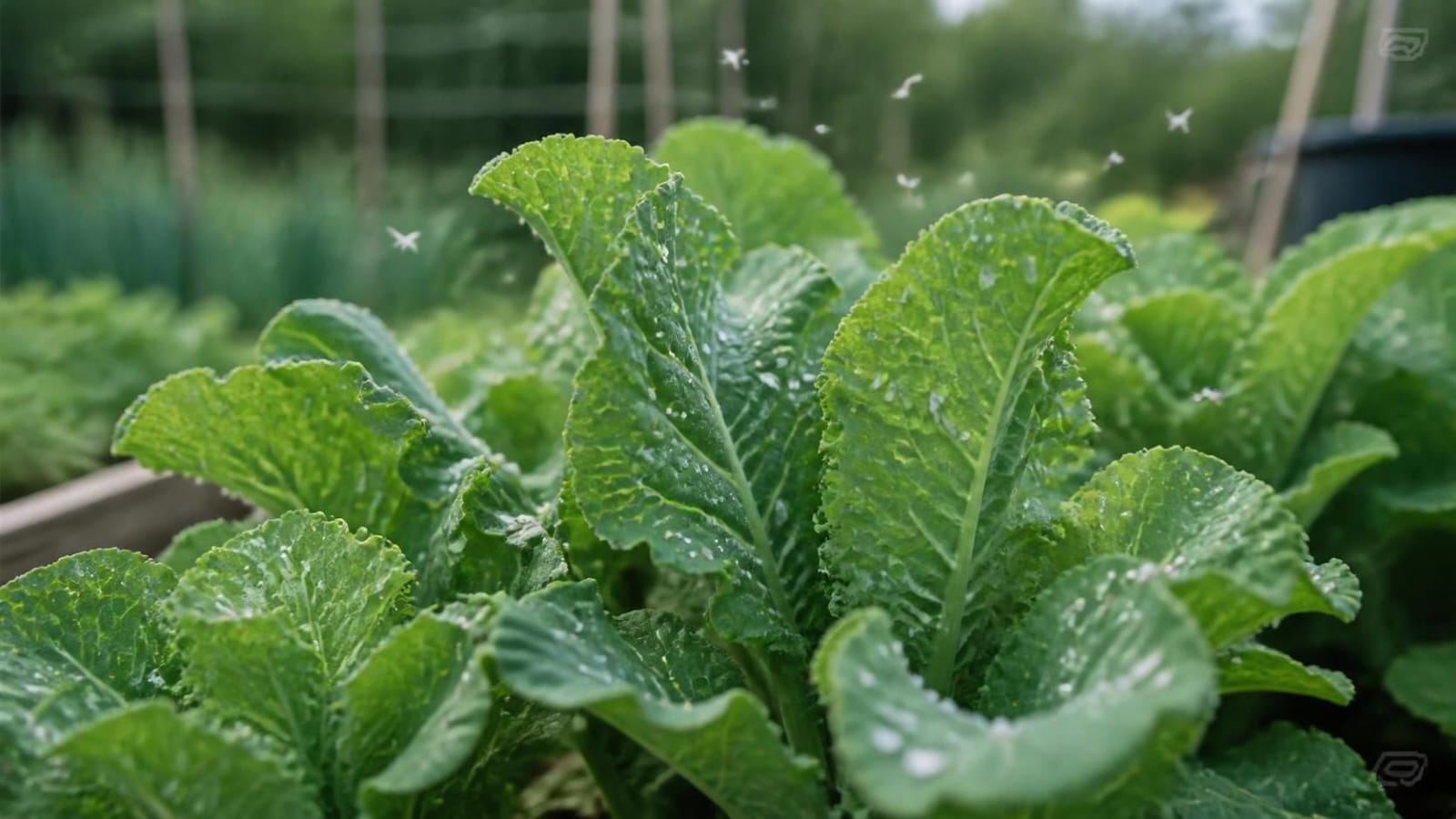
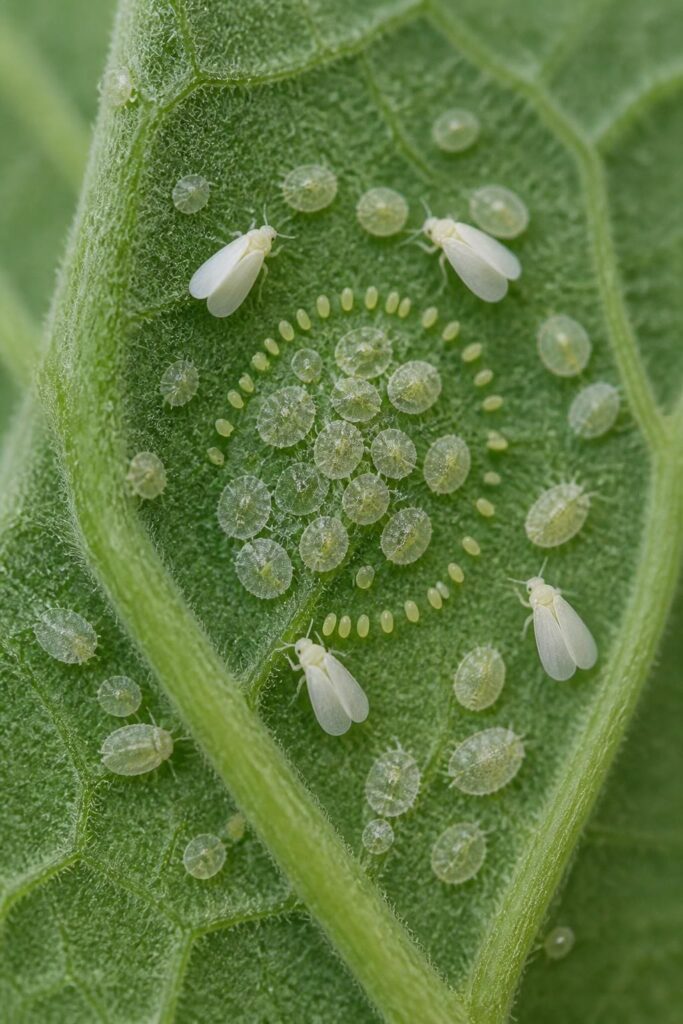
| Tiny white, moth-like insects flutter up when you brush the plant, and leaves feel sticky | Whiteflies | Turn the leaves over. Whiteflies lay eggs on leaf undersides, and the immature stages look like small, flat, oval scales. |
| Tiny dark, mosquito-like flies hover near the pot or soil, often in seedling trays | Fungus gnats | They are dark, not white, and tend to stay near the potting mix. Tap the pot, and gnats take flight. |
| Soft insects cluster on shoot tips or leaf undersides and mostly stay put instead of flying up in a cloud | Aphids | Aphids are related to whiteflies and also leave sticky honeydew, so the two are easy to confuse. |
| Sticky leaves or black sooty mold, but no obvious insects | Honeydew from an infestation | Check undersides and stems closely. Honeydew can remain after the insects that made it have moved on. |
The distinction matters because the fixes differ. If the insects you see are clustered and not flying, this guide to aphids that keep coming back after treatment may fit better. If the tiny dark flies hover near the soil, especially in trays, see this one on fungus gnats in seed starting mix. According to UC IPM, adult fungus gnats stay near potted plants and growing media, while whiteflies gather on the undersides of leaves.
Why whiteflies keep coming back
Sprays reach only part of the population
UC IPM explains that most less-toxic products, including insecticidal soaps, neem oil and petroleum-based oils, control only the whiteflies that are directly sprayed. The undersides of the lowest leaves, where colonies are often largest, are the hardest to reach, so missed insects survive and rebuild.
Timing adds to the problem. UNH Extension notes that whitefly life stages overlap, so eggs, nymphs, pupae and adults can all be present at once, and the life cycle takes roughly three to five weeks depending on temperature. A single spray therefore rarely clears them. UC IPM also points out that nymphs cause most of the damage, while adults alone usually do not.
New adults keep arriving
The most common pest species have a wide host range that includes many weeds and crops, and they move from one host to another as plants are harvested or dry up. Even a perfectly sprayed plant can be reinfested by adults flying in from neighboring plants. UC IPM advises inspecting new plants before bringing them into the garden and promptly destroying infested annuals once flowering or fruiting ends.
Harsh sprays can make it worse
Whiteflies have many natural enemies, and UC IPM reports that outbreaks frequently occur when these are disturbed or destroyed by pesticides, dust or ants. Broad-spectrum products such as pyrethroids, organophosphates and neonicotinoids can be particularly disruptive, and whiteflies quickly build up resistance to most pesticides other than soaps and oils. The result can be a cycle in which each spray clears the pests but also removes what was holding them in check.
Ants and dust protect them
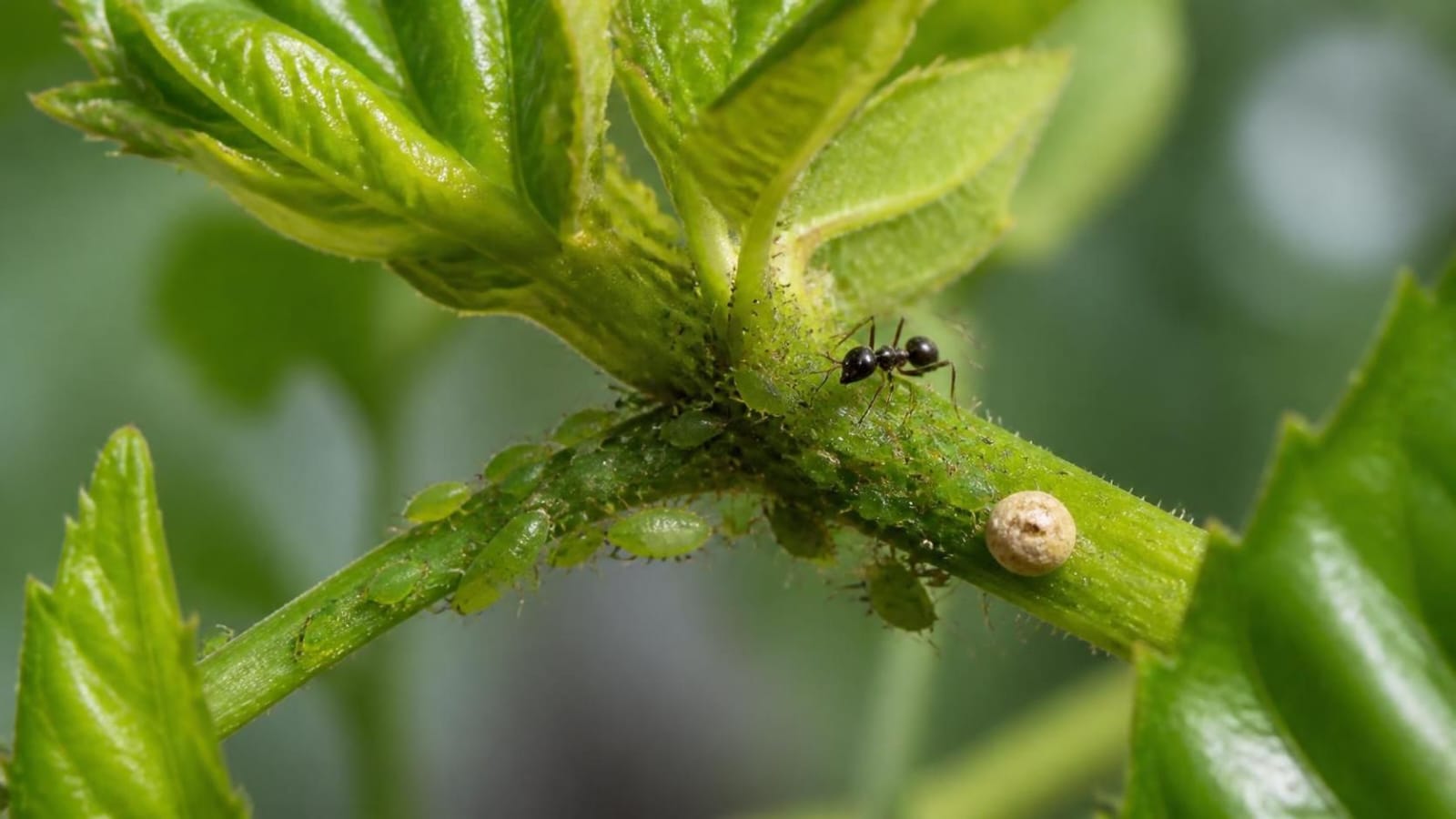
Whiteflies produce honeydew, which attracts ants. The ants interfere with the natural enemies that would otherwise control whiteflies, and dusty conditions can also disrupt the activity of beneficials. If ants are climbing the plant, dealing with them is part of dealing with whiteflies.
What actually works
- Remove and wash first. Prune out isolated infested leaves when you first notice them, and hose adults off with a strong stream of water. UC IPM says hand removal of heavily infested leaves or plants may bring populations down to levels natural enemies can handle.
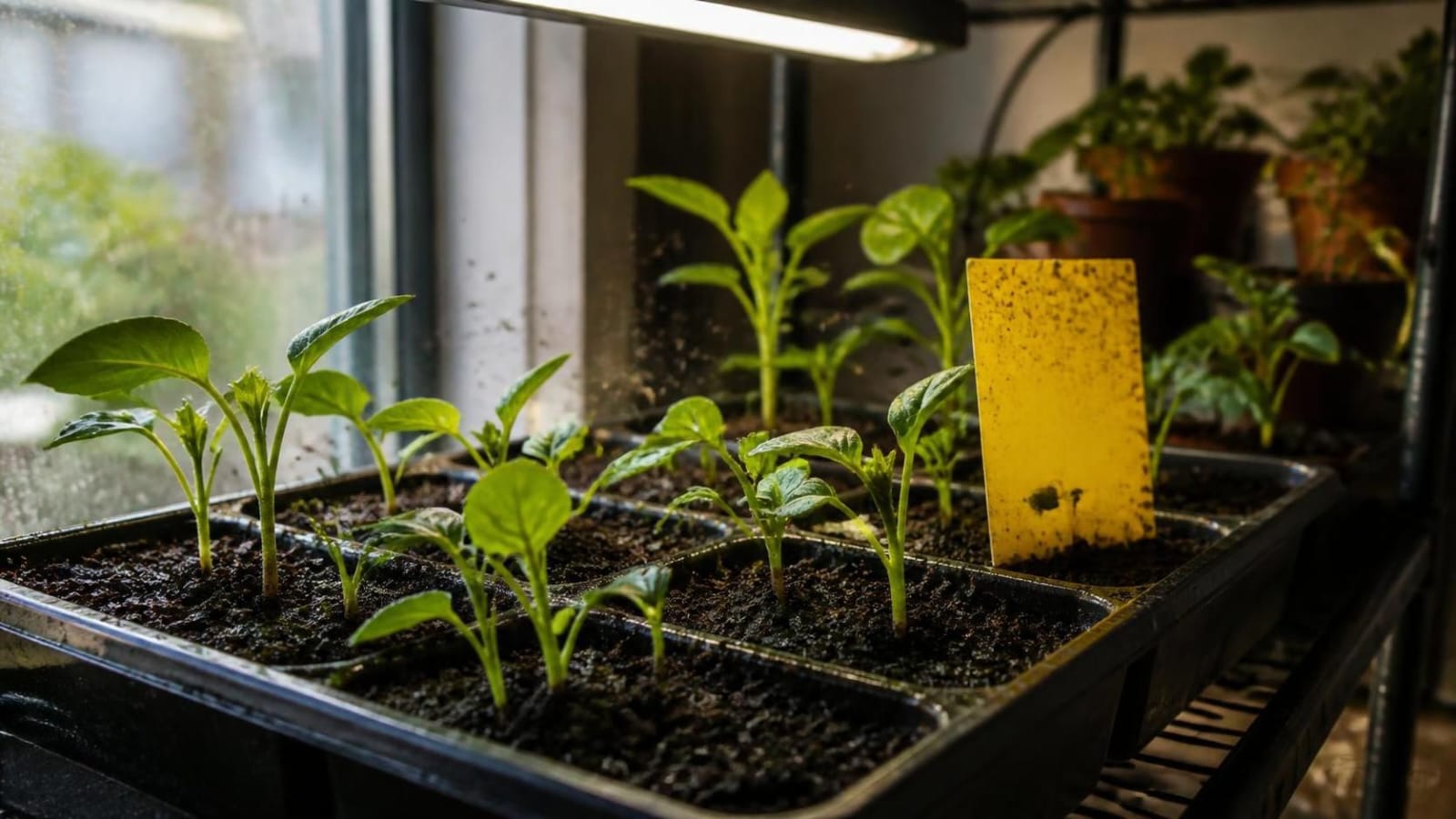
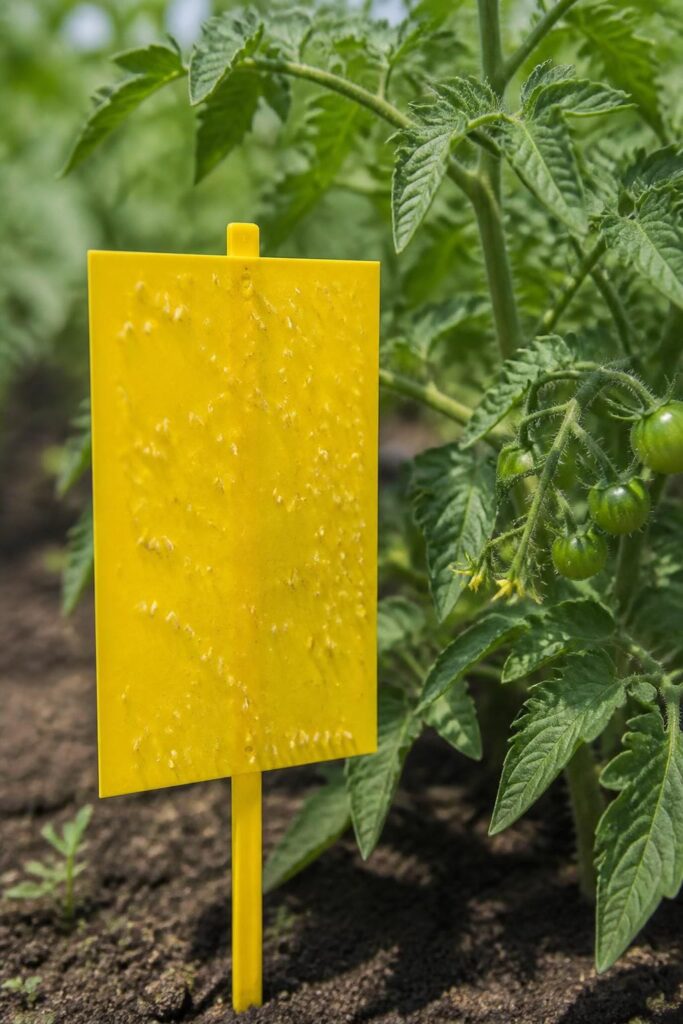
- Use yellow sticky traps mainly to monitor. They can reduce adults somewhat, but UC IPM says they will not eliminate a damaging population. Place them with the sticky side facing the plants and out of direct sunlight.
- If you spray, cover everything. Soaps and oils work only on contact, so wet the leaf undersides thoroughly and repeat as the label directs. Avoid applying them to drought-stressed plants or when temperatures exceed 90°F, to prevent leaf burn. Soaps and neem may reduce populations but will not eliminate them.
- Look for natural enemies before spraying again. UC IPM notes that empty pupal cases with a round exit hole were parasitized by tiny wasps, while a T-shaped slit shows a healthy adult emerged. If you find round holes, give the beneficials a chance.
- Keep checking for several weeks. Because the life cycle runs three to five weeks, inspect undersides weekly through at least one full cycle before deciding the problem is gone.
What not to do
- Do not keep escalating to stronger insecticides. UC IPM says even the most toxic insecticides are only partially effective against whiteflies, and most kill natural enemies.
- Do not spray only the tops of the leaves. The colonies are underneath.
- Do not spray in hot sun or on stressed plants. Soaps and oils can burn leaves.
- Do not buy a plant without checking its leaf undersides. Infested nursery stock is a common way to reintroduce them.
- Do not hold on to a badly infested houseplant at all costs. UC IPM says that if a houseplant infestation becomes large, it may be best to discard the plant.
Preventing a return
- Use reflective mulch for young plants. Shiny metallic or reflective plastic mulch can repel whiteflies while plants are small. Remove it when plants grow large or temperatures climb, and use drip irrigation under plastic.
- Keep dust and ants down. Regular watering reduces the hot, dusty conditions that favor whiteflies and hinder their natural enemies.
- Clear out hosts. Remove weeds and old plants that repeatedly carry high whitefly populations, and destroy infested vegetable plants after harvest.
- Inspect before you bring plants home. Check undersides for eggs and nymphs, especially on indoor and greenhouse plants.
- Spare the beneficials. Choose soaps or oils over broad-spectrum sprays when treatment is needed.
Common questions
How long does it take to get rid of whiteflies?
Expect weeks, not days. A full life cycle takes roughly three to five weeks, and UC IPM describes heavy infestations as difficult to manage, so early action matters.
Does neem oil eliminate whiteflies for good?
No. UC IPM says neem oil and similar products may reduce but not eliminate populations, and they control only the insects they touch.
Can I save a heavily infested houseplant?
Sometimes. UC IPM suggests washing eggs and crawling juveniles off with water, disposing of infested plant parts, using yellow sticky traps, and making repeated applications of a horticultural oil or insecticidal soap. If the infestation is large, discarding the plant may be the better choice.
Can whiteflies spread plant diseases?
Some can. UC IPM notes that certain whitefly species transmit viruses to some vegetable crops, and their honeydew can lead to black sooty mold on leaves.