A banana tree in a pot can live indoors, outdoors, or move between the two with the seasons. Indoors all year, only a dwarf variety in the brightest spot you have will do well. Give it a deep, wide pot with drainage holes and a loose, rich mix. Keep it moist but never soggy, and feed it while it grows. Outside, wait until nights stay reliably above about 50°F (10°C), and bring the pot in before frost. Indoors, trouble often starts with weak light and too much water for that light. Read the leaves before you reach for the watering can.
A banana “tree” is not a tree in the botanical sense. The trunk is a pseudostem, a tight bundle of leaf stalks, and the whole plant is a giant herb growing from an underground corm. That matters in a pot. The corm and its thick roots want room, moisture and warmth, and a container limits all of them.
Decide where the pot will spend January
Before you choose a pot or a mix, settle where this plant will be in midwinter. That one answer decides the variety, the light you have to plan for, and how much heavy lifting you are signing up for.
| Where it lives | Suits | The main catch |
|---|---|---|
| Indoors all year | Dwarf varieties only | Needs the brightest window you have. Dry air and spider mites become a routine chore, and fruit is unlikely. |
| Outside in summer, inside for winter | Dwarf or compact ornamental types; a big plant is hard to carry | Two moves a year, a pest check before each return, and a slow adjustment to sun in spring. |
| Outside all year | Frost-free climates, or very hardy kinds with the pot protected | A single frost can kill the leaves, and roots in a pot are more exposed than roots in the ground. |
NC State Extension rates the species hardy in USDA zones 10 and 11. Its plant database also warns that moving a big container plant in and out is real work. Here’s the catch with any hardiness rating: it describes plants growing in the ground. A pot exposes the roots to cold from every side. A rating earned in a garden bed doesn’t carry over to a pot left outside.
Choose a variety that was built for a pot
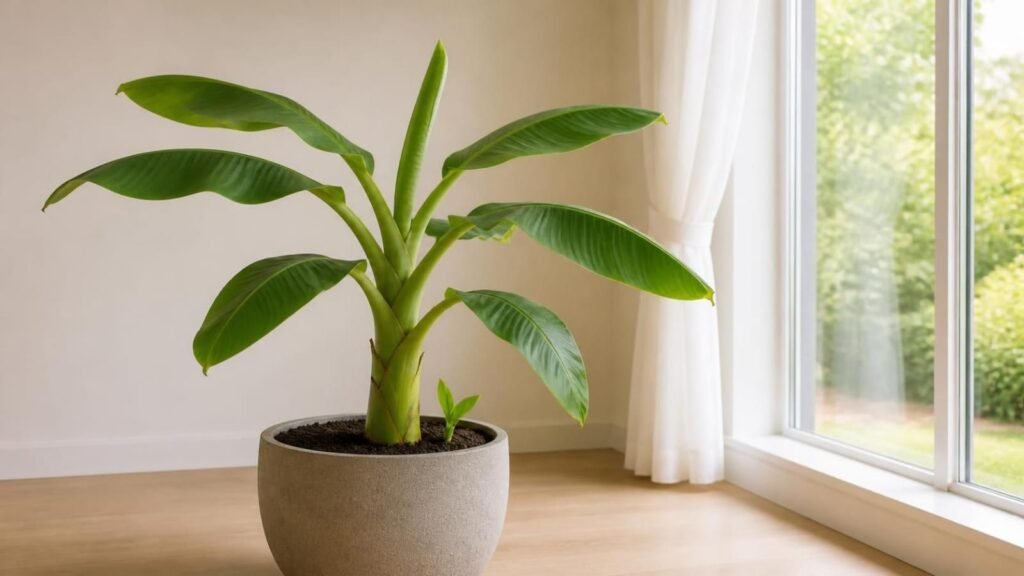
Most of us pick whichever plant looks lushest at the nursery. Many plants sold as banana trees are meant to climb well past ten feet, and in a pot that ends badly. Dwarf types are the answer, with one honest warning. Texas A&M AgriLife Extension lists ‘Dwarf Cavendish’ at about 6 feet. Other growers quote up to around 10 feet. The real number depends on light, pot size and feeding. “Dwarf” is a banana-sized word. Plan for a plant that will still fill a corner.
‘Dwarf Cavendish’ and its compact relatives are the usual starting point, and nurseries also sell ‘Ice Cream’ for containers.If cold is your main worry, Musa basjoo is the most cold tolerant of the group. Illinois Extension says it can overwinter outdoors in zone 5 under heavy mulch. That advice is for plants in the ground, so do not stretch it to a pot sitting on a patio.
The pot, the mix and the first week
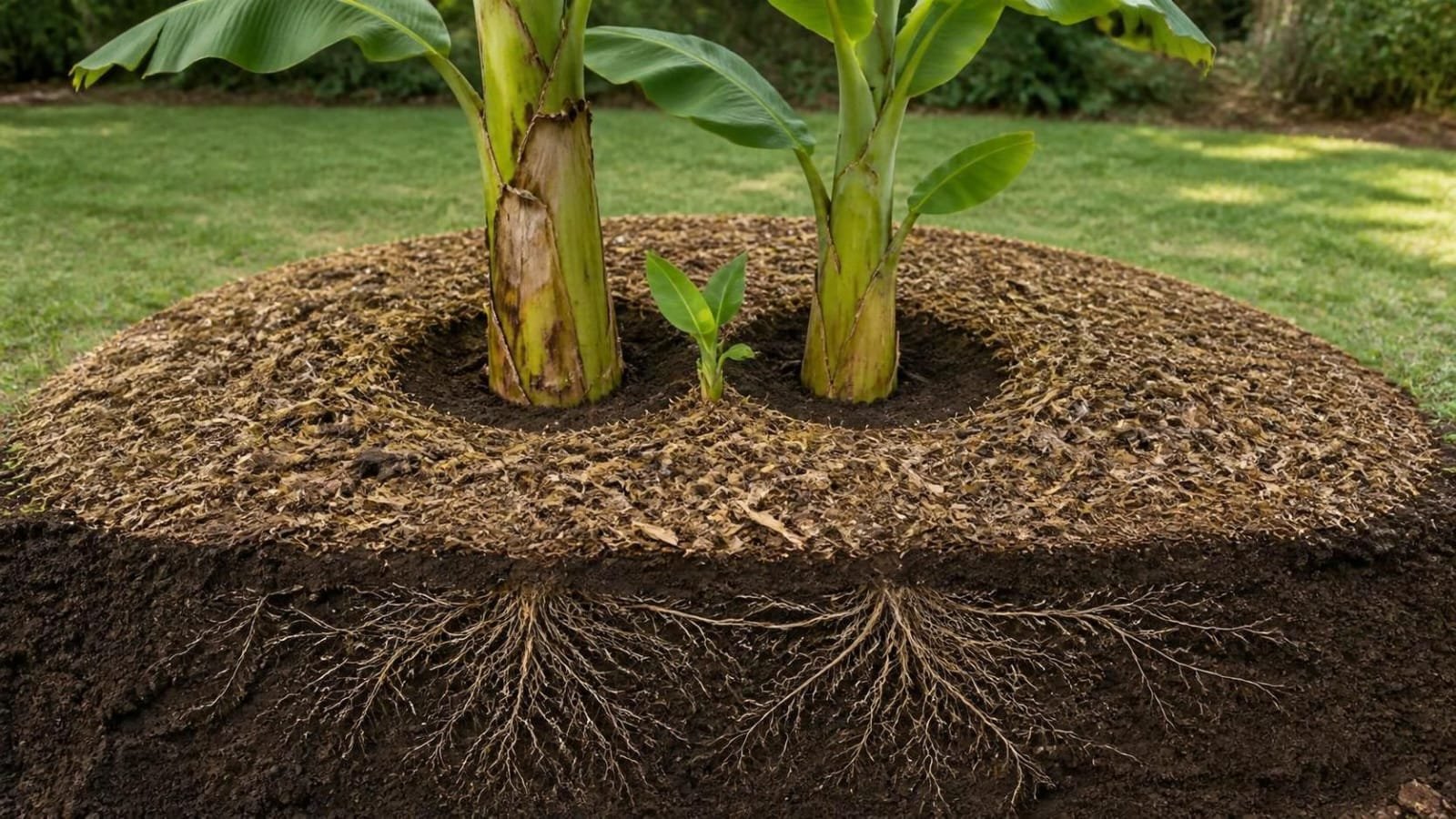
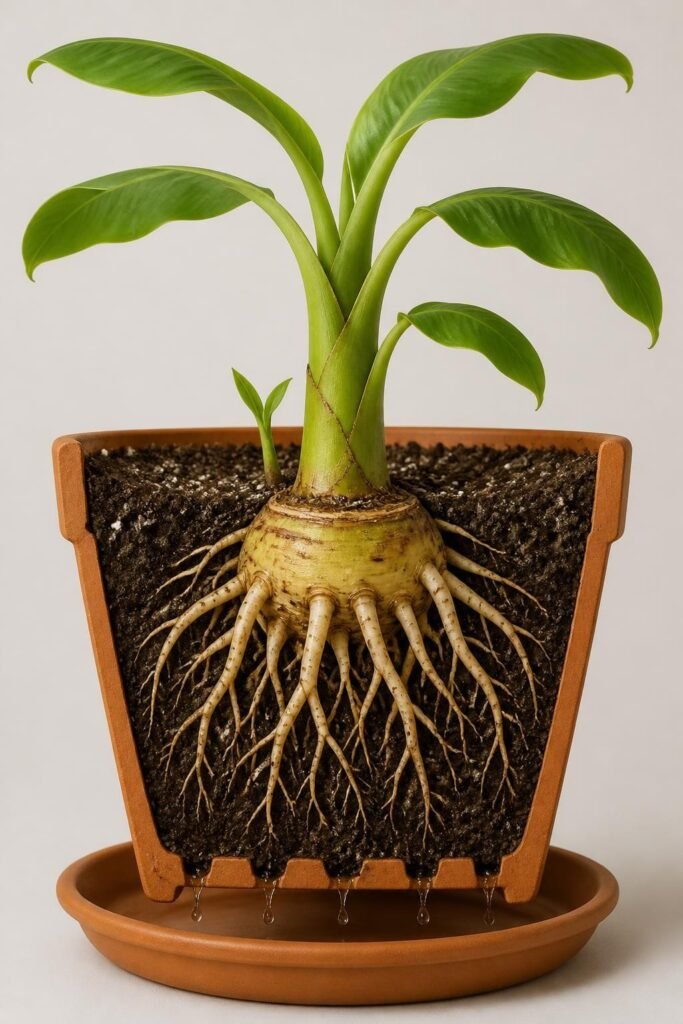
The instinct is to buy the biggest pot on the shelf, on the theory that a big plant deserves a big home. For a grown plant that is not far off. Epic Gardening suggests at least 15 gallons. A Penn State Extension Master Gardener recommends a sturdy pot 18 to 24 inches deep and wide. Those figures describe a mature plant, though. A young banana dropped into that much soil has few roots to drink it, and the mix stays wet. Move up one pot size at a time. A banana does better a little snug than swimming. A tall plant is also top-heavy, so a heavy pot or a sheltered spot helps if wind is a risk.
Bananas want a loose mix that drains fast and holds plenty of organic matter. Potting soil blended with perlite or coarse sand and some compost is a common answer, with a pH from slightly acidic to neutral. Our guide to banana tree soil goes through the options. Set the root ball at the same depth it grew in its nursery pot, no deeper. Our walk-through on how to plant a banana tree covers the steps. Drainage holes are a must. Empty the saucer after watering, because a pot standing in water invites root rot.
Watering a banana tree in a pot: the move we all make first
When a banana leaf droops or yellows, most of us reach for the watering can. Fair enough, because these are thirsty plants with huge, thin leaves. The trouble is that thirst follows light. A large pot in summer sun can need water every day. The same plant in a dim room in December barely drinks, and the roots sit in damp mix for days.
So stop watering by the calendar. Push a finger two inches into the mix. Lift the pot too, since a dry pot is noticeably lighter than a wet one. When it is time, water until it runs from the holes, then empty the saucer.
Read the leaves before you change anything
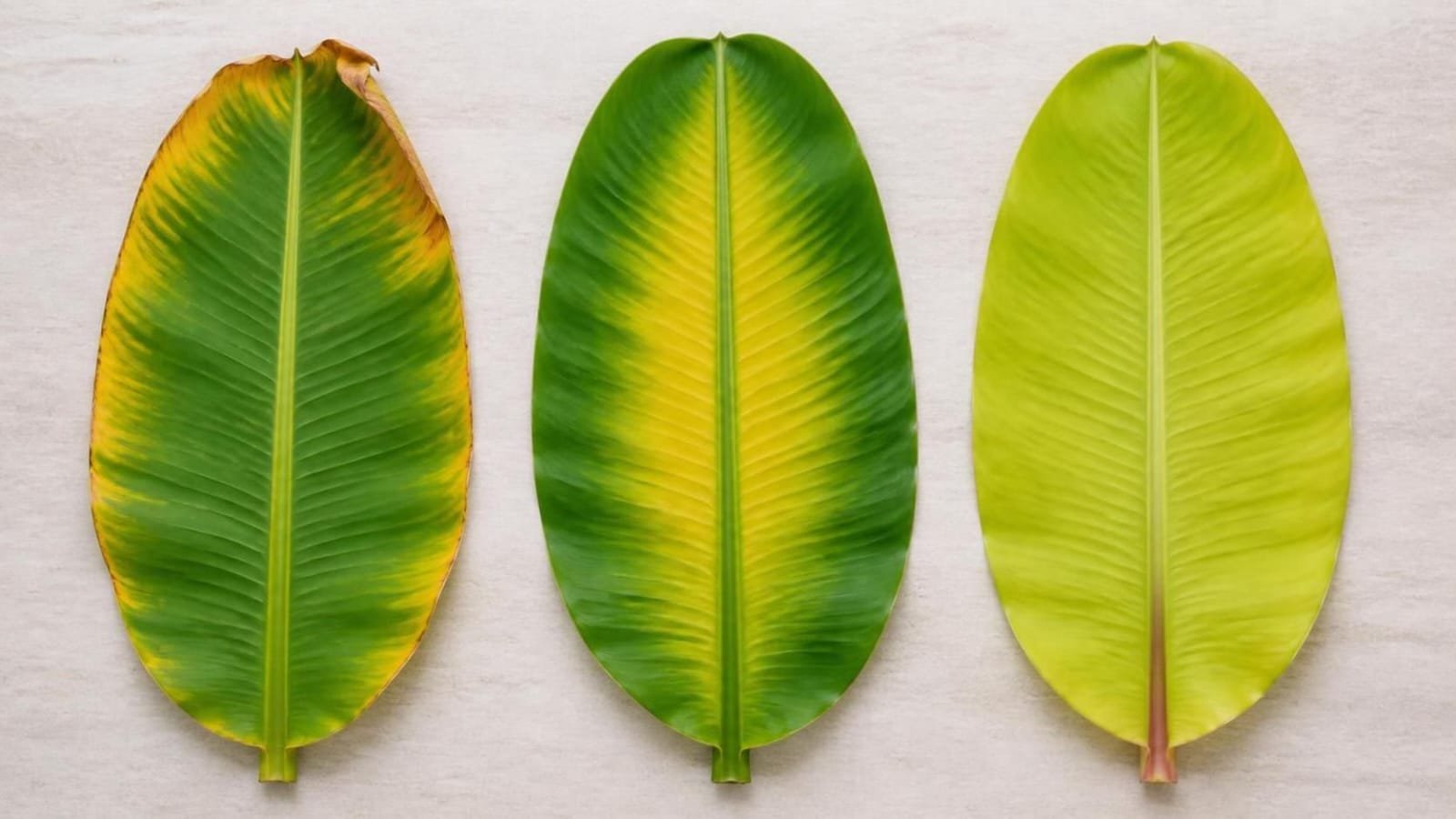
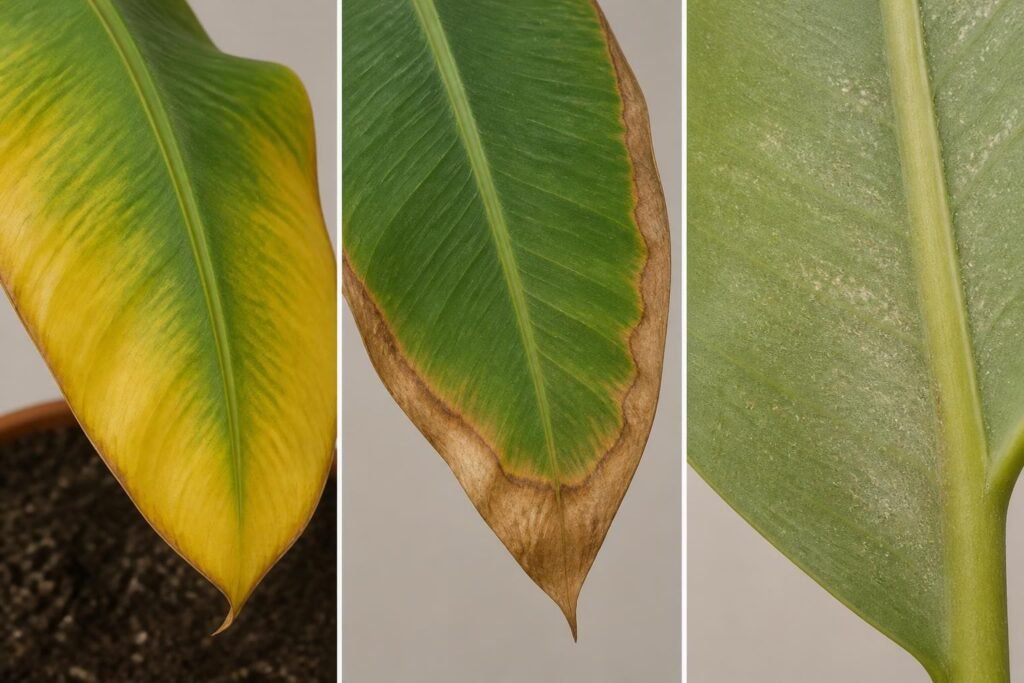
Several of these problems look alike, brown edges especially. If a case stays stubborn after you check the points below, send a photo to your local extension office. A description or a picture can only narrow things down.
| What you see | Likely cause | How to check |
|---|---|---|
| Lower leaves yellowing, plant in a dim spot | Too much water for the light | Mix is still damp days after watering, the pot feels heavy, and there may be mould or gnats on the surface. |
| Brown, crisp edges, worst on the newest leaves | Dry mix, dry air or fertilizer salts | See how fast the pot dries between waterings, and think back on how heavily you have been feeding. |
| Fine webbing and pale speckling under the leaves | Spider mites | Look at the undersides with a magnifier, and check where the leaf stalk meets the stem. |
| Ragged, torn edges on otherwise healthy leaves | Wind, or ordinary wear | New leaves are clean, and the damage lines up with the direction of the wind or a draft. |
| White dusty marks on the leaf surface | Mineral deposits from hard water, or mealybugs | Wipe with a damp cloth. A crust that wipes away is minerals; soft, cottony clusters in the leaf joints are mealybugs. |
| Pale, scorched patches after a move outdoors | Sun shock | It started within days of moving the plant from indoor light into full sun. |
A leaf that has already browned will not turn green again. Our guide to banana tree pruning and brown leaves explains what to cut and what to leave alone.
A banana tree indoors: light first, then humidity
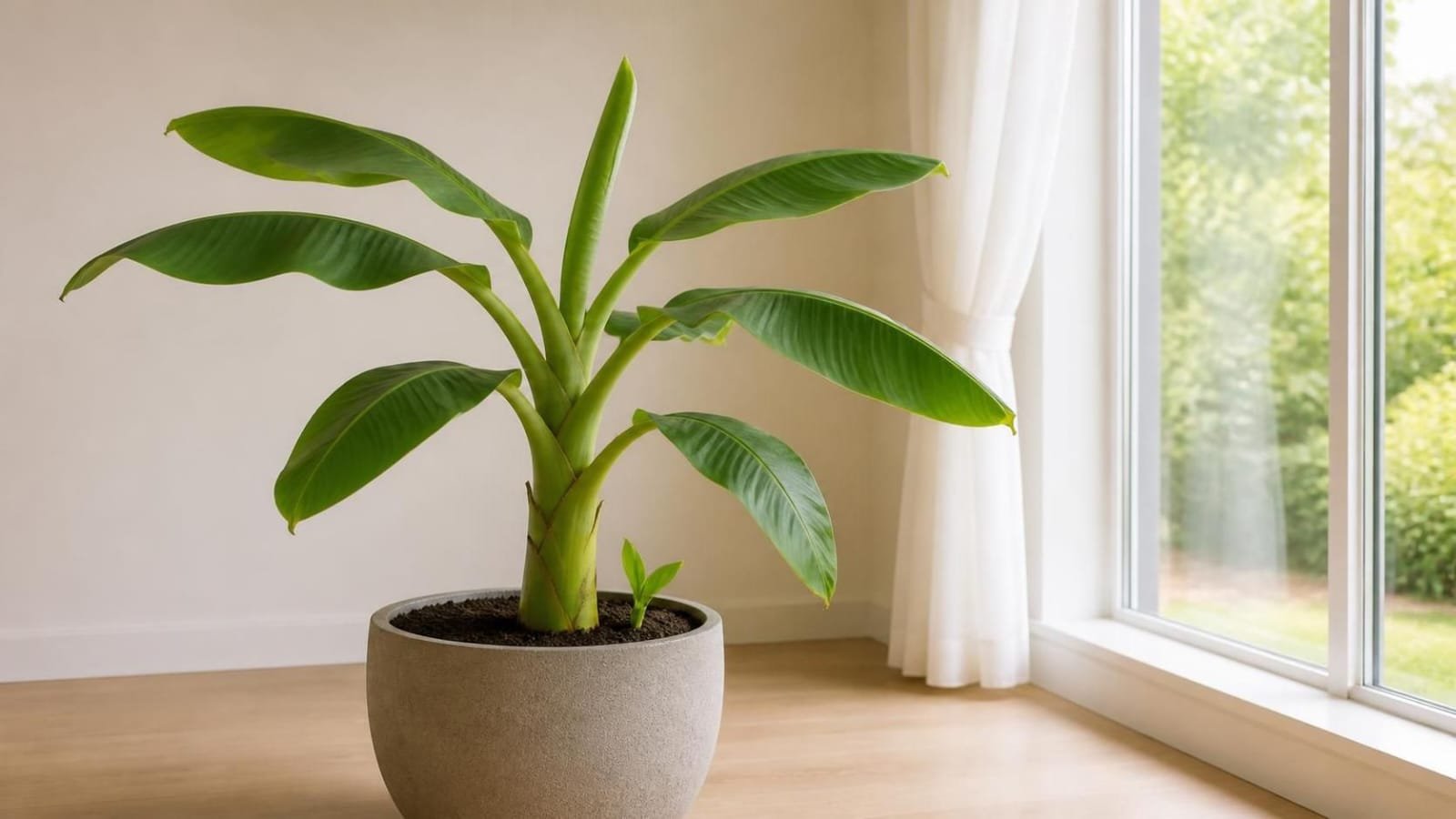
An indoor banana tree lives or dies by light. Outdoors it wants full sun to light shade, and the same plant behind glass receives far less, even beside a bright window. Put it at the brightest window you have, away from drafts and heater vents. Turn the pot now and then so the leaves don’t all lean one way. Nurseries often say bright, indirect light, and some growers say full sun. If the plant stretches, pales or drops its lower leaves, it wants more. A grow light can fill in over the shortest days.
Dry indoor air and spider mites tend to arrive together. A humidity tray or a humidifier gives a modest local lift. Misting gives only a brief lift. Check the undersides of the leaves every week or two. If mites turn up, cover the soil and shower the plant. That washes off many of them. If they come back, use a product labeled for houseplants and follow the label and your local rules.
Feeding a banana tree in a pot
A banana in a pot depends entirely on what you put in the mix, and it takes a lot. One piece of documented evidence is worth knowing. In a Mississippi State University master’s study of container-grown Musa, Ensete and Canna in pine bark, the nitrogen rate mattered most. The ratio of nitrogen to potassium was not significant. That is one study in one substrate, so treat it as a hint about where to look, not a rule for every mix.
Feed while the plant is actively growing. A commonly given interval is every six to eight weeks, but amounts differ a great deal between products, so follow the label on yours. Stop as winter approaches. A resting plant takes up very little. Unused fertilizer salts build up in the pot and can burn the roots. You’ll see stunted growth and brown, dry leaf tips. For types and timing, see our banana tree fertilizer guide. Outdoors, a layer of mulch over the mix can slow drying, and mulch for banana trees covers which materials suit.
Taking a banana plant outdoors for summer
The first warm afternoon of spring tempts everyone to carry the pot outside. Hold off. Penn State Extension advice is to keep a banana plant out of temperatures below 50°F (10°C), and to move it outdoors once it stays around that mark. Then ease it into the sun. Start with a few hours of shade and add light over time, because leaves grown in indoor light can scorch in sudden sun.
Choose a sheltered spot. Texas A&M notes that frost kills the leaves and that temperatures in the high 20s Fahrenheit can kill a plant to the ground. Strong wind also tatters the foliage badly. Outdoor pots also dry much faster than indoor ones, so check the mix daily in hot weather. The wider routine for a banana in full growth sits in our banana tree care guide.
Bringing the pot back in for winter
Most of us wait for the forecast to say frost and then drag the pot inside that evening. A better habit is to decide early which winter you want for the plant. You have two workable choices.
Keep it growing
This needs your brightest window and acceptance of slower growth. Water less as growth slows, and stop feeding when it does.
Let it rest
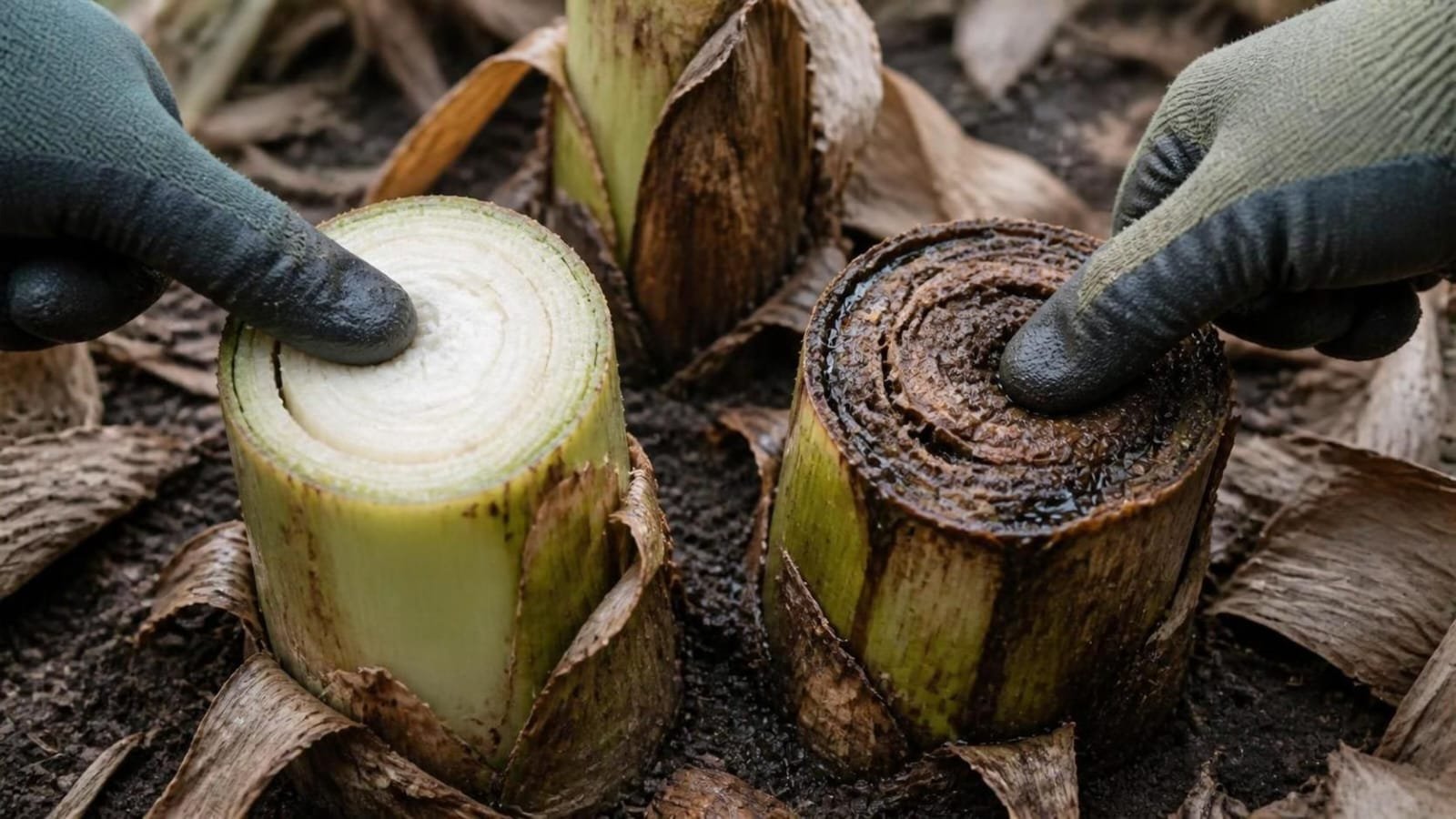
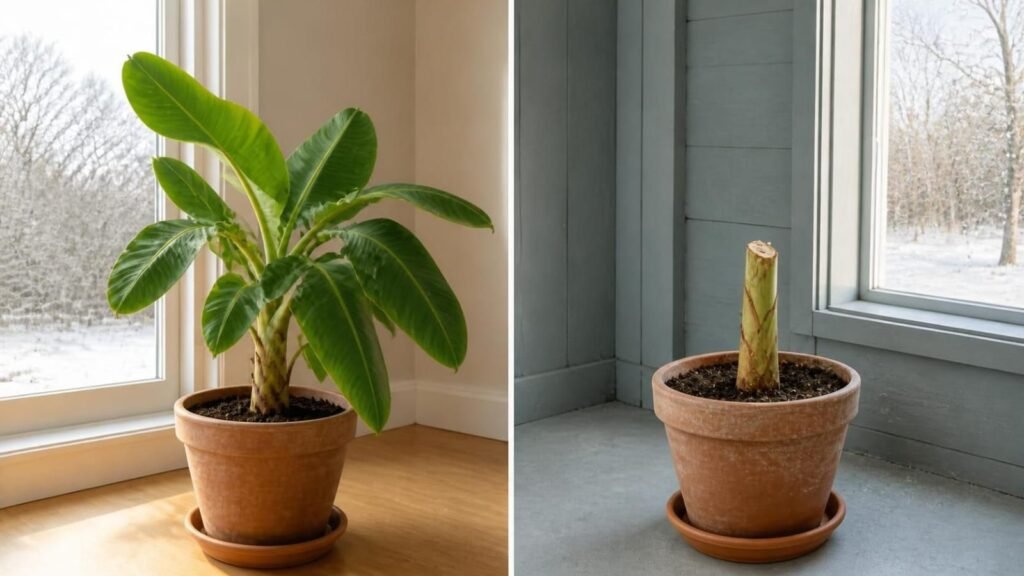
Leave the pot outdoors until just after the first light frost. That starts the plant dying back. Bring it in well before a hard freeze, since roots in a pot are exposed. Epic Gardening then cuts all the leaves off just above the stem. The pot spends about a week in a cool, sheltered spot such as a garage, so any pests can show themselves. After that it goes somewhere cool and bright, away from heaters, and gets water only when the top two inches of mix are dry. Illinois Extension describes a similar idea for plants lifted from the ground: wrap the root ball in a plastic bag and store it somewhere cool and dark until spring. One trade-off: NC State notes that container plants cut close to the ground every fall may never flower.
A common situation: a banana spends the summer on a sunny patio, looks superb, and comes indoors in October. By December the oldest leaves are yellow, a few edges have browned, and the mix is still damp a week after watering. Nothing is wrong with the plant itself. It is using far less water in dim light, and summer’s watering habits have not caught up.
- Don’t carry the plant indoors without checking the leaf undersides and stem for mites, scale and mealybugs first.
- Don’t keep feeding a plant that has stopped growing.
- Don’t park the pot beside a heater to “keep it warm”; for a resting plant, heat can wake it too early.
- Don’t keep watering on the summer schedule.
Repotting, pups and pruning
Repot every two to three years, in spring before new growth starts. If the plant has room to grow, move up one pot size and loosen any circling roots. If it doesn’t need more room, thin the pups instead. Cut them away with a clean, sharp tool, pot them separately, and refresh the mix around the parent. Prune only what is broken or dead. Leaves that tear and hang down can come off once they have clearly gone, which is all most potted bananas ever need.
Questions that come up
Can a banana tree live indoors all year?
Yes, if it is a dwarf variety and gets the brightest window you have. Expect slower growth in winter, check the leaf undersides for spider mites, and do not expect fruit.
How often should I water a banana tree in a pot?
There is no reliable number of days, because the answer follows light and heat. Water when the top two inches of mix are dry and the pot feels light, until water runs out of the holes.
Will a banana tree in a pot ever fruit?
Don’t count on it indoors. Younger plants often take two or three years to flower, even in good conditions. The annual cut-back described above can keep a container plant from flowering at all. A potted banana is worth growing for the leaves.
Can I use a decorative pot with no drainage holes?
Use it as a sleeve. Keep the banana in a plain pot with holes, set that inside the decorative one, and lift it out to drain after each watering.