
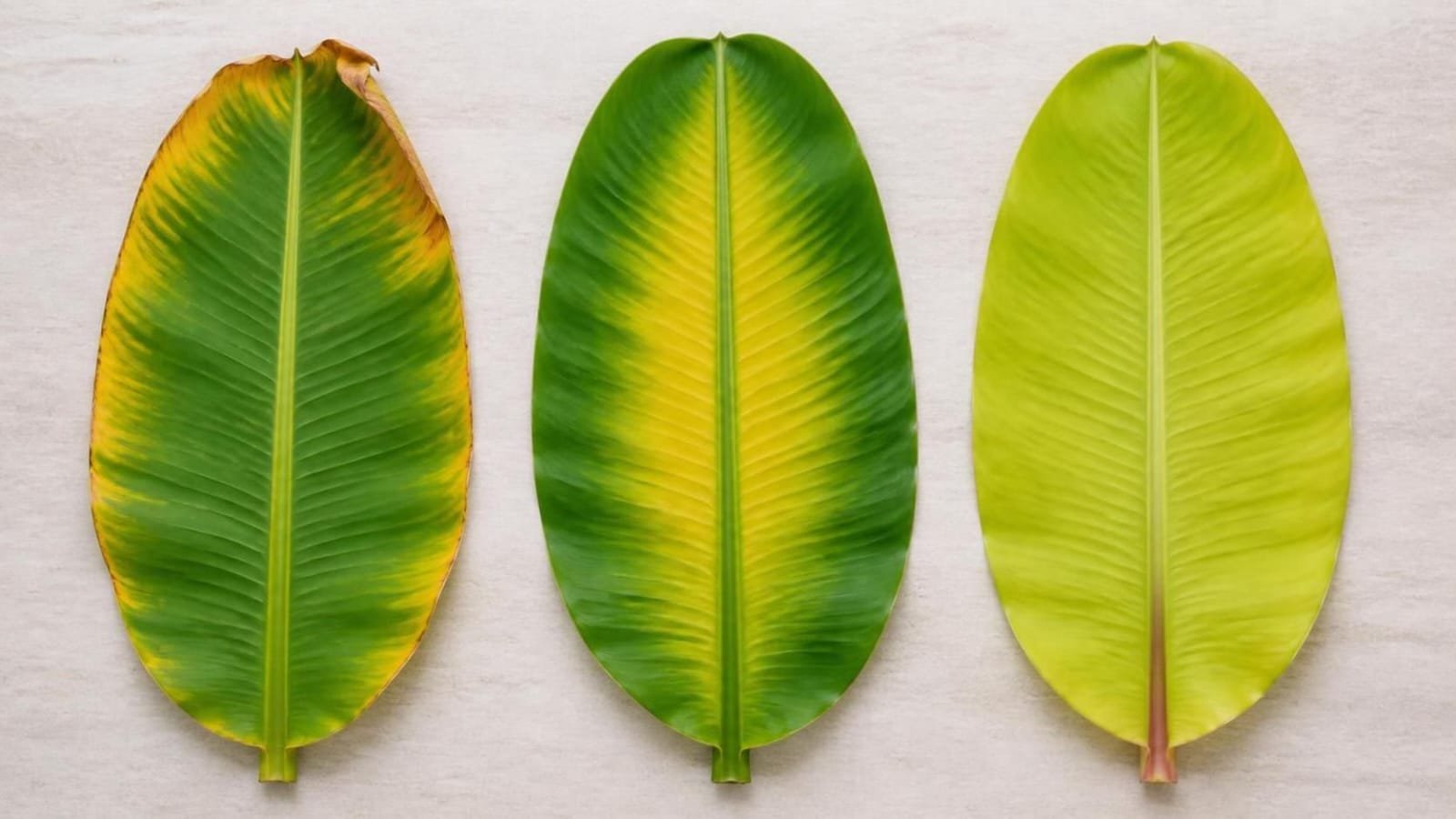
Banana trees are heavy feeders, yet that reputation leads many gardeners to feed a plant that is actually drowning. The usual starting point for banana tree fertilizer is a high-potassium product, roughly a 3-1-6 ratio such as 6-2-12, with some magnesium, applied in small doses through the warm months rather than all at once. That is the program UF/IFAS gives for Florida home gardens, so adjust it to your own soil and climate. The bag still comes last, because lower leaves turn yellow when a plant is hungry and also when its roots are waterlogged or stressed by salts, and fertilizer only helps with the first.
Yellow lower leaves? Check the soil before you buy fertilizer
Hold off on the fertilizer and run through these in order:
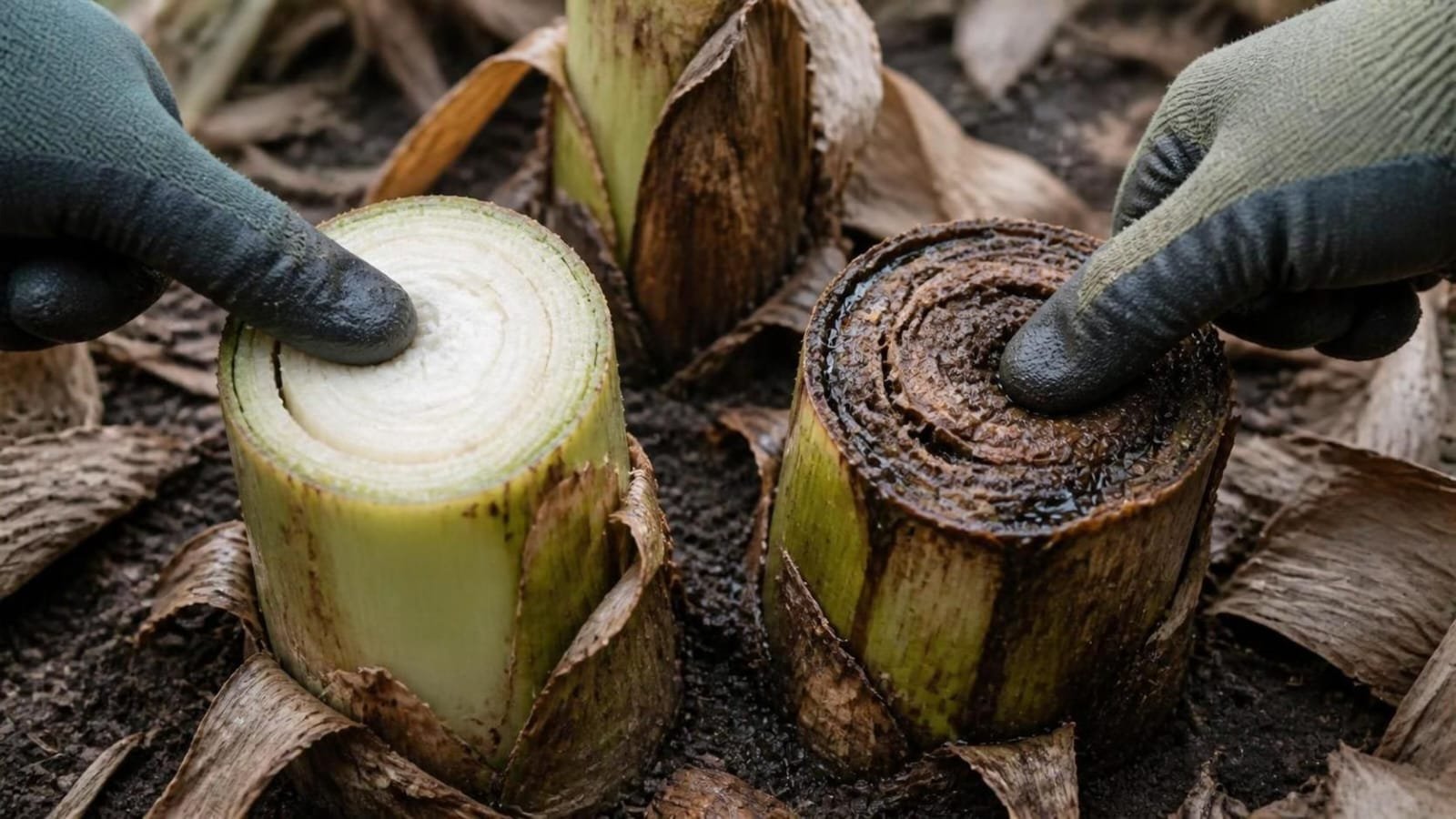
- Push a finger a few inches into the root zone. Soggy, sour soil means starved roots, and NSW DPI reports that root tips begin to die if they sit waterlogged for more than six hours. Damaged roots have little use for extra fertilizer, which mostly adds salt. Fix drainage first; the watering side is covered in Banana Tree Care.
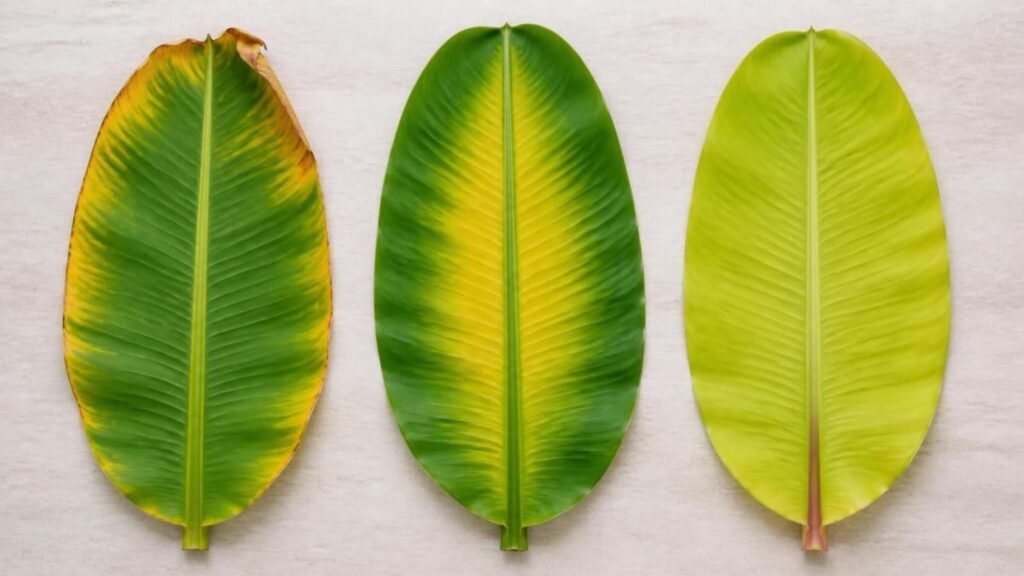
- Read which leaves are yellow. Old leaves yellowing from the tip and edges suggest potassium, and the tip curls under where wind isn’t shredding the leaf. Yellow through the middle of the blade with green margins and midrib suggests magnesium, which heavy potassium feeding can bring on. Evenly pale old leaves may be nitrogen, which the same guide says can resemble potassium shortage.
- Test when the clues disagree. Leaf color alone can’t separate nitrogen from potassium, so run a soil test, or a leaf tissue test if your extension service offers one.
- Only then feed, and feed small. Potassium washes out of light soils quickly, so smaller, more frequent doses work better. Banana Tree Soil helps you work out what kind of soil you have.
The lawn crew just fed the grass beside your banana
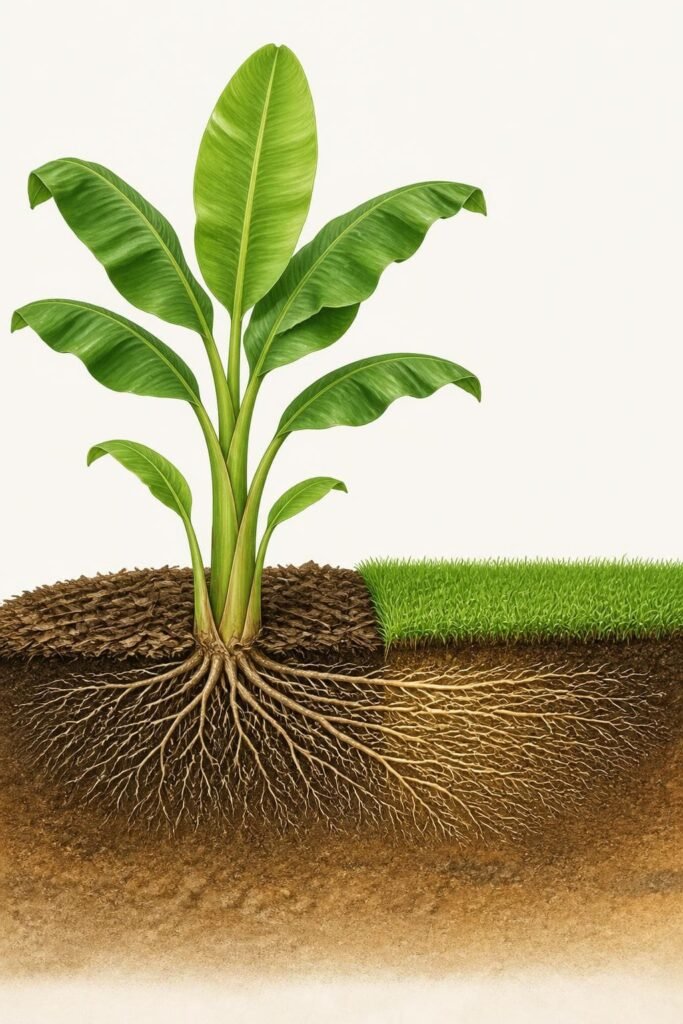
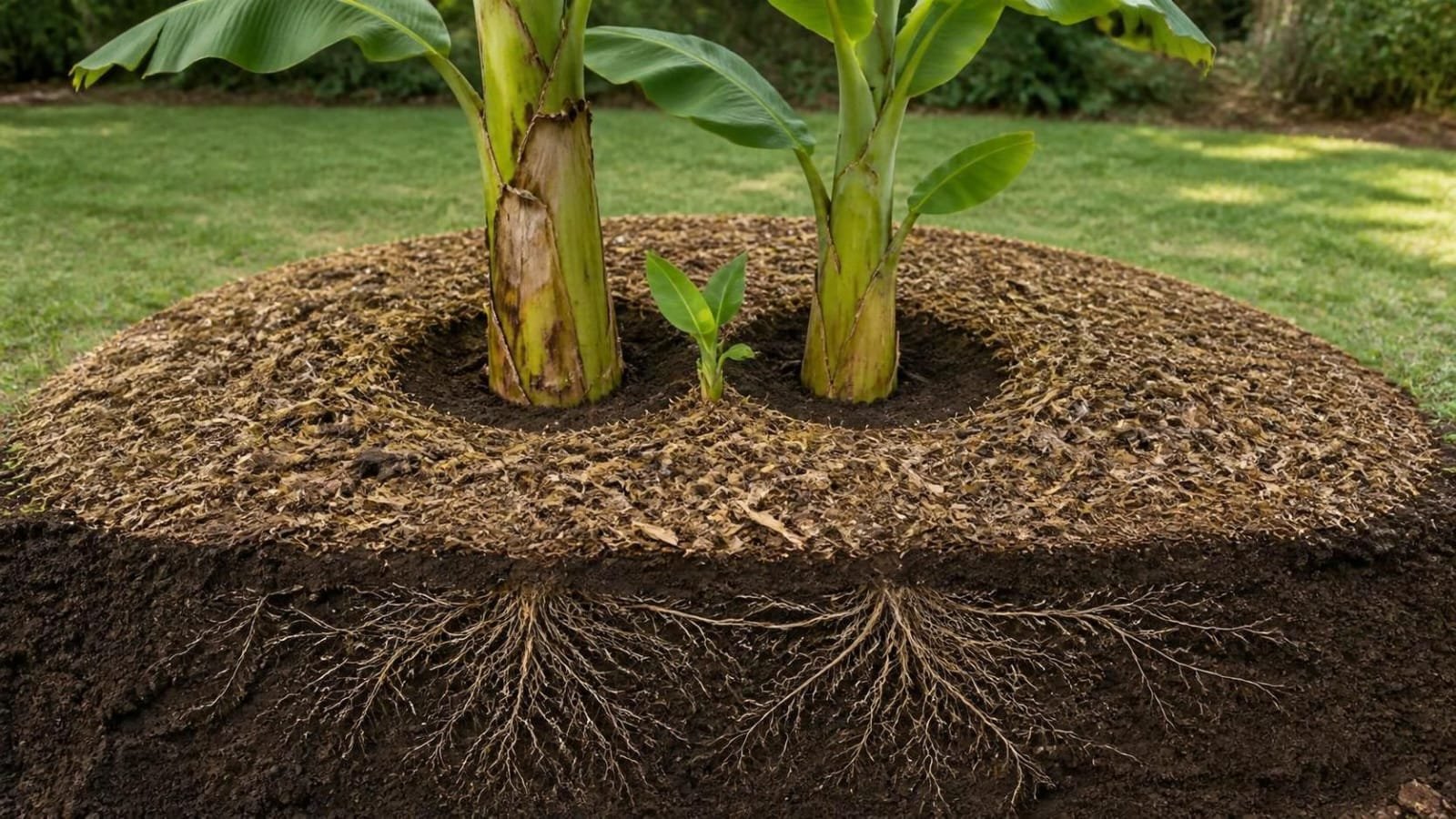
Okay, so here’s where it gets sneaky. A mature mat’s roots spread six to ten feet, and the UF/IFAS fact sheet advises against some feed-and-weed lawn products next to a mat, since they may reduce fruiting and fruit quality. How much harm a product does depends on what is in it, so check its label before using it near a banana. Sprinklers on a timer cause trouble too, since too much water too often ends in root rot.
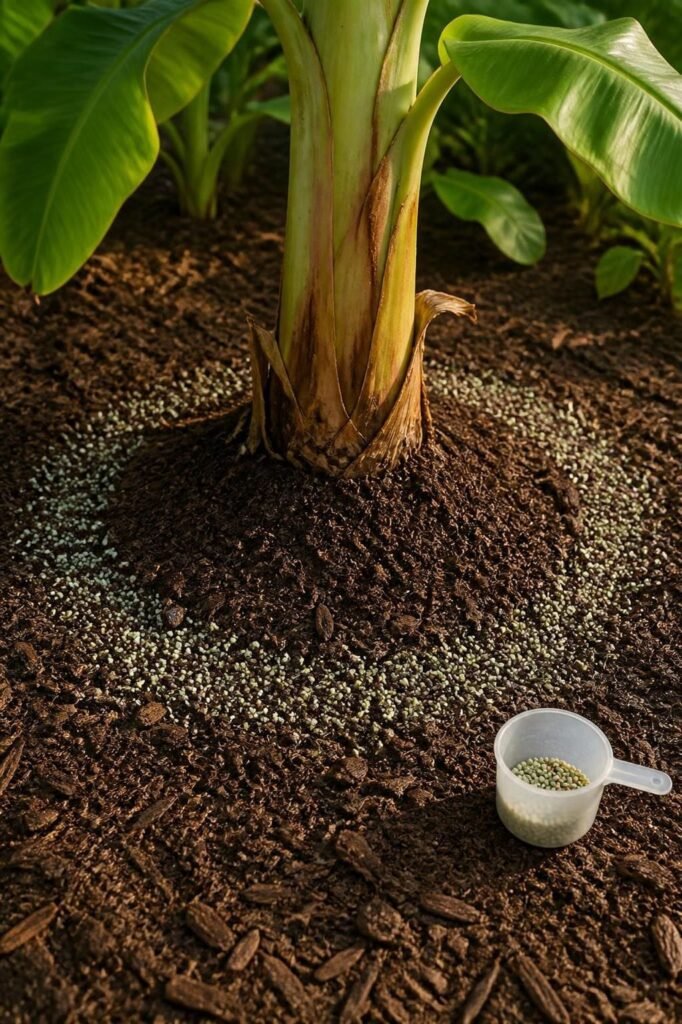
Scatter your own fertilizer across the whole root zone and keep it off the pseudostem. Mulch helps the soil hold what you add, and the materials and depth are covered in Mulch for Banana Trees. For a new plant, the fact sheet says sandy soil needs no fertilizer in the planting hole; the full sequence is in How to Plant a Banana Tree.
Best fertilizer for banana trees: what the bag should say
Look for a ratio near 3-1-6 with a little magnesium. Potassium is the main need, but a lot of it can crowd out magnesium and leave you with the yellow-middle leaves described above. UF/IFAS starts a young plant at about half a pound of 6-2-12 per application and notes that the first three to four months decide how big the bunch gets.
Organic or synthetic?
Don’t sweat the type too much. Either can work, as long as the potassium share is high, some magnesium is present, and you know how much went on. Organic sources tend to release nutrients more slowly and build up the soil, while synthetic products act faster and print a predictable analysis. Compost and manure vary a lot, so a soil test tells you what they actually added. After harvest, UF/IFAS advises chopping the old stalk into small pieces and leaving it as mulch, which returns part of what the plant took up. Banana peels get recommended online a lot, but the extension sources behind this article don’t mention them, so treat them as a bonus at most.
How often to fertilize a banana tree
Plan on a feeding about every two months in the warm season. For home plants, UF/IFAS counts roughly three applications per six months and scales each dose with age: about half a pound to a pound per mat in the first six months, rising to three or four pounds once the plant is past 18 months. Those amounts are per application, not a yearly total, and the fact sheet adds that the right amount also depends on how many stalks the clump has. They are Florida figures for sandy soil, so let your soil test and the product label overrule them. In containers, follow the label for your pot size.
Go easy on nitrogen. The NSW DPI guide says too much gives fast growth with weak stems that can buckle under the bunch, and flowering gets delayed. And honestly, a plain measuring cup beats a handful: in that guide’s test, handfuls of urea differed by about 100 percent from person to person.
Potted banana in winter: ease off the fertilizer
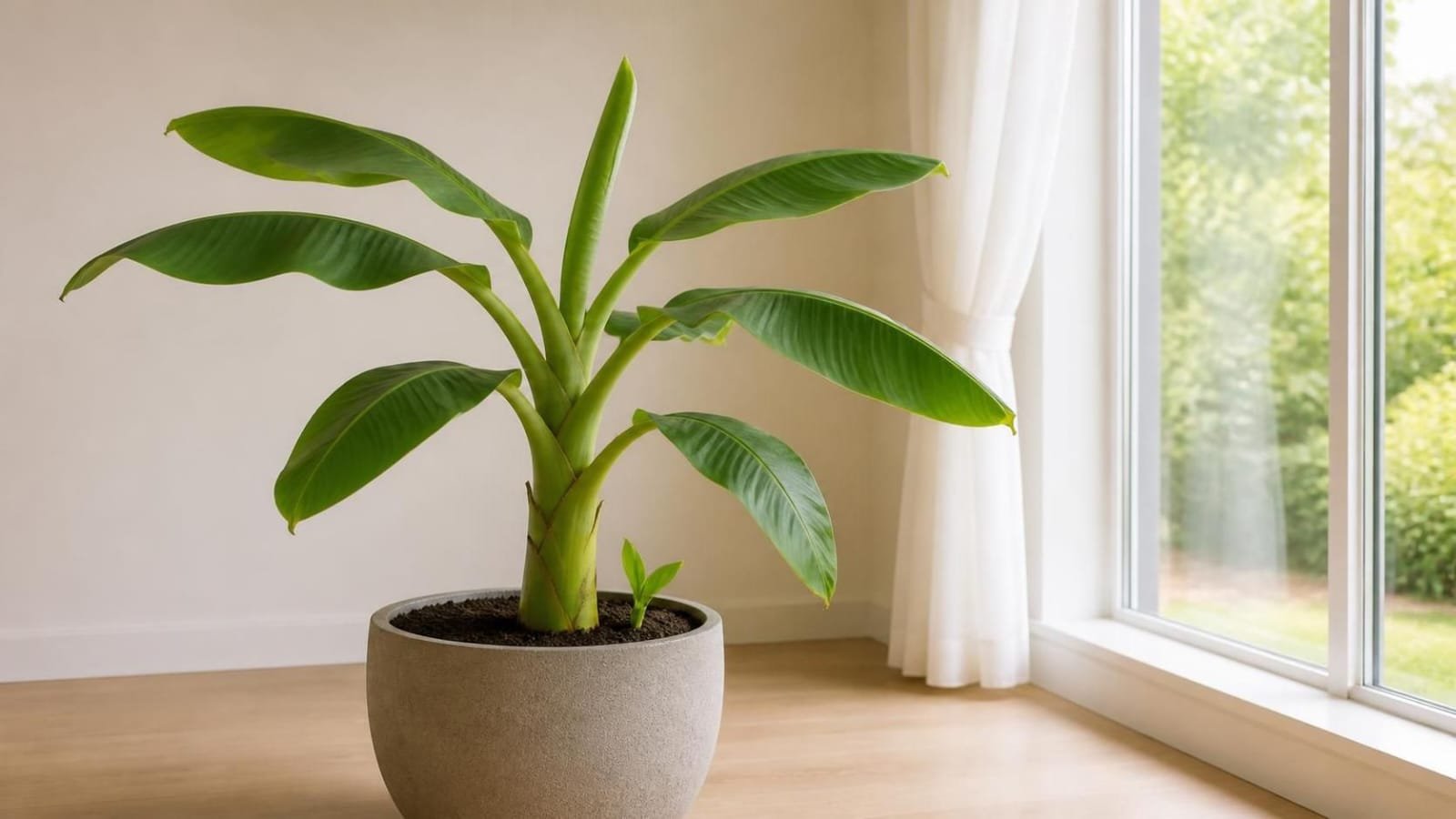
Cold slows everything underground. The NSW guide notes that banana root growth slows as soil cools and stops below about 11°C, so, depending on the variety, fertilizer can be cut back or paused for the winter. In a pot, leftover fertilizer can build up as salts, and UF/IFAS lists yellow, dying leaf margins as a sign of salt damage. Container setup is in Banana Trees in Pots.
Judge the plant by its newest leaf, since old yellow leaves won’t green back up. Once one is fully brown, Banana Tree Pruning and Brown Leaves explains when to cut it off.
3 thoughts on “Banana Tree Fertilizer: What to Use and When to Feed”