
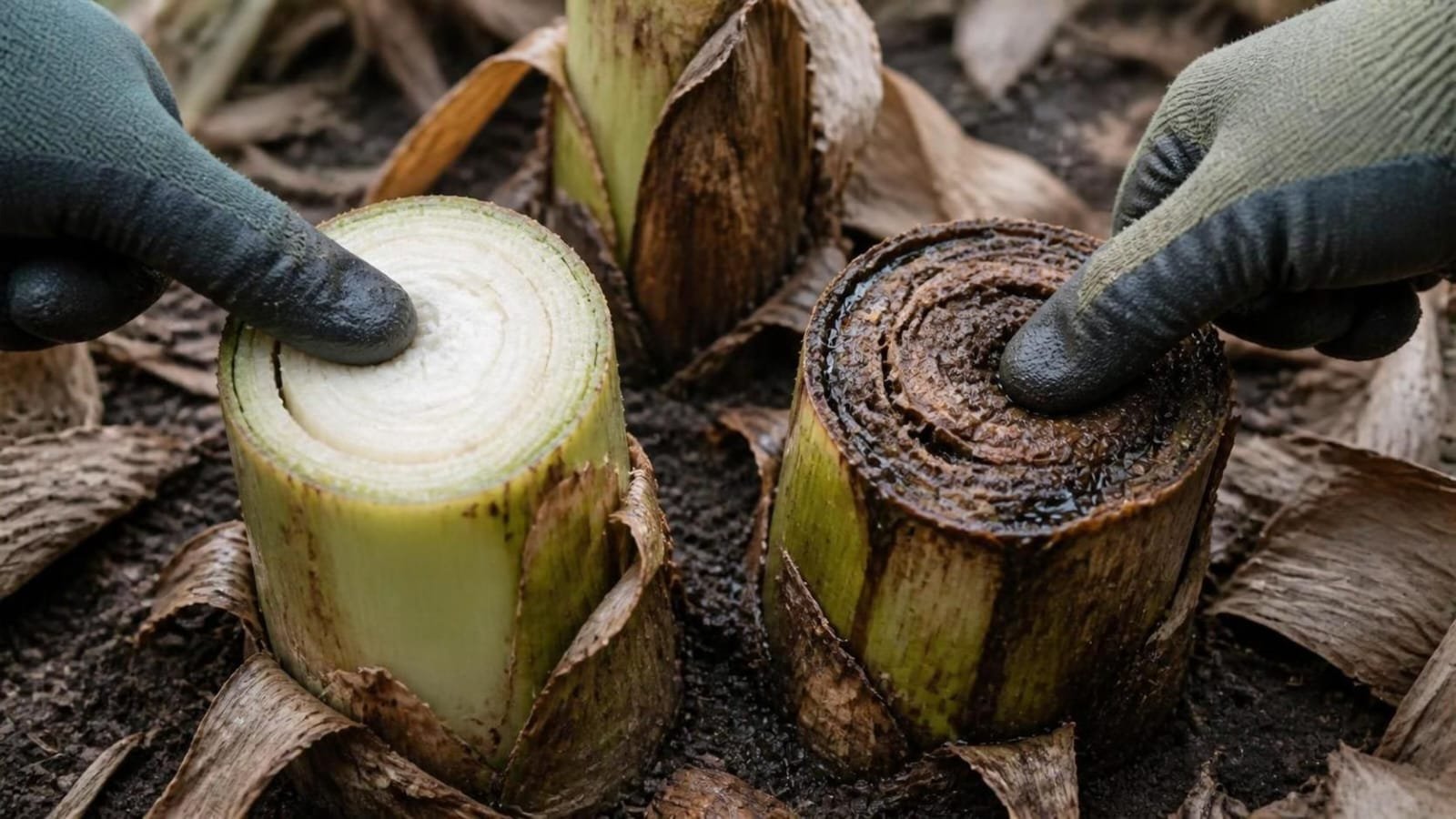
The best banana tree soil is deep and loose. It drains fast, holds a little moisture, and is full of organic matter. Aim for a pH between 5.5 and 7.0. Drainage matters most. Stunted, yellow plant? Suspect soggy soil first.
University of Florida extension specialists rank drainage as the top soil factor for bananas. They also link soil that stays wet, even without flooding, to stunting and yellow leaves. Before you buy anything, find out what your soil does.
Test Your Banana Tree Soil Drainage First
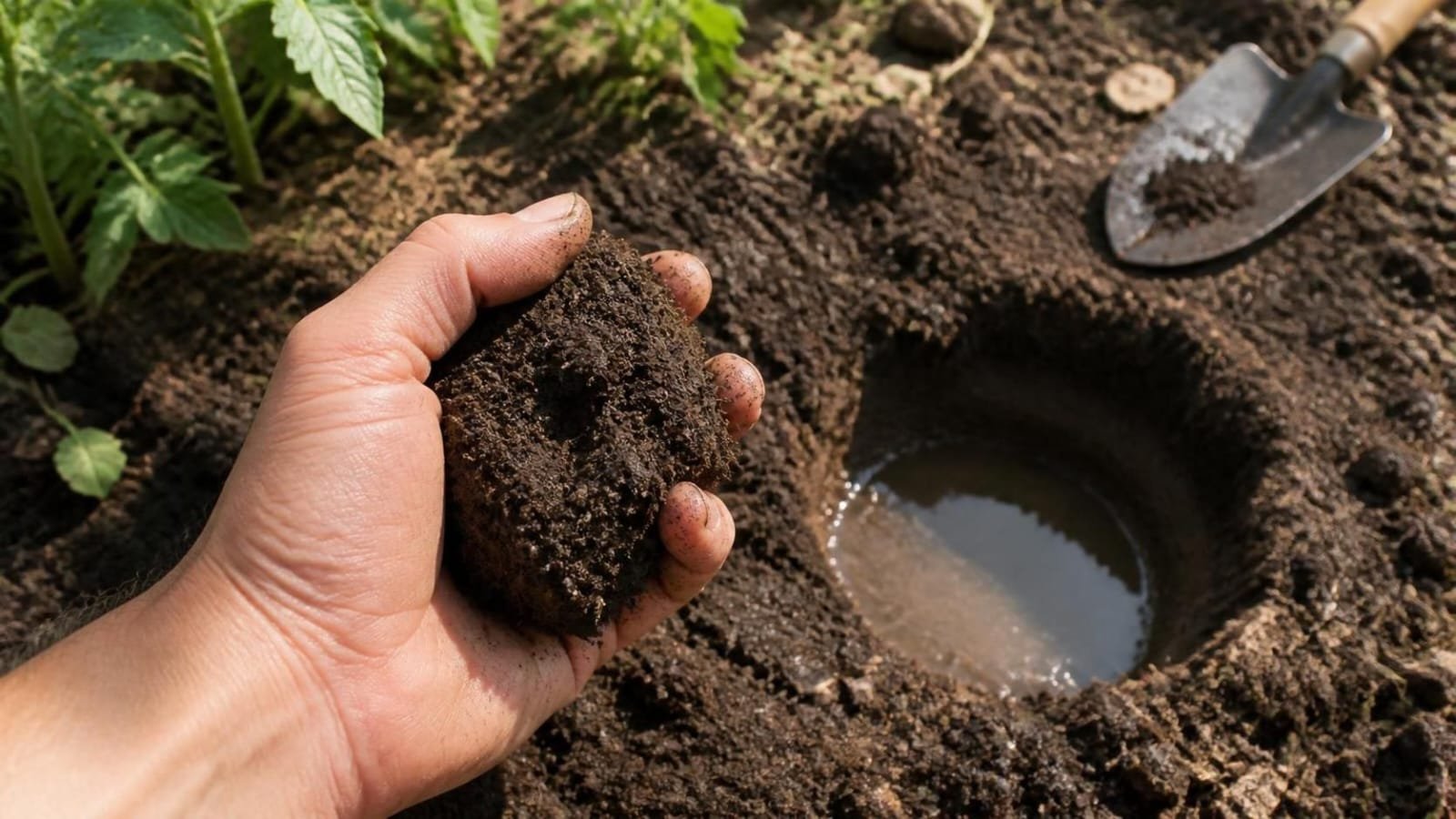
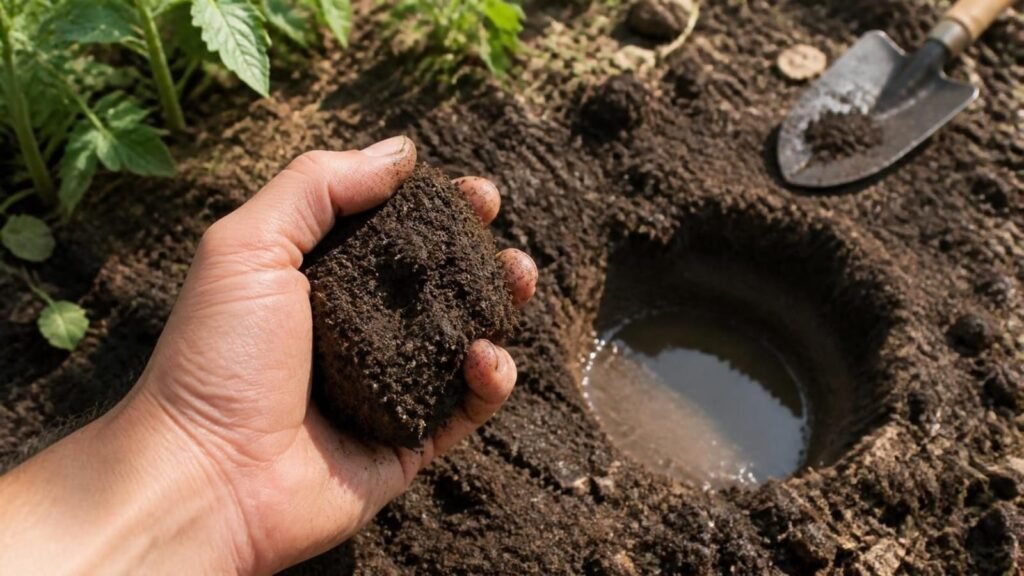
Most of us grab potting mix first. Don’t. Dig a hole about a foot deep where the tree will go. Fill it with water and let it drain. Then fill it again. A common rule of thumb: if water is still standing the next day, the spot is too wet. That points to a site or drainage problem, and amending only the planting hole may not solve it.
Now the squeeze test. It’s a quick hint about texture and moisture, not a verdict. Grab a handful of moist soil and close your fist. A clump that holds but crumbles when poked is loamy. A slick, sticky ribbon is a dead giveaway for clay. If it falls apart the second you open your hand, it’s sand.
Best Soil Fixes for Clay, Sand, and Compacted Ground
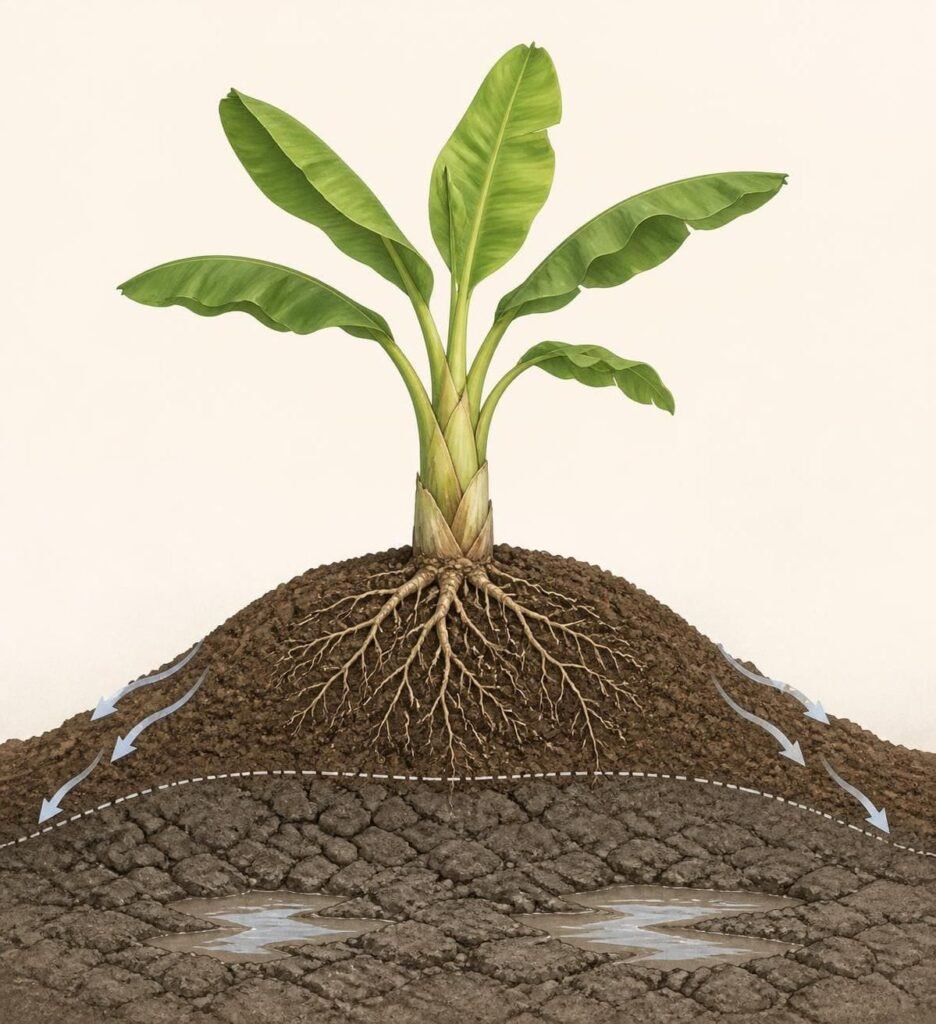
Heavy clay or a wet spot
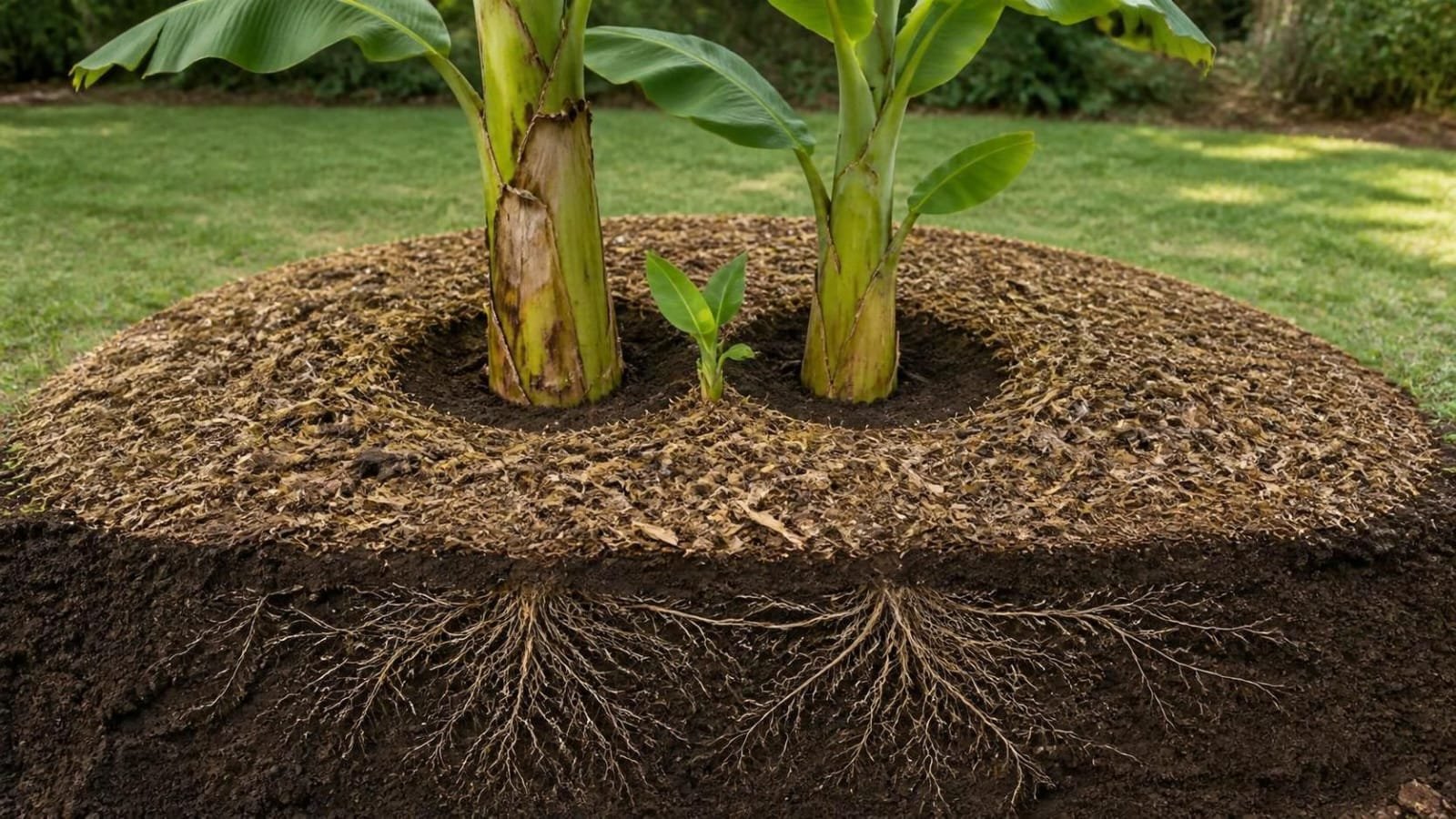
The instinct: dig a big pit, fill it with compost. Don’t. In clay, that pit turns into a bathtub. The same guide, written for Florida yards, suggests a raised mound of native soil instead, 2 to 3 feet high. That fits spots where the water table is shallow and heavy rain brings occasional flooding. Blend any compost into the soil you dug out. Don’t layer it in. Our guide on how to plant a banana tree covers hole size and depth.
Sandy soil
Sandy soil is the opposite. Water and nutrients race through. Compost helps, but mulch does more of the daily work. A few inches of bark or wood chips slows evaporation and feeds the soil as it breaks down. See our page on mulch for banana trees.
Shallow or compacted ground
Banana roots travel sideways. A Brazilian study of irrigated banana plantations compared shallow and deeper soils. Roots did better in the deeper soil, while the shallow ground was harder to penetrate. Don’t limit soil improvement to the planting hole. On hardpan or shallow ground, loosen a wide area. Over solid rock, extension advice is to break through with a digging bar or auger.
What pH Do Banana Trees Need?
Sources differ here, from 5.5 to 6.5 up to 5.5 to 7.0, so aim for the middle. A cheap test kit or a local extension soil test will show where you stand. Here’s the kicker: pH trouble, soggy roots, hunger, and salty soil all cause yellow leaves. A description can’t tell you which. Rule out drainage, then test. Only then does feeding make sense. Our banana tree fertilizer guide picks up from there.
Brown, crispy leaf edges are a separate check. Salty soil, drought, dry wind, and cold can all cause them. A new mix fixes none of those. See our notes on banana tree pruning and brown leaves.
Best Soil for Banana Trees in Pots
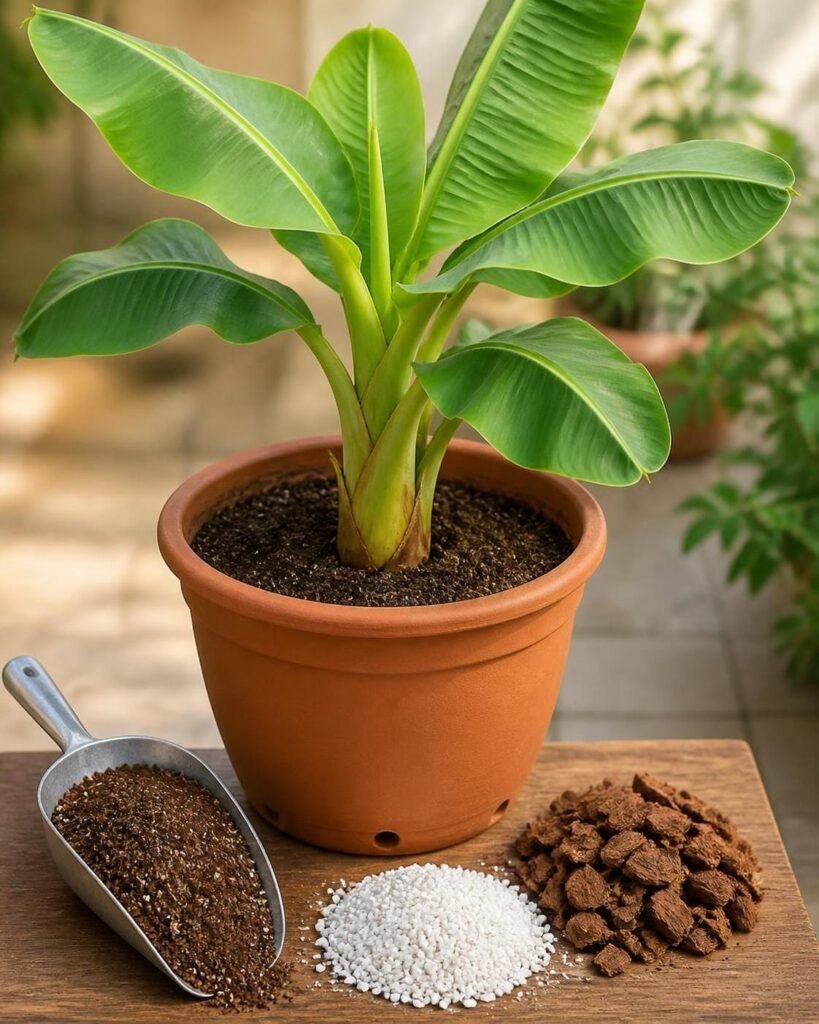
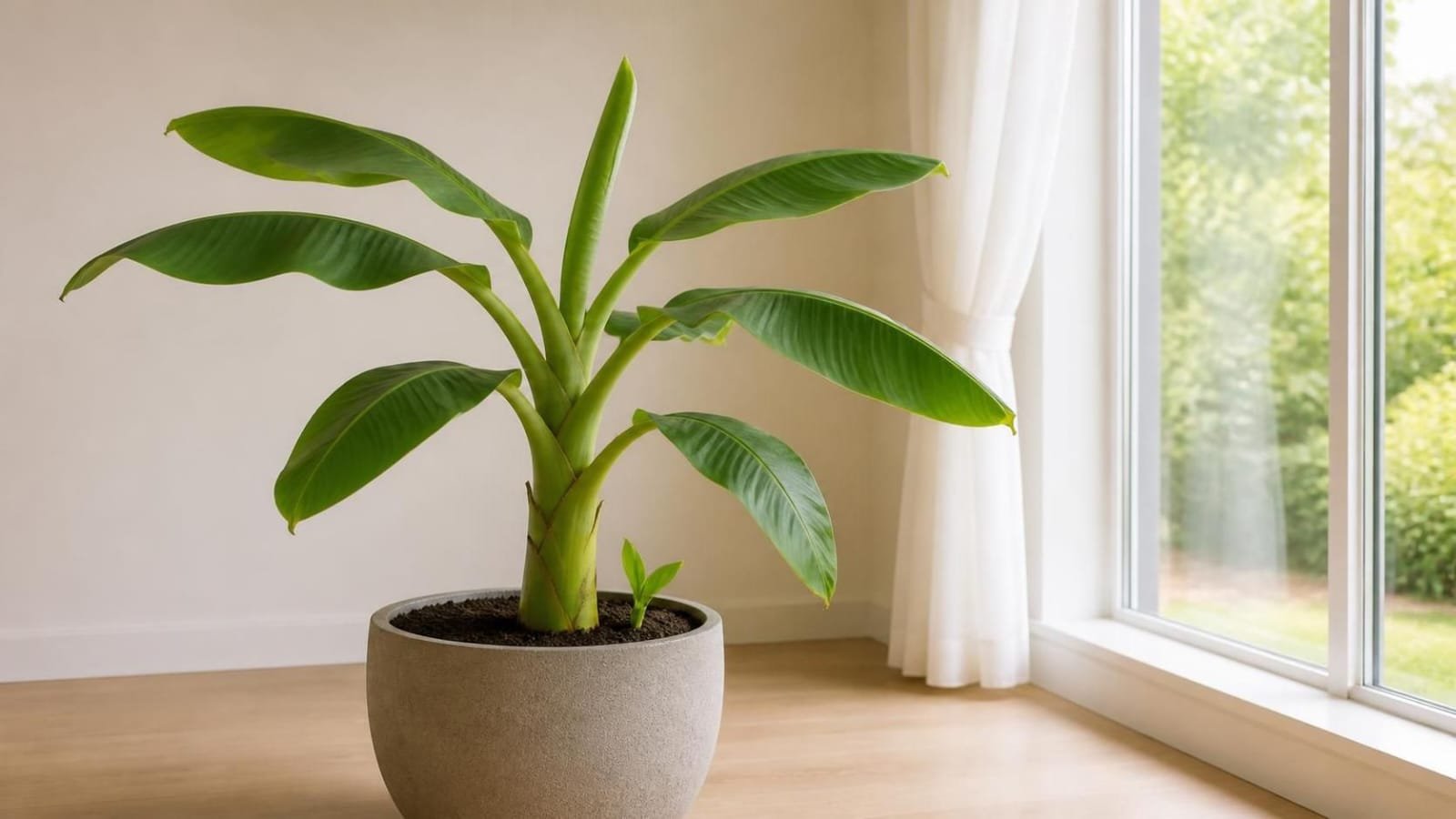
Garden dirt packs down in a container and stays wet. Use a good potting mix instead, and open it up with something coarse, like perlite or pine bark. Drainage holes aren’t optional. Pot size and repotting are covered in our guide to banana trees in pots.
Keeping the Soil Working
Picture a banana planted in a lawn bed with a timed sprinkler. The leaves yellow. The owner adds fertilizer. The plant slides further, because the roots sit in constantly wet soil. If that sounds familiar, you’re not alone. Soil and watering have to be solved together, so our banana tree care guide is worth reading next.
Start with the water test and the squeeze test. Those two tests tell you most of it. Fair enough if the results still leave you guessing. A local extension office can confirm the rest.
4 thoughts on “Banana Tree Soil: Best Mix, pH and Drainage Fixes”