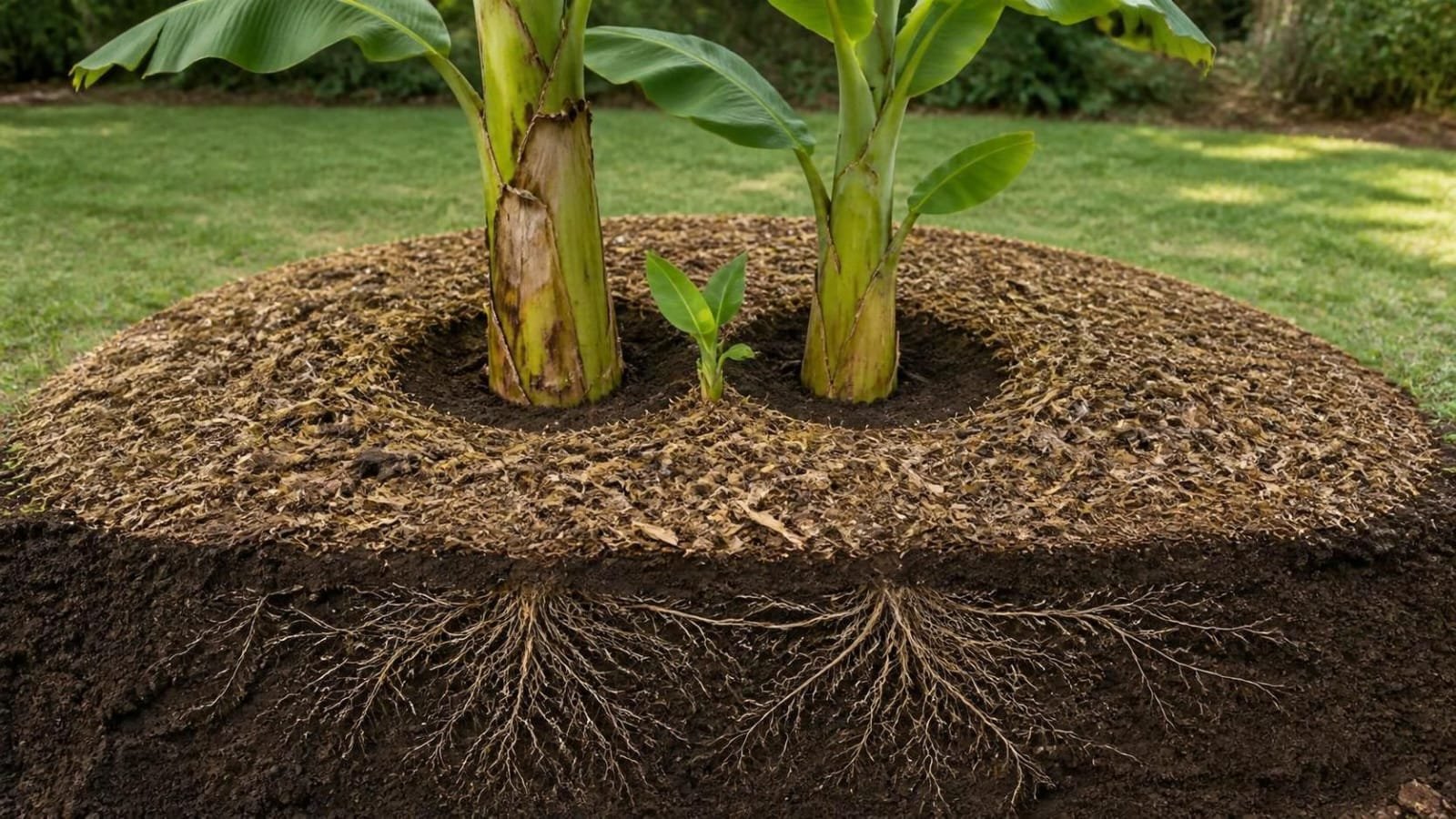
For a home garden, the best mulch for banana trees is usually a coarse organic material. Think wood chips, bark, straw, shredded leaves or chopped banana leaves. Spread it 2 to 6 inches deep in a wide ring around the tree. Pull it back about 3 inches from the pseudostem so the base can breathe. Mulch holds moisture, keeps weeds down and feeds the soil slowly as it rots. It won’t fix a soggy bed, though. If the soil is already waterlogged, sort out the drainage first. A constantly wet layer around the base raises the risk of rot.
Those numbers come with strings attached, and the strings are where most people slip up. So let’s walk through them in the order you’d actually check things.
Check the Soil Before You Mulch Banana Trees
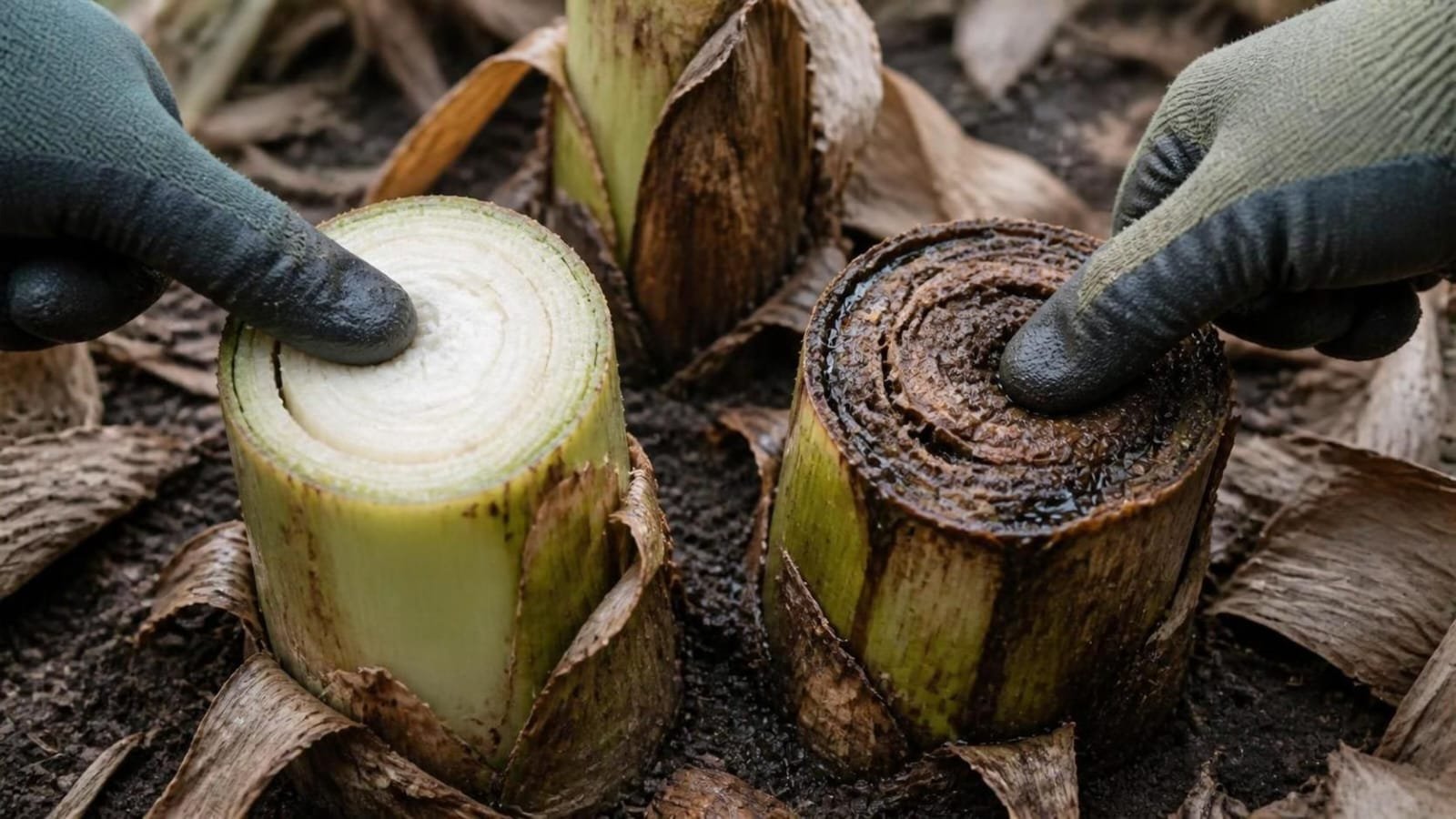
Most of us grab a bag of mulch the minute a banana tree looks tired. Hold off for ten minutes. Stick a trowel in beside the tree and dig down about four inches. Squeeze a handful of soil. If water seeps out between your fingers, or it smells sour, mulch isn’t your fix.
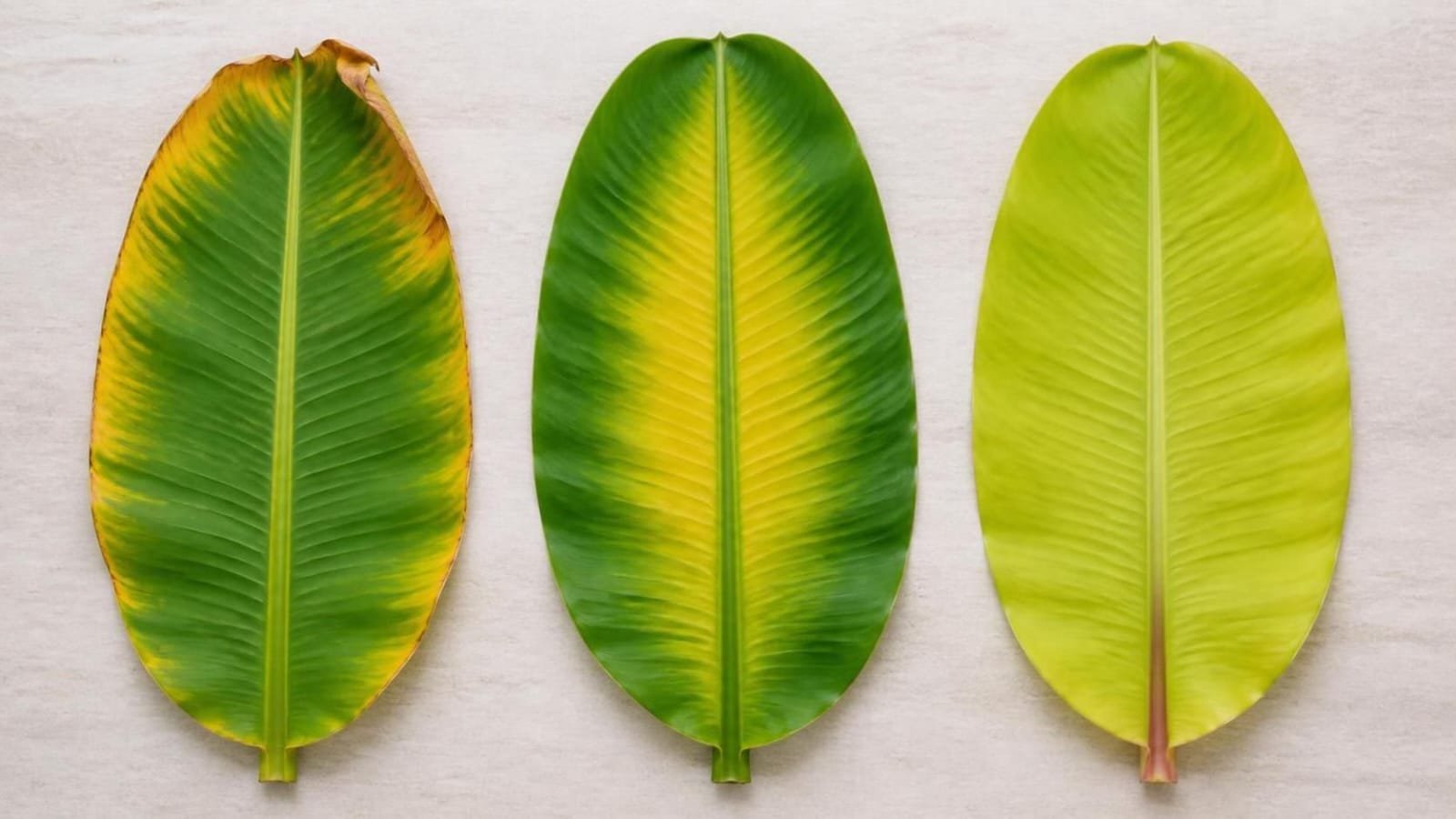
Bananas hate wet feet. Florida extension specialists say soil that stays wet, even without flooding, leads to stunted plants, yellow leaves and lower yields. They recommend raised beds where the water table is high or the soil saturates often. That’s all in the UF/IFAS banana fact sheet. Here’s a common scenario. A banana looks pale and stalled. The owner piles on mulch during a rainy stretch. The leaves get yellower, because the new layer slows evaporation from soil that was already too wet. Fix the drainage first. Our guide to banana tree soil covers what bananas want under their roots.
If the handful crumbles and feels cool and damp, you’re good to go. If it’s dry a few inches down, water deeply first. Mulch holds moisture in. It can’t make any.
Best Mulch for Banana Trees: What Works and What to Skip
Banana trees grow fast and drink a lot. Their roots are fibrous and spread wide. So the right banana tree mulch has to be coarse enough to let air and water through. It also has to be organic, so it feeds the soil as it breaks down. The table compares the usual options. Think of it as practical guidance, not hard rules.
| Material | Best for | Watch out for |
|---|---|---|
| Wood chips or bark | Everyday ground cover | A standard choice for home banana trees. Coarse enough to drain. A deep, packed pile can stay wet. |
| Straw or paddy straw | Light cover and winter insulation | Easy to spread and refresh. It blows around in wind. It can carry weed seed. |
| Shredded leaves | Free, soil-building cover | Shred them first. Whole wet leaves mat down into a slippery lid. |
| Chopped banana leaves and old stalk | Recycling what the tree produces | Chop small. Read the weevil note below first. |
| Compost or well-rotted manure | Feeding the soil | Use a thin layer under a coarser mulch. It feeds more than it protects. |
| Fresh grass clippings | Thin top-ups | A thick layer turns into a wet, matted cap. Mix with something drier. |
| Black or clear plastic, or white net | Warming soil and saving water in commercial plantings | Doesn’t feed the soil. It’s a grower’s tool, not a soil builder. |
Two rows deserve a closer look. First, straw. In an Indian trial on tissue-culture Grand Naine bananas, paddy straw gave the best growth and bunch figures of the mulches compared. Average bunch weight was 23 kg. The trial ran in a hill region with its own soils and rainfall. Take it as encouraging, not universal.
Second, plastic. You’ll hear that anything inorganic has no place around bananas. For a garden bed, fair enough. Field research is a bit more mixed. In a Turkish field trial, Dwarf Cavendish grown under clear plastic or white net mulch gave heavier bunches than bare soil. That was 26 and 28 kg against 24 kg. White net also cut the time from shooting to harvest by roughly nine days. The site sat outside the main banana-growing zones, where clear plastic is already used to warm the soil and save water. The authors also pointed out that clear plastic restricts water infiltration. That’s why they tried a rain-permeable net. In a home garden, an organic mulch holds moisture too. Unlike plastic, it feeds the soil as it rots. That trial didn’t compare the two types.
Banana Leaves and Old Stalks as Mulch
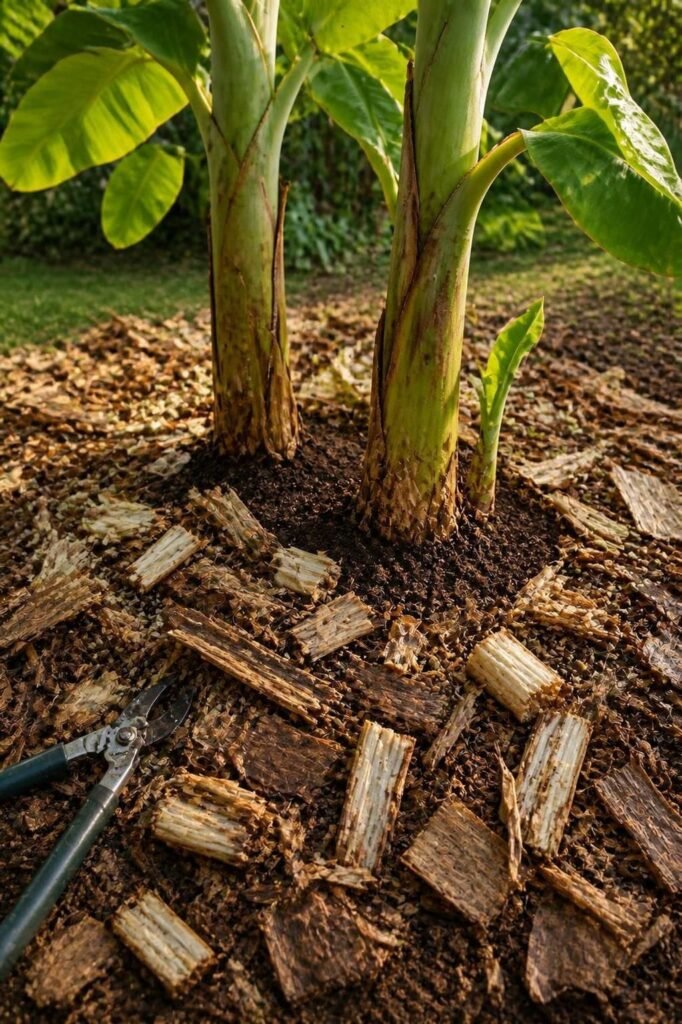
A banana tree makes its own mulch all year. Brown leaves come off. After a stalk fruits, it gets cut down at the base. Lay the leaves around the base. Chop the stalk into small pieces before you spread it. Our guide to banana tree pruning and brown leaves explains which leaves to take off and which to leave alone.
None of this is new. In Embu County, Kenya, growers spread farmyard manure around their banana trees first. Then they cover it with cut banana leaves. They repeat the job about every six months, according to the WOCAT technology database. The leaves protect the soil surface. The manure underneath feeds the roots.
Does Mulch Attract Banana Weevils?
Here’s the kicker. Plenty of growers worry that mulch invites banana weevils, and the research partly backs them up. In a three-year trial in banana fields run by the International Institute of Tropical Agriculture, mulched plots had higher weevil densities and more plant damage than unmulched plots. Damage was the same whether the mulch touched the pseudostem or sat about 3 feet away. Weevil numbers did stay higher where mulch reached the base for most of the trial. Even so, the researchers concluded that better soil water and higher leaf potassium outweighed the damage.
Two cautions. That work was done in sub-Saharan African banana fields, so your results may differ. And the banana borer lays its eggs at the base of the pseudostem. A heap of rotting stalk piled right there is best avoided. Extension advice for the borer includes grinding up or removing old pseudostems. That’s one more reason to chop stalks small. Every so often, lift the mulch at the base and look for tunnels or gnaw marks. The larvae bore into the pseudostem and rhizome. A related pest, the sugarcane weevil, causes similar damage. Checking tells you whether you have a problem. It isn’t control. If you find damage, ask your local extension office for current control advice.
How to Mulch a Banana Tree: Depth, Width and Stem Gap
Order matters here more than you’d think.
- Check the soil is damp. Not dry, not soggy. Mulch seals in whatever moisture is already there.
- Pull weeds by hand. Skip systemic weedkillers on the trunk area. Bananas can decline or die from them.
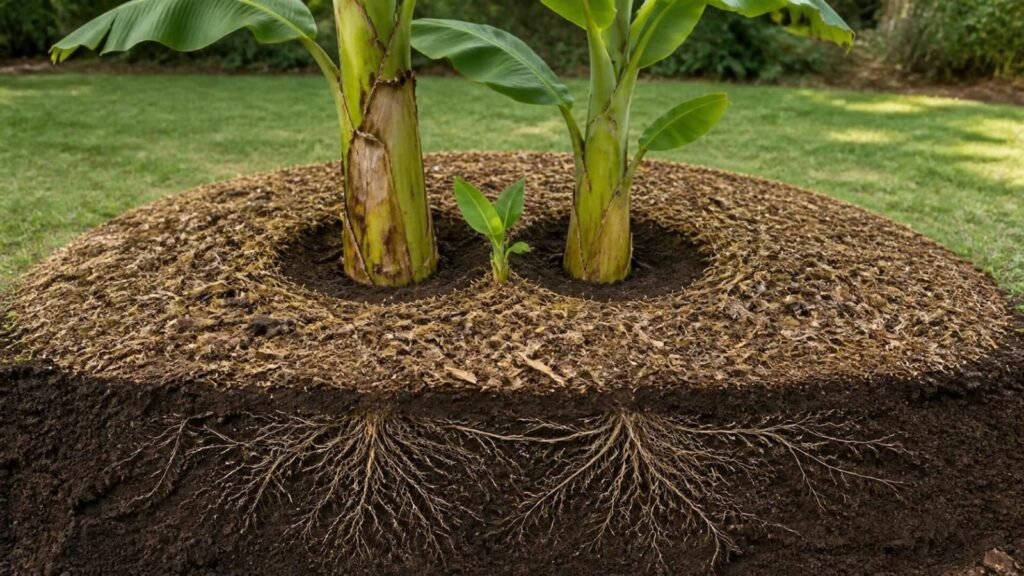
- Spread 2 to 6 inches. That’s the range Florida extension recommends in the UF/IFAS fact sheet. They suggest bark, wood chips or something similar, spread outward from the pseudostems. Keep a weed-free ring 2 to 6 feet wide.
- Leave a gap at the stem. The Royal Horticultural Society advises mulching onto damp soil. It also advises leaving a gap of about 3 inches (7.5 cm) around the base of the stem to prevent rotting. Mulch piled against the pseudostem keeps the base wet. That’s why the gap matters.
- Go wider than looks necessary. A mature banana tree’s roots spread several feet beyond the pseudostems. Widen the ring each season as the plant grows. A neat little circle at the base won’t cover it.
- Settle light materials. Water straw and leaves in lightly so they stay put.
So how thick is thick enough, within that 2 to 6 inch range? Here’s a rule of thumb. Go 2 to 3 inches on heavy soil that stays damp. Go 3 to 4 inches on average garden soil. Go up toward 6 on fast-draining sandy ground or through hot, dry spells. That split is practical guidance, not a measured rule.
When to Mulch Banana Trees and How Often to Top Up
Mulch a new sucker right after planting, while the soil is still freshly watered in. Our guide on how to plant a banana tree covers the planting steps that come first. After that, spring is a natural time to refresh the layer, as growth takes off. Top up when you can see soil through it. That happens sooner with straw and leaves than with coarse chips.
Fertilizing Mulched Banana Trees
Banana trees are heavy feeders, potassium especially. A thick layer can make fertilizer awkward to place. So rake the mulch back. Scatter the fertilizer on bare soil. Then pull the mulch back over. Follow the product label for rates. Our banana tree fertilizer guide covers what to feed and when. You may have heard that wood chips rob plants of nitrogen. That worry applies mainly when chips are dug into the soil. Left on the surface, they generally have little effect on feeding.
Mulch for Banana Trees in Winter
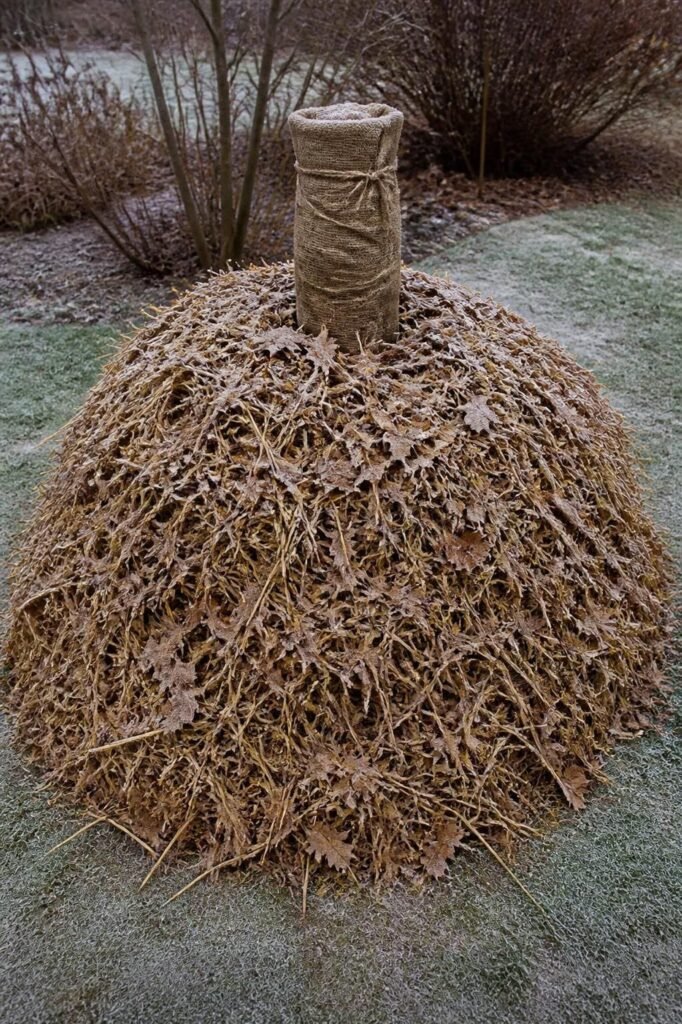
Everything so far is growing-season mulch. Winter mulch for banana trees has one job. It keeps the ground and the rhizome from freezing. That takes far more material than a summer layer. Shape matters as much as depth.
The nursery Logee’s describes the goal for hardy banana (Musa basjoo) as an insulating mound. It needs to be high enough and wide enough to keep the ground from freezing. Build it up as well as out, so cold can’t creep in toward the middle. The New York Botanical Garden’s Plant Talk blog gives similar advice for bananas left outdoors. Pile straw and leaves well beyond the width of the crown. Dry straw and leaves are the usual picks. A waterlogged pile defeats the purpose. Mulch over the roots is one layer of protection, not the whole job. The same post also describes wrapping the pseudostem for tall bananas left in the ground over winter. Whether mulch alone is enough depends on the variety and your lowest winter temperature.
How thick? There’s no honest single answer. It depends on the variety. It depends on how cold winter gets and how long the cold sticks around. Check what your local extension office recommends for overwintering bananas where you live. Once hard frost is past, rake the pile back. That lets the soil warm up and new shoots push through. Our banana tree care guide covers the wider seasonal routine.
Mulch for Banana Trees in Pots
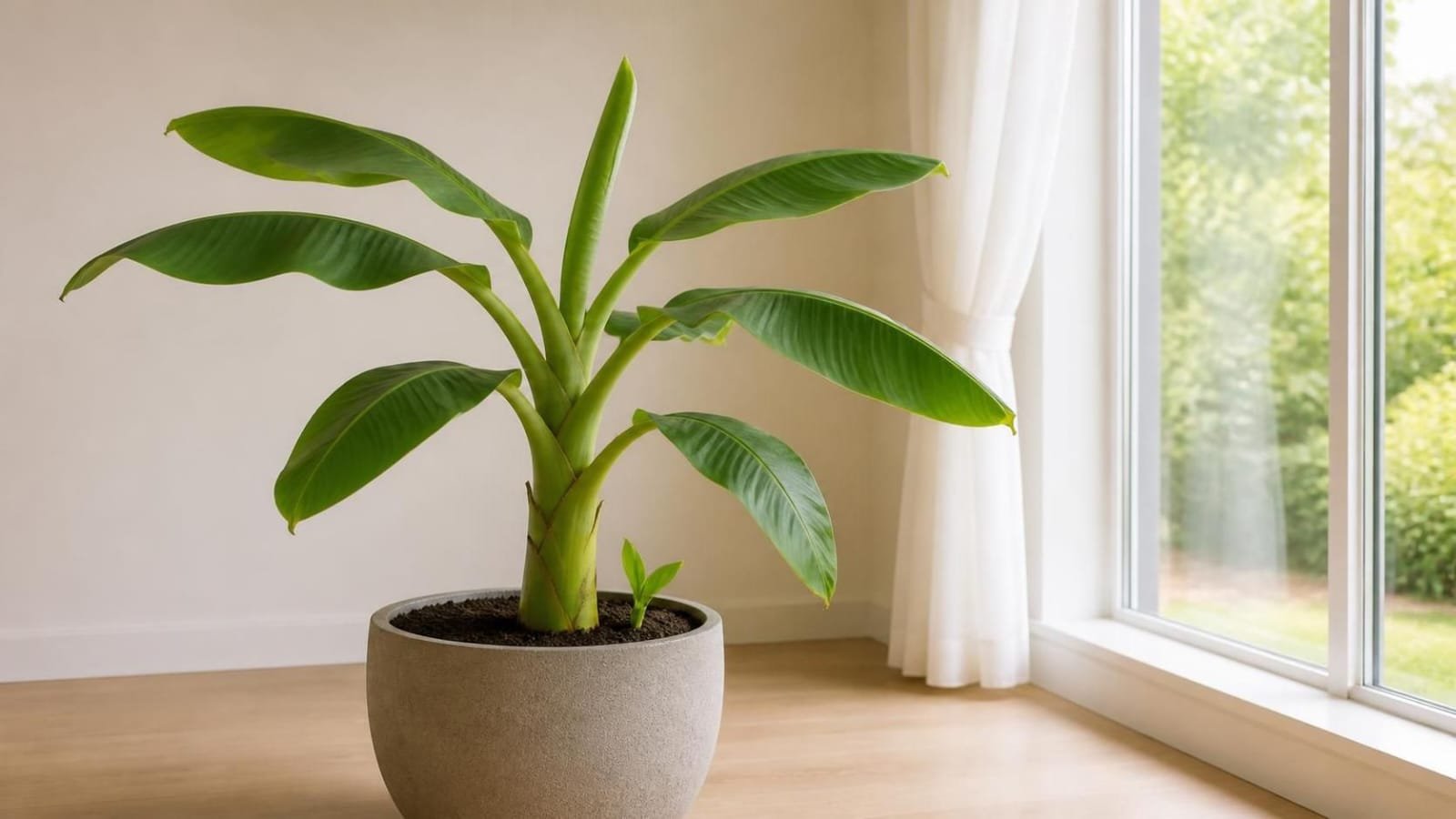
Same idea, smaller scale. Add a thin layer of bark or shredded leaves, an inch or two. It slows drying of the potting mix. Keep it clear of the stem to avoid a damp collar. In cold weather, a pot’s roots are exposed on all sides. The RHS suggests wrapping the container itself in bubble wrap, fleece or burlap. Our guide to banana trees in pots covers container size, watering and the rest.
One last limit. Mulch improves conditions. It won’t fix poor nutrition, root damage or pests, and a written description can’t tell those apart. Say a banana tree stays stunted even with good drainage, steady water and fresh mulch. Take a few leaves and a look at the roots to your local extension office. And next time you top up, lift the mulch at the base and check the pseudostem for tunnels or gnaw marks.