
Moonglow juniper is one of the best-known silver-blue upright junipers in the trade. It’s easy to like. It’s also easy to plant wrong, usually because the size on the tag isn’t the whole story.
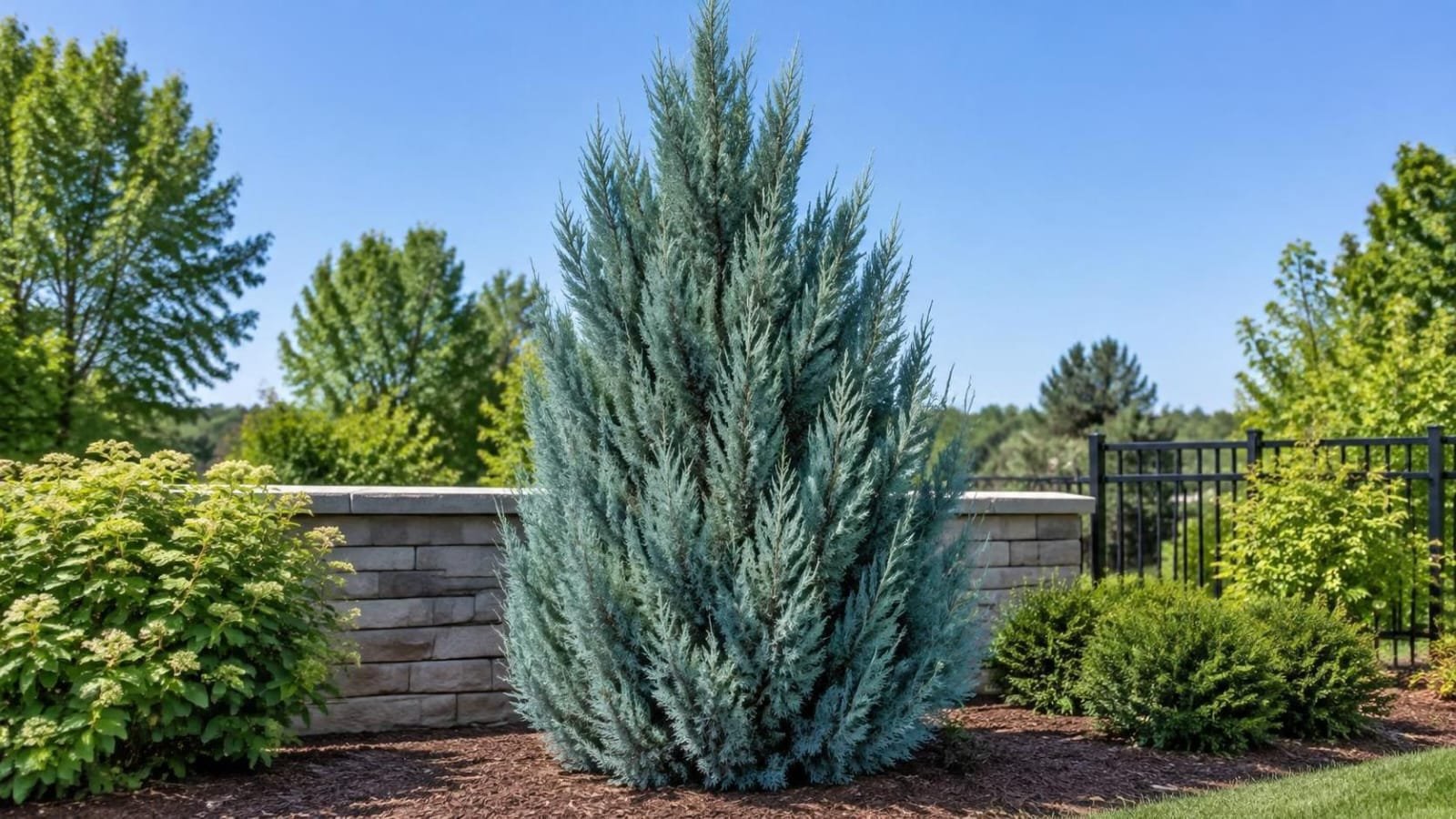
Moonglow juniper is a cultivar of Rocky Mountain juniper (Juniperus scopulorum). It forms a narrow, upright pyramid with silvery-blue foliage. Most nursery plants reach 15 to 20 feet tall and 6 to 8 feet wide. It grows at a moderate pace in full sun and well-drained soil. It does not tolerate wet roots.
What Moonglow juniper is
Moonglow is a cultivar of Juniperus scopulorum, the Rocky Mountain juniper. It came from a seedling selected in the 1970s by Hillside Nursery in Lehighton, Pennsylvania. The American Conifer Society describes it as a narrow, upright pyramid with showy silvery-blue foliage. Nurseries also list it as juniper Moonglow or moon glow juniper, so check both spellings when you shop.
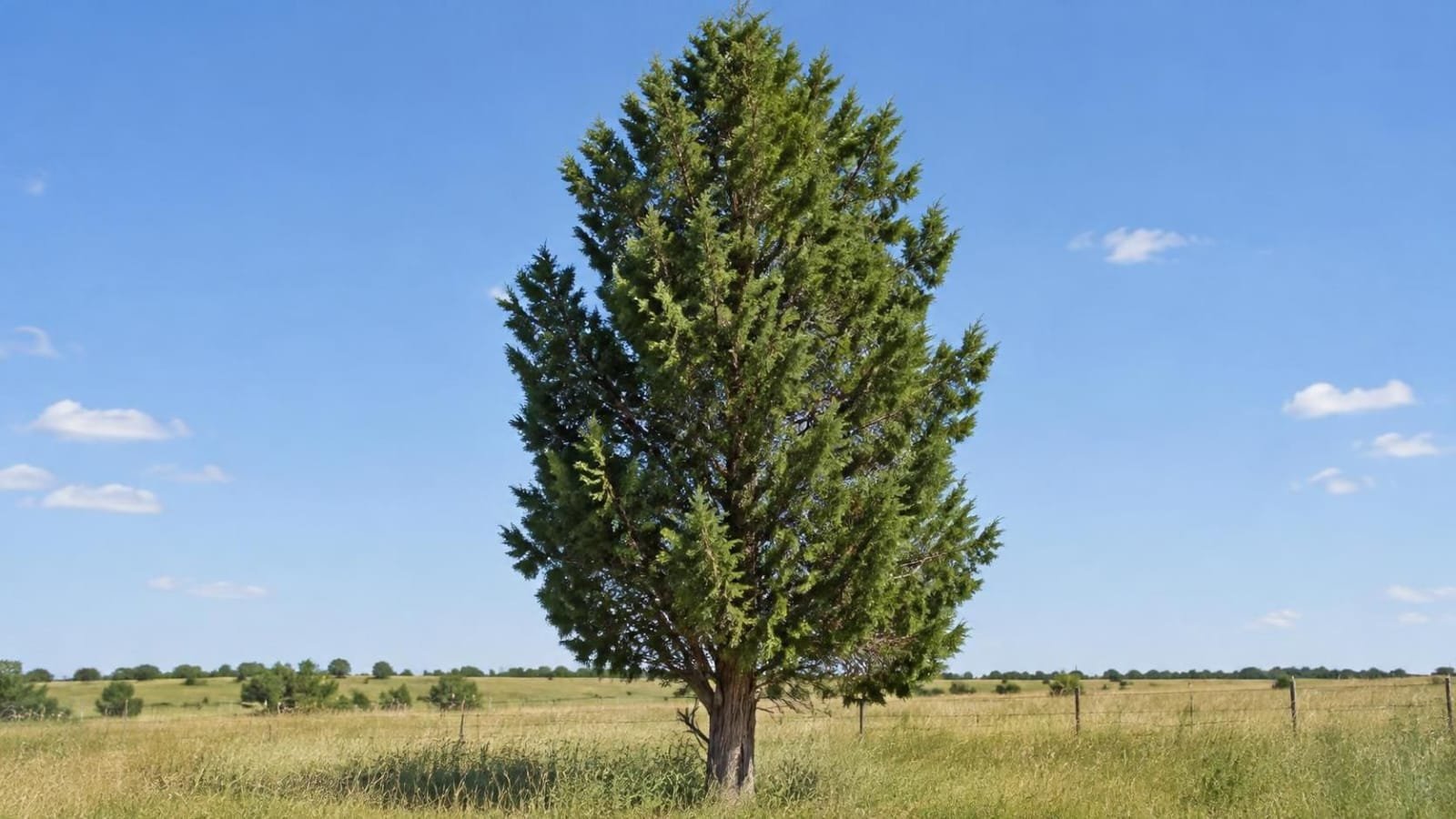
The species is native to the western United States and Canada. NC State Extension notes that it is often confused with eastern redcedar. If you’re trying to tell them apart, the Juniperus Virginiana guide is the right place to start.
How big it gets and how fast it grows
The sources don’t agree on size or speed. The table shows the spread.
| Source type | Mature height | Mature width | Growth note |
|---|---|---|---|
| Cultivar profile | About 20 feet after 10 years | About 8 feet | Over 2 feet a year, listed as large |
| Nursery listings | 15 to 20 feet | 4 to 8 feet | Moderate |
| Species profile, extension | 30 to 40 feet | 3 to 15 feet | Slow |
| Species profile, extension (second) | 25 to 45 feet | Not listed | Slow |
Plan for 15 to 20 feet tall and 6 to 8 feet wide. That’s the range most nursery listings use. Treat the faster growth in the cultivar profile as a best case, not a promise.
Before you buy
Plan for a full-size upright tree, not a dwarf. Give it full sun and soil that drains. Check the zone listing for your area, because sources agree on zone 3 as the cold limit but differ on the warm end, from zone 7 to zone 8.
Foliage and winter color
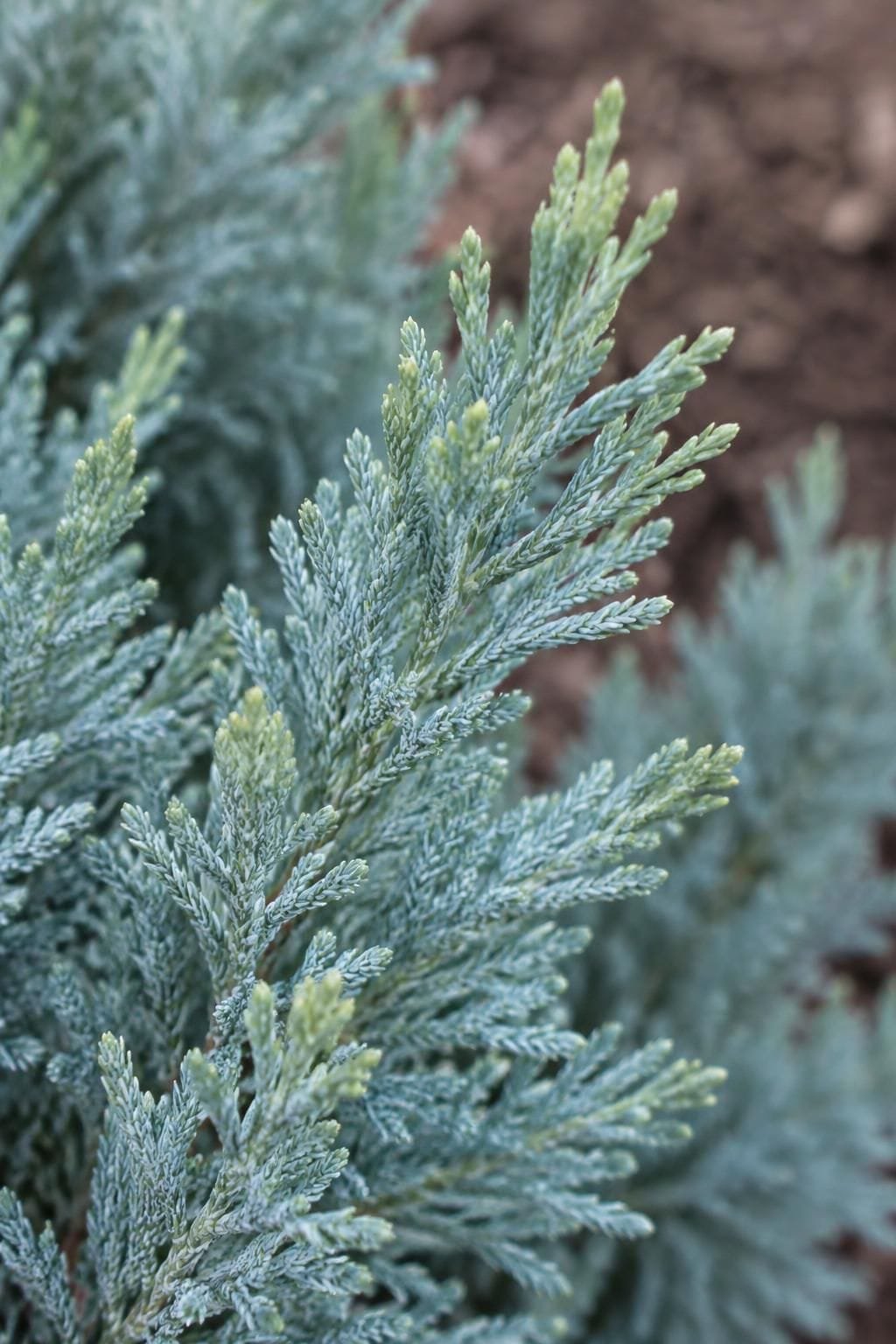
The foliage is scale-like and silvery blue in summer. Winter color is less certain. Some nurseries say it turns grayish green when the weather turns cold. Others say it holds its color through winter. Either way, a change in color is not a sign of trouble.
Planting Moonglow juniper
Give it full sun. NC State lists partial shade as acceptable, but full sun is the safer target.
Drainage matters more than anything else. The species dislikes wet roots, but NDSU says it likes moist soil once established and tolerates a wide range of soils, including salty and high-pH ground. Aim for moist but never soggy.
Plant it at the same depth as the pot. Keep the root ball from drying out during the first season. For a screen, space plants about their mature width, roughly 6 to 8 feet, and adjust for the variety you choose.
Care after planting
Water new plants through their first season. After that, Moonglow handles dry spells well. NDSU describes Rocky Mountain juniper as very drought tolerant once established.
Feed lightly, if at all. Junipers rarely need much fertilizer. If growth looks weak, use a light, balanced feed in early spring and avoid heavy nitrogen.
Prune only when you need to, and do it in early spring. Keep cuts light. Don’t cut into old, bare wood, because it may not regrow.
Ice can damage the branches. When heavy snow piles up, knock it off the branches when you can.
Pests and diseases
Watch for aphids, bagworms, twig borers, webworms, scale, and spider mites. Blights can show up after wet springs. Root rot follows poorly drained soil.
Cedar-apple rust is the disease most people ask about. NDSU Extension notes that the rust rarely causes serious damage to Rocky Mountain juniper, which is good news if you have apple trees nearby.
Where Moonglow fits in the landscape
Moonglow works well as a vertical accent, a screen, or a row along a fence line. Nursery guidance points to screens, hedges, and windbreaks as its main jobs. It also works as a single specimen or a corner plant along a street. Nursery guidance also suggests a topiary form in a container for an entryway. Use it where the silver-blue color will show against darker green plants. Its narrow pyramid suits tight spots where a broad shrub would crowd its neighbors. For a narrow column with a different look, see the Taylor Juniper guide.
Several other narrow upright junipers compete for the same spot. Compare the Blue Arrow Juniper guide, the Skyrocket Juniper guide, and the Blue Point Juniper guide on width and winter color before you choose. Moonglow is broader than Skyrocket, so measure your space first.
Seed-grown junipers versus named cultivars
NDSU notes that seedling plantings of Rocky Mountain juniper can vary widely in form. That variation is the reason growers select named cultivars. Moonglow started as a seedling selection, so the plants you buy are chosen for their shape and color. If you buy seed-grown plants, expect more variety from one tree to the next. For a uniform row or screen, buy named plants and check that the tags match.
Site and climate limits
Moonglow handles dry soil, salty air, and alkaline ground. NDSU lists its tolerance for salts and high pH, and NC State lists drought and salt spray tolerance. The real limits are humidity and heat. NC State says the species cannot handle high humidity or high night temperatures. That makes hot, humid southern gardens a poor match. Cold is less of a problem, since the plant is hardy to zone 3. Check your summer nights as well as your winter lows before you plant.
Fire, ice, and wildlife
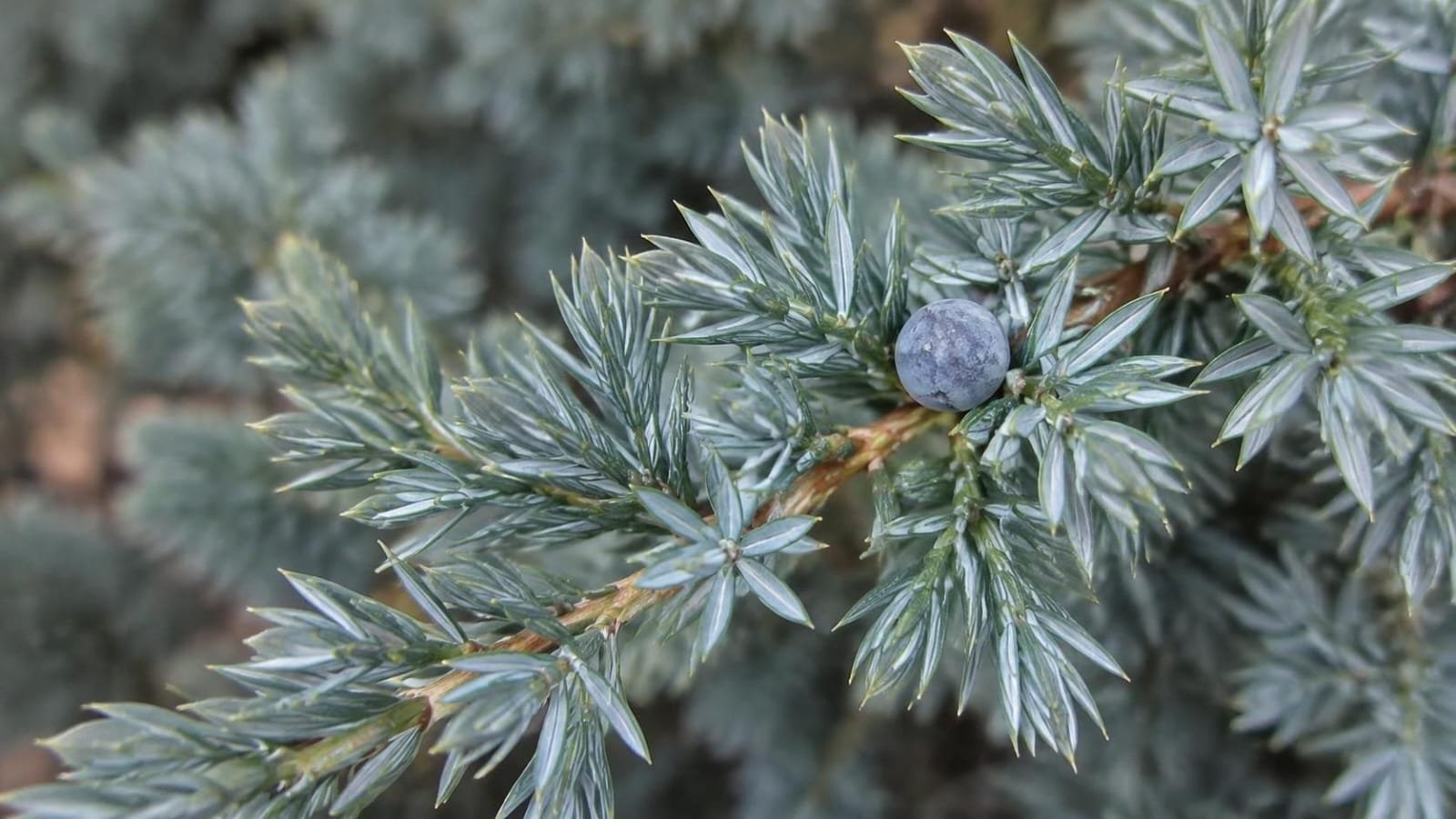
Thin bark and oily foliage make Rocky Mountain juniper vulnerable to fire. In wildfire country, keep it away from the house and clear the ground beneath it. Ice is another weakness. Heavy snow can split branches, so knock it off early when you can. Wildlife is a mixed picture. Birds eat the waxy blue cones and nest in the dense branches, which is good for a backyard habitat. Animals may also rub against young trunks, so protect new plants with a barrier if deer or rabbits are a problem where you live.
Choosing a healthy plant
Start with the foliage. Look for dense, even color and no brown tips. Check the base of the trunk for wounds or damage. Gently slide the plant out of the pot and look at the roots. Circling roots should be loosened at planting. Plants that are root-bound or dry at the base are hard to recover. If you’re buying a tall plant, check that the top shoot is intact. Spring and early fall are good planting windows, when the weather is cooler and the roots can settle. Ask the seller for the cultivar name and the expected size, so you can match the plant to your space.
Frequently asked questions
Is Moonglow juniper a Rocky Mountain juniper?
Yes. It’s a cultivar of Juniperus scopulorum, the Rocky Mountain juniper.
How big does Moonglow juniper get?
Most nursery sources list 15 to 20 feet tall and 6 to 8 feet wide. The American Conifer Society estimates about 20 feet tall and 8 feet wide after ten years.
Is Moonglow the same as Skyrocket?
No. They’re separate cultivars. The American Conifer Society describes Moonglow as broader than Skyrocket.
Is Moonglow juniper deer resistant?
Nursery listings call it deer resistant. No plant is deer proof, though, especially during a hard winter.
Why is my Moonglow juniper turning brown?
Start with drainage and the spring weather. Root rot can follow wet soil, and blights can follow a wet spring. Check the branches for tip dieback. A single dead tip is easy to prune out, so look at the whole plant before you worry. If the browning spreads, a local extension office can test a sample.
Does Moonglow attract wildlife?
Some. Birds eat its blue cones, and the dense branches give nesting cover. It fits a backyard habitat well.
Is Moonglow juniper safe around pets?
Sources disagree. One nursery database lists it as safe for pets. NC State tags Rocky Mountain juniper for contact dermatitis, so wear gloves when you prune it.
Can I grow Moonglow from a cutting?
Rocky Mountain juniper can be propagated from seed or stem cuttings. Seed-grown plants vary, so named cultivars are usually propagated from cuttings to keep their form.
One thought on “Moonglow Juniper: Size, Growth Rate, and Care Guide”