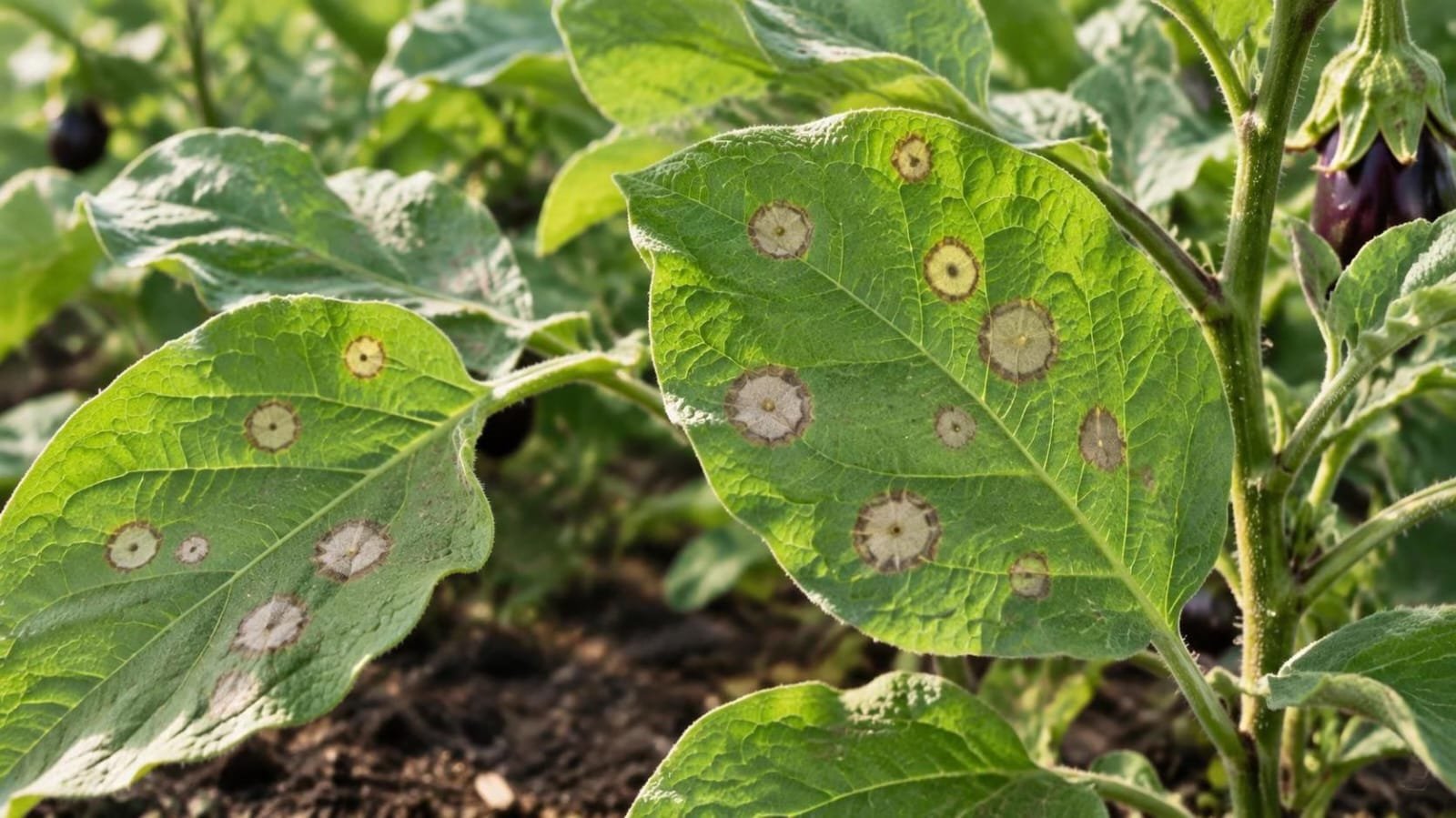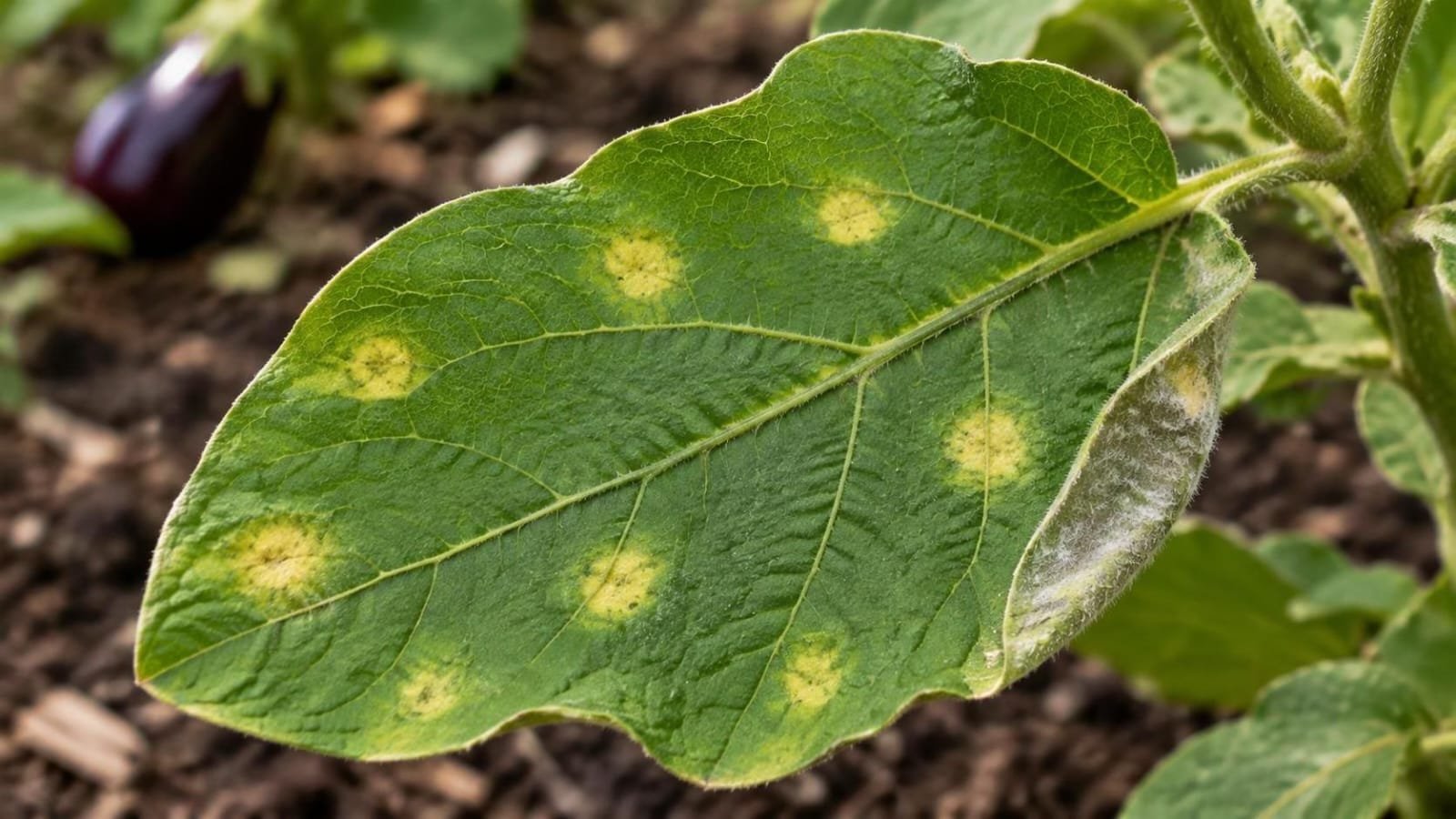
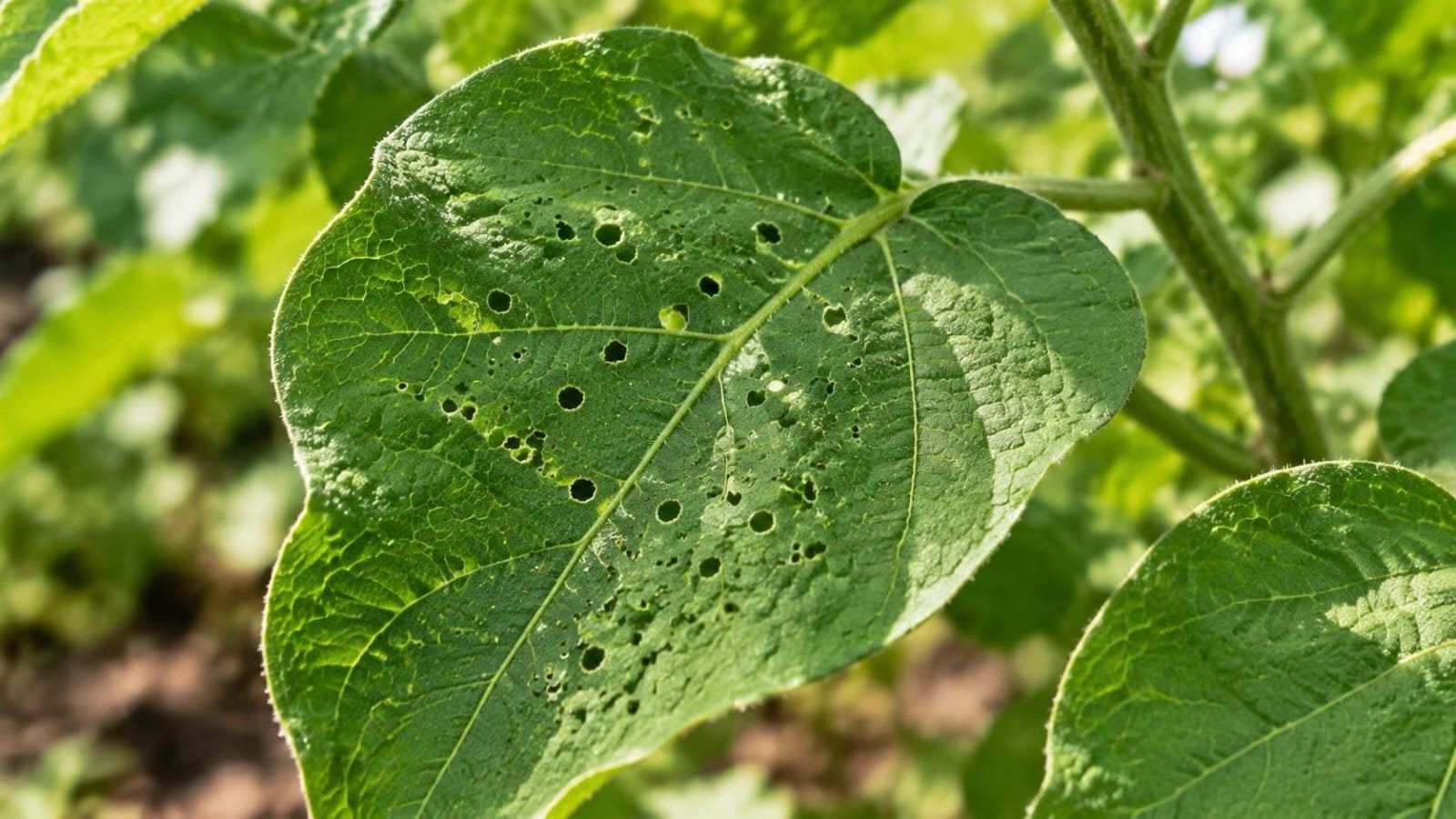
Holes in eggplant leaves are usually caused by insects. Tiny round holes that look like shot marks point to flea beetles. Larger, ragged holes that strip leaves point to Colorado potato beetle. Irregular holes along the edges, and plants cut off at the soil line, point to cutworms. Irregular holes with silvery slime trails, found after dark, point to slugs. Look at the size and shape of the holes, then find the insect.
Chewed leaves are a common complaint with eggplant. The culprit is often easy to find once you know what to look for. The pattern of the damage, the time of day, and where it appears on the plant all give you clues. This guide helps you narrow the list before you act.
What do holes in eggplant leaves tell you?
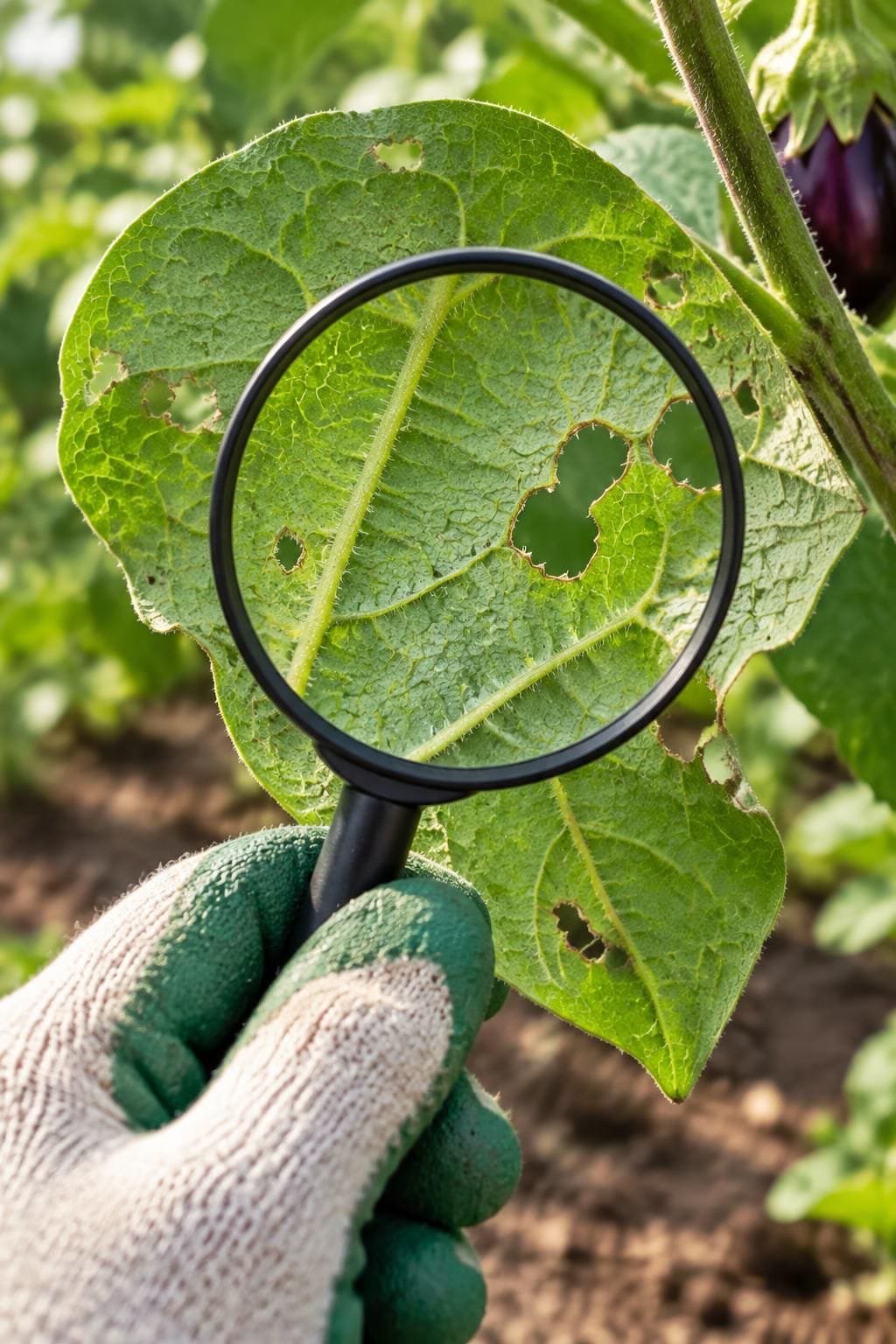
Start with the hole itself. Shot holes are small, round, and often many, and they look like someone fired tiny pellets through the leaf. Larger irregular holes that eat from the edge inward point to beetles or caterpillars. Damage that strips leaves down to the veins usually means a large chewer, such as Colorado potato beetle.
Then look at where the holes are. Damage concentrated on the lower leaves near the soil can point to slugs or cutworms. Damage spread across the whole plant suggests a feeder that moves freely.
Are flea beetles the most likely cause of holes in eggplant leaves?
Often, yes. University of Minnesota Extension describes flea beetle adults creating shallow pits and small, irregular holes that give a shot-hole appearance. The adults are only 1/16 to 1/8 inch long, black, and jump when disturbed. Heavy feeding can cause wilting.
Iowa State University Extension notes that flea beetles are a common pest of home-garden eggplant. Minor damage usually has little effect on yield. The same source recommends action once the damage becomes significant.
Could Colorado potato beetle be eating my eggplant leaves?
Yes. The same University of Minnesota guide lists Colorado potato beetle as a leaf-chewing pest. Both adults and larvae chew holes. Heavy feeding can defoliate the whole plant, leaving only the veins on some leaves. Adults are yellowish with black stripes. They’re round in shape. Larvae are reddish pink, with two rows of dark spots on each side.
Colorado potato beetle is active through the summer, so check the plant every few days once you see damage. Look for both the adults and the larvae on the leaves, especially on the undersides.
Could cutworms or slugs be the cause?
Cutworms are a different case. The UMN guide lists the main sign first: cutworms cut plants off at or just below the soil surface. They can also chew holes in leaves in spring and early summer. They hide in the soil during the day. You may only find them when you disturb the soil near the base.
University of Maryland Extension answered a case where no beetles were visible. The likely culprit was slugs, which feed at night. Slug damage often has an irregular outline. You may see silvery slime trails on the leaves or soil the next morning.
| Clue | Flea beetle | Colorado potato beetle | Cutworm | Slug |
|---|---|---|---|---|
| Hole shape | Small, round shot holes | Large, ragged holes; can strip leaves to the veins | Irregular holes on the edges, and cut stems at soil level | Irregular holes with ragged edges |
| Insect size | 1/16 to 1/8 inch, black, jumps | Adults and larvae, about 3/8 inch | Larvae about 2 inches, hidden in soil by day | No insect; slime trail instead |
| When active | Throughout the season | Summer | Spring and early summer | Night and damp mornings |
| Other sign | Adults jump when disturbed | Adults and larvae visible on leaves | Plant cut at the base | Silvery slime trails |
Swipe sideways to see every column.
Do holes in eggplant leaves hurt the harvest?
Light damage usually doesn’t cut yield much, according to Iowa State University Extension. Heavy damage is different. Large areas of lost leaf reduce the plant’s ability to make food for fruit. Young plants are generally more vulnerable. Watch seedlings and new transplants more closely than established plants.
If the plant wilts along with the holes, check the whole plant for stress. Why Is My Eggplant Plant Wilting? covers the wilt causes, and heavy chewing can add to that stress.
How do you check for the insect?
Check at two times of day. In the morning, look at the undersides of leaves and the soil around the base for slugs and cutworms. In the afternoon, watch the leaves for adults, since flea beetles jump and hide when disturbed. Flea beetles are tiny, so use a hand lens if you have one.
Keep a record of what you find. Notes on the time of day, the insect you saw, and the damage pattern make the next check faster and more accurate.
What should you do first?
For flea beetles, watch for small jumping insects when you brush the leaves, and check the new growth. For Colorado potato beetle, check the undersides every few days, and remove eggs, larvae, and adults by hand when you find them. For cutworms, check the soil at the base of any cut plant. The caterpillar is often curled in the top inch or two of soil. For slugs, search the plants and soil after dark, and look for silvery trails.
Confirm the insect before you treat anything. Remove weeds and plant debris near the bed, since many of these insects use them for cover. Protect young transplants, which are more vulnerable than established plants. If the damage stays heavy, use a control labeled for that insect and crop. Follow the label for rate and timing.
Don’t assume the holes mean a disaster. Many plants outgrow light damage. If leaves curl rather than show chewed holes, compare the symptoms with why eggplant leaves curl. If dry brown patches appear without holes, see why eggplant leaves turn brown. Spots that spread without chewing may need the eggplant disease identification guide. For the leaf patterns in general, Eggplant Leaves: Identification, Problems, and Care is the place to start. How to Grow Eggplant: Planting, Growing, and Care connects these checks to the rest of the season.