
Zucchini leaves turn yellow most often because of water stress, nitrogen moving out of older leaves, or a problem at the root or stem. But the cause is rarely a mystery once you look at where the yellowing starts and how it spreads. A plant that yellows from the bottom up is telling you something different from one whose new growth comes in pale.
The fastest way to narrow it down: check the oldest leaves first, then the newest. If the bottom leaves are yellow and the top is still green, suspect water stress, nitrogen, or normal aging. If the new leaves are yellow or pale while the old ones stay dark, suspect iron or a root problem. If the yellowing is patchy, mottled, or comes with white powder or holes, shift to diseases, viruses, or borers.
Before you reach for fertilizer or a spray, spend two minutes reading the pattern. Zucchini plants are generous communicators, and the yellowing almost always follows a rule. Once you know the rule, the fix stops being guesswork.
Start With the Pattern, Not the Remedy
A yellow leaf is a symptom, not a diagnosis. The same color can come from a plant drowning, a plant starving, or a vine being hollowed out from the inside. The differences live in the details: which leaves turn first, whether the veins stay green, and how quickly the color changes.
If you are not sure what healthy zucchini foliage looks like to begin with, it helps to review what zucchini leaves look like at different growth stages. A normal lower leaf can fade and drop as the plant matures. The trouble starts when the yellowing moves faster than the plant can replace it.
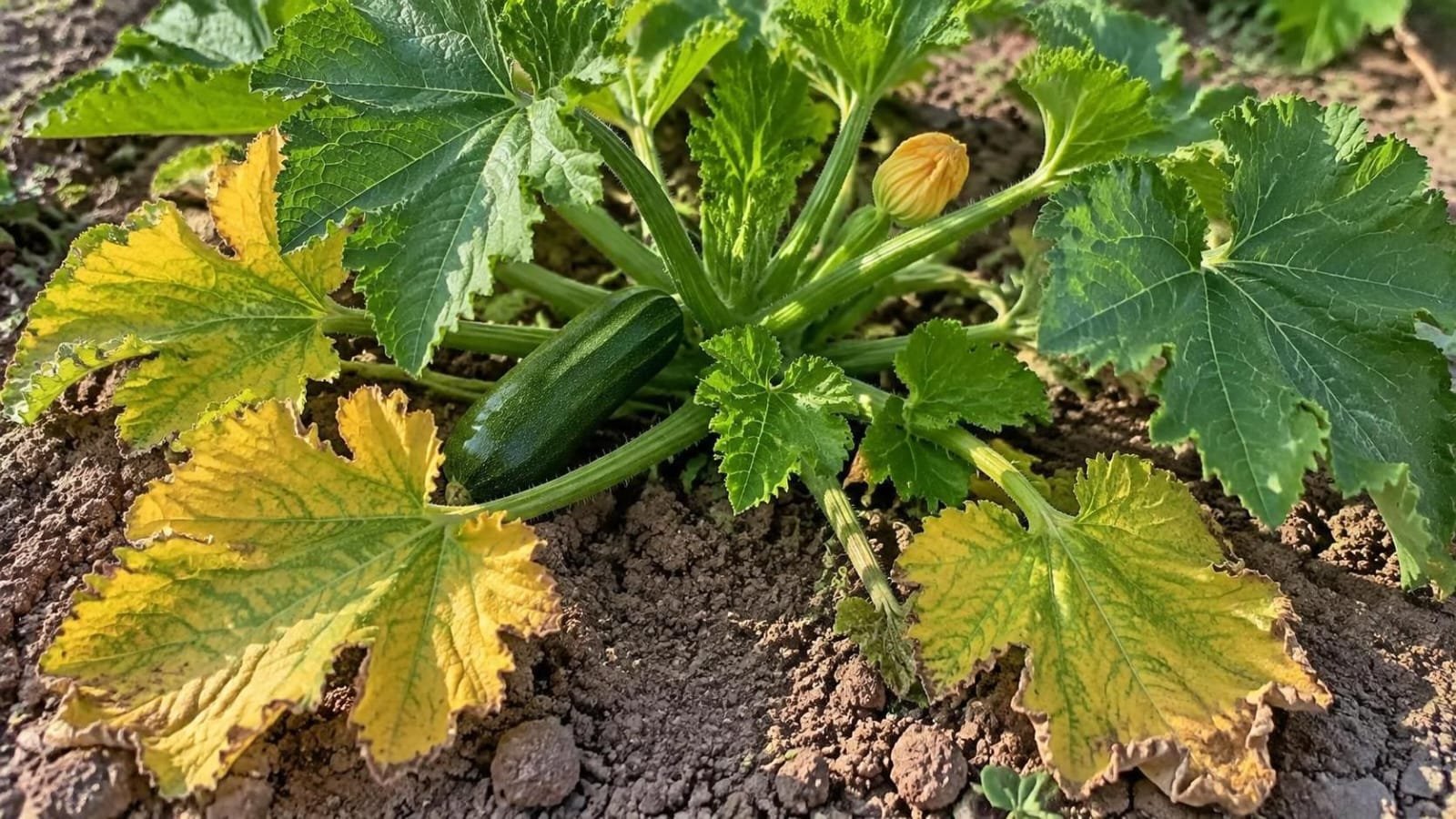
Old leaves first, new leaves green
This is the classic bottom-up pattern. The plant is moving nitrogen out of its oldest leaves and sending it to the growing tips and fruit. It happens when the soil is genuinely low in nitrogen, but it also happens when the roots cannot take up nitrogen because they are waterlogged, damaged, or sitting in cold soil. The leaf color alone does not separate those possibilities. The soil and the stem do.
Pull a yellow lower leaf gently. If it comes away with almost no resistance and the stem underneath looks firm and green, the plant is shedding an old leaf. If the stem is soft, dark, or split, look at the base of the plant before you feed anything.
New leaves first, old leaves dark
When the newest leaves come in pale or yellow while the older leaves stay deep green, the plant is not recycling nitrogen. It is failing to get enough iron to new growth, and iron is not mobile inside the plant. Overwatering, compacted soil, and high pH can all make iron unavailable even when it is present in the ground. This pattern deserves a soil check rather than a blanket feed.
Yellow between the veins, green veins
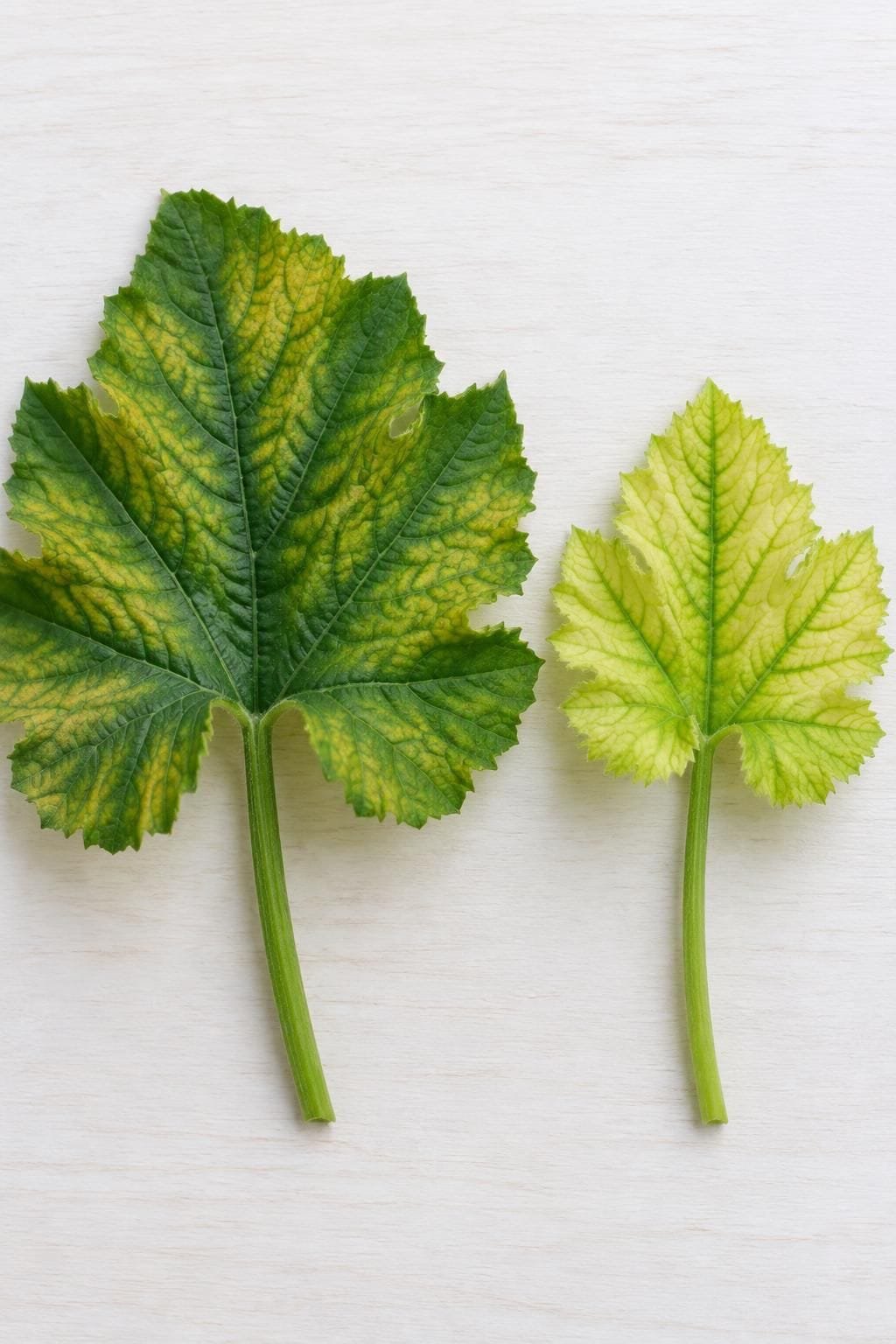
Interveinal chlorosis—yellow tissue with veins that stay green—usually points to magnesium. On zucchini it tends to appear on older leaves first, because magnesium is mobile and the plant moves it to new growth when supply runs short. This is different from nitrogen, which yellows the whole leaf more uniformly, and from iron, which starts at the top.
Patches, powder, or a sudden collapse
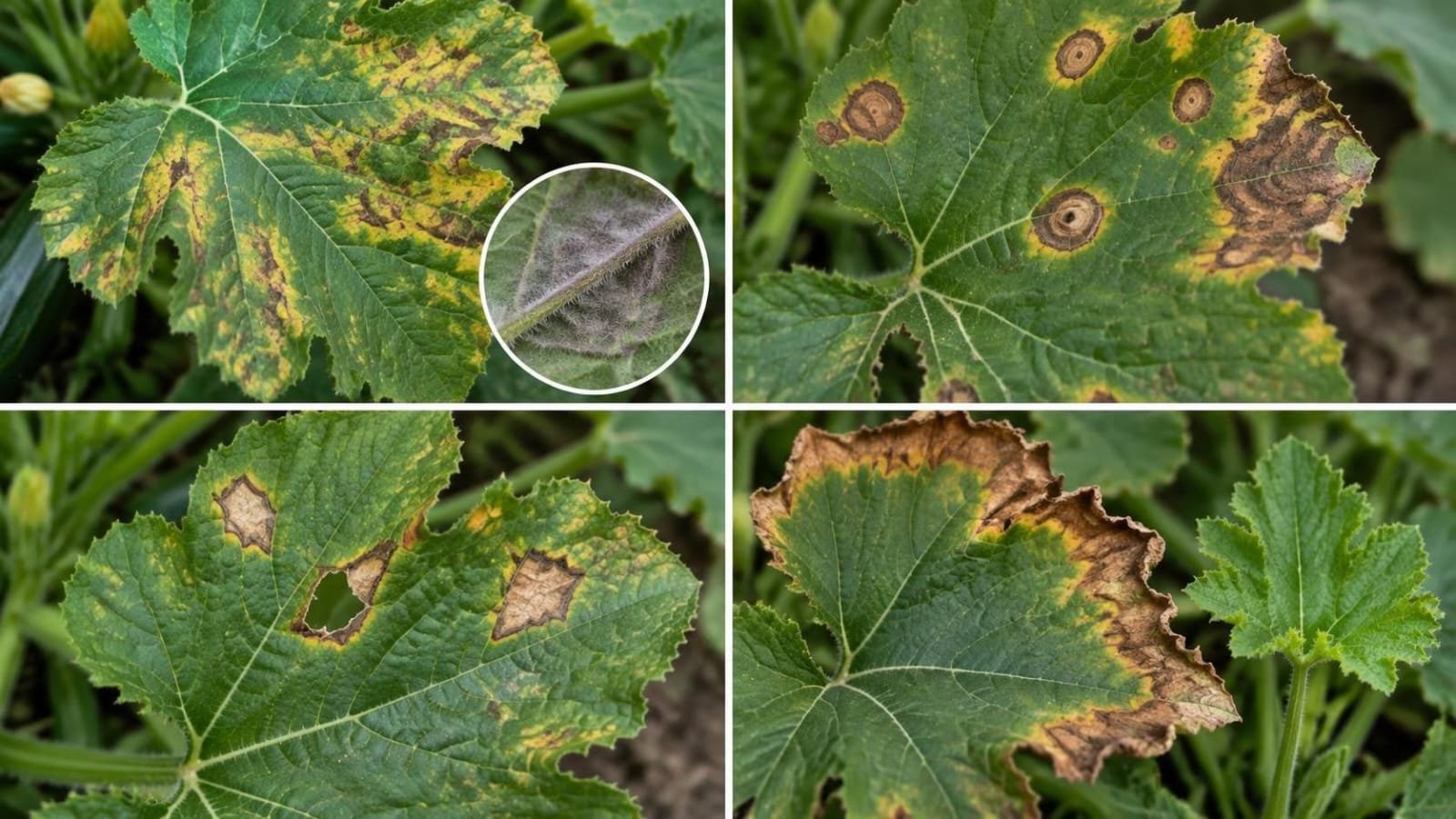
If the yellowing is blotchy, angular, or accompanied by white powder, gray fuzz, or holes, you are no longer in the nutrient lane. Mildews, viruses, and borers produce yellowing as a side effect of a larger problem. Treating those with fertilizer wastes time and can make the plant softer and more attractive to pests.
The Main Causes, and How to Tell Them Apart
No single clue proves a cause on its own. Use two or three together. A waterlogged pot and a nitrogen-hungry plant can look identical from a standing height; the difference is what you find when you push a finger into the soil or lift the plant out of the pot.
Watering problems: too much and too little
Water stress is the most common yellowing cause in zucchini, and it splits into two opposite mistakes. Too little water produces leaves that droop in the afternoon and recover by evening, with dry, crispy edges if the shortage continues. Too much water produces yellow lower leaves on a plant that looks limp even when the soil is wet. The roots are suffocating, and the yellowing is a consequence of poor root function, not a lack of nutrients in the ground.
Check the soil before you water. Push a finger down two inches. If it is cool and wet, wait. If it is dry and loose, water deeply and then leave it alone until the top inch dries again. Container zucchini are especially prone to this swing because a small volume of potting mix can go from soggy to bone dry in a day.
Nitrogen drawdown
Zucchini grows fast and fruits heavily. Nitrogen is mobile in the soil and in the plant, and frequent watering can leach it below the root zone. When the plant cannot pull enough from the soil, it takes nitrogen from the oldest leaves and sends it upward. The result is a green top and a yellow bottom. A balanced vegetable fertilizer addresses the supply, but only if the roots are healthy enough to take it up.
Magnesium and iron
Magnesium deficiency shows as yellow between the veins on older leaves, with a narrow green border along the main veins. Iron deficiency shows as pale or yellow new growth with green veins, a net-like pattern that starts at the top. Both can be triggered by soil conditions rather than absolute shortage: cold soil, poor drainage, and high pH interfere with uptake. A foliar feed can green up the plant temporarily, but it does not fix the underlying soil problem.
Powdery mildew and downy mildew
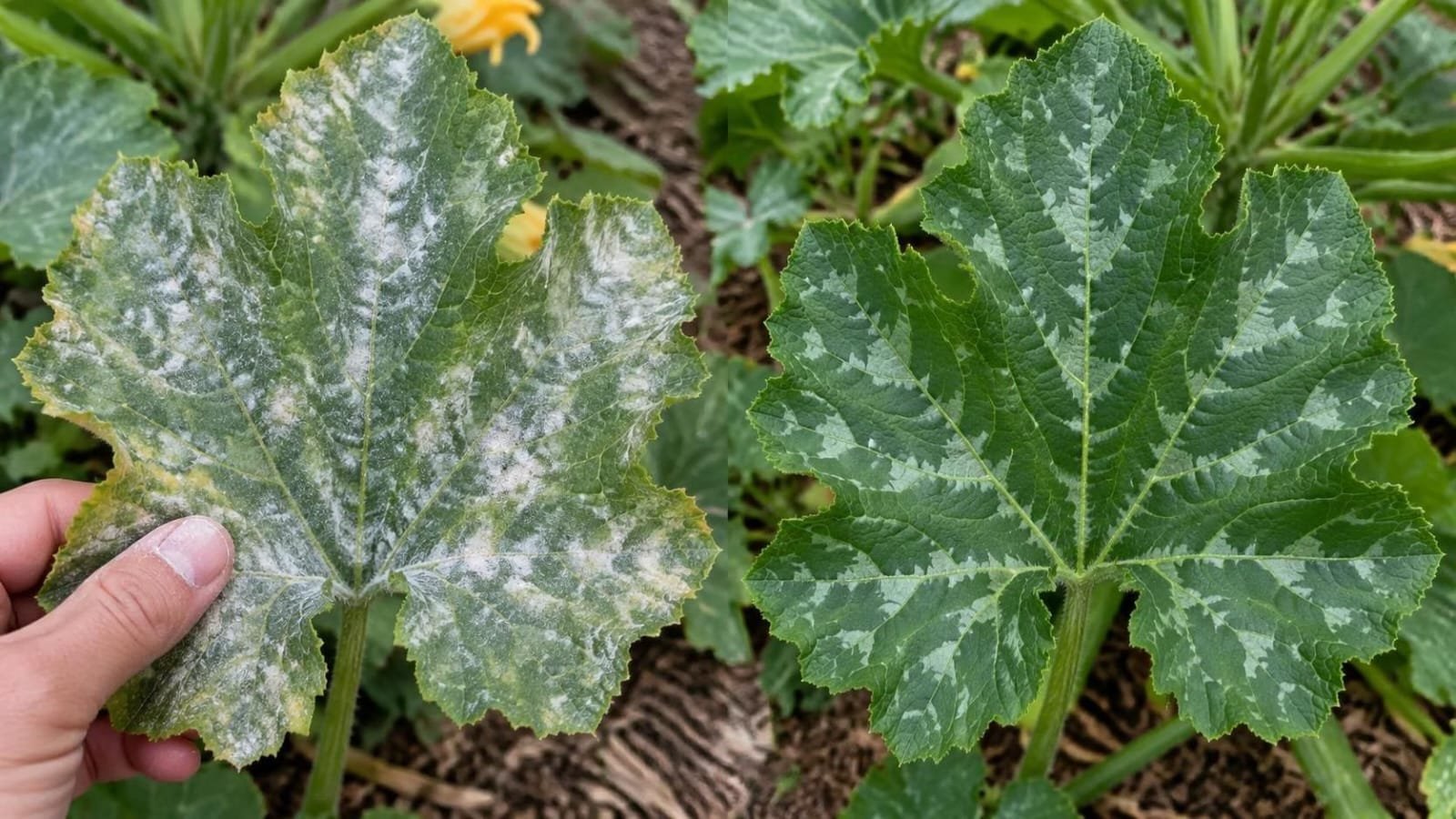
Powdery mildew begins as small white, powdery patches on older leaves and the stems, and the leaf eventually yellows, browns, and dries. Downy mildew produces angular yellow spots bounded by veins, often with grayish fuzz underneath in humid weather. Neither is a nutrient problem, and feeding the plant will not cure them. If you suspect mildew, review the identification and treatment steps for powdery mildew on zucchini before spraying anything.
Squash vine borer and root damage
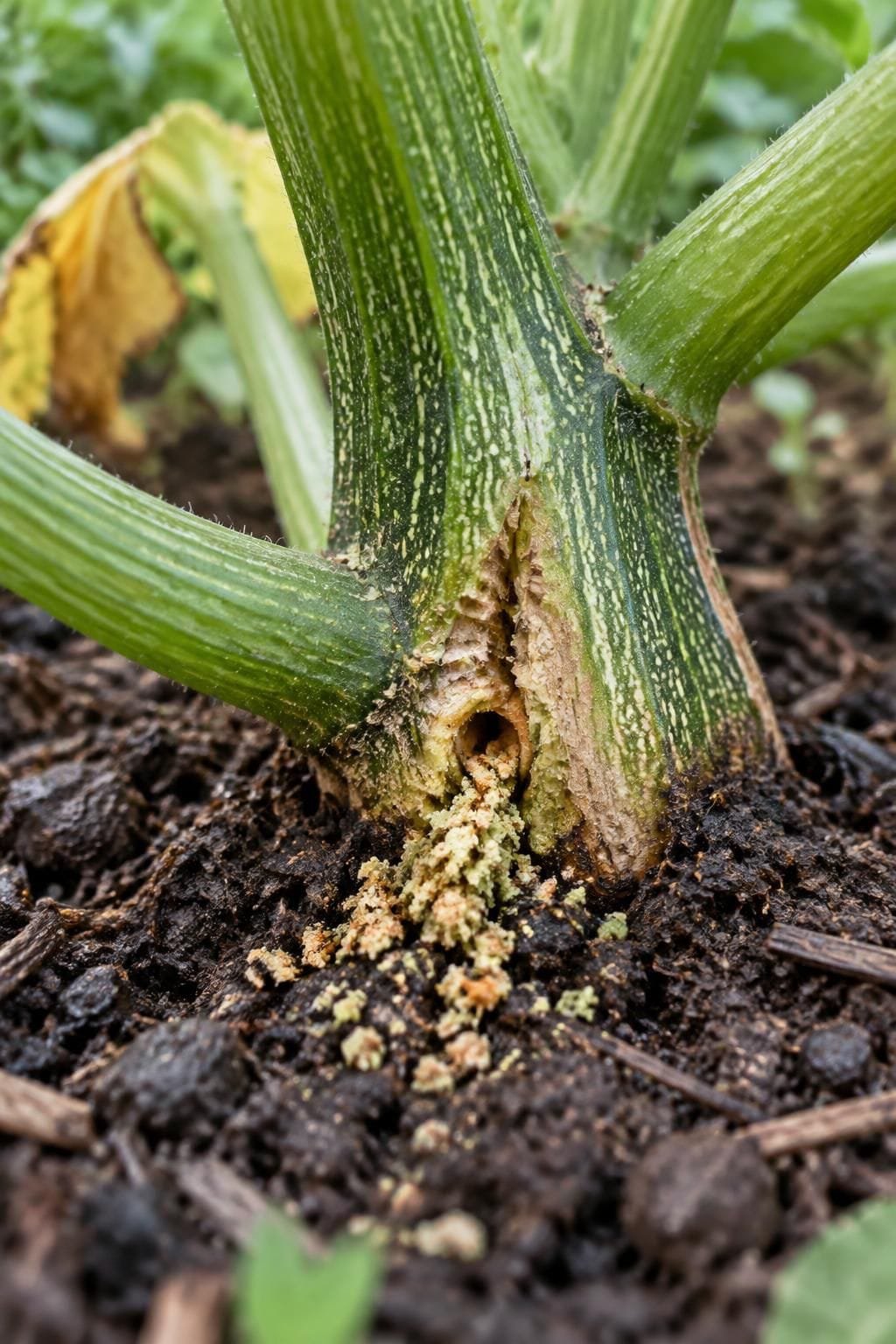
A zucchini that yellows and wilts suddenly, especially in the heat of the day, may have a borer inside the stem. The larvae feed from the inside, cutting off water and nutrients. Look for a small hole near the base of the plant with greenish or orange sawdust-like frass pushed out of it. If you find that, the problem is physical, not nutritional. Root rot from overly wet soil produces a similar collapse but without the frass; the stem base feels soft and may look dark or split.
If the yellowing comes with chewed leaves, sticky residue, or visible insects, move to a pest diagnosis. The guide to identifying pests and leaf damage covers the common chewers and sap-feeders that can make a zucchini look nutrient-deficient when it is actually under attack. For a broader visual key, the zucchini diseases and pests identification guide is a useful cross-check.
Viruses
Viral infections produce mottled, mosaic patterns of yellow and green, distorted leaves, and sometimes deformed fruit. The yellowing is irregular and does not follow the clean top-or-bottom pattern of a nutrient issue. Viruses are spread by aphids, cucumber beetles, and contaminated tools. There is no cure once a plant is infected; the practical move is to remove it before it becomes a source for the rest of the garden.
Normal aging of lower leaves
Not every yellow leaf is a crisis. Zucchini plants regularly shed their oldest lower leaves as the canopy thickens and those leaves fall into shade. The plant withdraws what it can and lets the leaf go. If the plant is still pushing new growth, flowering, and setting fruit, a yellow leaf here and there at the bottom is not a reason to change course. The distinction is pace: normal aging takes a few leaves over weeks, while a problem takes several leaves in a few days.
| What you see | Most likely cause | First check |
|---|---|---|
| Oldest leaves yellow first; top green | Nitrogen drawdown or waterlogged roots | Soil moisture at two inches; stem firmness |
| New leaves pale; veins green | Iron unavailable (pH, cold, wet soil) | Soil pH and drainage |
| Yellow between veins; older leaves | Magnesium deficiency | Soil test; recent heavy watering or leaching |
| White powder or angular yellow spots | Powdery or downy mildew | Leaf surface and underside in humidity |
| Sudden wilt plus hole with frass | Squash vine borer | Base of stem, one inch below soil line |
What to Do Now, Depending on What You Found
The right response is the one that matches the cause you confirmed. Adding fertilizer to a waterlogged plant makes the problem worse. Spraying a fungicide on a nitrogen-deficient plant does nothing. Work from the diagnosis, not from a general checklist.
- If the soil is wet and the plant is limp: stop watering, improve drainage, and let the top two inches dry before the next irrigation. If the plant is in a container, check that the drainage holes are open and raise the pot so it does not sit in a saucer of water.
- If the soil is dry and the lower leaves are yellowing: water deeply and slowly, then mulch to keep moisture steady. A sudden drench after a long dry spell can split fruit and stress roots, so aim for consistency rather than a rescue flood.
- If nitrogen is the likely issue: side-dress with a balanced vegetable fertilizer according to the label, water it in, and remove the leaves that are more than half yellow. They will not recover and they can harbor pests.
- If you find a borer hole with frass: the plant may still produce if the damage is limited. You can try to slit the stem carefully and remove the larva, but severely hollowed plants usually decline. Dispose of the affected stem away from the garden.
- If you confirm mildew: remove the worst leaves, improve airflow, and follow a labeled fungicide or cultural program. Do not compost infected foliage.
What Not to Do
- Do not add fertilizer to a plant in saturated soil. The roots cannot take it up, and the salts can cause further damage.
- Do not spray a fungicide before you have identified the disease. Powdery mildew, downy mildew, and viral mosaic need different responses, and viruses cannot be cured with sprays at all.
- Do not judge a correction after only three days. Give it a week to show new growth before you change course again.
- Do not keep a virus-infected plant in the garden out of hope. It becomes a reservoir for insects to spread the problem to healthy plants.
Will the Yellow Leaves Turn Green Again?
Usually not. A leaf that has lost most of its chlorophyll does not rebuild it, even after the underlying problem is corrected. What matters is whether the new growth comes in green and whether the plant keeps setting fruit. If the newest leaves are healthy and the yellowing stops spreading, the correction is working. If the yellowing continues up the plant or the new leaves emerge pale, the diagnosis was incomplete or the correction has not had time to reach the roots.
This is also why removing the worst yellow leaves is often the right move. They are no longer contributing much, and they can shade healthy growth or attract pests. Compost them only if you are confident the cause was nutritional or water-related; diseased foliage belongs in the trash.
If the plant is yellowing while also dropping fruit or producing fruit that stays small and yellows, the problem has moved past the leaves. The guide to why zucchini turns yellow covers the fruit side of the same stress.
Prevention for the Next Planting
Most yellowing in zucchini comes from conditions you can set up before the plant ever goes in the ground. Stable moisture is the foundation. Zucchini wants consistent water, not a cycle of drought and flood. Mulch helps, but in humid climates keep it a few inches away from the stem so the base can dry.
Feed according to growth, not on a fixed calendar. A soil test takes the guesswork out of nitrogen and pH. If you grow in containers, plan on more frequent feeding because the limited volume of potting mix leaches nutrients faster than garden soil. Give the plants enough space for airflow; crowded zucchini stay wet longer and develop mildew earlier.
Rotate cucurbits so borers and soil-borne pathogens do not build up in the same bed. Inspect the stem base once a week during the growing season, especially in midsummer. A two-minute check can catch a borer before the plant collapses. If you are growing in a new bed or a container, start with a mix that drains well, and water according to the soil’s actual condition rather than a fixed schedule.
And if the yellowing pattern still does not fit any single cause, a lab or Extension diagnosis is worth the time. Zucchini can carry more than one problem at once, and a plant that is waterlogged is also more vulnerable to root rot and less able to take up nutrients. A diagnosis that accounts for the whole plant will save you from treating symptoms in circles.
3 thoughts on “Why Are My Zucchini Leaves Turning Yellow? A Field Guide to What Your Plant Is Telling You”