
Blue Arrow is one of the best-known narrow upright junipers in the trade. Its tall, slim profile makes it a go-to for tight spaces, privacy screens, and formal accents. Its size and growth rate are also easy to misread, so it helps to know what the sources say before you plant.
Blue Arrow juniper (Juniperus scopulorum ‘Blue Arrow’) is a narrow, columnar evergreen with bright blue foliage. Mature size depends on the source. It is often listed at 12 to 20 feet tall but only 2 to 4 feet wide. Growth ranges from slow to fast. It needs full sun and well-drained soil, and it does poorly in wet ground.
What Blue Arrow juniper is
Blue Arrow is a cultivar of Juniperus scopulorum, the Rocky Mountain juniper. The American Conifer Society says it started as a seedling selected in 1949 at Pine Grove Nurseries in Clearfield, Pennsylvania. Many growers consider it an improvement over the older Skyrocket, which is still widely planted.
The species name isn’t settled. Some nurseries and extension sources place Blue Arrow in the Rocky Mountain group, while the Virginia Tech Extension lists it with eastern redcedar. Plant names in the trade often lag behind the botany, so do not rely on the species name alone when you compare plants. Compare the traits instead: the color, the width, and the cold hardiness on the tag.
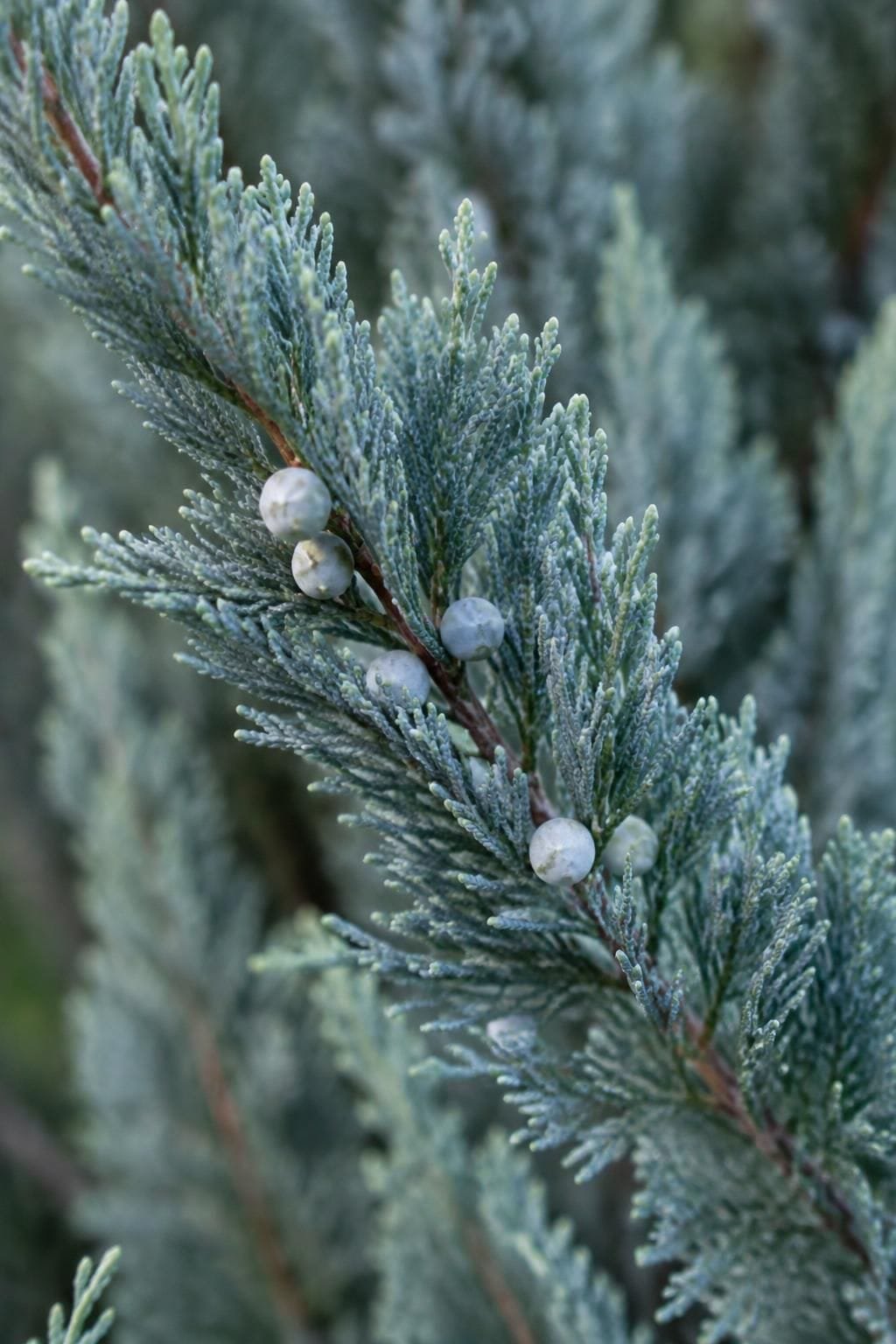
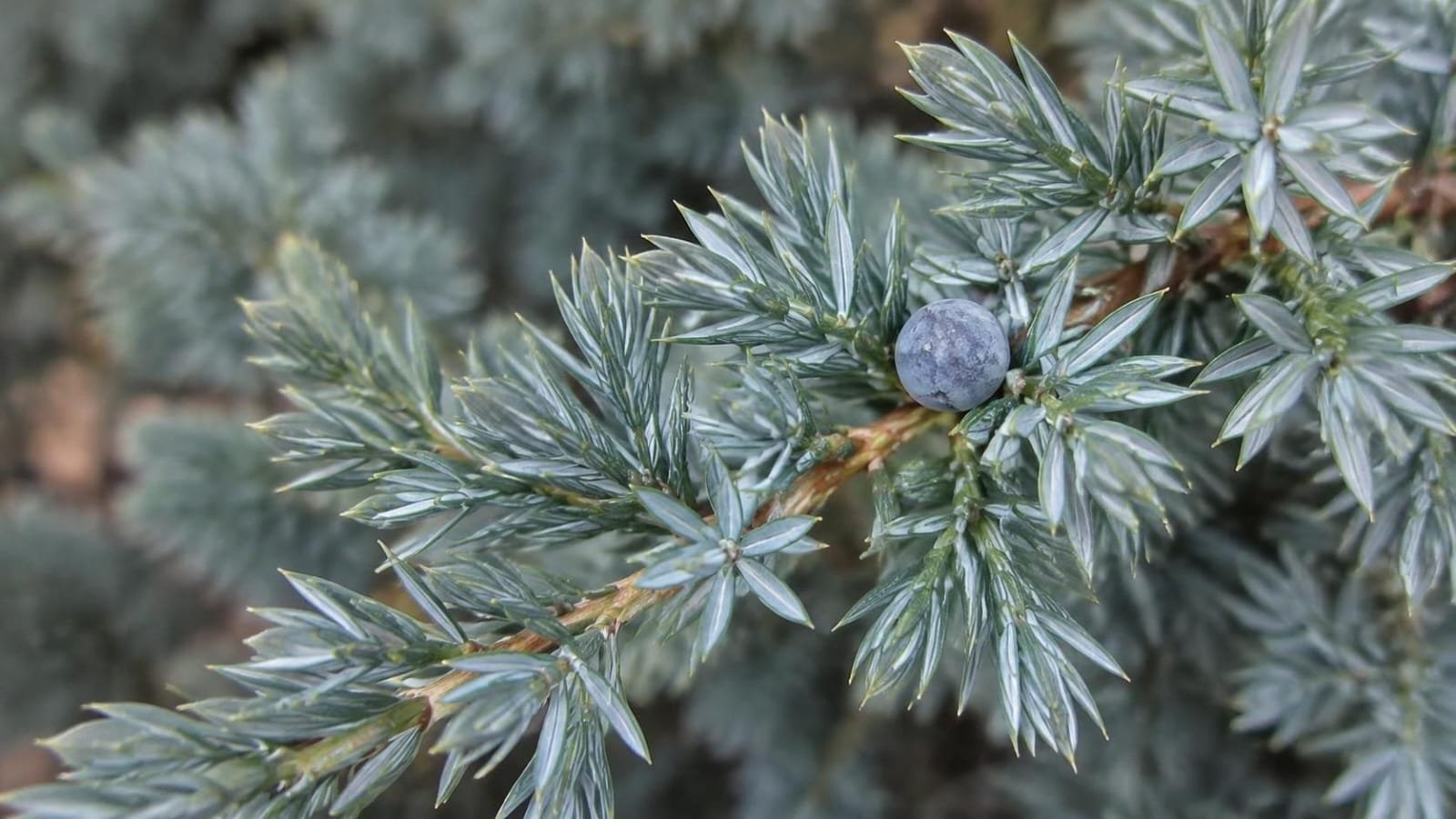
Blue Arrow is easy to spot once you know its form. The branches are dense and ascending, and they hug a central stem. The foliage is steel-blue to bright blue-green, and it holds its color through the year. The plant reads as a column, not a pyramid, which is the main reason people choose it over broader junipers.
Look at the base of the plant when you shop. A healthy specimen has green, live growth low on the stems, not bare trunk with foliage only at the top.
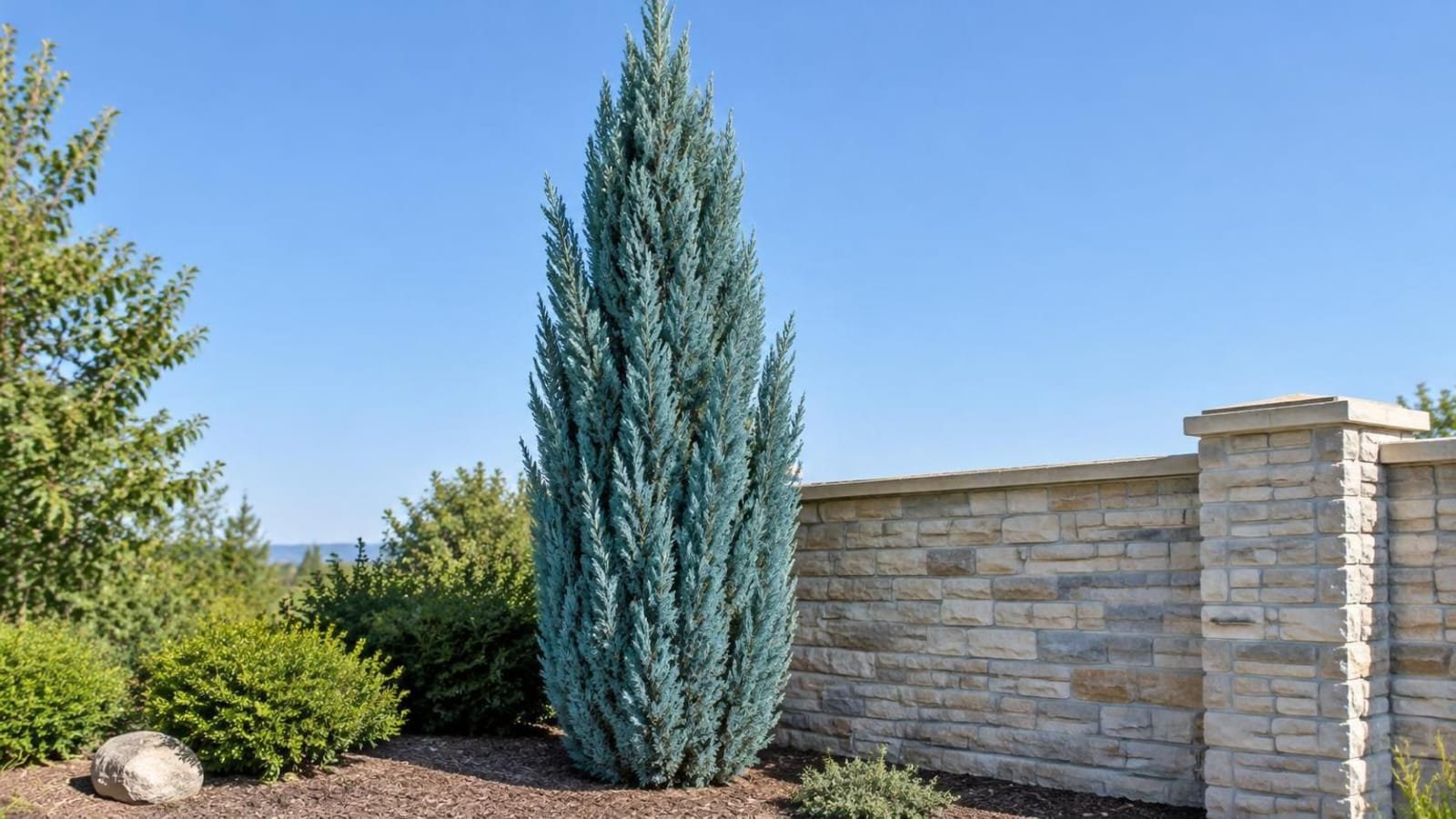
How tall and wide Blue Arrow juniper gets
Size is where the sources diverge the most. The table lays out the main figures. Read it as a range, and plan around the taller end if the plant will sit near a wall or a walk.
| Source type | Mature height | Mature width | Growth note |
|---|---|---|---|
| Cultivar profile, after 10 years | 12 to 15 feet | About 2 feet | 15 to 18 inches a year |
| Large-nursery listings | 15 to 20 feet | 3 to 4 feet | Moderate |
| Garden-center listings | 12 feet | 4 feet | Medium |
| Small-form container listings | 3 to 4 feet | 2 to 3 feet | Slow to moderate |
| Fast-growing nursery listing | 10 to 15 feet | 1 to 2 feet | Fast |
Most sources put a mature Blue Arrow between 12 and 20 feet tall. Width is the number that matters most for a tight space. Nearly every listing puts the spread at 1 to 4 feet, so a narrow bed will suit this plant much better than a broad shrub border.
The tall numbers usually describe a mature plant. The small ones usually describe a young plant or a container-grown plant that hasn’t had years to fill out. If you are buying a small plant today, the size on the tag is not the size you will have in ten years.
How fast Blue Arrow juniper grows
Growth rate is another point where the sources split. The American Conifer Society describes it as fairly fast, with 15 to 18 inches of growth a year after the first years. Nursery listings tend to say moderate, and some UK sellers call it slow to average. Those descriptions can all fit the same plant, depending on soil, sun, and age.
A realistic plan is steady growth in the first few years, then a column that keeps gaining height for many seasons. Do not expect a full screen in one year. A row of plants will look like a hedge within a few seasons if the spacing and the site are right.
Good conditions speed things up. Full sun and well-drained soil give the plant its best shape. The NC State Extension lists the species as intolerant of wet soils, so poor drainage will slow growth or cause decline long before the plant reaches its size on the tag.
Where Blue Arrow fits in the landscape
Blue Arrow works best where height matters more than width. It makes a strong vertical accent beside a door, a pair of plants flanking a gate, or a formal row along a fence. In a narrow bed, it adds structure without crowding the path.
It also works as a privacy screen, especially in a tight yard. Plant the row close enough that the columns touch as they mature. Keep in mind that this plant is much narrower than the Blue Point juniper size and care guide, which needs more width.
Compare Blue Arrow with other narrow upright options before you buy. The Skyrocket juniper growth rate guide is the closest older choice, and the Spartan juniper size and care guide is a columnar Chinese juniper with its own size profile. The Moonglow juniper size and care guide is broader, so it fills a different role. For a taller accent with a different look, see the Taylor juniper growth rate guide.
If you need a low plant instead, Blue Arrow is the wrong choice. The Blue Star juniper size and care guide and the Blue Rug juniper planting guide stay low, and they handle that job much better. For the wider species and its varieties, the Juniperus virginiana varieties guide gives a fuller picture.
Planting Blue Arrow juniper
Pick a site with full sun. The plant needs direct light for its best color and density. Most sources list six or more hours of direct sun as the target, and partial shade will produce a thinner column.
Soil drainage matters more than soil type. Blue Arrow tolerates sandy, loamy, and clay soils, as long as water moves through them. Avoid low spots where water collects after rain. Walk the site after a heavy rain to see where water sits. That spot is a poor choice for any juniper. Poor drainage is a common reason a healthy-looking plant starts to decline.
Plant at the same depth the plant grew in its pot. Water well at planting, and keep the soil evenly moist through the first season. Mulch the root zone two to three inches deep, and keep the mulch off the trunk. After that, the plant handles dry spells well.
For a formal entry, plant a matched pair on either side of the door and space them at about their mature width so they read as a set. For a row, space plants at about their mature width. For a screen, that often means 2 to 4 feet apart. Closer spacing fills in faster but crowds the plants as they widen.
Before you buy
Check the zone on the tag. Listings range from zone 3 to zone 9, so confirm that your winter lows fit the plant you are buying.
Read the mature width, not only the height. A plant that is 15 feet tall and 2 feet wide fills a very different space than one that is 15 feet tall and 4 feet wide.
Caring for Blue Arrow juniper
Blue Arrow needs little pruning. The NDSU Extension notes that Rocky Mountain juniper is very drought tolerant once established, which means you can let the plant rely on rain in most years. Water during long dry spells, especially in the first two summers.
Prune only when you have to. Shape lightly in late winter or early spring, and remove dead or damaged branches as you see them. Avoid cutting into old, bare wood, because it may not regrow.
Ice and heavy snow can damage the branches. The NC State Extension lists the species as intolerant of ice, so knock heavy snow off the column when you can. Feed lightly, if at all. Established plants in the ground rarely need fertilizer.
Fire is another risk. The thin bark and oily foliage of Rocky Mountain juniper burn readily, so keep it clear of dry grass and leave space between the plant and any structure in a wildfire zone.
Pests and diseases to watch
Blue Arrow has few serious problems when grown in full sun and good soil. The main disease concerns are tip blights in wet springs, root rot in poorly drained soil, and cedar-apple rust, which needs both junipers and apple or crabapple trees to complete its life cycle.
The NDSU Extension notes that cedar-apple rust rarely causes serious damage to Rocky Mountain juniper, which is good news if you have apple trees nearby. Keep an eye on the plant anyway, and remove galls if you see them.
Insects to watch include aphids, bagworms, twig borers, webworms, scale, and spider mites. Spider mites and bagworms are common on these plants, so check the undersides of the foliage every few weeks in spring and summer. The Clemson Extension factsheet covers how to identify and manage these pests.
Check the plant after wet weather, since fungal problems often show up then. Deer resistance is one of the traits nurseries promote. No plant is deer proof, though, especially in a hard winter. Expect some browsing if deer are heavy in your area.
Frequently asked questions
How tall does Blue Arrow juniper get?
Most listings show 12 to 20 feet at maturity. Plan for the taller number if you want the plant to keep its shape in a narrow bed.
How wide is Blue Arrow juniper?
Usually 2 to 4 feet, and sometimes less. That narrow width is the main reason to choose it.
Is Blue Arrow juniper fast growing?
Sources disagree. Some describe fast growth, and others say moderate or slow. Expect steady growth in the first few years, then a column that keeps gaining height over time.
Can Blue Arrow juniper grow in a container?
Yes. Use a large pot with drainage holes, and expect to repot as the root system fills the container. Container plants need more water than plants in the ground.
Why is my Blue Arrow juniper turning brown?
Start with drainage. Wet soil and root rot are common causes. Check the tips for blight, the branches for galls, and the foliage for pests. Browning on inner branches can also come from shade or poor air movement. If the browning spreads, a local extension office can test a sample.
Is Blue Arrow the same as Skyrocket?
They are close cousins in the trade, but they are separate cultivars. The American Conifer Society says many growers consider Blue Arrow a major improvement over the older Skyrocket.
Is Blue Arrow juniper deer resistant?
Nursery listings describe it as deer resistant. Deer will still browse hungry plants in a hard winter, so protect young plants if deer are a problem where you live.
3 thoughts on “Blue Arrow Juniper: Size, Growth Rate, and How to Grow It”