
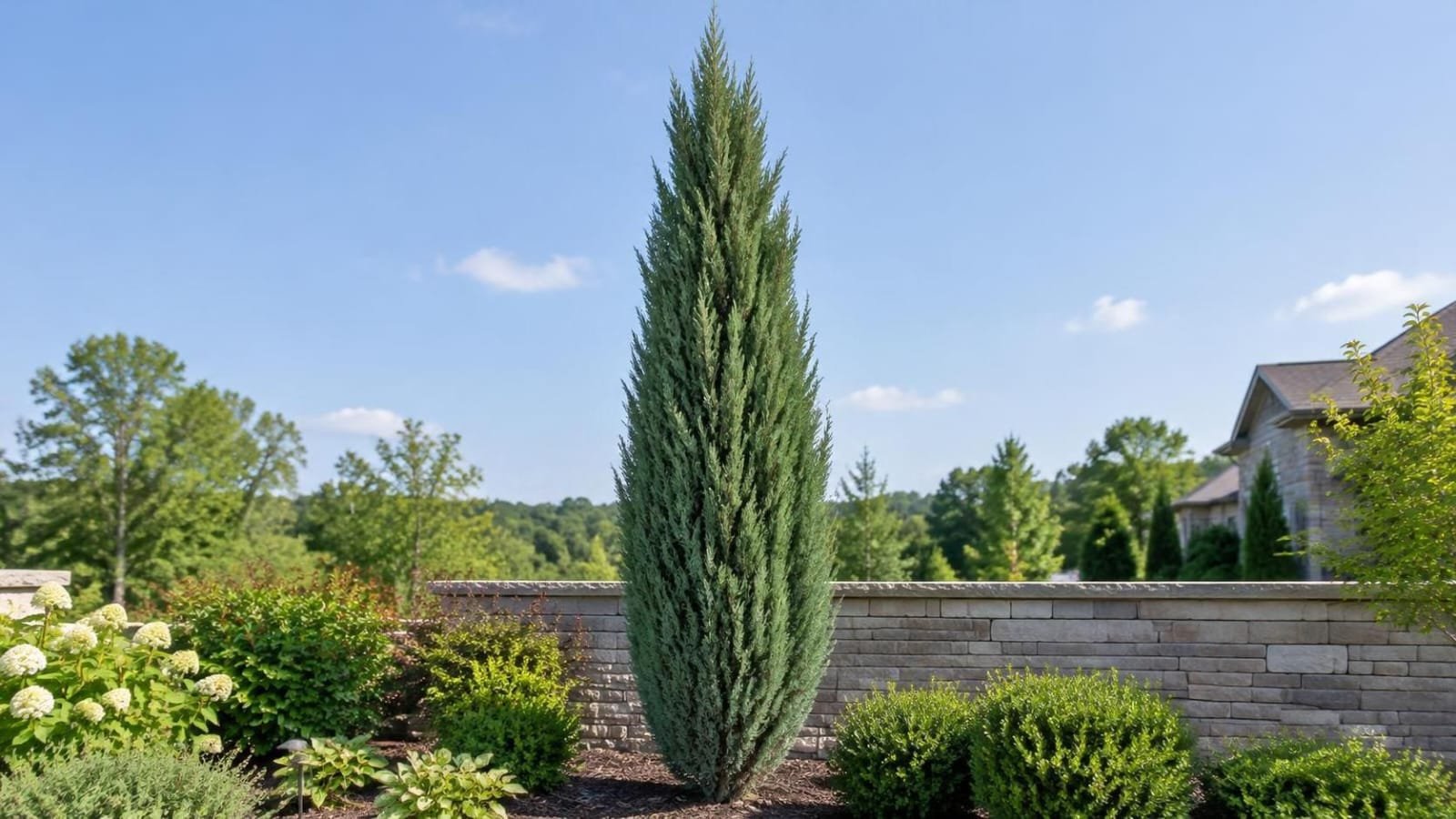
A Taylor juniper (also sold as Taylor Eastern redcedar) is a narrow, columnar form of eastern redcedar. It usually reaches 20 to 25 feet tall and stays 3 to 4 feet wide. Give it full sun and well-drained soil, and go easy on the fertilizer.
Most people want three things from a Taylor juniper. They want to know how big it gets, how fast it gets there, and what it needs to keep its narrow shape. Garden center tags are a fair place to start. The numbers vary by source, though, so it helps to compare them.
How tall and wide a Taylor juniper gets
The original tree is a good reference point. Allen Wilke, a Nebraska nurseryman, found it in 1978 near the town of Taylor. According to the UT Gardens write-up on the cultivar, that parent tree stood about 25 feet tall and 3 feet wide. A healthy plant in your garden should look much like it: tall and slim.
Nursery listings are more conservative. Many list a mature Taylor juniper tree at 15 to 20 feet. That works for rough planning, but it sits at the low end of the detailed profiles. Here’s how the numbers compare:
| Source | Mature height | Mature width | Growth note |
|---|---|---|---|
| Typical nursery listings | 15 to 20 feet | About 3 feet | Medium to moderate |
| Extension gardener profile | 20 to 25 feet | 3 to 4 feet | Medium |
| Botanical society profile | 20 feet or more after 10 years | About 3 feet at the base | Listed as a large grower |
| Original parent tree | About 25 feet | About 3 feet | Not stated |
Plan for a column of 20 to 25 feet. The width stays steady at 3 to 4 feet, and that narrowness is the main reason to choose this tree.
How fast a Taylor juniper grows
Sources disagree most on growth rate. NC State Extension rates Taylor as a medium grower. The American Conifer Society is more generous. Its profile describes a plant that reaches 20 feet or more in ten years, or about 2 feet a year on average. The UT Gardens write-up takes a middle view. It says Taylor grows more slowly than many common screening evergreens, but it looks established within a few years.
Expect steady, unhurried height. The first year or two may look modest. After that, the column starts to look like a small tree. If you need a screen within one season, choose a faster plant.
Soil can speed growth too much. Both sources warn about rich ground. Heavily amended, wet, or fertilized soil can push Taylor to grow faster than its shape can hold. The column loses the neat outline that drew you to it.
What a Taylor juniper needs to grow well
Give it full sun. NC State Extension says Taylor tolerates full to partial sun, but it lists six or more hours of direct light as the target. In shade, a juniper tends to thin out, and a thin column loses the shape you wanted.
Soil matters less than sun, with one exception. Taylor handles clay, loam, sand, and shallow rocky ground. It also copes with poor soil. Wet soil is the exception. Waterlogged roots cause the most trouble, so check drainage first. Once established, it handles dry spells well.
Water a new tree evenly through its first season. After that, let the soil dry between waterings.
Hold off on the fertilizer. Most gardeners go wrong here because they want to see growth. Heavy feeding pushes growth past what the column can hold, so a light touch is enough. Extension listings place Taylor in USDA zones 4 through 9.
Where Taylor fits in your landscape
Taylor works best when you need height without width. Use it as a vertical accent near an entrance, a narrow screen along a driveway, or a formal row where a broad evergreen would crowd its neighbors. For a solid screen, space Taylor junipers 3 to 4 feet apart.
Compare it with other upright junipers before you buy. Read the guides for Blue Point Juniper, Blue Arrow Juniper, Skyrocket Juniper, and Spartan Juniper. Moonglow Juniper has its own sizing and care notes too.
If you need something low, Taylor is the wrong pick. Blue Rug Juniper and Creeping Juniper spread across the ground. Blue Star Juniper is a compact shrub, so it fills a different role. For the wider species, the Juniperus virginiana guide covers varieties, identification, and general care.
When a Taylor juniper looks wrong
Check the root zone first. Poor drainage is one of the most common causes of trouble. If the inner or lower branches brown while the tips look fine, check the soil after rain. Dig a few inches down a day or two after a storm. Soil that stays wet at that depth usually means drainage is the problem. Fix the site or the planting bed. Changing how you water won’t solve it.
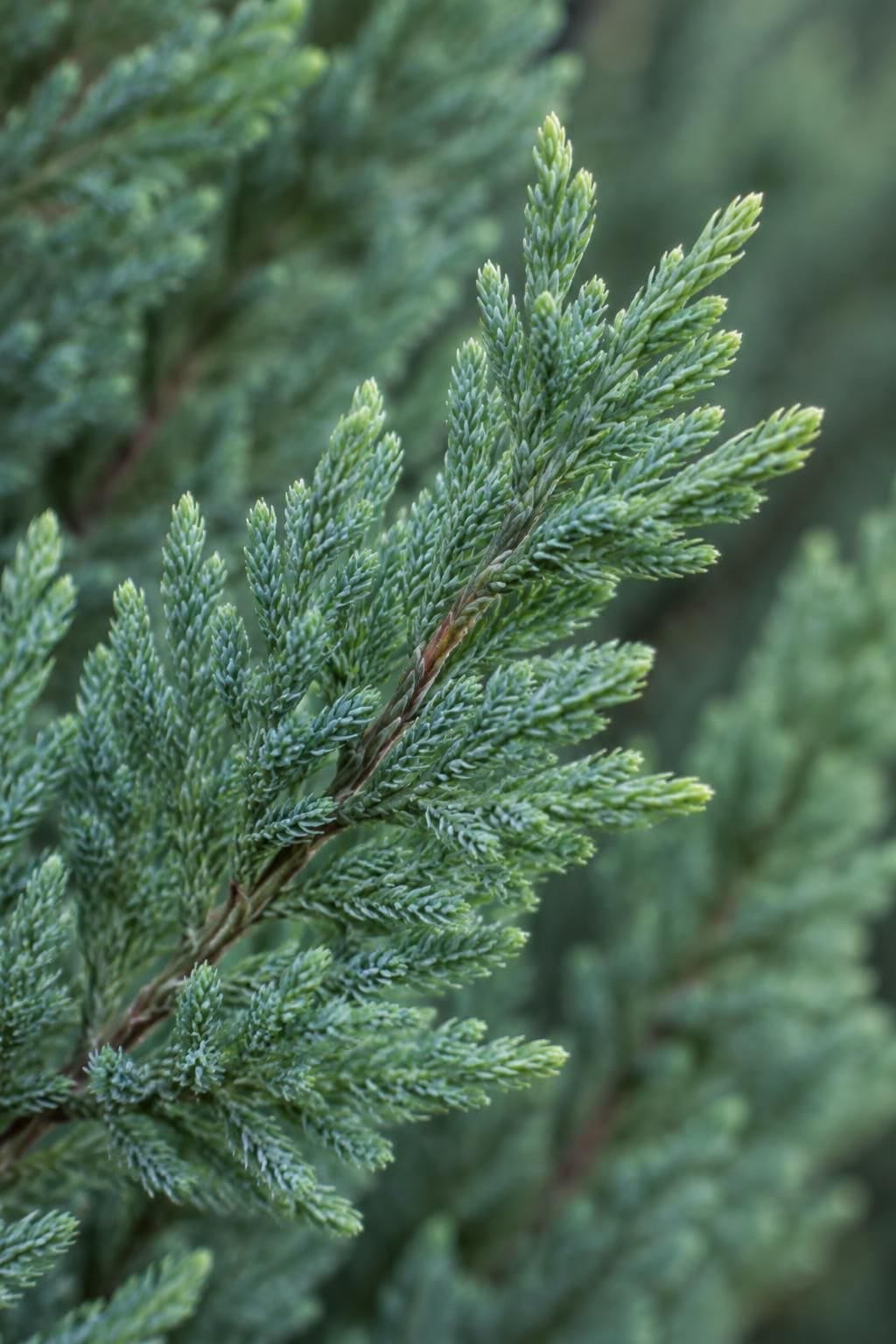
Next, look at the shape. A column that spreads, flops, or grows lopsided can point to rich soil or heavy feeding. Watch it for a season or two before you act. One weak flush of growth tells you little.
Rust is the last thing to check. Cedar apple rust can appear on junipers. Extension sources list it as a possible issue for Taylor, though the plant is usually trouble-free. The American Conifer Society says Taylor is purported to resist phomopsis blight. Purported is the key word. Treat that as a possible bonus, and don’t count on it.
A description from across the yard often can’t tell rust, winter injury, and drainage damage apart. They can look alike. If the clues don’t fit, a local extension office can look at a sample.
Before you plant, check three things. Does the spot get six or more hours of direct sun? Does the soil drain after rain? Can you wait a few years for the column to fill in? If the answers look good, Taylor is worth a place in your garden.
One thought on “Taylor Juniper: Size, Growth Rate, and Growing Requirements”