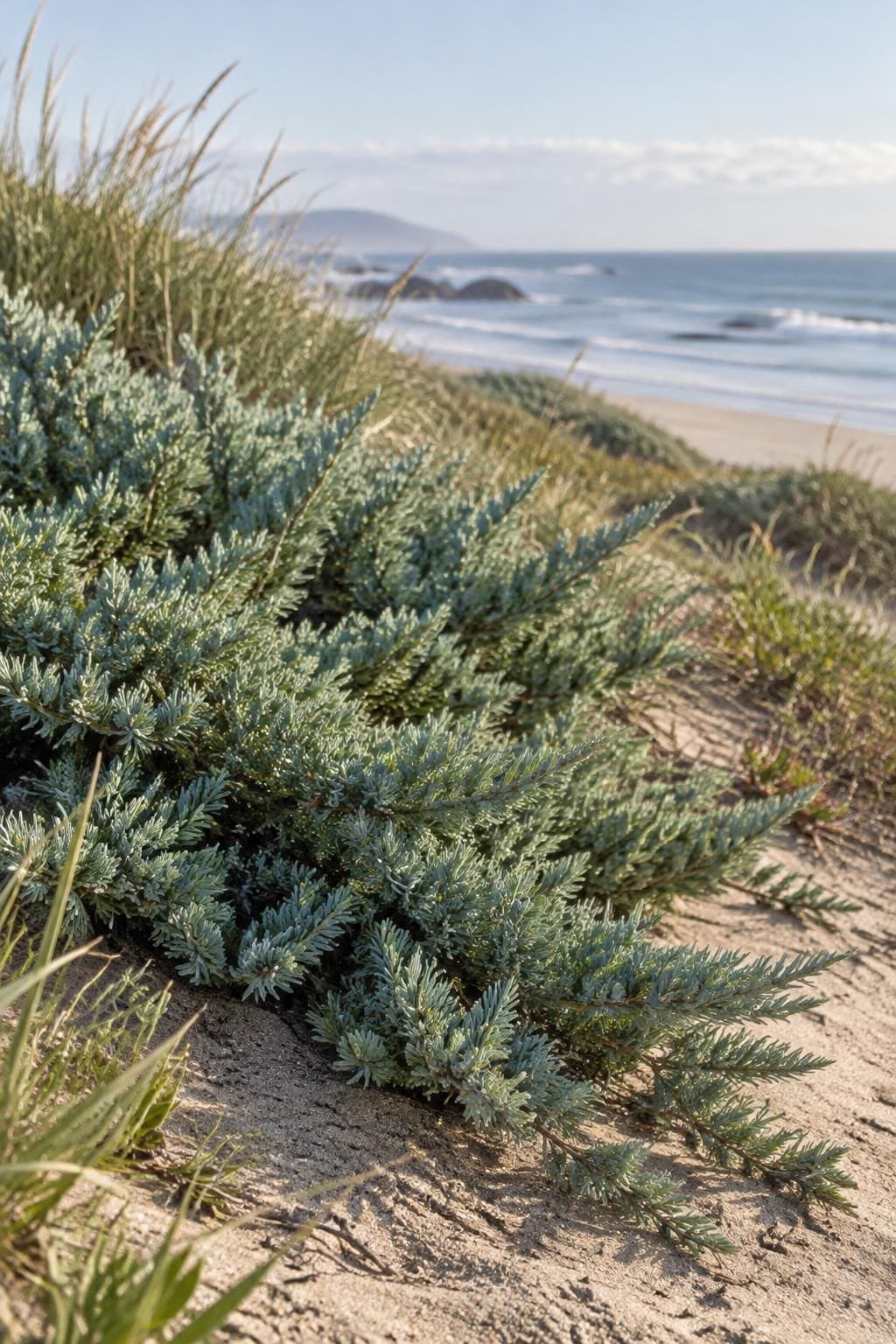
To cover an area with Blue Pacific juniper, divide the square footage by the square of your spacing, then round up. At 4 feet apart, a 400-square-foot bed needs about 25 plants, and at 3 feet apart it needs about 45. Closer spacing fills the bed sooner, but it costs more and the crowded plants may need thinning later. The sources reviewed put the time to full coverage at roughly two to four years, depending on spacing, sun, and care. The plant is a low, spreading groundcover with blue-green foliage, and it handles salt and heat well once established.
What the plant is and what it is not
Blue Pacific is a cultivar of Juniperus conferta, the shore juniper, which comes from coastal sites in Japan. The NC State Extension plant profile lists the species under several older names, including Juniperus rigida var. conferta, so you may see different names in different catalogs. One seller lists it under the Chinese juniper, Juniperus chinensis, which is a different species with a different habit. Check the botanical name on the tag before you calculate your plant count.
The shape is what matters most for planning, and it is easy to misjudge from a small plant in a pot. This is a prostrate plant, so it spreads along the ground rather than climbing. Sources range from about 6 to 18 inches tall at maturity, with a width of roughly 4 to 8 feet. The exact figures depend on the listing, so use the tag for the plant you are buying. That low, wide habit is why the plant works as a groundcover, and it is also why the width, not the height, decides how many plants you need.
Blue Pacific juniper spacing and plant count
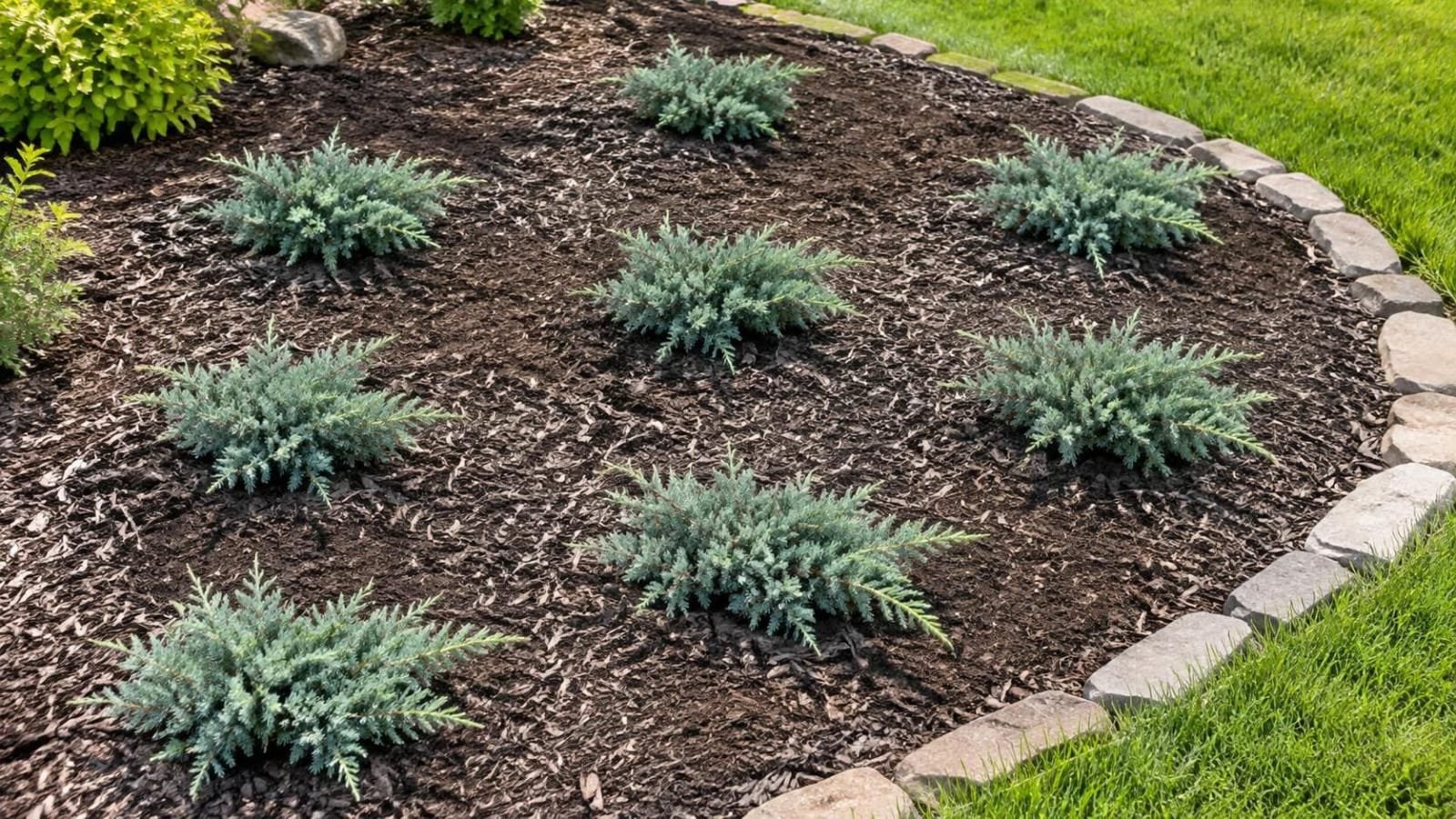
Do the math on paper before you order. It takes about two minutes. Multiply the length and width of the bed to get the square footage. Then divide by the spacing multiplied by itself. For a 20-by-20-foot bed, which is 400 square feet, the numbers look like this. At 5 feet apart, you need 16 plants. At 4 feet, you need 25. At 3 feet, you need 45, because 400 divided by 9 comes to just over 44. Round up every time, since you can’t plant a fraction of a shrub.
That calculation assumes a square grid, with plants in straight rows. A staggered, triangular pattern covers the same area with a few fewer plants, and it fills in more evenly. The square count is therefore a safe upper estimate. Buy a few extra if the bed has curves or if you expect some losses in the first season.
How long coverage takes
Spacing sets the timeline. One nursery says plants set 3 to 4 feet apart can form complete coverage within two to three years, while plants set 4 to 5 feet apart may take three to four years. Those figures are estimates. Growth depends on the plant, your soil, and how much water and sun the bed gets in the first season.
Growth rate figures also vary. Several listings describe the plant as spreading 6 to 12 inches a year, and one evergreen groundcover profile gives 6 to 8 inches a year for a moderate to fast grower. Another listing calls growth fast enough to spread a few feet by the second season, which seems optimistic. Plan around the slower rates so the timeline doesn’t disappoint you.
In the first season, expect the bed to look sparse, with bare soil between plants. That sparse look is normal. Keep weeds under control, and don’t judge the planting too early. Coverage usually shows up over several months, not all at once.
If you want a faster bed, the tradeoff is cost and thinning. Closer plants fill in sooner but compete for root space, and they will eventually need to be pulled or cut back to keep the bed from crowding. Plants set at the wider spacing take longer to cover the ground, but they need less thinning.
Planting the bed
Prepare the bed before planting, because weeds often compete hardest during the first two years. Remove existing weeds and grass from the planting area, and consider a barrier or a layer of mulch to keep them down while the plants fill in. Once the juniper covers the ground, it does much of this work itself, though only after it is established.
Plant in full sun, which most sources give as at least six hours a day. Listings give USDA zones 5 to 9, although one says 6 to 9 and another says 5 to 11, so check the zone on the tag. The groundcover profile notes that shade slows growth and thins the foliage, so a bed that gets only dappled light will fill in later and less densely. Container size changes the starting point. Some suppliers sell this juniper in 1-gallon and 3-gallon containers, and the larger plant starts out fuller, though it costs more. Plant at the same depth the plant grew in its container, and water deeply through the first season, then let the top of the soil dry between sessions.
The soil needs good drainage. Sources describe the plant as tolerating sandy and rocky ground, but none of them say it tolerates standing water. A bed that stays soggy after rain will rot the plants before they fill in, so grade the site or raise it if you have to.
Salt, coast, and wildlife
The plant’s reputation rests on coastal performance. It is described as having exceptional salt tolerance and as a good choice for seaside plantings. Other listings describe it as tolerant of salt spray, sandy soil, and heat. If your bed sits near the water, that is a strong reason to choose it over a plant that struggles with salt spray.
Deer resistance is listed for this juniper, and one nursery says deer tend to leave it alone. Treat that as a helpful tendency rather than a guarantee, and protect new plants if deer are a problem in your area.
If your bed is on a steep bank rather than flat ground, our Gray Owl juniper guide covers a plant chosen for slopes, and the planting logic there applies to this one as well.
Other options for a bed
Blue Pacific is a groundcover, and it is not the only juniper that fills a bed. If you want a shorter edge plant for a small space, our Blue Star juniper guide covers a compact shrub. For a bed that needs a golden contrast beside the blue-green foliage, our Old Gold juniper guide describes that option.
If the bed needs a taller plant in one corner, our Wichita Blue juniper size guide covers a narrow upright option, and our Juniperus virginiana guide compares a native species that grows far larger. Once you choose the groundcover, our Sea Green juniper planting guide walks through the planting steps that apply to any juniper in the ground.
Before you order
Measure the bed, choose a spacing based on how fast you need coverage, and run the count with rounding up. Write the number down next to the spacing, so the order matches the plan you made on paper. Ask the nursery whether the plant is sold as Juniperus conferta. Some suppliers offer bulk pricing for groundcover quantities, which can change the cost of a large bed, so ask before you buy one plant at a time. Then decide how long you can wait. A bed that needs to look finished in one season will cost more and need closer spacing, while a bed you can give three years will fill in with fewer plants.