
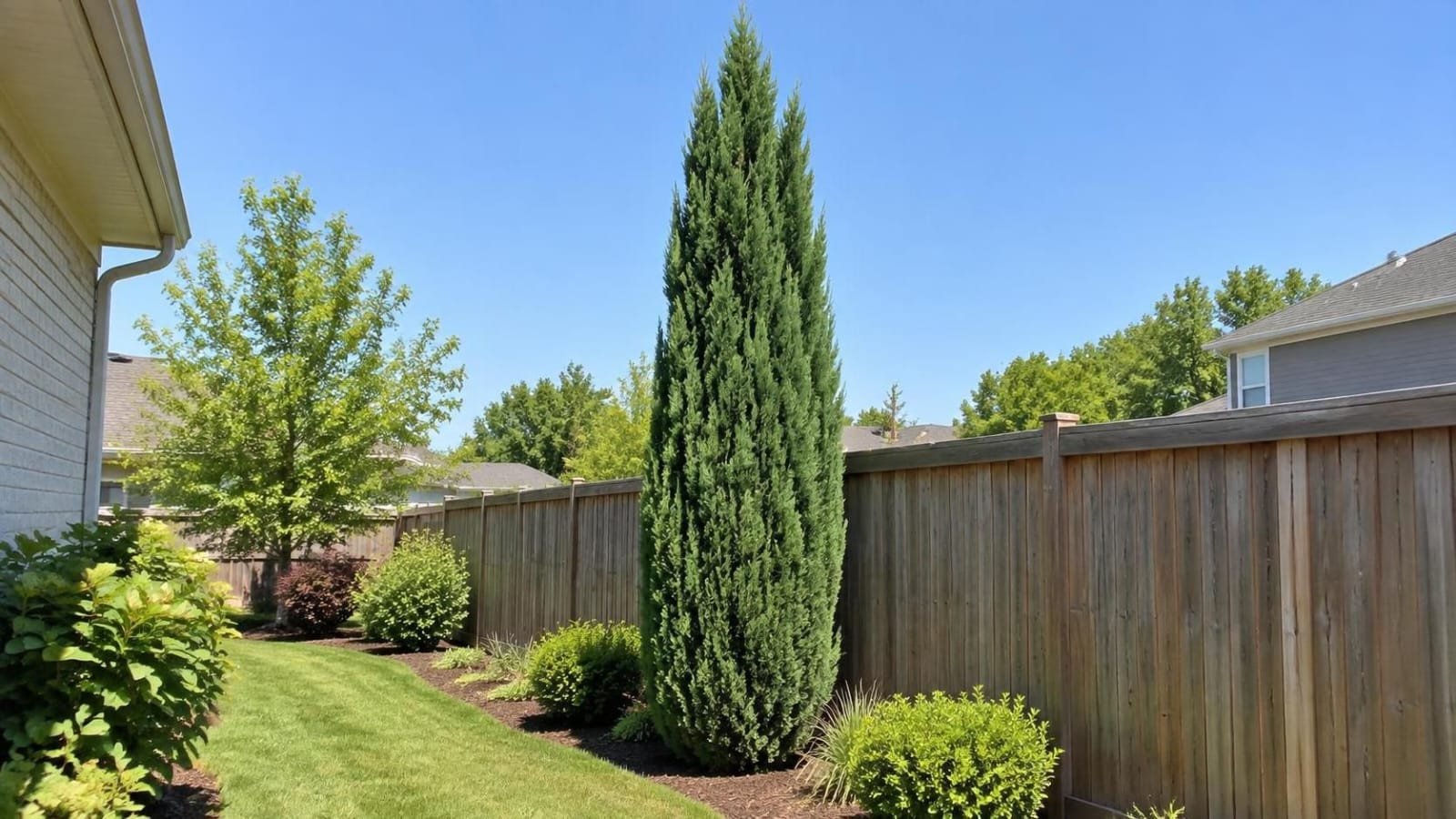
Star Power juniper is a fast-growing, dense, upright hybrid with blue-green foliage, bred for screens and tall hedges. It was introduced in Wisconsin in 1998, and it is sold under the botanical name Juniperus × ‘J.N. Select Blue’. Most listings give a mature height of 15 to 18 feet and a width of 6 to 10 feet, and it is one of the faster junipers sold for screening. Its main strength is speed, so the planning question is how quickly you need the screen, and how much room the mature width will take.
Where it comes from
The plant was selected at Johnson’s Nursery in Wisconsin, and sources describe it as a hybrid, believed to come from common juniper and Chinese juniper parents. That mixed ancestry explains why it is columnar and dense, and it is one reason its growth and hardiness differ from the Rocky Mountain and eastern species covered elsewhere on this site.
The name also causes confusion. Some listings use ‘Star Power’ for a plant with a different botanical name and a slightly different height, so check that the name on your tag matches ‘J.N. Select Blue’ before you compare sizes. One listing goes further and calls the plant a Rocky Mountain juniper, Juniperus scopulorum ‘Monam’. The hybrid origin reported by the other sources makes that label doubtful, but it is worth asking the nursery to confirm the parentage if you care about the species.
How tall and wide Star Power juniper gets
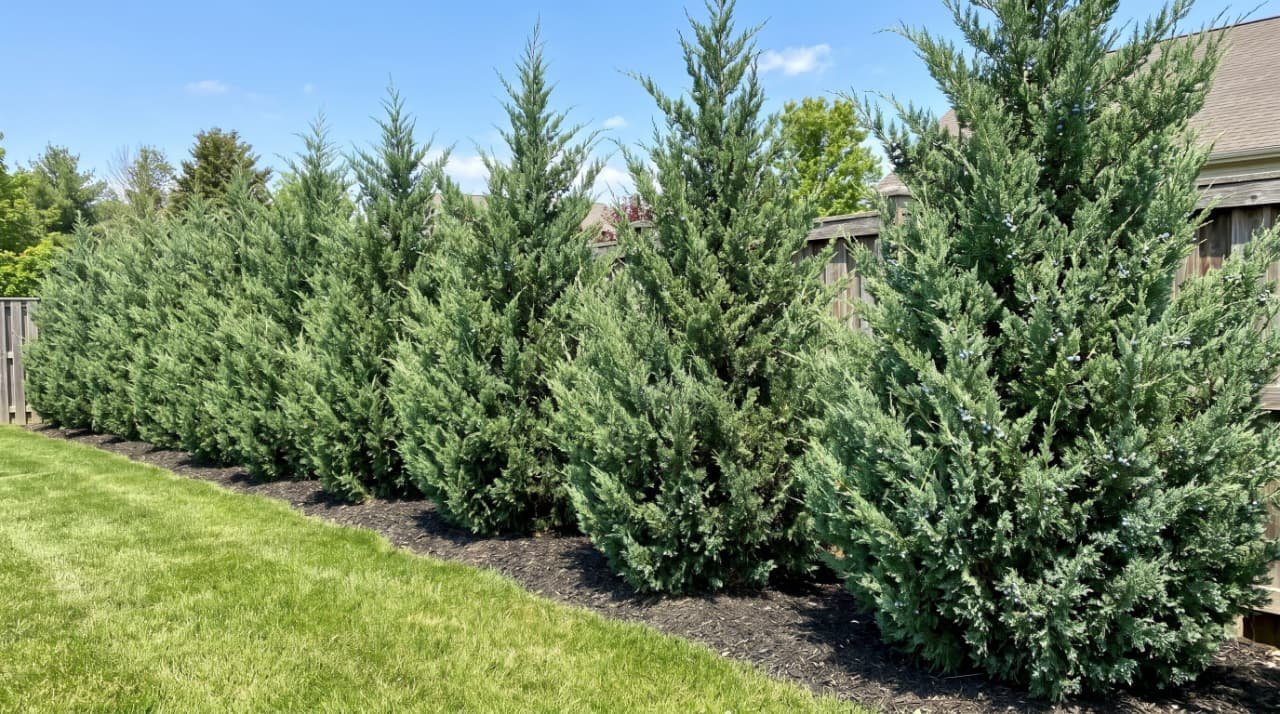
The reference figures cluster around 15 to 18 feet tall. Nature Hills gives 15 to 18 feet tall and 6 to 10 feet wide, and other listings give 17 feet tall with a width of 7 to 9 feet. It is narrow at the top and a little broader at the base, so it fits a tight line better than a broad shrub would.
A plant that reaches 15 feet in about 10 years, as one nursery describes, will overtake a fence or a second-story window in a short time. Plan for the full height before you plant, since the screen will be taller than you expect within a decade.
How fast it grows
Growth is the reason to buy it. Sources give rates ranging from more than 10 inches a year to about 2 feet a year, with a few calling it moderate. The spread in those figures reflects the site, the age of the plant, and how well it is watered in the first seasons, so use the lower end when you plan the timing of a screen.
Fast growth has a cost. A plant that adds height quickly also tends to need more room at the base, and you should expect it to widen as it matures. Measure the distance from the planting line to the nearest fence or walk, then add the mature width to the calculation.
Spacing for a screen
Spacing sets how fast the screen closes. One nursery suggests about 8 feet between plants for a screen, while others say closer spacing creates a barrier faster. Closer plants fill in sooner, but they compete for light and water as they grow, and they will need to be thinned if the screen gets too dense at the base.
A row planted in a staggered pattern usually looks more natural than a straight line, and it closes the gaps more evenly. Stagger the plants by a few feet on alternating sides of the line, so the screen reads as a mass rather than a fence of single plants. If you want a formal hedge, plan for trimming. If you want a natural screen, leave the plants to grow into their shape.
Hardiness, wind, and deer
Hardiness is usually listed as USDA zone 3 to 7 or 3 to 9, depending on the source. It is described as tolerant of wind and salt, and it keeps its structure in exposed sites, which makes it useful along an open property line. Check the zone on your tag, since the listings disagree.
Deer resistance is listed for this plant, and one nursery notes that it provides shelter for wildlife, including birds that use the dense branches in winter. Treat the deer rating as a tendency, and protect young plants in a yard with heavy deer pressure.
Foliage and winter color
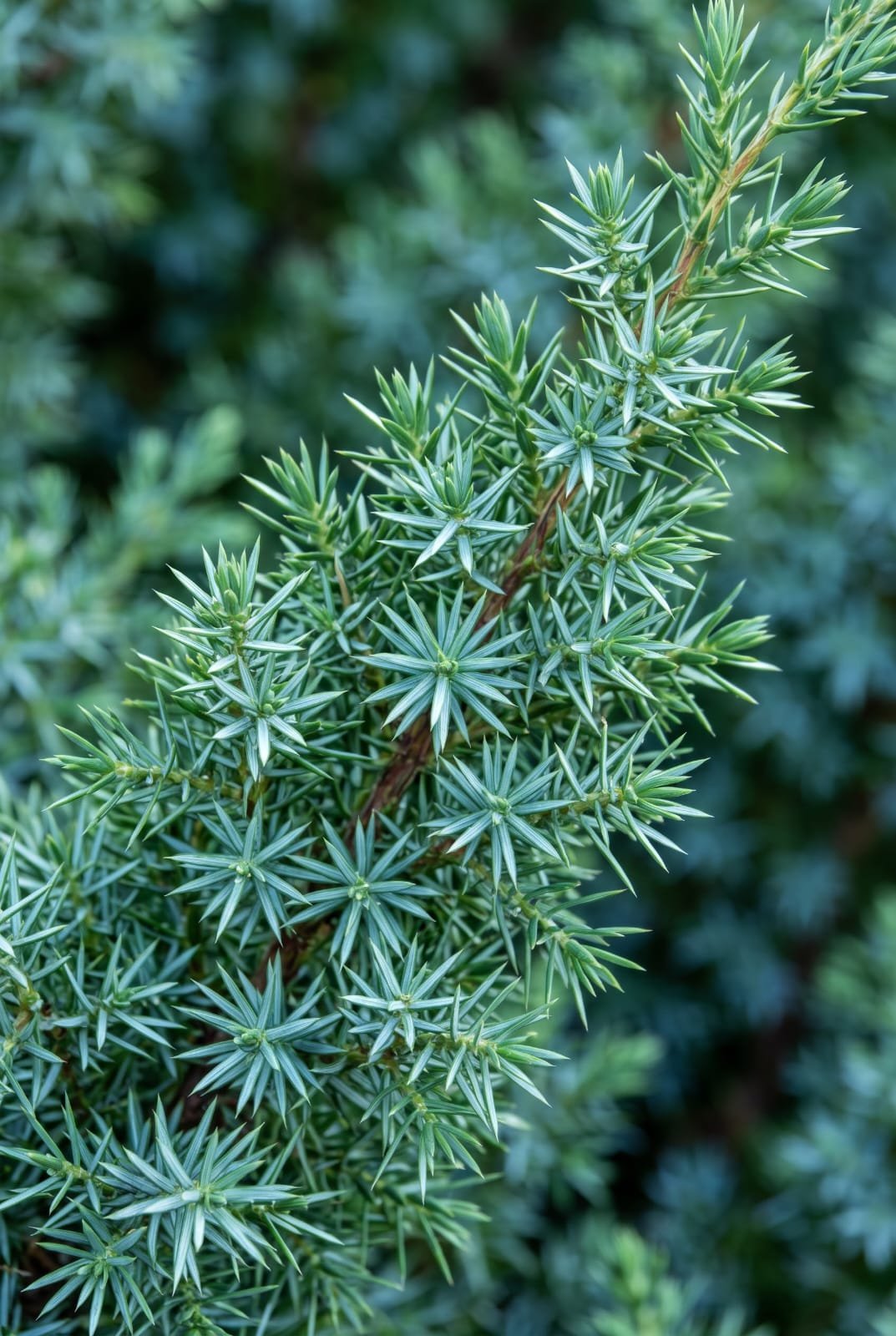
The foliage is blue-green in summer, and sources describe a color shift in cold weather, with some listings noting purple or bronze tones in winter. The needles are soft and fine textured, which makes the screen look lighter than its height suggests.
How Star Power compares with other screening junipers
Star Power is for a fast, dense screen. It is different from the Hetz columnar form, which is more about identity and form, and from Medora, a slower Rocky Mountain cultivar used as a single accent. Our Hetz juniper guide explains the columnar and spreading forms, and our Medora juniper guide covers a slower, narrower accent.
If you need a shorter plant for the same job, our Wichita Blue juniper size guide covers a different narrow form, and it is worth comparing the mature heights before you decide.
Common mistakes
The first mistake is expecting instant privacy. A young plant fills in over several seasons, so a screen planted this year is a partial screen next year and a full one later. The second is planting too close to a house or a fence because the nursery pot looked narrow. The third is topping the plant to hold it at a lower height. Topping a columnar juniper leaves unsightly stubs and rarely gives the dense look people want, so choose a shorter plant if you need a lower screen.
Fast growers also get watered less carefully than slow ones, since they look healthy and push new growth. Check the root zone during the first summer, and do not assume the plant needs no water because it is growing well.
Before you commit to a long row, look at the sun and the wind on the site. A screen that faces a fully exposed boundary will take the full force of that wind, and the plants do best with full sun and good drainage. A quick walk around the property at different times of day tells you more than any catalog. Note where the afternoon sun falls and where the wind funnels through, then plan the line around those spots.
Who it suits
This juniper suits a property line, a back yard, or a side yard where height matters more than width, and where the owner can wait a few seasons for the screen to close. It is less suited to a small front yard or a narrow walk, where the mature width and height will crowd the space.
If you have room for a broader screen and want a lower plant, the Juniperus virginiana varieties guide covers native options that suit a different style of planting.
Planting and early care
Plant in full sun, at the depth the plant grew in its pot, with the top of the root ball level with the soil. Water regularly through the first season, since fast-growing plants use more water while they establish. For the digging and backfilling steps, our Sea Green juniper planting guide covers the full sequence.
Pruning is usually optional. One source says the plant keeps a dense canopy with no pruning, and that is one of its selling points. If you trim it into a hedge, do it lightly and avoid cutting into bare wood.
Before you buy
Confirm the botanical name on the tag, and ask for the mature height and width of that exact plant. Ask whether the figure describes the plant in its pot or at maturity, since the two can be very different for a fast grower.
Measure the screen line at the mature width, then add a few feet for the plant to fill in. Keep the tag or receipt so you have the name and size you were promised.
2 thoughts on “Star Power Juniper: Fast Growth for a Privacy Screen”