
Growing eggplant in raised beds works well because the soil warms earlier in spring and drains more freely than many garden soils. For most home gardens, a bed roughly 10 to 12 inches deep and no more than about 4 feet wide, filled with loose, compost-rich soil, gives the roots what they need. Plant once the nights are reliably warm, because a warm bed cannot make up for cold air.
Many eggplant problems start below the surface, and a raised bed changes what happens there before the first plant goes in. The plant asks for warm roots and steady moisture, and the soil has to drain without drying out. A bed can provide both, but only if you build it with some care.
Why the bed warms first
In spring, soil in a raised bed warms faster than soil at ground level. The bed sits higher, it has more exposed surface, and loose soil lets cold water drain away instead of sitting around the roots. Kellogg Garden’s guide notes that eggplant can go into raised beds earlier than it can into the ground, which lengthens the season.
Here’s the kicker: a warm bed doesn’t mean you can plant early. Warm soil helps the roots, but leaves and flowers respond to air temperature. Seedlings that sit through a run of cold nights will stall, even in soil that feels warm to the hand, so the bed earns you a head start without setting the calendar.
How deep and wide should a raised bed be for eggplant?
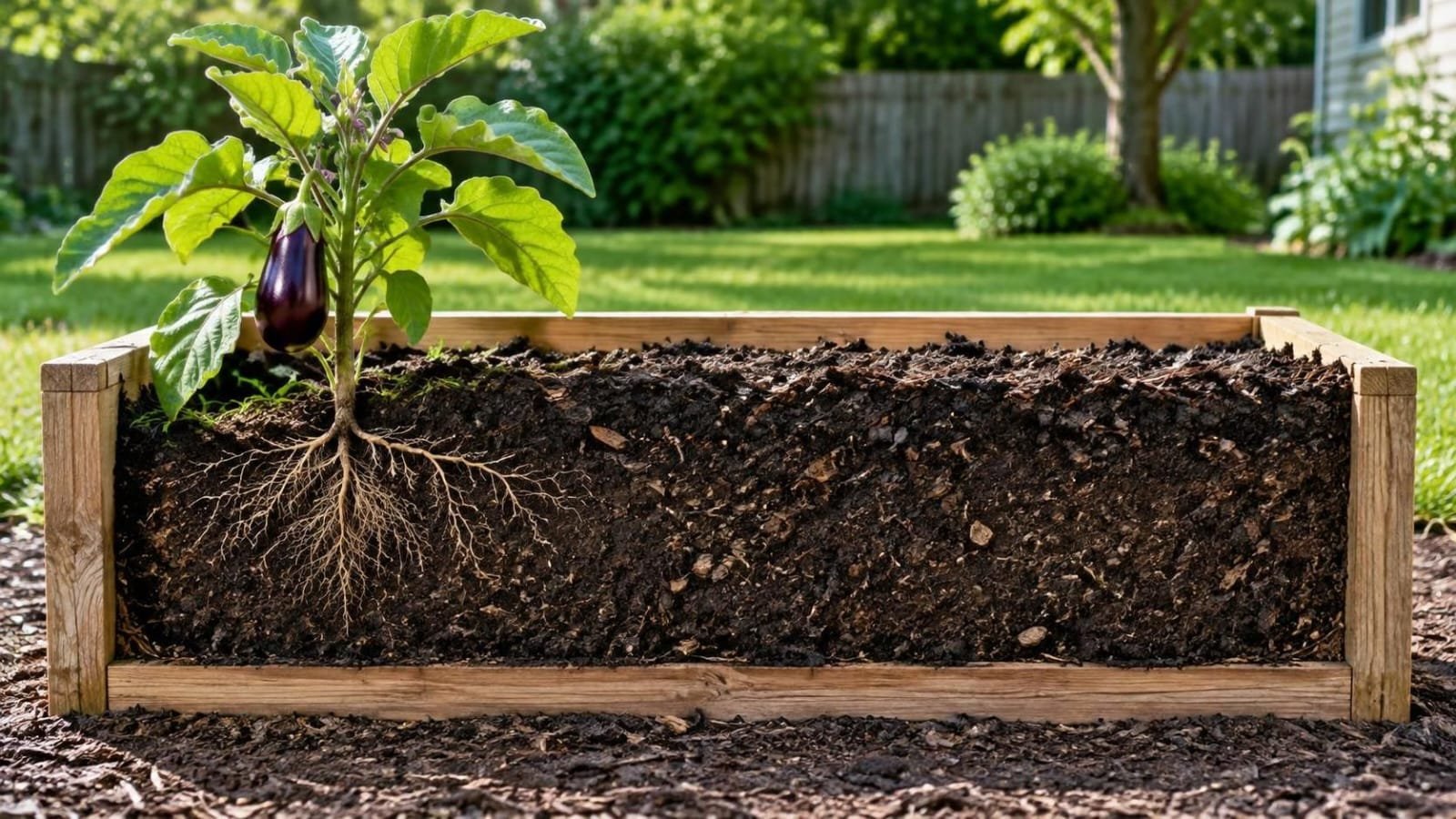
Depth and width are hard to change once the frame is built, so settle them first. Extension guidance for high tunnels describes beds about 8 to 10 inches high with a top width of 30 to 36 inches, Those are commercial dimensions, but they still give a useful reference point. Texas AgriLife Extension works from wider field beds of 38 to 40 inches, which suits open-field rows. For a home garden, Epic Gardening advises keeping the bed no more than four feet wide, so you can reach the middle from either side without stepping on the soil.
The figures differ because they describe different systems. Taken together, they point to a bed roughly 10 to 12 inches deep and under four feet wide, with a width you can comfortably reach across. Depth matters because eggplant roots need room to spread, and a shallow bed dries out faster in summer, which tends to stress the plant.
Raised bed materials
Wood is the most common choice, and rot-resistant boards such as cedar are a popular option. Metal beds heat up quickly in full sun, which matters if your summers are already hot. Stone or brick lasts longer but costs more and is harder to change. Each material suits a different budget and climate, so match the choice to how long the bed will stay where it is.
Filling a raised bed with the right soil
Dense yard soil is a frequent culprit when a new bed disappoints. It packs down, drains poorly, and leaves young roots short of air. A better base is a blend of good topsoil and fully finished compost, with enough organic matter that the mix stays crumbly after watering. Fresh manure or half-rotted compost can burn young roots or pull nitrogen away from the plants, so use only material that has broken down completely.
Before you plant, run a soil test. It tells you whether the pH is in a workable range and which nutrients are short, so you correct the real problem instead of guessing. Soil pH and amendments get their own article, so this one stays with the bed’s structure. You don’t need to line the bottom; the mix should drain into the soil beneath.
Picking the site
Eggplant needs full sun for most of the day, and a bed in partial shade often produces fewer fruit. Check the spot in late morning and early afternoon, since a fence or tree can block the light at exactly the hours that matter most. Wind is the other thing to watch. Tall plants carrying heavy fruit can snap in strong gusts, so a sheltered location helps. In very hot climates, some afternoon shade can ease heat stress, but that is a judgment to make after you have watched the bed through a midsummer week.
Timing the transplant
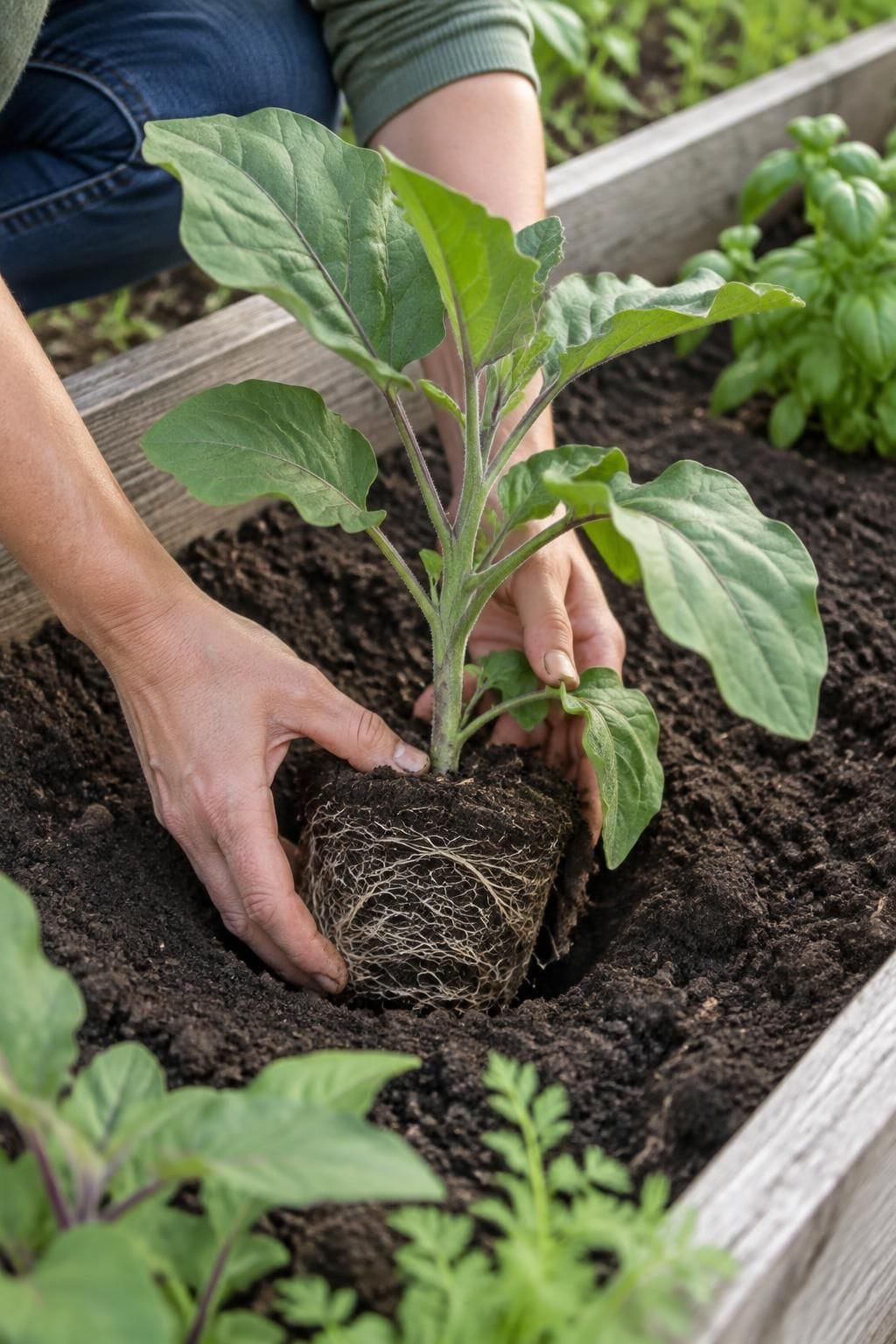
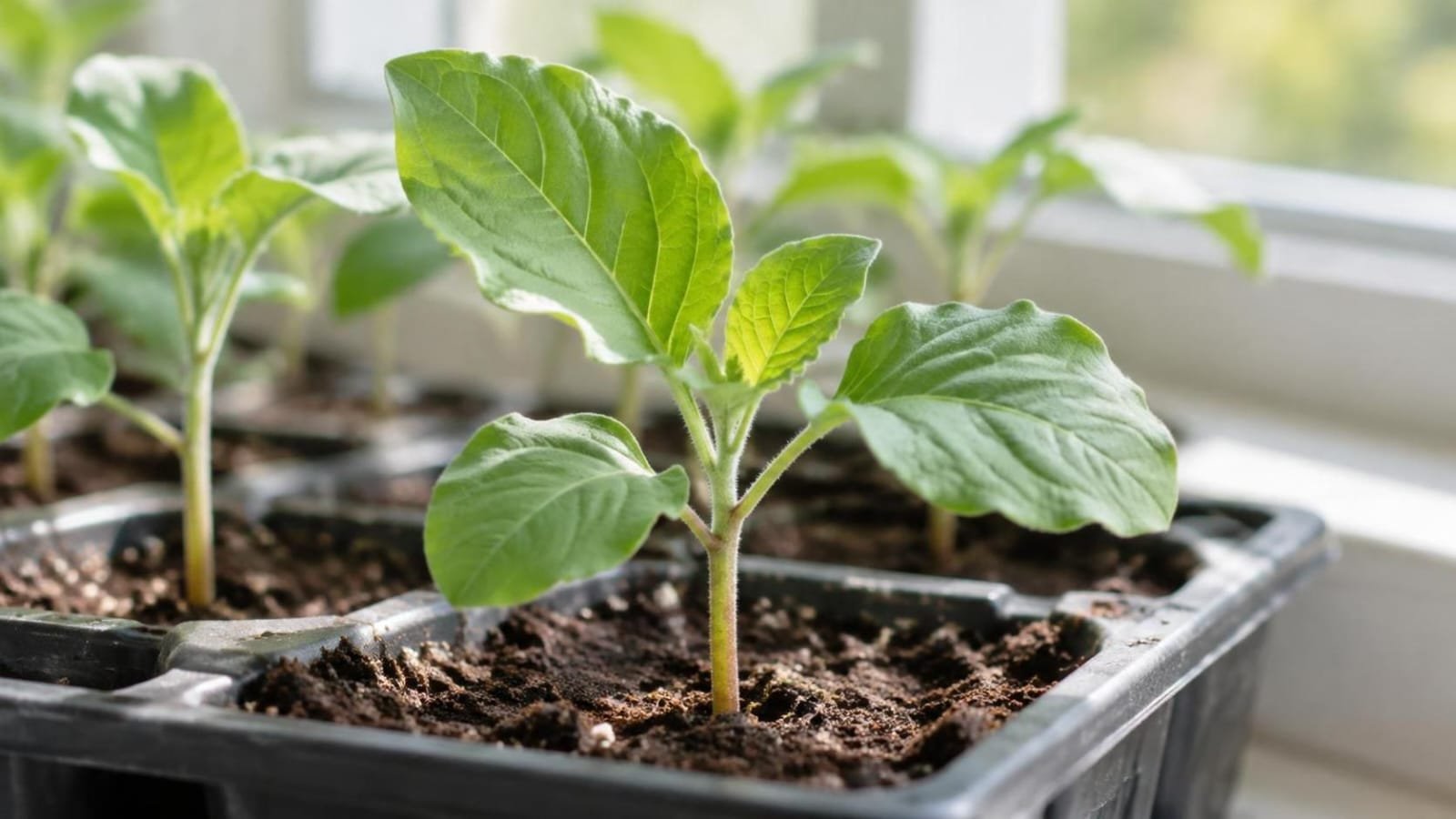
Planting out because the bed feels ready is easy to do, while the nights may still be cold. When to Plant Eggplant covers the calendar side in detail. For the bed itself, the signs to look for are a stocky transplant, roughly 10 to 12 inches tall, and nights that stay comfortably warm. Extension guidance for high tunnel production puts transplanting about six to eight weeks after sowing, a useful check if you raised your own seedlings.
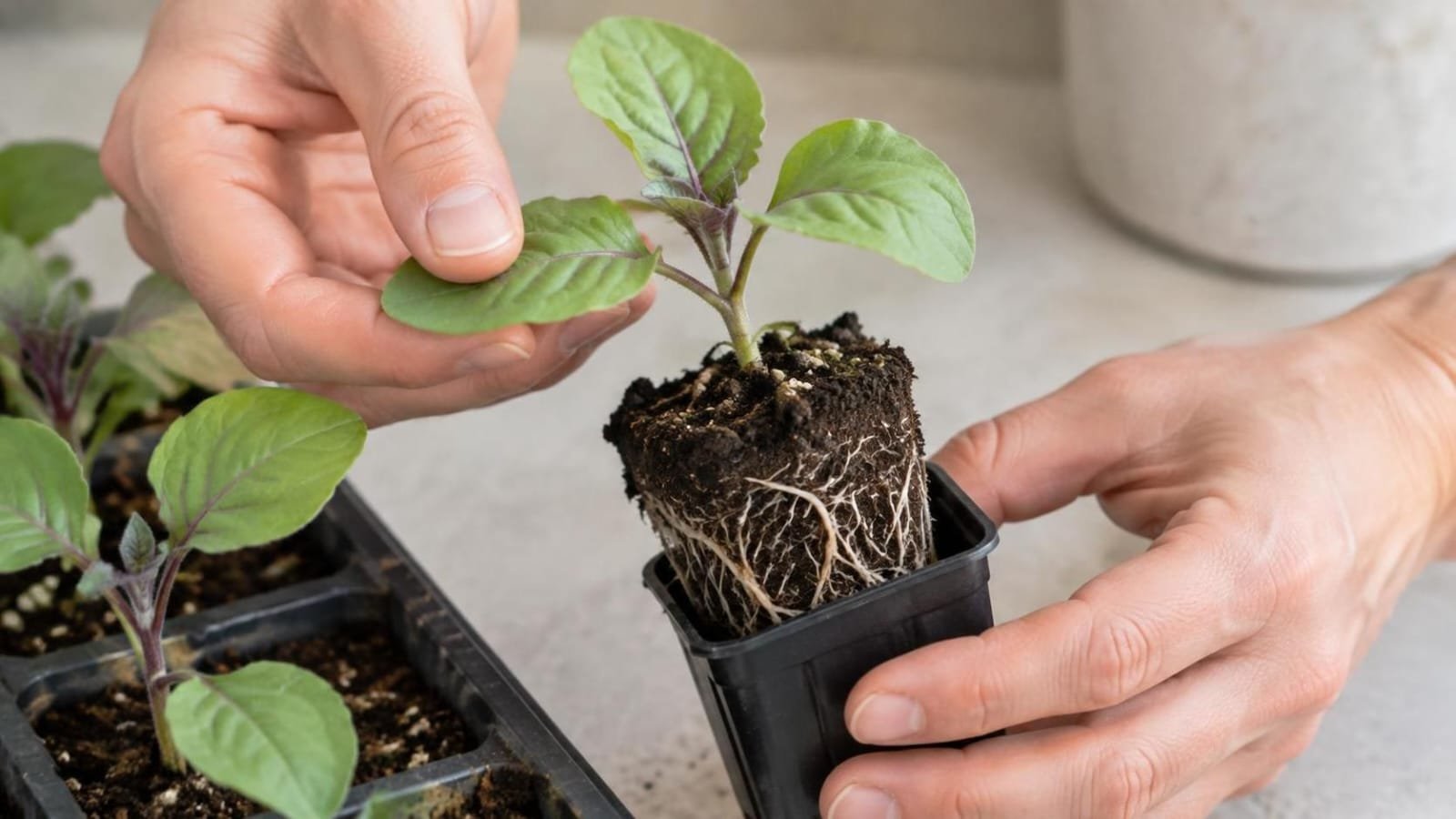
Set the transplant at the depth it grew in its pot, firm the soil gently around the stem, and water it in well. A limp plant the next day is often just transplant stress, so give it several days before you judge it.
Starting from seed
If you grow your own transplants, you get more choice of variety and better control of the seedlings. Eggplant seed needs steady warmth to germinate and bright light once it sprouts, and weak seedlings are harder to establish after transplanting. How to Grow Eggplant From Seed walks through sowing and seedling care step by step. Here the only point is that the bed should wait for strong transplants.
Spacing inside the bed
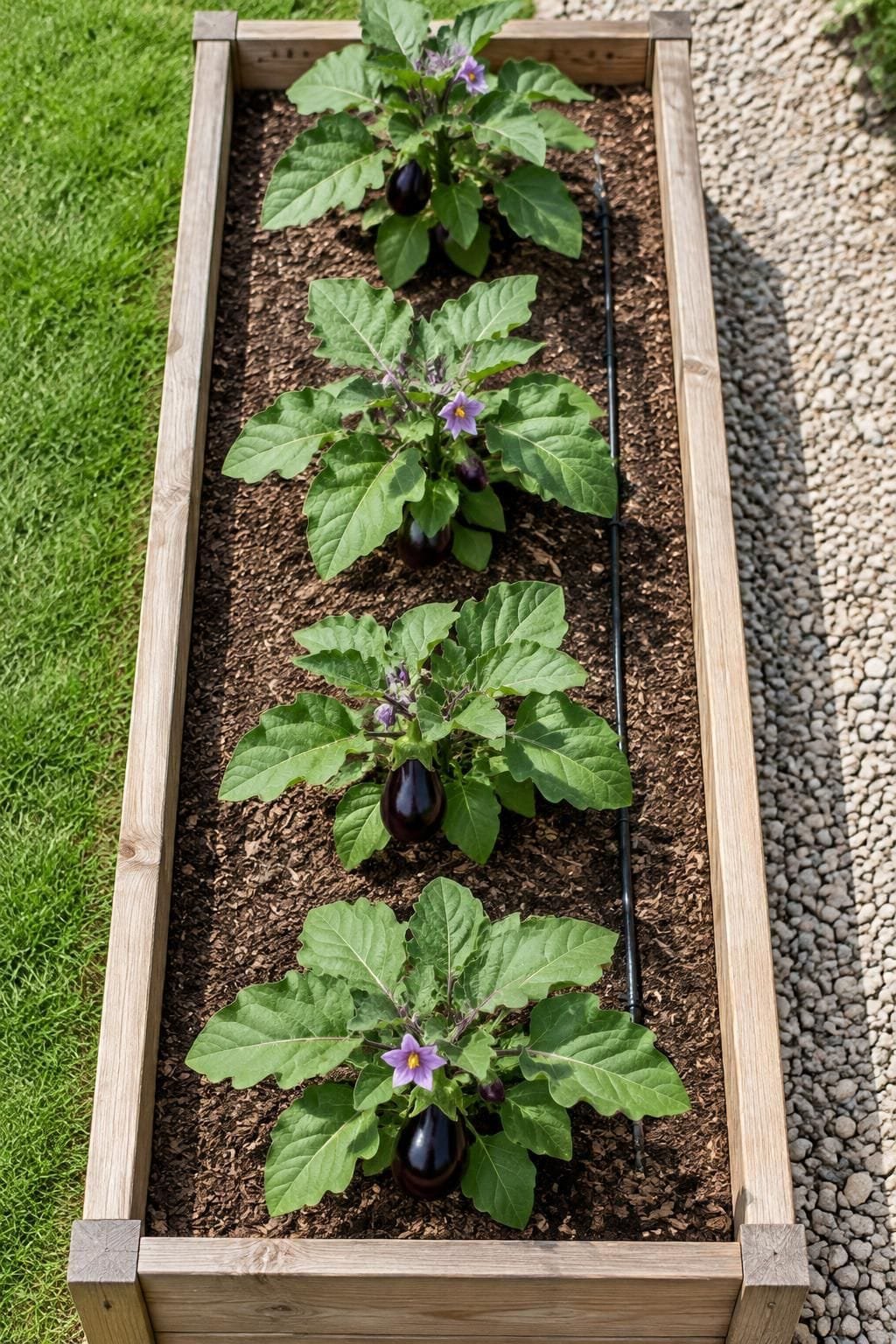
Spacing depends on the variety, the size of the plant, and whether you train it up a support. Texas AgriLife’s guidance gives 24 to 36 inches between seedlings in its 38 to 40 inch beds. That is wider than many home beds need, so treat it as an upper limit rather than a target. In a narrow bed, leave enough room to reach every plant from the edge and pick fruit without stepping onto the soil. The detailed spacing discussion has its own article.
Watering and mulch
A raised bed dries out faster than the ground around it, especially in windy weather or during a heat spell. Drip irrigation suits a bed well because it delivers water to the root zone and keeps the leaves drier, which can lower the risk of some leaf diseases. Covering the surface with mulch slows evaporation and keeps the soil temperature steadier. The right amount of water changes with weather and soil, so check the soil with a finger before each watering instead of following a fixed calendar.
Choosing a variety for the bed
Plant size varies a lot between eggplant types, and that changes how a bed works. Compact types suit a small bed well, while large, sprawling plants need more room and firmer support. Check the expected height and spread on the seed packet or plant tag before you decide. Types of Eggplant compares the main groups so you can match a variety to the space you have.
Bed or container?
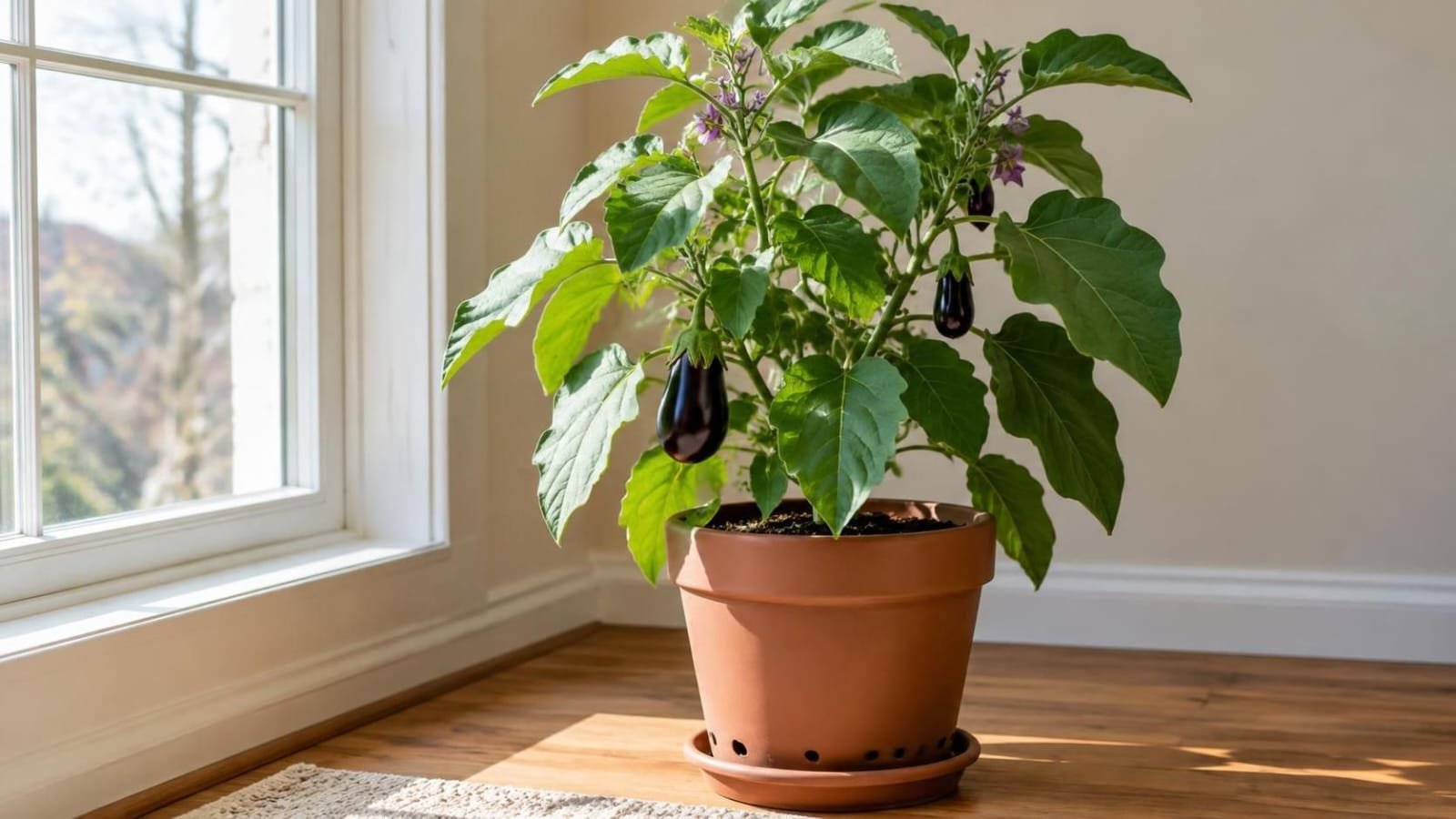
If you’re deciding between a bed and a pot, the main difference is how much soil you have to work with. A bed holds a larger volume of soil and water, so plants usually have more buffer during dry spells. Containers are easier to move and suit a patio or a balcony. How to Grow Eggplant in Containers and Pots covers the pot side of that decision in full.
What a raised bed does not fix
A bed does not protect the plant from insects or disease. Aphids, flea beetles, and spider mites still arrive, and soil-borne problems can still build up in the same bed year after year. Good drainage lowers the risk of some root problems without eliminating them. A description of leaves or fruit rarely points to a single cause. Similar symptoms can come from watering, nutrients, pests, or weather, so examine the plant before you treat it. If a plant keeps declining despite good conditions, your local Extension office can look at a sample and tell you what they see.
Begin with the spot. On a clear day, count the hours of direct sun it gets, then mark the footprint and check how far you can reach across it. Those checks settle most of the bed’s design before any soil goes in. For the full path from planting to harvest, read How to Grow Eggplant: Planting, Growing, and Care, which ties these early decisions to the rest of the season.
One thought on “How to Grow Eggplant in Raised Beds”