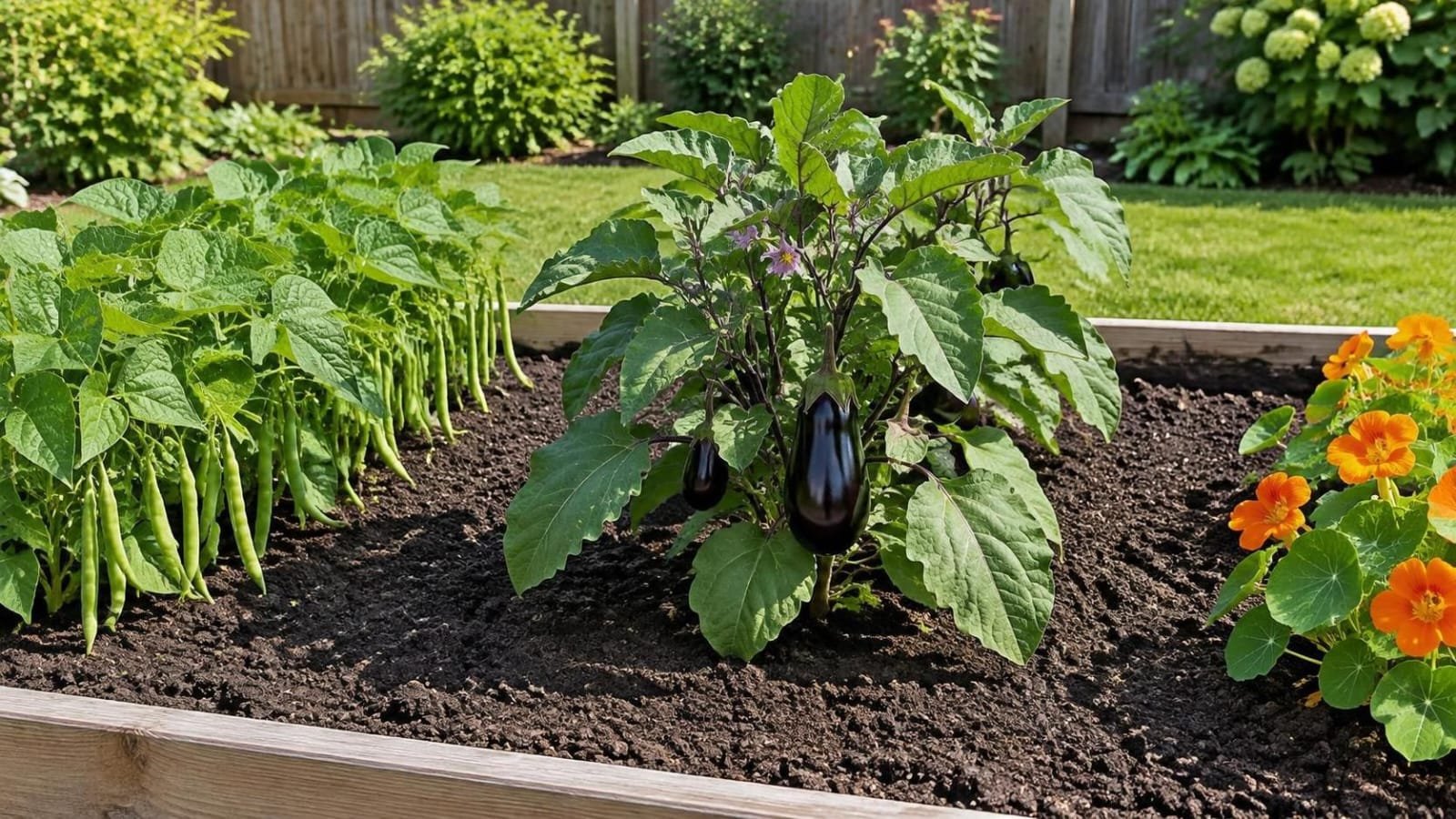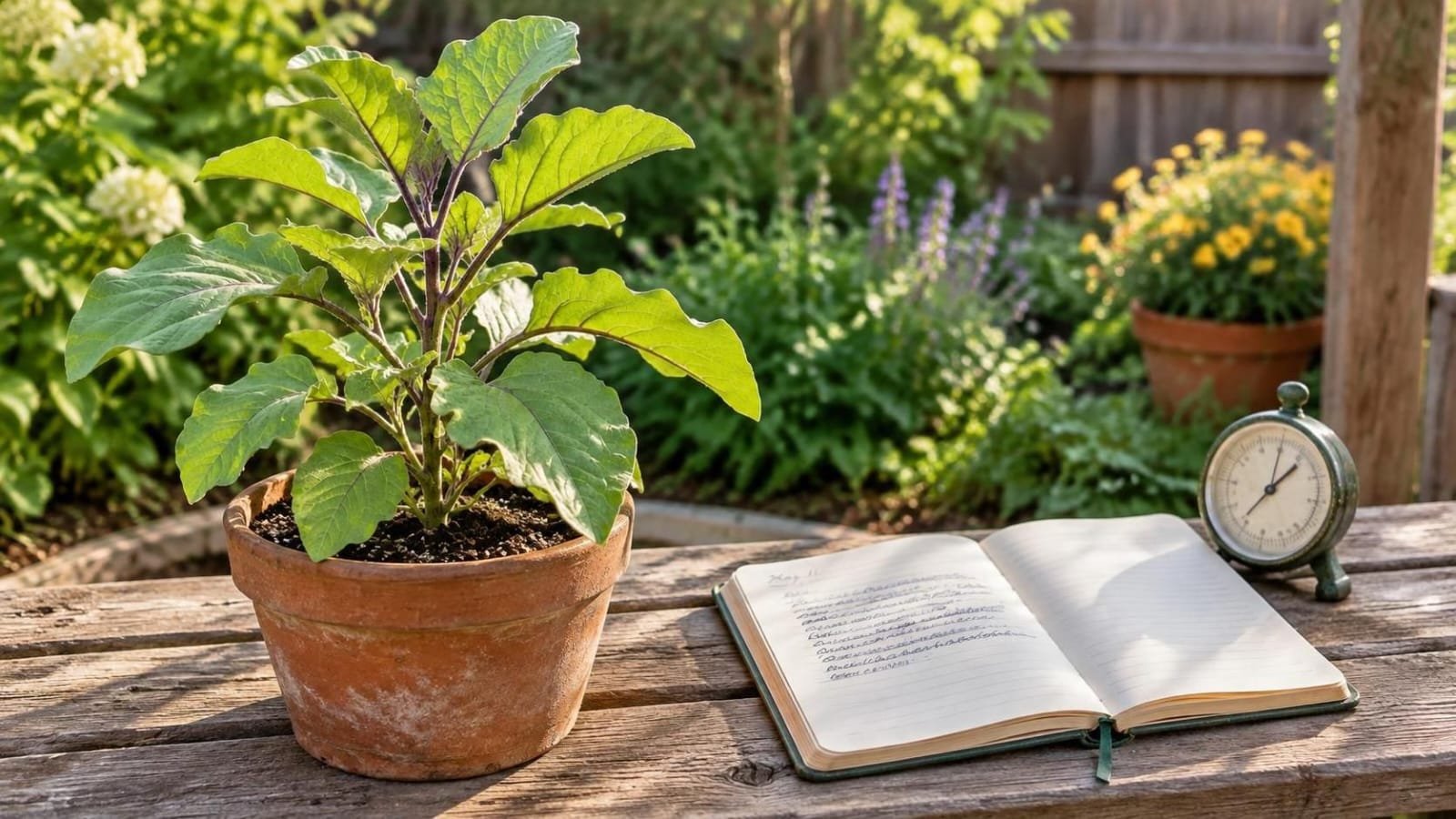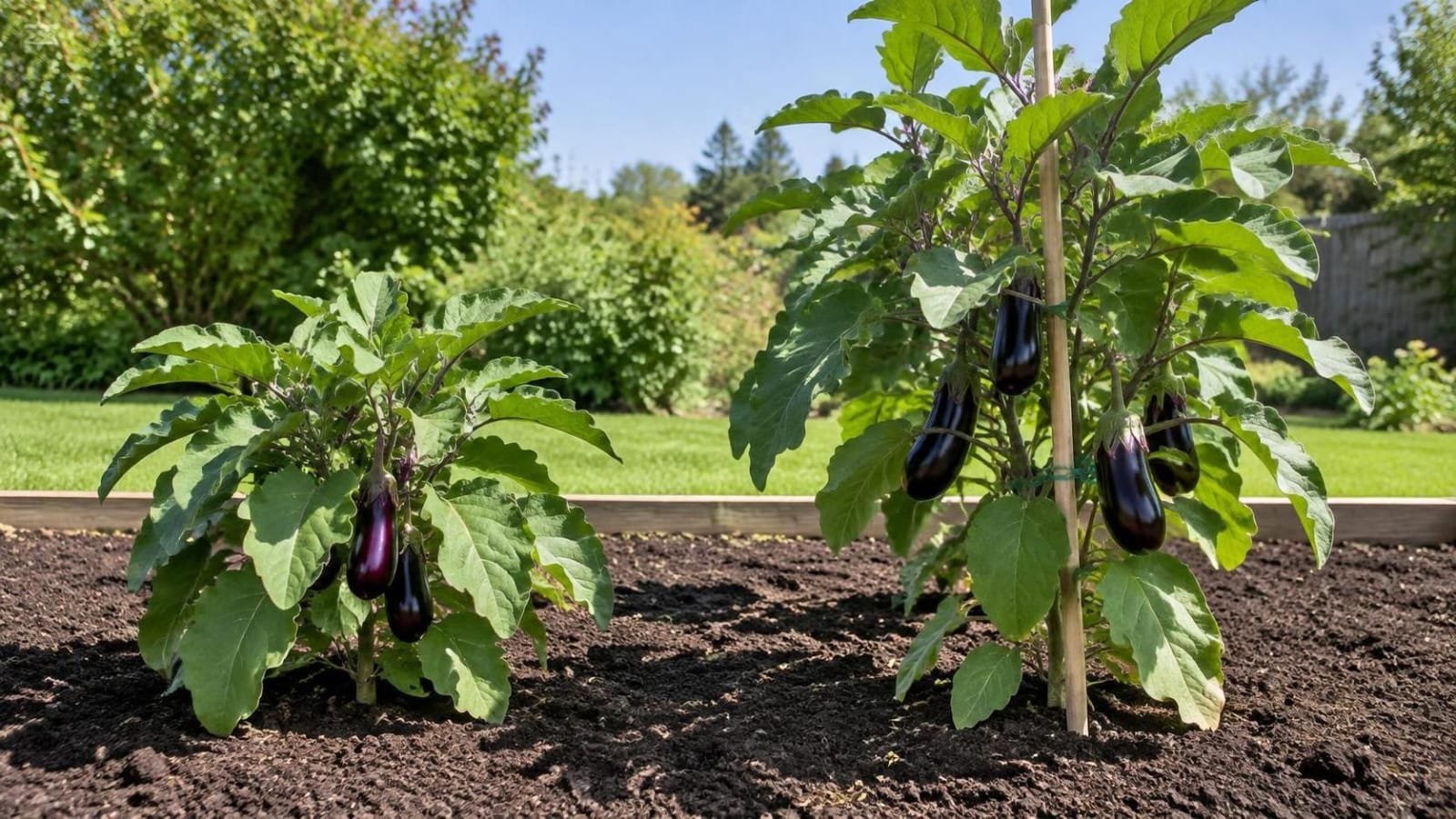
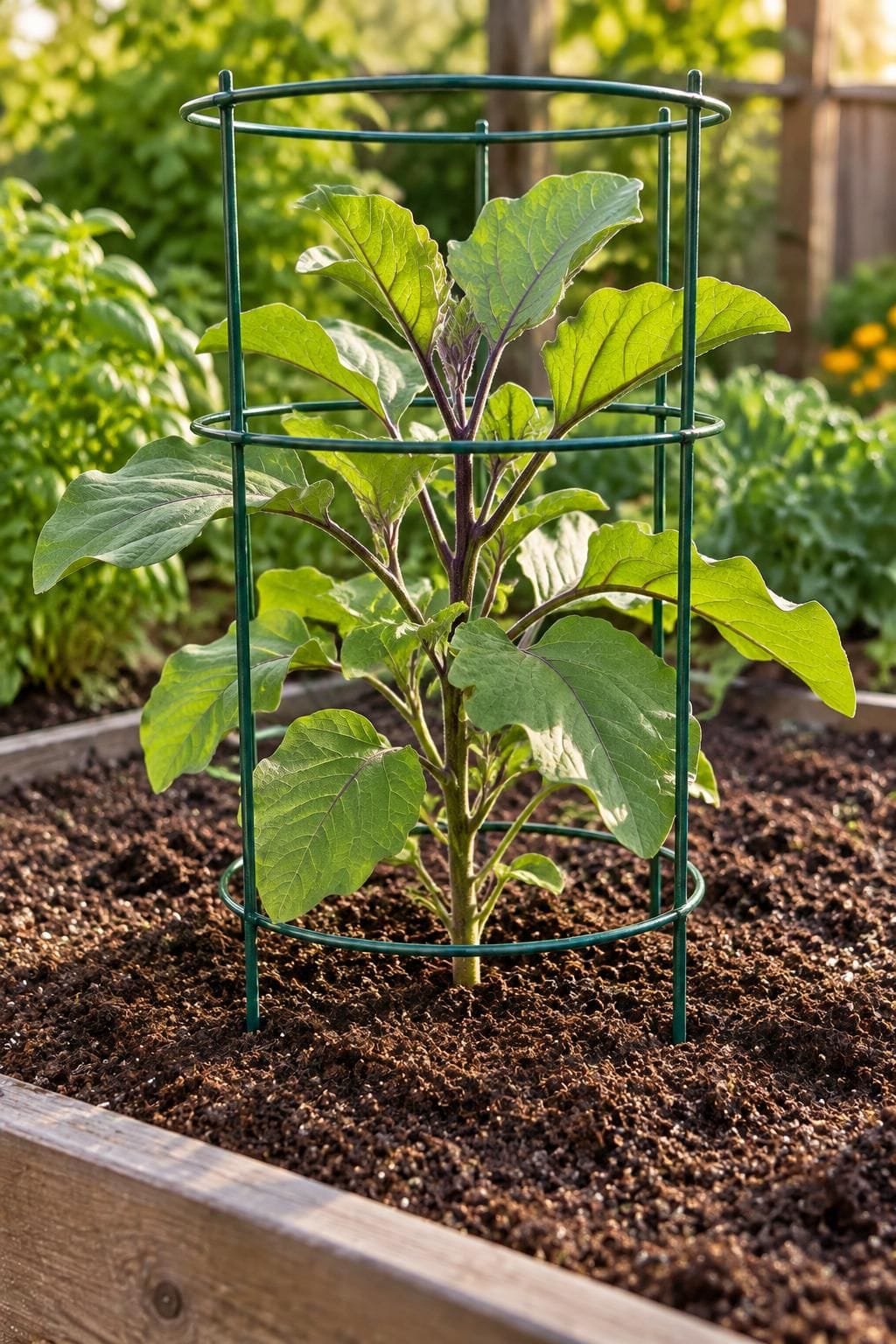
Do eggplants need a cage or support? Yes, most do. Heavy fruit can bend stems and snap branches, and staking keeps fruit off the soil. A single stake works for compact plants, and a tomato-style cage works well for medium and tall types. Install the support at planting, while the roots are still easy to protect.
Many gardeners wait until a plant falls over before they add support. By then, the stem may already be bent or the roots disturbed. This guide explains why eggplant needs support, which option fits which plant, and how to install it safely.
Why does eggplant need support?
University of Missouri Extension says eggplant should be staked for optimum growth and yield. Staking keeps fruit from touching the ground, which reduces disease and improves fruit shape, especially on long fruit types.
Weight is the main reason. Eggplant branches carry a lot of fruit, and the stems can crack when they bend under that load. Support also makes harvest easier, since the fruit hangs in reach rather than hidden under leaves.
When should you install support?
Install support at planting. Epic Gardening recommends staking at transplanting or when the seedling has a few leaves. Driving a stake later risks cutting roots, and tying an established plant tightly can injure the stem.
Washington State University Extension lists eggplant among plants that need a single stake when they sprawl. The rule is simple: set the support when you set the plant.
Which support fits which plant?
The right support depends on the plant’s size and growth habit. The table below compares the common options, with notes on when each works best.
| Support type | When to use it | How to install | Main drawback |
|---|---|---|---|
| Single wooden or bamboo stake | Compact and medium plants, and plants that stay narrow | Drive it at planting, about an inch or two from the stem, then tie loosely | Offers little support for heavy, sprawling plants |
| Tomato-style wire cage | Medium plants that spread, and plants in containers | Set the cage over the plant at planting, and center the stem inside | Fruit can get trapped inside the cage, and airflow can drop |
| Stake and twine system | Rows of plants, or several plants in a bed | Drive stakes at each end of the row and run twine between them, raising it as plants grow | Takes more setup, and needs regular adjustment |
| Large stake or trellis | Tall types that can reach several feet | Drive a longer stake deep enough to hold, and tie the stem at several heights | Needs strong anchoring, and costs more |
Swipe sideways to see every column.
Stake length matters as much as type. Sources give different numbers, from about 4 to 6 feet for long stakes to shorter stakes for compact plants. Pick a stake that reaches above the plant’s expected height. Drive it deep enough that wind won’t pull it loose.
How do you tie the plant without damaging it?
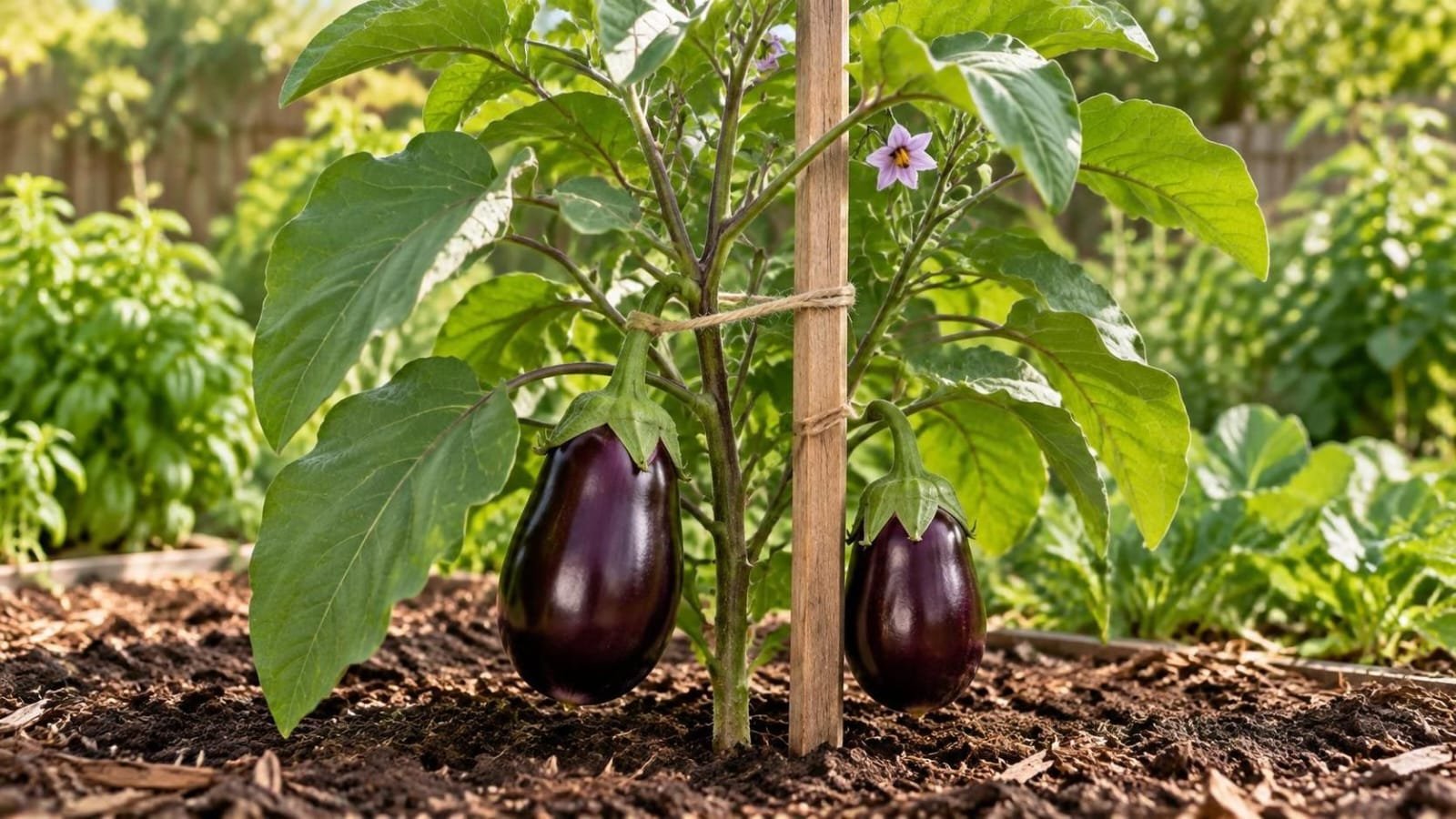
Use soft ties such as garden twine, cloth strips, or pantyhose. Loop the tie loosely around the stem, then fasten it to the support. Leave a little slack so the stem can move in the wind and grow in thickness. Tight ties cut into the bark and can girdle the stem.
Check the ties every week or two in the growing season. Retie as the plant grows, and remove any tie that has started to bite into the stem.
What about compact and container plants?
Compact types may need only a light stake or none at all. Their size makes them less likely to fall, but heavy fruit can still pull branches down. In a container, a single sturdy stake is often enough. A small cage works if the pot is large enough to hold it.
Container size matters for stability too. How to Grow Eggplant in Containers and Pots covers pot size. A larger pot keeps a tall plant from tipping before support takes over.
How does support affect plant health?
Support does more than hold the plant up. Keeping fruit and branches off the soil reduces contact with splashed soil and moisture, which helps limit some diseases. Better airflow through the plant helps leaves dry faster after rain or watering.
Support can also reduce root disturbance when wind rocks a top-heavy plant. That benefit is smaller than the protection for fruit and stems, but it matters in windy sites. The support should steady the plant without crowding it, so plan the layout with room for air to move.
Does spacing change the support plan?
Yes. Plants spaced too closely compete for room and light, and their stems can tangle around each other. Give each plant enough room for its support. How Far Apart to Plant Eggplant explains the spacing ranges, and the same layout works for stakes and cages.
How tall do eggplants grow, and how big should the support be?
The expected height decides how tall the support should be. Standard types can reach several feet. The support should extend above the plant’s mature height. How Tall and How Deep Do Eggplant Plants Grow? covers typical heights by variety.
What’s the simplest way to support eggplant in a first garden?
Pick one plant type you can support easily. Install the stake or cage at planting, and tie the stem loosely at the first sign of bending. Check the support every week, and add ties as fruit forms. That small routine prevents most support failures.
For the full growing guide, How to Grow Eggplant: Planting, Growing, and Care connects support to planting, watering, and harvest. If you need to move plants, How to Repot Eggplant Seedlings explains how to handle roots at the right time.