
How to fertilize eggplant? Start with a soil test, then feed at planting using the product label or the lab’s recommendation. Eggplant is a heavy feeder, so nitrogen often needs to be split across the season. Place fertilizer a few inches from the stem, not against it. Add a light side dressing after flowering begins on low-nitrogen soils. Too much nitrogen gives leafy plants with little fruit. Feed the plant you have, not the one you hope for.
Fertilizer is one of the most common reasons eggplant grows well in one bed and poorly in another. The plant needs nutrients for leaves, flowers, and fruit. The amount depends on your soil, your climate, and the stage of growth. This guide explains how to test, when to feed, and how to avoid the most common mistakes. For soil structure and pH, see Best Soil for Eggplant: pH, Mix, and Amendments.
Why does eggplant need fertilizer?
Gardening Knows How describes eggplant as a heavy feeder. That means it draws a lot of nutrients from the soil as it grows, flowers, and sets fruit. A long, productive season uses more nutrients than a short one, and a container uses them faster than a bed.
Nitrogen supports leaf and stem growth, while phosphorus and potassium support flowering, fruit development, and overall plant health. Balanced feeding matters because the plant needs all three, not just the one on the front of the bag.
Should you test the soil first?
Yes. A soil test is the best starting point, because it tells you what the soil already holds. University of Nebraska–Lincoln Extension recommends retesting about every five years, unless you’ve added a major amendment. Take a bulk sample of 10 to 15 cores, about 8 inches deep, from the garden area. Mix the cores in a clean bucket, and send a subsample to a lab.
Oklahoma State University Extension explains that the lab report lists nitrogen, phosphorus, and potassium recommendations, plus pH. Use those recommendations rather than guessing. Test results show what the soil holds, which can differ a lot from what the bag claims.
How do you feed at planting?
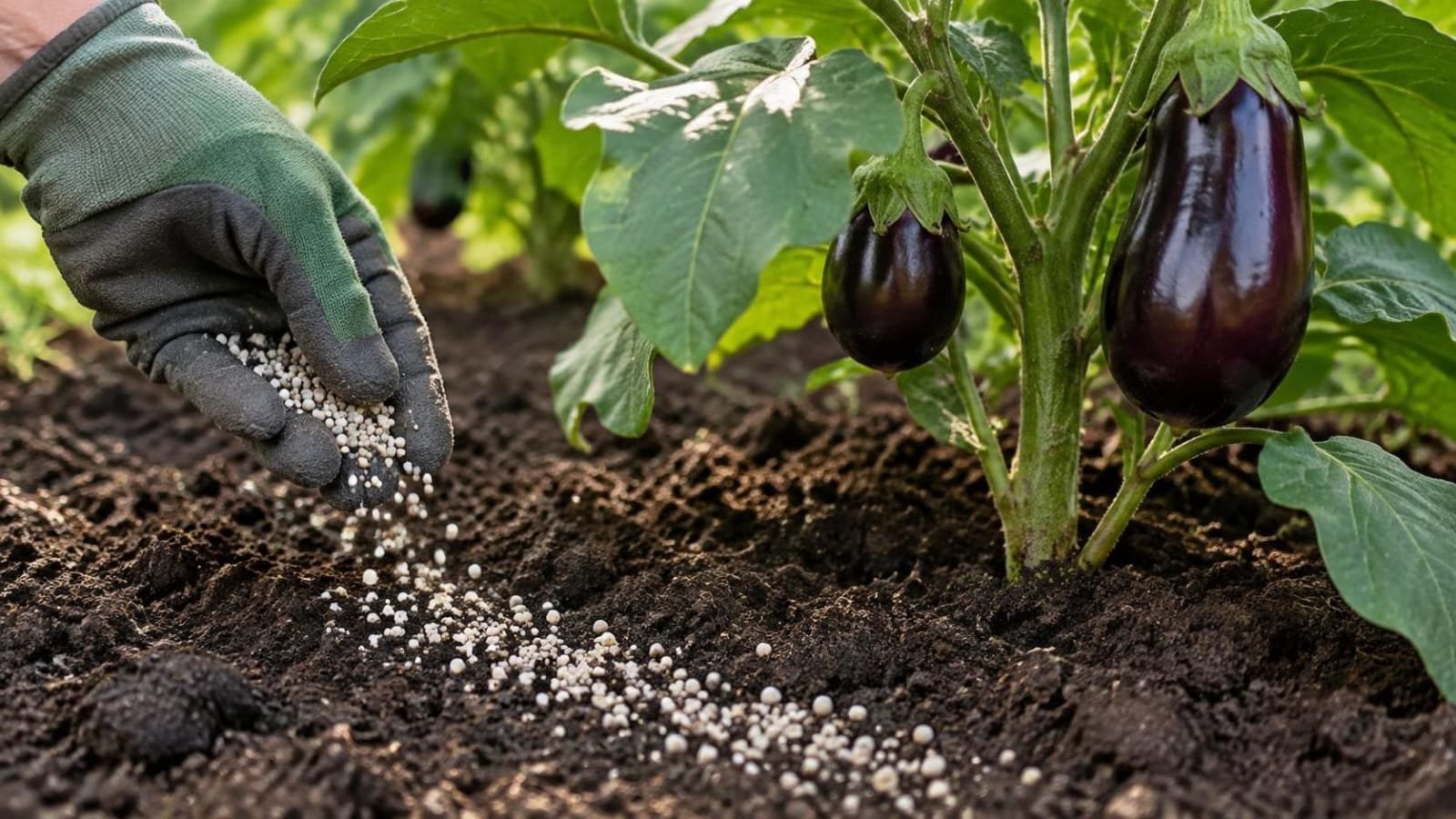
Alabama Cooperative Extension System recommends an all-purpose fertilizer at planting when there’s no soil test. Follow the label directions. The same guide says to place nitrogen four to six inches from the stem, rather than against it. Direct contact can burn roots, and the plant can’t use the nutrients until they reach the roots.
If you have a soil test, follow the lab’s recommendation. If you don’t, follow the label, and start conservative. You can always add more later, but you can’t take it back out of the soil.
How should you split nitrogen through the season?
Oklahoma State University Extension recommends splitting nitrogen into several applications. One is before planting, and another is a side dressing later in the season. Utah State University Extension describes a similar pattern for eggplant. Apply part of the nitrogen before planting, and the rest later.
Splitting nitrogen matches the plant’s demand. Early feeding supports transplant recovery and leaf growth. Later feeding supports flowering and fruit set. Feeding everything at once can push growth early and leave the plant short when fruit needs nutrients most.
When should you side-dress?
University of Nebraska–Lincoln Extension advises a light side dressing right after flowering on soils low in nitrogen. It also warns against over-fertilizing. Apply the fertilizer in a band around the plant, keep it away from the stem, and water it in.
Don’t side-dress by habit. If the plant is vigorous and the soil tested well for nitrogen, you may skip the side dressing. Watch the color and growth of the plant before you add more.
What happens if you feed too much nitrogen?
Too much nitrogen pushes leafy growth at the expense of flowering and fruit. The plant looks lush and green, but it sets fewer fruit. That’s why nitrogen should follow the plant’s stage, not a calendar date. Gardening Knows How makes the same point for eggplant.
Excess fertilizer can also leave salts in the soil, which stress roots. The lab test and the label instructions are the best protection. If you see sudden wilting after feeding, water the soil thoroughly and check the plant before adding more.
What happens if the plant gets too little?
A plant short on nutrients grows slowly, and its older leaves may look pale or thin. Flowering and fruit set can slow, and the fruit may stay small. These signs can also come from cold, water stress, or light problems, so check the basics before you add fertilizer.
A small, steady feeding program is often better than a heavy dose once the problem appears. Correct the cause, then feed according to the label or the lab report.
How do containers change the feeding plan?
Container plants use nutrients faster than in-ground plants, and watering washes some of them out of the root zone. Feed container plants more often in smaller amounts. How to Grow Eggplant in Containers and Pots covers container basics, and the label is still your guide for rates.
Use a potting mix with some slow-release nutrients, or add a fertilizer on a regular schedule through the season. Keep the mix evenly moist, since dry soil reduces nutrient uptake.
How does watering affect fertilizer?
Water carries nutrients to the roots, so a feeding plan works best when the soil is moist but not soggy. Fertilizing a dry bed can burn roots, and fertilizing a waterlogged bed can wash nutrients away. How Often Should You Water Eggplant? covers the watering schedule.
Water the bed lightly after feeding so the fertilizer moves into the root zone. Don’t pour water directly onto the stem.
Can organic matter replace fertilizer?
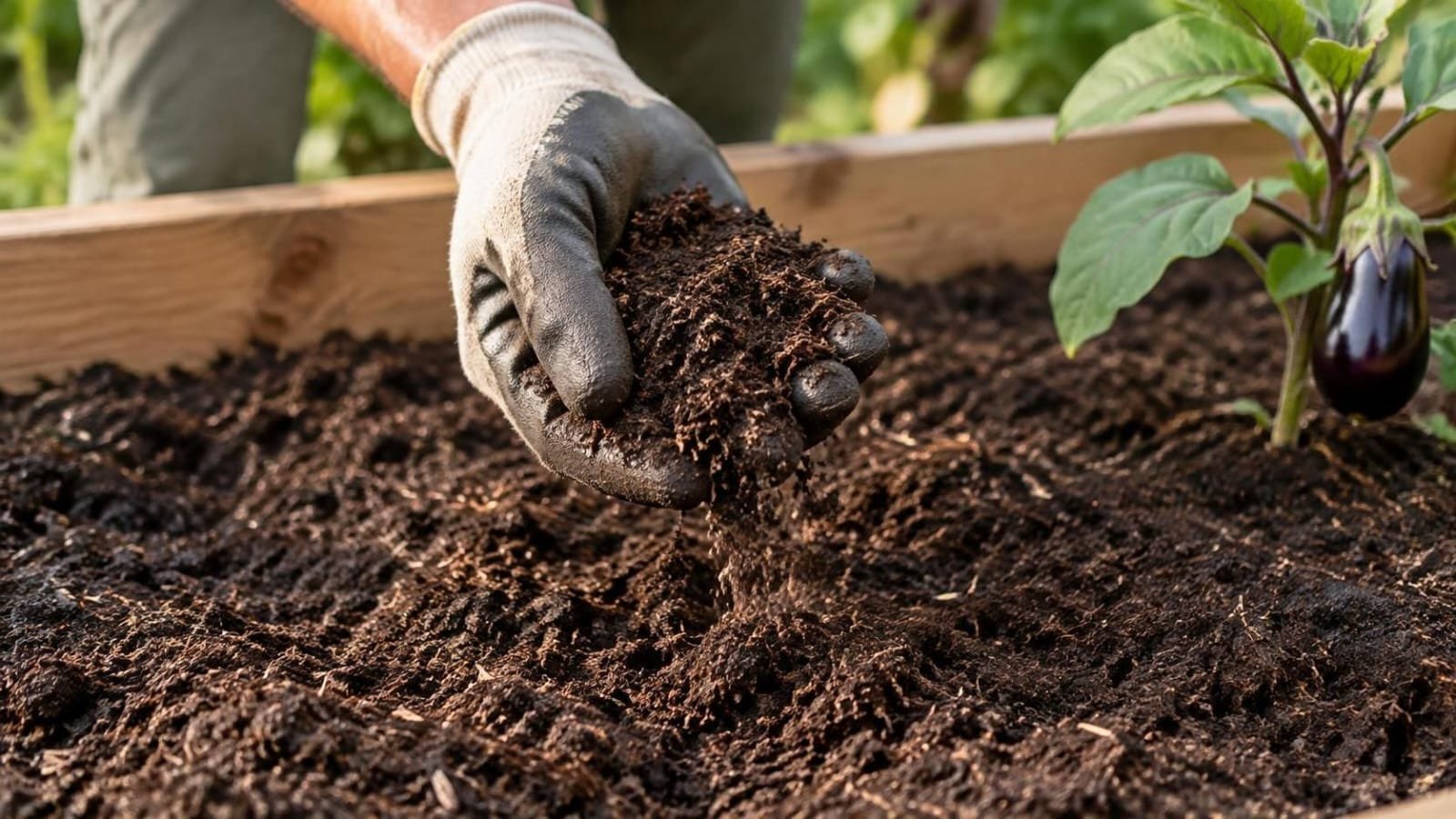
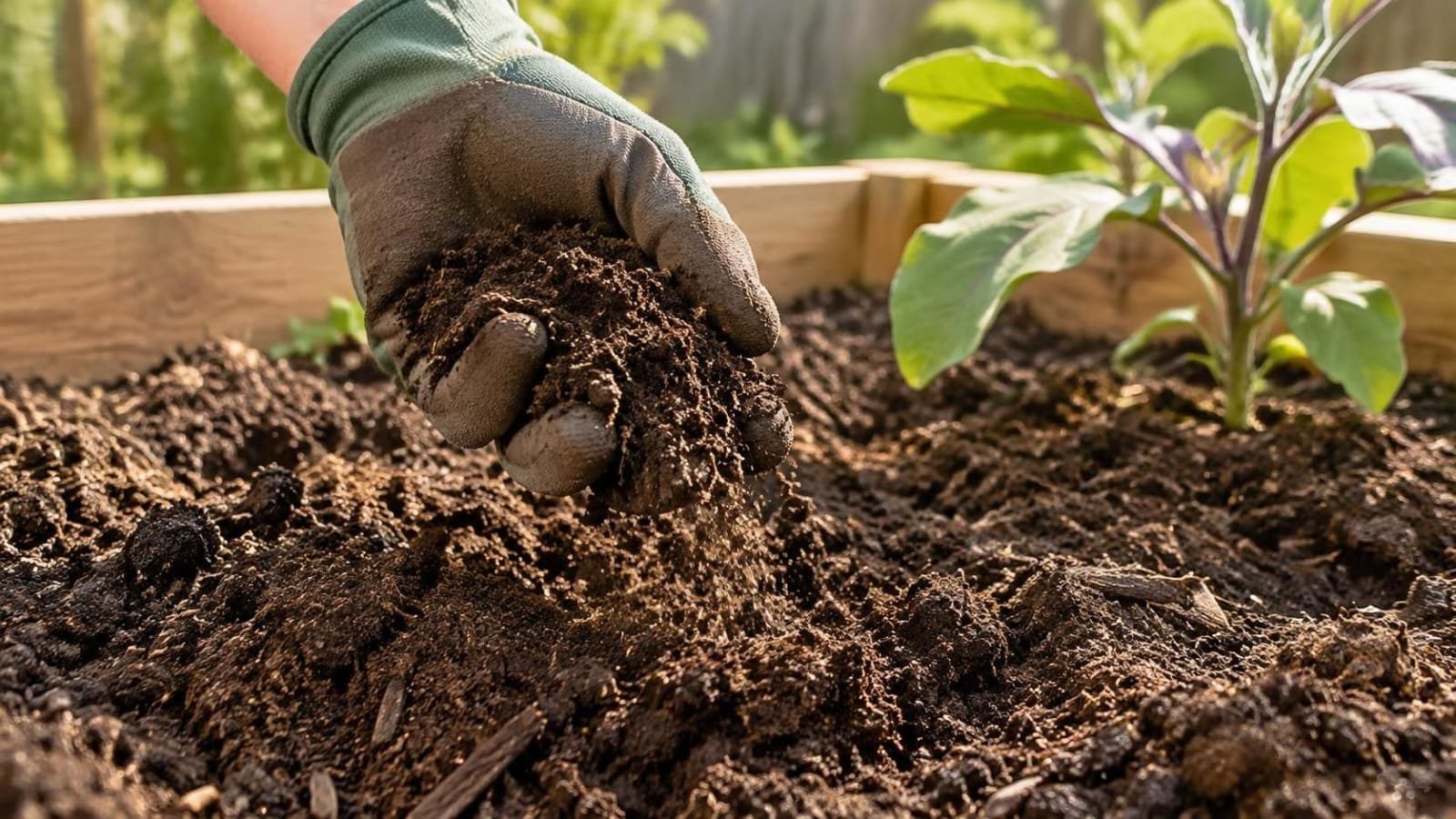
Compost adds nutrients slowly and improves soil structure. It helps, but it doesn’t always supply enough nitrogen for a heavy feeder on its own. Many gardeners use compost as the base and add fertilizer when the test or the plant calls for it.
University of Maryland Extension notes that tissue testing during the season can help check nutrient status and identify deficiencies. That’s useful if the plant looks off and the soil test is old.
Do beans and other companions replace feeding?
Legumes such as beans fix some nitrogen, and that can help nearby plants. It doesn’t replace a feeding plan. Eggplant Companion Plants: What to Plant With (and Avoid) covers companion choices. Treat nitrogen from companions as a bonus, not a substitute.
How do you build a feeding plan for the season?
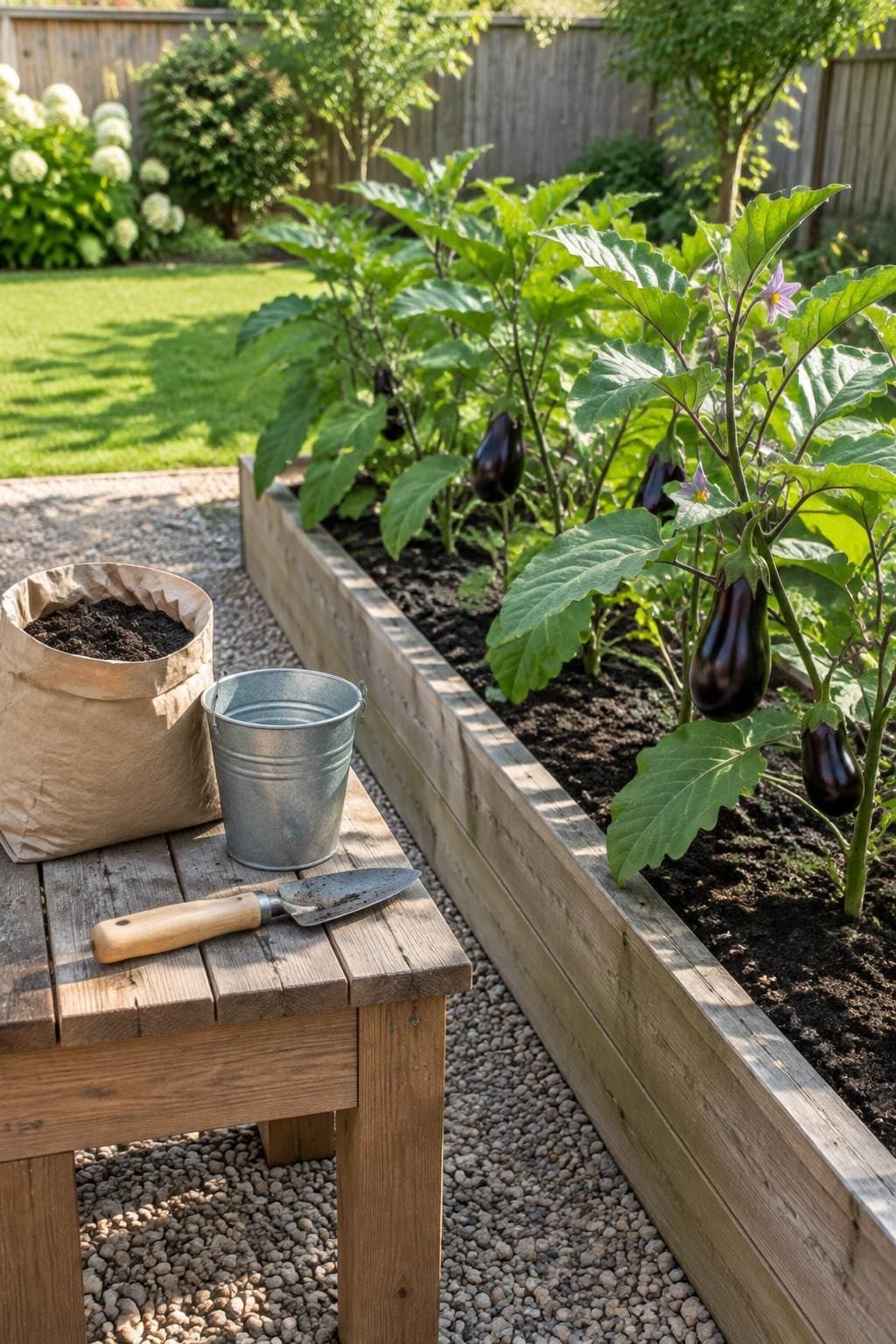
Start with the soil test. Feed at planting according to the label or the lab report, and split the nitrogen. Watch the plant as flowers and fruit set. Side-dress only if the plant and the soil call for it. Water to keep the soil moist, and keep notes on what you applied and when.
Timing follows the plant’s stage. Eggplant Growth Stages: Seed to Harvest shows the stages, and the feeding plan should match them. For the full growing guide, How to Grow Eggplant: Planting, Growing, and Care connects feeding to planting, watering, and harvest.
One thought on “How and When to Fertilize Eggplant”