Find a zucchini plant covered in blooms but short on fruit, and most gardeners reach for something. They feed it, water it harder, or start blaming the seed. More often than not, the better first move is to do nothing and take a closer look at the flowers.
Short answer: Zucchini normally opens male flowers first and adds females one to two weeks later, so a male-only stage is usually just that, a stage. If a healthy, mature plant is still all male after several weeks, look at heat, dry spells, heavy nitrogen and the variety. And make sure you are not missing female flowers that open early in the morning.
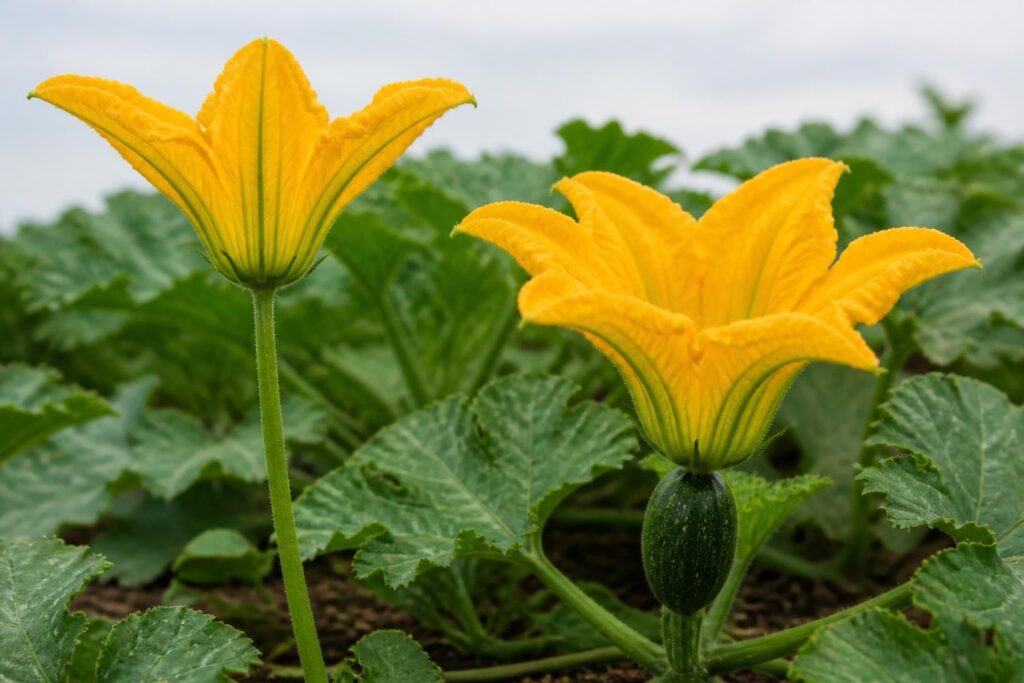
First, make sure you are looking at male flowers
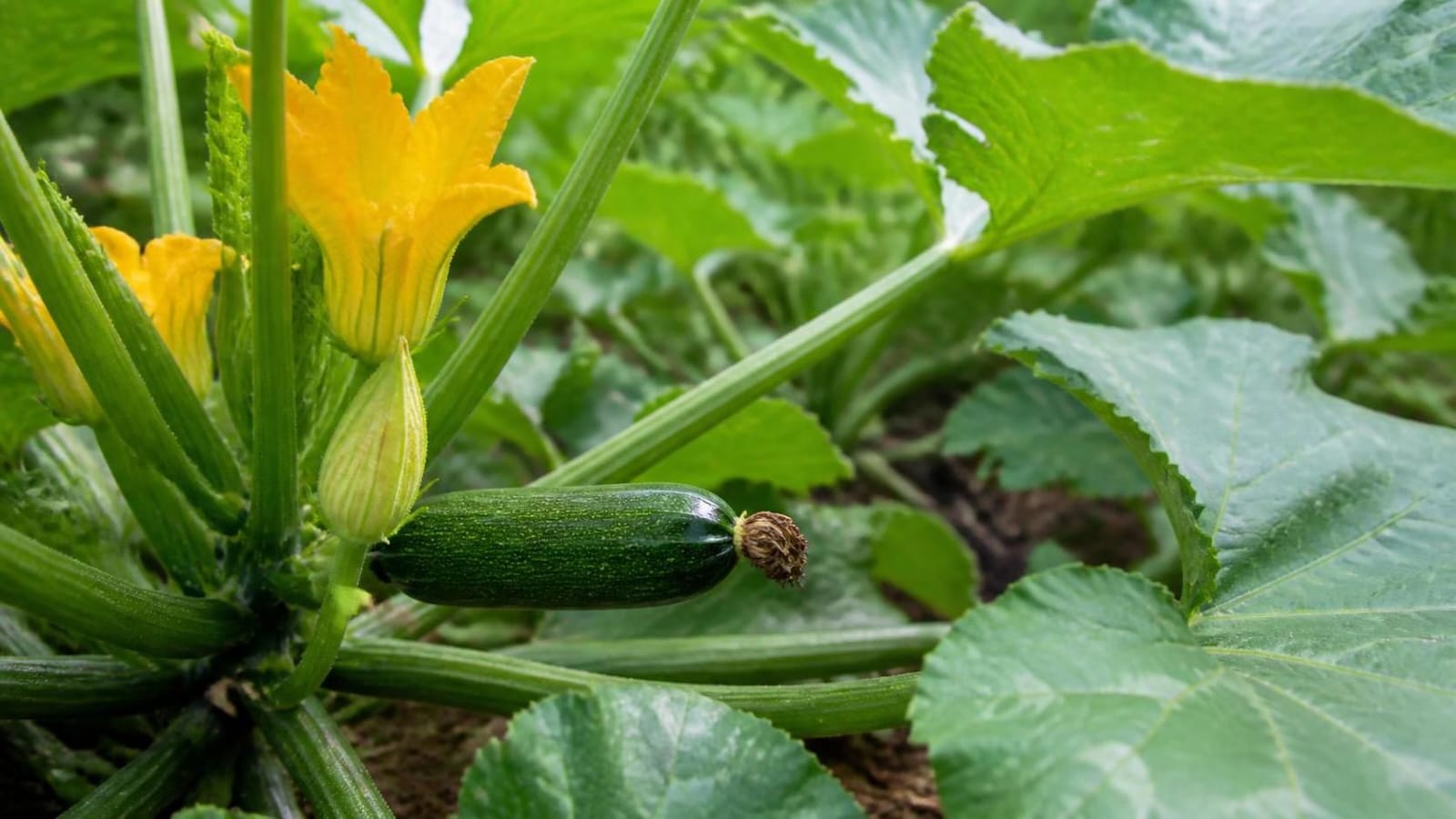
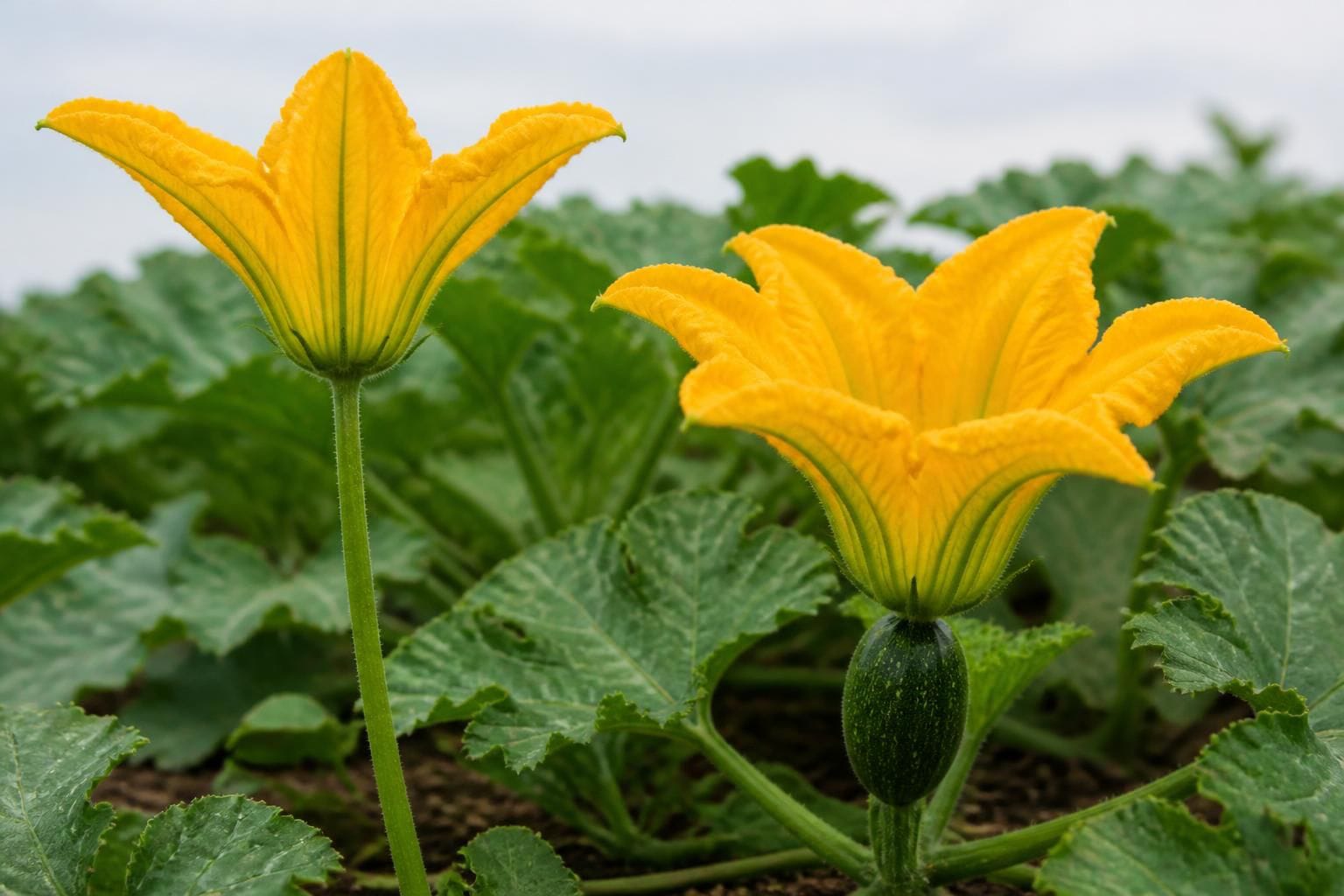
Zucchini carries separate male and female flowers on the same plant, and from a distance they look alike. Up close, the difference is easy to see. A University of California Cooperative Extension leaflet describes the male squash flower as sitting on a long, slender stem, while the female sits on a very short one with a miniature fruit, the ovary, at its base. So if no flower has a tiny zucchini behind it, you really do have males only.
Timing trips up a lot of people. Squash flowers open early in the morning and stay receptive for a single day, so a quick look after lunch can miss the females entirely. Check at first light.
If you grow cucumbers too, don’t assume the same rule of thumb works. Cucumber males have very short stems and grow in clusters, which is why the two crops get confused. The early-male habit is shared, though, and this guide to cucumber plants with many male flowers but few female flowers covers it from the cucumber side.
How long to wait: a rough timeline
Weather and variety shift the dates, so read this as a pattern, not a calendar.
| Where your plant is | What it usually means | When to look closer |
|---|---|---|
| Just started flowering, every bloom is male | Normal. University of Maryland Extension says squash makes male flowers for one to two weeks before females appear. | Nothing to do yet. Keep the water even. |
| Two to three weeks of male-only flowers | Still within the usual range. Iowa State says a good crop should start within a few weeks. | Check recent weather. Hot, dry spells can delay the females. |
| Healthy, mature plant, still all male after several weeks | Less typical, and worth investigating. | Work through heat, water, nitrogen and variety below. |
| A hybrid whose first flowers were female and dropped off | Plausible. In hybrid summer squash the first flowers are usually female, and the University of California leaflet says they fail unless males and bees are nearby. | Expect males next. Hand-pollinate if bees are scarce. |
| Female flowers present, but the tiny fruit shrivels | A pollination problem, not a flower-sex problem. | See the pollination section further down. |
What not to do while you wait
- Don’t pull the plant. A male-only start is how healthy squash normally begins.
- Don’t feed it by guesswork. Heavy nitrogen is linked to delayed female flowers, so follow soil test results and the product label.
- Don’t pick off the male flowers. The females will need their pollen.
- Don’t spray open flowers during the morning, when pollinators are working them.
- Don’t replant in a panic. A second sowing is a backup, not a replacement for a plant that is only a few weeks old.
A Georgia planting-date study and what “all male” really means
Whenever someone tells me their plants make only male flowers, I think of a study by University of Georgia researchers in HortScience. They counted male and female flowers on five summer squash cultivars, two of them zucchini, across eight plantings over two years, tallying the first two weeks of flowering each time. Counts swung widely with cultivar and planting date, and no neat pattern emerged. The authors note that growers do report all-male or all-female plants under some conditions, yet in their own plots it never happened. The nearest thing was a mid-July planting of the two zucchini cultivars, when heat restricted the female flowers and both sexes were low overall.
My takeaway: a truly male-only plant is rarer than it feels. Most of the time the honest answer is “not yet” or “too hot,” not “broken.” It was a field study in one part of Georgia, so treat it as a pattern, not a promise for your garden.
When waiting stops being the answer
If the plant is established and healthy and several weeks have passed, work through these suspects in order.
Heat and dry spells
Hot, dry summers bring a familiar complaint: lots of flowers on cucurbits, no fruit, and female flowers delayed, sometimes for weeks. Michigan State University Extension describes exactly this pattern, and its advice is patience, because the condition tends to correct itself. You can’t change the weather. Even moisture and a layer of mulch are the levers you do have.
Too much nitrogen, too little water
The same Michigan State guidance suggests fertilizing according to soil test recommendations, avoiding excessive nitrogen, and providing a dependable supply of moisture. It notes that most plants need at least an inch of water a week, though you should adjust that for your soil and weather. If you are unsure what the soil holds, test it before you feed. Lush leaves and no fruit is a classic sign of a plant that has been given too much of a good thing.
Variety, planting date and the early weeks
That same study found the two zucchini cultivars were sensitive to heat, and suggested that cultivars like them suit cooler parts of the season while others are better for warm months. The researchers also point out, citing earlier work, that flower sex is determined as early as the two-true-leaf stage, so conditions in a plant’s first weeks may matter more than anything you do now. That is why a stalled plant can’t be fixed overnight. Maryland Extension suggests planting summer squash two or three times during the season, which also works as insurance, and it lists parthenocarpic cultivars, which set fruit without pollination, as another option when pollination is unreliable.
If female flowers appear but the fruit still fails
Once the females show up, the problem often moves to pollination. Iowa State horticulturists note that cool, rainy weather during bloom reduces bee activity, and fewer bees means poor pollination and poor fruit set. They also advise using insecticides only when necessary, to avoid harming pollinators. If the tiny fruit yellows, shrivels and dies, that pattern has its own diagnosis in this guide to zucchini rotting at the blossom end despite normal flowers.
Hand-pollinate in the morning
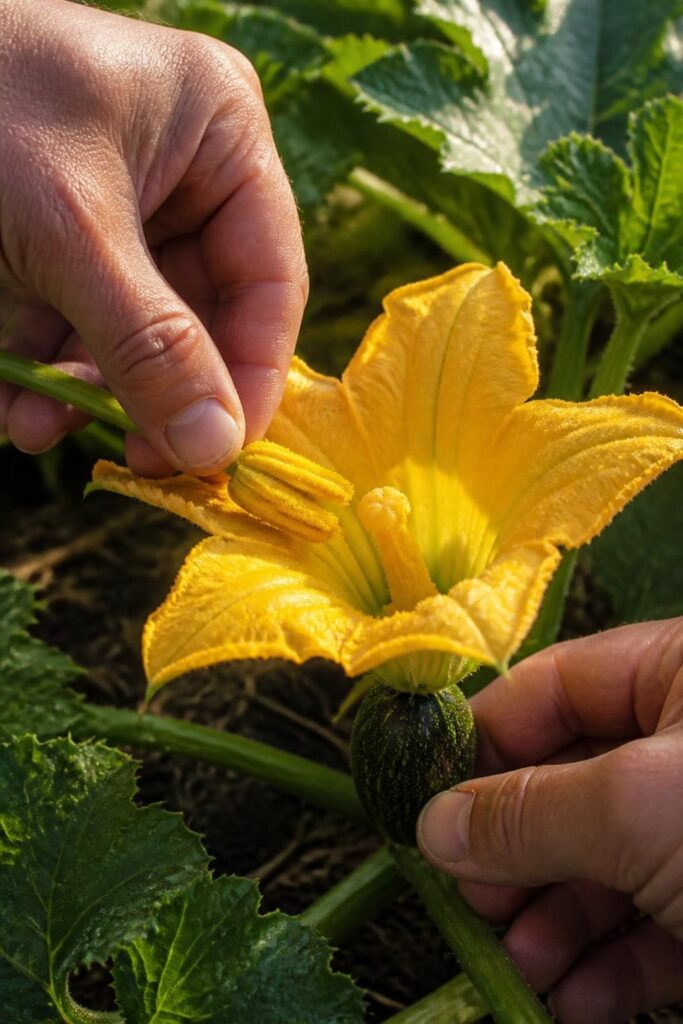
Ask Extension gives the simple method. Squash pollen is sticky, so move it with a small paintbrush, or break off a male flower and gently roll its pollen onto the stigma of the female. Go early, because the flowers open early and last only one day. One male flower can serve more than one female if it still carries pollen.

A short plan for this week
- Look at first light. Confirm whether any flower has a tiny zucchini behind it.
- If the plant is young, give it one to two more weeks, and keep the watering even.
- Mulch and water steadily rather than letting the bed dry out between soakings.
- Skip the extra nitrogen. Test the soil if you are unsure.
- Hand-pollinate each morning once females appear, especially after cool, rainy days.
- Plan a second sowing or a different variety if heat keeps stalling your plants.
Quick answers
How long until my zucchini makes female flowers?
Often one to two weeks after the first male flowers, and sometimes a few weeks. Hot, dry weather can stretch that out.
Can a male flower turn into a female flower?
No. A flower that has opened as male stays male. What changes is that the plant starts producing new female flowers later.
Should I pick the male flowers?
Leave them for now. The females depend on that pollen, and pollen can come from the same plant or from a different one.
Is it a bad-seed problem?
Rarely. Fair enough, variety does matter, because cultivars differ in how they respond to heat. But an all-male stage in a young plant is normal for almost any variety.