
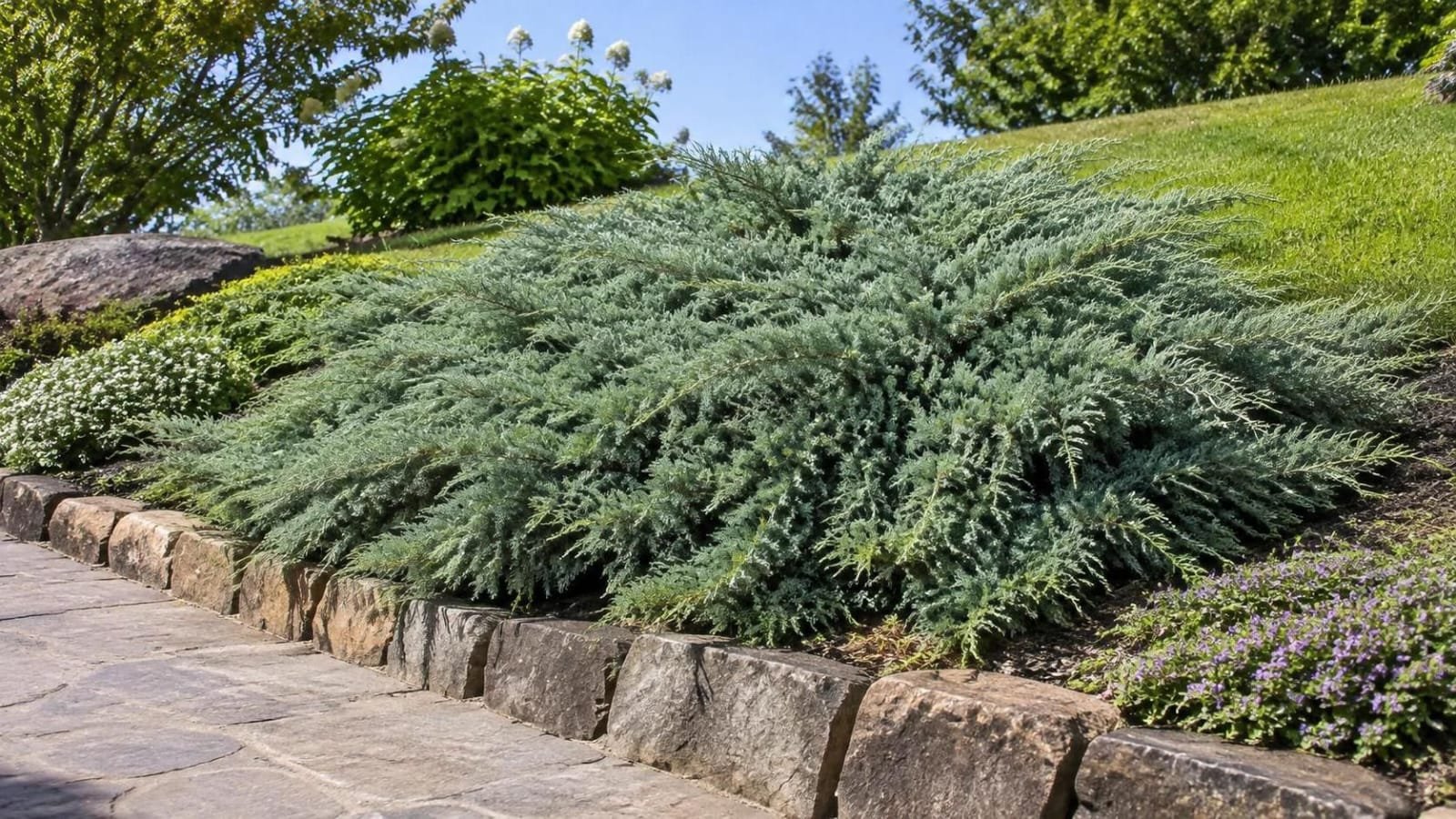
A Gray Owl juniper is a low plant that spreads wider than it rises. Most sources give it a height of 2 to 3 feet and a spread of 4 to 6 feet, and some list up to 6 to 8 feet wide at maturity. That spread is why nurseries commonly recommend it for slopes and banks, where a low, dense mound can hold soil and fill space that taller shrubs would crowd. Plant it in full sun and well-drained soil, and expect it to take a few seasons to cover its full width.
What kind of juniper this is
Gray Owl is a cultivar of Juniperus virginiana, the eastern redcedar. That is a native North American tree, and it is a different plant from the Chinese junipers that many shrub catalogs describe. The Missouri Botanical Garden describes the cultivar as a broad, slow-growing form with a compact, wide-spreading habit, and it notes that the plant is a female form that produces berry-like cones. Those two details, the spread and the cones, shape most of the decisions you will make about this plant.
Check the name on the tag. One nursery lists this plant as Juniperus × pfitzeriana ‘Grey Owl’, which is a hybrid name, and the care and size information may not match the eastern redcedar cultivar. If you are comparing species, our Juniperus virginiana varieties guide explains how the species differs from other junipers.
How wide it spreads
Height is the easy part. Most listings give 2 to 3 feet, and one reference says the cultivar typically stays up to 3 feet tall, with infrequent taller plants. Width is where the sources diverge. That same reference gives about 6 feet, and a Maryland nursery gives 4 to 6 feet. Other trade listings give 6 to 8 feet at maturity. One nursery says the plant spreads 4 to 6 feet within the first five years, then reaches its larger mature width over time.
For planning, use the lower end of the range as your first target and allow extra room if the site is open. Give the plant enough space that its outer branches can reach their full spread without pressing on a walk, a wall, or a neighboring plant. A spot that is 3 feet from a path may look fine in the first year, but it will not look fine in the fifth.
Using it on a slope
Slopes are the most common reason people choose this juniper. A dense, mounding plant with a spreading root system can help hold soil on a bank, and nursery listings commonly describe it for erosion control on hillsides. The key is to get the plants established before the first heavy rain. Plant them in staggered rows across the slope rather than in a single straight line, which tends to cover the bank more evenly as the plants fill in.
Prepare the soil before you plant, and avoid planting in the middle of a wet season. Water the new plants regularly through the first summer, then let the soil dry between waterings. Sources describe the plant as drought tolerant once established, but a new root system on a slope needs steady moisture to reach down into the bank.
Until the plants fill in, a light layer of mulch over the bare soil helps hold moisture and keeps the surface from washing out. If your slope is steep or the soil is mostly rock, check the site before you commit to a full planting. The plant tolerates dry, rocky soil, but it does not tolerate standing water, and a slope that holds water after rain needs drainage work before any shrub goes in.
Growth rate and timing
Expect a slow start and a steady fill. Botanical references call the cultivar slow growing, and one nursery describes slow to moderate growth. A plant in a small pot will look sparse for a season or two. That is normal, and it is a reason to space plants according to their mature width rather than the size they look like at planting. Container size makes a difference to that first look. One supplier sells this juniper in 3-gallon containers, which gives a fuller start than a small pot, though it costs more.
Spring is the usual planting window, and early fall works in many climates if the plant can establish before the ground freezes. Plant at the same depth it grew in its pot, with the root flare at the soil line, and mulch the surface to keep moisture in.
Berries and wildlife
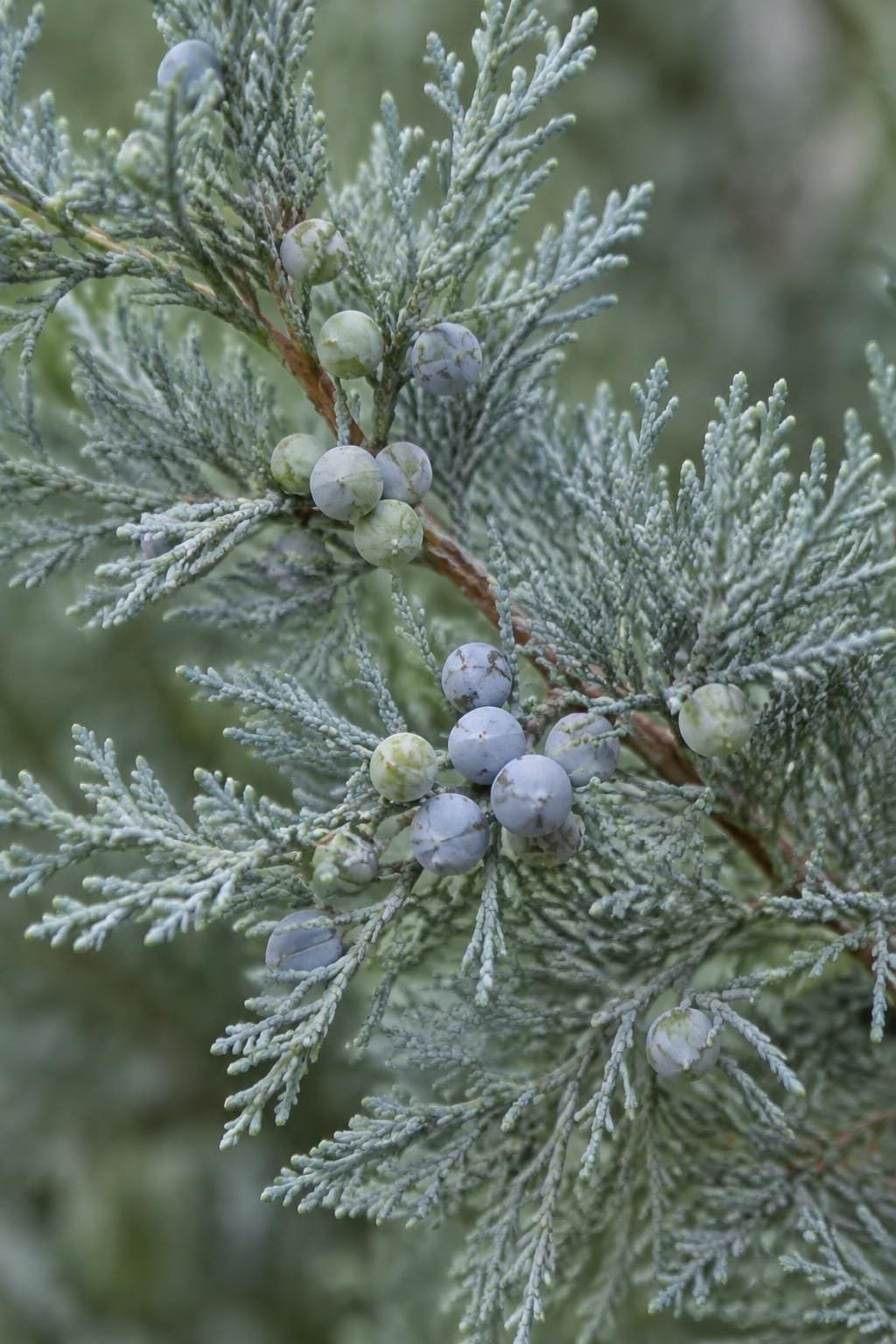
The female plant is the one that produces cones. Those cones look like small blue-gray berries, and birds eat them. The sources disagree on the timing. One reference says the cones ripen in fall of the first year, while another listing says a female plant can take two years to produce mature cones. A third source says female plants start producing cones after two to three years. The honest answer is that timing depends on the plant, its age, and the site.
Some sources also say a male plant nearby is needed for the cones to set seed, which matters if you plan to collect seed or count on a crop of cones. Ask the nursery which sex the plant is before you buy, since a plant sold as a female will look and behave differently from one sold as a male.
Deer tolerance is listed for this juniper, but one nursery warns that deer may still browse it under heavy pressure. Treat it as deer tolerant, not deer proof, and protect young plants if deer are common in your area.
Zones and care
Most listings give USDA zones 4 to 9. One listing says 2 to 9, and another says 3 to 8. Those differences are small, but the zone on your plant’s tag is the number to plan around. Check your zone against the label before you buy.
Care is simple. The plant does well in full sun and tolerates dry soil, and it needs little pruning. Remove dead or damaged branches as needed. If you want a tidier edge, trim lightly in late winter, and avoid cutting deep into bare wood, since junipers often do not regrow from it.
For a shorter, lower planting beside it, our Blue Star juniper guide covers a smaller shrub, and our creeping juniper guide covers a plant that hugs the ground even more closely. Both are worth comparing if the slope is very steep or very narrow.
Planting it on a bank or a border
When you plant several Gray Owl junipers together, spacing matters more than it does for a single specimen. Plants set too close will merge into one mass and crowd each other’s lower branches. Plants set too far apart will leave bare soil for a long time, which invites weeds and erodes the slope. A spacing of about 4 to 6 feet is a common starting point for covering ground, and it is worth checking against the mature width on the tag. For the planting steps themselves, our Sea Green juniper planting guide walks through digging, backfilling, and first-season watering, and those steps apply here too.
If you need a taller plant in the same bed, our Wichita Blue juniper size guide covers a narrow, upright option that will not fill the same role. For a flatter ground cover with a different habit, see our Blue Rug juniper guide.
Before you buy, measure the slope and the bed, then compare the mature spread on the tag with the space you have. Ask the nursery which sex the plant is and what the mature width is for that lot. A plant that fits the slope on paper will still look right in five years only if you planned for its full width.
3 thoughts on “Gray Owl Juniper Spread and Slope Planting Guide”