
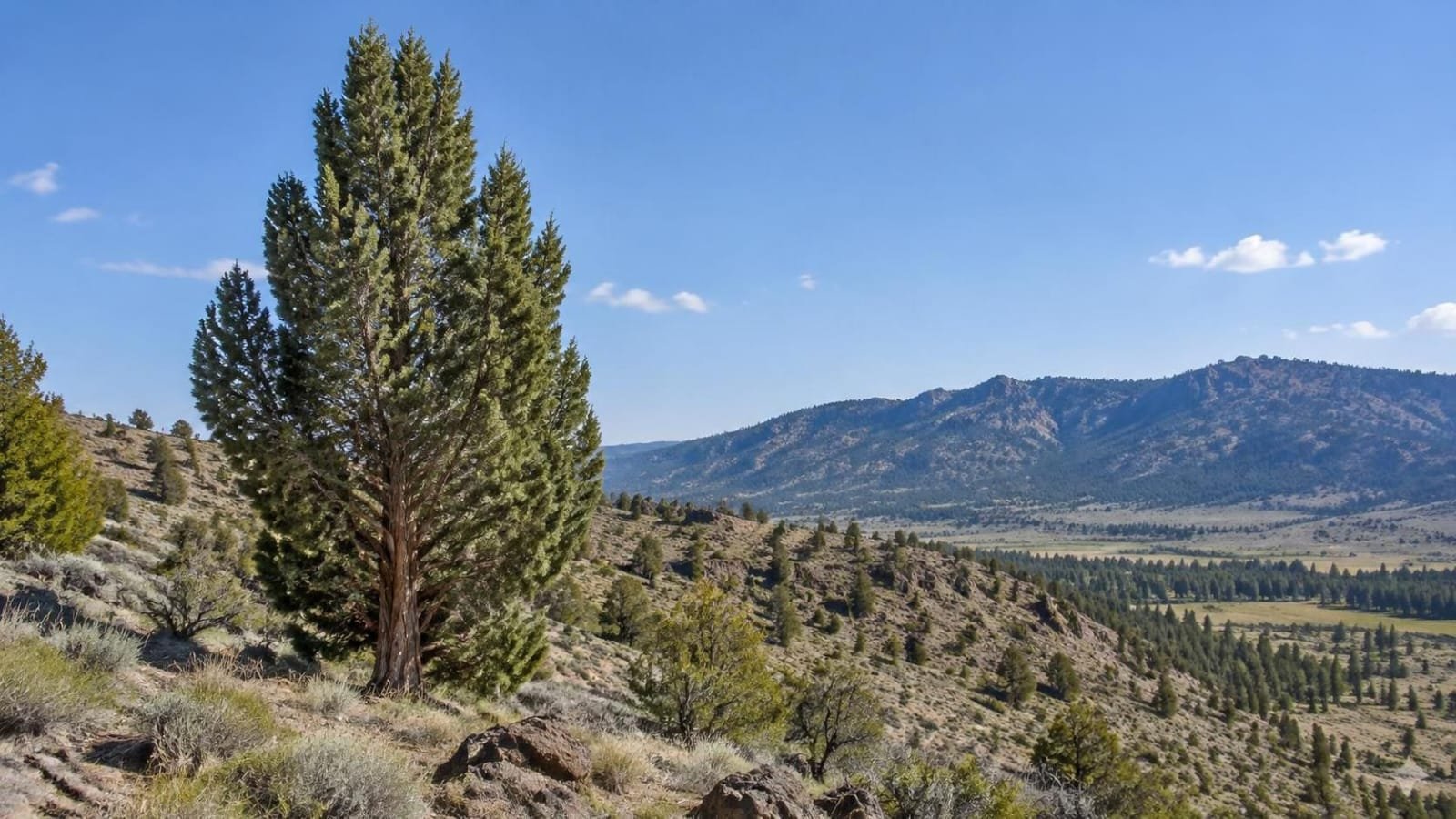
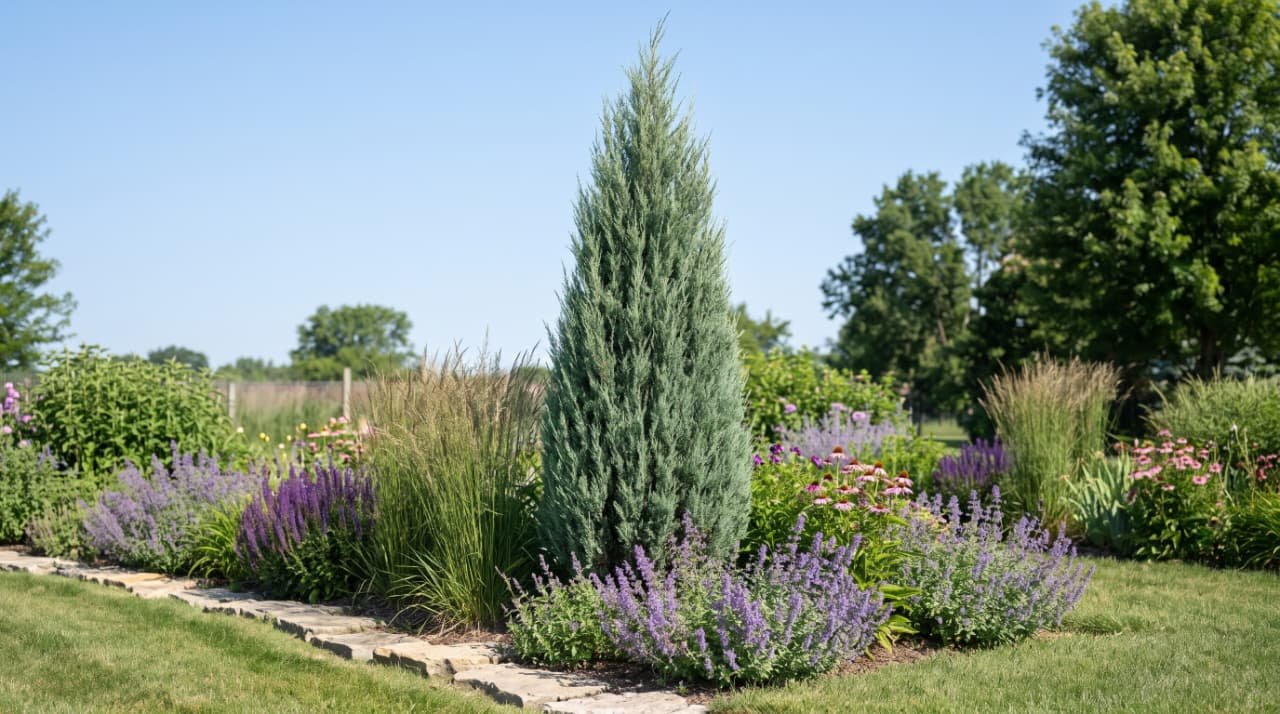
Rocky Mountain juniper, Juniperus scopulorum, is a native western conifer. Most landscape plants sold under its name are cultivars, but the species itself is a tree that can reach 30 to 40 feet in the wild, with a narrow to rounded crown, shedding reddish-brown bark, and scale-like blue-green foliage. It is often confused with eastern redcedar, so the most useful identification clues are the bark, the cones, and the way the foliage sits on the branch.
Native range and habitat
The species grows naturally from the western Great Plains through the Rocky Mountains into southwestern Canada, and south into Arizona, New Mexico, and west Texas. It prefers rocky or sandy hillsides, bluffs, ridgetops, and canyon bottoms, which tells you a lot about what it needs. A Lady Bird Johnson Wildflower Center profile describes its native habitat as rocky or sandy hillsides and mountains.
In the landscape, the species is drought tolerant and intolerant of shade. Utah State University Extension notes that it needs very little water once established. A plant grown in a dense, humid, shady site will look thin, so match the site to the native habitat before you plant.
How to identify the plant
Start with the foliage. Rocky Mountain juniper has small, scale-like leaves that lie flat against the branches, in colors from bluish-silver to dark green. Young plants carry pointed, needle-like juvenile foliage, often with a whitish waxy coating, which is one reason a seedling can look unlike the mature tree. The University of Minnesota Campus Trees program notes that the leaves resemble those of eastern redcedar, but the tips are blunter and the scales overlap differently, so look closely at the tips rather than relying on color alone.
The bark is the easiest clue to check in person. It is reddish-brown to gray, and it peels or shreds into thin strips. Eastern redcedar has similar shredding bark, so the bark alone does not settle the question. Use it together with the foliage and the cones.
Cones, sex, and what the fruit looks like
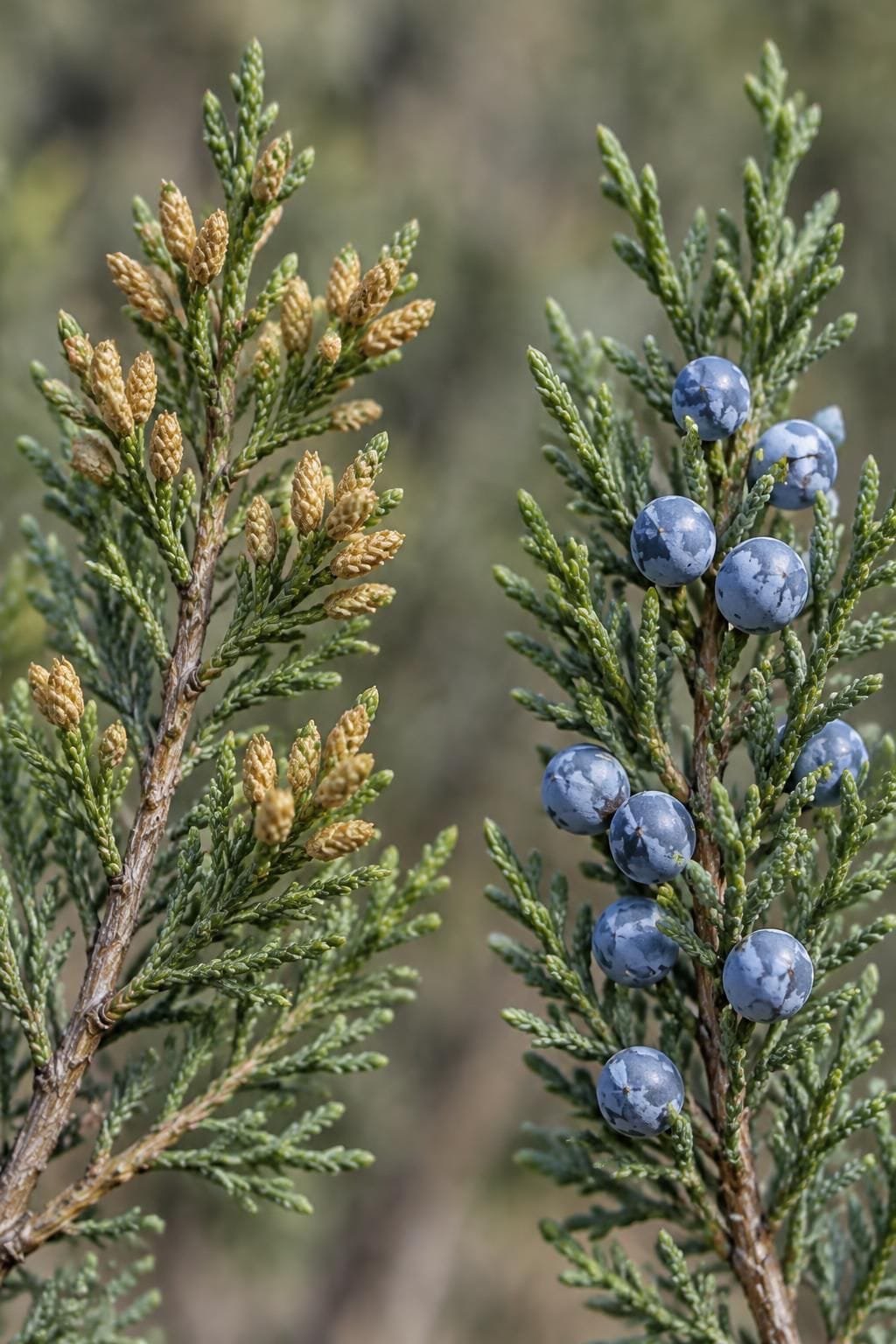
The species is generally dioecious, which means male and female cones usually grow on separate trees, though some plants bear both. Males produce small, yellow-brown, papery cones at the branch tips. Females produce round, bright blue cones that are covered with a whitish bloom and ripen in the second year. Those female cones are botanically seed cones, but they are often called berries, and birds eat them.
The NC State Extension plant profile describes the cones as a food source for birds and small mammals, and it notes that the trees are very susceptible to damage from fire because of their thin bark and volatile oils. That detail matters if you plant near a wildland edge.
Young plants and mature trees look different
A seedling or a young nursery plant does not look like the mature tree. Its juvenile foliage is made of pointed, white-coated needles, and the scale-like adult leaves appear as the plant matures. Female cones are hard to spot in the first year, so a young plant can look like it has no cones at all.
The USDA Plant Guide reports that the species reaches seed-bearing age in about 10 to 20 years and then bears cones every two to five years. If you are waiting on a young plant for fruit or wildlife value, the wait can be long.
Growth and size in the wild and the nursery
Mature trees usually reach 30 to 40 feet, and one Nebraska reference lists a height of 50 feet. Sites with thin soil, wind, or drought often produce smaller, shrubbier plants, so the wild form can look different from a tall tree in a sheltered yard. Spread is less consistent across references, so use the height figure for planning and treat the spread as a range to confirm with the nursery.
Growth rate is slow, and the species is long lived. Nursery plantings use the same species, though the cultivars sold in the trade are selected for narrower or more uniform forms. If you are buying a named cultivar, check its own size listing rather than assuming it matches the species.
Disease and insect issues
Rocky Mountain juniper is the alternate host for cedar-apple rust. That rust needs both junipers and apple-family trees to complete its life cycle. On the juniper, it shows as reddish-brown galls that can be cone-like or gelatinous, depending on the season. The species is also susceptible to twig blights. Those show as browning and death of twig tips, which can spread down the branch if left alone. Blights tend to follow poor drainage, shade, and wet conditions.
Good air circulation, full sun, and a site that drains well are the simplest ways to reduce those problems. If you see galls or blight, look at the site conditions before you reach for a treatment, and check the label and local extension guidance before you apply anything.
Wildlife value
The species provides food and cover. Migratory birds and upland game birds eat the blue cones, and the trees offer nesting sites and shelter. The cones are a food source for birds, which makes the species useful in a yard that is also meant to support wildlife.
Where it grows well in the landscape
Hardiness is listed as USDA zones 3 to 7 in the sources reviewed, which covers the northern plains and much of the Rockies. The species tolerates dry, rocky, and sandy ground, and it is salt tolerant only to a low degree, so it is not a good choice for a seaside planting.
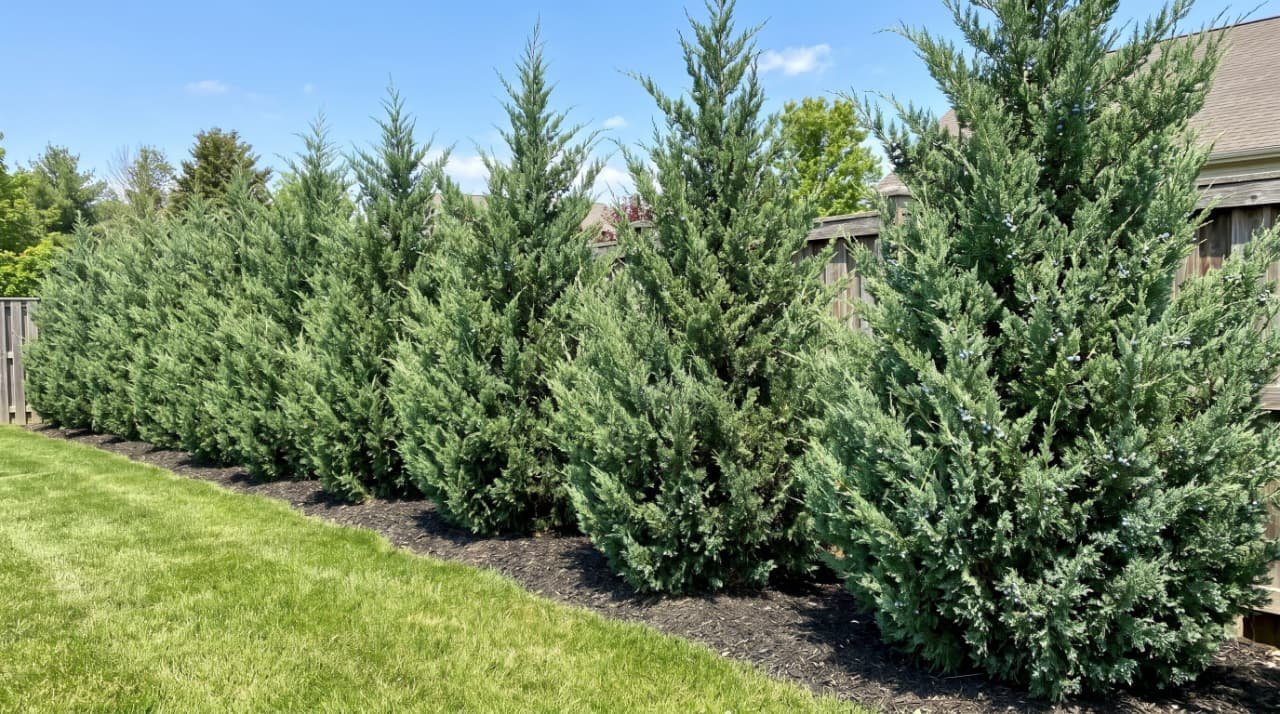
Landscape uses in the references reviewed include windbreaks, visual screens, and foundation plantings. The species keeps its lower branches, which is one reason it is used in windbreaks. Planting it in a row that gets crowded or shaded will thin out the lower foliage over time.
Its twisted, irregular habit is different from the Chinese juniper types many gardeners see in catalogs. If the tree in front of you has sculpted, twisted branches, it is more likely a Chinese juniper, and our Hollywood juniper size guide covers that group.
Field checks work best in combination. Look at the foliage tips first, then check the bark, and finally look for cones on the branch tips. If all three point the same way, you have a reasonable identification. If they disagree, take a clear photo of each feature and compare it with a regional extension guide before deciding.
Rocky Mountain juniper and eastern redcedar
These two species are the pair most often confused. Foliage and bark overlap so much that neither settles the question on its own. The cones and the crown with age are the more reliable clues, and the table below sets them side by side.
| Feature | Rocky Mountain juniper | Eastern redcedar |
|---|---|---|
| Scientific name | Juniperus scopulorum | Juniperus virginiana |
| Native range | Western North America, from British Columbia to Arizona and west Texas | Eastern United States, west to Colorado |
| Crown with age | Narrow, pyramidal to rounded | Pyramidal when young, becoming irregular with age |
| Cone maturity | Blue cones ripen in the second year | Blue cones mature from September to November |
| Bark | Reddish-brown to gray, peeling in narrow strips | Reddish-brown, shredding in long, thin strips |
| Male cones | Yellow-brown and papery at branch tips | Yellow-brown and papery at branch tips |
Cone timing is the most useful single check. Rocky Mountain juniper cones take two growing seasons to ripen, while eastern redcedar cones mature by fall of the same year. Look at the age of the cone crop on the branch, then confirm with a second clue before deciding.
Native species or cultivar?
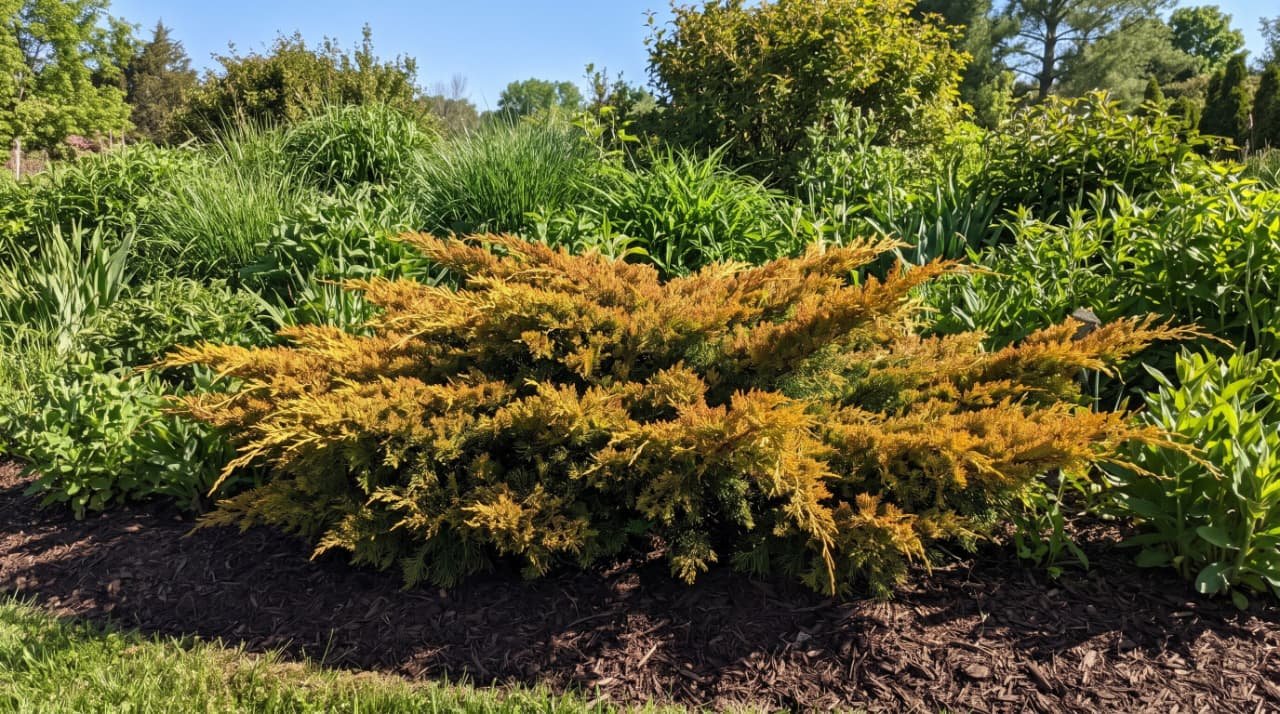
Most landscape plants labeled Rocky Mountain juniper are cultivars, including Medora and Wichita Blue. The cultivars vary in size, color, and form, so the native species and the nursery cultivars should be treated as separate plants. Our Medora juniper guide covers a narrow, slow column, and our Wichita Blue juniper size guide covers a broader, looser form.
If the tag says eastern redcedar or Juniperus virginiana, that is a different species with its own cultivars. Our Juniperus virginiana varieties guide covers that group. For a silver-blue cultivar of the eastern species, see our Gray Owl juniper guide.
Ask yourself what the site looks like before you commit. The species prefers open, sunny, well-drained ground, and it does poorly in shade and wet soil. A site that stays damp after rain or sits under a dense canopy is a poor match, even if the plant looks healthy at the nursery.
Before you buy or dig
Check the botanical name on the tag, and confirm whether the plant is the species or a cultivar. If you are trying to identify a tree already growing on your property, look at the foliage tips, the bark, and the cones together. Scale-like foliage alone does not settle the question, and the cones only show up at certain times of year.
If the tree is near a wildland edge or in a fire-prone area, note its thin bark and volatile oils, and talk to a local extension office about placement. Keep the identification notes and any photos, since they make it easier to match the plant later.
One thought on “Rocky Mountain Juniper Identification: Native Range, Cones, and Growth”