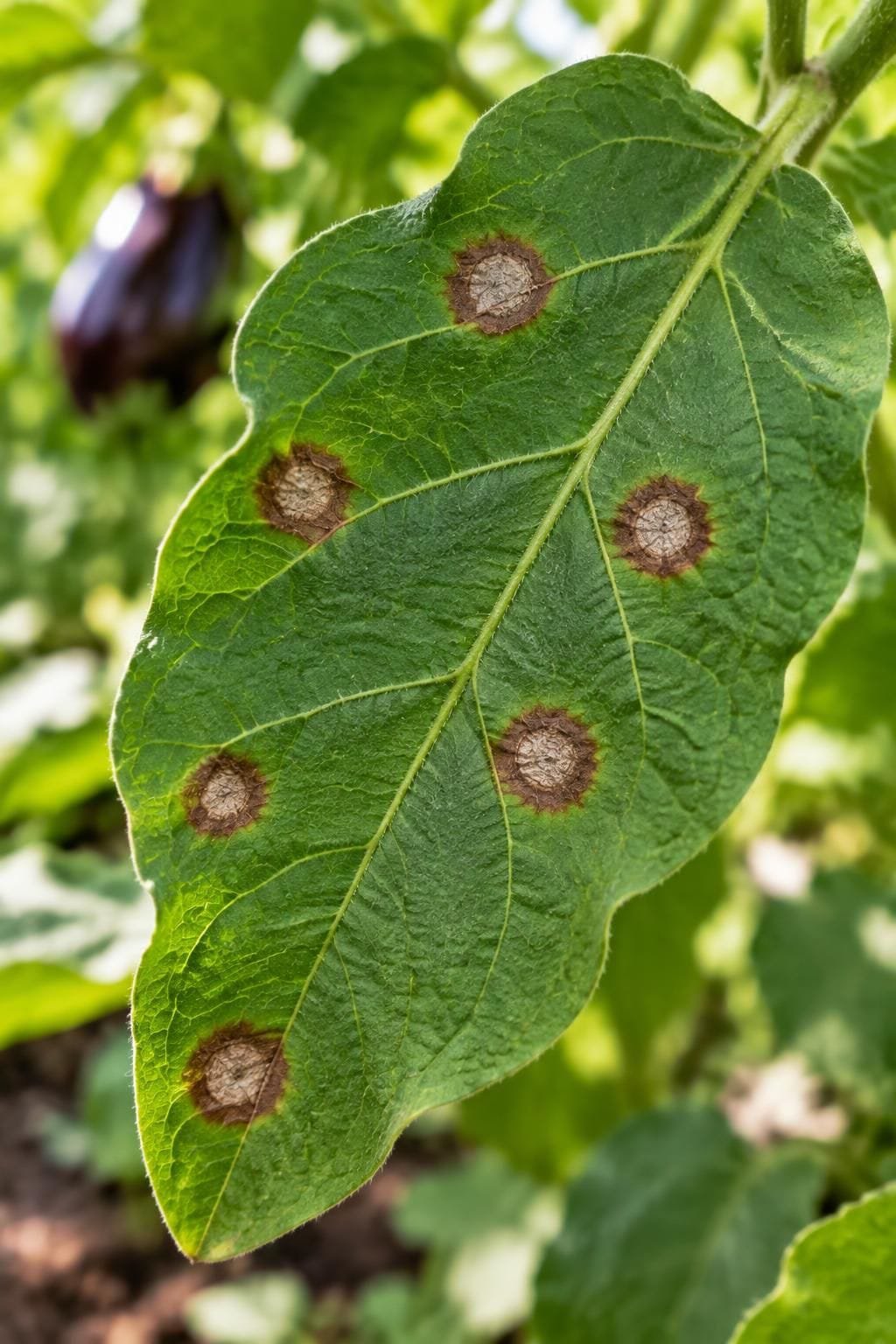
Why are my eggplant leaves turning brown? Eggplant leaves turn brown most often from heat and sun scorch, from water stress, or from a leaf disease. Scorch usually starts at the leaf edges and tips on the most exposed leaves. Water stress can also brown the edges. Round brown spots with a light center often point to a disease. Check the pattern and the location before you act.
Brown leaves look alarming, but many causes are easy to fix. The key is where the browning starts, what shape it takes, and what the weather and soil have been doing. This guide helps you sort those causes in the order that matters most.
Start with the simplest question: is the browning on exposed leaves during a heat wave? If so, the cause is probably sun and heat. How Much Sun Does Eggplant Need? explains how to protect the plant. If the leaves are also wilting, check Why Is My Eggplant Plant Wilting? and the soil moisture in How Often Should You Water Eggplant?. If the browning comes with yellowing first, Why Are My Eggplant Leaves Turning Yellow? covers those causes. For the general leaf patterns, start with Eggplant Leaves: Identification, Problems, and Care. Spots with a light center need the disease view in Eggplant Diseases: Symptoms, Identification, and Treatment.
Is it sun scorch or sunscald?
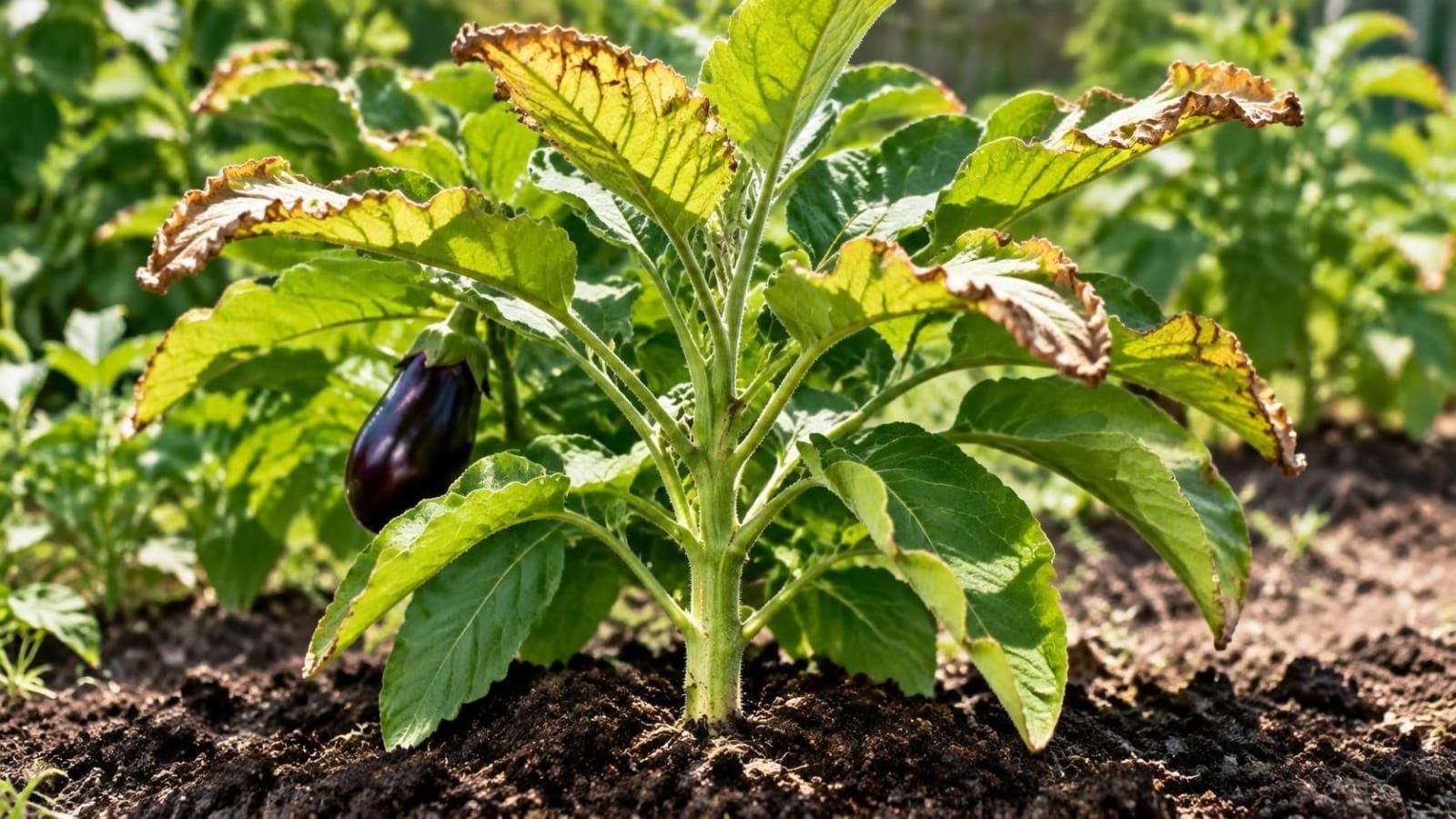
Sun scorch usually starts at the leaf edges and tips. It happens during hot, dry weather, when the leaves lose water faster than the roots can supply it. North Carolina Cooperative Extension notes that scorch first appears on the edges and can spread if the conditions continue. The damage that’s already done stays, but the plant can grow new, healthy tissue.
Sunscald is a related problem. When the foliage dies back, the fruit is exposed and sunburns. Utah State University Extension describes the same pattern in eggplant. White Spots or White Leaves on Eggplant: Powdery Mildew and Sunscald covers the sunscald pattern in more detail.
Could water be the cause?
Yes. Drought stress dries the leaves and makes the edges crisp and brown. Overwatering can also stress leaves. Suffocated roots can’t supply water, so the leaves may yellow first and then brown. Both can look alike, so check the soil with a finger before you change anything.
Keep the soil evenly moist, not wet or dry. Mulch helps hold moisture in hot weather. Best Soil for Eggplant: pH, Mix, and Amendments covers drainage and mix, which decide how well the soil holds water.
What does disease browning on eggplant leaves look like?
Disease spots look different from scorch. University of Minnesota Extension describes Phomopsis blight as circular gray to brown lesions with a light center on the leaves. Severely infected leaves tear, yellow, wilt, and drop. Heat damage tends to start at the leaf edges, so the lesion shape helps tell the two apart.
If you see spots with a light center, check Eggplant Diseases: Symptoms, Identification, and Treatment for identification and the disease options. Control depends on the cause, so confirm the diagnosis before you spray anything.
Could pests cause brown leaves?
Yes, in heavy numbers. Feeding on the underside of leaves can cause a russet look, and heavy spider mite infestations leave webbing on the undersides. Heavy flea beetle feeding can also leave leaves brown once the damage adds up. Holes in Eggplant Leaves: What’s Eating Them? covers chewing damage.
Turn the leaves over and look for small insects, webbing, or sticky residue. Check the new growth first, since many pests start there.
How do you tell brown from yellow or curled leaves?
Brown is usually the final stage of damage. Yellow comes first in many cases, as the leaf loses chlorophyll. Curling often comes before browning, especially with heat or insects, and Why Are My Eggplant Leaves Curling? covers those causes.
If the leaves brown from the edges inward, think scorch or water. If they brown in spots with a light center, think disease. If they brown after yellowing and curling, think a longer stress or pest problem.
Is the browning on new or old leaves?
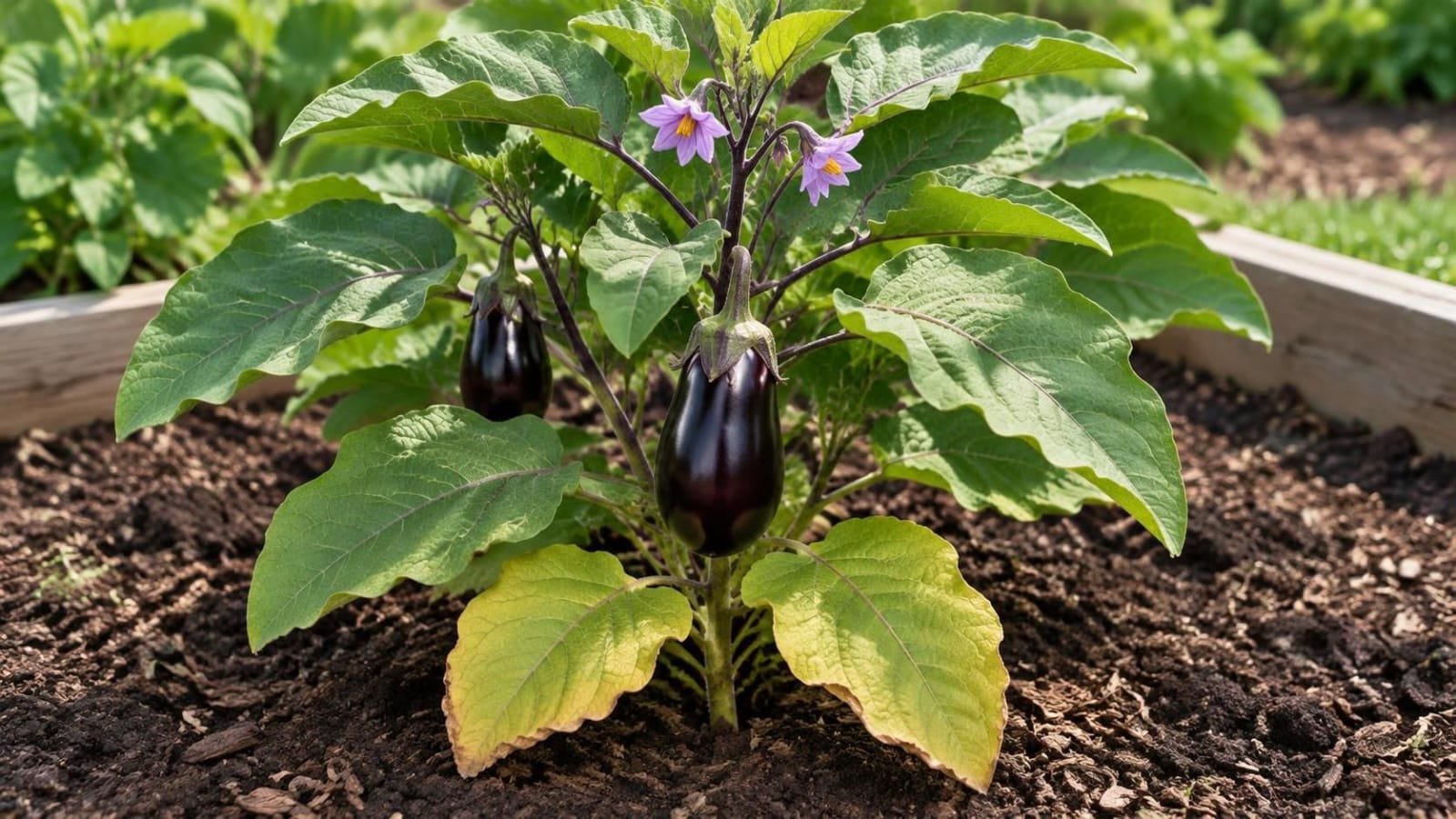
Old leaves at the base can dry and brown naturally late in the season. Normal aging is usually a slow decline, and the new growth stays healthy. Browning on new leaves points to a current problem, such as heat, water, or disease.
Keep notes with dates. A pattern across weeks tells you more than a single look, and it helps a diagnostic guide or extension agent sort out the cause.
What should you do about brown leaves?
Remove leaves that are fully brown and dry, especially if they’re on the lowest part of the plant. Leave leaves that are partly green, since they still feed the plant. Water the soil when it’s dry, and keep the foliage dry where you can.
Shade the plant during the hottest hours if scorch is the problem. Don’t strip the plant bare, since the leaves shade the fruit and protect it from sunscald. A plant with good leaf cover is more likely to keep its fruit safe.
When should you worry about brown leaves?
Brown leaves that spread quickly, appear with wilting, or show lesions on the stem need a closer look. Check the stem near the soil line and the fruit as well. Eggplant Leaves: Identification, Problems, and Care explains the general leaf patterns, and How and When to Fertilize Eggplant covers feeding if the plant looks short on nutrients.
For the full growing guide, How to Grow Eggplant: Planting, Growing, and Care connects brown leaves to planting, watering, and harvest.