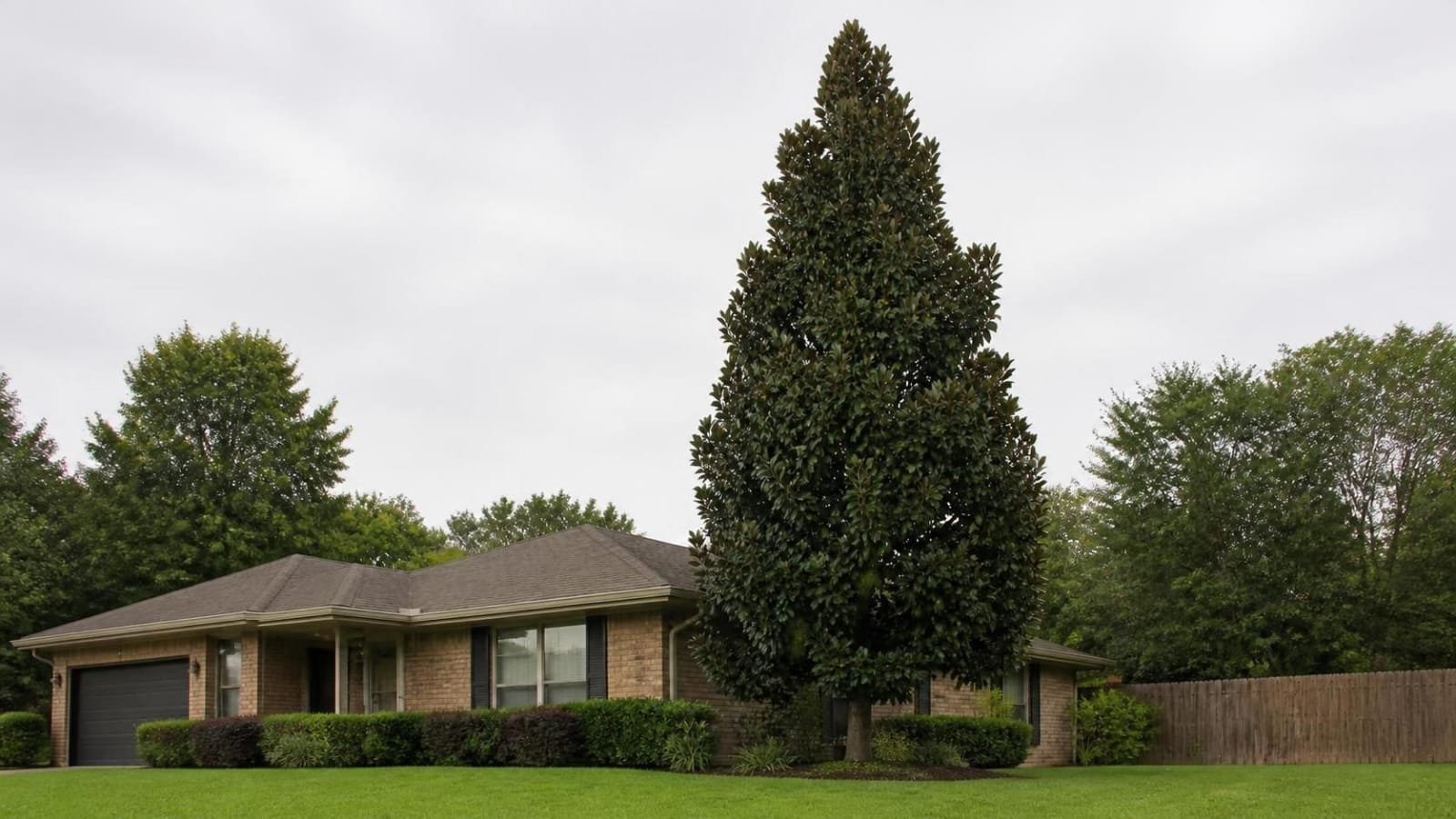
Short answer: most extension guides put a little gem magnolia at about 15 to 20 feet tall with a spread of 8 to 10 feet, and it grows slowly. Some extension sources list up to 30 to 35 feet, so measure your space against the larger number before you plant.
The name is part of the problem. “Little” and “dwarf” suggest a shrub, and a young tree in a nursery pot does look modest. But it keeps adding height for years, and the size on the tag describes the plant on the day you buy it, not the tree it will become.
How tall does little gem magnolia actually grow?
Extension guides are the most careful about their figures, so they are the best place to start. Here is how three of them compare.
| Source | Mature height | Mature spread | Notes |
|---|---|---|---|
| NC State Extension | 15 to 20 ft | 8 to 10 ft | About 20 ft over the first 20 years; zones 7a to 8b |
| University of Georgia Extension | 15 to 20 ft | 8 to 10 ft | Flowers at a much younger age than the standard southern magnolia |
| UF/IFAS (Florida) | 30 to 35 ft | Not listed | Slow growth; needs little pruning to develop |
The guides don’t explain the gap. Age, climate, and soil could all play a part, but none of these pages tests them. Until you know which conditions apply to your yard, plan around the taller figure and treat the shorter one as a lower estimate.
How fast does a little gem magnolia grow?
Slowly, and that is part of its appeal. NC State Extension describes it as reaching about 20 feet over its first 20 years, and the extension guides generally describe it as slow-growing. Nursery and garden sites often quote one to two feet a year. I couldn’t confirm that figure in an extension source, so treat it as a rough guide rather than a schedule.
Slow growth is easy to mistake for a problem. A young tree that adds little height in a season is not necessarily unhealthy, so compare its progress with the timeline above before you worry.
Spread and spacing: the number people forget
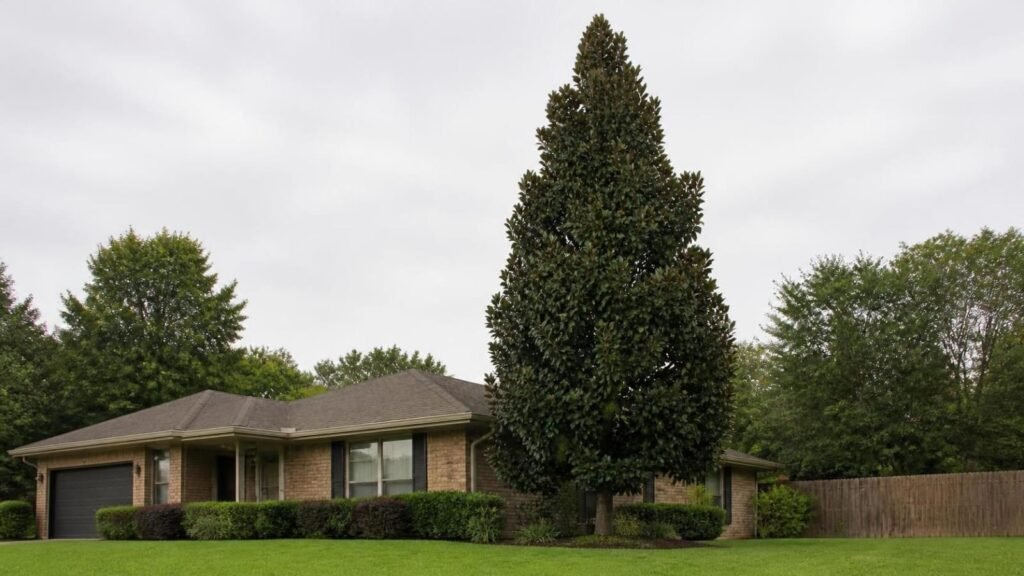
Height gets the attention, but width decides how crowded the tree becomes. the two extension guides in the table give a spread of 8 to 10 feet, so the canopy reaches roughly 4 to 5 feet out from the trunk on each side. A tree planted 5 feet from a wall will touch that wall once the canopy fills out.
For a hedge or screen, planting about 8 to 10 feet apart lets the canopies just meet. Closer than that, they will fill in sooner and start to crowd. Since this tree needs little pruning, crowding is hard to fix later without taking out limbs you would rather keep.
How light changes the shape
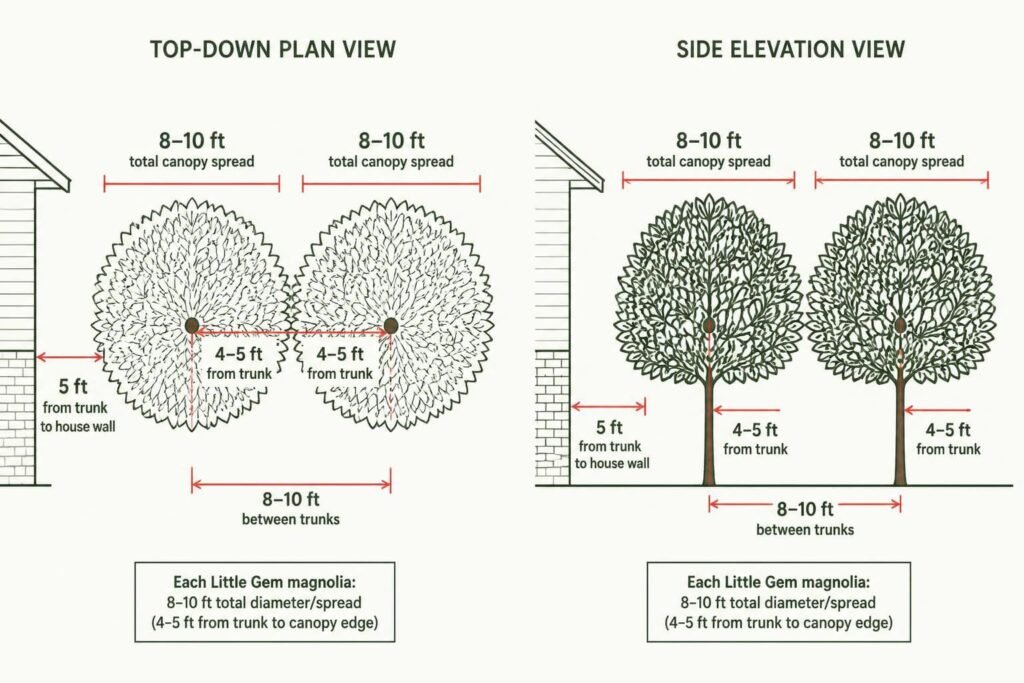
Full sun here means six or more hours of direct light a day, and partial shade means roughly two to six hours. The tree grows in both, so partial shade is workable. What changes most is the shape. Sun generally gives a fuller, denser crown, while a shadier spot tends to produce a looser one. Check the light at a few times of day, and remember that a neighbor’s tree or a new fence can take the afternoon sun a few years after planting.
Why you can’t prune it into a smaller tree
Many people buy a small tree expecting regular trimming to keep it small. This one does not cooperate well with that plan. UF/IFAS notes that it needs little pruning to develop, which suits a natural shape. If you want it held near 8 feet, it is the wrong tree for that job.
If a tree is already pressing against its space, the practical fix is to move the plan, not reach for the shears. Look up before you dig. Wires, roof edges, and walkways are the usual conflicts, and they are much easier to avoid at planting time than to live with afterward.
When the mature size doesn’t fit your space
If the taller figure will not fit your space, compare the Little Gem and Teddy Bear cultivars to see which one fits your site. Check the mature numbers in each guide, since varieties differ.
If you already have a little gem that seems stuck in size, look at water and soil before blaming the variety. A tree that is short on water or sitting in poor soil can look stunted, and you can check our breakdown on identifying Little Gem leaf and disease problems to pinpoint what is holding it back.
Before you buy, measure the space against the taller figure, count the sun hours, and check how the spot drains. Once the tree is in the ground, follow a planting and long-term maintenance routine from the start.