
Plenty of comparison pages treat Teddy Bear as the small magnolia and Little Gem as the bigger one. Check the nursery tags and both say roughly twenty feet. So what actually separates them?
Short answer: they are closely related, and the difference is mostly shape and site. Neither is a clear winner. Choose Teddy Bear for a dense pyramid shape that stays around 15 to 20 feet with a fairly predictable width. Choose Little Gem for more heat tolerance, an open and looser shape, or easier availability, if you can accept a tree that may keep growing taller over the years.
One point about names first, since it confuses many buyers. Teddy Bear is the trade name, and the cultivar behind it is ‘Southern Charm’, as Oklahoma State’s plant profile lists it. Little Gem is just ‘Little Gem.’ Both are Southern magnolia (Magnolia grandiflora), which is why they share the glossy evergreen leaves and the big fragrant flowers.
At the nursery, two tags say the same thing
The first move is to read the tag, and it’s the least helpful part of the purchase. Both trees are sold at about 20 feet, and a tag is only as reliable as whoever filled it in. Three quick checks tell you more:
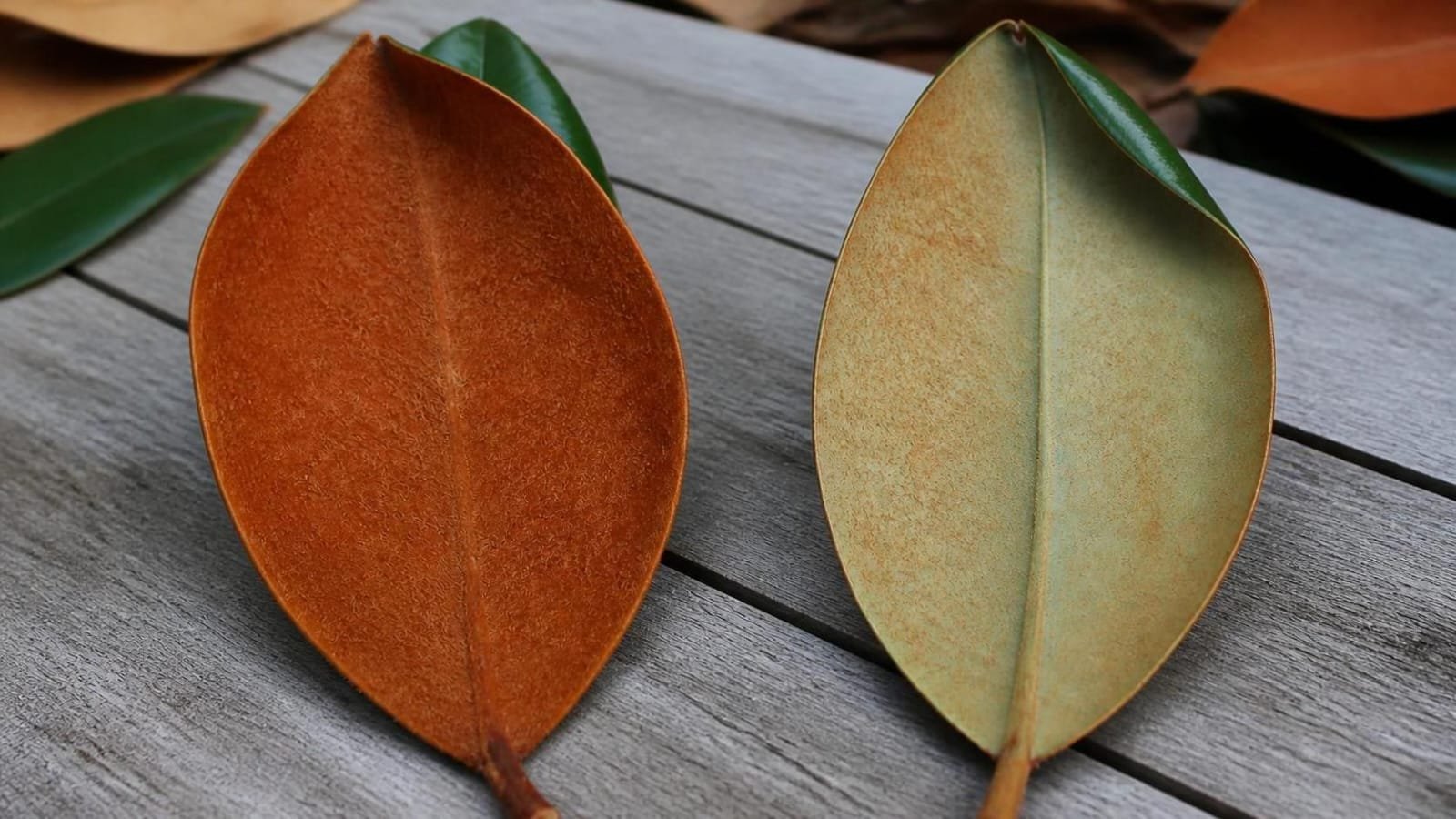
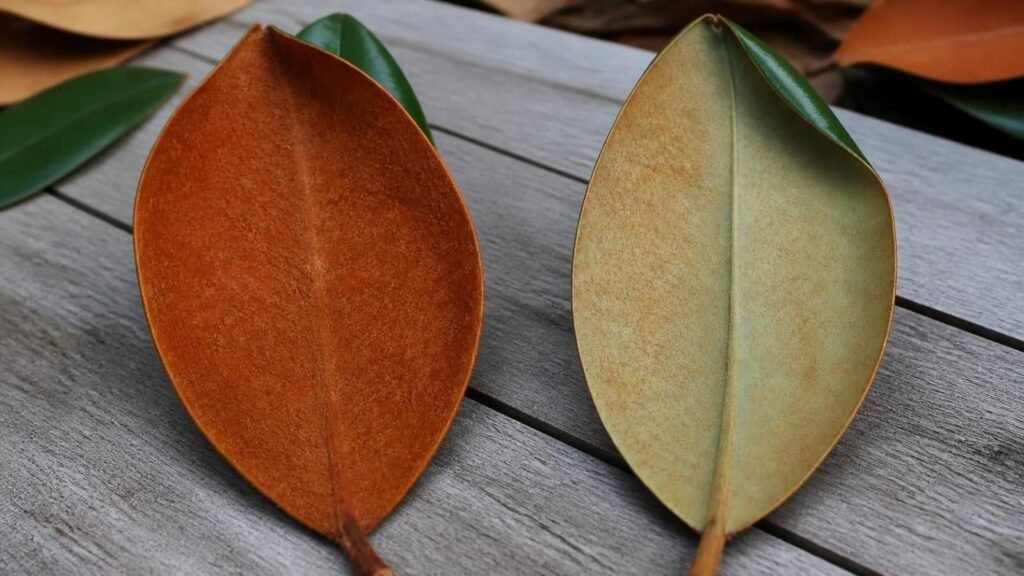
- Flip a leaf over. The Teddy Bear name comes from a dense, reddish-brown fur on the underside of the leaf. Little Gem is fuzzy too, but the covering is lighter and sparser, according to Hunker’s consumer-site comparison, so treat that as a clue, not a rule.
- Read the botanical name. ‘Southern Charm’ means Teddy Bear. If the label only says “compact magnolia,” ask the grower which cultivar it is.
- Ask how old the tree is and whether it has bloomed yet. This matters more than it sounds, and the flowering section below explains why.
None of this is a lab test. Young potted plants can look alike, so if the cultivar matters to you, buy from a grower who can name it.
The tags say 20 feet. Width and density are where they differ.
Height is where the two overlap most. The difference between Little Gem and Teddy Bear magnolia shows up in width, density, and how predictable each tree is. If you want the year-by-year picture for Little Gem alone, our Little Gem magnolia size and growth rate guide goes into it.
| Trait | Little Gem | Teddy Bear (‘Southern Charm’) |
|---|---|---|
| Mature height | 15 to 20 ft on many tags; two extension sources say perhaps 30 to 35 ft eventually | About 15 to 20 ft |
| Width | Sources range from about 7 to 18 ft | Sources range from about 8 to 15 ft |
| Shape with age | Oval to pyramidal, tends to open up and show lower limbs | Dense pyramid, foliage from bottom to top |
| Leaf underside | Light, sparse rusty-brown fuzz | Heavy, felt-like reddish-brown fur |
| First flowers | About 2 to 3 years in extension sources; the breeder reports year one | Around year three (breeder’s report only) |
| Hardiness zones | 7 to 10a | 7 to 9; some listings say 6b |
| Availability | Easy to find | Can take some work to locate (a 2022 extension note) |
Here’s the kicker: extension sources don’t agree with each other on Little Gem. Mississippi State Extension calls it slow-growing and says perhaps 30 to 35 feet tall with an 8 to 12 foot spread, while Coastal Carolina University’s arboretum says 15 to 20 feet tall and 7 to 10 feet wide. The UF/IFAS Panhandle horticulture agents quote 15 to 18 feet wide and say the tree grows more open and less dense with age, which shows off the lower limbs. Teddy Bear figures stay in a narrower band, roughly 15 to 20 feet tall and 8 to 15 feet wide across the Oklahoma State profile, the Panhandle write-up and a nursery listing, with foliage that stays dense from the bottom to the top. The ranges overlap, so this is a general tendency, with exceptions.
One side-by-side comparison exists. When the breeders behind ‘Southern Charm’ grew it next to Little Gem in Seneca, South Carolina, they recorded it as more compact, narrower, more freely branching and denser, with stronger upright side branches (plant patent USPP13049). Fair enough if you shrug at that; a patent is the breeder describing its own tree at one site, not an independent trial. It does line up with what the extension agents describe, though. For scale on the Little Gem side, NC State’s JC Raulston Arboretum reported in a 2000 extension newsletter that the tree reaches about 20 feet high and 10 feet wide in ten years.
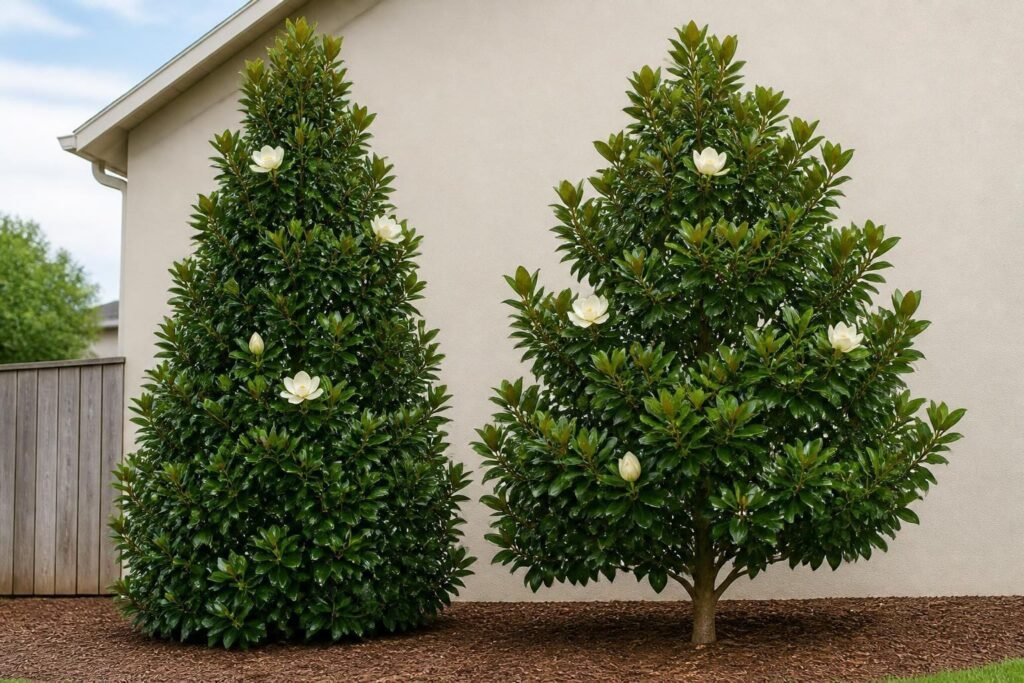
So when a fence or a wall sets a hard limit, Teddy Bear is the safer bet because its width is easier to predict. When you have room and prefer a looser, more open outline, Little Gem makes sense. If your planting strip is under about six feet wide, neither tree fits without trimming; as a rule of thumb, both are wider than that.
Your winters sit on the cold edge of zone 7
Most buyers check the zone on the tag and stop there. The zone number is a minimum guide, and for these two trees it is not settled. UF’s fact sheet (an older publication, from 1994) puts Little Gem at zones 7 through 10a, which is more heat range than Teddy Bear listings offer. Teddy Bear is listed for zones 7 to 9 in the extension profile, while a retail plant-finder listing says 6b and, in the same breath, suggests a thick winter mulch in exposed spots.
That 6b claim comes from a brand listing, and none of the extension pages reviewed for this article test either tree there, so treat 6b as marginal. Pick a spot sheltered from wind, mulch the root zone, and look over the leaves after a hard winter. In the other direction, the Gulf Coast and the hotter parts of zones 9 and 10a lean toward Little Gem. And in colder climates, remember that the species itself can brown and drop leaves in harsh winters, a pattern Utah State’s tree guide places in zone 5 and colder.
You want flowers this summer, not in year three
In the breeder’s side-by-side, Little Gem started flowering in its first year of growth and ‘Southern Charm’ in its third. Independent extension sources are more modest: Mississippi State puts Little Gem’s first blooms at about 2 or 3 years old, and Coastal Carolina says within 2 to 3 years. So Little Gem probably flowers a little sooner, but the documented gap is smaller than the patent suggests, and no independent source gives a Teddy Bear figure at all.
A 15-gallon nursery tree is likely a few years old already (an assumption, so ask the grower), which can shrink the gap further. That’s why the third pot check, asking whether it has flowered, is worth the question. As for the season itself, listings for both trees run from spring into fall, and Stony Brook’s arboretum describes Little Gem as selected for abundant flowers over an extended season, so length of bloom shouldn’t decide it.
You’re planting a privacy row, and every page quotes a different growth rate
If you’ve read three pages and come away with three different growth rates, you’re not alone. Nursery listings quote about 1 to 2 feet a year for Little Gem, extension sources call it slow, and the breeder’s patent describes ‘Southern Charm’ as rapid-growing, while the Panhandle agents say Teddy Bear matures more slowly than Little Gem. Some Australian nursery pages reverse this and call Little Gem the faster, taller one. Site, soil, water and sun move all of these numbers around, so growth rate is a weak reason to choose; it is close to a coin flip.
Density is the better tiebreaker. For a screen that needs foliage right down to the ground, Teddy Bear’s habit of holding leaves from bottom to top does more for privacy than a few extra inches a year. Little Gem opens up with age, which suits a single specimen tree but works less well as a screen. If you do plant Little Gem in a row, seller recommendations for spacing run from about 4 to 10 feet. The tight end fills in sooner and will likely crowd the trees later, so decide now whether you will thin the row or accept a crowded hedge.
Yellow leaves in late spring, or a sticky film on the leaves
Don’t sweat the yellow leaves first. NC State’s arboretum notes that Little Gem drops older yellow leaves in late spring, so some leaf drop at that time doesn’t mean you killed it. If the tree turns sticky or sooty instead, suspect scale insects. The extension sources above list magnolia scale as the most common pest on Little Gem, and one adds tulip-poplar weevil and canker diseases, though it says most of these don’t threaten the tree’s long-term health. UGA Extension, by contrast, calls Little Gem adaptable with no serious insect or disease problems, so severity seems to depend on where you live.
No source reviewed here compares the pest resistance of the two cultivars. Since they are the same species, expect the same pests and diseases. Our Little Gem magnolia problems guide walks through leaves, flowers and scale in more detail, and the same checks apply to Teddy Bear.
Planting day, whichever tree you choose
Most planting mistakes happen on the first day. The steps below include the common errors.
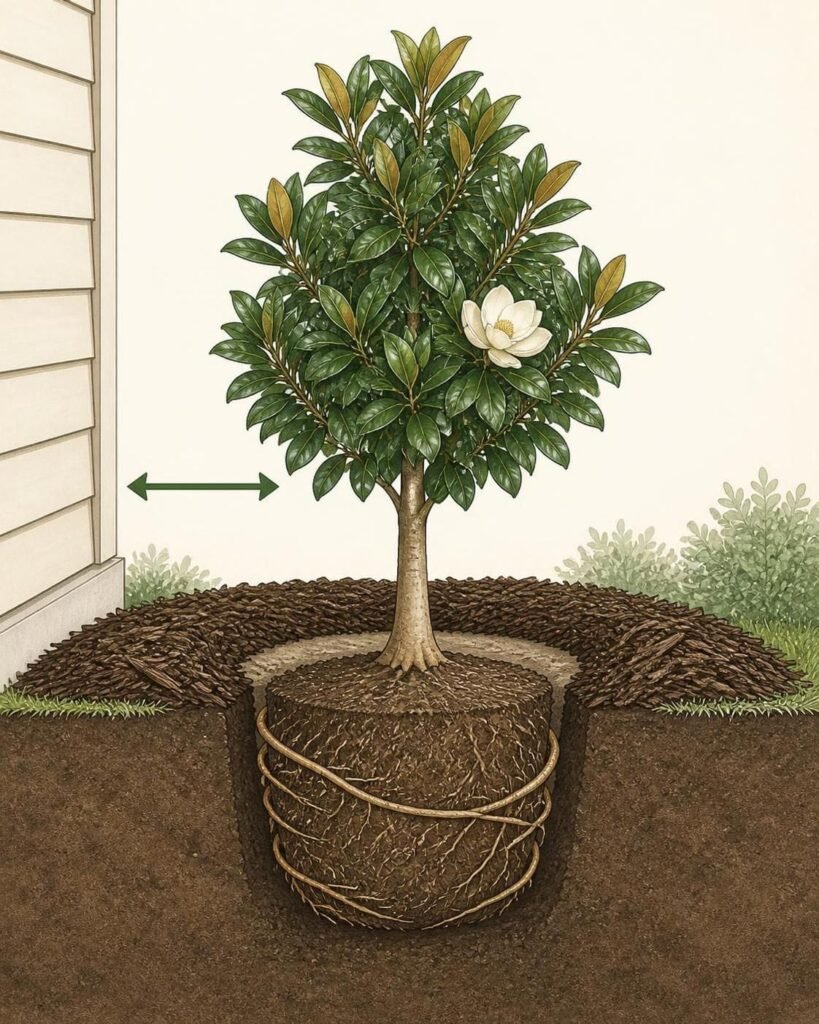
- Measure before you dig. Run a tape from the planting spot to the nearest wall, fence or eave, and plan around the larger width figure. Some sellers say Little Gem can sit as close as 5 feet from a house; that only works if you’re willing to prune.
- Check the roots, then set the depth. Magnolias are prone to girdling roots, so loosen any roots circling the root ball. Set the top of the root ball level with, or a touch above, the surrounding soil. Planting too deep is a common mistake and is hard to correct later.
- Water evenly, and check drainage before you add more. When leaves yellow, the reflex is more water. The Teddy Bear extension profile calls for regular moisture once established, with tolerance for brief dry spells, and the retail listing warns it will die in standing water. Poor drainage is a bigger threat than a missed watering.
- Mulch, but keep it off the trunk. Organic mulch benefits the tree, and a thicker winter layer helps in cold spots. Pull it back a few inches from the trunk. For feeding and routine care, our Little Gem magnolia tree care guide covers the basics, and Teddy Bear shares the same species-level needs.
- Hold the pruning. Neither tree needs much. When you do trim, wait until right after flowering so you don’t cut off the season’s blooms.
If you’re still on the fence, measure the clearance first. Most other differences on this page can be worked around, but a wall cannot be moved.
2 thoughts on “Little Gem vs Teddy Bear Magnolia: Which Is Better?”