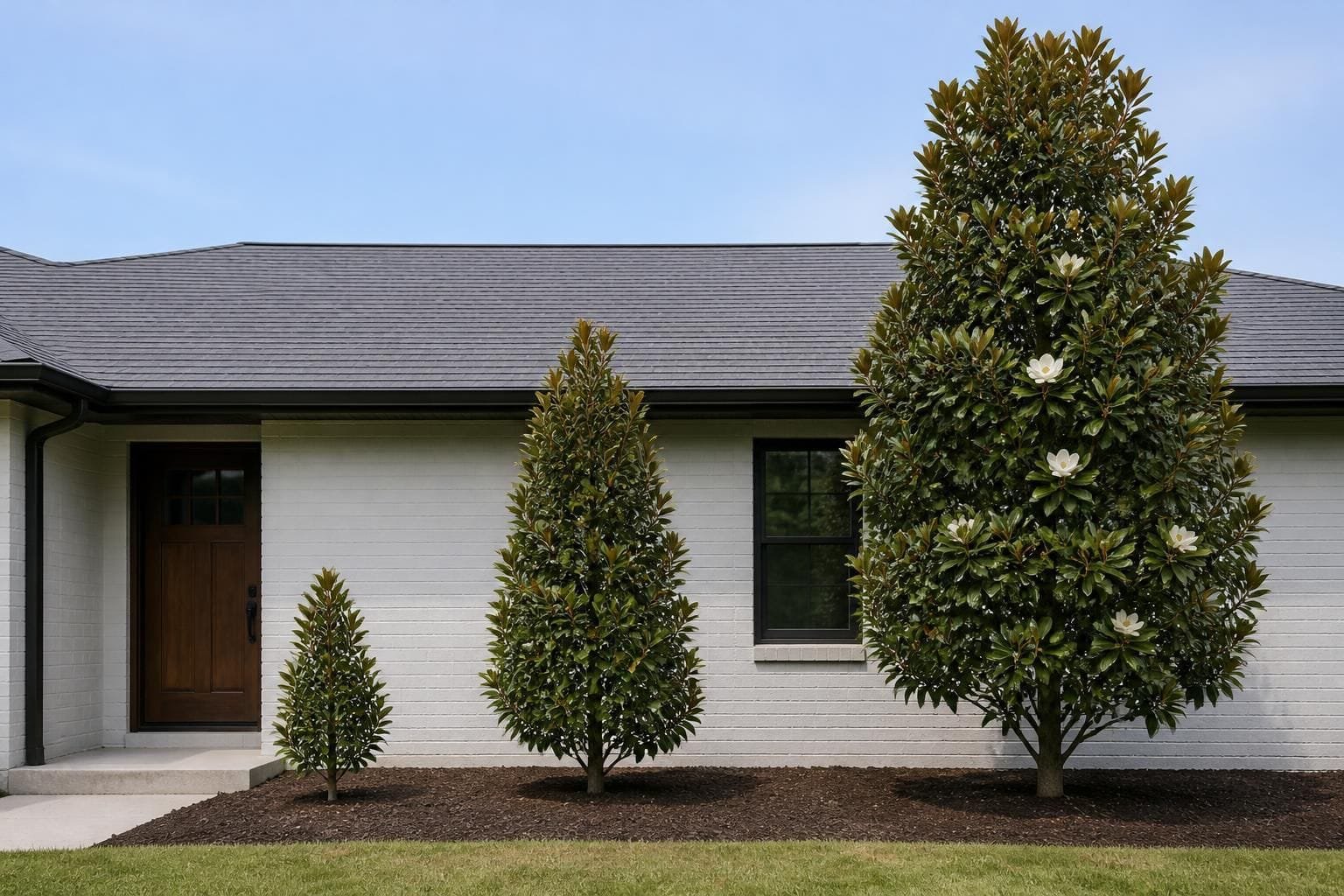
Most trouble with a little gem magnolia begins with one word on the plant tag: dwarf. It is smaller than the old southern magnolias, fair enough, but extension sources put its mature height anywhere from about 15 to 35 feet, and that spread of numbers decides where the tree can safely go. Check that first. After that, the care itself is pretty forgiving.
Short answer: little gem magnolia does best in full sun (six or more hours of direct light) and in moist, well-drained, slightly acidic soil. Plant it in a wide, shallow hole with the top roots at the surface, water the whole root ball on a steady schedule through its first year, and go light on both fertilizer and pruning. Give it room for at least 15 to 20 feet of height and 8 to 10 feet of spread, and more than that if your spot allows.
How big does a little gem magnolia really get?
Pick up five different extension pages and you will find at least three different heights. Part of the explanation is probably time, since this tree grows slowly and a figure for twenty years is not a figure for fifty. Part of it may be climate and soil, which the sources rarely spell out.
| Source | Mature height | Spread | Also noted |
|---|---|---|---|
| NC State Extension | 15 to 20 ft | 8 to 10 ft | Slow growing, about 20 ft over the first 20 years; reliable in zones 7 to 9 |
| University of Georgia Extension | 15 to 20 ft | 8 to 10 ft | Hardy in zones 7 and 8; blooms from spring into November |
| UT Gardens | 20 to 25 ft in full sun | About half the height | Dense oval in sun; thinner and less floriferous in shade |
| Mississippi State Extension | 30 to 35 ft | 8 to 12 ft | Slow growth; flowers at 2 or 3 years old |
| LSU AgCenter | 30 to 35 ft | 12 to 15 ft | Named a Louisiana Super Plant in 2018 |
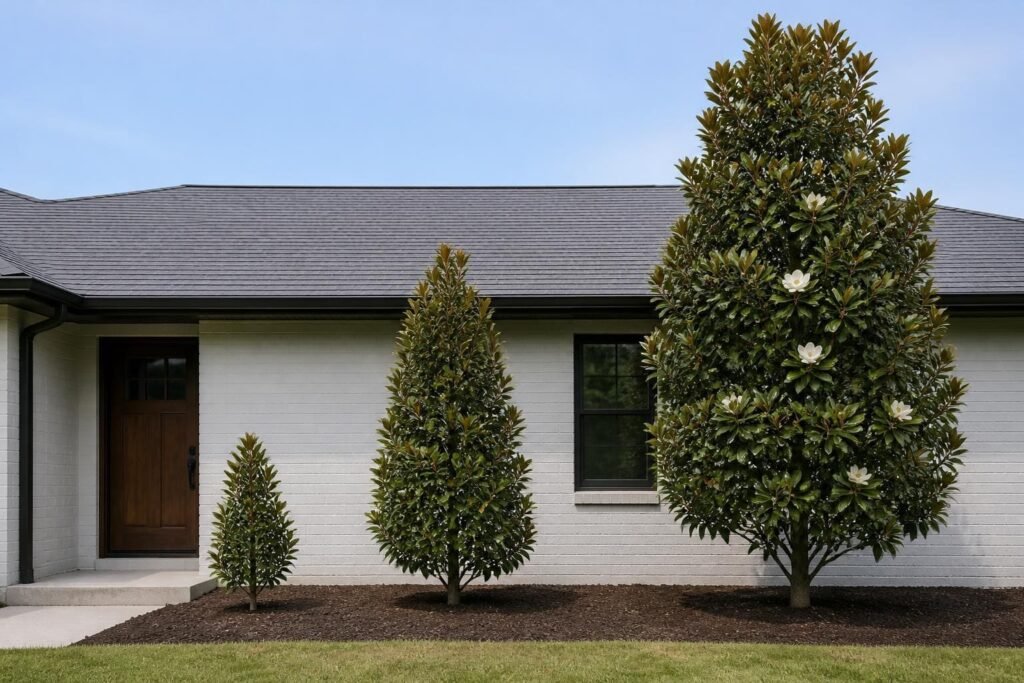
Even the tall end is small next to a full-size southern magnolia. It is still a lot of tree for a six-foot side yard. Here’s the thing: because heavy pruning is not this tree’s strong suit (more on that below), you site it for the size it could reach, not the size it is at the nursery. If the space is tight or sits under wires, treat 15 to 20 feet as the best case and not a promise. The sources do not explain the gap, so planning for the taller numbers is the safer way to read them.
Choosing the spot: sun, soil, and elbow room
Do little gem magnolias need full sun?
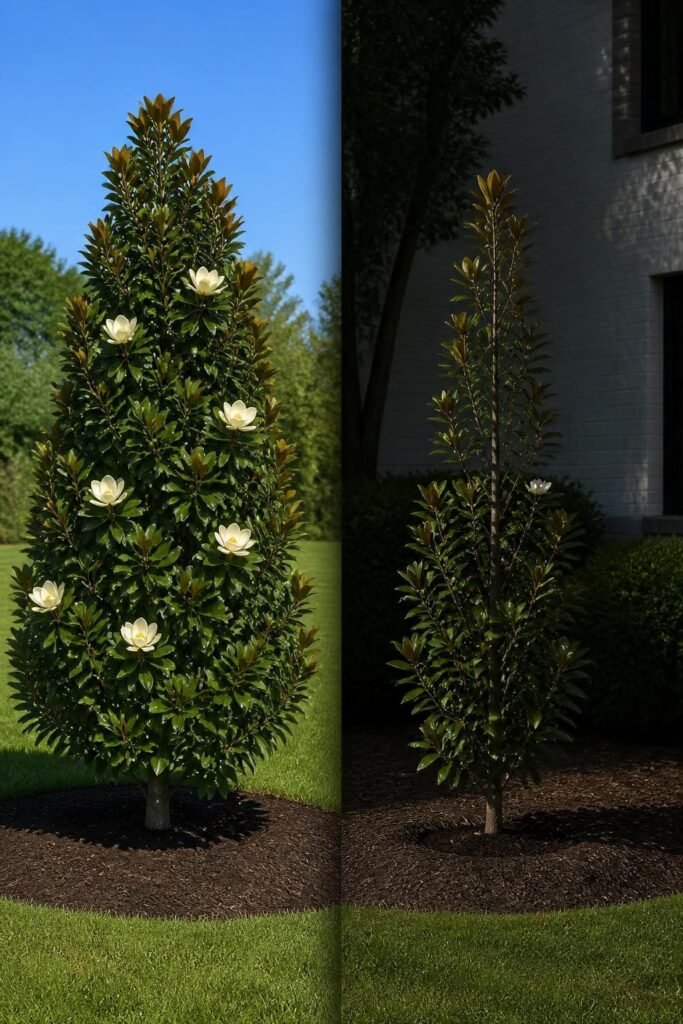
They grow and flower best in full sun, meaning six or more hours of direct light, but they will survive in part shade. What you give up in shade is bloom and fullness.
The clearest description comes from an extension horticulturist writing for UT Gardens. In full sun, this cultivar fills out into a dense oval. In shade it flowers less and takes on a narrow, thin look, a bit like a sparse Christmas tree. The same piece adds that a sunny tree keeps producing the occasional flower right up to hard frost, so you get some perfume most days of the warm season.
A common situation: the spot is sunny the year you plant, and three summers later a neighbor’s maple or a new fence has taken the afternoon. Count the sun hours in the place where the tree will stand when it is 15 feet tall, not where it stands today. Check the spot at a few different times of day and add up the sunny hours.
Little gem magnolia soil requirements
Moist, well-drained, slightly acidic soil. The LSU AgCenter gives a pH range of 5.5 to 6.5 and warns that the tree does poorly in compacted or flood-prone ground. Clay itself is not the problem. Clay that holds water is.
Check drainage before the tree arrives. Dig the hole, fill it with water, let it drain, and fill it again. If water is still standing in it the next morning, that spot needs a different plan: another location, or a wider and shallower planting with the root ball sitting a little high. Your local extension office can tell you what works on your particular soil.
You cannot judge pH by looking at soil. A soil test through your extension office, or a garden-center kit, tells you whether you are in range, and it saves a lot of guessing later if the leaves start to yellow.
How far from the house, fence, or next tree?
Several nursery pages suggest about five feet from the house. Run the numbers yourself. A tree with an 8 to 10 foot spread has a canopy that reaches 4 to 5 feet out from the trunk, and the wider spreads in the table reach 6 to 7 feet. Plant it five feet from a wall and the branches will be leaning on the siding by the time it matures. Six to eight feet gives the smaller figures room, and more is better if you believe the taller sources.
The same arithmetic works for a screen. Space the trees about as far apart as the mature spread if you want the canopies just touching, which is roughly 8 to 10 feet for the smaller numbers. Closer than that fills in faster and crowds sooner, and since this tree takes limited pruning, crowding is hard to undo.
How to plant a little gem magnolia, step by step
Most of us dig a deep hole and fill it with rich compost, because it feels generous. With trees it works against you. Both University of Georgia Extension and the University of Florida’s tree-planting guide advise against amendments in the planting hole, and Florida’s guide adds that the soil you dug out usually makes the best backfill. Some nursery pages still recommend working in composted manure. The extension material points the other way.
- Pick fall if you can. Roots keep growing while the top of the plant slows down for cooler weather, so the tree has a head start on next summer. If winters where you live are hard on young evergreens, spring planting gives the roots a full season before the first cold snap.
- Look up before you dig. A wire, a security light, or a roof edge that will fight the canopy later is a reason to move the spot now.
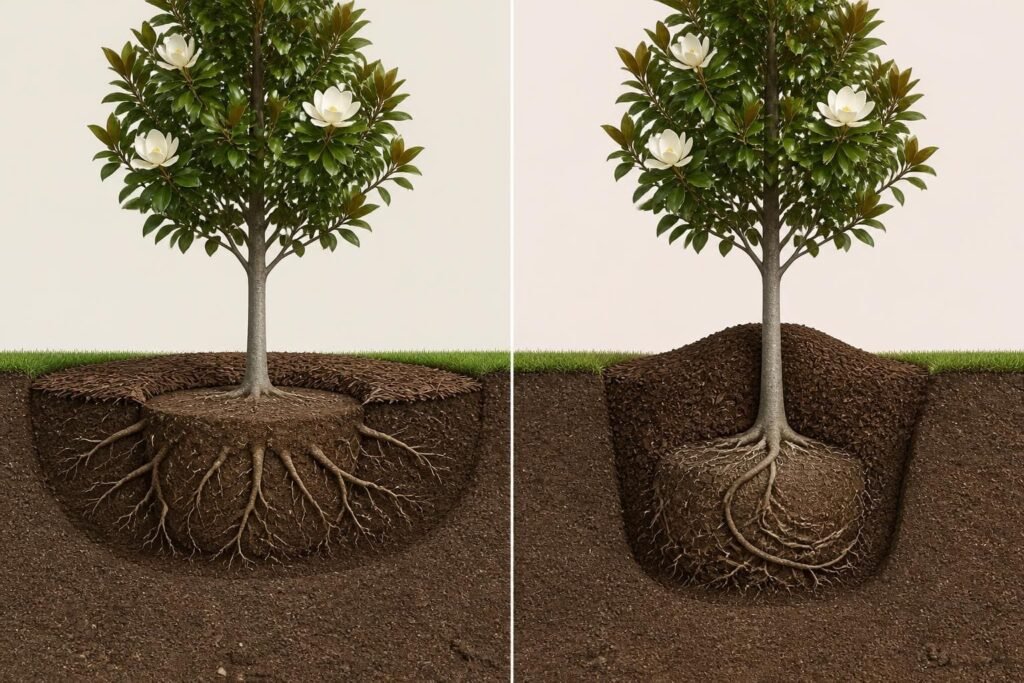
- Dig wide and shallow. Make the hole two to three times the width of the root ball and no deeper than the root ball itself. This is the part people get wrong. If you overshoot, put soil back in the bottom and firm it with your foot.
- Find the top root. Brush soil off the top of the root ball until you see where the highest root leaves the trunk. That point should sit at the surface or slightly above it, never below. Planting a little high is safer than planting deep.
- Deal with circling roots. Container-grown trees often have roots wrapped around the outside of the root ball. Loosen them and cut the worst ones so roots head out into the soil instead of around the trunk. Left alone, they can girdle the trunk years later.
- Backfill with the native soil. No compost, no fertilizer in the hole. Slice a shovel through the soil as you fill to break up clumps, and firm it with your foot, not your full weight.
- Water well, then start the schedule in the next section. Fertilizer waits until the following spring.
- Mulch a ring, not a mound. Spread it around the root ball and keep it off the trunk so the root flare stays visible. Mulch piled on the root ball holds water against the bark and can encourage girdling roots.
Watering a little gem magnolia in year one, and every year after
A common situation: a magnolia goes in during October, gets a good soak the first week, and is then left to the weather. That is a quiet way to lose a new tree. Penn State Extension names insufficient water as the leading reason newly planted trees fail, and points out that roots stay inside the original planting hole for weeks, often the whole season. That is where the water has to go, not onto the lawn around it.
Here is the schedule that article recommends for a new tree:
- First one to two weeks: water daily.
- Weeks three to twelve: every two to three days.
- After week twelve: once a week until the first frost.
- Planted in autumn: follow the same pattern until the first frost, then resume weekly watering in spring and keep it up through the growing season.
- After the first year: weekly until the tree is established.
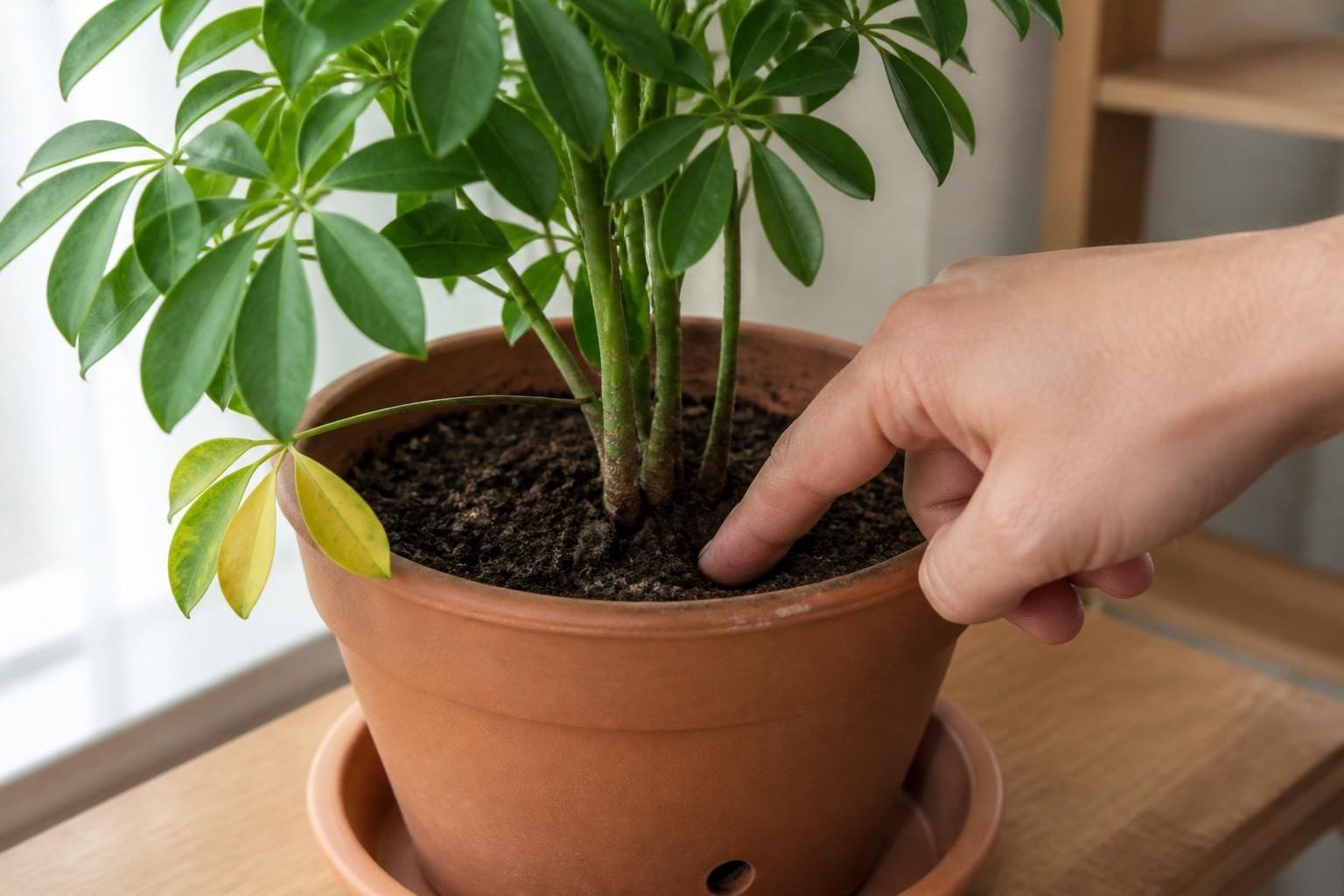
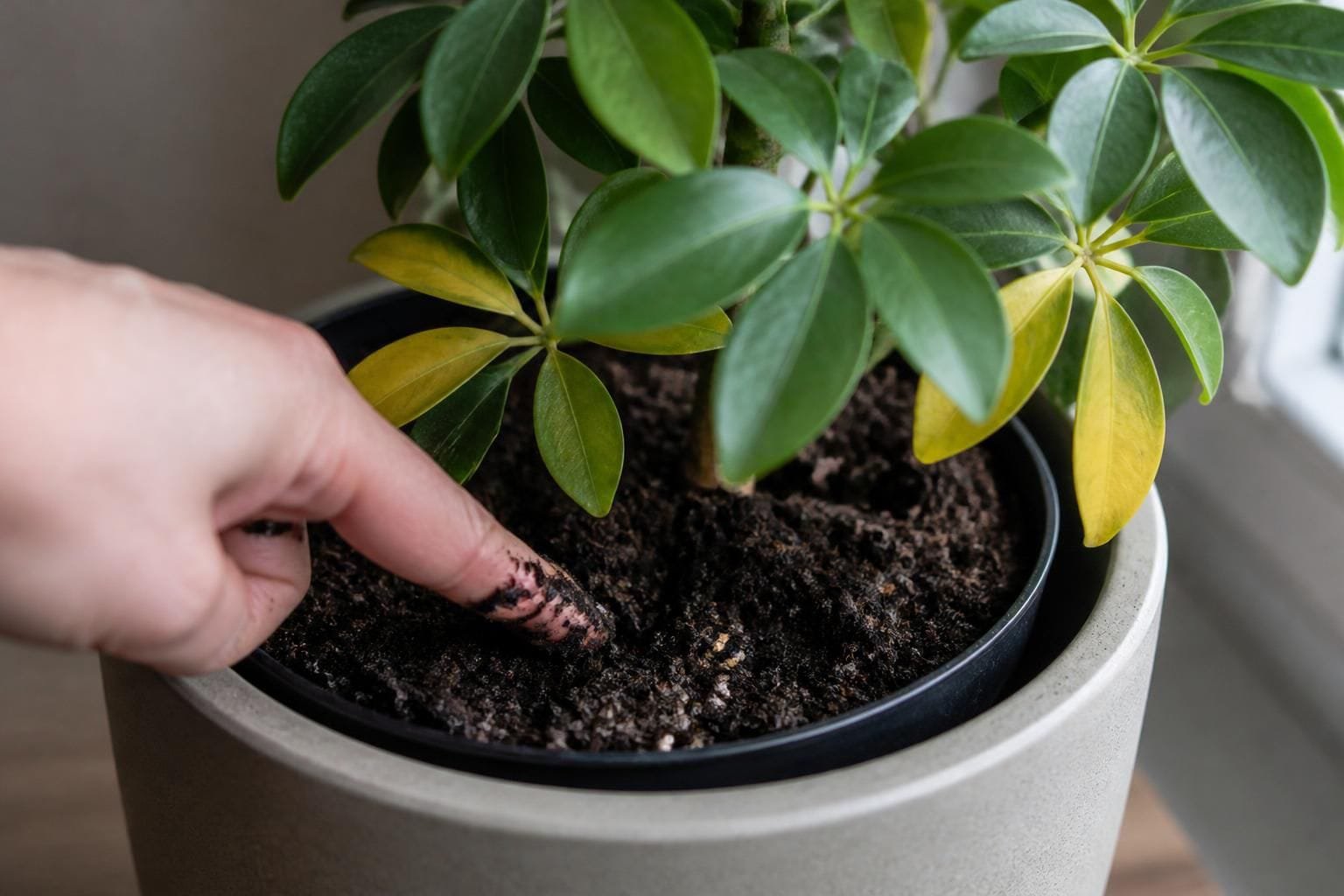
That schedule comes from Pennsylvania, so treat it as a starting point and adjust for local heat and soil. Each watering should reach the whole root zone, until the soil is moist 6 to 9 inches down. As a floor, think 1 to 1.5 gallons per inch of trunk diameter. Little gem is often multi-stemmed, so measure the thickest trunk and treat the result as a minimum. A metal rod or long screwdriver tells you quickly: it slides in easily where soil is moist and fights you where it is dry. Mulch helps hold the moisture. Keep it no deeper than about three inches, and about three inches back from the trunk.
Once the tree is established, how often it needs water depends on how much soil its roots can reach. UF/IFAS Extension in Baker County rates it very drought tolerant with plenty of root room, and only moderately so in restricted or poor, dry soil. NC State’s plant database lists it as intolerant of soil extremes, dry or wet. In practice that means a long, slow soak during weeks without rain, instead of waiting for the leaves to droop, especially for trees planted in a narrow strip beside pavement.
Fertilizer: much less than the plant tag suggests
When a tree looks pale or refuses to flower, fertilizer is the first thing most of us reach for. For this tree it is rarely the fix. Sun drives flowering, and soil pH drives most of the yellowing, so those two checks come before the bag.
The Gardenia plant guide takes a soil-first approach. A yearly top-dressing of compost is often enough in decent soil, with a slow-release fertilizer made for acid-loving plants in early spring only if growth is weak or a soil test calls for it. It also notes that yellow leaves on alkaline soil can be chlorosis, and that sulfur or chelated iron, guided by a soil test, are the usual options. Some nursery pages recommend feeding three times a year plus bone meal for heavier bloom. The university sources used for this article ask for far less. Whatever you use, follow the product label for rate and timing, and check local rules, since approved products differ by region.
Pruning: when, how much, and when to leave it alone
The tidy-minded reflex is to shear a tree into shape every year. This one does not ask for it. Most sources describe pruning as minimal, and the Gardenia guide gives the practical rules: prune right after the main bloom flush, avoid heavy cuts in winter, take out only dead, damaged, or crossing branches plus light tip-pruning for shape, and keep total live removal under about 20 percent in a year, because magnolias can be slow to seal big wounds.
You will see other timing online, such as late winter or early spring. The advice does conflict, and local conditions may matter, so your extension office is the best tiebreaker. Little gem adds a wrinkle: it blooms in flushes into fall, which makes right after bloom a moving target. A cut in late spring or early summer, after the main wave of flowers, is the practical reading.
If you find yourself pruning every year just to keep the tree inside its space, the problem is the spot, not the shears. Lower limbs can come off if you want a clear trunk, but take them in stages.
Yellow, dropping, or sticky leaves: what’s normal and what isn’t
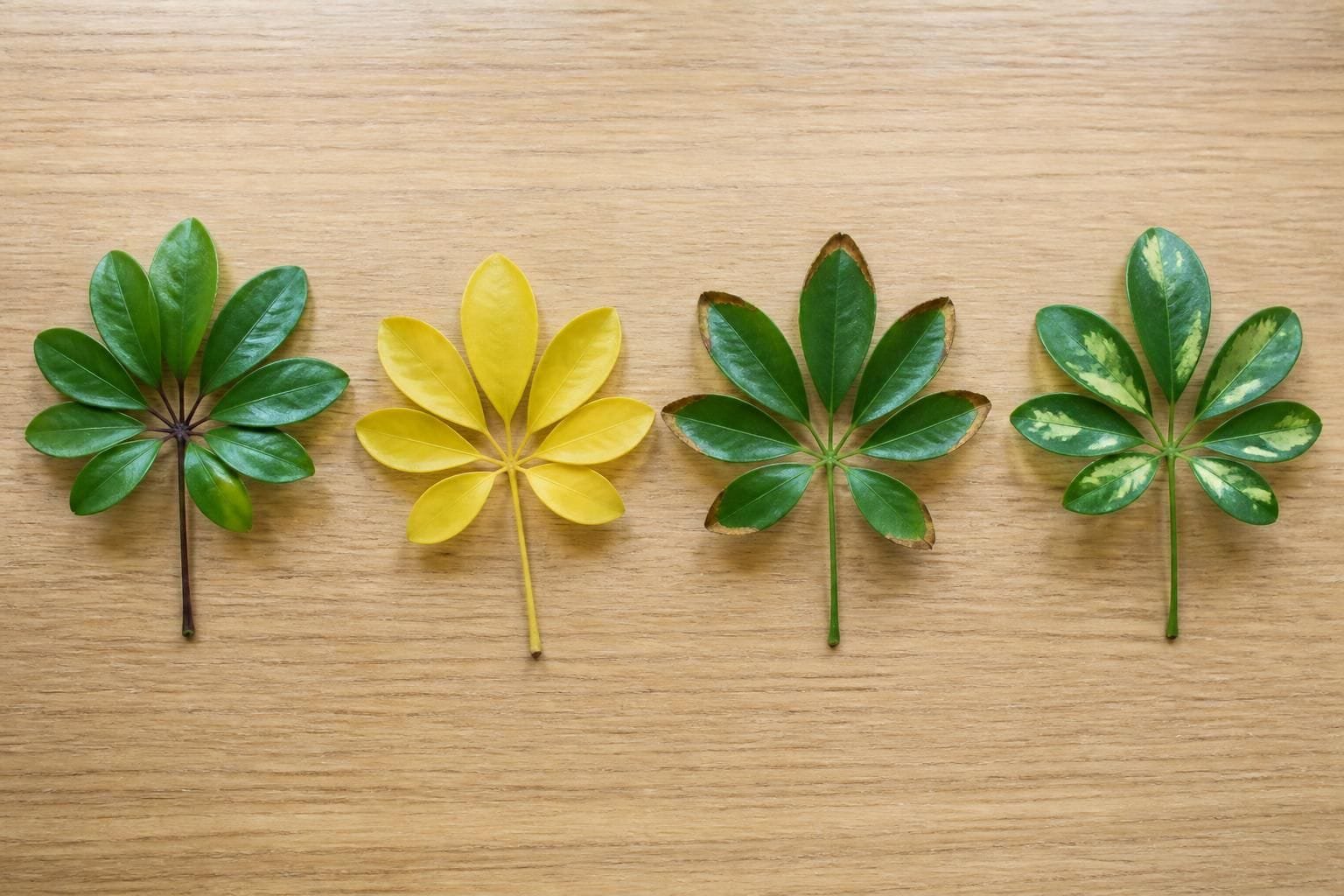
If you have spent an evening searching for why your evergreen is dropping leaves in spring, you’re not alone. Start with the calendar. UF/IFAS Extension in Baker County notes that little gem’s leathery leaves are shed as new foliage emerges in spring, and that the big, slow-rotting leaves can be a nuisance on a patio. Older leaves yellowing inside the canopy while the tips push out fresh growth is the tree doing its normal housekeeping.
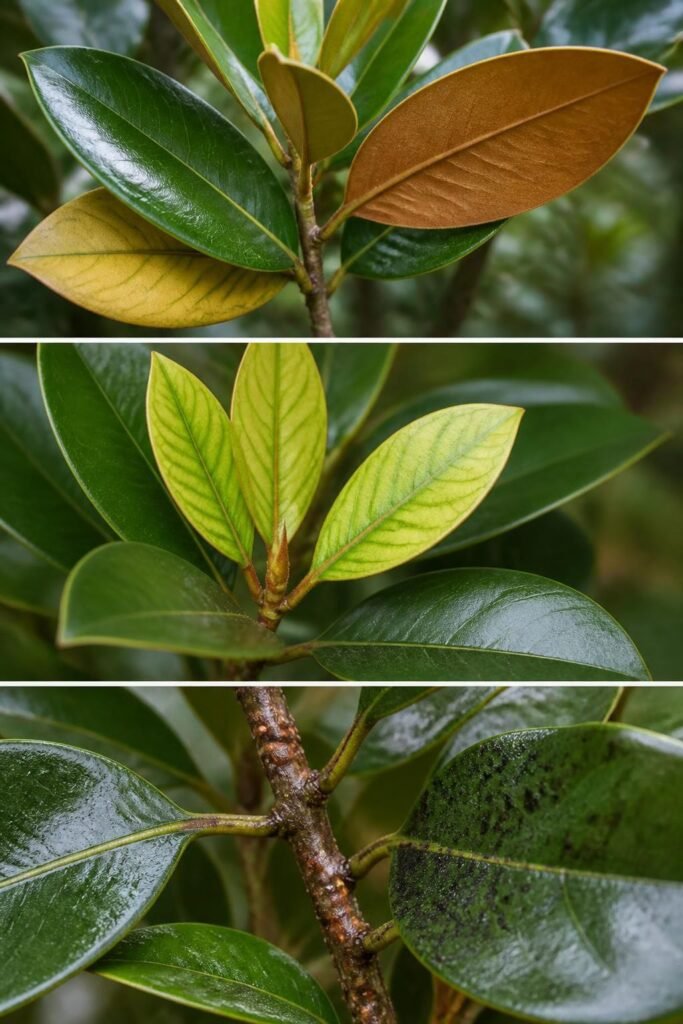
Yellowing that does not fit that pattern needs a closer look. Work down this table from the top.
| What you see | Most likely cause | How to check | What to do |
|---|---|---|---|
| Older, inner leaves turn yellow and drop in spring; new growth looks healthy | Normal seasonal leaf shed | Look for fresh new leaves at the branch tips and a green outer canopy | Nothing. Rake the leaves up. |
| New leaves pale yellow, veins staying greener | Chlorosis, often tied to high soil pH | Run a soil pH test before treating anything | Follow the soil test and the product label. Skip general fertilizer on a guess. |
| Older leaves yellow or brown and drop, leaves wilted or curled | Too little water | Push a probe into the root zone; dry soil 6 to 9 inches down confirms it | Water slowly across the whole root zone until it is moist at that depth. |
| Young leaves light green or yellow; soil constantly damp; algae or mushrooms | Too much water or poor drainage | See whether water stands on the soil after rain or irrigation | Ease off watering and look at drainage, especially in clay. |
| Sticky shine on leaves, then a black film; small bumps on twigs | Scale insects with sooty mold | Inspect twigs and leaf undersides for raised bumps | Confirm the pest first, then ask your extension office about labeled products. |
The two watering rows lean on Penn State Extension’s lists of under- and over-watering symptoms, and the same source notes that overwatering is most harmful in clay and compacted soil. For scale, Mississippi State University Extension says magnolia scale is the most common type, can reach half an inch across, and can be controlled in its overwintering stage with horticultural oil. It also says trees often keep growing well even under heavy infestations, though they look rough. Follow the label on any product you use.
One honest caution: this table works from descriptions, and yellowing from root stress, iron shortage, and dry soil can look nearly identical in a photo. When two rows both seem to fit, a local extension office or a certified arborist can look at real leaves, twigs, and soil and settle it.
If the tree is not planted yet, the order of operations is simple: measure the space against the taller numbers in the size table, count the sun hours, fill the test hole with water, and only then buy. If it is already in the ground, pull any mulch off the trunk this week, check that the top roots sit at the surface, and put the watering schedule on your calendar.