
“Red banana tree” is a name shared by at least three different plants, and which one you own decides almost everything else. Most often it means Ensete ventricosum ‘Maurelii’, an ornamental that is not a true banana, makes no edible fruit and does not send up pups. It can also mean blood banana (Musa acuminata ‘Zebrina’), a true banana with green leaves blotched in red-purple. Or it can mean Red Dacca, a fruiting banana whose red is in the stem and the peel. Look at the leaves first, then at the base of the plant. Those two checks sort out the fruit, the winter care and the color problems below.
Here’s the kicker: red banana tree is a common name, not a species. The label on the pot and the plant inside it can disagree. You’re not alone if that has already happened to you. One nursery listing uses the name for Musa acuminata, while many other sellers use it for Ensete, which is also sold as red Abyssinian banana.
Start with the leaves, not the tag
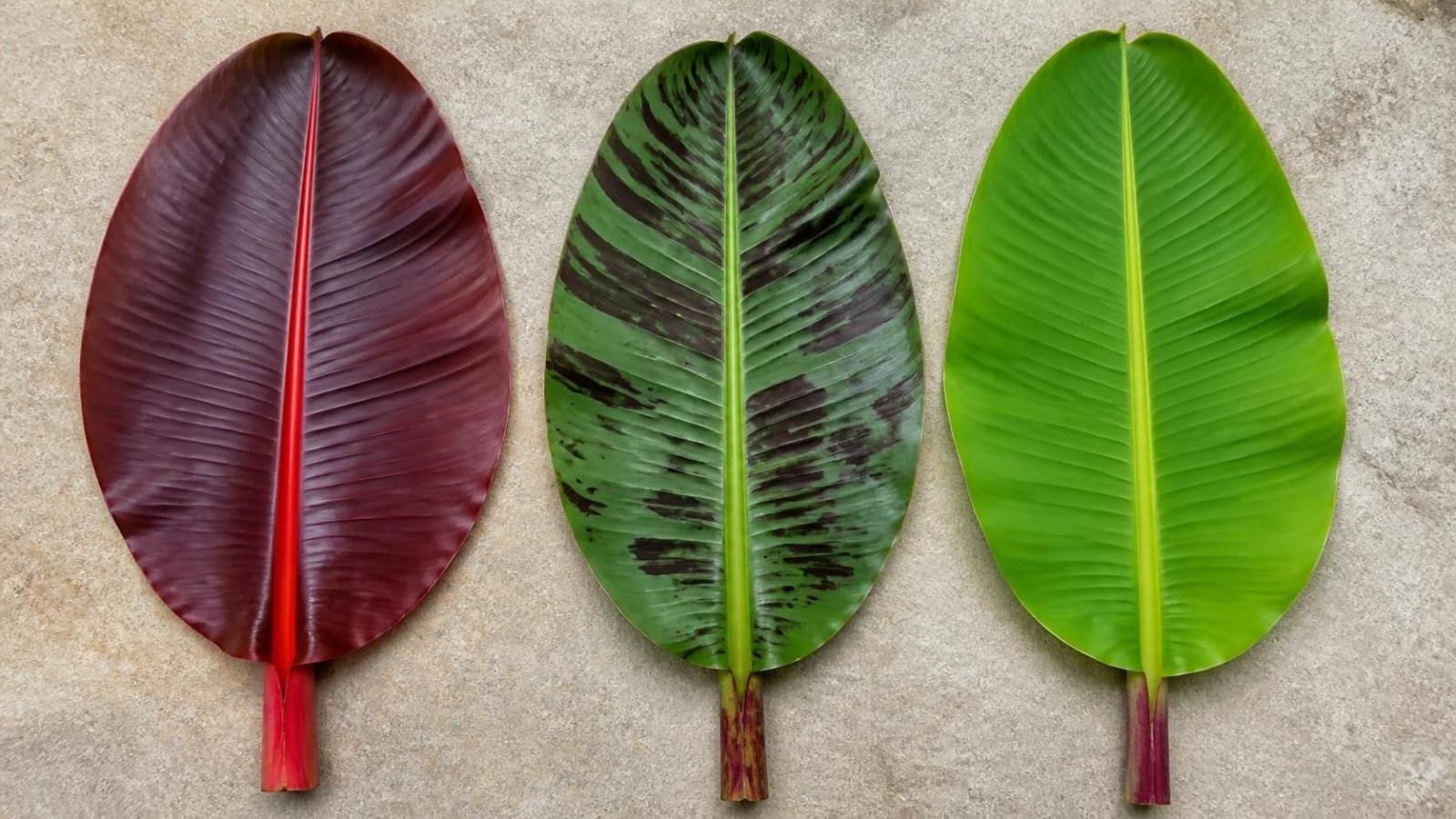
Most of us read the tag and stop there. Don’t. Hold a mature leaf up to the light and look at how the red is laid on.
- A maroon or claret wash over most of the blade, a thick red midrib and reddish leaf axils (where the stalks meet the stem) point to Ensete ‘Maurelii’. NC State Extension describes new foliage emerging with maroon-reddish tints and reddish leaf axils.
- Blue-green or dark green leaves splashed with irregular red patches, as if someone flicked a brush at them, point to blood banana. Monrovia describes the leaves as blue-green and mottled with deep red.
- Plain green leaves on a red or red-purple stem suggest a Red Dacca type, where the color sits in the stem and, later, the fruit. Logee’s sells it with exactly that combination of red stem and green foliage.
Light muddies this check, so go easy on the conclusion. A Maurelii in too little sun turns dull green with less red, according to a Florida grower’s care notes. A plant patent for a red Ensete cultivar says the same thing in other words: appearance may vary with the environment while the genetics stay the same (US Plant Patent PP21885). So read the pattern and the midrib before you judge the depth of red.
Then crouch down and look at the base
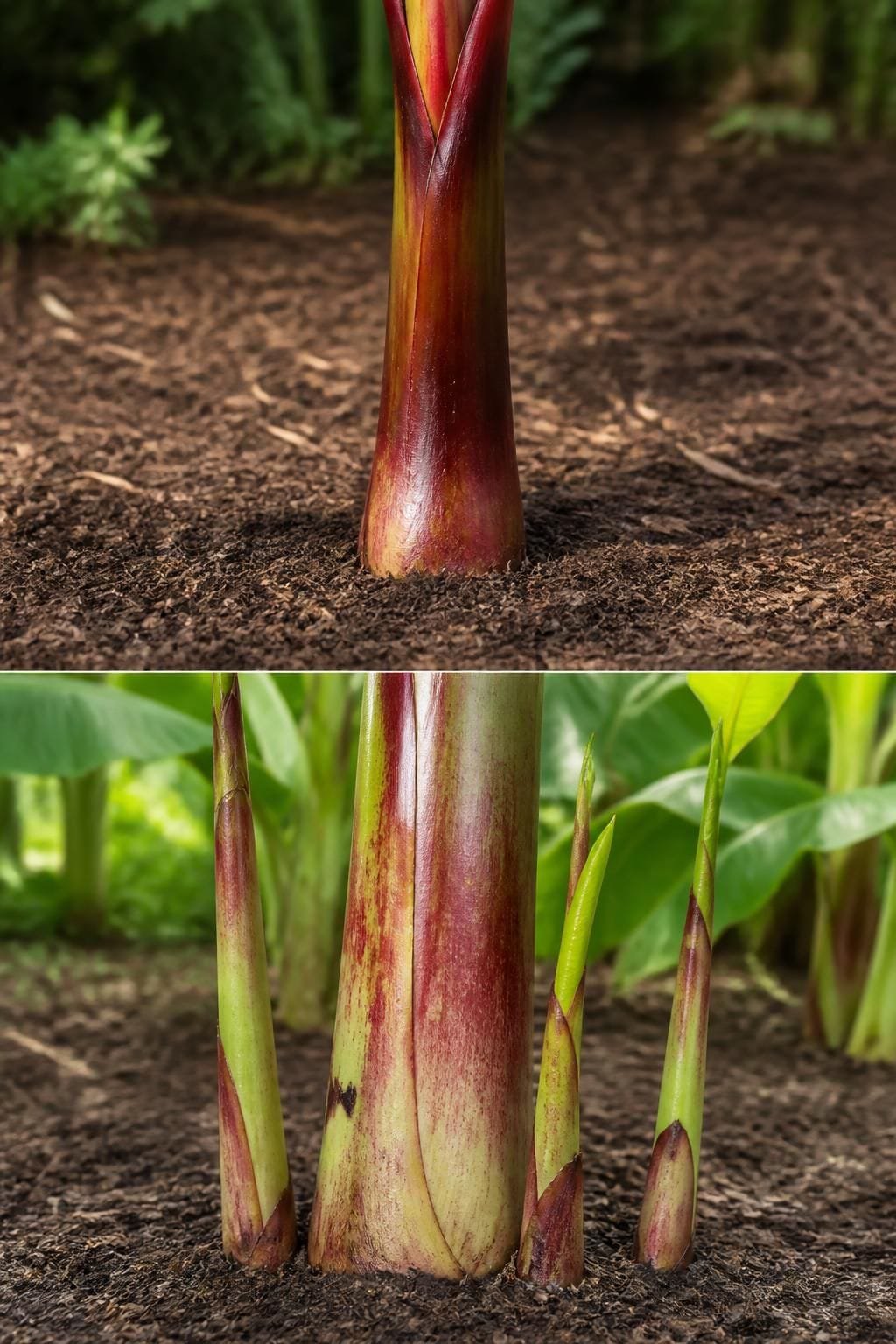
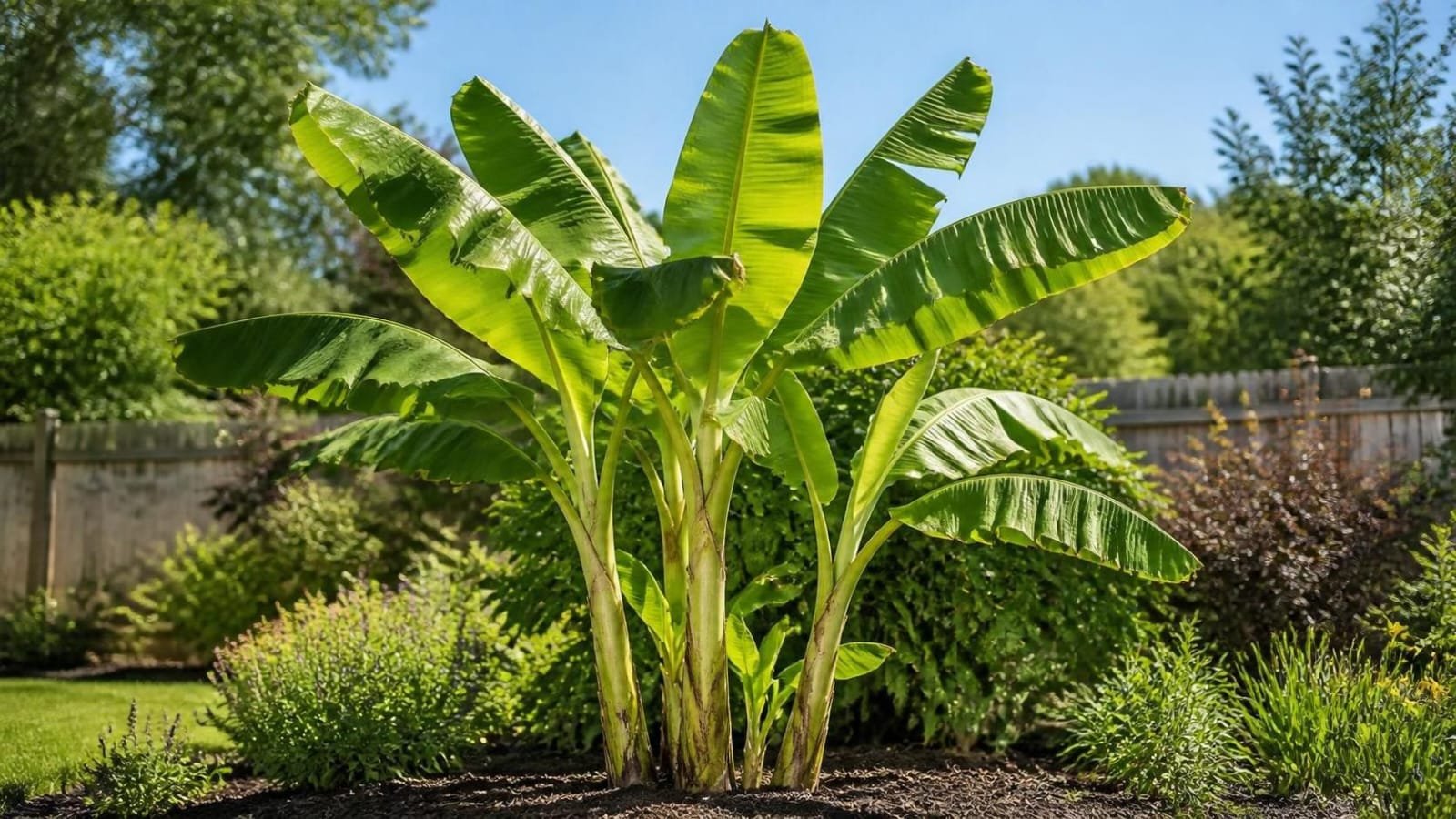
This is the fastest way to rule a plant out. Gardenia describes Ensete as solitary. It does not form a clump of pups the way Musa does, and its guide says you generally can’t divide it like a clumping banana. So if you see a cluster of stems at different heights around the main one, you have a Musa: blood banana or a Red Dacca type.
The reverse is weaker evidence. A small, young plant may not have made pups yet. A bare base only tells you something after the plant has had a season or two to settle. If you do have pups on a blood banana or Red Dacca, they can be cut away and potted; propagating banana plants walks through how.
One more source of confusion is the Latin name. Ensete used to be filed under Musa, which is why older labels read Musa ensete or Musa maurelii. Epic Gardening notes it is no longer formally a banana, though it behaves very much like one.
The three red bananas side by side
The figures below are ranges. Published sources disagree on hardiness and height, and a plant’s size depends a lot on climate and pot (banana tree height and size explains why). For the wider family, banana tree types and varieties covers the green and yellow kinds too.
| Check | Ensete ‘Maurelii’ | Blood banana | Red Dacca |
|---|---|---|---|
| Where the red is | Leaf blade, midrib and leaf axils | Patches and streaks on green leaves | Stem, and the peel when ripe |
| Pups at the base | Normally none | Yes, grows in a clump | Yes, grows in a clump |
| Fruit | Dry, not worth eating | Small and seedy; sources disagree on edibility | Short, plump, creamy to pink flesh |
| Listed hardiness | Zones 9 or 10 through 11 | Zones 8 or 9 through 11 | Zones 9 through 11 |
| Height in listings | About 8 to 10 ft in gardens, far taller in ideal conditions | About 3 to 6 ft in some listings, 8 to 10 ft in others | About 5 to 8 ft in a container |
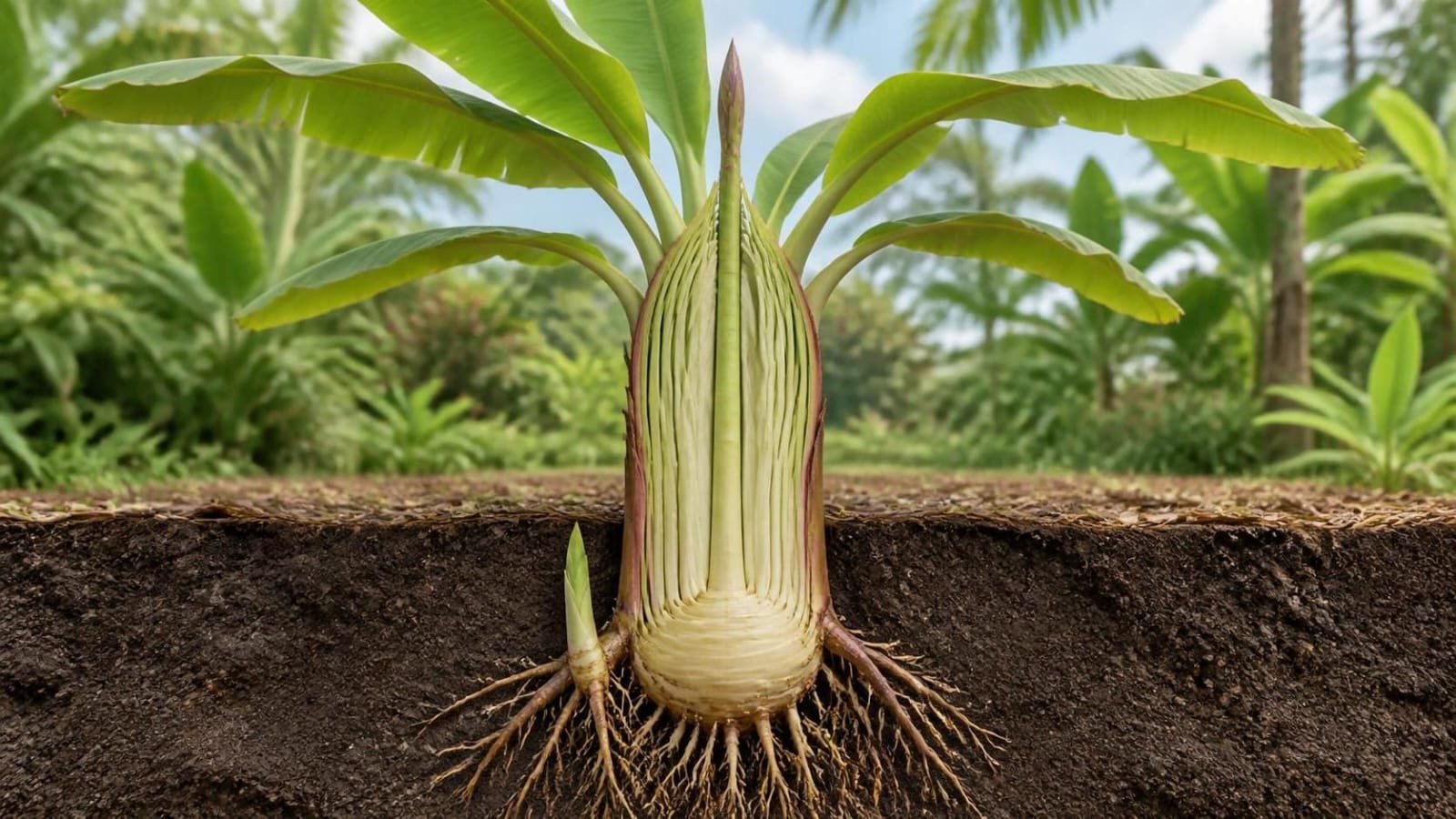
Calling it a tree is a stretch. What looks like a trunk is a pseudostem, a tight stack of leaf sheaths, as UF/IFAS Extension explains for bananas generally. If that surprises you, are banana trees actually trees? takes it further.
Red banana tree fruit: which one can you eat?
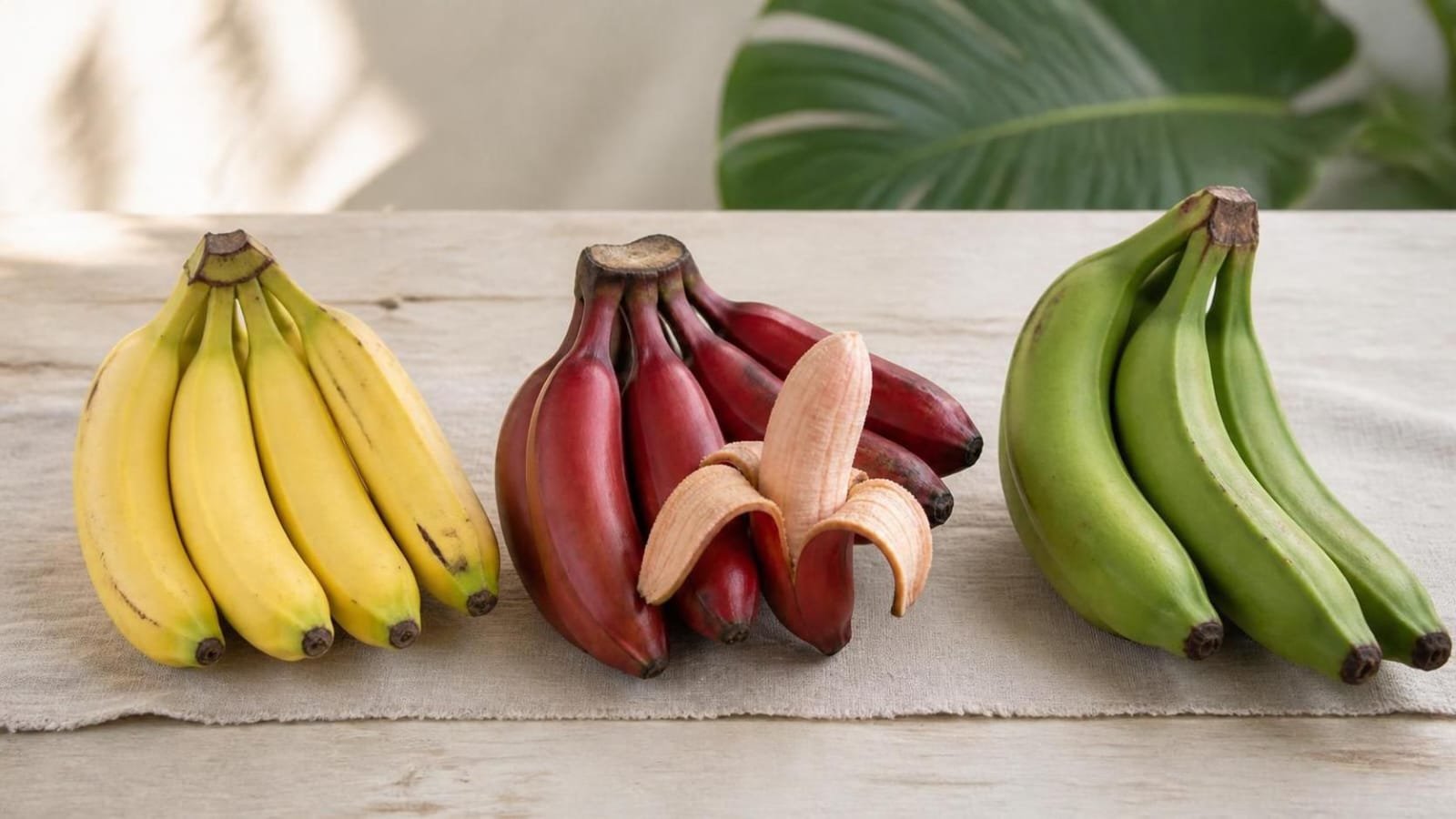
Only the Red Dacca type is grown for eating. Maurelii’s fruit is dry and not worth the trouble, and blood banana’s is small and seedy at best.
Fine Gardening describes the Maurelii’s fruit as banana-like but dry and unpalatable. A garden-center plant of this kind probably started in tissue culture. What Grows There says it is unlikely to flower at all outdoors in zones 6 and 7. Buying one for bananas is the mistake to avoid.
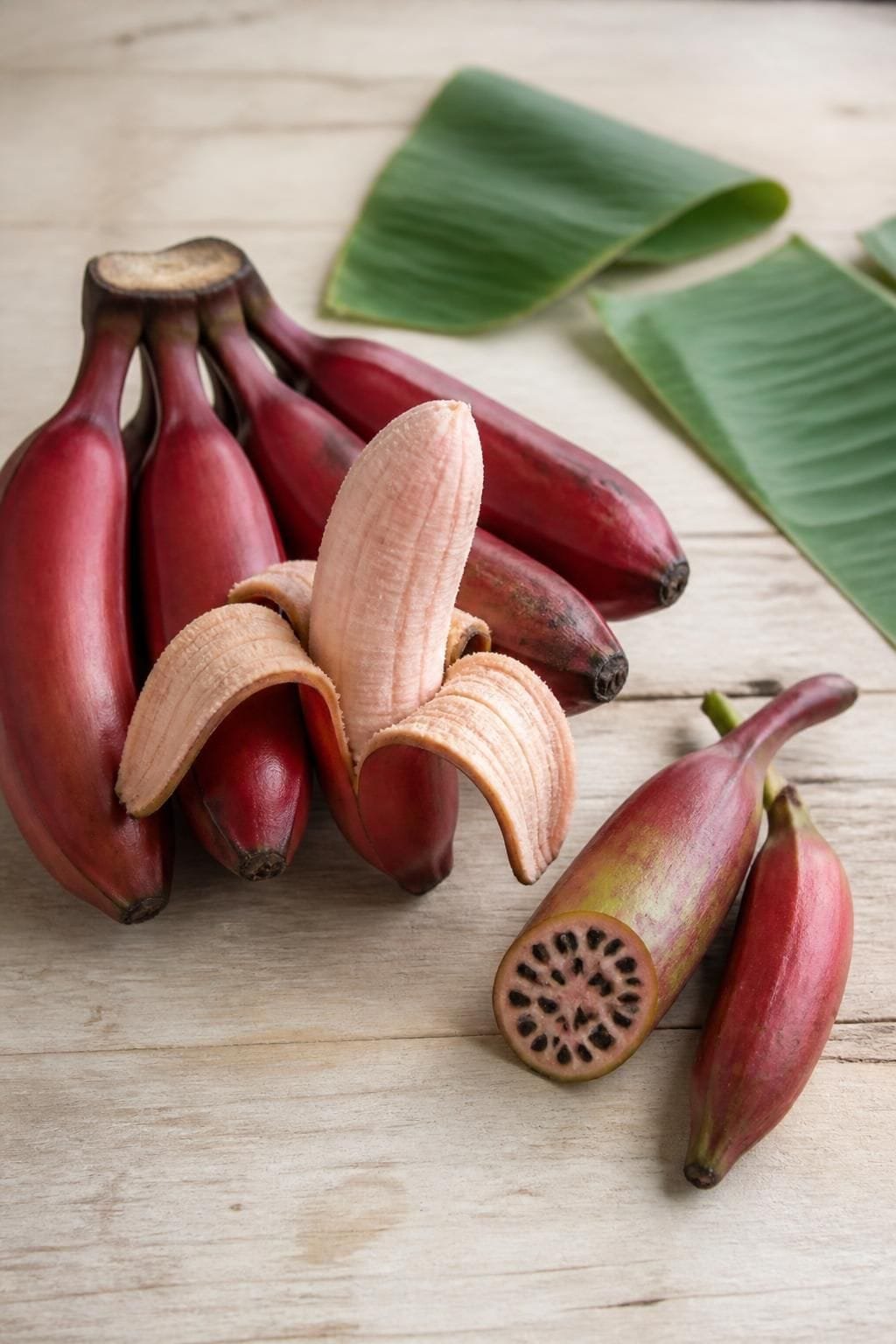
Blood banana is murkier. Monrovia says it may bear small, sweet bananas. Wikipedia’s blood banana and red banana entries call its small-seeded fruit edible. Fine Gardening’s blood banana entry calls the orange fruits inedible. Plan on an ornamental, and call any fruit a bonus. The same Wikipedia red banana entry describes Red Dacca as having a deep red or maroon peel when ripe, with creamy to light pink flesh.
Red Dacca needs patience and warmth. UF/IFAS Extension puts the flower stalk at 10 to 15 months after planting. It also notes that temperatures below 60°F can cause chilling injury, including a flower stalk that fails to emerge. Each stem fruits once and then dies, which do banana trees only fruit once? explains, and how long a banana tree takes to grow covers the timeline.
A common situation: someone buys a red banana plant in spring hoping for fruit. By the second summer it is a good-looking foliage plant with no pups to divide and nothing worth picking. Nothing is wrong with it. The name just promised more than the plant could deliver.
And if the red bananas you actually want to grow came from the grocery store, planting the fruit will not get you a tree. Can you grow a banana tree from a banana? explains why.
Winter decides whether you keep a red banana plant
The move most gardeners make in fall is to dig the plant up and pot it. That works for many bananas, but advice for Maurelii is mixed. Some growing guides say to lift it before frost. The Missouri Botanical Garden lists it for zones 10 to 11 and says it is reportedly harder to transplant than the species. Its advice is to skip planting it in the ground and digging it each fall. With the guides split, the safer course is the one that avoids the move. White Flower Farm points the same way: pot it in spring, and bring the container into a sunny room above 50°F.
Published advice splits on what happens indoors. White Flower Farm describes a bright room, while What Grows There describes cutting the plant back, repotting and storing it cool, around 40°F, until spring. Both are published practices, and none of these sources compares them. Pick the one your space can actually offer.
For blood banana and Red Dacca, treat the zone ranges in the table as your planning limits, and move pots in before nights approach them. If winter lows are your real problem, look at the cold-tolerant bananas, such as Japanese fiber banana. They have green leaves. The hardy banana plant guide compares them. After a cold snap, hold off on cutting; banana tree pruning and brown leaves shows how to tell damage from death.
Keeping the red in the leaves
When the red fades, the first move is usually to feed the plant. Check the light first. Gardenia says more sun deepens the red as long as moisture stays steady. The Florida grower’s notes add the other side: too much peak-summer heat can scorch or fade the leaves. A dull plant is not necessarily sick or mislabeled.
Moisture matters just as much. The Missouri Botanical Garden says Maurelii wants consistently moist soil that does not dry out. Soggy is a different problem, and banana tree care and banana trees in pots cover how to read the difference. Whatever fertilizer you choose, follow its label, since rates vary by product.
Wind can shred these leaves. NC State Extension recommends a protected spot, such as a courtyard, atrium or walled garden. It also lists wilt, mosaic virus and anthracnose as problems, along with aphids and mealybugs. Diagnosing from a description has limits. A virus or wilt can look like several other troubles, so have your local extension office or a lab confirm one before you spray anything. If you do treat, follow the product label and your local rules.
Quick answers about the red banana tree
Is a red banana tree a real banana?
It depends on the plant. The red-leaved Ensete is no longer formally classed as a banana, though it looks and grows much like one. Blood banana and Red Dacca are true bananas in the genus Musa.
Are store-bought red bananas the same as a red banana tree?
Not usually. Red bananas sold as fruit are Red Dacca type. The ornamental red banana tree sold for foliage is most often Ensete, whose fruit you would not eat.
Can a red banana plant live in a pot?
Yes, and in cold climates it is the easier route because the pot can come indoors for winter. Choose a large, heavy container, and pot a Maurelii in spring rather than moving it later. Banana trees in pots has the container details.
Mistakes that cost a season
- Buying a “red banana tree” for fruit without confirming it is a Red Dacca type.
- Digging a Maurelii out of the ground each fall as if it were an ordinary banana, when it reportedly resents being moved.
- Cutting into an Ensete base hoping for a division it will not give.
- Deciding the plant is mislabeled or dying because the red dulled in shade.
So here is what to do next. Photograph one mature leaf and the base of the plant, and compare them with the table. If you want bananas, plant a Red Dacca type. If you want foliage, Ensete or blood banana will do it, and in colder climates either one should live in a pot you can move. If the check still leaves you between two plants, that’s a fair result. Nursery names vary a lot. A flower or fruit will usually settle it. A photo sent to your local extension office or the nursery that sold it can get you there sooner.
One thought on “Red Banana Tree: Which One Do You Actually Have?”