
Yes, you can grow zucchini in a pot or container, as long as the pot is bigger than you’d expect. Give each plant its own pot of at least 5 gallons (10 or more is easier), fill it with fresh potting mix, set it in full sun, and be ready to water almost daily in summer. A bush variety is the safest choice.
For the full crop, see the complete guide to growing zucchini. This article sticks to pots.
What size pot does zucchini need?
Most of us grab whatever container is lying around. Zucchini doesn’t take well to that, and the advice online doesn’t agree on a minimum. NC State Extension suggests at least 3 gallons for container squash, and Colorado State’s container chart lists 3 gallons for bush zucchini. An Extension answer on ask.extension.org says 15 gallons would be better, one plant per pot.
A 3-gallon pot can keep a plant alive but may dry out in one hot afternoon. Treat 5 gallons as the floor for a bush type, and go to 10 or more if you can’t water twice a day.
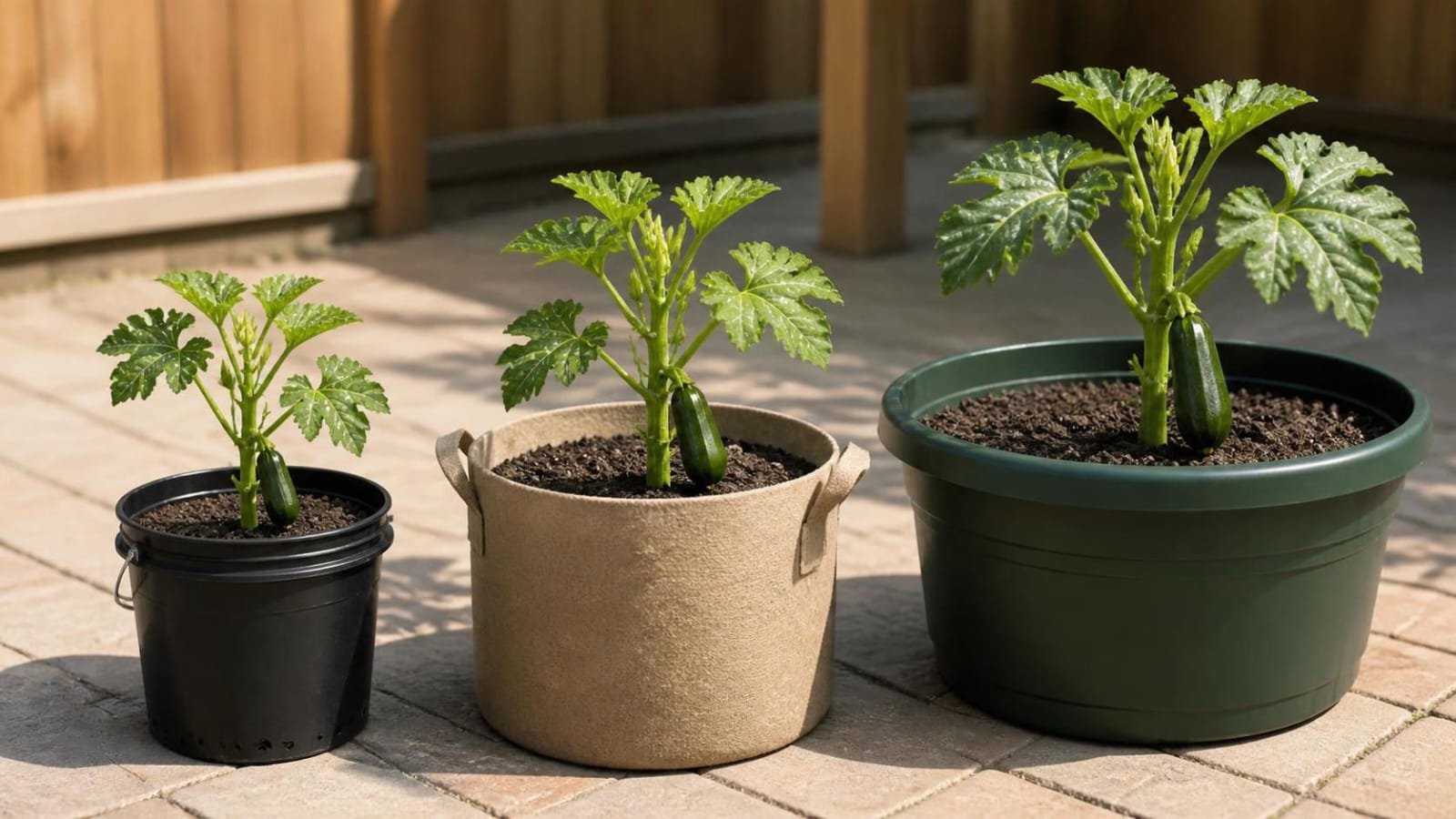
Zucchini in a 5-gallon bucket, grow bag, or planter
You can grow zucchini in a 5-gallon bucket if it’s food-safe, you drill drainage holes first, and you keep to one bush plant. Fabric grow bags breathe well but dry faster in wind. Plastic planters hold moisture longest. Here’s the kicker: a planter labeled 5 gallons may hold less than a true bucket.
How to plant zucchini in a pot
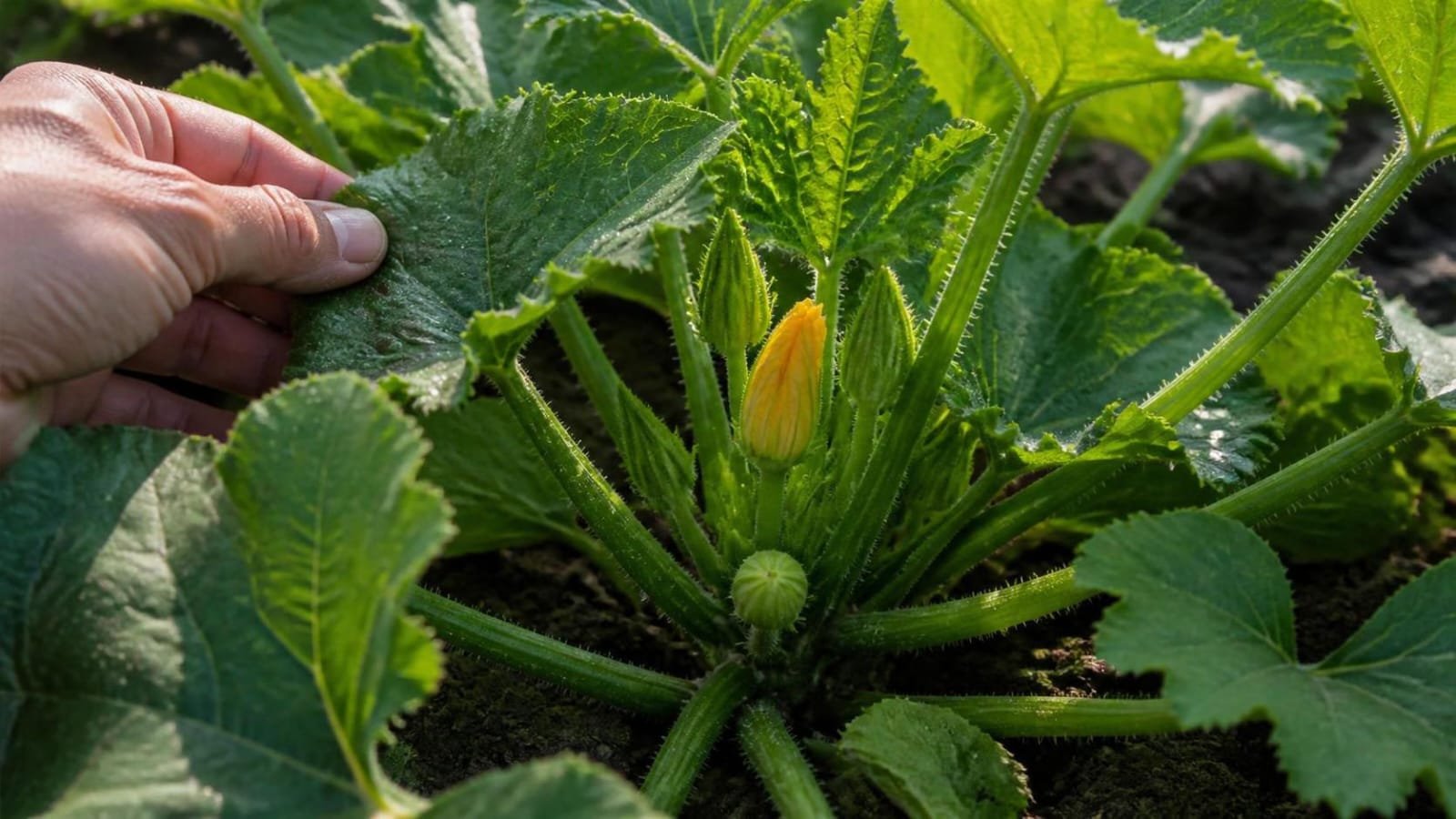
Use fresh, light potting mix with perlite or vermiculite. Garden soil compacts in a pot and smothers the roots, and old mix can carry pests that overwinter. Wait until about two weeks after your last spring frost, since zucchini can’t take cold, then sow two or three seeds about an inch deep in the center. Starting indoors instead? See how to grow zucchini from seed.
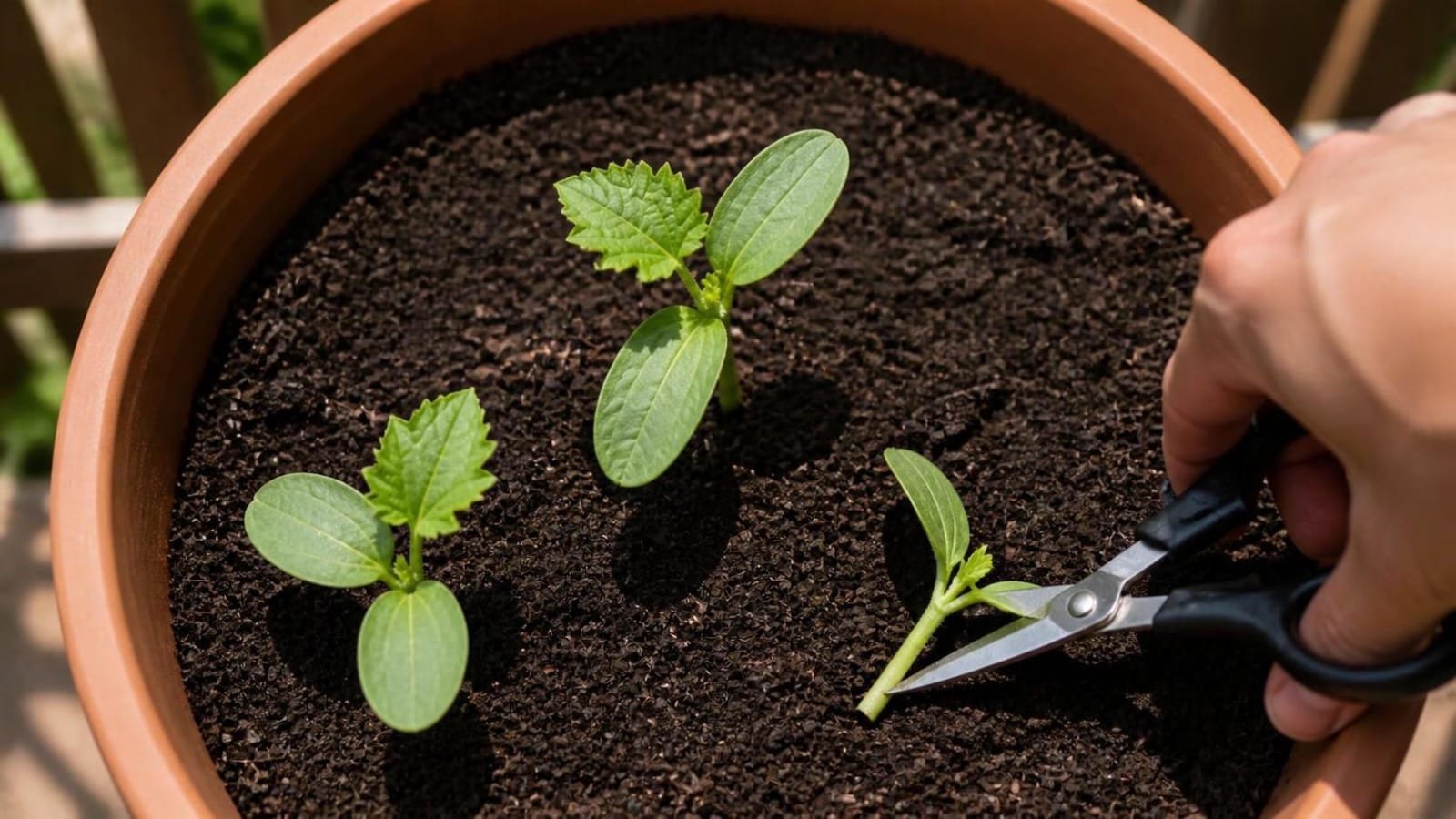
Once seedlings are a few inches tall, snip all but the strongest at the soil line. Crowding invites disease.
Watering and feeding zucchini plants in pots
Most gardeners water when the leaves droop. In a pot that’s a little late. Push a finger a couple of inches into the mix each morning, and if it feels dry, water at the base until it runs out the bottom.
University of Wisconsin Extension notes you may need to water up to three times a day in hot, dry, windy weather. Don’t overcorrect, though: Texas A&M warns that poor drainage will slowly kill container plants, so the holes matter as much as the watering.
A common situation: a plant looks great in June, then wilts every afternoon in July. Look at it the next morning. If it perked up overnight, that’s usually heat stress, and a bigger pot or afternoon shade helps. If it’s still limp in soggy mix, suspect drainage and roots. If the mix is bone dry, the pot is too small for the weather. If it stays wilted in moist mix, check the stem base: sawdust-like frass points to squash vine borer. Symptoms overlap; your local extension office can help if you’re unsure.
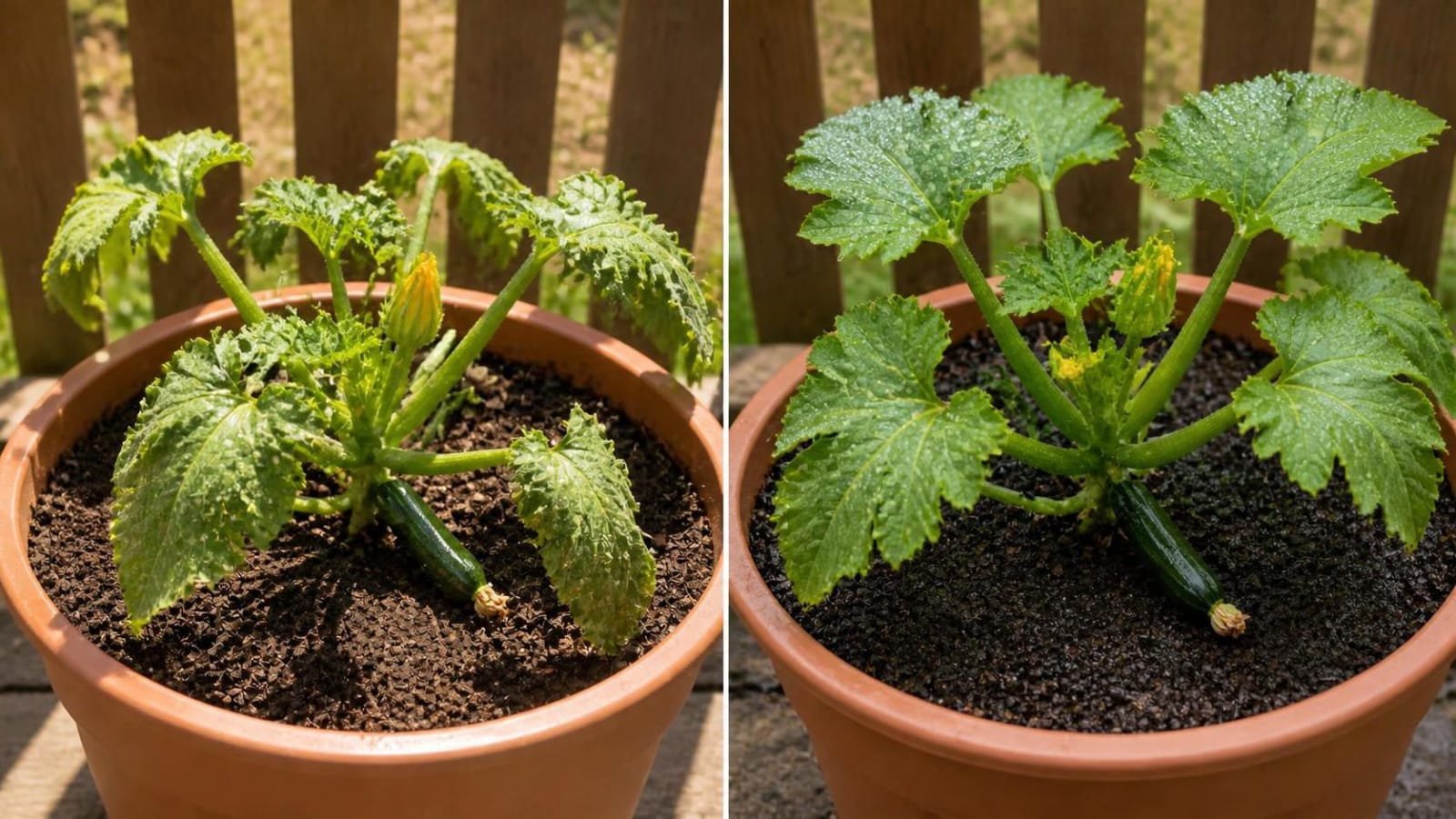
Potting mix runs out of nutrients faster than ground soil. Iowa State Extension recommends a soluble fertilizer every week or two, though many mixes already contain slow-release fertilizer, so you may not need to feed right away. Follow the product label.
Vining types, flowers, and fruit that won’t set
Bush plants are easiest, but a vining variety can work in a big pot with sturdy support. See growing zucchini vertically.
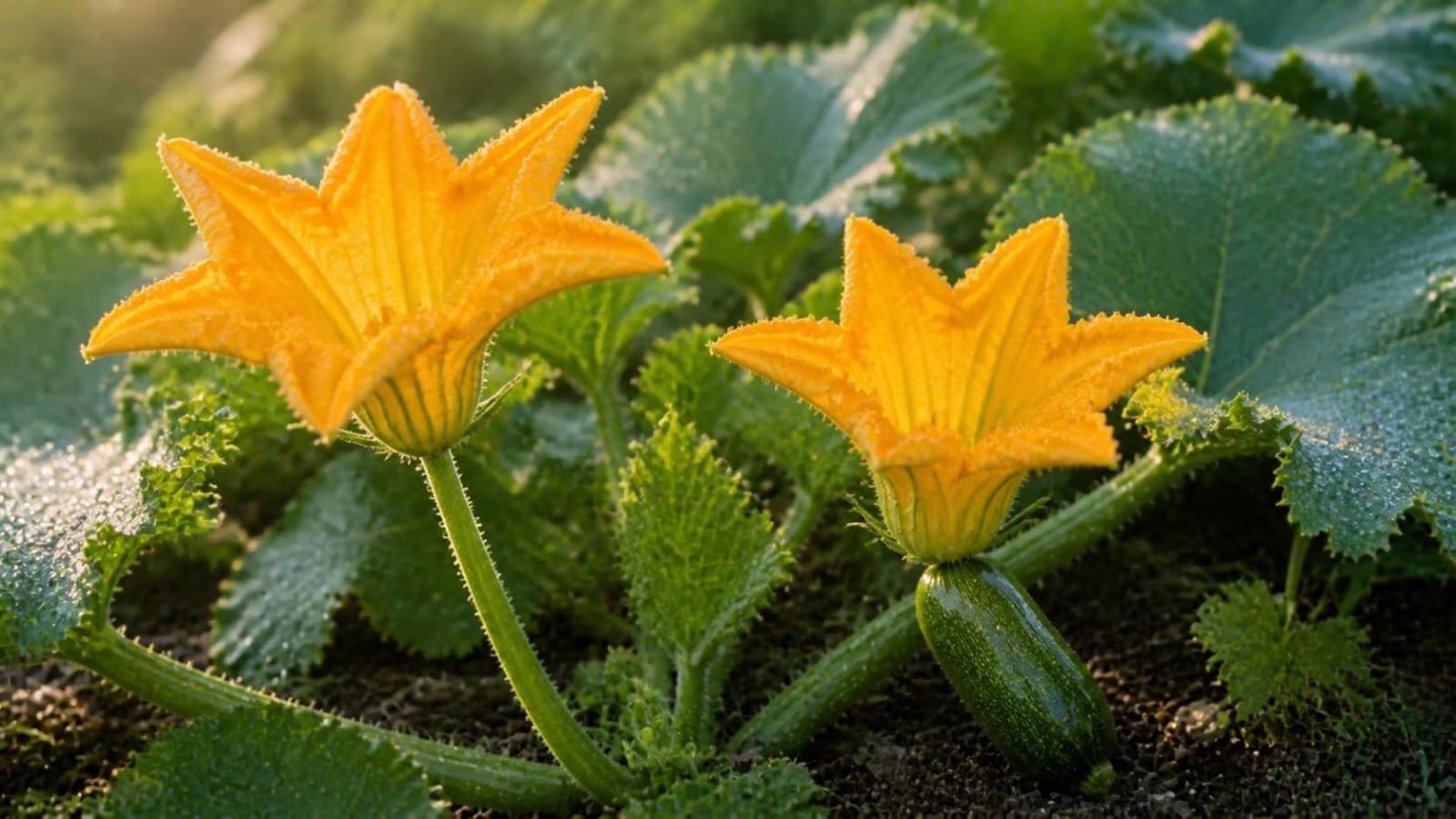
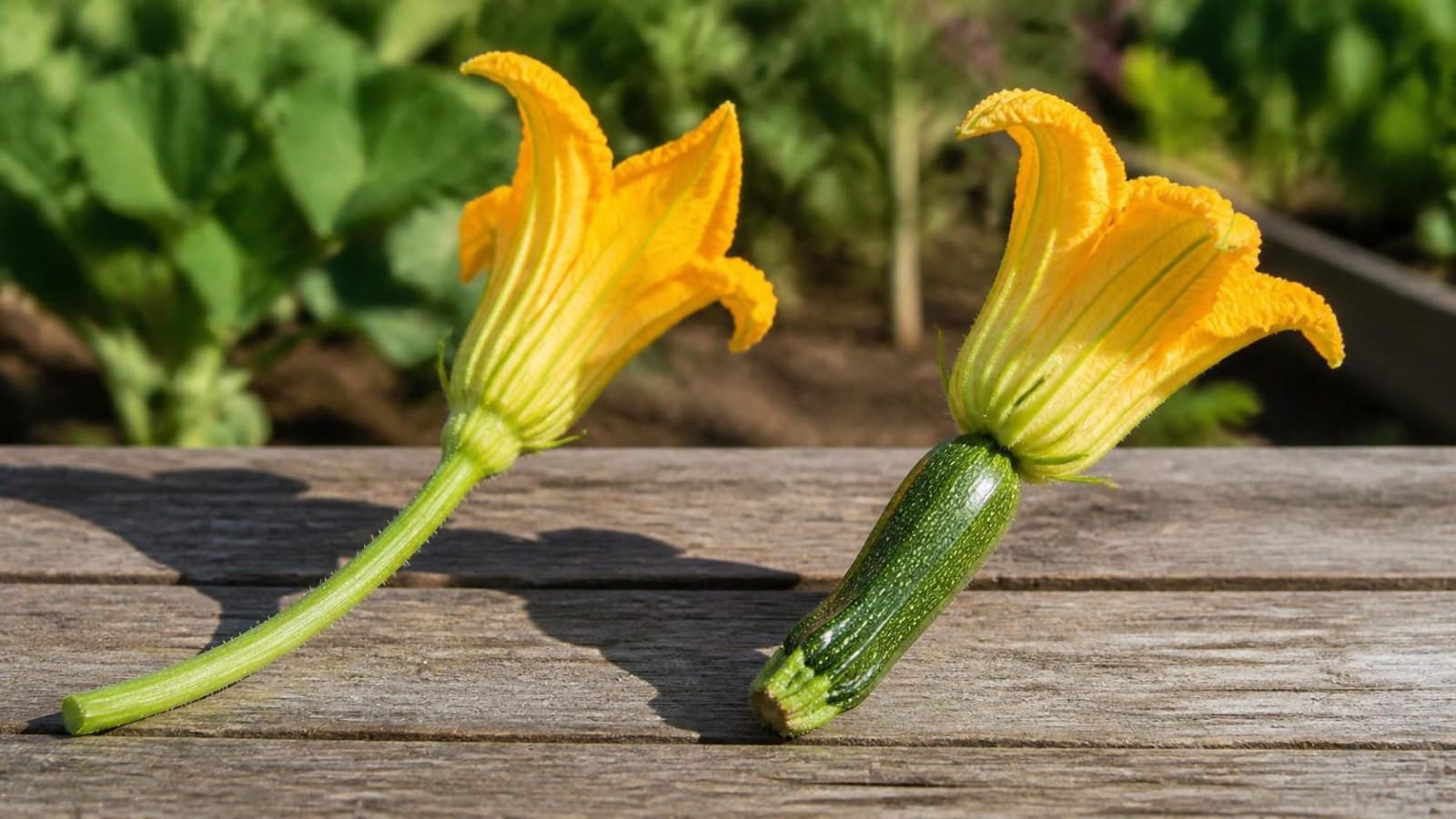
Male flowers open first, so a plant showing only male flowers may just need a week or two. If female flowers open but the tiny fruit shrivels, pollinators probably aren’t reaching your balcony. In the morning, brush pollen from a male flower onto a female one. A brown, mushy fruit tip can follow uneven watering (blossom end rot), though poor pollination causes similar rot.
One plant per pot is the rule. Past two or three plants, try zucchini in raised beds.
Harvest zucchini while they’re small. Regular picking keeps the plant producing.
3 thoughts on “How to Grow Zucchini in Containers and Pots”