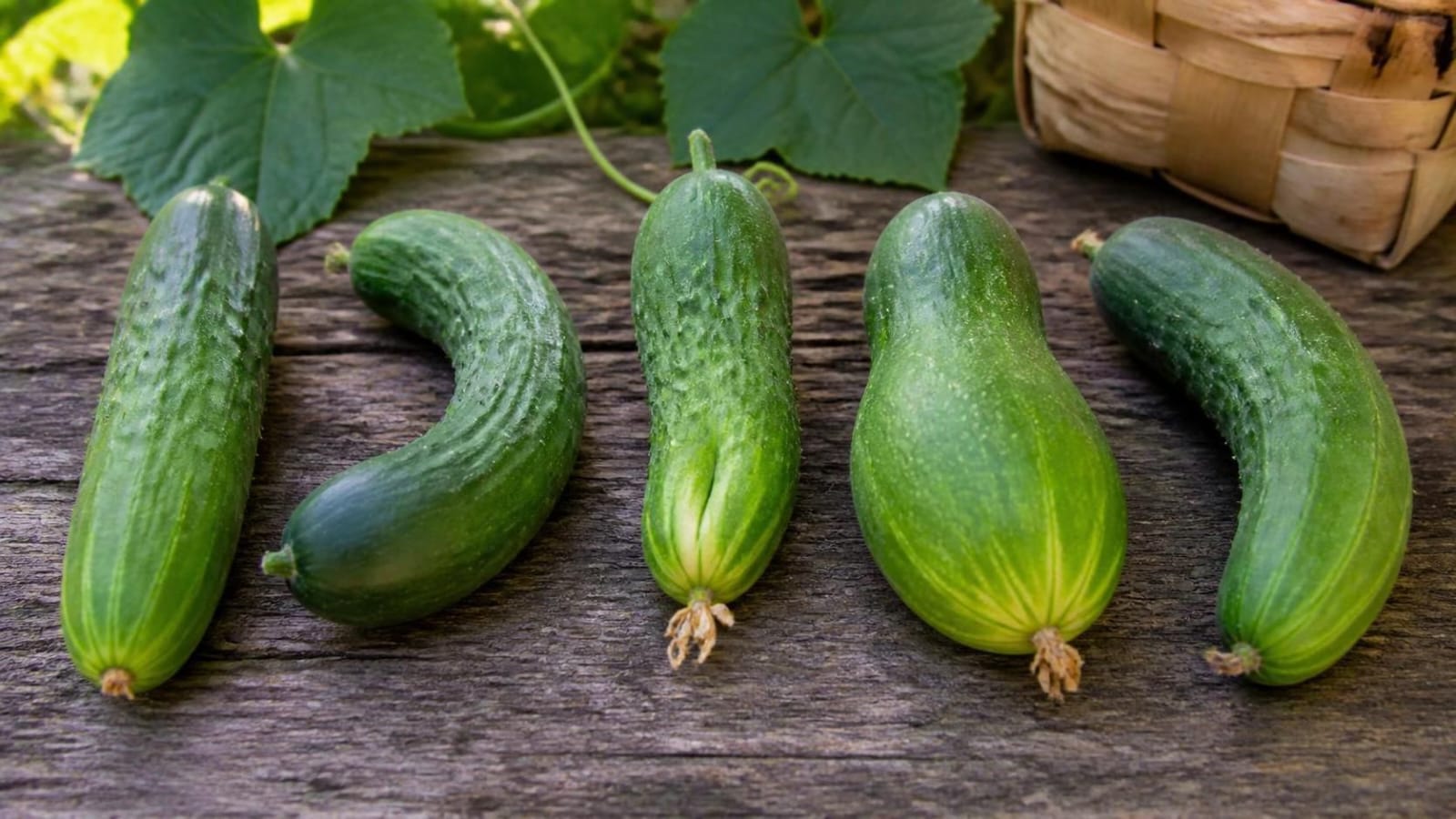
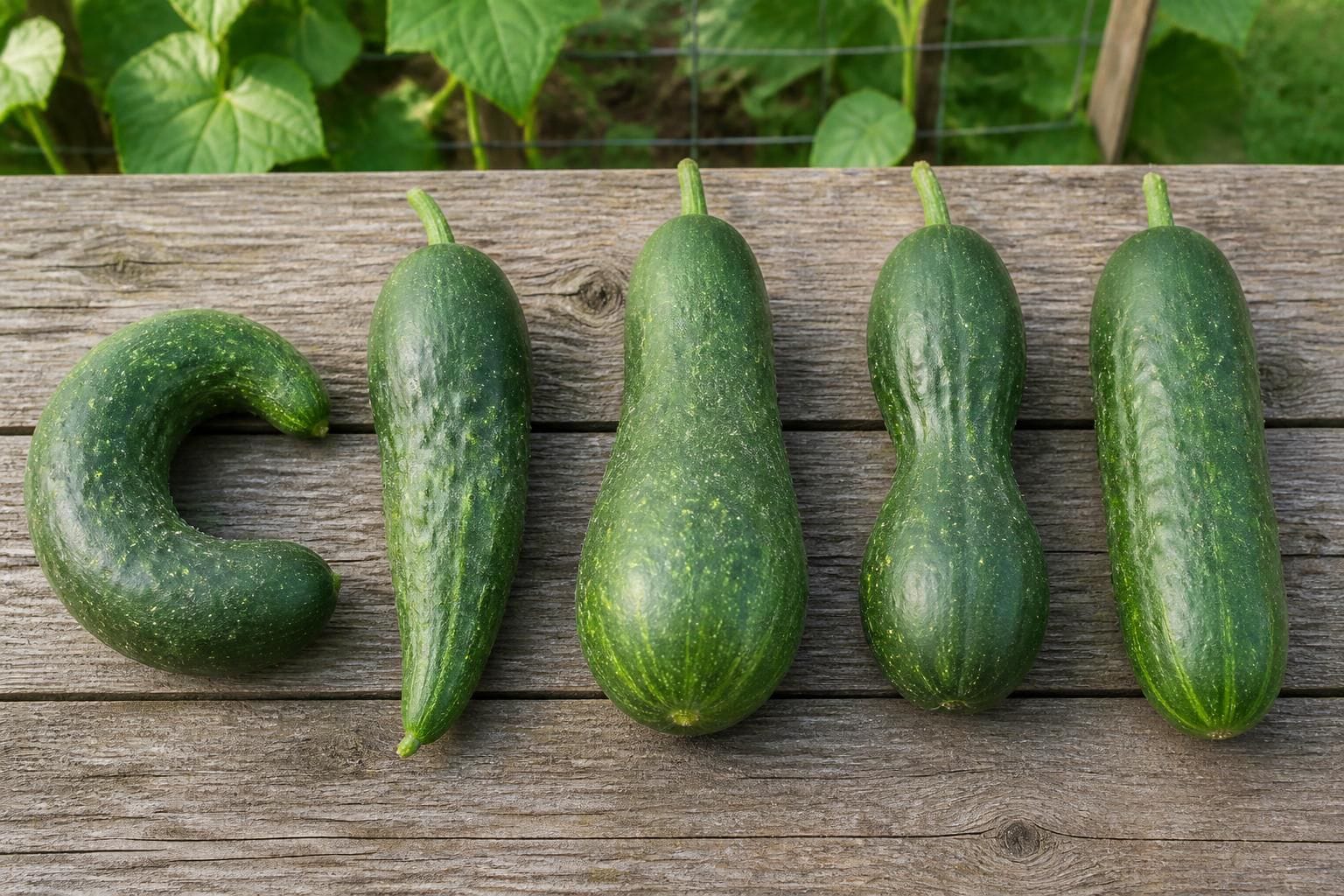
A cucumber curled like a fishhook. Another pinched in the middle. A third swollen at one end like a bowling pin. The vine itself looks fine, with green leaves and plenty of flowers, so what went wrong? If you’re staring at a trellis like that, you’re not alone.
Short answer: Most badly misshapen cucumbers come from incomplete pollination or from swings in water supply. Crooked, tapered or nubbed fruit points to pollination. A blossom end that balloons after a dry spell followed by rain or heavy watering points to water. If the fruit is distorted and the new leaves are twisted, cupped or mottled as well, think herbicide exposure or a virus. Read the shape and the leaves together before you change anything.
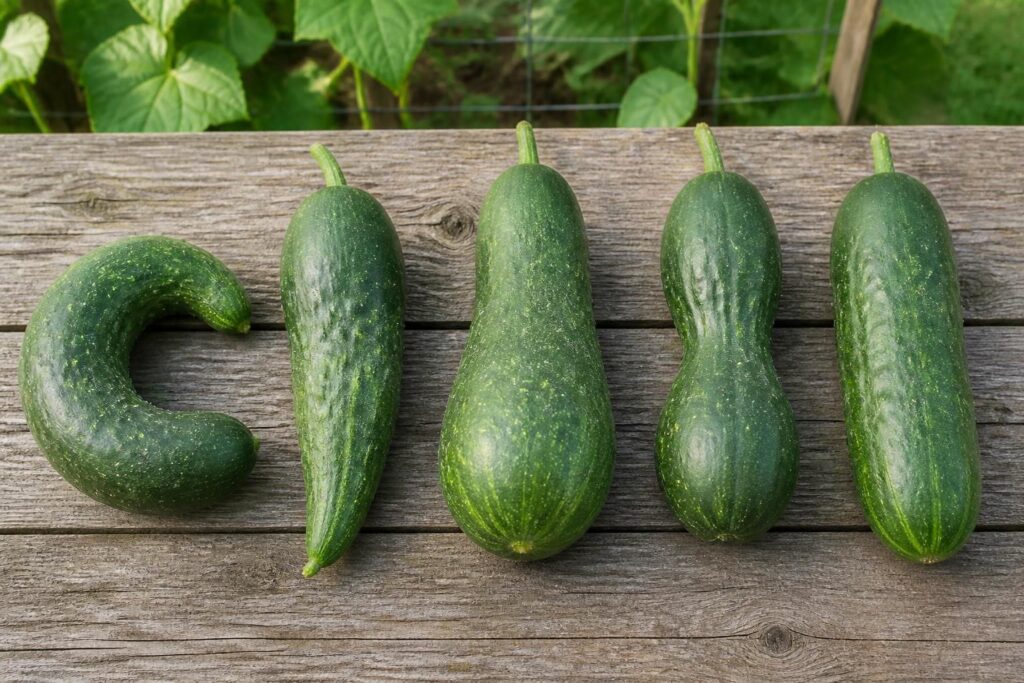
Read the shape first, then the leaves
Start with the leaves. If they are smooth and green on a vigorous vine, the cause almost always lies in how the fruit was pollinated, watered or handled. If they are twisted, crinkled or mottled, virus and herbicide join the list. Then ask which end of the fruit is off, and whether it is one cucumber, a few, or everything since a particular week.
One thing trips people up: timing. A cucumber’s shape is set while it forms, so the crooked fruit in your hand tells you about the days when it was developing, not about this afternoon’s weather. The table below does the narrowing.
| What you see | Most likely cause | How to check |
|---|---|---|
| Hook or C-curve, one side shorter than the other | Incomplete pollination, or an obstacle in the way | Few bees lately, or a cold, wet stretch when the flower opened. Check whether the bend sits where the fruit touched a wire, stem or soil. |
| Full at the stem end, tapering to a thin point or a knobby nub at the blossom end | Incomplete pollination | Female flowers opened in poor weather, and the same vine also carries some normal fruit. |
| Fat or bulbous at the blossom end | Water swing late in fruit development | A dry spell followed by rain or heavy watering. Leaves look healthy. |
| Curled, distorted or tapered fruit during hot, dry weather | Drought stress | Soil is dry a few inches down and leaves wilt in the afternoon. |
| Short, pale fruit pointed at the blossom end, or irregular fruit with weak stem ends | Nutrient shortage (uncommon) | Leaf symptoms across the whole plant, such as yellowing or bronzed edges. A soil test settles it. |
| Warty, lumpy or blotchy fruit | Cucumber mosaic virus | Mottled, crinkled new leaves, stunting, and aphids on the plant. |
| Distorted fruit with twisted, cupped or strap-like new leaves | Herbicide exposure | Other plants nearby, such as tomatoes, show the same twisting. Spraying nearby, or new compost, manure, hay or clippings. |
| Fat, seedy, lumpy fruit on a seedless greenhouse type | Unwanted pollination | The seed packet says seedless or parthenocarpic, and bees can reach the flowers. |
More than one row can apply at once. A cold week can cut bee visits while an uneven watering routine adds a second stress, so start with whichever cause you can correct fastest.
Pollination: the most common cause, and the easiest to miss
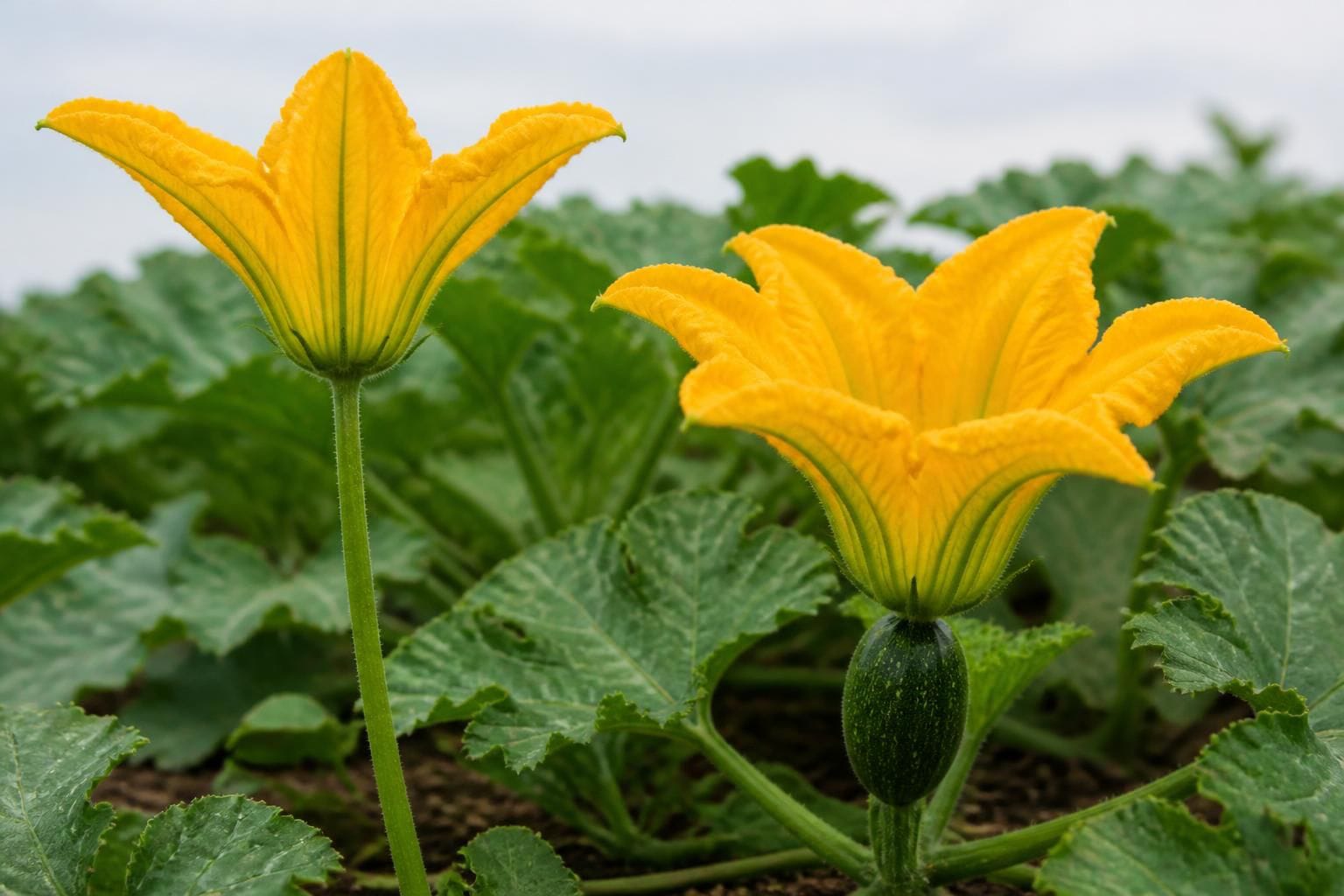
Behind every female flower sits a small ovary packed with ovules. When pollen does not reach some of them, those sections stay unfertilized and fill out less. That is how you end up with a crooked or nubbed fruit on an otherwise healthy plant, as University of Saskatchewan horticulturists explain.
The numbers are sobering. According to Nebraska Extension’s bee pollination guide, each pollen grain is responsible for just one seed, a cucurbit flower stays open for a single day, and it takes at least nine honeybee visits to pollinate a cucumber flower adequately. Ask Extension puts the range at eight to twelve. Heat can reduce pollen viability too, the guide adds, but too few bees is the more common culprit. Cold, wet or very hot weather can all cut visits. One bad week at flowering is enough to leave a row of odd fruit, even in a garden buzzing with pollinators.
Fewer female flowers means fewer chances, too. If your vines are throwing lots of male blooms and hardly any females, that is a different problem with its own causes. This guide to cucumber plants with many male flowers but few female flowers sorts out what is normal and what is not.
Hand-pollinate for a couple of weeks
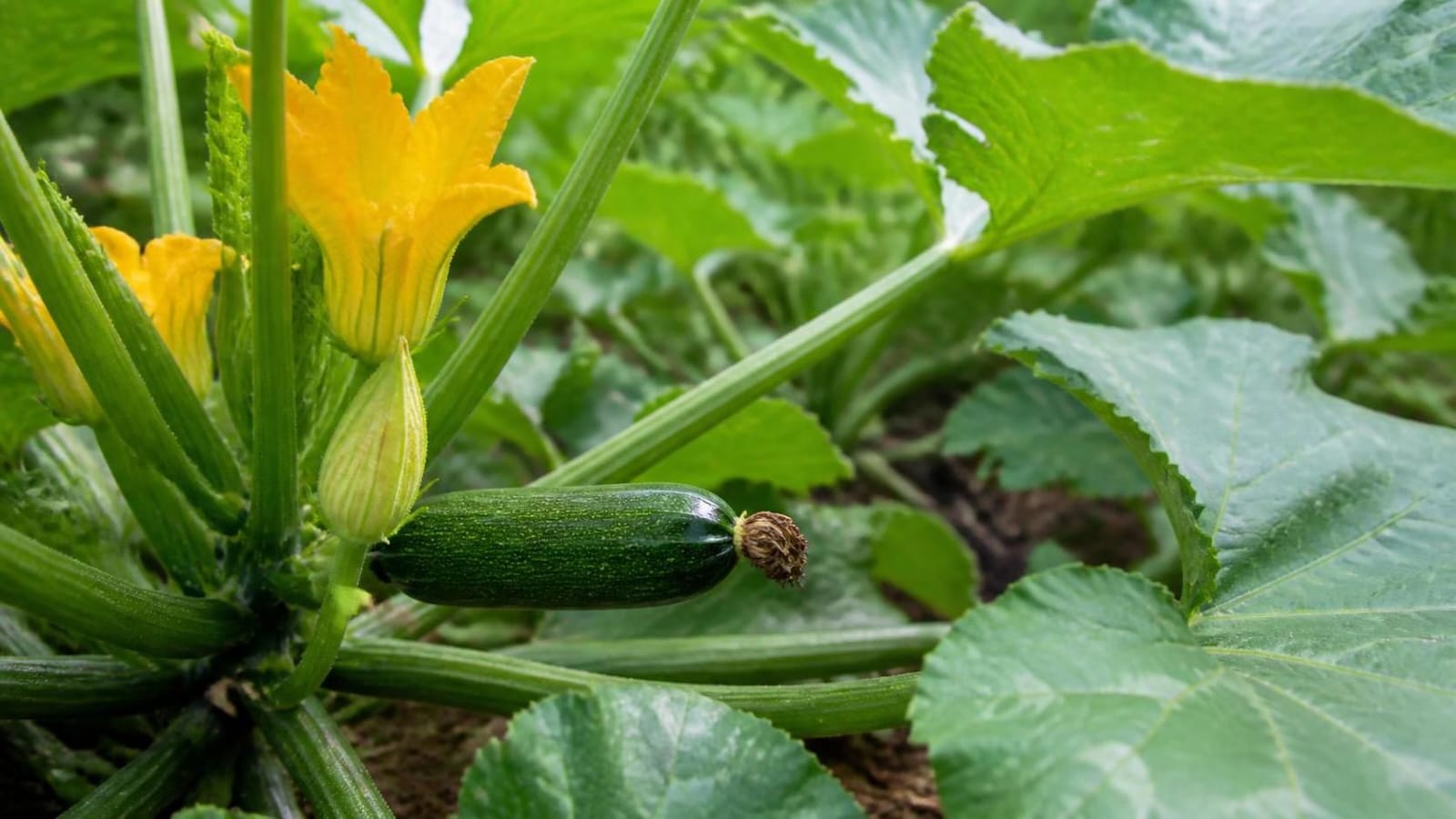
Do it in the morning, while the flowers are open. A female flower has a tiny cucumber behind the petals; a male flower sits on a plain, thin stem. Take a freshly opened male flower, peel back its petals and dab the pollen onto the center of the female. Use several males if you can, because every pollen grain feeds one seed. A soft brush works as well. Keep going through the rough weather, then hand the job back to the bees.
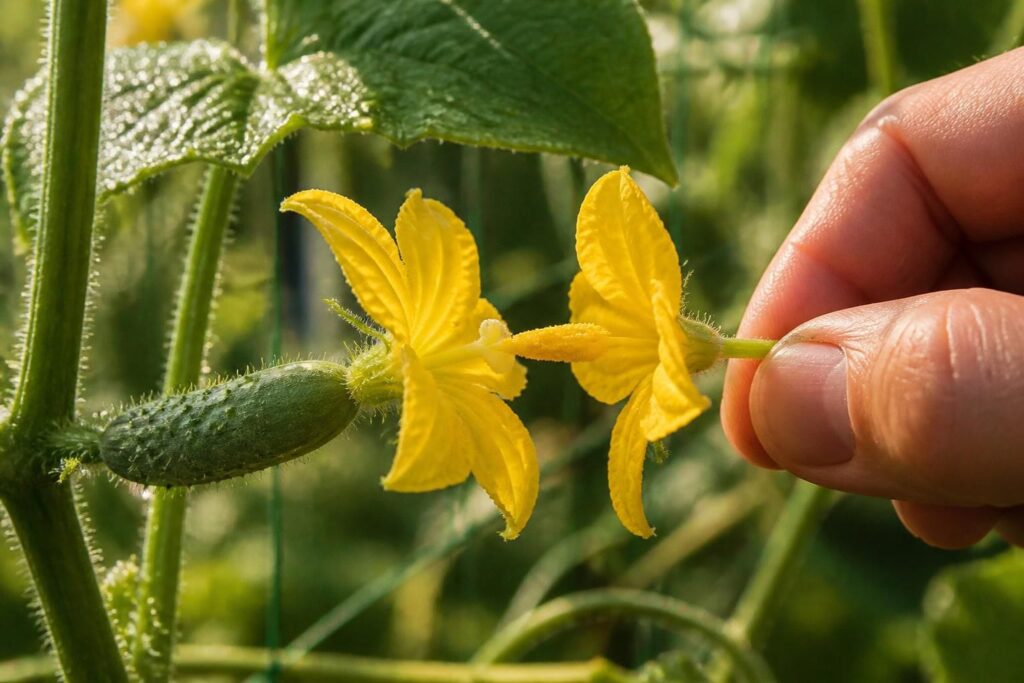
A twist for seedless varieties
Some cucumbers bred for greenhouse and hoophouse growing are parthenocarpic, meaning they set fruit without pollination. University of Minnesota Extension notes that when these varieties do get pollinated, they produce seeds and the fruit can become misshapen. If you grow a seedless type, the fix is the opposite of everything above: keep bees off the flowers.
Water: why one end balloons or tapers
A bulbous blossom end usually is not a pollination problem at all. It comes from a large intake of water late in the fruit’s development, and it is especially common after rain. Dry spell, downpour, heavy hand with the hose: the fruit swells unevenly.
The dry half of the cycle matters just as much. The University of Kentucky’s vegetable scouting guide notes that cucurbit fruit is typically 85 to 90 percent water, and that drought-stressed cucumbers can come out curled, distorted or tapered at the blossom end. Here’s the kicker: one bed can give you a tapered fruit in the dry week and a bulbous one after the storm. Two shapes, one cause.
The fix is unglamorous. Water deeply and regularly rather than letting the bed dry out and then soaking it, use drip or a soaker hose if you can, and mulch once the soil has warmed. Stress that distorts fruit can also push bitterness into it, so if a crooked cucumber tastes harsh, read this guide to why cucumbers turn bitter despite healthy growth for what to do with the fruit you already have.
Heat, cold and the vine’s workload
Weather mostly acts through the bees, but the plant’s own workload matters too. A research thesis from Central Queensland University on greenhouse cucumbers found more misshapen fruit in production zones carrying a heavier fruit load, though it calls this a trend, not proof. It also noticed something reassuring: a curved young fruit can sometimes straighten before harvest.
Regular picking takes pressure off the vine. Iowa State University Extension horticulturists recommend harvesting every two to three days, since over-mature cucumbers left on the vine inhibit further fruit set.
Less common causes worth ruling out
Nutrient shortage
Nutrient shortage is a rarer cause than many gardening pages suggest, and it seldom acts alone. A Wageningen guide to nutritional disorders in cucumbers, published in 1969 and still a handy diagnostic reference, reports short, abnormally shaped fruit pointed at the blossom end under nitrogen deficiency, and irregular fruit with underdeveloped stem ends under potassium deficiency. The leaves give it away: general yellowing with nitrogen, bronzed and yellow-edged with potassium. Potassium deficiency was rare in commercial glasshouses, the guide adds, and more likely on light sandy soils or peat substrates with no potash or manure.
One Japanese greenhouse study found that bottle-gourd-shaped fruit became more common under certain conditions linked to rising soil temperature, and that a dilute potassium sulfate treatment reduced their share. One greenhouse, one set of conditions, so take it as a clue rather than a recipe. What I would actually do is get a soil test before reaching for fertilizer, because feeding without one is guesswork. And read the label and check local regulations before applying any product, since approved products and rates differ by country.
Cucumber mosaic virus
Distorted fruit alone does not point to virus. The leaves have to look wrong too. Washington State University’s Hortsense describes cucumber mosaic virus as causing mottled, yellow, wrinkled leaves, stunting and deformed plant parts, with warty, blotchy fruit that is usually bitter. Aphids spread it, and there is no chemical cure. Remove and destroy infected plants, control aphids and weed hosts, and plant resistant or tolerant varieties next time.
Herbicide drift and contaminated compost, manure or hay
This one gets missed constantly because it looks like a disease. Texas A&M AgriLife Extension notes that 2,4-D is volatile, can drift considerable distances, and affects sensitive crops including cucurbits. New growth turns twisted and distorted, and leaves can become fan-shaped with flattened stalks. Fruit can be affected too. The clue is that several different plants nearby, tomatoes especially, show the same twisting at the same time.
Nebraska Extension separates two situations. Drift from wind, vapor or a contaminated sprayer tends to be a one-time event, and plants usually outgrow it as new growth comes in normal. Herbicide carried in on lawn clippings, soil, compost, hay or manure is a different story: the damage is ongoing, the plants do not recover, and the fruit should not be eaten. If you added any of those materials recently, look there first. There is nothing you can do to reverse the damage, so the job is to identify the source and prevent a repeat.
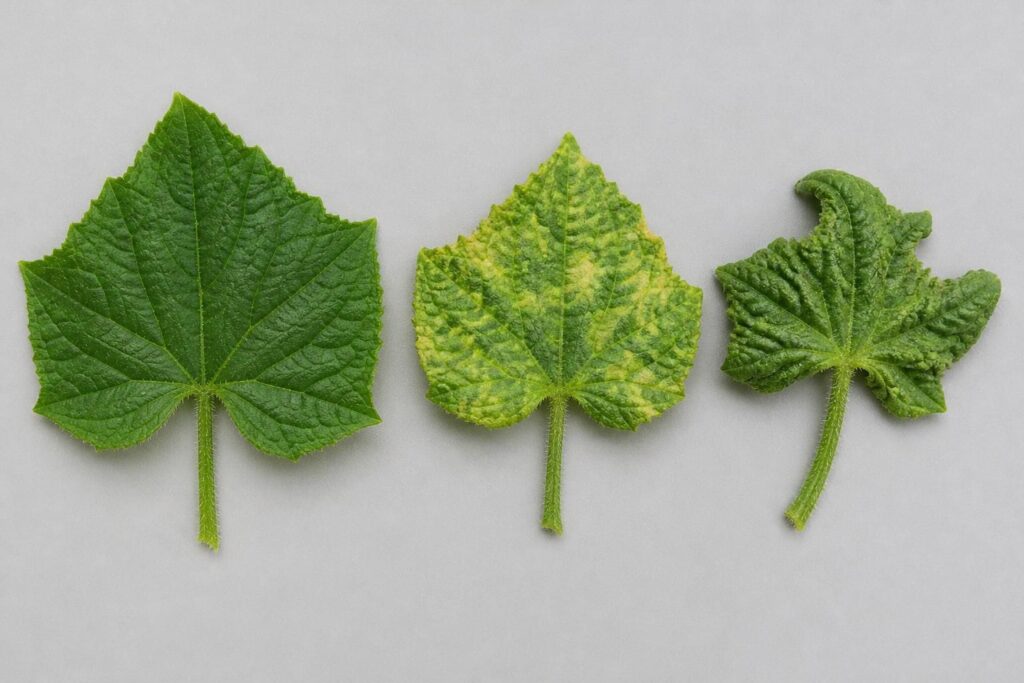
Obstacles, scars and variety
If the bend sits exactly where the fruit touched a wire, stem, stone or the ground, it was simply in the way. Growing the vines up a trellis lets fruit hang free. A few varieties are naturally round or curved, so check the tag before you decide something went wrong. And rough, corky patches are a different matter from shape: Ohio State University Extension describes cucumber beetle feeding as leaving rough, corky scars on the rind, so look for the beetles before you blame the water.
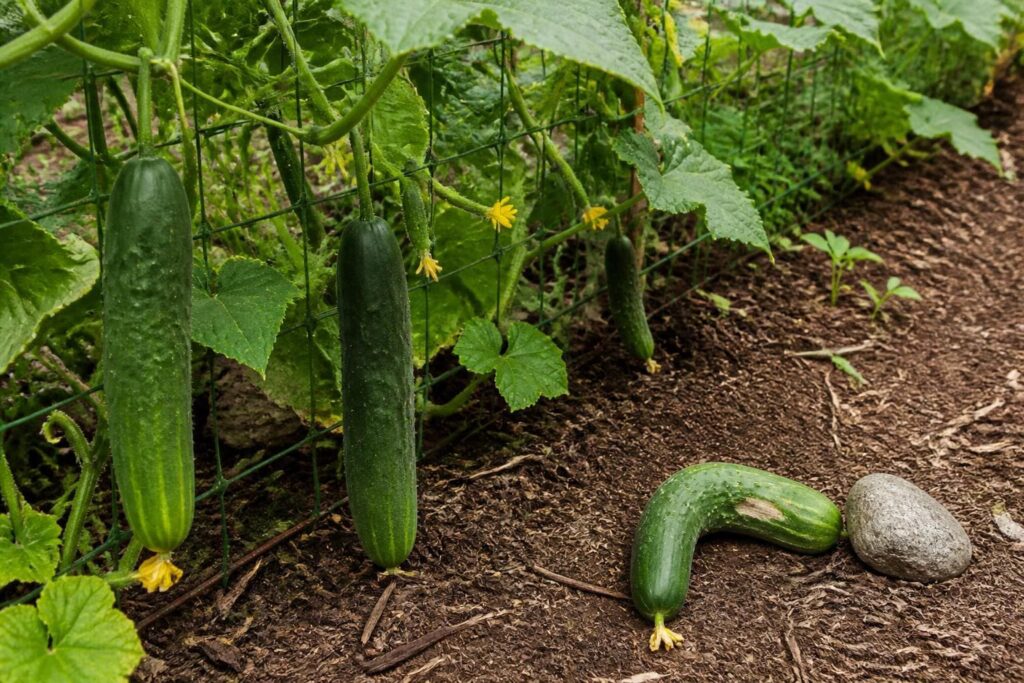
Should you pull the badly shaped ones?
When I want to know whether stripping out bad fruit is worth the bother, I go back to a fall slicing-cucumber trial run by Dr. Timothy Coolong at the University of Georgia in Tifton, in a season the report describes as hot and dry. The September 24 harvest was poor, with many misshapen culls. Two days later the team pulled the misshapen fruit, immature and mature, and picked the plots again on October 2. The report ties the new fruit set after that cleanout to an exceptionally large final harvest, roughly a third of the season’s total yield. It was a variety trial under plastic mulch, with scheduled fertilizer and honeybee hives nearby, so I don’t treat it as a promise for a backyard trellis. It is, though, the reason I would rather strip a deformed cucumber early than leave it draining the vine.
Here is how I would put that together with the Australian findings. Remove fruit that is clearly beyond saving, such as tight nubs, thin tapers and sharp hooks. Give a mild curve on a very young fruit a few days, since young curved fruit can straighten. The same Central Queensland thesis notes that commercial practice is to remove small misshapen fruit as soon as it appears. Anything still edible can go straight to the kitchen.
A practical plan for the next two weeks
- Check the leaves and the neighborhood first. Mottled or twisted foliage, nearby spraying, or recently added compost, manure, hay or clippings change the diagnosis.
- Even out the water. Deep, regular watering, with mulch once the soil has warmed.
- Pollinate by hand each morning while the weather is poor, and keep sprays off open flowers.
- Trellis the vines so the fruit hangs free.
- Pick every two or three days and remove the worst deformed fruit early.
- Test the soil before you feed, and judge the next few fruits rather than the ones already formed, because their shape is set.
What not to do
- Do not pull a healthy vine over a few crooked fruit. Check the weather, the watering and the pollination first.
- Do not flood the bed after a dry spell. That is how bulbous fruit happens.
- Do not feed by guesswork. Test the soil, then follow the results and the product label.
- Do not spray open flowers during the morning hours when bees are working them.
- Do not eat fruit from plants you suspect were exposed through contaminated compost, manure or hay.
Quick answers
Are badly misshapen cucumbers safe to eat?
Usually, yes. The Saskatchewan horticulturists describe misshapen fruit from an otherwise healthy plant as perfectly edible, even if it will not fit a pickle jar. The exceptions are fruit from plants you suspect were exposed to herbicide through compost, manure or hay, and fruit from virus-affected plants, which tends to taste bitter. Taste a small piece first.
Will a crooked cucumber straighten out?
A mature hook will not unbend, and a fruit whose shape is set stays that way. What you can change is the next fruit. A slight bend on a very young cucumber sometimes evens out, so give it a few days before you pull it.
Why are my cucumbers fat at one end after rain?
That balloon shape usually comes from a large intake of water late in fruit development, not from pollination. Mulch and steady watering reduce the swing.
Do I need bees for cucumbers?
Most garden varieties do, because pollen has to travel from male to female flowers. Seedless greenhouse types are the exception. If bees are scarce, hand pollination is the dependable backup.
Why did my cucumbers go crooked late in the season?
Several causes tend to stack up late in the year: cooler weather that keeps bees away, a vine that has carried a heavy crop for weeks, and uneven rain. Check pollination and water first, and keep harvesting.