
Repot eggplant seedlings when the roots circle the cell or show at the drainage holes, or when the plants crowd each other. Most seedlings are ready around 3 to 4 inches tall. Move up one pot size at a time, plant at the same depth the seedling grew, and water it in well. Don’t bury the stem deeply, because eggplant stems can rot when buried.
Eggplant seedlings grow fast once they get warm and light. The small cells that work well for sprouting, though, can hold them for only a few weeks. When the roots run out of room, growth stalls, and the plant can stay stunted for the rest of the season. Repotting at the right time keeps that from happening.
This article focuses on the repotting step itself. It covers signs of readiness, pot sizes, the moves, and the care that follows. For a complete season-long overview, see How to Grow Eggplant: Planting, Growing, and Care. For sowing seed and early germination, seeHow to Grow Eggplant From Seed. For indoor light and setup, see How to Grow Eggplant Indoors.
Why do eggplant seedlings need repotting?
A seedling needs room for two things: roots and leaves. The roots take up water and nutrients, and the leaves make the energy that builds the plant. A cramped root system limits both. Cornell Cooperative Extension warns that seedlings in cells that are too small become root-bound. Those plants often turn leggy and weak.
Fresh potting mix matters too. Old mix holds fewer nutrients, and it can carry disease from earlier plantings. A repot gives the seedling clean, rich mix and more room to grow in the same move.
Repotting also helps with watering. A larger pot holds more mix and more water, so the seedling dries out more slowly. That buffer makes small watering mistakes less likely to hurt the plant.
How do you know an eggplant seedling needs a bigger pot?
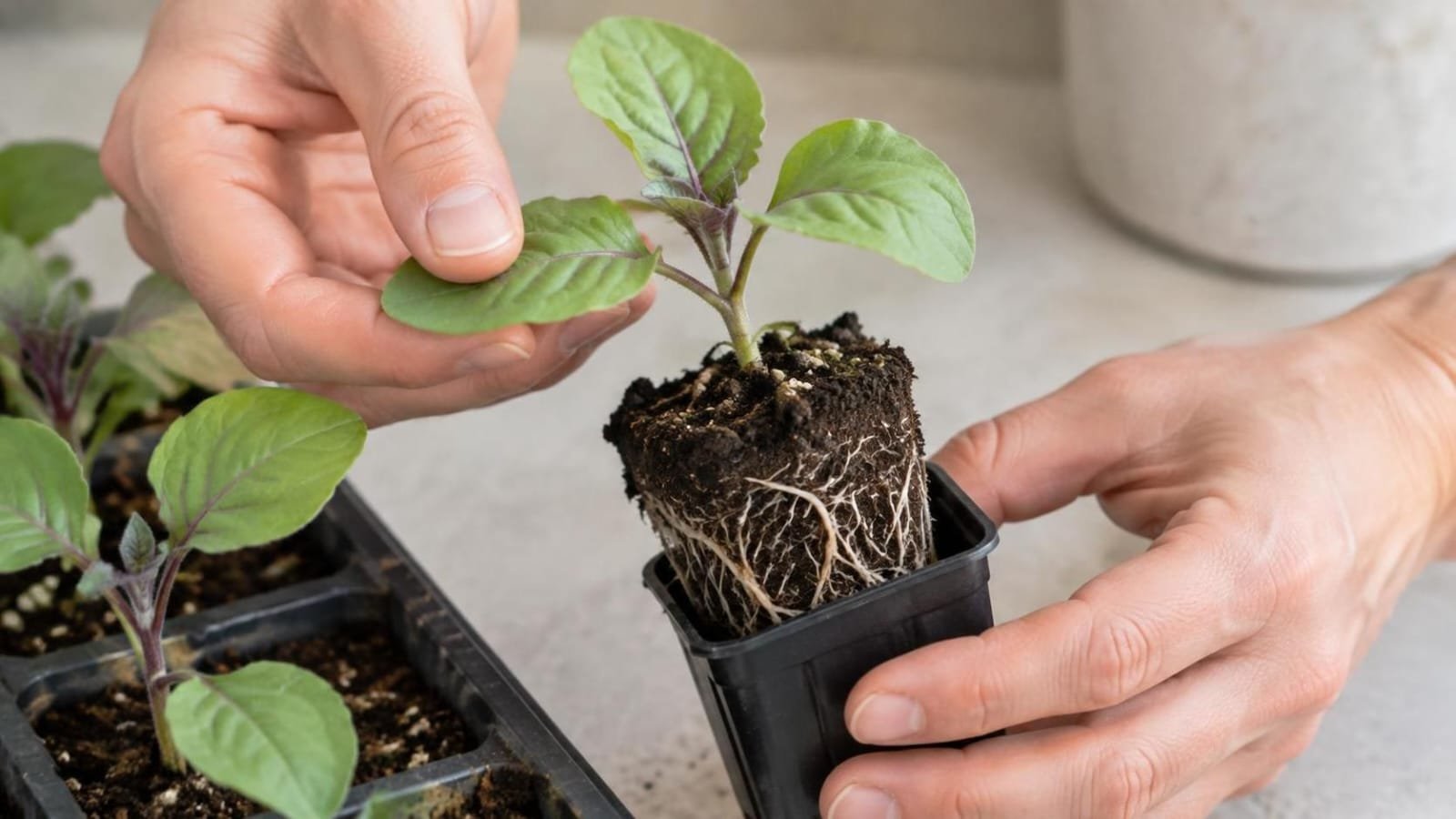
The clearest sign is a root-bound plant. Homestead and Chill defines a root-bound plant as one whose roots have run out of room and wind into a tangled circle. Lift the seedling gently from its cell. If the roots form a solid, circling ball, it’s time.
Other signs are easier to see from across the room. Roots poking out of the drainage holes mean the plant has outgrown its container. Water that runs through fast, or soil that dries within a day, can also point to a crowded root system. Growth slows, leaves yellow early, and the plant looks stalled even with good light.
Crowding is another signal. When seedlings in one tray touch each other, they compete for light and nutrients. The National Gardening Association advises repotting seedlings once they are three to four inches tall and crowding each other. That works as a rule of thumb for eggplant too. Garden.org explains the practice.
| Stage | Typical seedling size | Container | Sign it’s time to move |
|---|---|---|---|
| Starter cell or plug | Sprouted, first true leaves forming | Small cell or plug tray | Roots reach the bottom of the cell |
| First pot up | About 3 to 4 inches tall, several true leaves | About a 3-inch pot, roughly twice the cell volume | Leaves touch neighbors, or roots show at the drainage holes |
| Second pot up | Stocky stem, several sets of true leaves | About a 4-inch pot, or a 1-gallon container | Roots circle the root ball, or growth slows |
| Final container or bed | Sturdy, healthy, not stretched | Garden bed or large container | Nights stay warm enough for planting out |
What size pot should an eggplant seedling move into?
Savvy Gardening recommends that new containers be about twice as large as the old ones. That rule keeps the jump manageable. A pot that is too large holds extra wet mix, and the roots can sit in soggy soil for too long. Stepping up one size at a time avoids both problems. At most US garden centers, that means a 2.5-inch cell, a 3-inch pot, then a 4-inch pot or 1-gallon container.
Drainage matters more than the pot’s material. Choose containers with drainage holes, and set them on a tray or saucer that you can empty after watering. Plastic, fabric, and clay all work. Each material dries at a different rate, so check the soil by feel rather than by the material alone.
Use a seedling mix for the first pot up. Homestead and Chill notes that very small seedlings with thin roots do best in lighter soil. Heavier mix can stay wet around fragile roots and cause trouble. Move to a richer mix as the plant grows.
How do you repot an eggplant seedling step by step?
Start by watering the seedling and the new pot. A moist root ball slides out of its cell more easily. A damp pot also keeps the new mix from drying at the edges. Water the cell about an hour before you move the plant if you can.
Fill the new pot with moist mix to about one inch below the rim. Make a hole large enough for the root ball. Hold the seedling by a leaf, not the stem, because the stem bruises easily and the leaf can be replaced. Gently push the seedling out of the cell from the bottom.
Set the seedling in the hole at the same depth it grew in the cell. Fill around the root ball, then press the mix lightly. Keep the soil firm enough to hold the plant upright, but avoid packing it down hard.
Keep root handling gentle. Homestead and Chill notes that teasing roots can shock tender annual seedlings. If the roots circle tightly, loosen the outer ones with your fingers, but don’t cut or pull them apart. Gentle handling protects the seedling.
Water the newly potted seedling thoroughly until water runs out of the drainage holes. Empty any saucer after a few minutes so the roots don’t sit in standing water.
Should you bury eggplant seedling stems?
Sources disagree here, and the difference matters. Homestead and Chill says eggplant, along with tomatoes and peppers, can grow new roots from a buried stem. That’s true for some plants, and it’s the reason many gardeners bury leggy seedlings. Ask Extension, on the other hand, reports that eggplant stems that are too leggy to tolerate burial can rot once buried.
Our advice is to plant eggplant at the same depth it grew. If a seedling is only slightly leggy, you can bury it a little, up to the first true leaves. Avoid deep burial. Fix the legginess at the source instead, with more light and cooler nights, as described below.
Water the plants after the move
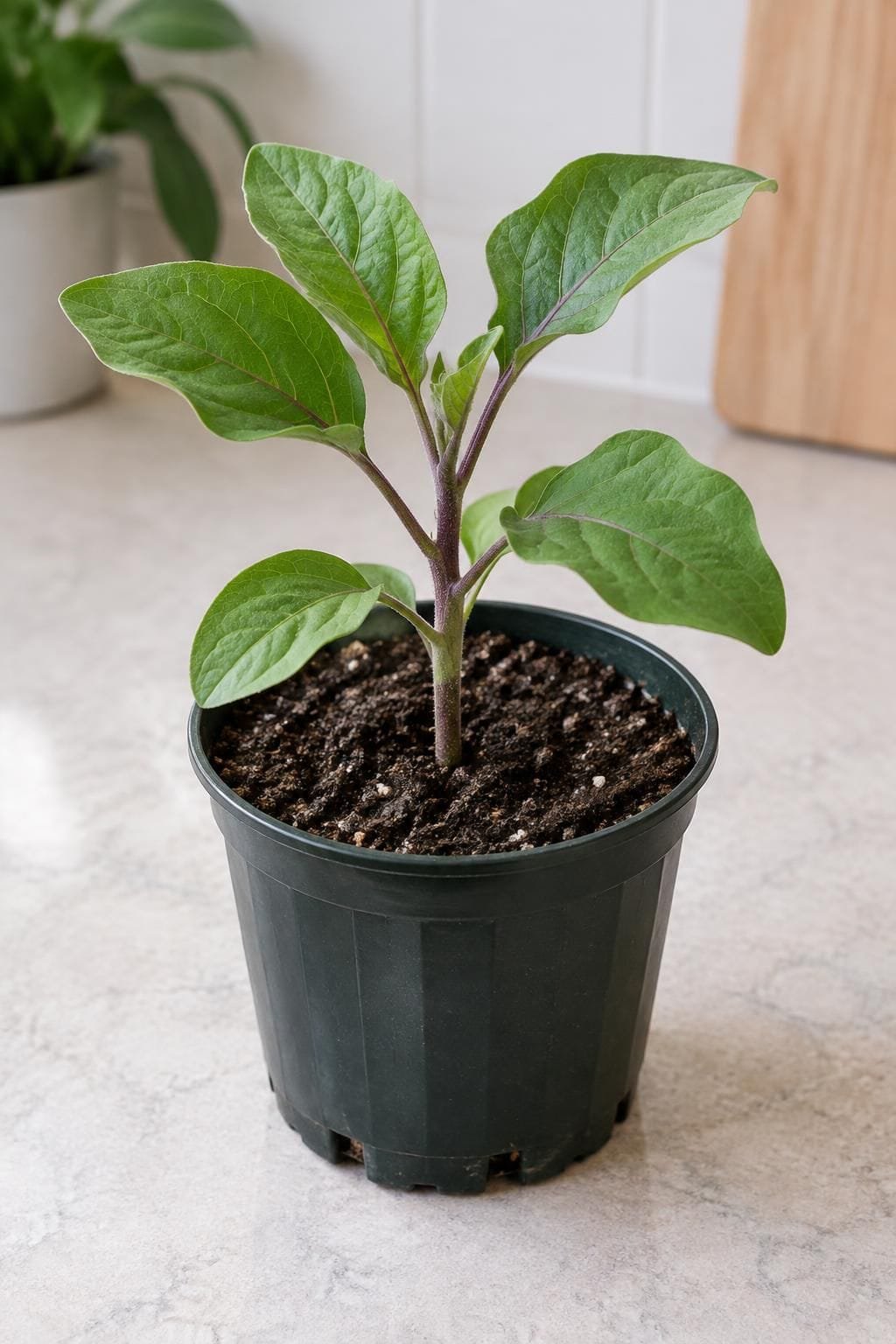
Keep the mix evenly moist for the first week after repotting. Roots need moisture to reach out into the new mix, and dry spells slow their growth. Check the soil with a finger each day. Water when the top half inch feels dry, and water thoroughly when you do.
Overwatering causes its own problems. Purdue Extension’s transplant production guide lists spindly growth as a result of low light, high fertilizer rates, and overwatering. Soggy mix also invites damping-off and root rot, so a fast-draining mix matters as much as the water schedule.
Light and temperature keep seedlings sturdy
Leggy seedlings usually have a light problem. Purdue’s guide says spindly transplants are produced under low light, high fertilizer rates, or overwatering. A seedling that stretches toward a dim window is telling you it needs more light. Move it closer to the light source, or raise the grow light as the plant grows.
Night temperatures matter too. The same Purdue guide notes that warm nights favor leggy growth. Lowering the temperature briefly at dawn can reduce stem stretch. Cooler nights, within the range eggplant tolerates, produce shorter, thicker stems. The indoor guide covers temperature ranges for growing seedlings in detail.
Keep an eye on fertilizer as well. Heavy feeding pushes soft, stretched growth. A light, balanced feed once the plant has its first true leaves is enough at this stage. Follow the product label for strength and frequency.
Spot the common problems after repotting
Most trouble after a move falls into a few categories. The table below lists the usual symptoms, the likely causes, and the first step to take. Use it as a starting point, and check the plant against the cultural basics before you add anything else.
| Symptom | Likely cause | First step |
|---|---|---|
| Plant wilts the day after the move | Transplant shock or root disturbance | Shade the plant for a day or two, then water and watch for recovery |
| Stem stretches and falls over | Low light, warm nights, or overwatering | Raise the light, cool the nights slightly, and let the top of the mix dry between waterings |
| Leaves turn pale or yellow | Overwatering, root stress, or low nutrients | Check drainage and moisture first, then apply a light balanced feed if the mix is depleted |
| Soil stays wet for days and the plant droops | Pot too large for the plant, or mix that drains too slowly | Water less often, check the drainage holes, and move the plant to a better-draining mix if the problem continues |
Give the plant time to settle
The Daily Garden advises treating new transplants gently for a few days. Avoid strong fertilizer, direct midday sun, and heavy handling during that window. A seedling that looks limp for a day or two often recovers once its roots reach the new mix.
Don’t judge the plant too quickly. Some wilting is normal. If the plant keeps declining, check the roots for rot, the drainage, and the light.
When to repot again
Repot again only when the roots fill the current pot. Moving a seedling into a much larger pot too early leaves the mix wet around the roots and slows growth. The signs are the same: circling roots, roots at the drainage holes, or growth that stalls.
The final pot should match your planting plan. If you plan to set the plant in a bed, you don’t need a large pot at all. If you plan to keep it in a container, choose a size that suits the mature plant. How to Grow Eggplant in Containers and Pots covers that choice. How to Grow Eggplant in Raised Beds covers bed planting.
Plan the move to the garden
Timing for the final move depends on your climate and the weather, not just on the seedling’s size. Root-bound or leggy plants struggle outdoors. Keep them growing well in their pots until the weather is ready. When to Plant Eggplant covers the outdoor calendar.
If you’re growing in a greenhouse, the process is similar, but the timing differs. How to Grow Eggplant in a Greenhouse explains how to manage temperatures and light once the plants move in.
A simple repotting checklist
Before you repot, check three things. The seedling is ready, the pot drains, and the mix is moist and fine. After the move, check three things. The plant sits at the same depth, the mix is firm but not packed, and the first watering has drained.
Keep a short note with the date of each repot, the pot size, and the seedling’s height. Those notes make the next move easier and show you which plants respond best to your routine.
3 thoughts on “How to Repot Eggplant Seedlings”